How to Lock a Sliding Door Securely
Sliding doors offer a great way to let in light and air, but sometimes keeping them locked tight can feel tricky. You might wonder if your sliding door is as secure as it could be, especially if you are new to home security. Many people find locking sliding doors a bit confusing at first.
This guide will make it simple. We will walk you through easy steps so you can feel safe and sound. Get ready to learn how to lock your sliding door with confidence.
Securing Your Sliding Door Methods
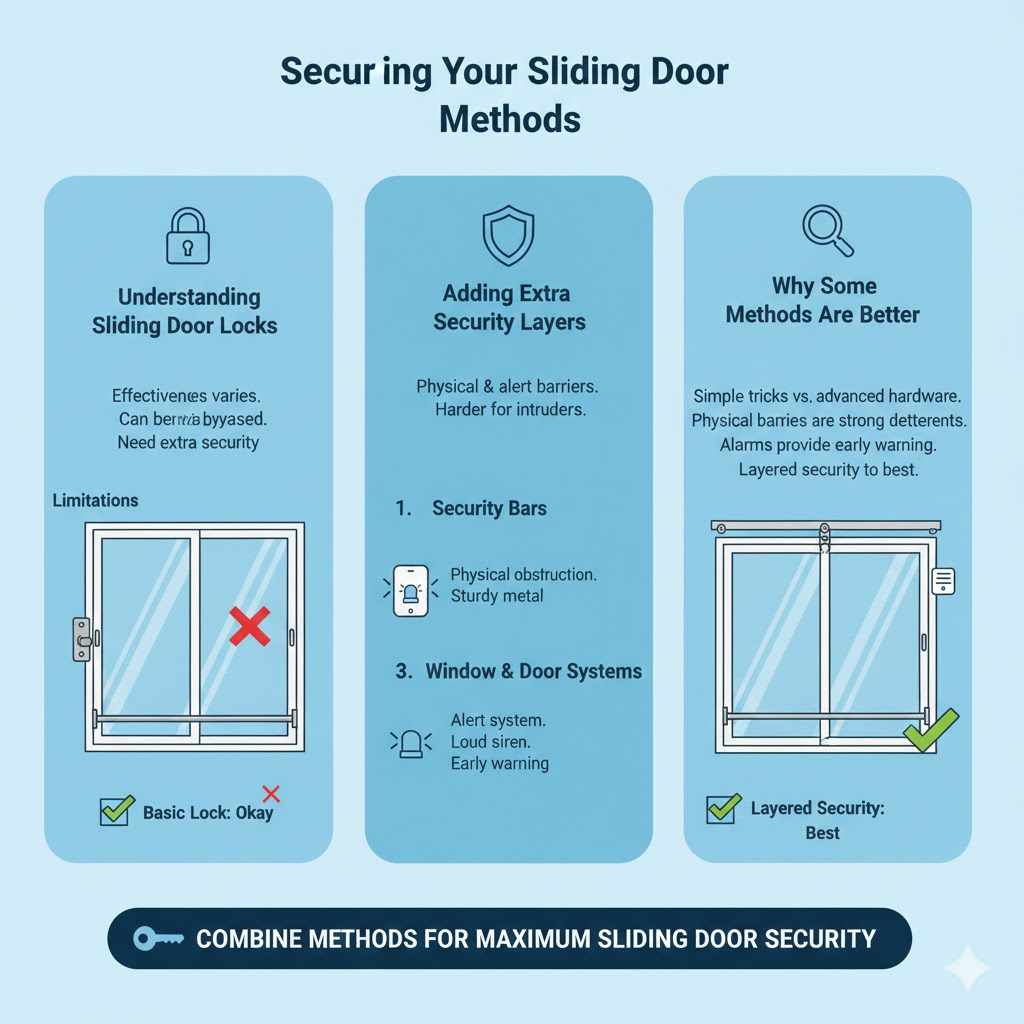
Ensuring your sliding doors are locked securely is vital for home safety. These doors can sometimes feel less secure than hinged doors due to their track system. This section will explore various ways to enhance the security of your sliding doors, from simple tricks to more advanced hardware.
We will look at why some methods are better than others and how to choose the right options for your home.
Understanding Sliding Door Locks
Sliding doors often come with basic locking mechanisms built into the handle or frame. These are usually simple latches or key-operated locks. However, their effectiveness can vary greatly depending on the door’s age and quality.
Some of these factory-installed locks can be bypassed with a bit of force or simple tools. This makes it important to know their limitations and when to add extra security.
The main goal of a lock is to prevent unwanted entry. For sliding doors, this means keeping the panels from being lifted off their tracks or forced open. A good lock will engage firmly with the frame or the other door panel.
It should resist jiggling or prying attempts. Understanding how your current lock works is the first step to making it better.
Adding Extra Security Layers
Beyond the built-in lock, several external devices can significantly boost sliding door security. These range from simple wooden dowels to specialized security bars and alarm systems. Each adds a layer that makes it harder for intruders to gain entry.
These additions work by physically blocking the door’s movement or by alerting you to any tampering.
Think of it like a chain on a regular door. The chain allows you to open the door a little but stops it from opening wide. For sliding doors, these extra layers act as a physical barrier.
They might prevent the door from sliding open at all, even if the lock is picked. Others make a lot of noise if someone tries to force the door. This can scare them away.
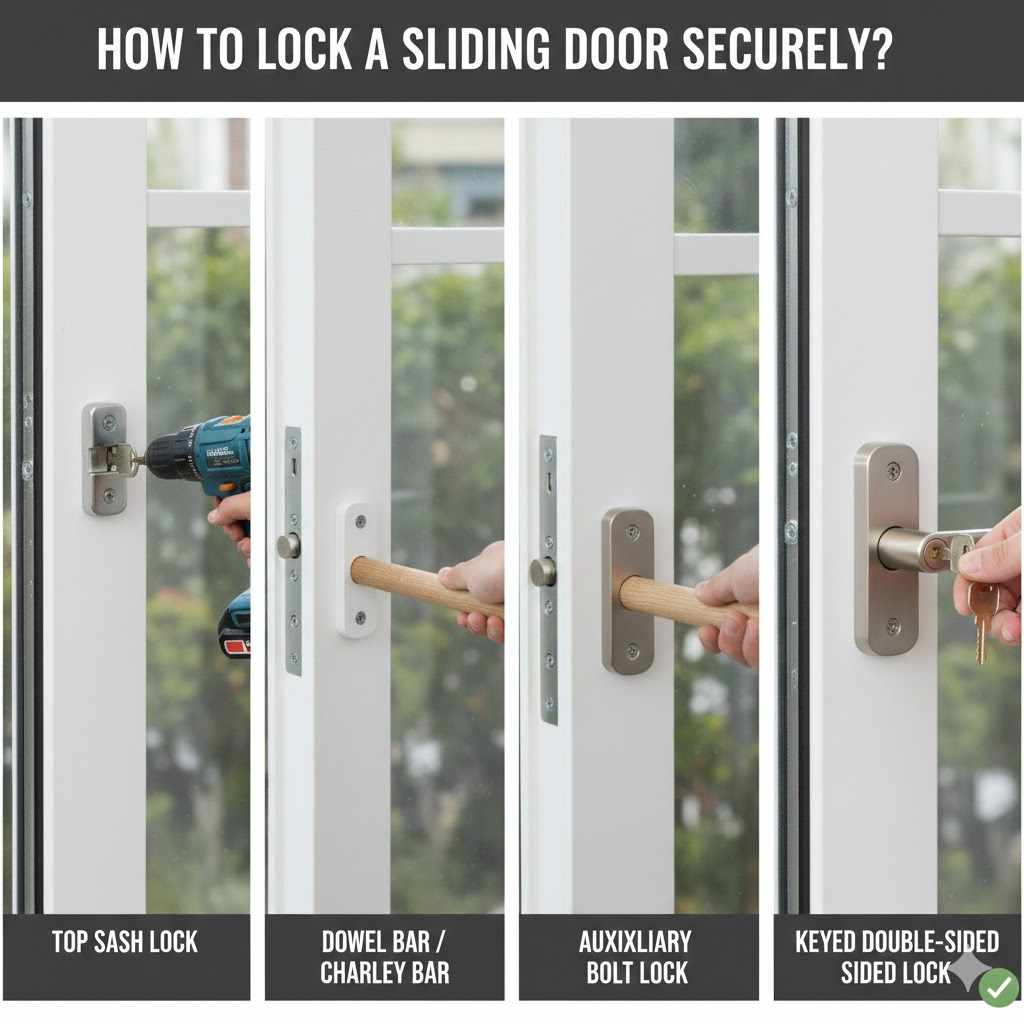
- Adding a security bar provides a physical obstruction. This bar fits into the door track and prevents the door from sliding open. It is a simple yet effective deterrent. The bar’s strength is key, so choosing one made from sturdy metal is important.
- Window and door alarms are another option. These small devices stick onto the glass or frame and sound a loud siren if the door is opened or tampered with. They act as an early warning system. The sound alone can be enough to make an intruder leave.
- Top-hung locking systems offer enhanced security. These systems involve a track installed at the top of the door frame. The locking mechanism engages with this top track, making it much harder to lift the door off its bottom track.
How to Lock a Sliding Door Securely With Simple Tools
For many people, the idea of security might seem complicated or expensive. However, you can significantly improve how to lock a sliding door securely without buying fancy gadgets. Simple items found around the house can act as effective security measures.
These low-cost solutions are easy to implement and can make a big difference in preventing unwanted access.
The Classic Dowel or Broomstick Method
This is one of the oldest and simplest tricks in the book for securing sliding doors. It works by jamming the door track. You just need a piece of wood cut to the right length.
This piece of wood sits in the bottom track, preventing the sliding door panel from moving.
To do this, measure the distance from the inside of the sliding door panel to the door frame when the door is closed. Cut a wooden dowel, broomstick, or even a sturdy piece of lumber to this exact length. When you want to secure the door, place this piece of wood snugly in the bottom track, wedged between the door panel and the frame.
This physically stops the door from sliding open. It is very effective against forced entry through the track.
A key advantage is its low cost and ease of use. Anyone can do it. The main limitation is that it only works on the door panel that slides.
If your door has two panels that slide past each other, this method secures the outer panel. You can even buy adjustable security bars that are similar but can be set to different lengths. These are often made of metal for extra strength.
Using a Charley Bar or Security Bar
A Charley bar, also known as a security bar or patio door bar, is a more robust version of the dowel method. These bars are typically made of strong metal, often aluminum or steel. They are designed to fit securely in the door track and resist force.
Many are adjustable, making them easy to use on different doors or in different situations.
You place one end of the bar on the floor inside the door track, and the other end rests against the sliding door panel. When the door is closed, the bar wedges the door shut. This makes it extremely difficult to force the door open from the outside.
Some Charley bars also have a hook or a way to attach to the door handle itself, offering even more resistance. They are a popular choice for a reason: they work well and are relatively inexpensive.
- Adjustable Length: Many security bars can be extended or shortened. This allows them to fit various door widths and track depths. You can adjust them for a snug fit every time.
- Durable Materials: Made from strong metals like steel or aluminum, these bars are built to withstand force. They are much stronger than a simple wooden dowel.
- Easy Installation: No tools or permanent fixtures are usually required. You just place the bar in the track. This makes them ideal for renters.
Securing With a Padlock and Chain
Another effective method involves using a sturdy padlock and a strong chain. This requires a bit more setup but offers excellent security. You would attach one end of the chain to the sliding door and the other end to the door frame or a secure anchor point.
The padlock then secures the chain.
This method essentially creates a physical barrier that prevents the door from sliding open. To install this, you would typically drill small holes and use strong screws to attach eye bolts or loops to the door and frame. The chain links through these loops, and the padlock secures the chain.
This makes it very difficult to force the door open.
While effective, this method involves minor modifications to your door or frame. You need to be comfortable with drilling. The strength of the chain, padlock, and anchor points is crucial.
A weak link will compromise the entire system. It is best to use heavy-duty hardware designed for security applications.
Simulated Sliding Door Lock Scenario
Imagine you are going on vacation and want extra peace of mind. You have a standard sliding glass door leading to your backyard.
- First, you ensure the main lock on the door handle is engaged.
- Then, you take a sturdy metal security bar. You measure the distance from the door frame to the sliding panel.
- You adjust the security bar to fit snugly in the track, wedging the sliding panel against the frame.
- For added measure, you place a thick wooden dowel just behind the security bar, creating a double barrier.
- Finally, you check that both the security bar and dowel are firmly in place, preventing the door from sliding open even if someone tries to force it.
Advanced Solutions For Enhanced Security
While simple methods are great for basic security, sometimes you need more robust solutions. These advanced options offer higher levels of protection and can integrate with other home security systems. They often involve specialized hardware or electronic components that provide greater peace of mind.
Installing a Deadbolt Lock
For the ultimate in sliding door security, installing a dedicated deadbolt lock is a top choice. Unlike the basic locks integrated into door handles, deadbolts are designed for higher security. They require a key to operate from both sides (or a thumbturn on the inside) and have a bolt that extends deep into the door frame.
This makes them very difficult to force open.
Sliding door deadbolts are specifically designed for this type of door. They often consist of two parts: one mounted on the sliding door and the other on the fixed frame. When engaged, a strong bolt extends from the sliding door into a receiver on the frame.
This creates a very secure lock that is much harder to bypass than standard latches.
The installation process for a deadbolt lock can be more involved. It typically requires drilling holes for the bolt mechanism and the strike plate on the frame. It is important to follow the manufacturer’s instructions carefully or hire a professional locksmith to ensure proper installation.
Once installed, a deadbolt provides a significant security upgrade.
Using Window Films and Laminated Glass
The glass in sliding doors can be a weak point. It can be shattered to gain access. Window films and laminated glass are treatments that make the glass much harder to break.
This is a preventative measure that works even if someone attempts to smash the glass.
Security window film is a clear, strong plastic film applied to the inside surface of the glass. It holds the glass together even if it cracks or breaks. This means the glass will not shatter into pieces, and an intruder cannot easily create an opening.
It can make a door resistant to impacts.
Laminated glass is made by bonding two or more panes of glass together with a strong interlayer, usually polyvinyl butyral (PVB). This interlayer keeps the glass in place when broken. It is much stronger than standard tempered or annealed glass.
While more expensive than film, it offers superior protection against forced entry.
- Impact Resistance: Both film and laminated glass are designed to withstand impacts. They make it much harder for an intruder to break through the glass.
- Glass Shard Containment: Even if the glass breaks, these treatments prevent it from shattering outwards. This significantly reduces the risk of injury and makes it harder to gain access.
- UV Protection and Privacy: Some security films also offer additional benefits like blocking harmful UV rays and providing daytime privacy.
Smart Locks and Alarm Systems Integration
For the most modern approach to how to lock a sliding door securely, consider smart locks and integrated alarm systems. Smart locks can be controlled remotely via a smartphone app. They often come with features like activity logs, temporary access codes, and alerts if the lock is tampered with.
These smart locks can be integrated with home security systems. If the alarm is triggered by motion sensors or door/window sensors, the system can notify you and potentially even lock down your doors. Some smart locks also have built-in alarms.
Integration means your sliding door lock can work hand-in-hand with your other security measures. For instance, if a window sensor is tripped, your smart lock might automatically engage or send an alert to your phone. This networked approach offers a high level of security and convenience.
However, smart locks rely on a power source and a stable Wi-Fi connection, which are factors to consider.
Case Study: Improving Backyard Patio Security
The Miller family had a sliding glass door that led to their patio. They often left it unlocked when they were home, but they worried about security when they were out. They decided to improve how to lock a sliding door securely.
First, they installed a heavy-duty security bar in the track. This was a quick and easy step. Then, they added a battery-powered door and window alarm to the sliding panel.
The alarm was loud and easy to set. They also decided to install a keyed deadbolt specifically designed for sliding doors. This gave them a robust locking option for when they were away for longer periods.
After implementing these measures, the Millers felt much more secure. The security bar prevented casual access. The alarm provided an audible warning if someone tried to force the door.
The deadbolt offered solid protection for extended absences. They found that combining simple solutions with more advanced hardware created a strong security posture for their sliding door.
Choosing the Right Security Measures
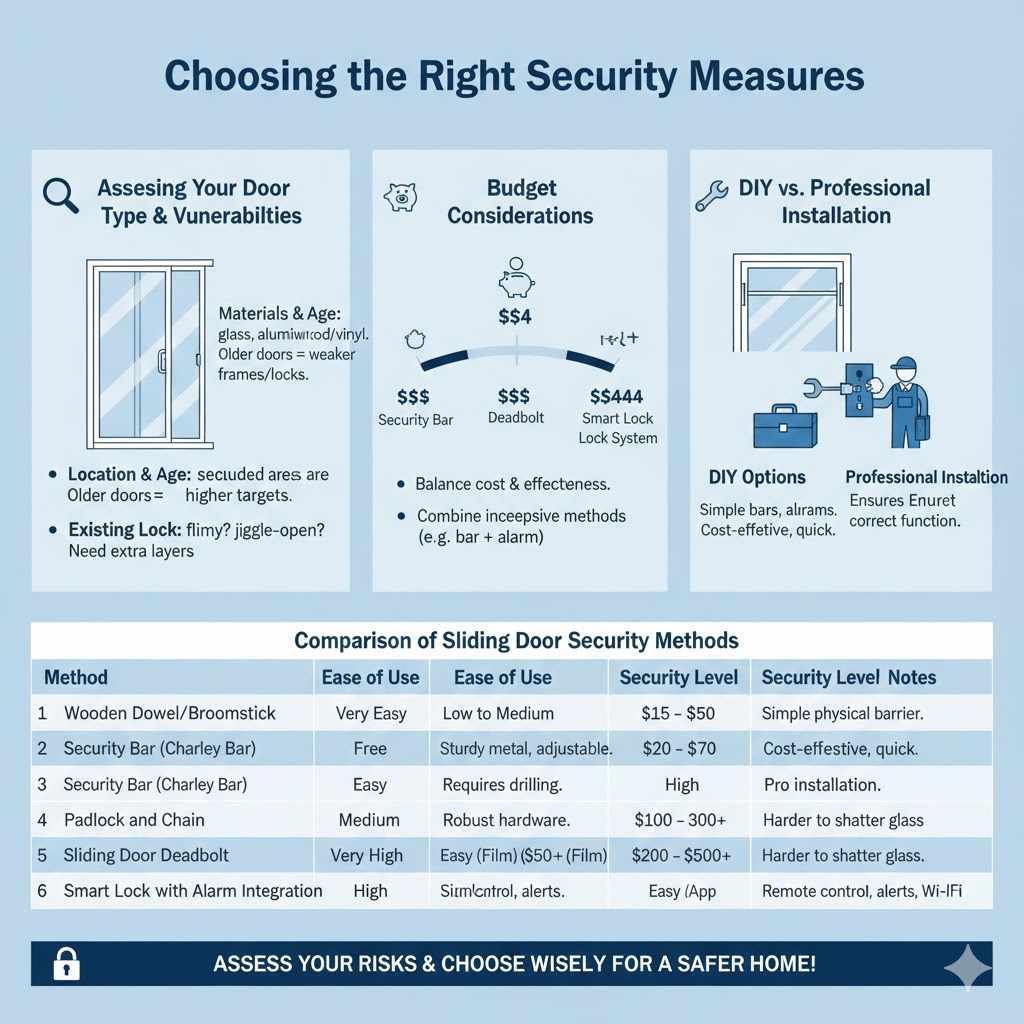
Selecting the best security solutions for your sliding doors depends on several factors. You need to think about your budget, the type of door you have, and your personal security needs. Not all solutions are right for every situation.
It is important to assess your specific risks and choose methods that offer the best protection for your home.
Assessing Your Door Type and Vulnerabilities
Sliding doors come in various materials and designs. Some are made of glass with aluminum frames, while others might be wood or vinyl. The quality and age of the door also matter.
Older doors might have weaker frames or less robust locking mechanisms. Glass doors, in particular, are vulnerable to breakage.
Think about where your sliding door is located. Is it easily visible from the street, or is it in a more secluded area of your property? Doors that are easily accessible from the outside, like those leading to a patio or balcony, are often higher targets.
Identifying these vulnerabilities is key to choosing effective security measures.
Consider the existing lock. Does it feel flimsy? Can it be easily jiggled open?
These are signs that you need to add extra layers of security. The goal is to make your sliding door as difficult and time-consuming to bypass as possible.
Budget Considerations
Security solutions can range from free to very expensive. The dowel or broomstick method is essentially free if you already have a suitable piece of wood. A security bar might cost between $15 and $50.
Installing a new deadbolt could range from $100 to $300, depending on the lock and installation costs. Smart locks and integrated alarm systems can cost several hundred dollars or more.
It is important to find a balance between cost and effectiveness. Sometimes, a combination of inexpensive methods can provide excellent security. For example, using a security bar along with a loud door alarm can be very effective without breaking the bank.
Prioritize your spending on the solutions that offer the most protection for the areas most vulnerable to intrusion.
DIY vs. Professional Installation
Many security measures for sliding doors can be installed by the homeowner. Simple solutions like security bars or alarms require no tools and are very easy to set up. Adding a wooden dowel is as simple as cutting a piece of wood.
These DIY options are cost-effective and quick.
However, for more complex installations, such as deadbolts or integrated smart lock systems, professional installation might be recommended. A professional locksmith or security installer can ensure the locks are fitted correctly and function optimally. Proper installation is crucial for the effectiveness and longevity of higher-end security systems.
Incorrect installation can create new vulnerabilities.
Comparison of Sliding Door Security Methods
| Method | Ease of Use | Cost | Security Level | Notes |
|---|---|---|---|---|
| Wooden Dowel/Broomstick | Very Easy | Free | Low to Medium | Simple physical barrier. Only works on sliding panel. |
| Security Bar (Charley Bar) | Easy | $15 – $50 | Medium to High | Sturdy metal bar, adjustable. Effective against forcing the door open. |
| Padlock and Chain | Medium | $20 – $70 | High | Requires minor drilling for attachment points. Strong if hardware is robust. |
| Sliding Door Deadbolt | Medium (Installation) | $100 – $300+ | Very High | Dedicated lock for sliding doors. Requires professional installation for best results. |
| Security Film/Laminated Glass | Easy (Film) / Medium (Glass) | $50 – $200+ (Film) / $500+ (Glass) | High (Protects against breakage) | Makes glass harder to shatter. Film is a retrofit; glass replacement is more involved. |
| Smart Lock with Alarm Integration | Easy (App Control) / Medium (Setup) | $200 – $500+ | High to Very High | Remote control, alerts, integration with home security. Requires power and Wi-Fi. |
Frequently Asked Questions
Question: What is the easiest way to secure a sliding door?
Answer: The easiest way is to use a wooden dowel or a metal security bar placed in the bottom track. This physically blocks the door from sliding open and requires no tools.
Question: Can someone lift a sliding door off its tracks?
Answer: Yes, some sliding doors, especially older or less secure models, can be lifted off their tracks if they are not properly secured. Adding security measures helps prevent this.
Question: Do I need to drill holes to make my sliding door more secure?
Answer: Not always. Simple methods like security bars or dowels don’t require drilling. However, installing deadbolts or chain locks often involves drilling for proper attachment.
Question: How much does it cost to secure a sliding door?
Answer: Costs vary greatly. You can spend nothing if you use a dowel. A security bar might cost $20 to $50.
Installing a good deadbolt and having it fitted could be $100 to $300 or more.
Question: Are sliding door alarms effective?
Answer: Yes, sliding door alarms can be very effective. They emit a loud noise when the door is opened or tampered with, which can scare off intruders and alert you to a potential break-in.
Conclusion
Locking your sliding door securely is important for peace of mind. You have learned various methods, from simple dowels to advanced deadbolts. Adding a security bar or an alarm is a great step.
Even basic solutions make a big difference. You can easily improve your home’s safety now.