How to Pick a Door Knob Without Tools A Practical Guide
Accidentally locked yourself out? It’s a surprisingly common situation, and knowing How to Pick a Door Knob Without Tools (Emergency Guide) can be a lifesaver. Many people find the idea of picking a lock intimidating, but with some basic knowledge, you might be surprised at what you can achieve. Don’t worry, we’re not aiming for professional lock-picking skills. This guide will provide you with simple, accessible methods. Ready to explore some easy techniques? Let’s get started, and you’ll soon discover the basics.
Exploring Methods for Door Knob Entry Without Tools
When you’re facing a locked door and don’t have your keys, the immediate reaction is usually a sense of panic. This section focuses on easy methods that can help you get back inside. We’ll explore different approaches, emphasizing accessibility and readily available items. The goal is to get you back in quickly and with minimal effort. Remember, the techniques described here are for emergencies when you have a legitimate reason to enter. Safety first is always the key.
Using a Credit Card or Thin Plastic
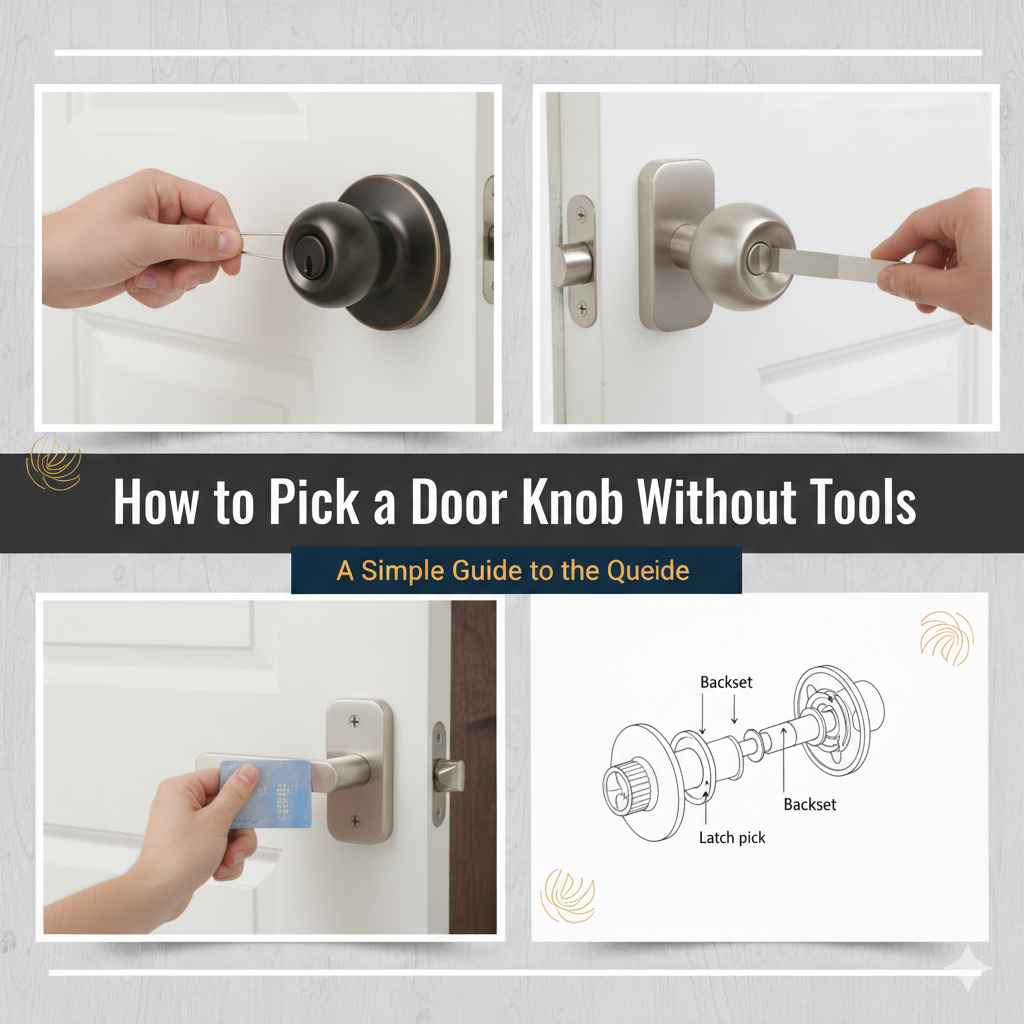
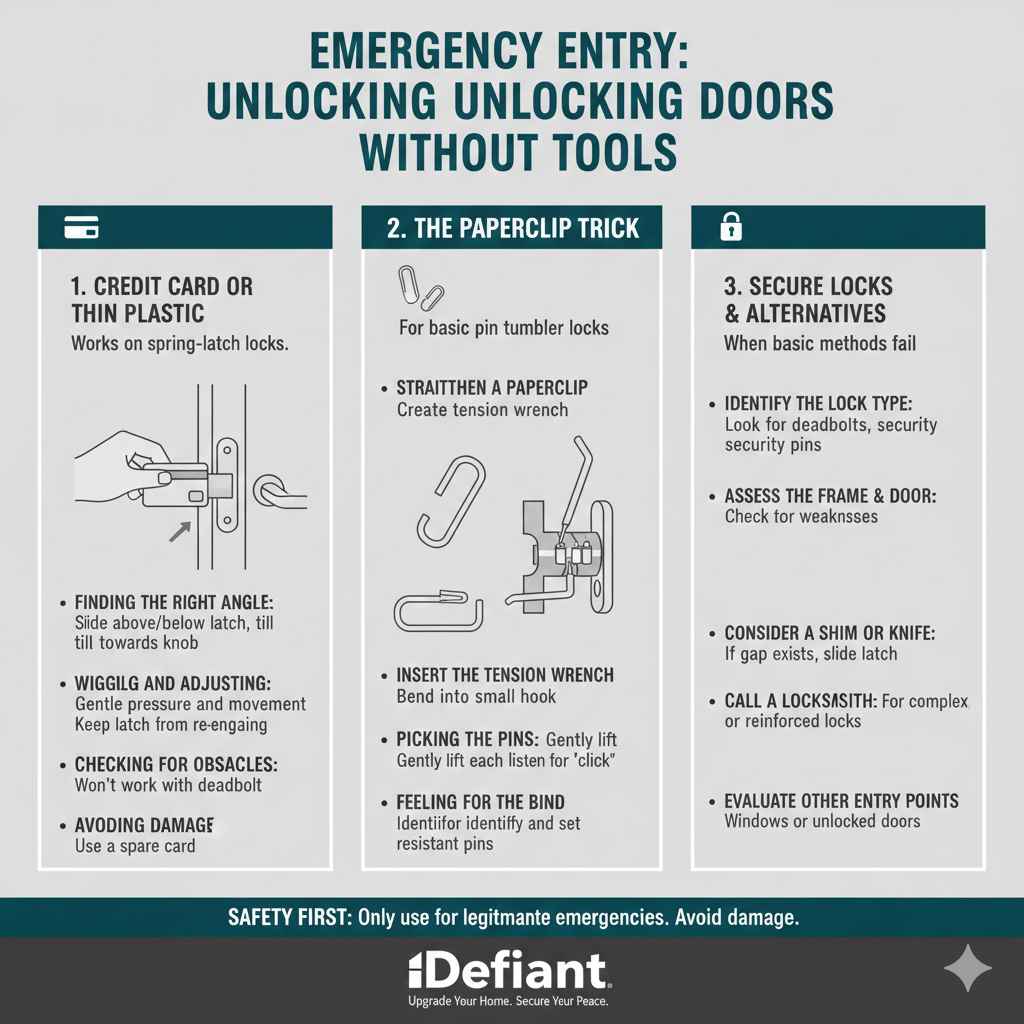
One of the most common methods for gaining entry to a door is using a credit card or a similar thin piece of plastic. This approach works best on doors with a spring-latch lock, which is very common. The principle is to slip the card between the doorframe and the latch, pushing the latch back to open the door. The success of this technique largely depends on the gap between the door and the frame. A credit card is a great option because it’s readily available and durable, though other types of plastic, such as a driver’s license or a hotel key card, can also work.
- Finding the Right Angle: Insert the card above or below the latch. The angle is critical. Too straight, and it won’t work; too angled, and it might get stuck. The best angle often involves a slight tilt towards the doorknob. This allows you to better feel the latch.
- Wiggling and Adjusting: Gently wiggle the card while applying pressure towards the door. This helps to feel and push the latch. Different door frames and latches require different angles and amounts of pressure. If it does not work at first, experiment with different insertion points, as well as applying and varying pressure.
- Applying Consistent Pressure: Keep consistent pressure towards the inside of the door. This pressure keeps the latch from re-engaging once it’s been pushed back. It prevents the door from relocking. Maintaining this pressure is necessary to open the door.
- Checking for Obstacles: Ensure there are no obstructions, such as a deadbolt, preventing the latch from moving. If a deadbolt is engaged, the credit card technique will likely fail. This technique primarily focuses on spring-latch entry.
- Avoiding Damage: Use a card you can afford to lose or damage. Avoid excessive force, which could damage the door or the card. Try to avoid scratching the door frame or the paint.
The Paperclip Trick and Similar Strategies
Another popular method for picking a door lock involves using paperclips or similar small metal objects. This technique is more sophisticated than the credit card method because it directly engages the internal mechanisms of the door knob lock. It requires a bit more skill and patience, but it can be effective. This method works well on basic pin tumbler locks. Learning the specific steps makes it a valuable emergency solution.
- Straighten a Paperclip: Begin by straightening one end of the paperclip to make a tension wrench. This part will be inserted into the bottom of the keyhole. You’ll apply light pressure in the direction the door opens. The goal is to keep tension on the lock.
- Create a Picking Tool: For the actual picking, you’ll need another paperclip. Bend it into a small hook or pick. This is used to manipulate the pins inside the lock. The hook end needs to be small enough to enter the keyhole without getting stuck.
- Insert the Tension Wrench: Insert the straightened paperclip into the bottom of the keyhole. Apply gentle, steady pressure in the direction you would turn the key to open the door. This keeps the lock cylinder in a position to be picked. This pressure is essential.
- Picking the Pins: Use the hook to gently lift each pin inside the lock. You’ll feel a slight click as each pin is set. Work your way through the pins one by one, feeling for the click that indicates a pin is properly set. This takes practice.
- Feeling for the Bind: As you pick, pay attention to the binding pins. These are the pins that are offering resistance. Lift each pin until you feel it click, then move to the next. The order will be important.
Dealing with More Secure Door Knob Locks
Not all door knobs are created equal. Some door knobs include security features like anti-pick designs, or reinforced latches. These locks are specifically designed to make it much harder to pick or bypass them. This section explores strategies for when you encounter a more secure lock. While challenging, some basic tactics might still be useful, and when they are not, knowing when to call a professional is key. The more complex the lock, the more important it is to consider other approaches.
- Identify the Lock Type: Before you start, try to identify the kind of lock you’re facing. Look for features like extra security pins, or deadbolts. Deadbolts are very difficult to open without a key. This recognition impacts the options available.
- Assess the Frame and Door: Examine the door frame and door itself. Are there any weaknesses? Some older doors might have softer wood around the latch, which makes it easier to manipulate. Inspect the frame carefully.
- Consider a Shim or Knife: If there’s a gap between the door and the frame, try using a shim or a thin knife to push the latch back. Insert the tool between the door and the frame. Use leverage to slide the latch. This technique works best on simple spring latches.
- Searching for a Locksmith: In cases of complex locks, it might be the right time to reach out to a professional locksmith. They have specialized tools and experience. Using the right expert can prevent further damage to the door.
- Evaluating Other Entry Points: Before putting a lot of effort into the door, think about alternative entry points. This might include windows or other doors that might be unlocked. Consider all your options first.
Understanding Door Knob Mechanisms and Entry Attempts
To be effective in situations that require How to Pick a Door Knob Without Tools (Emergency Guide), you should have a basic idea about the inner workings of a door knob. This knowledge can give you an edge in getting the door open. Let’s explore the essential components and how they interact to lock and unlock a door. Learning the mechanism helps you understand what you’re trying to manipulate when attempting to open a lock.
The Anatomy of a Typical Door Knob Lock
A typical door knob lock consists of various parts working together. Recognizing each part and its function helps in better understanding how to attempt an emergency entry. The basic components include the cylinder, the pins, and the latch mechanism. These three are all integral to locking and unlocking the door. Knowing these will increase your odds of a successful attempt.
- The Cylinder: This is the part of the lock where you insert the key. It contains the pins. These pins must align correctly for the cylinder to turn. The cylinder connects to the rest of the lock mechanism.
- The Pins: Inside the cylinder are a series of pins. Each pin is split into two parts. When the correct key is inserted, these pins are aligned at the shear line, allowing the cylinder to turn. Any misalignment makes it hard to turn the cylinder.
- The Latch Mechanism: This component is responsible for keeping the door closed. When you turn the knob, it retracts the latch, which allows the door to open. The spring-loaded latch usually sits in the door frame.
- The Strike Plate: This is the metal plate on the door frame where the latch engages. It helps protect the door frame from damage. The strike plate secures the door when the latch is engaged.
- The Deadbolt (Optional): Many doors include a deadbolt. This is a separate locking mechanism that provides added security. It’s operated by a key. It is often a key piece to door security.
Common Weaknesses to Exploit
Understanding the common weaknesses can help you get inside when you don’t have a key. Door knobs are made to be strong and secure, but they have vulnerabilities. These vulnerabilities might be found in the lock itself, or in the door frame. The location of these weaknesses can vary depending on the door’s design, and this can provide opportunities for entry. Knowing these helps to make the process more effective.
- Latch Alignment Issues: Sometimes, the latch doesn’t perfectly align with the strike plate. This might be due to a warped door, or a misalignment of the frame. This slight misalignment can offer a point of leverage.
- Weak Door Frames: Older doors often have weaker door frames. The wood around the latch can be soft. That can make it easier to push the latch back. Wood rot weakens the structure further.
- Inadequate Strike Plates: A weak or poorly installed strike plate makes the door less secure. The screws securing the strike plate might be short or stripped. That makes it easier to force the door open.
- Locking Cylinder Vulnerabilities: Even in solid locks, certain weaknesses may exist. The internal pins in the cylinder may be worn or corroded. This can make them easier to manipulate.
- Spring Latch Vulnerabilities: Spring latches are designed to be simple, but that simplicity also makes them vulnerable. The spring mechanism can sometimes be overcome with the right tools. The space can be exploited.
Real-Life Examples of Successful Door Knob Entry
Seeing real-world scenarios helps in applying these techniques. Case studies reveal how these methods can work in different conditions. These examples provide useful insights. They show the different ways people have found entry in real situations.
- The Credit Card: A woman locked herself out of her apartment. After trying for a few minutes, she carefully inserted a credit card between the door and the frame. She wiggled and applied pressure, pushing the latch back. With a little effort, the door opened.
- The Paperclip Method: A man found himself locked out of his car. He straightened a paperclip, and using it as a tension wrench, he applied pressure to the lock. He used another paperclip to gently lift the pins. After a few minutes of patience, the lock opened.
- The Shimming Technique: Someone was locked out of their old wooden shed. The door frame had a noticeable gap. They slipped a thin piece of metal from a can between the door and frame, pushing the latch back. It worked quickly.
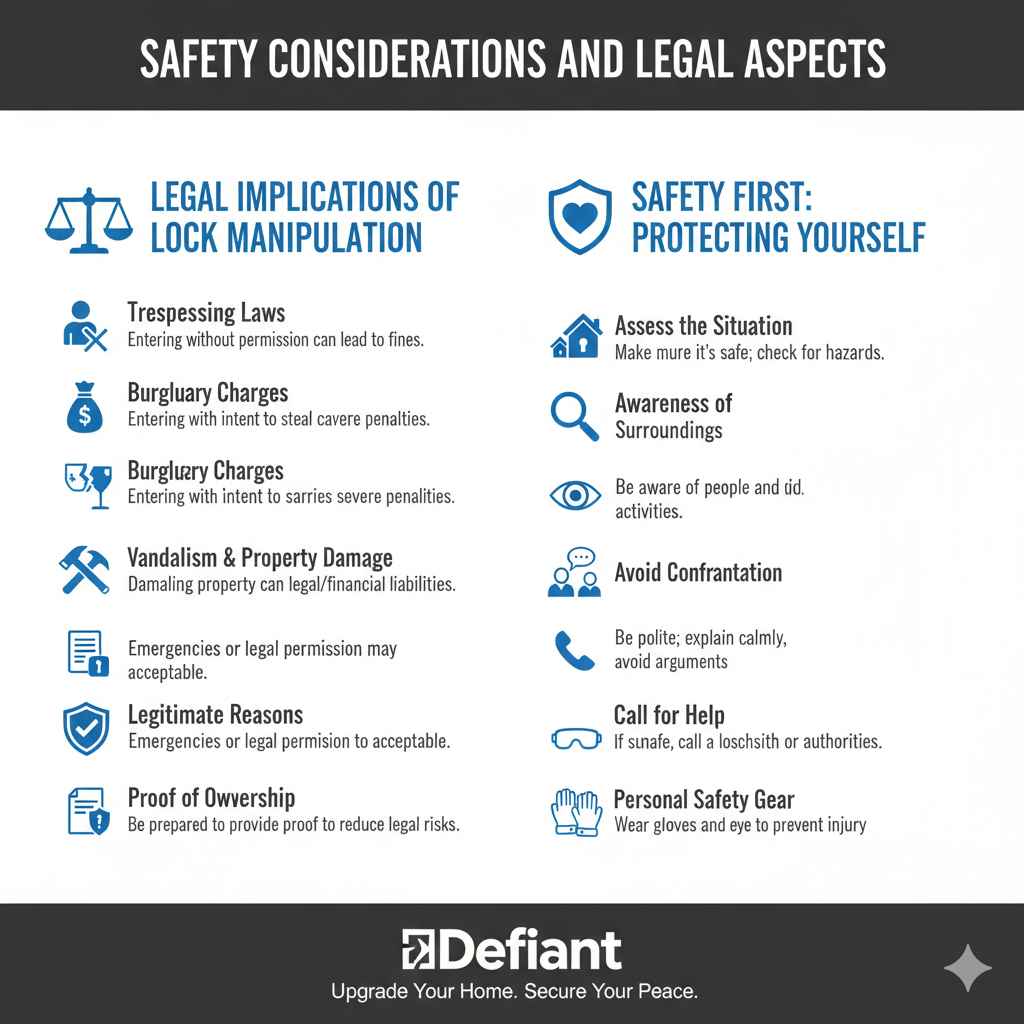
Safety Considerations and Legal Aspects
Gaining access to a locked property comes with important considerations. It’s not just about knowing How to Pick a Door Knob Without Tools (Emergency Guide) but also about making the right choices. This is very important. Always consider the potential legal implications and safety precautions. Understanding these factors will guide you in a responsible way.
Legal Implications of Lock Manipulation
It’s important to understand the legal limits of opening a door without a key. In many places, tampering with locks can have serious consequences. This depends on whether you have a legitimate reason to enter. The legal guidelines vary, so knowing your rights is key. This information helps avoid any legal trouble.
- Trespassing Laws: Entering a property without permission is considered trespassing. It can lead to fines, or more serious penalties, depending on the circumstances. Intent and the location matter.
- Burglary Charges: If you enter a property with the intent to steal something, you could face burglary charges. That carries severe penalties. This requires a legal defense.
- Vandalism and Property Damage: Causing damage to a door, lock, or any other part of a property can lead to vandalism charges. That can also result in legal and financial liabilities. This requires an experienced legal counsel.
- Legitimate Reasons for Entry: There are some circumstances where entry without a key may be acceptable, such as in emergencies or situations where you have legal permission to be there. You must understand your rights.
- Proof of Ownership: If you are the owner, you usually have the right to enter your property. Be prepared to provide proof of ownership if needed. This reduces legal risks.
Safety First: Protecting Yourself and Others
Safety should always be the priority when dealing with locks. It’s not just about getting in; it’s about protecting yourself and others from harm. This involves considering the immediate risks, and taking steps to reduce dangers. Following certain steps will improve your safety. Always be careful.
- Assess the Situation: Before attempting any entry method, assess the situation. Make sure it’s safe to do so. Look for potential hazards like broken glass or unsafe conditions. Never put yourself in danger.
- Awareness of Surroundings: Be aware of your surroundings. Check for any witnesses. Always be aware of the activities of other people.
- Avoid Confrontation: If someone confronts you, be polite. Explain your situation calmly. Avoid arguments or heated discussions.
- Call for Help When Needed: If you feel unsafe or unable to get in on your own, consider calling for assistance. This might include a locksmith or local authorities. Prioritize your safety above all else.
- Personal Safety Gear: Consider wearing gloves to protect your hands, and eye protection. It can prevent injury. Protection can be very important.
Frequently Asked Questions
Question: Is it legal to pick a lock on your own property?
Answer: Generally, yes, but you may need to provide proof of ownership if questioned. The key is to ensure you own or are legally allowed access to the property.
Question: What’s the easiest method to try first?
Answer: For doors with spring-latch locks, using a credit card or thin plastic to push the latch back is often the easiest and quickest approach.
Question: What if the door has a deadbolt?
Answer: If a deadbolt is engaged, the credit card technique usually won’t work. The paperclip method or calling a locksmith would be a better option.
Question: Are there any types of locks that are impossible to pick without tools?
Answer: High-security locks, like those with advanced anti-pick features or electronic components, are extremely difficult, or impossible, to pick without specialized tools and expertise.
Question: When should I call a locksmith instead of trying these methods?
Answer: If you’re facing a high-security lock, if you’re uncomfortable with the methods, if you’re unsure about the legality, or if you don’t own the property, it’s best to call a locksmith. Also consider this if you risk damaging the door.
Final Thoughts
Knowing How to Pick a Door Knob Without Tools (Emergency Guide) can be helpful in difficult situations. Remember, the methods described here are for legitimate emergencies only. You’ve now explored several techniques, from using credit cards to employing paperclips. This is for when you are locked out or for other similar needs. While these methods are useful, consider your surroundings, and your safety. Always know that there are limitations, and the legal implications matter. If you are uncomfortable or unsure, it’s always best to seek professional help. Your safety and responsibility should always be your top priorities. Armed with this knowledge, you are better equipped to handle a door lock emergency with both skill and care.