How to Pick a Door Lock with a Paperclip (Steps + Is It Legal?)
A standard door lock uses a pin tumbler cylinder that a paperclip bent into a tension wrench and a pick can sometimes open — but only on simple locks, not deadbolts or high-security cylinders. Forcing the wrong tool can jam the pins or snap the paperclip inside the lock. This guide covers bending the paperclips correctly, the exact picking motion, which locks it actually works on, and when it’s legal to try.
How a Pin Tumbler Lock Works
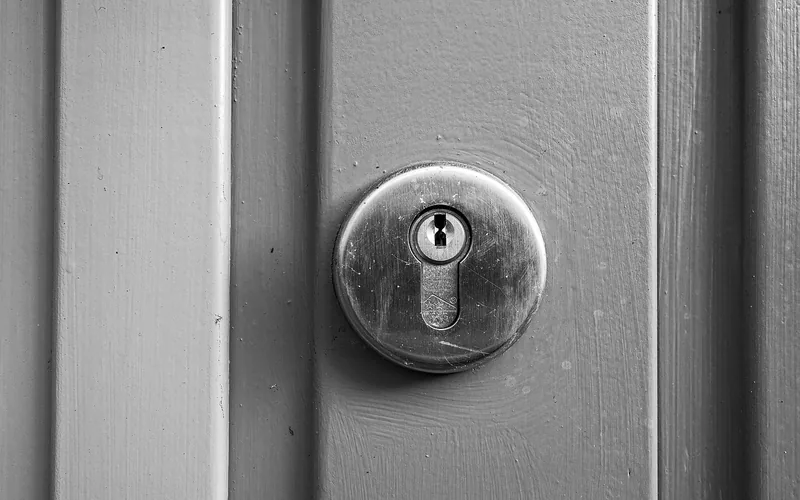
A pin tumbler lock is a cylinder lock that uses five or six spring-loaded pin pairs to block rotation until the correct key — or an improvised pick — pushes every pin to the exact height of the shear line. This is the mechanism behind most residential door hardware and lock types in the United States. Once every pin clears the shear line at the same time, the inner cylinder (the “plug”) is free to rotate and the lock opens.
A paperclip pick works by mimicking two functions a real key performs at once: a tension wrench applies light rotational pressure to the plug, and a pick lifts each pin individually until it sets at the shear line. Without the tension wrench holding the plug slightly turned, a set pin just falls back down — this is the part most beginners get wrong first.
Tools You Need
| Item | Why It’s Needed |
|---|---|
| Two large metal paperclips | One becomes the tension wrench, the other the pick. Thin or plastic-coated clips bend too easily to hold shape. |
| Needle-nose pliers | For clean, precise bends — fingers alone crush the wire’s shape. |
| A small flathead screwdriver (optional) | Extra leverage for stubborn tension wrenches. |
| A lock you own | Practice on your own hardware only — see the legal section below. |
Best Practice Lock Pick
BOZZYS Transparent Practice Padlock 5-Pack – $25.00
A see-through padlock lets you watch the pins set as you work your paperclip pick — far easier to learn the technique this guide covers than practicing blind on a door you can’t see into.
- Best for: Learning to feel a pin “set” by watching it happen
- Why we picked it: Legal, safe practice without touching a door you don’t own
- Main drawback: A simple 4-pin lock, easier than most real front-door cylinders
Compare more practice options
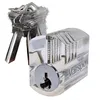 Option 1 Varspo Transparent Acrylic Lock – $19.99
|
 Option 2 Visual Guide to Lock Picking – $24.73
|
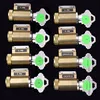 Option 3 Progressive Practice Lock Set of 8 – $98.90
|
As an Amazon Associate we earn from qualifying purchases.
How to Bend Your Paperclips
Straighten the first paperclip completely, then bend the last quarter-inch into a small L-shape — this is your tension wrench. Straighten the second paperclip too, but leave a small hook at the tip, like a tiny crochet needle — this is your pick. Bends that are too flimsy won’t hold pressure; bends that are too stiff are hard to maneuver inside the narrow keyway. Needle-nose pliers give a cleaner, more repeatable bend than fingers.
Step-by-Step: How to Pick the Lock
- Insert the tension wrench: Slide the L-shaped end into the bottom of the keyhole and apply light, steady rotational pressure in the direction the key would turn. Too much force jams the pins before they can be picked.
- Insert the pick: Slide the hooked paperclip into the top of the keyhole and feel for the row of pins inside — they feel like small bumps as you drag the hook across them.
- Set each pin: Push up on one pin at a time while holding tension. A pin that reaches the shear line gives a slight click and stays up instead of springing back down.
- Hold tension steady: Keep light, constant pressure on the tension wrench the entire time — easing off lets already-set pins drop back down and you lose your progress.
- Work through every pin: Move the pick from pin to pin, setting each one in turn. You’ll feel the plug rotate slightly further each time a new pin sets.
- Turn the cylinder: Once every pin is set, the tension wrench rotates the plug the rest of the way and the lock opens.
Expect it to take real practice — most beginners spend 10 to 20 minutes on their first attempt before the technique clicks (sometimes literally). A clean, newer pin tumbler lock is far more forgiving than an old or worn one.
Common Mistakes That Stop You From Getting In
- Too much tension: Heavy pressure on the wrench jams the pins in place instead of letting them set individually — the single most common reason a first attempt fails.
- Flimsy paperclips: Thin or plastic-coated clips bend out of shape under pressure and stop transmitting force to the pins.
- Rushing the pick: Moving too fast skips over pins that are almost set. Slow, deliberate movement finds the click faster than speed does.
- A snapped paperclip stuck in the lock: If this happens, stop — use tweezers to remove the fragment if it’s visible, or call a locksmith rather than forcing it further and risking damage to the cylinder.
Which Locks a Paperclip Can (and Can’t) Open
| Lock Type | Paperclip Success Odds | Why |
|---|---|---|
| Basic pin tumbler doorknob | Good, with practice | Simple 4-6 pin design, the mechanism this guide covers |
| Standard padlock | Good, if clean and new | Same pin tumbler principle, smaller keyway |
| Deadbolt | Harder | Deeper pins and tighter tolerances need more precise pressure |
| Old or rusty lock | Poor | Corrosion makes pins bind instead of moving freely |
| High-security or disc-detainer lock | Very poor to impossible | Purpose-built anti-pick features a paperclip can’t manipulate |
| Electronic or smart lock | Not applicable | No mechanical pins to set |

Is Picking a Lock With a Paperclip Legal?
📊 About 41 U.S. states require prosecutors to prove intent before lock-pick possession is treated as a crime. A handful of states, including Mississippi, Nevada, Ohio, and Virginia, instead treat simple possession as evidence of criminal intent — so local law matters. Source: TOOOL (The Open Organisation Of Lockpickers), Lock Picking Laws in the United States
Picking a lock is legal in every state when it’s your own property and you have permission — that’s true regardless of the state category above. It becomes a crime the moment you pick a lock on property that isn’t yours without the owner’s consent, separate from whatever your state says about simply owning picks or paperclips.
“In most states, lock-picking tools are legal to possess as long as there’s no intent to use them unlawfully — but a few states treat possession itself as evidence of intent, so it’s worth checking your specific state’s statute before you practice.”
When to Use a Safer Alternative Instead
A paperclip is a slow, unreliable backup, not a real locksmith tool. If the lock is a deadbolt, feels rusted or damaged, or you’re not making progress after a reasonable effort, stop before you risk breaking the paperclip off inside the cylinder. Check for an unlocked window, use a spare key you’ve stored elsewhere, or call a licensed locksmith — all faster and less risky than fighting a lock this method was never built to beat.
Frequently Asked Questions
Can I use any paperclip to pick a lock?
No. Stick to large, sturdy metal paperclips. Thin wire or plastic-coated clips bend out of shape under pressure and won’t reliably transmit force to the pins.
What kind of lock can I pick with a paperclip?
Simple pin tumbler locks, like most house doorknobs and standard padlocks, are the realistic target. Deadbolts, high-security cylinders, and disc-detainer locks are built to resist this method.
Is it legal to pick a lock with a paperclip?
Yes, on a lock you own or have explicit permission to pick. Picking someone else’s lock without permission is illegal everywhere in the US, and a handful of states also restrict simply possessing lock-picking tools — check your state’s law first.
How long does it take to pick a lock with a paperclip?
Most beginners take 10 to 20 minutes on a first attempt. With practice on a clean, simple lock, that drops to a couple of minutes — it depends heavily on the lock’s condition and your technique.
What if a paperclip breaks off inside the lock?
Stop trying to pick it further. Use tweezers or needle-nose pliers to remove a visible fragment; if it’s lodged too deep, call a locksmith rather than risk damaging the cylinder further.
Can I practice lock picking without getting in trouble?
Yes — practice only on a lock you own, ideally a dedicated practice padlock, in a private space. That keeps you legal in every state regardless of how that state treats tool possession.
Conclusion
A bent paperclip can open a basic pin tumbler lock once you’ve shaped a tension wrench and a pick correctly and practiced the feel of setting each pin. It won’t touch a deadbolt or a high-security cylinder, and it’s only legal on a lock you own or have permission to open. Keep two spare paperclips in a drawer for the next time you’re locked out of your own home.
Sponsored / affiliate links. As an Amazon Associate I earn from qualifying purchases. I may earn additional commission from eligible campaigns.