How to Remove Watermarks from Wood Furniture Fast
Water rings on your favorite wood table might seem like a big problem. You see them and think, “Oh no, how do I fix this?” Especially if you are new to furniture care, it can feel tricky. But don’t worry!
Getting rid of these marks can be really simple. This guide will show you easy ways to make your wood furniture look great again, fast. We will go through some simple steps that anyone can follow to say goodbye to those annoying water spots.
Easy Ways How to Remove Watermarks from Wood Furniture Fast
This section focuses on the core methods for tackling watermarks on wood. We will explore various common household items and simple techniques that can lift those unsightly rings and spots without causing damage. The goal is to provide clear, actionable advice for quick fixes that work for most types of wood finishes.
You’ll learn about different approaches depending on whether the watermark is light or deep. This helps you choose the best method for your specific situation.
Understanding Watermark Types
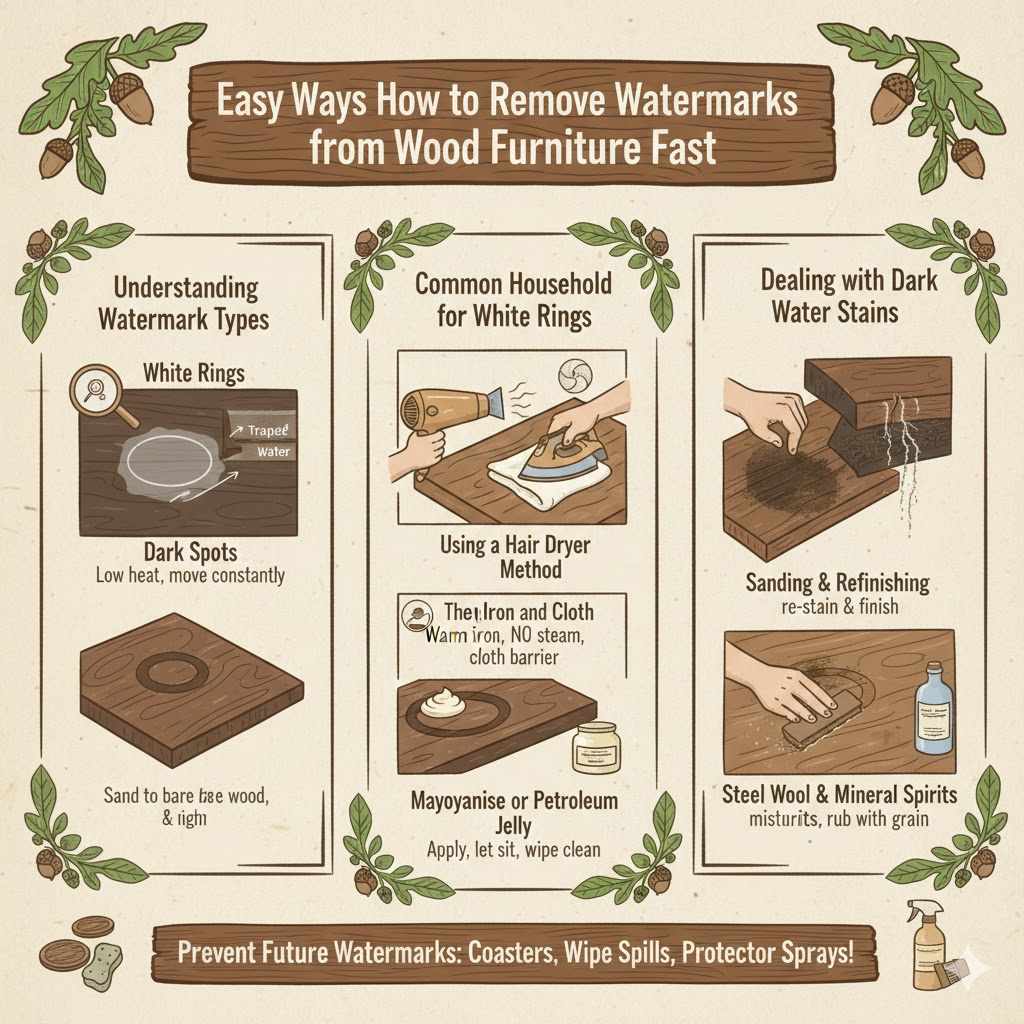
Before you start, it’s good to know what you’re dealing with. Watermarks on wood usually fall into two main categories: white rings and dark spots. White rings are often what people call “water stains.” They happen when moisture gets trapped in the top layer of the wood finish.
Think of it like fog on a mirror. The finish is still intact, but the water is clouding it up. Dark spots are more serious.
They mean the water has gone through the finish and into the wood itself. This can cause the wood to discolor.
Knowing the difference helps you pick the right tool for the job. For white rings, you usually need to gently heat or buff the finish to release the trapped moisture. For dark spots, you might need to go a bit deeper to remove the stained wood and then refinish the area.
This section breaks down how to identify these types so you can tackle them effectively.
Common Household Remedies for White Rings
Many items you already have at home can work wonders on light watermarks. These methods are gentle and often effective. They rely on common properties like mild abrasives or heat to clear the finish.
Using a Hair Dryer
A hair dryer is a surprisingly effective tool for white watermarks. The low heat gently evaporates the trapped moisture from the wood finish. You want to use a low heat setting and keep the dryer moving constantly.
Don’t hold it in one spot for too long, as too much heat can damage the finish.
- Hold the hair dryer about 6-8 inches away from the watermark.
Use the lowest heat setting available.
Move the hair dryer in a slow, circular motion over the affected area.
Continue this process for a few minutes, checking progress frequently.
The heat helps the moisture escape the finish. As it evaporates, the white cloudiness should start to disappear. This is a safe method for most varnished or lacquered surfaces.
Always test in an inconspicuous area first if you are unsure. The key is patience and constant movement to prevent overheating.
The Iron and Cloth Method
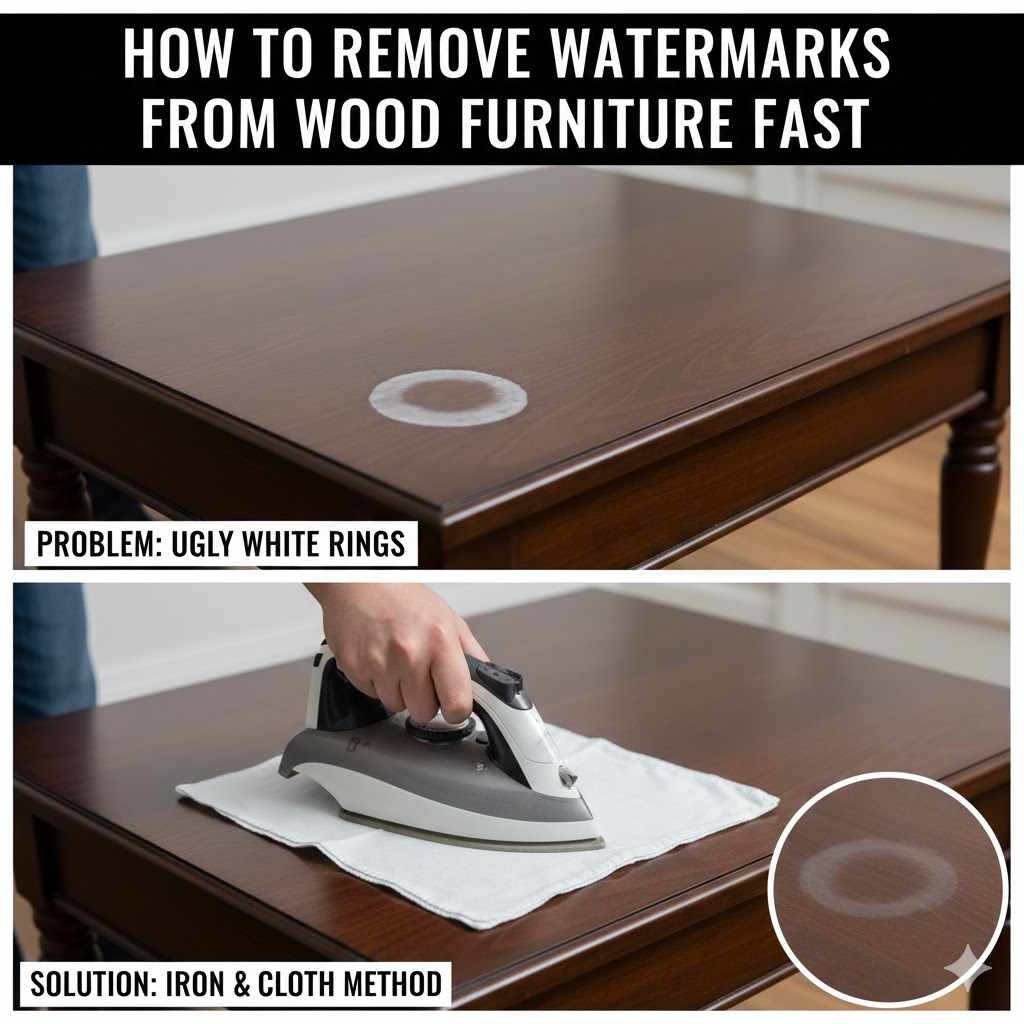
This technique also uses gentle heat. You place a clean, dry cloth over the watermark and then use a warm iron on top. The cloth acts as a barrier, protecting the wood finish from direct heat.
This method is great for pushing out moisture from the finish.
- Place a dry, soft cloth (like a cotton t-shirt or dish towel) over the white watermark.
Set your iron to a low heat setting, with no steam.
Gently press the warm iron onto the cloth for a few seconds at a time.
Lift the iron and cloth to check the progress. Repeat as needed.
The heat from the iron, transferred through the cloth, helps to release the trapped moisture. You are essentially drawing the water out of the finish. Be very careful not to leave the iron on for too long or use too much heat.
You do not want to melt or scorch the wood finish. This is a gentle but powerful way to deal with stubborn white rings.
Mayonnaise or Petroleum Jelly
Yes, really! The oils in mayonnaise or petroleum jelly can sometimes help to displace the moisture in the finish. They act as a lubricant and can help the finish return to its original clarity.
This is a bit of a folk remedy, but it often works for lighter marks.
- Apply a small amount of full-fat mayonnaise or petroleum jelly directly onto the white watermark.
Let it sit for at least an hour, or even overnight.
Gently wipe away the excess with a clean, soft cloth.
Buff the area to a shine.
The oil seeps into the finish and can help to loosen the trapped water molecules. This can make the cloudy appearance less noticeable. It’s a very gentle approach.
After wiping it off, you might see a slight oily residue. Buffing this away with a dry cloth will restore the shine. It’s a simple, low-risk option for those lighter stains.
Baking Soda Paste
Baking soda is a mild abrasive. When mixed with water or a bit of oil, it can create a paste that gently buffs away the watermark. This is best for slightly more stubborn white rings where buffing is needed.
- Mix baking soda with a small amount of water to form a paste. Alternatively, mix it with a bit of furniture oil or petroleum jelly for a gentler scrub.
Gently rub the paste over the watermark using a soft cloth. Work in the direction of the wood grain.
Wipe away the paste with a clean, damp cloth.
Dry the area thoroughly and buff to a shine.
The fine grit of the baking soda helps to lift the clouded finish without scratching. The oil or water in the paste prevents it from being too harsh. Always use light pressure.
If you use too much force, you risk dulling the finish. This method requires a bit more manual effort than the heat methods but can be very effective.
Dealing with Dark Water Stains
Dark water stains are more challenging because the moisture has penetrated the wood itself, not just the finish. This means you will likely need to remove the damaged finish and wood, and then repair the area.
Sanding and Refinishing
When dark stains occur, you often need to remove the damaged layer of wood. This means sanding the area down to the bare wood. Then, you will need to reapply a finish to match the surrounding furniture.
This is a more involved process but can restore heavily damaged areas.
- Start by lightly sanding the stained area. Use fine-grit sandpaper (e.g., 150-220 grit).
Sand in the direction of the wood grain.
Continue sanding until the dark stain is gone. You will see the natural wood color emerge.
Wipe away all the dust with a tack cloth.
Apply a wood stain that matches your furniture.
Once the stain is dry, apply several coats of a clear wood finish (like polyurethane or varnish) that matches your furniture’s existing finish.
This method requires a bit more skill and patience. The key is to feather the sanded area so it blends seamlessly with the rest of the furniture. If the stain is very deep, you might need to use a chemical wood bleach first.
However, for most common dark spots, careful sanding and refinishing can bring your furniture back to life.
Steel Wool and Mineral Spirits
For very stubborn dark stains that are not too deep, a fine-grade steel wool (0000 grade is recommended) can be used with mineral spirits. The steel wool acts as a gentle abrasive, and the mineral spirits help to lift the stain and lubricate the process.
- Dampen a pad of 0000 steel wool with mineral spirits.
Gently rub the stained area, always working in the direction of the wood grain.
Wipe away any residue with a clean cloth.
Inspect the area. If the stain is lighter but still present, repeat.
Once the stain is removed, clean the area with a damp cloth and allow it to dry completely.
You will likely need to reapply a furniture polish or a thin coat of finish.
This method is more aggressive than using baking soda. It can remove a thin layer of finish along with the stain. Therefore, it’s crucial to use the finest grade of steel wool and to work very gently.
Always test in a hidden spot first. The goal is to remove the stain without damaging the surrounding finish.
Preventing Future Watermarks
The best way to deal with watermarks is to stop them from happening in the first place. Taking a few simple precautions can save your furniture from future damage.
-
Use coasters: This is the most obvious and effective method. Always have coasters available for drinks.
Wipe up spills immediately: Don’t let liquids sit on the wood surface. A quick wipe with a soft cloth can prevent damage.
Consider a furniture protector spray: Some products create a barrier on the wood finish that repels liquids.
Avoid placing hot items directly on the wood: Use placemats or trivets for hot dishes.
These steps are simple habits that can make a huge difference in maintaining the beauty of your wood furniture. A little bit of care goes a long way. Think of these as ongoing maintenance rather than a difficult chore.
They help preserve the finish and the wood’s natural beauty for years to come.
How to Remove Watermarks from Wood Furniture Fast Using Natural Solutions
This part of the guide explores methods that use natural or common household ingredients. These are often preferred by people looking for gentle, non-toxic ways to care for their furniture. We will highlight why these solutions are effective and how to use them safely.
The focus remains on speed and simplicity for effective results.
Vinegar and Olive Oil Polish
A mixture of equal parts white vinegar and olive oil can create a natural furniture polish that also helps with minor watermarks. Vinegar is a mild acid that can help lift certain types of marks, while olive oil conditions the wood.
- Mix 1/2 cup of olive oil with 1/2 cup of white vinegar in a clean jar or bottle.
Shake the mixture well.
Apply a small amount to a soft, clean cloth.
Rub the polish into the wood in the direction of the grain.
For minor watermarks, let the mixture sit for a few minutes before buffing.
Buff the surface with a dry, clean cloth until it shines.
This solution works because the vinegar helps to cut through any dullness or residue on the surface, while the olive oil nourishes the wood. It’s a great way to add a protective sheen and address light imperfections. The oil can help to slightly disguise minor imperfections in the finish.
Toothpaste for White Rings
Non-gel white toothpaste can act as a very mild abrasive, similar to baking soda. It’s effective for buffing out those stubborn white rings that don’t respond to heat alone.
- Use a plain white, non-gel toothpaste. Avoid gel or whitening toothpastes as they may contain harsh chemicals.
Apply a small dab of toothpaste to a soft cloth.
Gently rub the toothpaste over the white watermark in a circular motion, or with the grain.
Do not scrub too hard.
Wipe the area clean with a damp cloth.
Dry and buff the surface to a shine.
The mild abrasive quality of the toothpaste helps to gently buff away the outer layer of the finish where the moisture is trapped. It’s important to use it sparingly and with gentle pressure. This method can sometimes leave a slightly dull spot if overdone, so a final buffing is essential to restore the shine.
Lemon Juice and Salt Scrub
Lemon juice is acidic, and salt is a natural exfoliant. Together, they can help to lift and polish away white watermarks. This is another method that uses common kitchen ingredients.
- Mix equal parts lemon juice and salt to form a paste.
Apply the paste to a soft cloth and gently rub it over the watermark.
Work in the direction of the wood grain.
Let the paste sit for about 5-10 minutes.
Wipe away the paste with a damp cloth.
Dry and buff the area to restore its shine.
The acidity of the lemon juice helps to break down the surface haze, and the salt gently scrubs it away. Be cautious with this method on darker woods or delicate finishes, as it can potentially lighten the wood or damage the finish if left on too long or rubbed too aggressively. Always test in an inconspicuous area first.
The Science Behind Watermark Removal
Understanding why these methods work helps you use them more effectively. Watermarks are a physical phenomenon affecting the wood finish.
Wood Finish Composition
Wood finishes are designed to protect the wood and enhance its appearance. They are typically made of resins, solvents, and additives. Common finishes include lacquer, varnish, shellac, and polyurethane.
These finishes form a hard, protective layer on the surface of the wood.
When water comes into contact with a finished surface, it can interact in a few ways. If the finish is still in good condition, water might bead up and roll off. However, if the finish has micro-scratches, is worn, or is a type that absorbs moisture more readily, water can seep into the top layers of the finish.
This is what causes the cloudiness associated with white watermarks.
Moisture Trapping in Finishes
White watermarks are essentially pockets of moisture trapped within the pores of the wood finish. Think of it like condensation on a cold glass. The water molecules are dispersed and suspended within the finish layers.
Because they are dispersed, they scatter light differently, making the area appear cloudy or white.
The goal of removing white watermarks is to release this trapped moisture. Gentle heat, mild abrasives, or oils can help to achieve this. Heat can cause the moisture to evaporate.
Oils can displace the water. Mild abrasives can remove the clouded top layer of the finish, allowing the moisture to escape and then be reapplied.
Wood Discoloration from Dark Stains
Dark water stains are a different beast. They occur when water penetrates through the finish and into the wood fibers themselves. Wood is porous, and when it absorbs water, it can swell and react with the natural compounds within the wood.
This reaction, or the water itself, can cause the wood to darken or discolor.
Unlike white rings, which are a surface issue, dark stains involve changes within the wood. Removing dark stains often requires removing the stained wood layer through sanding. This is because the discoloration is within the wood structure, not just on the surface finish.
After sanding, the wood needs to be refinished to match the surrounding area.
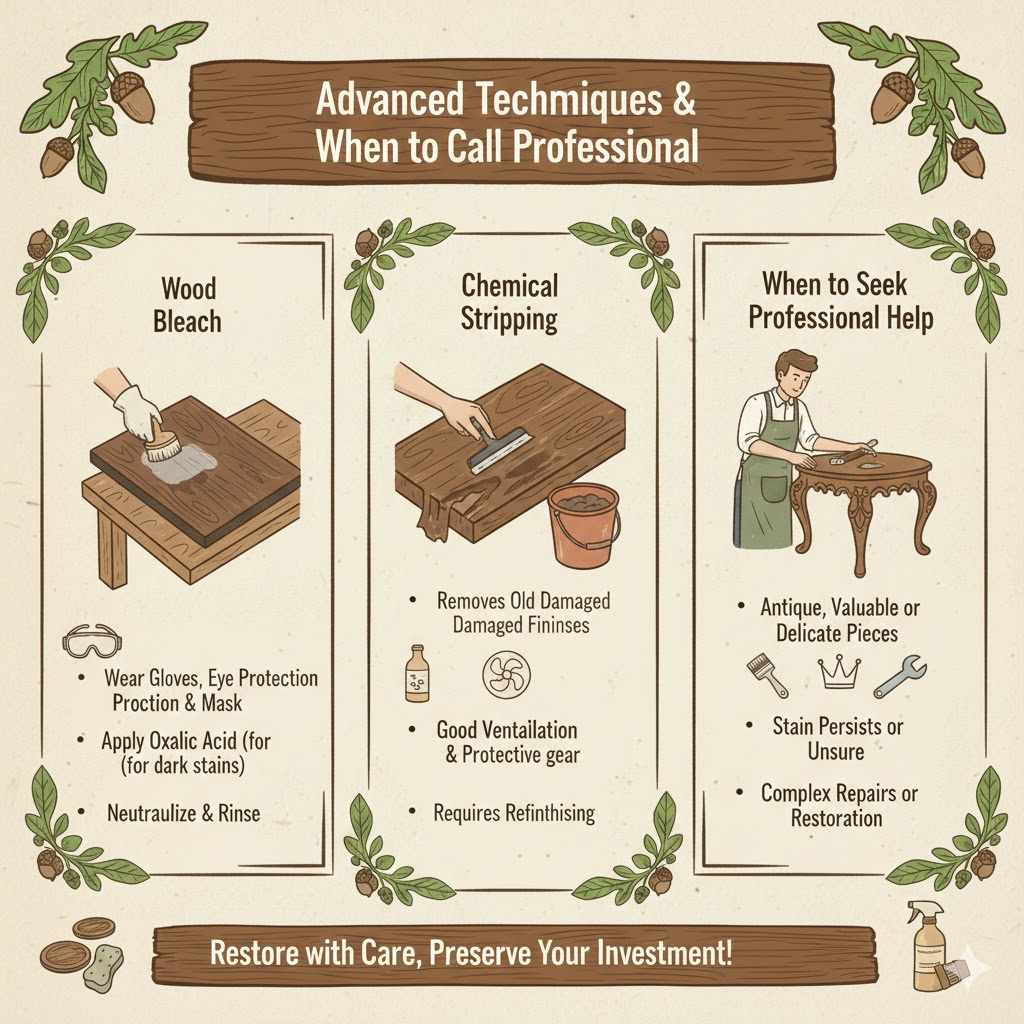
Advanced Techniques and When to Call a Professional
Sometimes, the DIY methods might not be enough, or you might want to explore more involved restoration processes. There are also times when it’s best to leave it to the experts.
Using a Wood Bleach
For very deep or stubborn dark water stains that sanding alone cannot remove, wood bleach can be an option. There are two main types: oxalic acid and chlorine bleach. Oxalic acid is generally preferred for wood because it’s more effective at removing dark water and iron stains without lightening the wood as dramatically as chlorine bleach.
-
Safety first: Always wear gloves, eye protection, and a mask when working with wood bleach. Ensure good ventilation.
Apply the bleach: Follow the product instructions carefully. You typically mix a powder with water. Apply it to the stained area with a brush or cloth.
Let it work: Allow the bleach to react with the stain for the time recommended by the manufacturer.
Neutralize and rinse: After the bleaching action, you must neutralize the bleach with a solution like baking soda and water. Then, rinse thoroughly with clean water.
Let it dry completely: The wood must be completely dry before proceeding to sanding or refinishing.
Wood bleaching can be effective but is an advanced technique. It can alter the wood’s natural color, so it requires careful application and neutralization to avoid damaging the wood or leaving uneven results. It is usually followed by sanding and refinishing to achieve a uniform appearance.
Chemical Stripping
If a finish is heavily damaged or has multiple layers of old finishes, chemical stripping might be necessary before dealing with deep stains. This involves applying a chemical stripper that softens the old finish, allowing it to be scraped and wiped away.
This is a messy and potentially hazardous process, requiring good ventilation and protective gear. After stripping, the wood is exposed and needs to be cleaned, sanded, and then refinished. It’s a way to get back to a clean slate, especially when dealing with severe damage or multiple old finishes.
When to Seek Professional Help
If your furniture is antique, highly valuable, or has a very delicate or intricate finish, it’s often best to consult a professional furniture restorer. They have the expertise, specialized tools, and materials to address damage without compromising the integrity or value of the piece.
Also, if you’ve tried several DIY methods and the stain persists, or if you’re unsure about a particular step, calling a pro is a wise decision. They can assess the damage and recommend the best course of action, whether it’s repair or complete restoration. Sometimes, the cost of professional repair is worth it for cherished pieces.
| Method | Best For | Pros | Cons |
|---|---|---|---|
| Hair Dryer | White rings | Fast, easy, uses common item | Can damage finish if overused |
| Iron & Cloth | White rings | Gentle heat, effective | Requires careful monitoring |
| Baking Soda Paste | Stubborn white rings | Mild abrasive, readily available | Risk of dulling finish if too rough |
| Sanding | Dark stains | Removes deep damage | Requires refinishing, skill |
| Steel Wool & Mineral Spirits | Stubborn dark stains | Effective abrasive | Can remove finish, requires care |
Statistics on Furniture Care
Proper furniture care can significantly extend the life of wooden pieces. Studies show that regularly maintained furniture can last 2-3 times longer than neglected items. For instance, a 2022 survey by a furniture industry association found that over 70% of consumers prefer to repair damaged furniture rather than replace it, highlighting the value placed on restoration.
Another report indicated that water damage is one of the most common reasons for furniture needing repair, accounting for about 25% of service calls for wood furniture issues.
Frequently Asked Questions
Question: How quickly can I remove a white watermark from wood furniture?
Answer: You can often remove a white watermark within minutes using gentle heat from a hair dryer or an iron with a cloth. Baking soda paste or toothpaste may take a bit longer, requiring some gentle buffing.
Question: Will these methods damage my wood finish?
Answer: The methods described are generally safe for most wood finishes when used carefully. However, always test in an inconspicuous area first. Overheating or aggressive scrubbing can potentially cause damage.
Question: What is the difference between a white watermark and a dark stain?
Answer: A white watermark means moisture is trapped in the finish, making it cloudy. A dark stain means water has penetrated the finish and into the wood, causing discoloration.
Question: Can I use these methods on antique wood furniture?
Answer: For valuable antique furniture, it is best to consult a professional restorer. DIY methods may be too aggressive and could damage the antique finish or value.
Question: How can I prevent watermarks on my wood furniture?
Answer: Always use coasters for drinks, wipe up spills immediately, and use trivets for hot items. Applying a good quality furniture polish or protector can also help create a barrier.
Wrap Up
You can effectively tackle watermarks on wood furniture fast. Gentle heat, simple household items like baking soda, or mild abrasives can clear most white rings. For darker stains, careful sanding and refinishing are needed.
Remember to always test methods first and prioritize prevention with coasters. Your wood furniture can look beautiful again with these easy steps.