How to Start Landscape Lighting Business: Genius Guide
Quick Summary: Starting a landscape lighting business is achievable by mastering design, installation, and business basics. Focus on understanding client needs, offering quality products, and building a strong local reputation to grow a successful venture.
Hey there, fellow home improvement enthusiasts! Ever looked at a beautifully lit garden at night and thought, “I could do that”? You’re in luck! Many homeowners, just like you, find themselves drawn to the magic landscape lighting brings to their homes. It’s not just about making things look pretty; it’s about safety, security, and highlighting those special features you love. But when you’re thinking about turning that interest into a real business, it can feel a bit overwhelming. Where do you even begin? Don’t worry! I’m here to guide you through it, step-by-step. We’ll break down exactly how to start your own landscape lighting business, making it feel as manageable as your favorite DIY project. Let’s light up your entrepreneurial journey!
Why Start a Landscape Lighting Business?
Thinking about a new venture? Landscape lighting is a fantastic field to get into. It’s a service that homeowners constantly need and appreciate. It enhances curb appeal, adds security, and makes outdoor spaces usable and enjoyable after the sun goes down. Plus, it’s a growing market! People are investing more in their homes and outdoor living areas, making professional landscape lighting a sought-after upgrade. It’s a chance to be creative, work outdoors, and build something tangible that brings joy and value to others.
Understanding the Landscape Lighting Market
Before you jump in, it’s smart to get a feel for the market. Who are your potential customers? What are they looking for? Are they homeowners who want to highlight their garden? Businesses wanting to improve their exterior look and security? Understanding these needs will shape your services. You’ll also want to see what other landscape lighting companies are doing in your area. What services do they offer? What are their prices like? This research helps you find your unique spot in the market. You can learn a lot by looking at local home and garden shows or even just driving around your neighborhood at night to see what lighting styles are popular.
Essential Skills and Knowledge
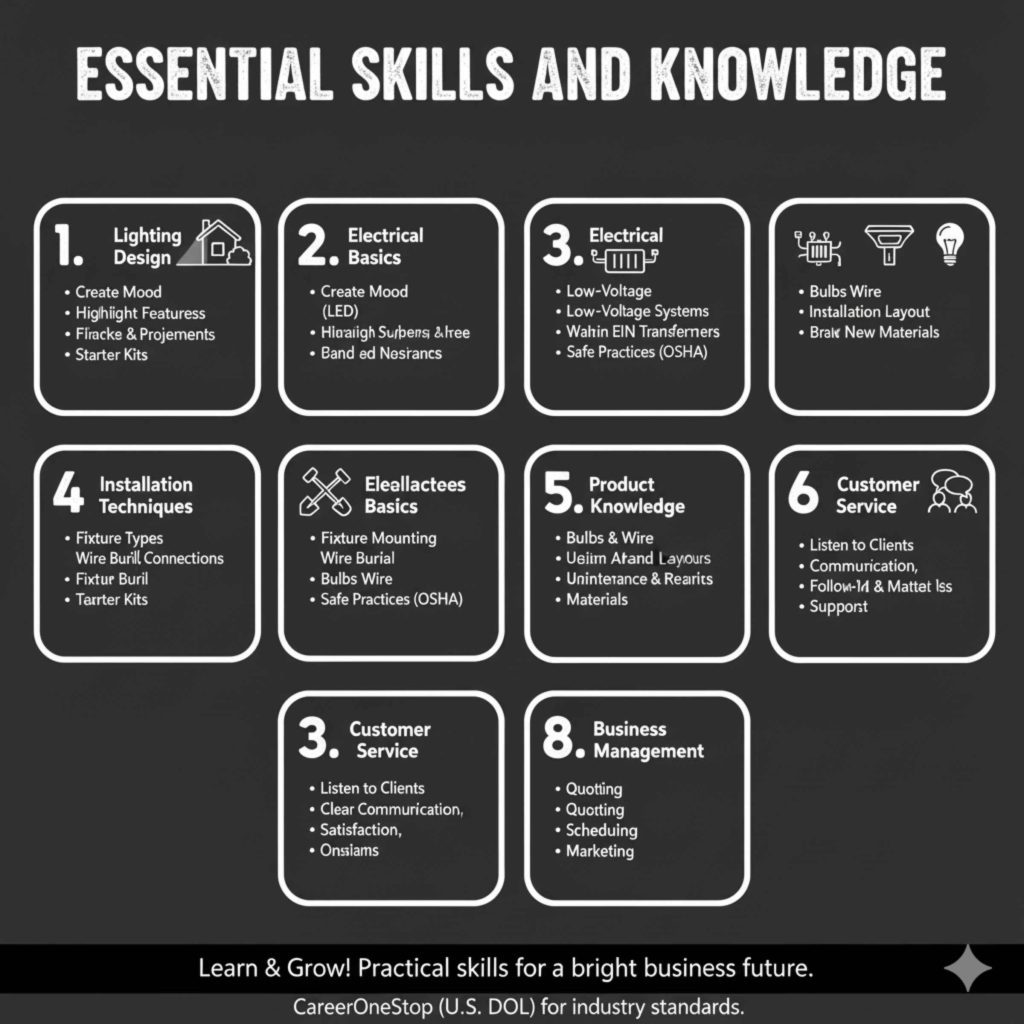
Starting a landscape lighting business requires a mix of practical skills and some business know-how. Don’t worry if you’re not an expert yet; learning is part of the journey! Here are some key areas to focus on:
- Lighting Design Principles: Understanding how to use light to create mood, highlight features, and ensure functionality. This includes knowing about different types of lighting (path lights, spotlights, well lights, etc.) and how to place them effectively.
- Electrical Basics: While you don’t need to be a master electrician, understanding low-voltage systems is crucial. This includes wiring, transformers, and safe installation practices. For higher voltage work, you’ll likely need to partner with or hire a licensed electrician.
- Product Knowledge: Familiarize yourself with different types of fixtures, bulbs (LEDs are standard now!), transformers, and wire. Knowing the pros and cons of various brands and materials will help you recommend the best solutions for your clients.
- Installation Techniques: Learning how to properly install fixtures, bury wire, and connect systems so they are durable and reliable.
- Customer Service: Being able to listen to clients, understand their vision, and communicate clearly throughout the project is vital for satisfaction.
- Business Management: This includes things like quoting jobs, scheduling, invoicing, and marketing.
If you’re new to electrical work, consider taking a local workshop or even shadowing an experienced professional to gain hands-on experience. The U.S. Department of Labor offers resources on career pathways and necessary skills for trades, which can be a great starting point for understanding industry standards: CareerOneStop.
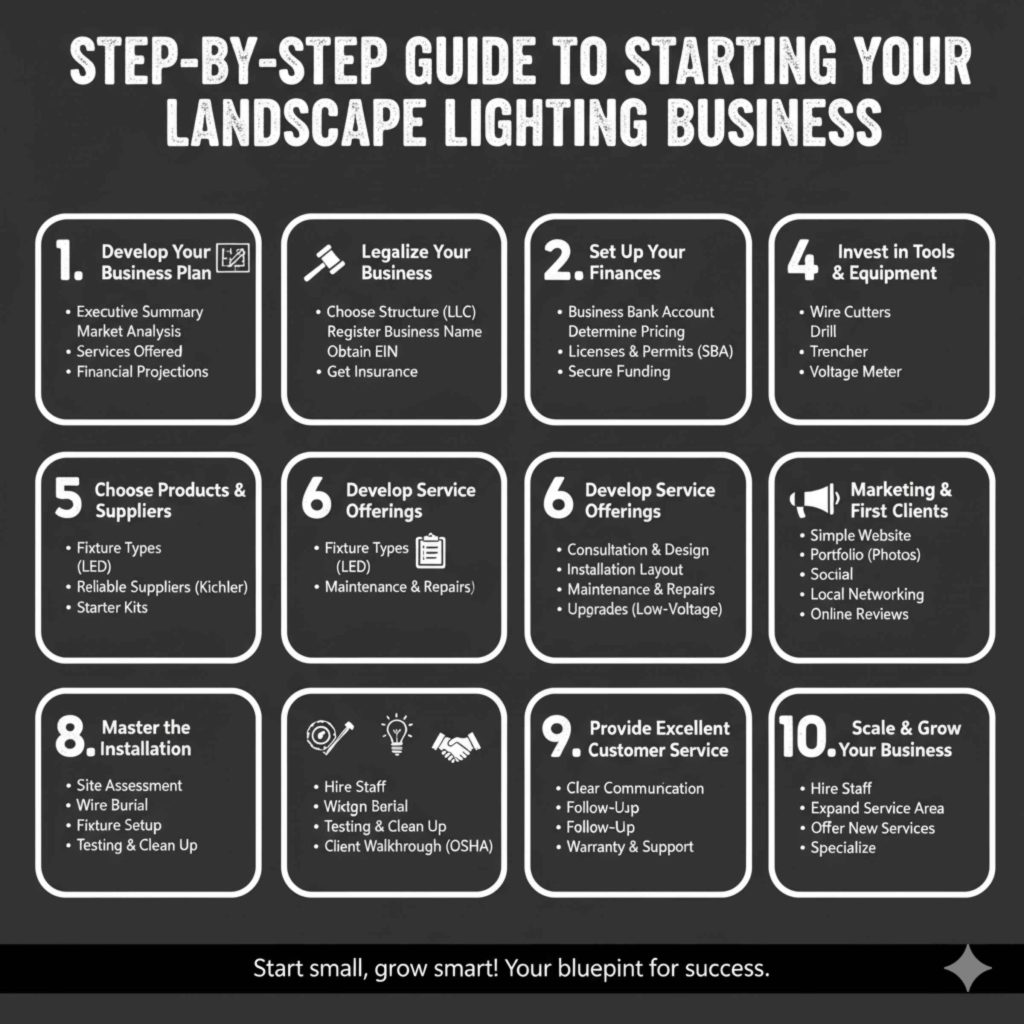
Step-by-Step Guide to Starting Your Business
Ready to get started? Here’s a practical roadmap to help you launch your landscape lighting business.
1. Develop Your Business Plan
This might sound formal, but it’s really just a roadmap for your business. It helps you think through key aspects and sets you up for success. Think of it as your blueprint.
- Executive Summary: A brief overview of your business.
- Company Description: What your business is all about.
- Market Analysis: Who are your customers, and who are your competitors?
- Services Offered: What exactly will you do? Design, installation, maintenance?
- Marketing and Sales Strategy: How will you find customers?
- Management Team: Who is running the show (that’s you!)?
- Financial Projections: How much money do you expect to make and spend?
2. Legalize Your Business
This is a crucial step to operate legally and protect yourself. You’ll need to decide on a business structure and register your business.
- Choose a Business Structure: Sole proprietorship, partnership, LLC, or corporation. An LLC (Limited Liability Company) is often a good choice for small businesses as it separates your personal assets from business debts.
- Register Your Business Name: You might need to file a “Doing Business As” (DBA) if you’re using a name other than your own.
- Obtain an Employer Identification Number (EIN): You can get this for free from the IRS website. It’s like a Social Security number for your business.
- Licenses and Permits: Check with your local city and county government for any required business licenses or contractor licenses. Some areas might require specific electrical licenses or permits for low-voltage installations. The Small Business Administration (SBA) is an excellent resource for understanding licensing requirements: SBA.gov.
- Insurance: Get general liability insurance. This protects you if someone gets hurt or property is damaged during your work.
3. Set Up Your Finances
Good financial management is key to a healthy business. You’ll need to track every dollar coming in and going out.
- Open a Business Bank Account: Keep your personal and business finances separate.
- Determine Your Pricing: Figure out how much to charge for your services. Consider your costs (materials, labor, overhead) and your desired profit margin.
- Get Accounting Software: Tools like QuickBooks or Xero can help you manage invoices, track expenses, and prepare for taxes.
- Secure Funding (If Needed): If you need money to start, explore options like small business loans, personal savings, or lines of credit.
4. Invest in Tools and Equipment
You don’t need a massive workshop for this, but the right tools make the job easier, safer, and more professional.
Here’s a basic list to get you started:
| Tool/Equipment | Purpose | Notes |
|---|---|---|
| Wire Strippers/Cutters | Cutting and stripping landscape wire. | Essential for making connections. |
| Shovel/Trenching Tool | Digging trenches for wires. | A sturdy shovel or a small trencher can save time. |
| Screwdrivers (various types) | Installing fixtures and making connections. | Phillips and flathead are common. |
| Voltage Tester | Checking for power and ensuring safety. | Crucial for electrical work. |
| Measuring Tape | Planning layouts and spacing fixtures. | A reliable tape measure is a must. |
| Ladder | Accessing higher areas for fixture placement. | Ensure it’s stable and safe to use. |
| Safety Gear (Gloves, Safety Glasses) | Protecting yourself on the job. | Always prioritize safety. |
| Vehicle | Transporting tools, materials, and yourself. | A truck or van is ideal. |
| Basic Hand Tools | Pliers, wrenches, hammer. | Standard toolbox items. |
As you grow, you might consider investing in more specialized equipment like wire pullers or even a small trencher for larger jobs.
5. Choose Your Products and Suppliers
The quality of your fixtures and materials directly impacts the success and longevity of your installations. It’s worth investing in good quality.
- Research Fixture Types: Path lights, spotlights, uplights, downlights, well lights, deck lights, step lights, and string lights.
- Focus on LED: They are energy-efficient, long-lasting, and offer a wide range of color temperatures.
- Find Reliable Suppliers: Look for wholesale landscape lighting suppliers. Building good relationships with them can lead to better pricing and support. Some popular brands include Kichler, FX Luminaire, and Brilliance LED.
- Consider Kits: For beginners, some suppliers offer starter kits that can be a cost-effective way to begin.
6. Develop Your Service Offerings
What exactly will your business do? Start with what you’re comfortable with and expand as you gain experience.
- Consultation and Design: Meeting with clients to understand their needs and creating a lighting plan.
- Installation: The core service of putting in the lighting system.
- Maintenance and Repairs: Offering ongoing service to keep systems running smoothly.
- Upgrades: Helping clients convert older halogen systems to modern LED.
It’s often wise to start with low-voltage (12V) systems, as they are safer and generally don’t require a licensed electrician for installation, though local codes should always be checked. High-voltage systems (120V) require a licensed electrician and more stringent safety protocols.
7. Marketing and Finding Your First Clients
This is where you get the word out and start building your customer base. Think creatively!
- Build a Simple Website: Showcase your services, portfolio (even if it’s just a few early projects), and contact information.
- Create a Portfolio: Take high-quality photos of your work, especially before-and-after shots.
- Leverage Social Media: Post pictures and videos of your projects on platforms like Instagram and Facebook.
- Local Networking: Connect with landscapers, home builders, real estate agents, and garden centers. They can be great referral sources.
- Flyers and Door Hangers: Target specific neighborhoods you’ve worked in.
- Offer a Referral Program: Incentivize happy clients to recommend you.
- Get Online Reviews: Encourage satisfied customers to leave reviews on Google, Yelp, or other local directories.
- Start Small: Offer to do a project for a friend or family member at a reduced rate to build your portfolio and get testimonials.
8. Master the Installation Process
Every installation is a chance to build your reputation. Focus on quality and attention to detail.
- Site Assessment: Walk the property with the client to discuss their goals and identify key areas to light.
- Design and Layout: Plan the fixture placement, wire runs, and transformer location. Consider power needs and voltage drop.
- Marking: Mark where fixtures will go and the path for buried wires.
- Wire Burial: Dig trenches to the appropriate depth (usually 6-8 inches for low-voltage) to protect the wire from damage.
- Fixture Installation: Mount fixtures securely at their designated spots.
- Wire Connection: Connect the low-voltage wire to the fixtures and the transformer. Ensure all connections are waterproof.
- Transformer Setup: Install the transformer in a convenient, protected location, usually near an outdoor GFCI-protected outlet. Set the timer or photocell.
- Testing: Turn on the system to check that all lights are working and positioned correctly. Make any necessary adjustments.
- Clean Up: Leave the property tidy, filling in trenches and removing any debris.
- Client Walkthrough: Show the client how the system works and answer any questions.
Safety is paramount. Always turn off power at the breaker before working with any electrical components, even low-voltage. When in doubt, consult with a licensed electrician. The Occupational Safety and Health Administration (OSHA) provides excellent safety guidelines for construction and electrical work: OSHA Electrical Safety.
9. Provide Excellent Customer Service
Happy customers are repeat customers and your best advertisers. Go the extra mile!
- Clear Communication: Keep clients informed at every stage, from the initial quote to project completion.
- Professionalism: Arrive on time, be courteous, and maintain a clean work area.
- Follow-Up: Check in with clients a week or two after installation to ensure they are satisfied and the system is working perfectly.
- Warranty and Support: Clearly state your warranty on parts and labor. Be available for questions or issues.
10. Scale and Grow Your Business
Once you’ve got a solid foundation, think about how you want to expand.
- Hire Staff: As demand increases, you might need to hire installers or administrative help.
- Expand Service Area: Consider taking on projects in neighboring towns or cities.
- Offer New Services: Perhaps add smart home integration for lighting control or even holiday lighting installations.
- Invest in Better Equipment: More efficient tools can increase your productivity.
- Specialize: You could become known for a particular style, like modern minimalist lighting or dramatic garden illumination.
Common Challenges and How to Overcome Them
Starting any business comes with hurdles. Here are a few common ones for landscape lighting and how to tackle them:
| Challenge | Solution |
|---|---|
| Getting the first few clients. | Focus on your network, offer introductory pricing, and build a strong online presence with great photos. |
| Competition from established companies. | Differentiate yourself with exceptional customer service, unique design ideas, or specialized offerings. |
| Dealing with unpredictable weather. | Schedule installations with weather in mind, have backup dates, and communicate any delays proactively with clients. |
| Managing inventory and suppliers. | Build strong relationships with a few reliable suppliers. Keep just enough inventory to avoid overstocking but ensure you have what you need. |
| Estimating job costs accurately. | Track your time and material costs diligently on every job. Refine your quoting process based on this data. |
| Ensuring electrical safety. | Stick to low-voltage systems initially. If working with higher voltage, partner with or hire a licensed electrician. Always follow safety protocols and local codes. |
Tools for Success
Beyond the physical tools, these resources can be invaluable:
- Professional Organizations: Joining groups like the American Lighting Association (ALA) or local trade associations can provide networking opportunities and access to training.
- Online Courses and Webinars: Many manufacturers and industry experts offer educational content on design and installation best practices.
- Software: Design software (even simple drawing tools) can help visualize projects. Project management software can help keep track of jobs and clients.
Frequently Asked Questions (FAQ)
Q1: Do I need an electrician’s license to start a landscape lighting business?
A1: For low-voltage (12V) systems, you typically do not need a full electrician’s license in most places, but always check your local and state regulations. For high-voltage (120V) systems, a licensed electrician is usually required by law.
Q2: What is the biggest mistake beginners make?
A2: Underpricing their services or overpromising on what they can deliver. It’s better to start with fair pricing based on your costs and gradually increase as you gain experience and a reputation.
Q3: How much does it cost to start a landscape lighting business?
A3: The startup costs can vary widely, but you could start with as little as $1,000-$3,000 for basic tools, insurance, and initial marketing if you already have a vehicle. Professional-grade tools and extensive inventory can increase this significantly.
Q4: What kind of insurance do I need?
A4: General liability insurance is essential. It protects you financially if you accidentally damage property or if someone is injured due to your work.
Q5: How do I find reliable suppliers for fixtures and wire?
A5: Look for wholesale landscape lighting distributors in your area or online. Many manufacturers also have dealer locators on their websites. Building a good relationship with a supplier can lead to better pricing and support.
Q6: Is landscape lighting a seasonal business?
A6: It can be, depending on your climate. In colder regions, demand might decrease in winter. However, you can offset this by offering holiday lighting services or focusing on indoor lighting design during off-seasons.
Conclusion
Starting a landscape lighting business is an exciting and rewarding path. By focusing on mastering the skills, understanding your market, and building your business on a foundation of quality and excellent customer service, you can create a thriving enterprise. Remember, every successful business starts with a single step, and you’ve just taken that step by learning how to begin. Keep learning, keep practicing, and don’t be afraid to let your creativity shine through your designs. With careful planning and a commitment to your craft, you’ll be illuminating homes and creating beautiful outdoor spaces in no time. Here’s to your bright future in landscape lighting!