How to Stop Dog Urinating: Proven Essential
To stop dog urinating, identify the cause (medical, behavioral, or environmental), clean thoroughly with an enzymatic cleaner, establish a consistent potty routine, manage their environment, and use positive reinforcement. Address underlying stress or anxiety, and consult a vet if issues persist.
It’s incredibly frustrating when your furry friend decides to use your favorite rug or a corner of the living room as their personal bathroom. Accidents happen, especially with puppies or newly adopted dogs, but when it becomes a recurring problem, it can feel overwhelming. You’ve tried cleaning, you’ve tried scolding, but the unwanted puddles keep appearing. Don’t worry, you’re not alone, and there are effective, humane ways to tackle this. This guide will walk you through understanding why it’s happening and provide proven steps to help your dog learn appropriate potty habits, bringing peace back to your home.
Understanding Why Dogs Urinate Indoors
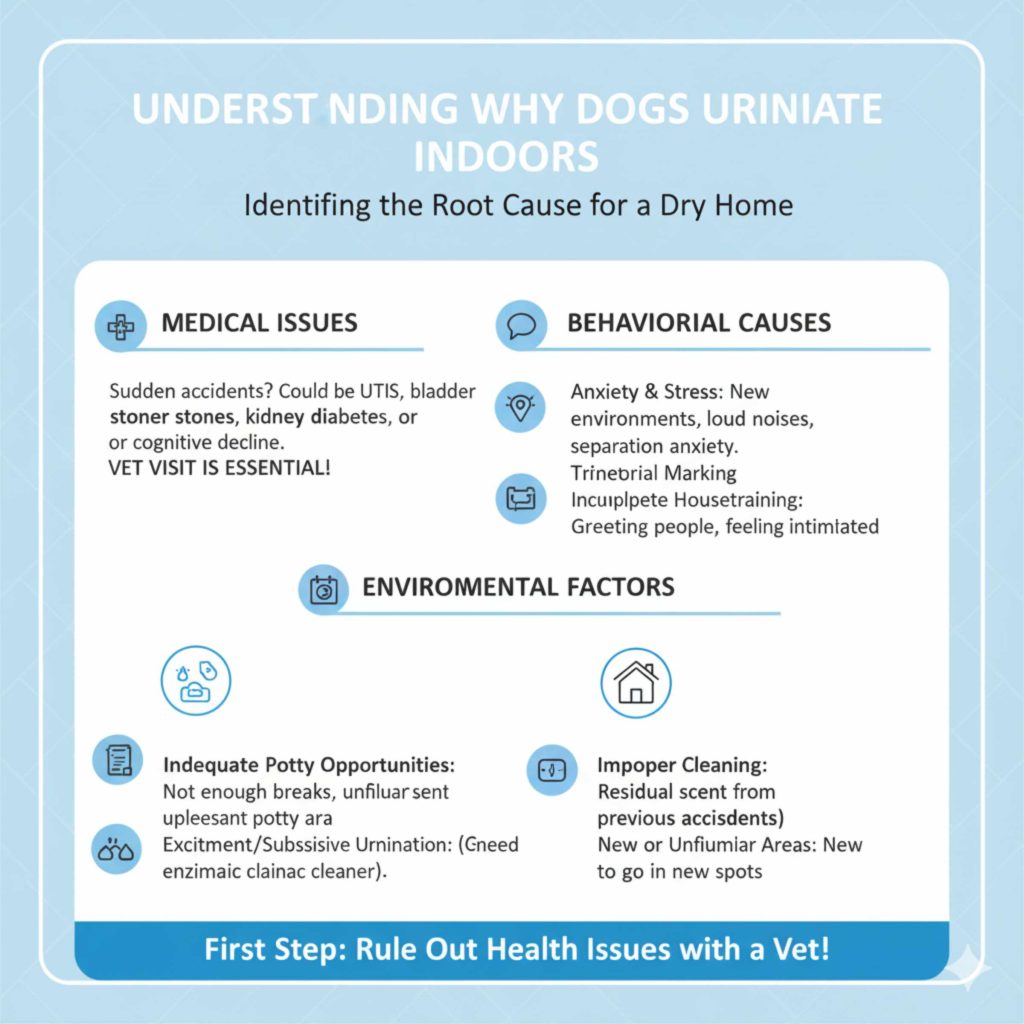
Before we can fix the problem, it’s important to understand why it’s happening. Dogs don’t urinate indoors to be spiteful; there’s usually a reason behind it. Identifying this reason is the first, crucial step in finding the right solution.
Medical Issues
Sometimes, the simplest explanation is a medical one. Urinary tract infections (UTIs), bladder stones, kidney disease, diabetes, or even cognitive dysfunction in older dogs can lead to incontinence or increased urination. If your dog suddenly starts having accidents after being reliably housetrained, a vet visit is essential. They can run tests to rule out or diagnose any underlying health problems.
Behavioral Causes
Many behavioral reasons can lead to indoor urination. These often stem from anxiety, fear, or territorial marking:
- Anxiety and Stress: Changes in the household, separation anxiety, loud noises (like fireworks or thunderstorms), or a new pet can all cause stress, leading to accidents.
- Territorial Marking: Unneutered males are particularly prone to marking their territory, but spayed females and neutered males can also do it. They might mark areas where other animals have urinated or items that carry unfamiliar scents.
- Incomplete Housetraining: Some dogs, especially puppies or those from shelters, may not have been fully housetrained. They might not understand that they need to go outside or may have had too few opportunities to learn.
- Excitement or Submissive Urination: Some dogs urinate a little when they get overly excited or when greeting people, or they might urinate as a sign of submission when feeling intimidated.
Environmental Factors
Your dog’s environment plays a significant role in their potty habits. Sometimes, the problem isn’t with the dog, but with their surroundings:
- Inadequate Potty Opportunities: If your dog isn’t taken out frequently enough, or if the designated potty area is unpleasant (e.g., dirty, too far away, or in a stressful location), they might choose to go elsewhere.
- Improper Cleaning: If previous accidents haven’t been cleaned thoroughly with an enzymatic cleaner, the residual scent can attract your dog back to the same spot. Regular cleaners don’t break down the odor molecules that dogs can still smell.
- New or Unfamiliar Areas: Dogs might be hesitant to urinate in a new environment if they haven’t been shown where it’s acceptable.
Step-by-Step Guide to Stopping Dog Urination
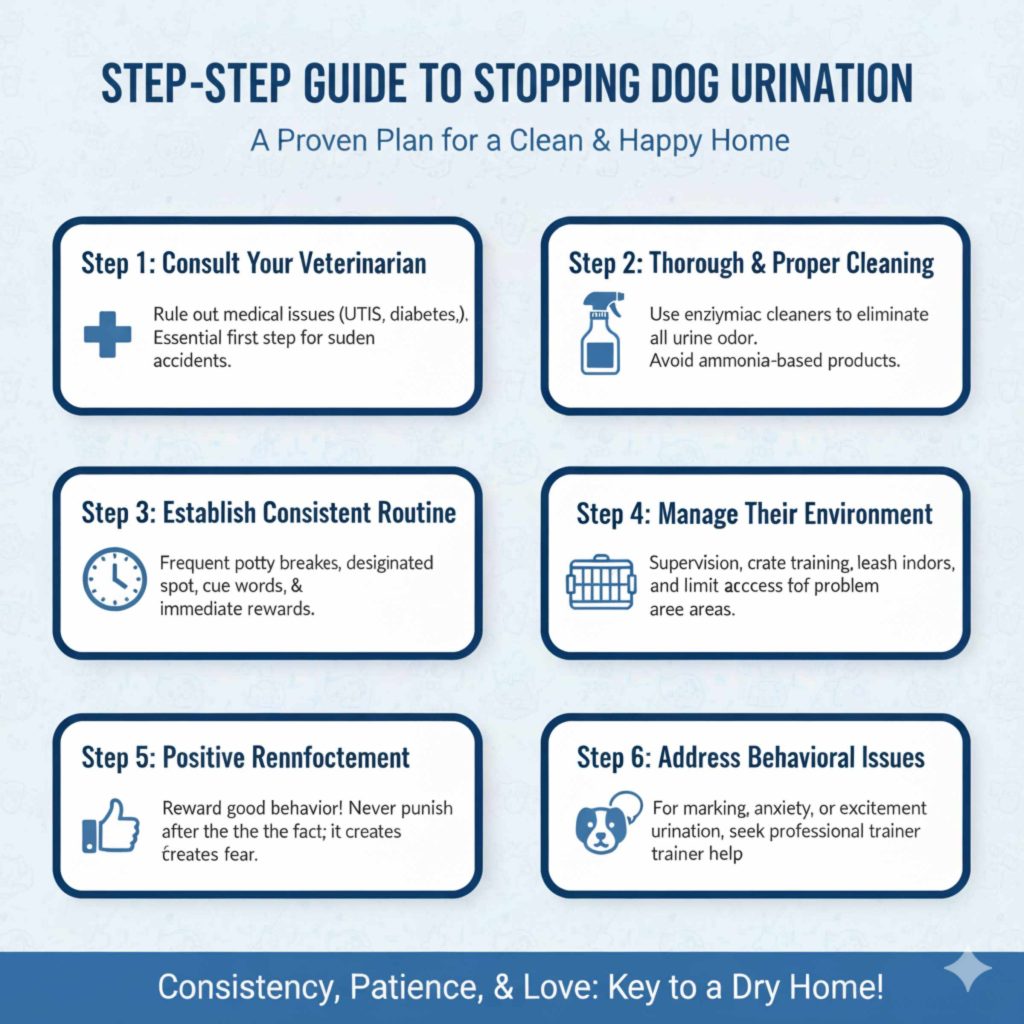
Once you have a better idea of why your dog might be having accidents, you can implement a targeted strategy. Consistency and patience are key. Here’s a proven approach:
Step 1: Consult Your Veterinarian
This is the absolute first step. As mentioned, many house-soiling issues have a medical root. A vet can perform a physical exam and urinalysis to check for infections, diabetes, kidney problems, or other conditions. If a medical issue is found, treating it will likely resolve the urination problem. You can find more information on common canine health issues on the American Veterinary Medical Association (AVMA) website.
Step 2: Thorough and Proper Cleaning
This is non-negotiable. If you don’t eliminate the scent of previous accidents, your dog will be drawn back to those spots. Standard household cleaners often aren’t enough:
- Use an Enzymatic Cleaner: These cleaners contain enzymes that break down the organic matter in urine, completely eliminating the odor. You can find them at most pet supply stores.
-
How to Use:
- Blot up as much fresh urine as possible with paper towels.
- Saturate the stained area with the enzymatic cleaner. Make sure to get into the padding if it’s a carpet.
- Let it air dry completely. This can take several hours or even overnight.
- Repeat if necessary, especially for older or stubborn stains.
- Avoid Ammonia-Based Cleaners: Urine contains ammonia, so using ammonia-based cleaners can actually make the smell stronger to your dog and encourage them to mark the spot again.
Step 3: Establish a Consistent Potty Routine
Consistency is crucial for housetraining. Dogs thrive on routine, and regular potty breaks help them learn where and when to eliminate:
-
Frequent Trips Outside:
- Puppies need to go out very frequently: first thing in the morning, after waking from naps, after playing, after eating, and right before bed.
- Adult dogs that are being housetrained should go out at least 4-5 times a day: upon waking, after meals, after play sessions, and before bedtime.
- Designated Potty Spot: Choose a specific area in your yard for your dog to do their business. Take them directly to this spot on a leash each time.
- Use a Cue Word: As your dog starts to urinate, say a cue word like “Go potty” or “Hurry up.” Eventually, they will associate the word with the action, which can be helpful for encouraging them to go when you’re on a time crunch.
- Reward Immediately: The moment your dog finishes urinating in the correct spot, praise them enthusiastically and give them a high-value treat. The reward must be immediate to reinforce the desired behavior.
Step 4: Manage Their Environment
Controlling your dog’s environment can prevent accidents and help them learn. This is especially important during the housetraining process:
- Supervision: When you are home, keep your dog in the same room as you and supervise them closely. Watch for signs they need to go, such as sniffing the ground intently, circling, or heading towards a door. If you see these signs, immediately take them outside.
- Crate Training: A crate can be an invaluable tool. Dogs are naturally reluctant to soil their sleeping area. Use the crate for short periods when you cannot supervise them directly. Ensure the crate is the correct size – just big enough for them to stand up, turn around, and lie down. Never use the crate as punishment.
- Leash Indoors: For a short period, you can keep your dog on a leash tethered to you while inside. This keeps them close and makes it easier to spot them if they start to look like they need to go.
- Limit Access: If you can’t supervise, restrict your dog’s access to certain areas of the house, especially those where they’ve had previous accidents or where they are more likely to go unnoticed.
Step 5: Positive Reinforcement and Avoiding Punishment
Positive reinforcement is far more effective than punishment for housetraining and behavioral modification. Punishing your dog after an accident can create fear and anxiety, potentially worsening the problem:
- Catching Them in the Act: If you catch your dog in the middle of an accident, interrupt them with a sharp, surprising noise (like a clap of your hands or a quick “Ah-ah!”). Immediately take them outside to their designated potty spot. If they finish outside, praise and reward them.
- Never Punish After the Fact: If you discover an accident later, do not scold or punish your dog. They will not connect the punishment to the accident that happened minutes or hours ago. This will only make them afraid of you and potentially cause them to hide when they need to go.
- Reward Good Behavior: Lavish praise and treats for successful potty trips outside. Make it a really positive experience!
Step 6: Addressing Behavioral Issues like Marking and Anxiety
If medical issues are ruled out and basic housetraining isn’t solving the problem, you may need to address specific behavioral triggers:
-
For Marking:
- Spay/Neuter: Neutering male dogs often significantly reduces or eliminates marking behavior. Spaying can help with females.
- Clean Thoroughly: As stressed before, enzymatic cleaners are vital for marking spots.
- Block Access: Prevent your dog from accessing areas where they tend to mark.
- Manage Visitors: If your dog marks when new people or pets visit, manage their introductions carefully.
-
For Anxiety/Stress:
- Identify Triggers: Try to pinpoint what causes your dog’s anxiety (e.g., being left alone, loud noises, specific people).
- Desensitization and Counter-Conditioning: For noise phobias or separation anxiety, gradual exposure to triggers paired with positive experiences can help. Consult a professional trainer or veterinary behaviorist for guidance.
- Provide a Safe Space: Ensure your dog has a comfortable, secure den-like area (like their crate) where they can retreat.
- Exercise and Mental Stimulation: A tired dog is often a well-behaved dog. Ensure they get enough physical activity and mental challenges through puzzle toys or training sessions.
- Calming Aids: Consider pheromone diffusers (like Adaptil), calming supplements, or thunder shirts, but these are often best used in conjunction with behavioral modification.
-
For Excitement/Submissive Urination:
- Calm Greetings: Ask visitors to ignore your dog for the first few minutes upon arrival, allowing your dog to approach them on their own terms.
- Avoid Direct Staring or Looming: When interacting, try to avoid direct eye contact and bending over your dog, which can be perceived as threatening.
- Build Confidence: Engage in fun training activities that build your dog’s confidence.
Step 7: Consider Professional Help
If you’ve tried everything and are still struggling, don’t hesitate to seek professional guidance. A certified professional dog trainer or a veterinary behaviorist can assess your dog’s specific situation and provide a tailored plan.
Resources like the Certification Council for Professional Dog Trainers (CCPDT) can help you find a qualified trainer in your area. For more complex behavioral issues, a veterinary behaviorist is recommended.
Common Mistakes to Avoid
Housetraining can be a journey, and it’s easy to make missteps. Being aware of common errors can save you a lot of frustration:
| Mistake | Why It’s a Problem | What to Do Instead |
|---|---|---|
| Punishing after the fact | Dog doesn’t understand why they are being punished, leading to fear and hiding behaviors. | Only intervene if you catch them in the act. If an accident is found later, clean it up without fuss. |
| Using ammonia-based cleaners | The smell of ammonia mimics urine, encouraging re-soiling. | Always use an enzymatic cleaner specifically designed for pet stains. |
| Not taking the dog out often enough | The dog’s bladder fills, and they have an accident before they can be taken out. | Establish a strict, frequent potty schedule, especially for puppies and newly adopted dogs. |
| Inconsistent potty breaks | Confuses the dog about expectations and routines. | Stick to a predictable schedule for potty breaks every single day. |
| Expecting too much too soon | Housetraining takes time and patience; setbacks can happen. | Celebrate small victories and understand that progress isn’t always linear. |
| Punishing for submissive or excitement urination | These are involuntary responses to emotions; punishment will increase anxiety. | Manage greetings, build confidence, and try to de-escalate exciting situations. |
FAQ About Stopping Dog Urination
Q: How long does it take to housetrain a dog?
A: It varies greatly. Puppies typically take anywhere from 3-6 months to be reliably housetrained, but some can take up to a year. Adult dogs can often be housetrained more quickly, sometimes within a few weeks, but it depends on their history and any underlying issues.
Q: My dog only pees on the carpet. Why?
A: Carpet is absorbent and often retains odors longer than hard surfaces. If not cleaned with an enzymatic cleaner, the residual scent can be a strong attractant. Also, some dogs find carpet softer and more appealing than outdoor surfaces.
Q: Is it okay to rub my dog’s nose in it?
A: Absolutely not. This is an outdated and ineffective method that only teaches your dog to fear you and hide their accidents. It does not teach them where to go and can cause significant behavioral problems.
Q: My dog is older and suddenly having accidents. What should I do?
A: This is a red flag for a medical issue. An older dog that was previously housetrained should be seen by a veterinarian immediately. Conditions like UTIs, kidney disease, diabetes, or even cognitive dysfunction (doggy dementia) are common causes.
Q: How can I stop my dog from peeing on my new furniture?
A: First, clean any accidents thoroughly with an enzymatic cleaner. Then, manage the environment by restricting access to the furniture when unsupervised. You can also try placing a crate or dog bed on the furniture (if feasible) to make it less appealing for urination. Positive reinforcement for appropriate potty breaks is essential.
Q: I have multiple dogs and one is having accidents. How do I know which one it is?
A: This can be tricky. If possible, supervise your dogs closely and separate them when you cannot. You might need to go back to individual housetraining for each dog, taking them out one at a time and rewarding them individually. Observing their behavior can also provide clues – does one dog seem more anxious or is one a known marker?
Conclusion
Dealing with a dog who urinates indoors can be a challenging experience, but it’s a problem that can almost always be solved with the right approach. By diligently identifying the root cause—whether it’s medical, behavioral, or environmental—and implementing a consistent, patient strategy, you can guide your dog towards success. Remember to prioritize thorough cleaning with enzymatic products, establish a reliable potty routine with ample positive reinforcement, and manage their environment effectively. Don’t shy away from seeking professional help if needed. With dedication and understanding, you can restore harmony to your home and enjoy a clean, happy life with your canine companion.