How to Turn Off Water to a Toilet (Quarter-Turn vs Multi-Turn)
Turn off water to a toilet at the angle stop valve on the wall or floor behind it — turn it clockwise until it stops. A quarter-turn valve closes in one 90-degree twist; a multi-turn (compression) valve needs several full rotations. If there’s no valve there or it’s seized, the home’s main shutoff works as a backup. This guide covers finding the valve, both shutoff methods, and freeing a stuck valve without breaking it.
Why You Need to Know How to Turn Off the Toilet’s Water
Turning off the water at the toilet stops a running fill valve, a rising bowl, or an overflow before it damages the floor or the room below. It’s also the first step for almost every toilet repair — replacing a flapper, a fill valve, or a supply line all start with the water off.
It matters for a bigger reason too: water damage is expensive and common. Knowing exactly where your shutoff is, and confirming it still turns, means a stuck fill valve costs you a few minutes instead of a flooded bathroom.
📊 Water damage and freezing accounted for an average of $15,749 per homeowners insurance claim from 2018–2022 — the second most common cause of homeowner claims after wind and hail. — Source: Insurance Information Institute (III)
Locating the Toilet Shut-Off Valve
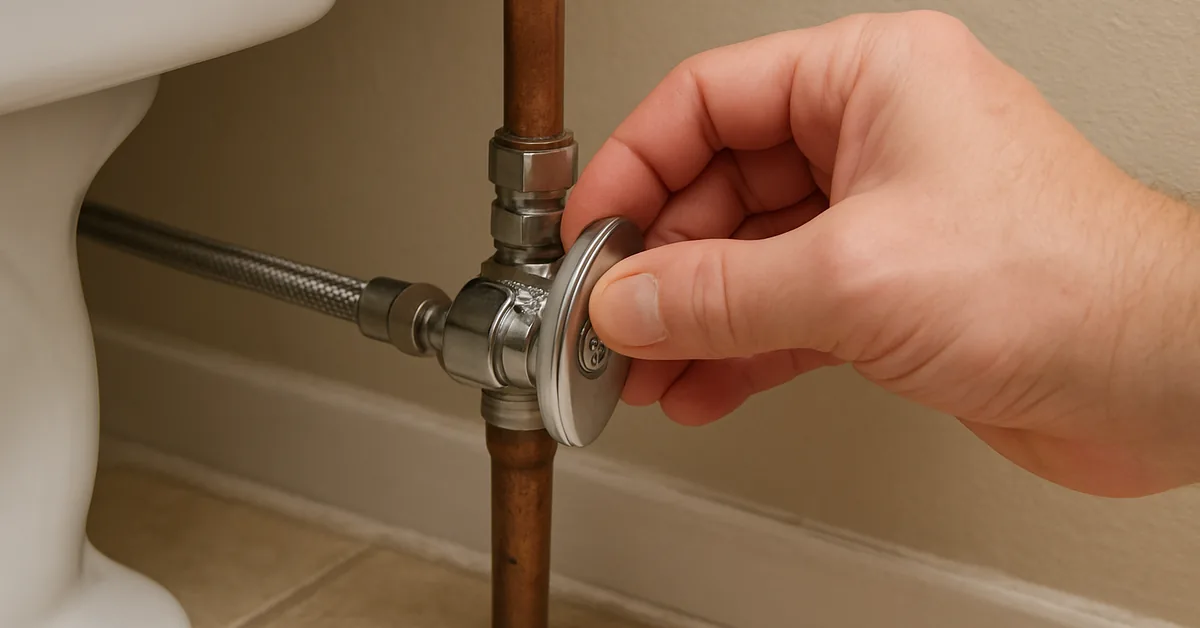
The shut-off valve is almost always on the wall or floor behind the toilet, not under the bathroom sink. Here’s how to find it:
- Look behind the toilet: Check the wall or floor near the base, usually on a short pipe a few inches above the floor.
- Identify the valve: It’s typically a small oval or lever handle, most often chrome.
- Check for older homes: Some older installations hide the valve under a floor access panel or cover plate near the base.
- Find the main shut-off as a backup: If there’s no valve behind the toilet, or it won’t turn, the home’s main water shut-off — usually near the water meter or where the supply line enters the house — works for any fixture.
Quarter-Turn vs. Multi-Turn: Which Valve Do You Have?
A toilet angle stop valve is the small shutoff fitting on the supply line, and it comes in two mechanisms that behave very differently. A quarter-turn (ball) valve has a lever handle and closes fully with a single 90-degree twist — twist until the handle sits crosswise to the pipe. A multi-turn (compression) valve has a round handle and needs several full clockwise rotations before it seats; stop as soon as it feels snug; over-tightening can damage the washer. Quarter-turn valves are more common in newer plumbing and resist mineral seizure better, since there’s less internal friction than a multi-turn valve’s threaded stem.
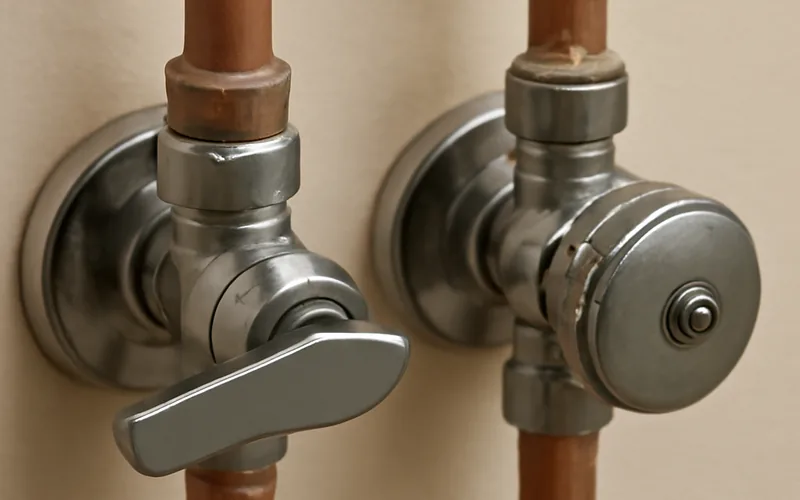
Once you find the valve and know which type it is, you’re halfway to shutting off your toilet’s water supply.
Tools You Might Need
Most of the time you can turn the valve by hand. For a stuck or older valve, these help:
- Adjustable wrench or groove-joint pliers: For a valve that won’t budge by hand.
- Gloves: Keeps your hands clean if the valve is dusty or corroded.
- Towel or small bucket: Catches any drips when you close the valve.
- Flashlight: Useful if the valve is in a dim spot behind the toilet.
Best Toilet Valve Upgrade Pick
Eastman Quarter-Turn Angle Stop Valve – $9.39
If your current valve is a stiff multi-turn compression type, swapping it for a quarter-turn ball valve gives you the single-twist shutoff described above — worth doing the next time you’re already under the tank.
- Best for: Replacing a rusted or stiff multi-turn valve behind the toilet
- Why we picked it: Quarter-turn ball design matches the easier shutoff this guide recommends
- Main drawback: Requires shutting off the main water supply first to install
Compare more toilet valve & supply tools
 Option 1 Fluidmaster Braided Supply Line – $8.60
|
 Option 2 CRAFTSMAN Groove Joint Pliers – $14.19
|
 Option 3 Complete Shut-Off Kit (Valve + Line) – $19.99
|
As an Amazon Associate we earn from qualifying purchases.
Method 1: Turning Off the Toilet Shut-Off Valve
This is the fastest way to stop the water, and it only affects this one toilet:
- Locate the valve: Find the shut-off valve on the water line behind the toilet.
- Turn the valve clockwise: For a lever-style quarter-turn valve, twist a quarter turn until the handle is crosswise to the pipe. For a round multi-turn valve, keep turning clockwise until it stops moving freely.
- Test the toilet: Flush to drain the tank. If it doesn’t refill, the valve is fully closed.
- Check for drips: Look for leaks around the valve body; a light additional turn usually stops a small drip.
This takes about 30 seconds on most toilets and is the right first move for replacing a flapper or fixing a running fill valve.
Method 2: Shutting Off the Main Water Supply
If there’s no valve behind the toilet, or it’s stuck, the main shut-off is the backup:
- Find the main shut-off: Usually in the basement, a utility closet, garage, or near the water meter.
- Turn off the water: For a lever, move it perpendicular to the pipe. For a round handle, turn clockwise until it stops.
- Drain the toilet: Flush to empty the tank, and open a low faucet elsewhere to relieve pipe pressure.
- Check other fixtures: This shuts off water to the whole house, so warn anyone else at home first.
This method takes a few minutes to locate and close but works whenever the toilet’s own valve has failed.
Method 3: Using the Toilet Tank’s Internal Valve (Temporary Fix)
In a pinch, you can stop water inside the tank itself while waiting on a repair or a plumber:
- Lift the tank lid: Set it aside somewhere it won’t get chipped.
- Find the fill valve: A tall tube with a float or ball, usually centered in the tank.
- Turn off the water: Some fill valves have a small screw or knob that shuts off water at the valve itself.
- Test it: Flush. If the tank doesn’t refill, the water is stopped — but this isn’t a permanent fix.
This method only works on some fill valve models and is meant as a short-term stopgap, not a long-term solution.
What to Do After Turning Off the Water
Once the water is off, here’s the order to work in:
- Drain the tank: Flush and hold the flush valve down to get as much water out as possible.
- Mop up excess water: A towel or sponge handles what’s left in the tank or bowl.
- Start your repair: Replacing a flapper, fill valve, or supply line is quickest with the water fully off and drained.
- Turn the water back on: Turn the valve counterclockwise slowly, then check every connection for leaks.
Troubleshooting Common Issues
A few things that commonly go wrong, and how to handle them:
- Stuck valve: Don’t force it — excessive pressure can snap the stem or crack the valve body. Apply a penetrating oil, wait about 10 minutes, then use pliers to move it a half-turn clockwise and back, repeating with a little more force each time until it loosens.
- No shut-off valve: Use the main shut-off described in Method 2.
- Leaking valve: If it drips after closing, snug it a bit more; a persistently leaking valve usually needs the packing nut tightened or the valve replaced.
- Tank still refills: The valve likely isn’t fully closed — on a multi-turn valve this can take several more rotations than expected.
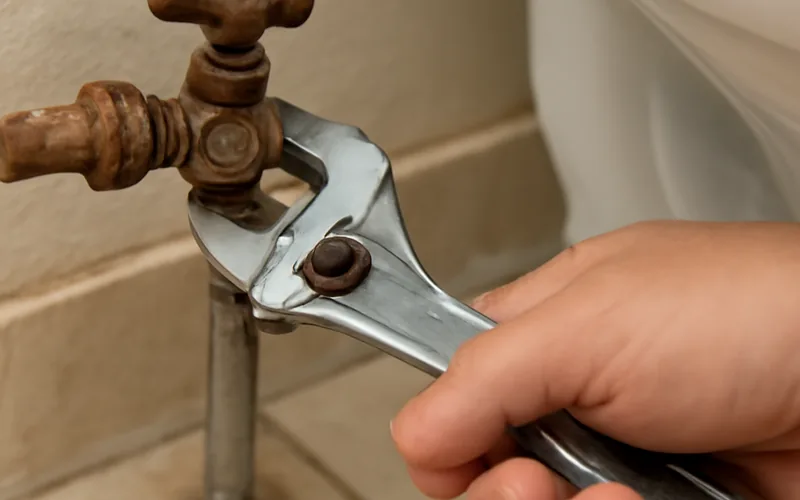
“Do NOT force a stuck valve. Excessive pressure can break the stem, crack the valve, or cause a leak in the water supply line.”
Comparing Methods to Turn Off Toilet Water
A quick comparison to help you choose:
| Method | Best For | Time Needed | Tools Needed | Difficulty |
|---|---|---|---|---|
| Toilet Shut-Off Valve | Quick fixes, most toilets | 30 seconds | None (maybe pliers for a stuck valve) | Easy |
| Main Water Shut-Off | No toilet valve, emergencies | 5 minutes | None, occasionally a wrench | Medium |
| Tank Internal Valve | Temporary fix, emergencies | 2 minutes | Towel | Easy |
The toilet’s own shut-off valve is the fastest option when it works; the main shut-off is the reliable backup when it doesn’t.
Preventing Future Toilet Troubles
A few habits keep the valve working when you actually need it:
- Check the valve regularly: Turn it closed and open once or twice a year so it doesn’t seize from disuse.
- Replace old or corroded valves: A valve that’s rusty, stiff, or leaking is cheap to replace before it fails during an emergency.
- Inspect the tank yearly: Look at the flapper and fill valve for wear; replacing them early prevents leaks and running water.
- Keep tools handy: A wrench or groove-joint pliers stored nearby saves time in a real emergency.
Safety Tips for Turning Off the Water
A few things to keep in mind:
- Turn slowly: A sudden hard twist is more likely to damage an old valve than a slow, steady turn.
- Use gloves: Keeps grime and mineral buildup off your hands.
- Have a towel ready: Valves can drip a little when closed.
- Know your main shut-off location: If the toilet valve ever fails, you won’t waste time searching for the backup.
Frequently Asked Questions
Where is the shut-off valve for my toilet?
It’s almost always on the wall or floor directly behind or beside the toilet, on the supply line a few inches above the floor. If you can’t find it, check for a cover plate on the floor or use the home’s main shut-off instead.
What if my shut-off valve is stuck?
Don’t force it. Apply penetrating oil, wait about 10 minutes, then use pliers to gently rock the valve a half-turn clockwise and back, gradually loosening it. If it stays seized or corroded, replace it rather than risk cracking the valve body.
Can I turn off the water without tools?
Most of the time, yes — both quarter-turn and multi-turn valves are designed to operate by hand. A wrench or pliers only become necessary if the valve is stiff, corroded, or hasn’t been turned in years.
Will turning off the toilet water affect other fixtures?
No, not if you use the toilet’s own angle stop valve — it only stops water to that fixture. Only the home’s main shut-off (Method 2) stops water to the whole house, including sinks and showers.
How do I know if I turned off the water correctly?
Flush the toilet after closing the valve. If the tank does not refill at all, the water is fully shut off. If it refills slowly, the valve isn’t fully closed — turn it further in the closing direction.
Conclusion
Turning off the water to a toilet comes down to finding the angle stop valve behind it and knowing which type it is — a quarter-turn valve closes in one twist, a multi-turn valve takes several rotations. When that valve fails or isn’t there, the home’s main shut-off is always the backup. It’s a five-minute skill that turns a potential flood into a minor inconvenience and is the first step before almost any toilet repair. For more bathroom fixes, browse our Bathroom Fixtures guides, including how to clean a toilet bowl.
Sponsored / affiliate links. As an Amazon Associate I earn from qualifying purchases. I may earn additional commission from eligible campaigns.