How to Unfreeze a Car Door Lock
Hey there! So, you’re stuck wondering how to unfreeze a car door lock? I feel you—there’s nothing more frustrating than standing in the cold, tugging at a car door that just won’t budge. I’ve been there, shivering outside my old Ford Focus one icy morning, desperate to get to work. As a car enthusiast living in the Midwest, I’ve dealt with my share of frozen locks and learned some handy tricks to thaw them out. Whether it’s your daily driver or a weekend cruiser, a frozen car door lock can ruin your day, especially in harsh winter weather.
I’m excited to share what I’ve picked up from trial and error, chats with mechanics, and even some old-school hacks. Let’s sit down, like we’re warming up in my garage, and I’ll walk you through every step to unfreeze your car door lock. This guide is packed with easy, practical tips for anyone, whether you’re a car newbie or a seasoned driver. Ready to beat the ice? Let’s dive in!
Why Car Door Locks Freeze
First, let’s figure out why this happens. Car door locks freeze when moisture gets inside the lock and turns to ice. I noticed this with my Focus after a snowy day—the lock was fine until overnight temperatures dropped. Water can sneak in from rain, snow, or even a car wash. Once it freezes, the ice jams the lock’s moving parts, making your key useless.
I learned that older cars or ones with worn weatherstripping are more likely to freeze. My friend’s ’90s Honda Civic froze every winter because its seals let water in. Cold climates like Minnesota or Michigan make it worse, but even milder areas can get surprise freezes. Knowing why it happens helps you fix it and prevent it.
Signs of a Frozen Car Door Lock
How do you know your lock is frozen? I thought my key was broken the first time, but there are clues. Here’s what I look for:
- Key Won’t Turn: The key goes in but won’t budge. I tried forcing it once—bad idea!
- Key won’t insert: Ice can block the keyhole completely. This happened to my SUV after an ice storm.
- Stiff or Sticky Feel: The lock feels “off” even if the key moves a little. I noticed this on my garage car.
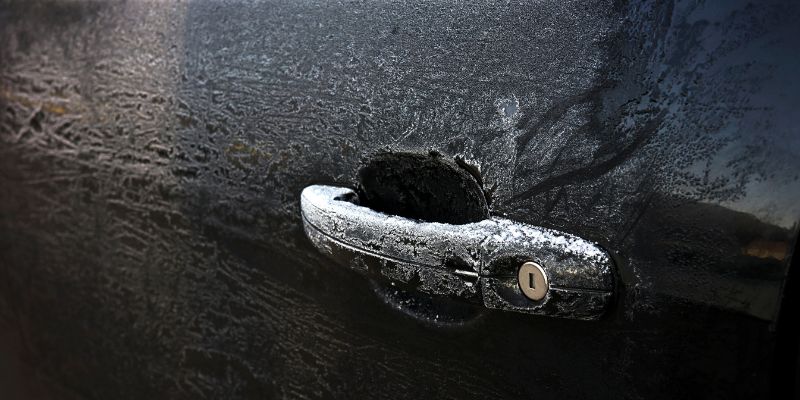
- Frost Around the Lock: Visible ice or frost on the keyhole is a dead giveaway. I saw this on my neighbor’s Jeep.
If your door handle or entire door is frozen, that’s a related issue, but we’ll focus on the lock here. I learned to check these signs before panicking.
Tools and Supplies You’ll Need
I keep a winter car kit for emergencies like this. Here’s what I use to unfreeze locks:
- De-Icer Spray: A can of lock de-icer is a lifesaver. I use WD-40 Specialist Lock De-Icer.
- Lighter or Matches: To heat the key (carefully!). I keep a lighter in my glovebox.
- Hand Sanitizer: The alcohol in it can melt ice. I grabbed some from my car’s console once.
- Hair Dryer and Extension Cord: For stubborn ice. I borrowed my wife’s hair dryer last winter.
- Rubbing Alcohol: A bottle of 70% isopropyl alcohol works great. I keep a small one in my trunk.
- Lubricant: Graphite or silicone spray prevents refreezing. I use a small tube of graphite.
- Rag or Towel: To wipe away water. I use an old shop rag.
- Gloves: To keep your hands warm. I learned this after freezing my fingers!
Having these ready makes the job easier. I store most in a bag in my trunk for winter emergencies.
Quick Method: Using De-Icer Spray
The fastest way to unfreeze a lock is with de-icer spray. I used this on my Focus, and it worked in minutes. Here’s how I do it:
- Shake the Can: Give the de-icer a good shake. I make sure it’s mixed well.
- Insert the Nozzle: The can has a thin straw to fit the keyhole. I attach it carefully.
- Spray into the Lock: Spray for 2–3 seconds. I aim right into the keyhole.
- Wait a Minute: Let the de-icer melt the ice. I counted to 60 to be patient.
- Try the Key: Gently insert and turn the key. I wiggled mine softly to avoid breaking it.
- Repeat if Needed: If it’s still frozen, spray again. I needed two sprays for a bad freeze.
This took me about five minutes. I bought a $5 can of de-icer at an auto store, and it’s lasted two winters.
Using a Heated Key
If you don’t have de-icer, heating your key can work. I tried this on my SUV during a camping trip. Here’s what I did:
- Grab a Lighter: Use a lighter or a match. I used a cheap Bic lighter.
- Heat the Key Tip: Hold the key’s metal part over the flame for 5–10 seconds. I kept it just above the flame to avoid soot.
- Insert the Key: Quickly put the warm key into the lock. I rushed to the door to keep it hot.
- Wiggle Gently: Turn the key softly to melt the ice. I moved it back and forth slowly.
- Repeat if Needed: Heat and try again if it doesn’t work. I did this twice for my SUV.
Be careful not to burn yourself or melt the key’s plastic handle. I held the key with a glove to stay safe. This method worked in about 10 minutes, but needs caution.
Using Rubbing Alcohol or Hand Sanitizer
Rubbing alcohol is my go-to when de-icer isn’t around. I used hand sanitizer from my car once, and it worked! Here’s how:
- Get Alcohol: Use 70% isopropyl alcohol or hand sanitizer with alcohol. I found a bottle in my glove box.
- Apply to the Lock: Pour or squirt a small amount into the keyhole. I used a straw to direct the sanitizer.
- Let It Sit: Wait 1–2 minutes for the alcohol to melt the ice. I tapped my foot to stay warm.
- Try the Key: Insert and turn the key gently. I wiggled it to help the alcohol work.
- Wipe Excess: Clean up any drips with a rag. I wiped my door to avoid streaks.
This took about five minutes. Alcohol is cheap—$2 for a bottle—and doubles as a cleaner. I keep some in my winter kit now.
Using a Hair Dryer
For stubborn locks, a hair dryer is awesome. I used my wife’s hair dryer on my Jeep’s lock during a deep freeze. Here’s the process:
- Get a Hair Dryer: Grab one with a low or medium setting. I used a basic model.
- Find Power: Use an extension cord to reach your car. I ran one from my garage.
- Aim at the Lock: Hold the dryer 6–8 inches from the keyhole. I pointed it directly at the lock.
- Heat for 2–3 Minutes: Move the dryer in circles to warm the area. I watched for melting ice.
- Try the Key: Insert and turn the key. My Jeep’s lock opened after one try.
- Dry the Area: Wipe away water with a rag. I dried the door to prevent refreezing.
This took 10 minutes but worked like a charm. Be careful not to overheat the lock or door paint. I kept the dryer moving to be safe.
Lubricating the Lock After Thawing
Once the lock is unfrozen, you need to keep it that way. I learned this after my Focus froze again the next day. Here’s what I do:
- Choose a Lubricant: Use graphite powder or silicone spray. I prefer graphite for locks.
- Apply Lubricant: Squirt a small amount into the keyhole. I puffed graphite into my Jeep’s lock.
- Work the Key: Insert and turn the key a few times to spread the lubricant. I did this five times.
- Wipe Excess: Clean any drips with a rag. I wiped my key to keep it clean.
Graphite costs about $3 and lasts for years. I lubricate my locks every winter to prevent freezing.
Preventing Frozen Car Door Locks
Prevention is better than thawing. I’ve cut down on frozen locks with these tricks:
- Cover the Lock: Use tape or a magnet cover over the keyhole. I taped my Focus’s lock during a storm.
- Use WD-40: Spray a little WD-40 into the lock to repel water. I do this monthly in winter.
- Check Weatherstripping: Replace worn seals to keep water out. I fixed my Civic’s seals for $20.
- Park in a Garage: If you can, park indoors. I use my garage for my Jeep in bad weather.
- Dry After Washing: Wipe locks after a car wash. I dry mine with a towel to avoid freezing.
These habits have saved me countless mornings. I haven’t had a frozen lock in two winters!
Comparison of Unfreezing Methods
Here’s a table I made to compare methods, based on my experience:
| Method | Time Needed | Tools Needed | Pros | Cons |
|---|---|---|---|---|
| De-Icer Spray | 5 minutes | De-icer can | Fast, effective | Costs $5, not always handy |
| Heated Key | 10 minutes | Lighter/matches | Free, uses common items | Risk of burns, slower |
| Rubbing Alcohol | 5 minutes | Alcohol/hand sanitizer | Cheap, easy to find | Messy if spilled |
| Hair Dryer | 10 minutes | Hair dryer, extension cord | Works on stubborn ice | Needs power, bulky |
This helped me choose de-icer for quick fixes and alcohol for emergencies. Pick what’s handy for you.
Handling Frozen Door Handles or Doors
Sometimes, the lock isn’t the only problem. I’ve had frozen handles and doors, too. Here’s what I do:
- Warm the Handle: Use a hair dryer or warm water (not hot) to thaw. I poured warm water on my Focus’s handle once.
- Check the Door Seal: Ice on the rubber seal can stick the door. I pried gently with a plastic scraper.
- Apply De-Icer: Spray de-icer on the seal or handle. I used it on my Jeep’s door seam.
- Prevent Refreezing: Rub silicone spray on seals. I do this yearly on my SUV.
These steps get you in when the whole door is frozen. I learned to check seals after struggling with my Civic.
Safety Tips for Unfreezing Locks
Safety is key—I’ve had close calls. Here’s what I keep in mind:
- Don’t Force the Key: Forcing can break it. I stopped when my key felt stuck.
- Avoid Hot Water: It can crack cold metal or glass. I use warm water sparingly.
- Be Careful with Flames: Keep lighters away from your car’s paint. I burned a tiny spot once—oops!
- Work in a Safe Spot: Stand clear of traffic. I moved my car to the driveway before thawing.
- Ventilate: If using sprays, open windows. I cracked my windows to avoid fumes.
These keep you and your car safe. I learned to be cautious after a few mistakes.
When to Call a Professional
I’m a DIY guy, but sometimes you need help. Here’s when I’d call a pro:
- Broken Lock: If the lock is damaged, a locksmith can fix it. My friend’s lock broke after forcing it.
- No Access: If all doors are frozen, a pro has tools. I considered this during an ice storm.
- Complex Systems: Keyless entry locks need experts. I left my cousin’s keyless lock with a locksmith.
- Time Crunch: If you’re late, a pro is faster. I paid $50 once to get to work on time.
A locksmith costs $50–$100. I check reviews to find a good one.
Common Mistakes to Avoid
I’ve goofed up a few times. Here’s what to skip:
- Forcing the Key: It can snap. I almost broke my Focus’s key doing this.
- Using Hot Water: It damages paint or refreezes. I learned to use warm water instead.
- Skipping Lubrication: Without it, locks refreeze. I forgot once, and my lock froze again.
- Ignoring Prevention: Not covering locks invites trouble. I tape mine now.
- Overusing De-Icer: Too much can gum up the lock. I use short sprays.
Avoiding these saves time and hassle. Learn from my slip-ups!

Why Frozen Locks Are an Automotive Issue
Frozen locks are a big deal for drivers. I love my cars, but a frozen lock can strand you, whether you’re heading to work or on a winter road trip. In the USA, where winters hit hard in places like Chicago or Buffalo, it’s a common headache. A working lock keeps your car secure and accessible, like a good battery or tires. I’ve missed appointments because of frozen locks, so I take it seriously. Plus, RV campers or truckers need reliable locks in cold weather, too.
Conclusion
So, how do you unfreeze a car door lock? It’s all about using the right tools—de-icer, alcohol, or even a hair dryer—and acting fast to melt the ice. From my icy mornings, wrestling with my Focus or Jeep, I’ve learned that a little prep and know-how can save the day. Whether you’re spraying de-icer, heating your key, or preventing freezes with WD-40, these steps keep you on the road, no matter how cold it gets. I hope this guide gives you the confidence to thaw your lock and drive worry-free, whether it’s a quick errand or a winter adventure. Got more questions? Check out the FAQs below for quick answers!
FAQs
How do I unfreeze a car door lock quickly?
Use a de-icer spray. Spray it into the keyhole, wait a minute, and try the key. I used WD-40 De-Icer on my Focus, and it worked in five minutes.
Can I use hand sanitizer to unfreeze a lock?
Yes, the alcohol in it melts ice. I squirted sanitizer into my SUV’s lock, waited two minutes, and it opened.
Is it safe to heat my car key with a lighter?
Yes, but be careful. Heat the tip for 5–10 seconds and use a glove. I did this on my Jeep without burning myself.
Why does my car lock keep freezing?
Moisture from rain or snow gets in and freezes. I fixed this by taping my Focus’s lock during storms.
Can a hair dryer unfreeze a car lock?
Yes, use it on low heat for 2–3 minutes. I thawed my Jeep’s lock with my wife’s hair dryer and an extension cord.
How do I prevent my car lock from freezing again?
Spray WD-40 or graphite into the lock and cover it with tape. I do this monthly in winter in my SUV.
When should I call a locksmith for a frozen lock?
If the lock is broken, all doors are frozen, or you’re in a rush, get a pro. I called one for $50 when my key wouldn’t work.