LVP vs Engineered Hardwood Key Differences Explained
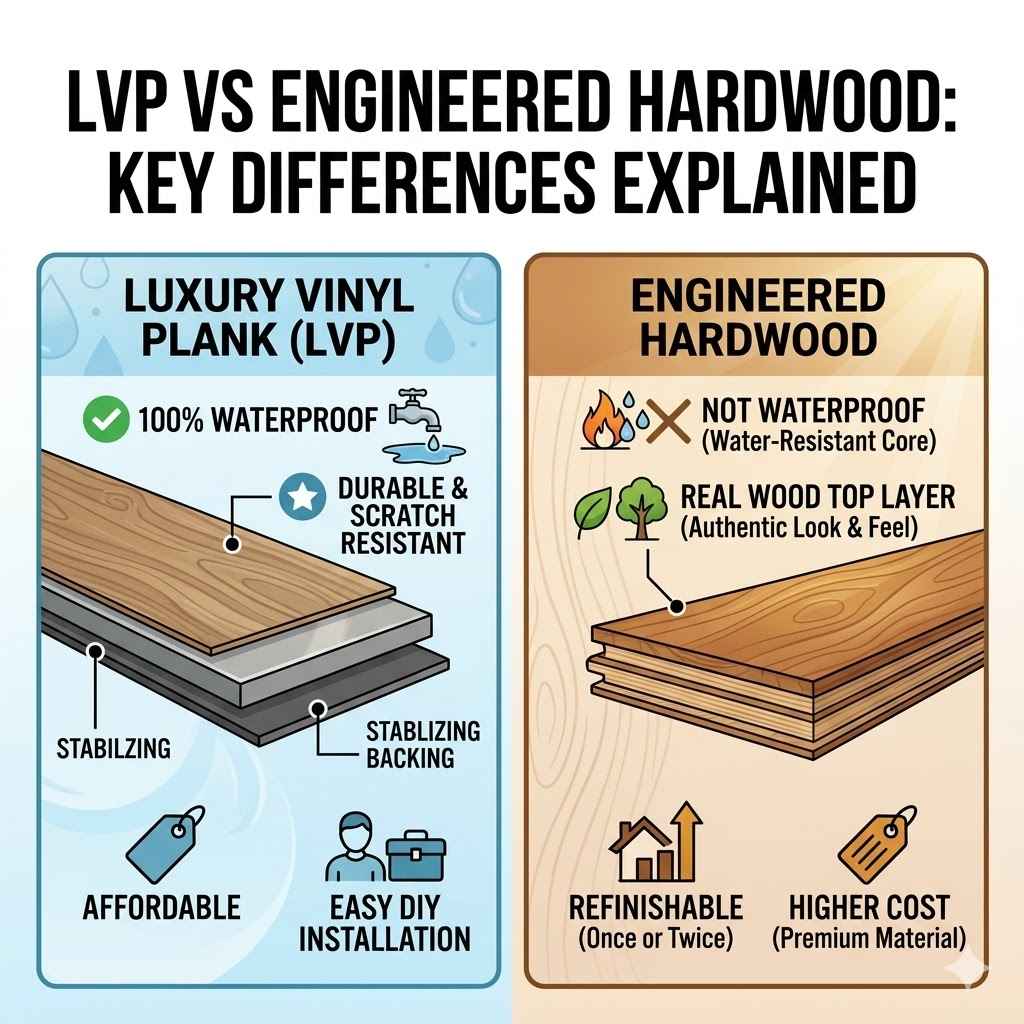
Choosing new flooring can feel like a big decision. When you’re looking at options, you might see LVP and engineered hardwood and wonder how they stack up. Understanding the LVP vs Engineered Hardwood: Key Differences Explained is common because they look similar but are made very differently.
It can be a bit confusing at first. Don’t worry, we’ll break it down simply, step by step. Let’s explore what makes each one unique and help you decide which is best for your home.
Understanding LVP and Engineered Hardwood Flooring
This section helps you get a clear picture of what LVP and engineered hardwood actually are. We’ll look at their makeup and how they are built. This will give you a solid foundation for comparing them.
What is Luxury Vinyl Plank (LVP) Flooring
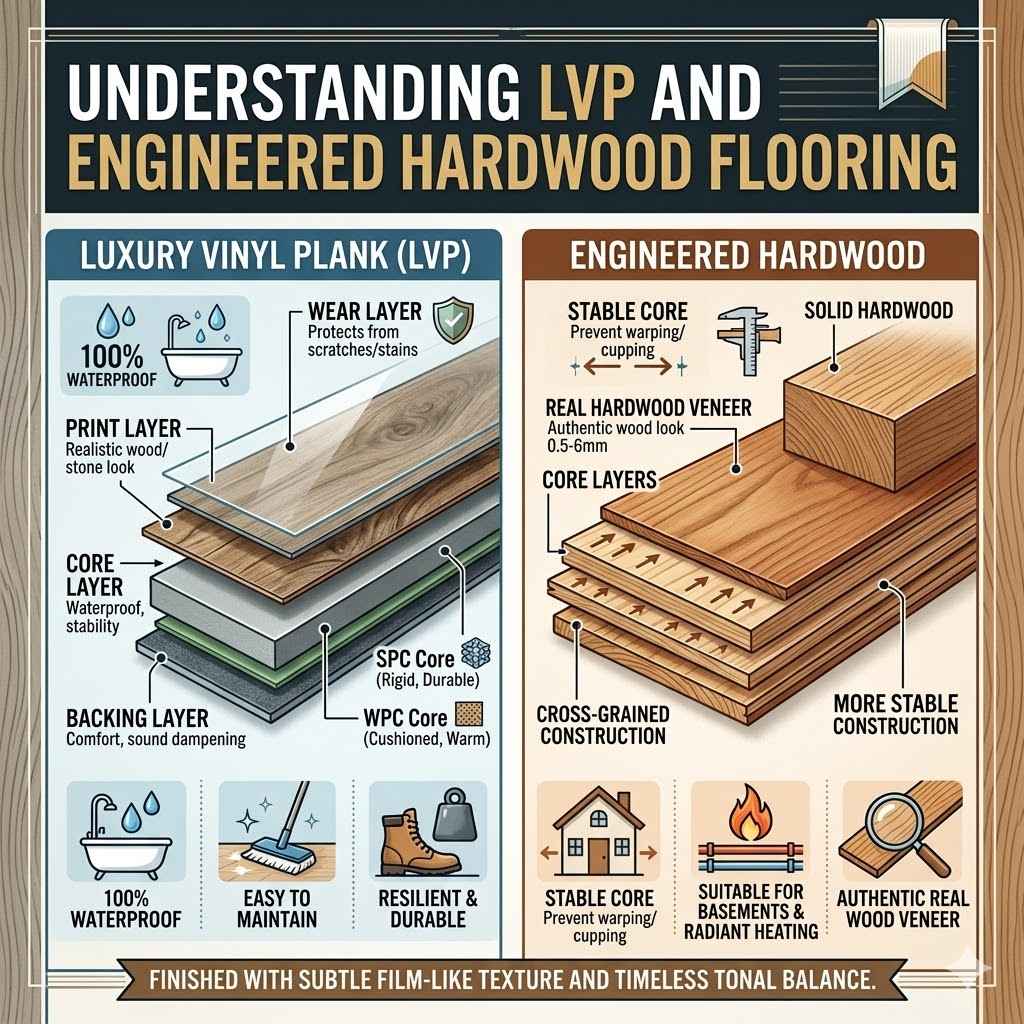
Luxury Vinyl Plank (LVP) flooring is a popular choice for many homeowners. It is made of several layers that give it durability and a realistic look. These layers typically include a wear layer, a print layer, a core layer, and a backing layer.
The wear layer protects against scratches and stains. The print layer mimics the appearance of natural materials like wood or stone.
The core layer provides stability and often includes features like waterproofing. Different types of core layers exist, such as stone plastic composite (SPC) or wood plastic composite (WPC). SPC cores are known for their rigidity and durability, making them ideal for high-traffic areas.
WPC cores offer more cushioning and warmth underfoot. The backing layer adds comfort and can help with sound dampening.
LVP is designed to be very resilient and easy to maintain. Its waterproof nature makes it a great option for kitchens, bathrooms, and basements. It can withstand spills and moisture without warping or damage.
This ease of care contributes to its widespread appeal.
What is Engineered Hardwood Flooring
Engineered hardwood flooring offers the look and feel of real wood but with a more stable construction than solid hardwood. It is made by bonding together multiple layers of wood or composite materials. The top layer is a veneer of real hardwood, usually between 0.5mm and 6mm thick.
This veneer is what you see and walk on, providing the authentic wood aesthetic.
Beneath this real wood veneer are several layers of plywood or high-density fiberboard (HDF). These core layers are cross-grained, meaning their wood grain runs in different directions. This construction makes engineered hardwood much more resistant to expansion and contraction caused by changes in humidity and temperature.
Solid hardwood, by contrast, is prone to warping and cupping in such conditions.
The number of layers and their thickness can vary, influencing the flooring’s durability and cost. A thicker veneer allows for more refinishing opportunities if scratches or wear occur over time. The overall stability of engineered hardwood makes it suitable for installation in areas where solid hardwood might not perform well, such as basements or over radiant heating systems.
Comparing LVP and Engineered Hardwood Durability and Performance
When choosing flooring, how well it holds up to daily life is a major consideration. This section will focus on how LVP and engineered hardwood perform in terms of toughness, resistance to wear, and their ability to handle moisture. We will also look at how they feel and sound underfoot, giving you a complete picture of their real-world performance.
Wear Resistance and Scratching
Luxury Vinyl Plank (LVP) flooring is known for its excellent wear resistance. The top wear layer is typically made of a clear vinyl or urethane coating that is very tough. This layer is designed to protect the plank from everyday wear and tear, including scratches, scuffs, and stains.
Higher quality LVP often has a thicker wear layer, measured in mils. A wear layer of 20 mils or more is generally considered suitable for heavy residential use.
The inherent resilience of vinyl makes it difficult to scratch deeply. While sharp objects can potentially damage the surface, most common household activities will not leave noticeable marks. LVP is also quite resistant to fading from sunlight, maintaining its color and appearance over time.
This makes it a practical choice for rooms that receive a lot of natural light.
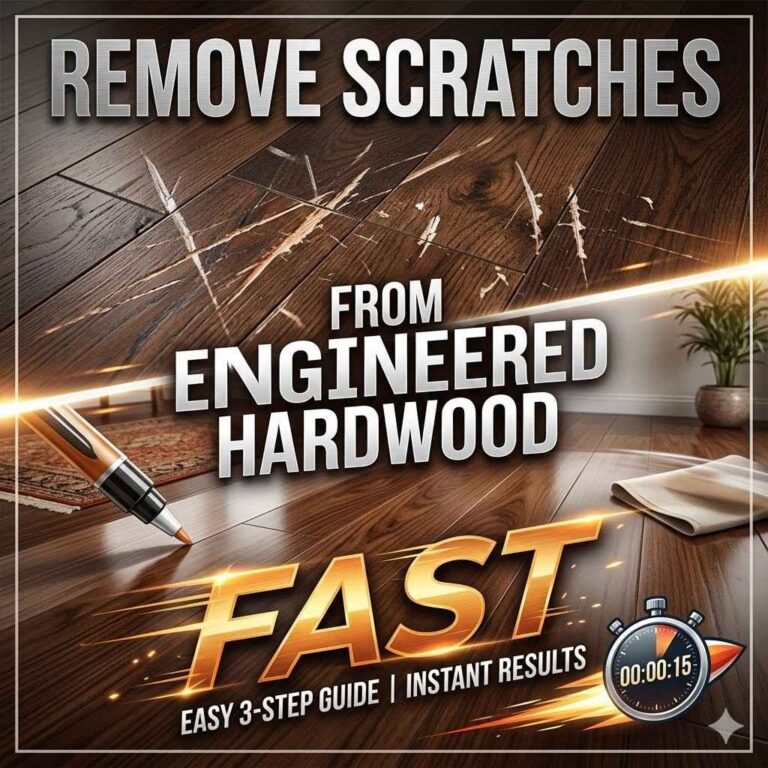
Engineered hardwood flooring also offers good wear resistance, but it differs from LVP. The durability of engineered hardwood depends heavily on the thickness and quality of its top hardwood veneer. Thicker veneers can withstand more wear and can be refinished if deep scratches occur.
However, the real wood surface is still more susceptible to scratching and denting than LVP.
The type of wood used for the veneer also plays a role. Harder woods like oak or hickory are more resistant to scratches than softer woods like pine. The finish applied to the veneer also contributes to its scratch resistance.
However, even with a strong finish, sharp objects or dragging heavy furniture can cause damage that may require repair or refinishing.
Water and Moisture Resistance
One of the biggest advantages of LVP is its superior water and moisture resistance. Most LVP products are completely waterproof. This means spills, splashes, and even standing water can sit on the surface without causing damage like warping, swelling, or staining.
This makes LVP an ideal choice for areas prone to moisture, such as kitchens, bathrooms, laundry rooms, and basements.
The waterproof nature of LVP is due to its construction. The vinyl material itself does not absorb water, and many LVP products feature a waterproof core and tight-fitting seams that prevent moisture from seeping through to the subfloor. This makes LVP a very low-risk option in environments where water is a concern.
Engineered hardwood flooring offers some moisture resistance, but it is not waterproof. While it is more stable than solid hardwood in humid conditions, it can still be damaged by prolonged exposure to water. If a spill is left unattended, or if there is significant moisture, the wood veneer can swell, warp, or delaminate.
The core layers can also be affected if moisture penetrates the surface.
Some engineered hardwood products have water-resistant finishes that offer a degree of protection against light spills. However, they are generally not recommended for areas where standing water is a common occurrence, such as shower areas or full bathrooms. For kitchens and laundry rooms, prompt cleanup of any spills is crucial to prevent potential damage.
Comfort and Sound
The feel and sound of flooring underfoot are important for everyday comfort. LVP can vary significantly in terms of comfort and sound absorption depending on its core construction and whether an underlayment is used. Planks with a WPC (wood plastic composite) core tend to be softer and offer more cushioning than those with an SPC (stone plastic composite) core.
SPC cores are harder and more rigid.
Adding a separate underlayment beneath LVP can greatly enhance its comfort and sound-dampening qualities. Many LVP products have an integrated underlayment already attached to the backing layer, which provides some cushioning and helps reduce noise. This can make walking and standing on LVP more pleasant, especially in larger spaces.
Engineered hardwood flooring generally offers a more solid feel underfoot compared to some LVP products, especially those with very rigid SPC cores. The natural wood veneer provides a warm and pleasant walking surface. Like LVP, the comfort and sound of engineered hardwood can be improved with the use of an appropriate underlayment.
Thicker underlayments can add more cushioning and reduce the sound of footsteps.
However, both types of flooring can sometimes produce hollow sounds, particularly if they are installed as a floating floor without proper subfloor preparation or underlayment. The density of the core layers and the installation method both influence the acoustics. A well-installed engineered hardwood floor or LVP with a good underlayment can significantly minimize hollow sounds and offer a satisfying feel.
LVP vs Engineered Hardwood Aesthetics and Style Options
The visual appeal of flooring is key to a home’s design. This section explores the variety of looks and styles available for both LVP and engineered hardwood. We’ll discuss how closely LVP can mimic natural materials and the range of real wood looks you can achieve with engineered wood.
Realistic Wood Looks
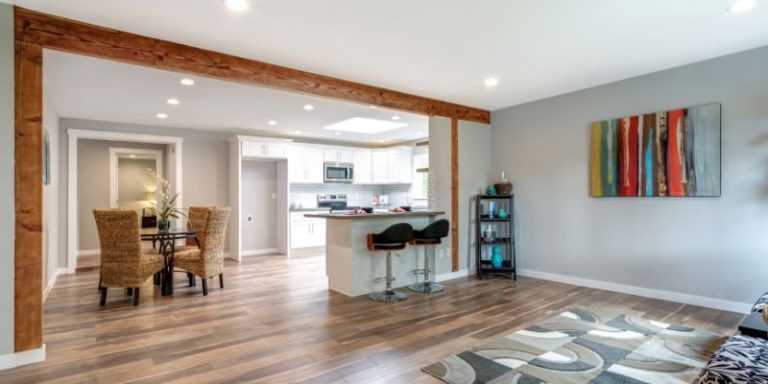
Luxury Vinyl Plank (LVP) flooring has made incredible advancements in replicating the appearance of natural wood. Modern LVP uses high-definition printing technology to create remarkably realistic wood grain patterns. These patterns are so detailed that they can mimic the knots, textures, and variations found in real hardwood species.
The print layer is protected by a clear wear layer, which can also have an embossed texture to enhance the tactile feel of the wood grain.
LVP is available in a vast array of wood styles, colors, and plank widths. You can find options that look like classic oak, rich walnut, exotic teak, or rustic pine. The designs aim to capture the unique characteristics of each wood species, including its natural imperfections and color variations.
This allows homeowners to achieve a high-end wood look without the cost and maintenance of genuine hardwood.
Engineered hardwood flooring, by its nature, offers authentic real wood aesthetics because it has a top layer of genuine hardwood veneer. The look of engineered hardwood is directly tied to the species of wood used for the veneer and how it is finished. You can find a wide range of wood species, from widely available options like red oak and maple to more premium choices like walnut and cherry.
The finishing process also plays a significant role in the appearance of engineered hardwood. It can be stained in various colors, from light, natural tones to deep, rich hues. Different finishes, such as matte, satin, or high-gloss, can also alter the look and feel of the wood.
The natural variations in the wood grain, knots, and mineral streaks contribute to the unique beauty of each plank.
Variety of Colors and Finishes
LVP flooring offers an almost endless spectrum of colors and finishes to suit any decor. Beyond realistic wood looks, LVP can also be designed to mimic stone, tile, or abstract patterns. For wood-look LVP, you can find everything from pale, whitewashed planks to dark, espresso-stained finishes.
There are options with a matte, natural appearance as well as those with a slight sheen.
The ability to digitally print designs means LVP can be customized to achieve specific aesthetic goals. Whether you’re going for a modern minimalist look with light grey wood-look planks, a farmhouse feel with distressed white oak, or a dramatic statement with dark, hand-scraped textures, LVP can deliver. The finishes are designed to be durable and easy to clean, maintaining their appearance over time.
Engineered hardwood flooring provides a sophisticated and natural range of colors and finishes. The color of the engineered wood is determined by the wood species itself and the stain applied. You can choose from the natural tones of maple or birch, the warm reds of cherry, or the deep browns of walnut.
Many manufacturers offer pre-finished engineered hardwood, which comes with a factory-applied stain and protective coating.
These factory finishes are typically very durable and can include various sheens, from low-lustre to high-gloss. Beyond standard stains, some engineered hardwood can be specially treated to achieve unique looks, such as a bleached appearance, a smoky effect, or a hand-scraped texture. The natural grain patterns and color variations inherent in real wood ensure that each plank is unique, contributing to a beautiful and timeless floor.
Installation Flexibility
LVP flooring is celebrated for its installation flexibility, making it a favorite for DIY enthusiasts and professional installers alike. Many LVP products utilize a click-lock system. This system allows planks to interlock securely with each other, creating a floating floor that doesn’t require adhesive.
This method is generally faster and cleaner than glue-down installations.
The click-lock mechanism means planks can often be installed over existing flooring, provided the subfloor is smooth, level, and clean. This ability to install LVP over tile, existing vinyl, or even concrete can save time and reduce preparation work. It’s also relatively easy to remove if you need to replace it later.
Some LVP products are designed for glue-down installation, which provides a very stable and secure floor. This method is often preferred in large commercial spaces or areas that experience very heavy foot traffic. The variety of installation methods available adds to LVP’s versatility.
Engineered hardwood flooring also offers installation flexibility, though it may be slightly more involved than some LVP options. It can be installed using several methods, including floating, glue-down, or nail-down. The floating installation method, similar to LVP’s click-lock system, is popular for its ease and speed.
It involves interlocking the planks and allowing the floor to rest on a prepared subfloor with an underlayment.
Glue-down installations provide a very strong bond between the engineered hardwood and the subfloor, offering excellent stability. Nail-down installations, typically used for thicker engineered wood products, involve securing the planks to a wooden subfloor using nails or staples. The installation method chosen often depends on the thickness of the engineered wood, the type of subfloor, and the desired level of permanence and stability.
LVP vs Engineered Hardwood Cost and Value
Budget is a significant factor for most people when selecting flooring. This section will compare the initial costs of LVP and engineered hardwood, as well as their long-term value considering durability, maintenance, and potential impact on home resale value.
Initial Purchase Price
The initial purchase price for LVP flooring can vary widely based on quality, brand, and design complexity. However, LVP is generally considered a more budget-friendly option compared to engineered hardwood. Basic LVP can be found at prices starting around $1 to $3 per square foot.
Mid-range to high-end LVP, offering superior durability, thicker wear layers, and more realistic designs, can range from $3 to $7 per square foot, and sometimes even higher for premium collections.
The cost of installation also needs to be considered. Because LVP is often installed as a floating floor with a click-lock system, DIY installation is common, saving on labor costs. Professional installation for LVP typically ranges from $2 to $5 per square foot, depending on the complexity of the job and location.
Engineered hardwood flooring is typically more expensive than LVP, reflecting the use of real wood veneer. The price range for engineered hardwood can start around $3 to $5 per square foot for more basic options with thinner veneers and simpler finishes. Higher-quality engineered hardwood, featuring thicker veneers, premium wood species, and sophisticated finishes, can cost anywhere from $7 to $15 per square foot, and even more for luxury or exotic wood types.
Installation costs for engineered hardwood also tend to be higher. While floating installations are possible, glue-down or nail-down methods are often recommended for engineered wood, especially thicker planks, to ensure maximum stability and performance. Professional installation for engineered hardwood usually ranges from $4 to $10 per square foot, depending on the chosen method and the complexity of the subfloor.
Long-Term Value and Resale Impact
When assessing long-term value, it’s important to consider durability, maintenance needs, and how the flooring might influence your home’s resale appeal. LVP, with its high durability and water resistance, can offer excellent long-term value, especially in high-traffic or moisture-prone areas. Its resilience means it can last for many years with minimal maintenance, potentially reducing replacement costs over time.
For instance, a 20-mil wear layer LVP installed in a busy kitchen could easily last 15-20 years.
While LVP is a practical and increasingly popular choice, its impact on resale value can be less pronounced than real hardwood. Buyers often perceive engineered hardwood as a more premium material. However, modern, high-quality LVP with realistic aesthetics is becoming more accepted and appreciated by potential buyers, particularly when it’s well-maintained and fits the overall style of the home.
Engineered hardwood flooring generally holds its value well and can positively impact a home’s resale appeal. The genuine wood surface provides a sense of luxury and quality that many buyers seek. When properly cared for, engineered hardwood can last for decades, and its ability to be refinished adds to its longevity and value.
A report by the National Association of Realtors indicated that installing hardwood floors can yield a return on investment of 70-80% or more at resale.
The long-term cost of ownership for engineered hardwood can be comparable to or even less than LVP, especially if the flooring is well-maintained and lasts for a very long time, potentially outlasting multiple LVP installations. The aesthetic appeal of real wood is a significant selling point that can justify a higher initial investment for many homeowners.
Maintenance and Cleaning Requirements
Maintaining and cleaning both LVP and engineered hardwood flooring is relatively straightforward, but there are some key differences. LVP is known for its exceptionally low maintenance requirements. Because it is typically waterproof and highly resistant to stains and scratches, cleaning is usually as simple as sweeping or vacuuming to remove dust and debris, followed by occasional damp mopping with a mild, pH-neutral cleaner.
Harsh chemicals, abrasive cleaners, or excessive water should be avoided, as they can potentially damage the wear layer or seams over time. For most spills, a damp cloth is sufficient. The lack of grout lines (unlike tile) and its seamless surface make LVP very hygienic and easy to keep clean.
For example, cleaning up after a pet accident on LVP is typically a simple wipe-down.
Engineered hardwood flooring requires slightly more care to preserve its natural beauty and longevity. Regular sweeping or vacuuming with a soft brush attachment is essential to remove grit that can scratch the wood surface. For deeper cleaning, a manufacturer-recommended wood floor cleaner should be used.
These cleaners are usually applied sparingly with a damp mop; it’s crucial to avoid soaking the floor with water.
Spills should be wiped up immediately to prevent moisture from penetrating the wood and causing damage. While engineered hardwood is more stable than solid hardwood, it is not waterproof. Avoiding excessive moisture, using furniture pads to prevent scratches, and maintaining consistent humidity levels in your home are all part of proper engineered hardwood care.
A typical cleaning might involve a light spray of wood cleaner and a quick mop over the affected area.
LVP vs Engineered Hardwood Installation Considerations
How flooring is put in place impacts its appearance, performance, and cost. This part will look at the subfloor needs, suitability for different areas of the home, and potential issues to watch out for during installation.
Subfloor Preparation Needs
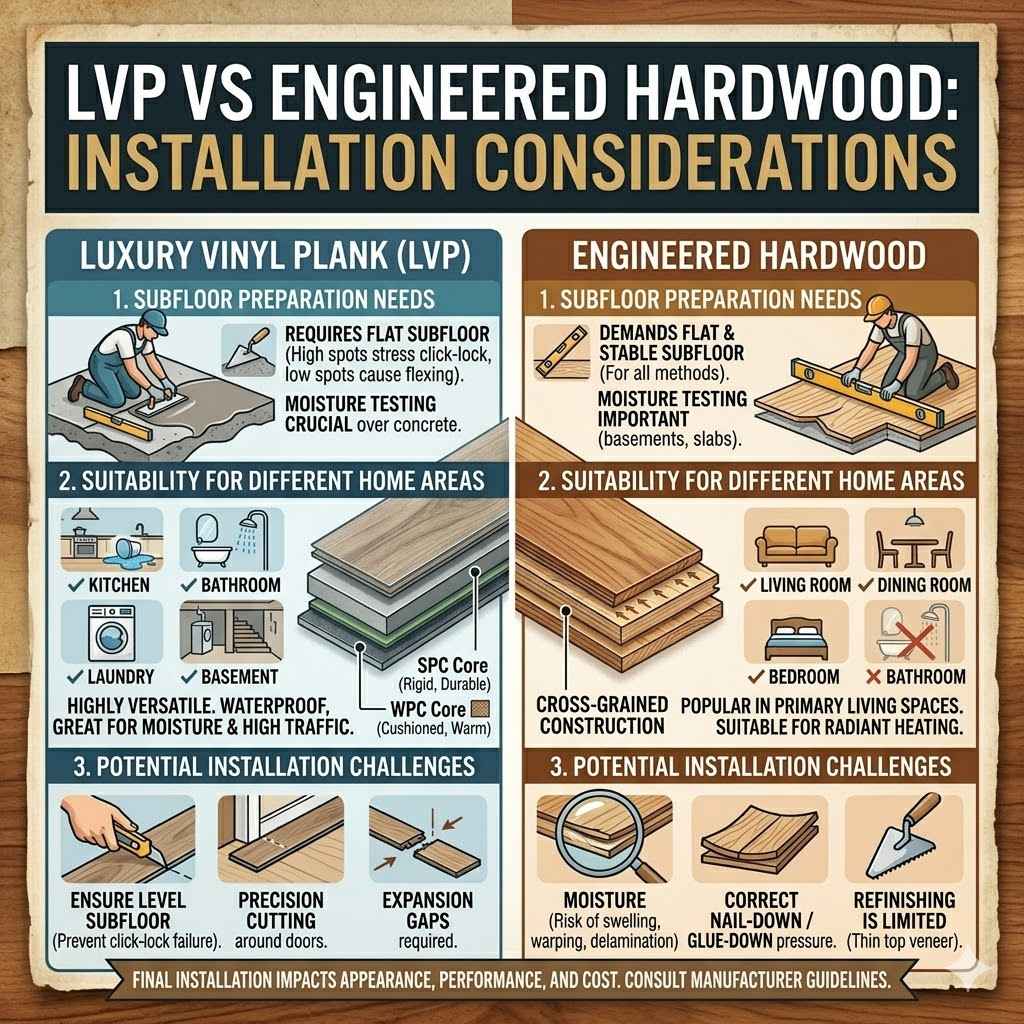
Both LVP and engineered hardwood flooring require a well-prepared subfloor for optimal performance and longevity. A smooth, level, clean, and dry subfloor is essential for a successful installation. Uneven subfloors can lead to issues such as creaking, gaps between planks, or damage to the locking mechanisms.
For LVP, especially floating installations, the subfloor needs to be very flat. High spots can cause undue stress on the click-lock system, while low spots can lead to flexing and potential damage. Minor imperfections can sometimes be addressed with a leveling compound.
If installing over concrete, moisture testing is crucial, as excessive moisture can compromise the LVP and subfloor. Many LVP products come with an integrated underlayment, which can help bridge very minor subfloor imperfections, but it’s not a substitute for proper preparation.
Engineered hardwood flooring also demands a flat and stable subfloor. The flatness requirements are often similar to LVP, particularly for floating or glue-down installations. For nail-down installations, a solid wood subfloor is usually required.
As with LVP, any significant dips or humps in the subfloor must be corrected. Moisture testing is equally important for engineered hardwood, especially when installing over concrete slabs or in basements.
The type of subfloor—whether it’s concrete, plywood, or existing flooring—will influence the preparation methods. For instance, cleaning an old adhesive residue from a previous floor might be necessary before installing engineered hardwood. Manufacturers often provide specific subfloor preparation guidelines, and adhering to these is critical for warranty validity and proper performance.
Suitability for Different Home Areas
LVP flooring is highly versatile and suitable for virtually every area of the home, making it an excellent choice for busy households. Its waterproof nature makes it ideal for kitchens, bathrooms, laundry rooms, and basements where moisture and spills are common. The durability and resistance to scratches and wear also make it a top pick for high-traffic areas like hallways, entryways, and living rooms.
Its ease of cleaning and maintenance further enhances its suitability for family homes, especially those with children and pets. Even in bedrooms, LVP can provide a comfortable and stylish surface. Some LVP products are designed with enhanced comfort features, making them pleasant to walk on even in living spaces.
A common scenario is using the same LVP throughout the main floor to create a consistent, waterproof, and easy-to-clean environment.
Engineered hardwood flooring is also a popular choice for many areas of the home, offering the beauty of real wood. It is commonly installed in living rooms, dining rooms, bedrooms, and hallways. Its aesthetic appeal makes it a desirable option for these primary living spaces.
However, due to its susceptibility to moisture damage, it is generally not recommended for bathrooms or laundry rooms where standing water or high humidity is a concern.
While some engineered hardwood products are treated for moisture resistance, they are not typically as foolproof as LVP in wet environments. In kitchens, careful and immediate cleanup of spills is essential. It can also be installed over radiant heating systems, which is a significant advantage for comfort in colder climates.
For instance, many homeowners choose engineered hardwood for their master bedroom to enjoy the warmth and natural look of wood.
Potential Installation Challenges
While both LVP and engineered hardwood are designed for easier installation compared to traditional materials, challenges can still arise. For LVP, a common issue is ensuring the subfloor is perfectly level. Even slight imperfections can cause the click-lock system to separate over time, creating gaps or an uneven appearance.
Cutting LVP can also be tricky, especially around doors or irregular shapes, requiring precise measurements and the right tools like a utility knife or a power saw with a fine-tooth blade.
Another potential challenge is the expansion and contraction of LVP, although this is generally minimal, especially with SPC cores. It’s still important to leave expansion gaps around the perimeter of the room, especially in larger areas or rooms with significant temperature fluctuations. For glue-down LVP, proper adhesive selection and application are crucial to ensure a strong, lasting bond.
With engineered hardwood, the primary challenge often relates to its sensitivity to moisture. If the subfloor is not adequately dry or if humidity levels are not controlled, the engineered wood can swell, warp, or delaminate. For nail-down installations, ensuring that the nails are driven correctly without damaging the wood veneer is important.
Glue-down installations require careful alignment and consistent pressure to ensure proper adhesion.
Refinishing engineered hardwood can also be a challenge. While some engineered wood can be refinished, the thinness of the top veneer limits how many times this can be done, and some products cannot be refinished at all. This means that deeper scratches or wear might be permanent, unlike with solid hardwood.
LVP vs Engineered Hardwood: Key Differences Explained Recap
Choosing the right flooring involves weighing various factors. We’ve explored the construction, durability, aesthetics, cost, and installation of both LVP and engineered hardwood. You now have a clear understanding of their distinct characteristics.
This knowledge empowers you to make an informed decision that best suits your home and lifestyle.
Frequently Asked Questions
Question: Which flooring is more durable LVP or engineered hardwood?
Answer: LVP is generally more durable for everyday wear and tear due to its protective wear layer. It’s highly resistant to scratches, dents, and stains. Engineered hardwood’s durability depends on its wood veneer thickness, with harder woods offering better resistance, but it is still more prone to damage from sharp objects or heavy impacts than LVP.
Question: Can LVP be installed in a bathroom?
Answer: Yes, LVP is an excellent choice for bathrooms because it is waterproof. It can withstand moisture and spills without warping or damage, making it a very practical and worry-free option for this room.
Question: Does engineered hardwood scratch easily?
Answer: Engineered hardwood can scratch, especially softer wood species or those with less durable finishes. While it’s more resistant than some flooring types, it is generally more susceptible to scratches and dents than LVP.
Question: Which flooring is better for resale value?
Answer: Engineered hardwood generally has a stronger positive impact on resale value because it is perceived as a premium, authentic material. However, high-quality LVP is increasingly accepted and appreciated by buyers for its aesthetics and practicality.
Question: Can I install LVP over existing hardwood floors?
Answer: You can often install LVP over existing hardwood floors if they are in good condition, smooth, and level. Ensure the hardwood is securely attached and free from significant damage or unevenness. Always check the LVP manufacturer’s specific installation guidelines.
Summary
LVP offers superior waterproof durability and lower cost, making it ideal for busy homes. Engineered hardwood provides authentic wood beauty and can boost resale value. Both require a level subfloor.
Consider LVP for high-moisture areas and engineered hardwood for style and value. Choose wisely based on your needs.