Mineral Spirits vs Paint Thinner: What You Need to Know
Figuring out the differences between Mineral Spirits vs Paint Thinner: Key Differences can be a little tricky when you’re starting out. They both seem similar, and using the wrong one can mess up your project. Don’t worry, though! This guide will break it down simply, showing you what each product does best and how to pick the right one. We’ll explore their uses, how they’re made, and why one might be better than the other. Ready to learn more?
What are Mineral Spirits and Paint Thinner?
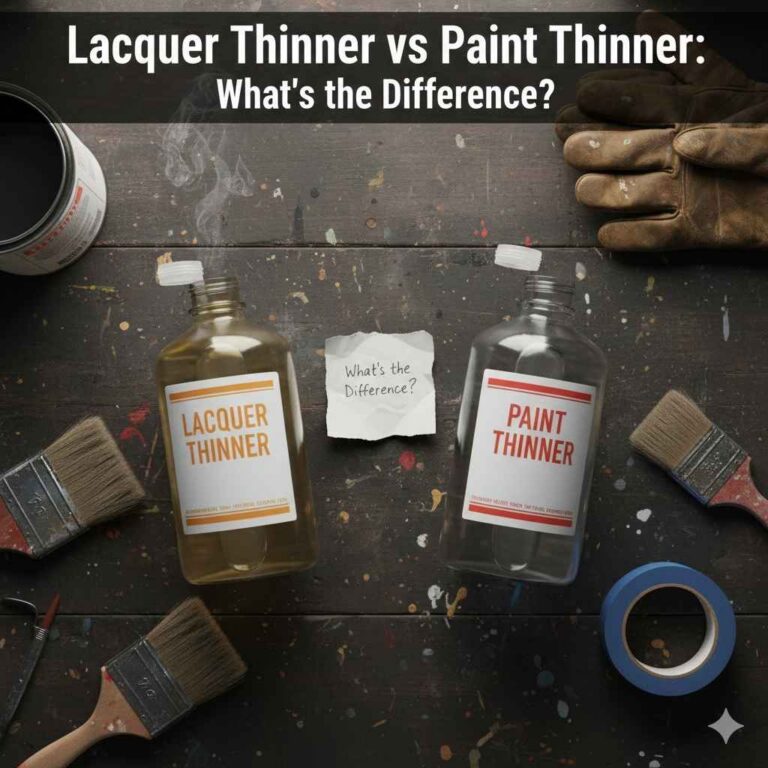
Both mineral spirits and paint thinner are solvents, meaning they dissolve other substances. Think of them as liquid helpers that can break down things like paint, oil, and grease. They’re often used to clean brushes, thin paints, and get rid of unwanted marks. While they share some similarities, they’re not exactly the same, and knowing the differences is useful for any painter or DIY enthusiast. Both liquids are derived from petroleum, a source commonly used to produce a variety of solvents.
Mineral Spirits: The Gentle Solvent
Mineral spirits are a type of petroleum-based solvent. They are generally milder than paint thinner, making them great for a variety of tasks where a gentler touch is needed. Often, mineral spirits are used when working with oil-based paints, varnishes, and other finishes. They’re effective at cleaning up brushes and tools after use, helping to keep them in good condition. The slower evaporation rate is also helpful for some applications.
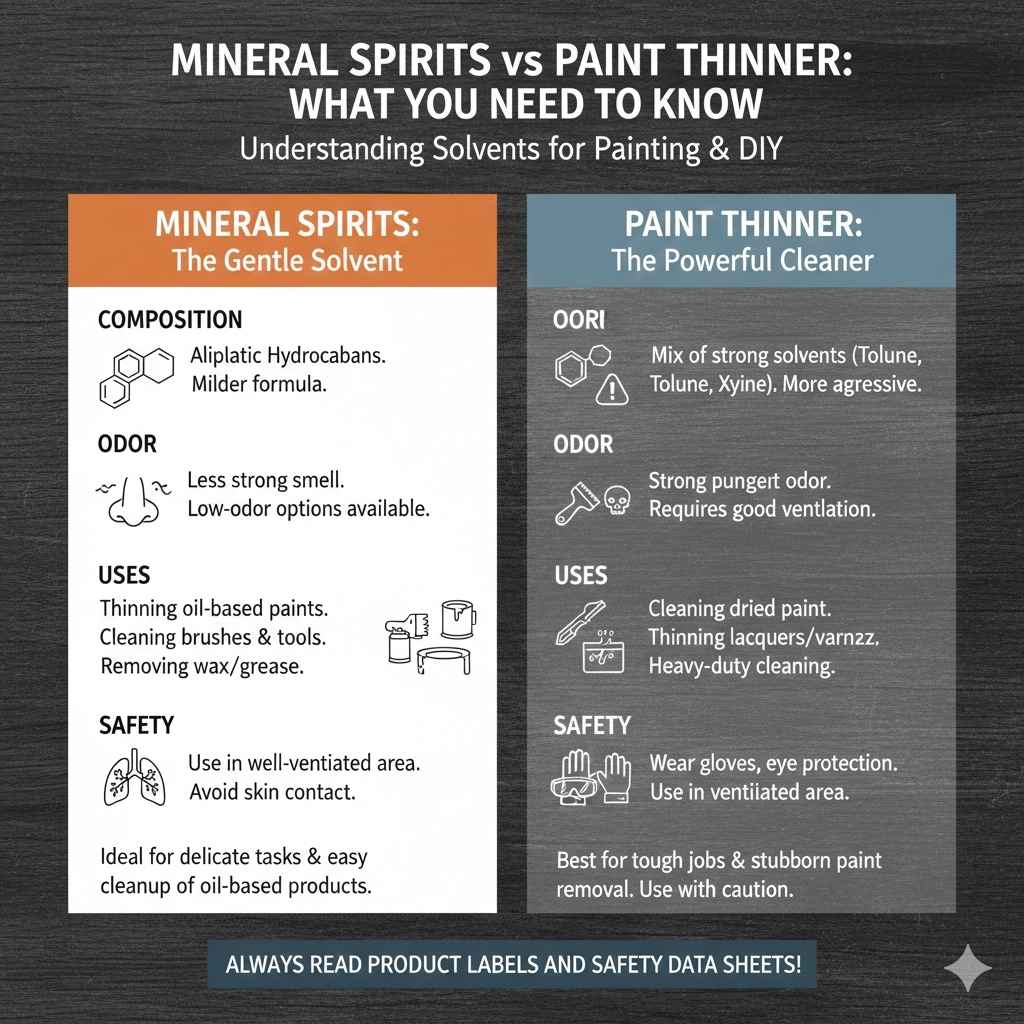
- Composition: Mineral spirits primarily contain aliphatic hydrocarbons. These are carbon and hydrogen atoms in a chain-like structure.
- Odor: Mineral spirits typically have a less strong smell compared to paint thinner. Some brands even offer low-odor options, making them more pleasant to work with.
- Uses: Besides cleaning brushes and tools, mineral spirits can be used for thinning oil-based paints, removing wax, and cleaning up spills of oil-based products.
- Safety: While safer than some solvents, it’s still important to use mineral spirits in a well-ventilated area and avoid prolonged skin contact.
For example, if you’ve been working with an oil-based paint and need to clean your brushes, mineral spirits are an excellent choice. They dissolve the paint effectively without being overly aggressive. When removing wax from a surface before repainting, mineral spirits can help gently remove the wax without damaging the underlying surface. Many users prefer this option for its versatility and gentler approach.
Paint Thinner: The Powerful Cleaner
Paint thinner is another petroleum-based solvent, but it’s usually stronger than mineral spirits. It’s designed to quickly dissolve paint and other tough substances. Think of it as a heavy-duty cleaner for more difficult jobs. It’s often used when you need something that works faster and more effectively. Because of its stronger formulation, paint thinner is usually more aggressive than mineral spirits.
- Composition: Paint thinner often contains a mix of solvents, including toluene and xylene, which are more aggressive than those found in mineral spirits.
- Odor: Paint thinner has a strong, often pungent odor. It’s important to use it in a well-ventilated space.
- Uses: Paint thinner is best for cleaning up dried or stubborn paint, thinning lacquers and varnishes, and sometimes for preparing surfaces before painting.
- Safety: Because of its stronger formulation, paint thinner requires extra caution. Always wear gloves, eye protection, and work in a well-ventilated area.
Imagine you’re dealing with dried paint on a surface. Paint thinner can dissolve and remove it more rapidly. When thinning lacquers, which are known for their quick-drying properties, paint thinner is often the right choice. However, be careful, as the strong properties can also damage some surfaces. In such a scenario, mineral spirits might be a better approach.
Key Differences: Mineral Spirits vs. Paint Thinner
The main differences between Mineral Spirits vs Paint Thinner: Key Differences are their strength, odor, and uses. Each has a specific function, and choosing the right one can make your job easier and safer. Understanding the differences is critical for effective use.
Strength and Cleaning Power
One of the main variations is their cleaning power. Paint thinner is generally more potent, which means it can dissolve paint and other materials more quickly. This makes it ideal for tough jobs. Mineral spirits, on the other hand, are less strong, but this also means they are less likely to damage some surfaces. They are a good option when you need to be a little more gentle. The right choice depends on what you’re trying to clean or thin.
- Paint Thinner: Superior for removing thick, dried paint, lacquer, and varnishes.
- Mineral Spirits: Better for delicate jobs, cleaning up fresh spills, and thinning oil-based paints.
Consider a scenario where you’re trying to remove old, hardened paint from a metal surface. Paint thinner will likely be the quicker and more effective choice due to its strength. The stronger solvents present in paint thinner are formulated to eat away at stubborn substances. In contrast, if you’re trying to clean up a spill of wet oil-based paint on a wood floor, mineral spirits might be the better option. Its milder formula will clean the surface without harming the finish of the wood.
Odor and Volatility
Odor and how quickly they evaporate are other major differences. Paint thinner has a strong, noticeable smell. It evaporates quickly, which is why it works well for some tasks. Mineral spirits usually have a gentler smell and evaporate more slowly. The slower evaporation of mineral spirits makes them appropriate for thinning paint, as the solvents stay mixed with the paint longer. These characteristics have practical implications for safety and how you work.
- Paint Thinner: Strong odor; evaporates quickly.
- Mineral Spirits: Milder odor; evaporates more slowly.
When working indoors, the odor of paint thinner can become overwhelming if the space is not properly ventilated. This strong scent can cause headaches or even nausea. In contrast, mineral spirits often have a less strong smell, making it more bearable for interior projects. The faster evaporation rate of paint thinner may be useful when you need a surface to dry quickly, such as when applying a new coat of lacquer. Mineral spirits, with their slower evaporation, are also a great option to keep your brushes from drying out.
Applications and Uses
The differences in strength and volatility mean each solvent is better suited for different jobs. Paint thinner excels when you need a powerful cleaning agent. Mineral spirits are better for general cleaning, brush care, and when you want to use the product in a situation that is more gentle. The right choice depends on the specific project.
- Paint Thinner: Used for thinning lacquers, cleaning spray guns, and removing stubborn stains.
- Mineral Spirits: Used for thinning oil-based paints, cleaning brushes, and general surface preparation.
If you’re using a spray gun to apply a lacquer finish, paint thinner is usually recommended to clean the gun thoroughly after use. The strong solvents will dissolve any lacquer residue effectively. If you’re working on an oil painting and need to thin your paint to achieve a certain consistency, mineral spirits are the usual approach. Mineral spirits are formulated to work well with oil-based paints and won’t affect the painting. When you are done with your painting, use mineral spirits to clean your brushes and make sure that you are prepared for your next project.
How to Safely Work with Solvents
Both mineral spirits and paint thinner can be dangerous if not handled properly. Always prioritize safety. By taking a few simple steps, you can minimize the risks and work safely.
Ventilation
Proper ventilation is the most important part of safe use. This means working in a space with fresh air circulating. If you’re working indoors, open windows and doors to allow the fumes to escape. Using a fan can also help circulate air. Ventilation is critical because these solvents release harmful vapors that can make you sick.
- Open Windows and Doors: Allow fresh air to enter the work area.
- Use a Fan: Circulates air and carries away fumes.
- Work Outdoors: If possible, work outside where there is plenty of fresh air.
Imagine you’re painting a room. Without adequate ventilation, the fumes from the paint thinner can build up, leading to headaches, dizziness, and even more serious issues. By opening windows and doors, or by using a fan, you ensure that the air is constantly refreshed, pushing those fumes away from your breathing zone. If the weather permits, setting up a work area outdoors is even better, as this provides a naturally ventilated environment.
Protective Gear
Always wear protective gear, including gloves and eye protection. Chemical-resistant gloves will protect your skin from contact with the solvents, and eye protection will shield your eyes from splashes. Consider a respirator to prevent inhaling fumes, especially when working in enclosed spaces. These steps help prevent exposure to harmful substances.
- Gloves: Protect your skin from contact.
- Eye Protection: Shields your eyes from splashes.
- Respirator: Filters out harmful vapors.
Picture yourself cleaning paint brushes with paint thinner. Without gloves, your skin can absorb the solvent, leading to irritation or even more serious skin conditions. Eye protection will keep your eyes safe from accidental splashes. A respirator is important in reducing your risk of inhaling dangerous fumes. The gear forms a crucial barrier against exposure and protects your health.
Disposal
Always dispose of solvents properly. Never pour them down the drain or into the environment. Check your local regulations for specific disposal guidelines. You might need to take them to a hazardous waste disposal site. This approach minimizes the risk of polluting the environment.
- Follow Local Regulations: Know the rules in your area.
- Use a Hazardous Waste Site: Many communities have sites for safe disposal.
- Never Pour Down the Drain: This can pollute water systems.
Let’s say you’ve finished cleaning your paint brushes with mineral spirits. You can’t simply pour the used solvent down the drain because it can contaminate local water sources. Instead, you need to find a safe way to dispose of it, such as taking it to a designated hazardous waste disposal facility. It ensures that the solvents do not harm the environment. Following proper disposal methods helps safeguard the environment.
Choosing the Right Solvent for Your Project
The right choice depends on the project. Considering the materials you’re working with, the job you’re doing, and the safety precautions you need to take will help you decide.
Material Compatibility
Consider the materials you’re working with. Some materials are sensitive to certain solvents. For example, mineral spirits are a good choice when working with oil-based paints, while paint thinner is useful for dissolving lacquers. Choosing the wrong solvent can damage or dissolve the surface you’re working on. Knowing the qualities of each solvent and the paint you are working with is important.
- Oil-Based Paints: Mineral spirits are usually compatible.
- Lacquers: Paint thinner is often the best choice.
- Plastics: Always test in an inconspicuous area.
Suppose you want to remove an old oil-based paint from a wood surface. Using mineral spirits will likely remove the paint without damaging the wood. Using paint thinner could be too strong and harm the wood. Conversely, when thinning a lacquer, paint thinner would be a better choice. The appropriate solvent matches the type of finish or substance you are working with.
Cleaning vs. Thinning
Ask yourself if you’re cleaning or thinning. Paint thinner is the choice for cleaning up stubborn stains. Mineral spirits are better for general surface prep or thinning paint. The use determines which product is right.
- Cleaning: Paint thinner is more powerful.
- Thinning: Mineral spirits are usually a better choice.
Imagine you have a paintbrush that you have used for latex paint. In this case, neither mineral spirits nor paint thinner are the right choice. Instead, you’d want to use water and soap to clean up the brush. If you have an oil-based paint and need to thin it, mineral spirits would be the appropriate choice. Selecting the right product for a specific job makes the task more effective.
Safety Considerations
Take safety into account. Paint thinner has a stronger smell and requires extra care. Mineral spirits are often a better choice if you have concerns about fumes or are working in a less-ventilated area. Make the decision based on the level of ventilation and the protective gear available.
- Ventilation: Always consider airflow.
- Protective Gear: Always wear gloves and eye protection.
- Environment: Choose the solvent that best suits your work area.
If you’re working indoors and ventilation is limited, mineral spirits might be a better choice due to the milder odor. This can help to avoid overwhelming fumes. If you have a good ventilation system and proper safety gear, you might decide that the powerful solvent is worth the increased risk. The selection will depend on how safely you can work.
Table of Comparisons: Mineral Spirits vs. Paint Thinner
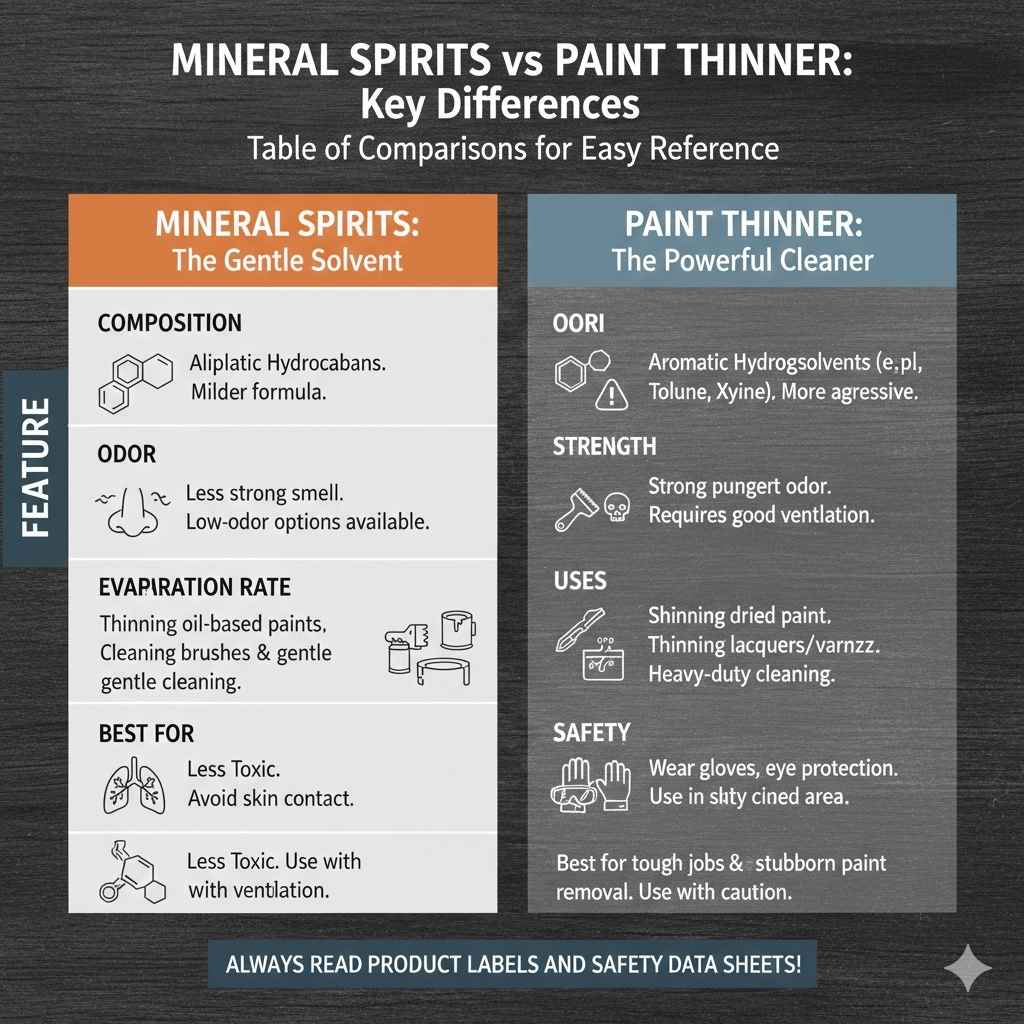
The following table summarizes the key differences between Mineral Spirits vs Paint Thinner: Key Differences, for easy comparison.
| Feature | Mineral Spirits | Paint Thinner |
|---|---|---|
| Composition | Aliphatic Hydrocarbons | Aromatic Hydrocarbons (e.g., Toluene, Xylene) |
| Odor | Milder | Stronger, Pungent |
| Strength | Milder | Stronger |
| Evaporation Rate | Slower | Faster |
| Best For | Thinning oil-based paints, cleaning brushes, gentle cleaning | Thinning lacquers, cleaning tough stains, heavy-duty cleaning |
| Safety | Less Toxic | More Toxic |
Frequently Asked Questions
Question: What can I use instead of paint thinner?
Answer: For many tasks, you can use mineral spirits, especially for cleaning oil-based paints and brushes. For some applications, denatured alcohol can be a good substitute.
Question: Are mineral spirits and white spirit the same?
Answer: Yes, mineral spirits and white spirit are essentially the same product. The name varies based on region, with “white spirit” being more common in Europe.
Question: Can I use paint thinner to clean brushes?
Answer: Yes, paint thinner can clean brushes. However, because it’s strong, use it cautiously and in a well-ventilated area. Mineral spirits are often a gentler choice.
Question: Is it safe to mix mineral spirits and paint thinner?
Answer: It’s generally not recommended to mix mineral spirits and paint thinner. They have different compositions and mixing them can alter their properties and effectiveness, and might affect the outcome of your project.
Question: How do I store paint thinner and mineral spirits?
Answer: Store paint thinner and mineral spirits in a tightly sealed container, away from heat, sparks, and open flames. Keep them in a well-ventilated area, and out of reach of children and pets.
Final Thoughts
So, we’ve explored the Mineral Spirits vs Paint Thinner: Key Differences in detail. You’ve learned that mineral spirits are generally the gentler option, perfect for tasks like cleaning brushes and thinning oil-based paints. Paint thinner, on the other hand, is the heavy-duty cleaner for tougher jobs like removing stubborn stains and thinning lacquers. The choice between the two is really about what you’re working on and what you need the solvent to do.
Always prioritize safety by using the right protective gear and working in a well-ventilated area. Whether you’re a seasoned pro or just starting out, picking the right solvent is a skill that will improve the quality of your work and help you complete your project. Armed with this knowledge, you can now approach your next painting or cleaning project with certainty and do it right.