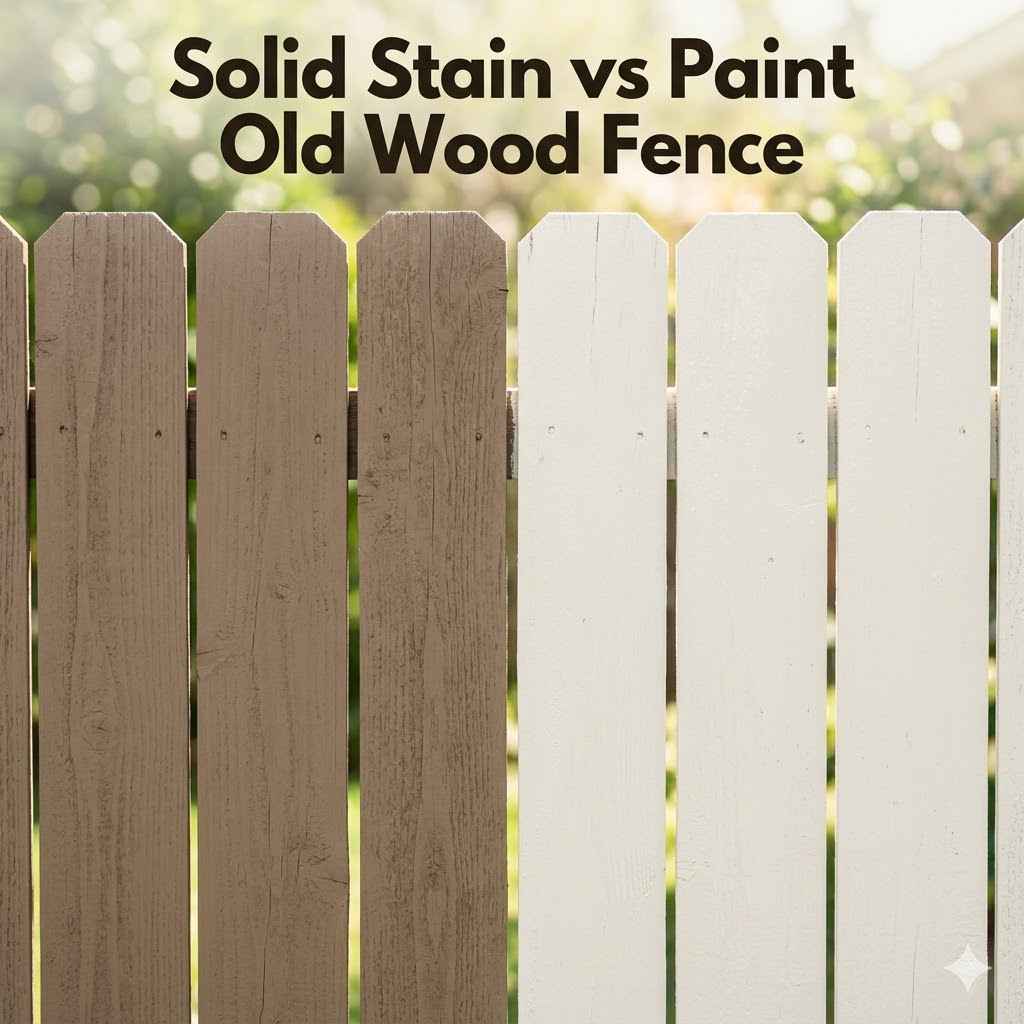
Solid Stain vs Paint Old Wood Fence
Choosing between solid stain and paint for your old wood fence can seem tricky. Many people wonder which one is better for keeping old wood looking good and protected. This choice affects how your fence looks and how much work it will need later.
Don’t worry, we’ll make it simple to decide. We’ll walk through everything you need to know to pick the right finish.
Why Old Wood Fences Need Special Care
Old wood fences often have a lot of character, but they also face many challenges. The wood might be weathered, showing signs of age, and could have some soft spots or minor damage. Proper finishing is key to protecting these fences from the elements, preventing further decay, and enhancing their natural beauty.
Without the right protection, old wood can quickly deteriorate from sun, rain, and pests, shortening its lifespan and leading to costly repairs or replacement.
Assessing Your Old Wood Fence
Before you decide on a finish, it’s important to look closely at your fence. Check for any signs of rot, mold, or insect damage. These issues need to be fixed before you apply any stain or paint.
Also, consider the current condition of the wood. Is it smooth, rough, or already peeling? Knowing these details will help you choose the best way to prepare and finish your fence for lasting beauty and protection.
- Examine for rot and decay.
- Look for insect damage.
- Assess surface texture and previous coatings.
A visual inspection for soft spots or crumbling wood is essential. Tap on the wood with a hammer to listen for a dull thud, which can indicate internal rot. If rot is found, it needs to be cut out and
Inspect for tiny holes or sawdust-like material, which are signs of termites or other wood-boring insects. Early detection and treatment are vital to prevent widespread damage that can compromise the fence’s strength. Insecticidal treatments can be applied before finishing.
Determine if the wood is rough or smooth and if it has old paint or stain that is peeling or flaking. Rough wood might accept solid stain more readily than smooth wood. Previous coatings that are not adhering well should be removed through sanding or scraping to ensure the new finish bonds properly.
Preparing the Wood Surface
Getting the wood ready is a big part of the job. You need to clean it thoroughly. This means removing old paint or stain that’s flaking off.
Sanding helps make the surface smooth. Washing the fence can get rid of dirt and mildew. Doing these steps well means your new finish will look better and last much longer.
It’s like getting a good canvas ready before painting a picture. The cleaner and smoother the wood, the better the final result.
- Cleaning and Washing.
- Sanding for Smoothness.
- Stripping Old Coatings.
Use a stiff brush and a wood cleaner to remove dirt, grime, and mildew. A pressure washer on a low setting can speed up the process, but be careful not to damage the wood fibers. Always rinse thoroughly with clean water and allow the fence to dry completely, which can take a day or two depending on the weather.
If the wood is rough or has splinters, sanding is necessary. Start with a coarser grit sandpaper (like 60-80 grit) to remove rough patches and then move to a finer grit (like 100-120 grit) for a smoother finish. This creates an ideal surface for both solid stain and paint to adhere to.
If there are layers of peeling paint or stain, you’ll need to strip them. Chemical strippers can be effective but require careful handling and ventilation. For less severe cases, scraping and sanding might be enough. Ensuring a clean surface free from old, loose coatings is paramount for the new finish to adhere properly.
Understanding Solid Stain
Solid stain is a great option for older wood fences because it looks like paint but acts more like a stain. It sinks into the wood, coloring it deeply while still letting some of the wood grain show through if applied thinly. It’s known for its durability and ability to protect wood from the sun’s harsh rays.
This makes it a popular choice for people who want a fresh look without completely hiding the wood’s natural texture. It offers a good balance of color and protection.
How Solid Stain Works
Solid stain is formulated with a higher pigment content than semi-transparent stains, which gives it its opaque, paint-like appearance. It penetrates the wood surface, providing color and protection from within. Unlike paint, which sits on top of the surface, solid stain generally allows the wood grain to be subtly visible, offering a more natural look than a thick coat of paint.
This penetration helps it resist peeling and chipping.
- Pigment content and opacity.
- Penetration vs. Film Formation.
- UV Protection.
The high pigment level in solid stain is what makes it opaque, similar to paint. This opacity means it covers most of the underlying wood grain, offering a uniform color. However, it’s not as thick as paint, allowing for some of the wood’s natural texture to remain visible, giving a rich, deep color.
Solid stain is designed to penetrate the wood fibers, binding with them to create a durable finish. This is different from paint, which forms a film on the surface. Because it penetrates, it’s less prone to cracking, peeling, or blistering, especially in conditions with significant temperature and moisture fluctuations.
The high pigment content also provides excellent protection against ultraviolet (UV) rays from the sun. UV rays can break down wood fibers and cause fading and degradation. Solid stain acts as a shield, absorbing or reflecting these harmful rays and preserving the wood’s integrity.
Benefits of Using Solid Stain on Old Wood
Solid stain is a fantastic choice for old fences for several reasons. It can revive dull, weathered wood by providing a rich, even color. It’s tough and lasts a long time, meaning you won’t have to reapply it as often as you might think.
It also does a great job protecting the wood from damage caused by sunlight and moisture. Plus, it tends to wear down more gracefully than paint, often fading rather than peeling, which makes touch-ups easier and less noticeable.
- Excellent color coverage.
- Long-lasting protection.
- Easier maintenance and touch-ups.
Solid stain offers a vibrant, uniform color that can completely transform the look of an old, faded fence. It covers imperfections and variations in the wood’s color, giving it a fresh, updated appearance. This makes it ideal for fences that have seen better days and need a significant visual upgrade.
The deep penetration and durable pigments in solid stain provide robust protection against UV rays, moisture, and general wear and tear. This means your fence will look good and stay protected for many years, reducing the need for frequent maintenance and repainting.
Unlike paint, which can chip and peel, solid stain typically fades over time. This gradual wear makes touch-ups much simpler. You can often reapply stain to worn areas without needing to strip the entire fence, blending the new color seamlessly with the old.
Application Tips for Solid Stain
Applying solid stain is much like painting, but with a few differences to keep in mind. It’s best to apply it when the weather is dry and not too hot or cold. You can use a brush, roller, or sprayer.
For older wood, you might need two coats to get the color just right and ensure full protection. Always work with the wood grain. Let each coat dry before applying the next one to get the best results.
- Choosing the right tools.
- Weather considerations.
- Coats and drying times.
A good quality brush with natural or synthetic bristles works well for detailed areas and edges. For larger sections, a roller with a medium nap can speed up the process. A garden sprayer can also be used for a quick application, but back-brushing is often recommended to ensure even coverage and penetration.
Apply stain on a day with mild temperatures, ideally between 50°F and 90°F (10°C and 32°C). Avoid applying in direct sunlight, as this can cause the stain to dry too quickly, leading to lap marks. Also, avoid painting if rain is expected within 24-48 hours, as moisture can affect the curing process.
Most projects require at least two coats for optimal color depth and protection. Always follow the manufacturer’s recommended drying times between coats. This is typically several hours, but can vary depending on humidity and temperature. Ensure each coat is fully dry before proceeding to the next.
Exploring Paint for Old Wood Fences
Paint is another option for fences, offering a solid, opaque finish. It comes in a huge variety of colors, letting you get exactly the look you want. Paint forms a thick layer on the surface of the wood, which can offer good protection.
However, for older wood, paint can sometimes lead to problems like peeling and chipping, especially if the wood isn’t perfectly prepared. This can mean more work down the road to keep it looking nice.
The Nature of Fence Paint
Fence paint is specifically formulated to withstand outdoor conditions. It typically has good adhesion and provides a durable, protective barrier against the elements. Unlike stains, paint creates a solid film that completely covers the wood grain and texture, offering a uniform color and finish.
This film can be very effective at blocking moisture and UV rays, but it also means that any failure in adhesion, like peeling or blistering, will be very noticeable.
- Surface film formation.
- Color variety and aesthetics.
- Moisture and UV resistance.
Paint creates a physical barrier on the surface of the wood. This film is typically thicker than that of a stain and completely obscures the wood’s natural appearance. It’s designed to be hard-wearing and resistant to impact and abrasion, offering a strong layer of protection.
One of the biggest draws of paint is the sheer range of colors available. From classic whites and grays to bold blues and greens, you can achieve almost any aesthetic. This allows for greater creative freedom in designing the look of your fence and matching it to your home’s exterior.
High-quality exterior paints are engineered to be highly resistant to moisture and UV damage. They repel water effectively, preventing rot and warping, and their pigments help block harmful UV rays that can degrade wood over time. This makes them a viable option for long-term protection.
Pros and Cons of Painting Old Wood
Painting an old wood fence can give it a fresh, modern look. It hides imperfections really well and offers strong protection from the weather. However, paint can be more work to maintain.
If not applied perfectly, it might peel or chip, especially on older, less smooth wood. This means you might have to scrape and repaint more often than with stain. Also, once you paint, it can be harder to go back to a more natural wood look later on.
- Pros.
- Complete coverage hides imperfections and wood variations.
- Wide range of color options.
- Good protection against elements.
- Cons.
- Prone to peeling and chipping.
- Difficult to repair seamlessly.
- Hides wood grain and texture.
This is great for fences that have a lot of knots, discoloration, or minor damage. Paint can make an old fence look brand new by providing a clean, uniform surface.
You are not limited by the wood’s natural color. You can choose any color to match your home or landscape, offering significant aesthetic flexibility.
When properly applied and maintained, paint offers excellent protection against moisture and UV rays, extending the life of the wood.
Especially on older, weathered wood, paint can lose adhesion over time, leading to unsightly peeling and chipping that requires regular scraping and repainting.
Touch-ups can be challenging, as perfectly matching the original paint color and texture can be difficult, often leading to visible patches.
If you prefer the natural beauty of wood, paint completely covers it, which might be a drawback for some homeowners.
When Paint Might Be the Right Choice
Painting is a good idea if your old fence has a lot of damage or a very uneven surface that you want to completely cover. If you’re aiming for a very specific color to match your house or garden, paint gives you that freedom. It’s also a good choice if you don’t mind doing more upkeep over the years, like scraping and repainting when needed.
For fences where the wood grain isn’t a priority, paint can provide a clean, bold finish that lasts for a good while with proper care.
- When significant surface imperfections exist.
- To achieve a specific color scheme.
- For homeowners comfortable with regular maintenance.
If your fence has deep cracks, rot that has been repaired, or a very rough texture that you want to hide, a good quality paint can provide a uniform, smooth finish that makes the fence look new again.
When the fence color is an integral part of your home’s exterior design or landscape, paint offers the most precise color matching and the widest variety of shades to choose from.
If you are prepared for the cyclical nature of maintaining a painted surface, including potential scraping, priming, and repainting every few years, then paint can be a suitable and attractive option.
Solid Stain vs Paint Best for Old Wood Fence A Detailed Comparison
When deciding between solid stain and paint for an old wood fence, it’s helpful to see them side-by-side. Each has its own strengths and weaknesses. Solid stain penetrates the wood, offering a finish that looks more natural and tends to wear more gracefully.
Paint sits on top, offering a solid color but sometimes leading to peeling. For old wood, which can be less predictable, the flexibility and less demanding maintenance of solid stain often make it a preferred choice. Let’s break down the key differences.
Durability and Longevity
Both solid stain and paint can offer good durability, but they achieve it differently. Solid stain’s ability to penetrate the wood means it is less likely to peel or chip, especially on older, more flexible wood. It often fades slowly, making touch-ups easier.
Paint, on the other hand, forms a surface film. While this film can be very tough, if adhesion fails due to moisture or wood movement, it can lead to peeling and cracking, requiring more involved repairs.
| Feature | Solid Stain | Paint |
|---|---|---|
| Penetration | Penetrates wood fibers | Forms a surface film |
| Chipping/Peeling | Less prone to peeling | More prone to peeling/chipping |
| Wear Pattern | Fades gradually | Can chip and peel |
| Longevity | Good; may require reapplication every 3-5 years | Good; may require maintenance every 2-4 years |
- Solid stain’s wear pattern.
- Paint’s vulnerability to wood movement.
- Frequency of reapplication.
The way solid stain wears is a significant advantage for older fences. Instead of flaking off in large sections, it tends to fade evenly. This means that even as it ages, the fence still looks reasonably good, and any new application blends in much better. This gradual wear reduces the visual impact of aging.
Wood expands and contracts with changes in temperature and humidity. Paint forms a rigid film on the surface. When the wood moves, this film can be stressed, leading to cracks and eventually peeling or chipping, especially if moisture gets underneath the paint layer.
Generally, solid stain may last slightly longer between full reapplication cycles compared to paint, especially in harsh weather conditions. However, the ease of touch-ups for solid stain often makes its long-term maintenance less burdensome than that of paint.
Ease of Application
Applying solid stain is often considered easier for DIYers than painting. Because it’s more forgiving, small mistakes or uneven strokes are less noticeable. Solid stain can often be applied with a brush, roller, or sprayer, and drips are generally less visible than with paint.
Paint application, especially for a smooth, uniform finish, often requires more care, including priming and potentially multiple thin coats, to avoid brush marks or roller textures.
- Solid stain’s forgiving nature.
- Paint’s need for precision.
- Tools and techniques.
If you’re new to fence finishing, solid stain is a great option. It doesn’t require the same level of precision as paint. Lap marks (where one coat meets another) are less noticeable, and minor imperfections in application tend to blend in with the wood grain and color.
Achieving a professional-looking painted finish often demands careful preparation and technique. This includes ensuring the surface is perfectly clean and dry, applying a primer, and using specific painting techniques to avoid visible brush strokes or roller marks, especially on large areas like a fence.
Both can be applied with brushes or rollers. However, sprayers are often more effective for stain application, allowing for quick coverage. For paint, using high-quality brushes and rollers, and ensuring even strokes, is critical for a smooth finish. Back-brushing or back-rolling (brushing or rolling over freshly applied paint to smooth it out) is a common technique for achieving a better finish with paint.
Aesthetics and Wood Grain Visibility
This is a key difference. Solid stain is designed to offer deep color while still allowing some of the wood’s natural texture and grain to show through. This gives a rich, natural look.
Paint, however, completely covers the wood grain, creating a uniform, opaque finish. If you love the look of natural wood but want a strong color, solid stain is usually the better pick. If you prefer a solid, consistent color and don’t mind hiding the wood, paint is a good choice.
| Feature | Solid Stain | Paint |
|---|---|---|
| Wood Grain Visibility | Subtle visibility of grain | Completely covered |
| Texture | Maintains some natural wood texture | Creates a smooth, uniform surface |
| Appearance | Rich, deep color with natural undertones | Solid, opaque color |
- The look of natural wood.
- Achieving a specific color.
- Textural qualities.
Many homeowners choose wood fences because they appreciate the natural beauty of wood. Solid stain respects this by allowing the subtle patterns and variations of the wood grain to remain visible, giving the fence a warm, organic feel.
Paint excels when you want a very specific color that isn’t available in stains or when you need to completely unify dissimilar wood types or repaired sections into one consistent hue.
Solid stain can provide a slightly more textured appearance, embracing the inherent roughness or smoothness of the aged wood. Paint offers a smooth, flat finish that can look very sleek but may feel less natural.
Maintenance and Upkeep
When it comes to maintenance, solid stain generally has an edge for old wood fences. Because it fades rather than peels, minor touch-ups are easier. You can often reapply stain to worn areas without needing to strip the entire fence, and the new stain will blend in fairly well.
Painting requires more effort over time. When paint starts to peel, you usually have to scrape away the loose bits, sand the area, prime it, and then repaint, which is a more involved process.
- Touch-up process for solid stain.
- Maintenance for painted fences.
- Overall effort over time.
If your solid stained fence starts to look a bit faded in certain areas, you can typically just clean those spots and reapply a coat of the same stain. The new stain will blend with the existing color, making the repairs less obvious and saving you a lot of time.
When paint begins to fail, it often requires more extensive work. This can include scraping off all loose paint, sanding the area smooth, applying a primer to ensure the new paint sticks, and then applying one or more coats of paint. This makes long-term upkeep more labor-intensive.
While both require upkeep, the typical maintenance for a solid stained fence is generally less demanding and time-consuming than for a painted fence. This can be a significant factor for homeowners looking for a lower-maintenance solution for their older wood fences.
Solid Stain vs Paint Best for Old Wood Fence: Making Your Choice
So, what’s the final word on solid stain versus paint for your old wood fence? For most older fences, solid stain often wins out. It protects well, looks good by letting some wood grain show, and is generally easier to maintain over the years.
Paint can work, especially if you want a very specific color or need to hide a lot of surface damage, but be prepared for more upkeep. Consider your fence’s condition, the look you want, and how much time you want to spend on maintenance.
Factors to Consider
Your decision should be based on a few key factors. First, what condition is your fence in? Very weathered or uneven wood might benefit more from solid stain’s forgiving nature.
Second, what look are you going for? Do you love the look of wood grain, or do you want a bold, solid color? Finally, how much time and effort are you willing to put into maintenance over the fence’s lifespan?
These questions will guide you to the best choice for your specific situation.
- Current state of the wood.
- Desired aesthetic outcome.
- Time commitment for upkeep.
If the wood is significantly weathered, has some minor cracks, or shows signs of wear, solid stain is often more forgiving. It can penetrate and adhere well to slightly rougher surfaces without peeling as easily as paint might.
If you want to maintain some of the natural wood character while adding color, solid stain is the way to go. If a completely uniform, vibrant color is your priority, paint is the better option.
Solid stain typically requires less intensive maintenance over time compared to paint. If you prefer a finish that fades gracefully and is easy to touch up, choose solid stain. If you don’t mind periodic scraping and repainting, paint is an option.
Recommendation for Old Wood Fences
For an old wood fence, Solid Stain vs Paint: Best for Old Wood Fence, solid stain is generally recommended. Its ability to penetrate the wood offers superior protection against moisture and UV rays, and it tends to wear more gracefully by fading rather than peeling. This makes it a lower-maintenance choice for aged wood, which can sometimes be more prone to adhesion issues with paint.
It revives the fence’s look while preserving its natural character.
- Why solid stain is often preferred.
- When paint might still be considered.
- Final decision based on personal preference.
Solid stain offers a fantastic balance of color, protection, and ease of maintenance for older fences. It complements the natural beauty of wood rather than covering it up entirely. Its penetration helps prevent moisture damage, a common issue for aged wood.
If the fence has a lot of surface damage that needs complete hiding, or if you desire a very specific, bold color that only paint can provide, then paint is a viable option. However, be prepared for more rigorous upkeep.
Ultimately, the best choice depends on your priorities. Weigh the aesthetic preferences against the maintenance requirements. Both can protect your fence, but they offer different looks and require different levels of care.
Frequently Asked Questions
Question: Can I use solid stain over old, peeling paint?
Answer: It is generally not recommended to apply solid stain directly over peeling paint. The stain will adhere to the loose paint, and as the paint peels, the stain will come with it. You will need to remove the loose paint first through scraping and sanding, and then you can apply the solid stain.
Question: Does solid stain protect wood as well as paint?
Answer: Solid stain offers excellent protection for wood, comparable to paint. It penetrates the wood to provide UV protection and resist moisture. While paint forms a surface film, solid stain binds with the wood fibers, offering durable defense against the elements.
Question: How often do I need to reapply solid stain to a fence?
Answer: The lifespan of solid stain can vary based on climate, sun exposure, and wood type. Typically, you can expect solid stain to last between 3 to 5 years before needing reapplication. Areas that receive more direct sunlight or heavy rain may require touch-ups sooner.
Question: Will solid stain completely hide the wood grain?
Answer: No, solid stain is designed to provide opaque color but still allows some of the wood grain and texture to show through. If you want a finish that completely covers the wood grain, you would need to use paint.
Question: Is it better to spray or brush solid stain on a fence?
Answer: Both spraying and brushing can work well for applying solid stain to a fence. Spraying can be faster for large areas, but it’s often recommended to back-brush or back-roll the stain immediately after spraying to ensure even coverage and proper penetration into the wood. Brushing offers more control for detailed areas.
Conclusion
For an old wood fence, solid stain is often the superior choice. It provides excellent protection and color while allowing some natural wood beauty to show. Maintenance is generally easier, with a graceful fade rather than peeling.
This makes it a great option for reviving aged fences with less long-term hassle.