The Best Bidet: Essential Upgrade Now
The best bidet is an affordable, easy-to-install upgrade that boosts hygiene and reduces toilet paper use significantly. For beginners, a non-electric bidet attachment offers the simplest path to a cleaner feeling without complex plumbing or electrical work.
Hello there! I’m Md Meraj, and I know that sometimes the simplest home upgrades feel the most complicated. You’ve probably heard friends raving about bidets, but the thought of installing one—with all those hoses and nozzles—might make you feel like you need a plumber. It doesn’t! Switching to a bidet is one of the easiest and most rewarding bathroom improvements you can make. It saves money, feels much cleaner, and is surprisingly simple to do yourself. Forget the frustration; we are going to walk through exactly what you need to know, step-by-step, to choose and install your first bidet.
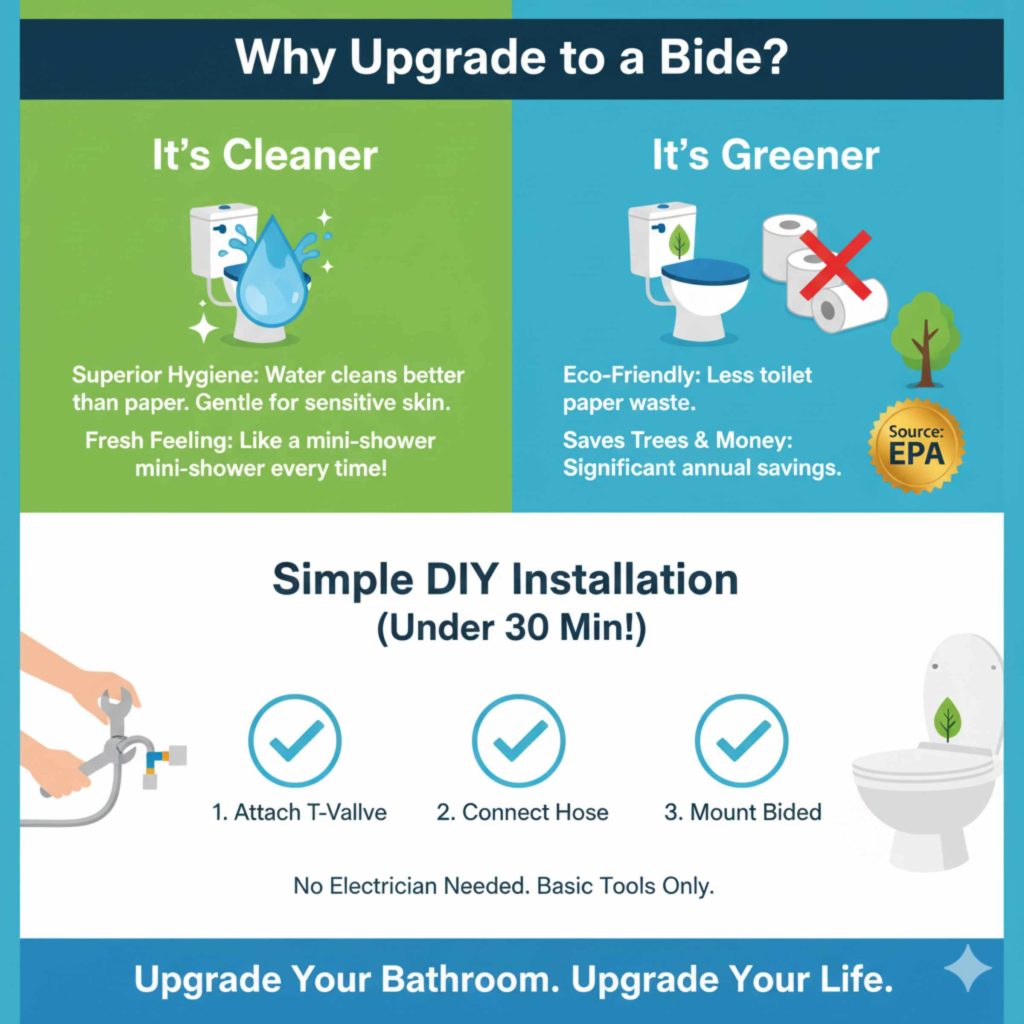
Why Upgrade to a Bidet? It’s Cleaner and Greener
If you’ve never used one, the idea of a bidet might seem like a luxury item reserved for fancy hotels. But honestly, it’s a practical tool that makes a real difference in daily life. Think of it this way: if you got mud on your hands, would you just wipe it with dry paper, or would you wash it? A bidet uses water for a superior clean.
The Hygiene Factor: A Truly Fresh Feeling
The main reason people switch is the feeling of cleanliness. Dry wiping just smears; water cleans. This is especially helpful for everyone in the family. For those with mobility issues or sensitive skin, water is much gentler than constant scrubbing with paper.
Saving Money and Trees
This is where the project becomes cost-effective. While the initial purchase costs a little, you drastically cut down on toilet paper consumption. Over a year, that savings adds up! Plus, you’re making a small, positive choice for the environment by reducing paper waste. According to some estimates, the average American uses a significant amount of toilet paper annually, much of which can be offset by switching to water cleansing (Source: EPA on paper waste reduction).
Simple Installation for DIY Beginners
This is the best part for us DIY folks: most modern bidet attachments require zero electrical work and minimal tools. If you can tighten a few bolts, you can install this upgrade in under 30 minutes.
Choosing Your First Bidet: Attachment vs Seat vs Integrated
When you start shopping for “the best bidet,” you’ll quickly see there are three main types. For a beginner looking for an essential, non-intimidating upgrade, one type stands out above the rest.
1. Bidet Attachments (The Beginner’s Best Friend)
These are slim units that fit right under your existing toilet seat. They connect to the existing water line supplying your toilet tank.
Pros: Very affordable, requires no electricity, incredibly easy to install (usually 15–20 minutes), and you keep your existing seat.
Cons: Usually only cold water, fewer features (like air drying).
2. Bidet Seats (The Feature Upgrade)
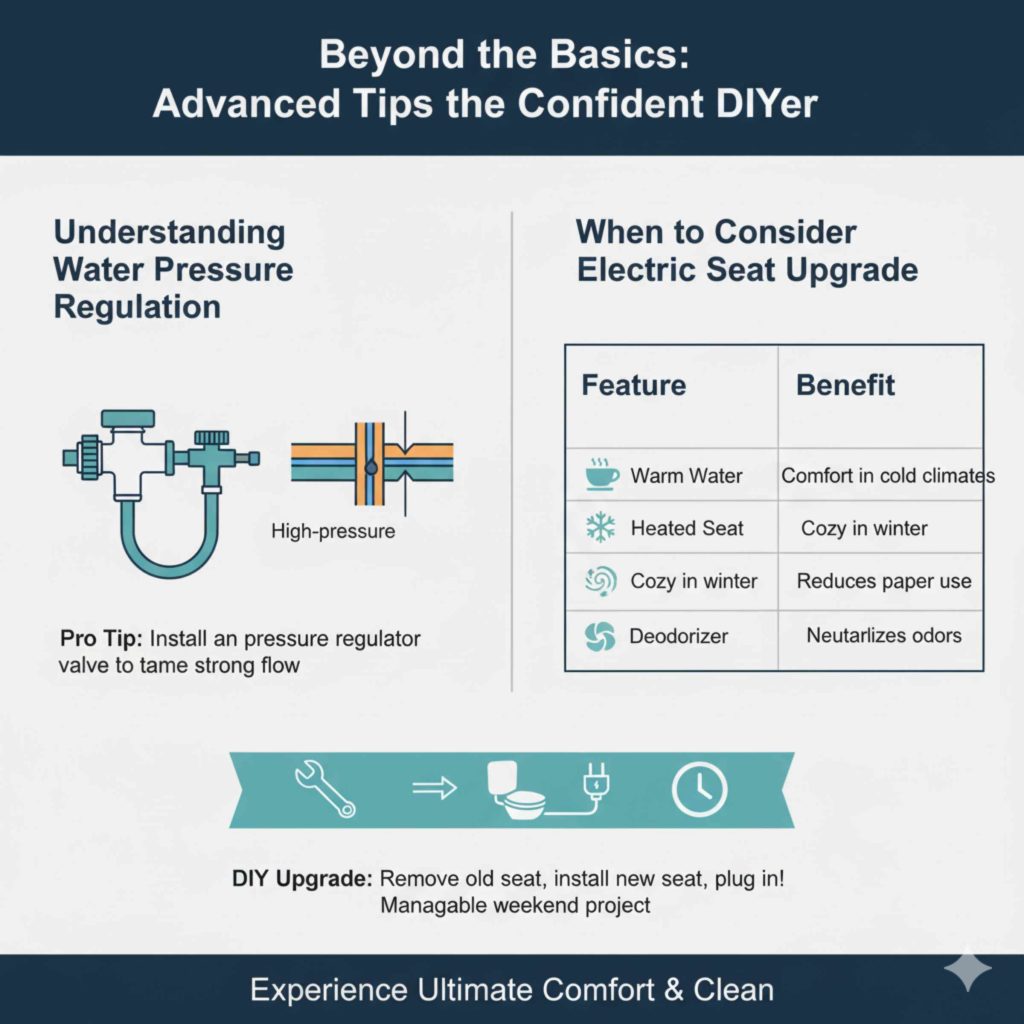
These replace your entire existing toilet seat. They usually plug into a nearby GFCI outlet for power.
Pros: Warm water wash, heated seats, warm air dryers, remote controls, and customizable settings.
Cons: More expensive, requires an electrical outlet near the toilet, slightly more complex installation.
3. Integrated Bidet Toilets (The Full Remodel)
This is the whole toilet unit with the bidet functions built right in.
Pros: Sleekest look, highest-end features.
Cons: Very expensive, requires professional plumbing and possibly electrical work.
Meraj’s Recommendation: If this is your first time, skip the complexity and go straight for a high-quality bidet attachment. It gives you the core cleaning benefit instantly without needing to call an electrician or worry about complex wiring.
What to Look For in Your First Bidet Attachment
Since we are focusing on the easiest and most reliable upgrade, let’s break down the features that matter most when picking out a top-rated attachment.
Essential Features Checklist:
- Nozzle Material: Look for stainless steel nozzles over plastic ones. Stainless steel is more durable and often has a self-cleaning feature.
- Dual Nozzles: Many good attachments offer both a rear wash and a gentler front (feminine) wash.
- Water Pressure Control: Ensure it has a simple, reliable knob or lever to control the spray intensity.
- T-Adapter Quality: The kit should come with a sturdy T-adapter, usually made of brass, to connect to your water supply. Avoid cheap plastic adapters.
Understanding Water Temperature
Most budget-friendly attachments use ambient (cold) water straight from the toilet line. While this might sound shocking at first, remember that the spray is brief. If you absolutely cannot handle cold water, you will need to step up to an electric bidet seat which heats the water. For most beginners, the cold water is manageable once you realize how quickly you get used to it.
Step-by-Step Installation Guide: Installing Your Bidet Attachment
This is the part where we build your confidence! Installing a bidet attachment is much like changing a showerhead—you are just adding a T-junction to the water supply under your tank.
Tools You Will Need (Keep it Simple!)
You won’t need power tools for this job, just a few common items you likely already have in your garage or toolbox.
- Adjustable Wrench (or Channel Locks)
- Flathead Screwdriver (sometimes needed to lift the seat)
- Towel or Small Bucket (to catch drips)
- Gloves (optional, but good practice)
The 5 Simple Steps to Installation
Follow these steps precisely, and you’ll be enjoying your upgrade in no time.
Step 1: Turn Off the Water Supply
This is the most important safety step. Locate the shut-off valve behind or near the base of your toilet. Turn the handle clockwise until it stops. This stops water from flowing into the tank.
Step 2: Drain the Tank
Flush the toilet handle once to empty most of the water from the tank. Hold the handle down to release as much remaining water as possible. You only need a little bit of water left in the tank to work with, but the line feeding the tank should be empty.
Step 3: Disconnect the Supply Line
Place your towel or small bucket under the connection point. Use your adjustable wrench to gently unscrew the flexible water supply hose from the bottom of the toilet tank. Some water might trickle out—that’s why you have the towel!
Step 4: Install the T-Adapter
Take the T-adapter that came with your bidet kit.
- Screw the top part of the T-adapter onto the threaded connection point on the bottom of your toilet tank (where you just removed the hose). Hand-tighten first, then give it a small quarter-turn with the wrench. Don’t over-tighten!
- Screw the flexible water supply hose (the one that goes to the wall) onto the bottom opening of the T-adapter. Again, hand-tighten, then gently secure with the wrench.
- Attach the bidet’s hose (usually a thinner, braided hose) to the remaining side opening on the T-adapter.
Step 5: Mount the Bidet Unit and Reconnect Water
- Carefully lift your existing toilet seat and lift the tank lid.
- Place the bidet mounting plate (or the unit itself, depending on the model) over the existing bolt holes on the toilet bowl rim.
- Reinstall the toilet seat and tighten the bolts firmly over the bidet unit.
- Replace the tank lid.
- Slowly turn the water shut-off valve back on (counter-clockwise). Watch all three connection points on the T-adapter for leaks. If you see a drip, turn the water off, tighten that connection just a bit more, and try again.
Once the tank fills up, you are ready to test the controls!
Bidet Maintenance: Keeping Your System Running Smoothly
A bidet is generally low maintenance, but a little care ensures it lasts for years. Since you are dealing with water fixtures, keeping things clean is key.
Routine Cleaning Schedule
- Weekly: Wipe down the external housing and control panel with a mild, non-abrasive cleaner.
- Monthly: Use a small, soft brush (like an old toothbrush) to gently clean around the nozzle tip. Many units have a self-cleaning function; run this first.
- Annually: If you live in an area with hard water, you might need to occasionally descale the nozzle tip. You can usually do this by running the nozzle through a small cup of white vinegar for 10 minutes, then rinsing it thoroughly.
Troubleshooting Common Beginner Issues
Don’t panic if something seems off right away. Most issues are simple fixes.
| Problem | Likely Cause | Meraj’s Fix |
|---|---|---|
| Water leaks at the T-adapter. | Connections are not tight enough, or the rubber washer is missing/damaged. | Turn off water, tighten the leaking connection slightly. Check that the rubber washer is seated correctly inside the fitting. |
| The spray is too weak. | Water pressure valve on the bidet is set too low, or the supply line is partially clogged. | Turn the bidet control knob up higher. If it’s still weak, check that the T-adapter valve is fully open. |
| The nozzle won’t extend/retract. | Debris or mineral buildup is blocking the mechanism (common in cold-water models). | Run the self-cleaning feature several times. If that fails, check the manufacturer’s guide for manual cleaning instructions. |
Comparing the Best Bidet Options for Homeowners
To help you decide which category fits your budget and comfort level, here is a quick comparison of what you can expect from different price points in the world of bidets. Remember, “best” often means “best fit for you.”
Bidet Price Point Comparison
| Type of Bidet | Typical Price Range | Key Feature | Ideal User |
|---|---|---|---|
| Basic Attachment | $30 – $60 | Cold water wash, simple controls. | The absolute beginner; renters; budget-conscious DIYer. |
| Premium Attachment | $70 – $150 | Self-cleaning nozzle, adjustable controls, often includes a T-adapter made of metal. | Those wanting the best non-electric experience. |
| Electric Bidet Seat | $200 – $500+ | Heated water, heated seat, air dryer. | Those prioritizing comfort and warmth; permanent homeowners. |
Addressing Beginner Worries: Common Concerns Before You Buy
When I first started looking into these upgrades, I had the same little worries everyone else does. Let’s tackle those head-on so you feel 100% confident hitting that “Add to Cart” button.
Concern 1: Will it fit my toilet?
Most standard bidet attachments are designed to fit 95% of two-piece toilets (the kind where the tank and bowl are separate pieces). If you have a one-piece toilet (tank and bowl molded together), you need to measure the distance between the seat bolts and the tank shape carefully. Always check the manufacturer’s measurement guide before buying.
Concern 2: What if I need a hot water line?
If you opt for a non-electric attachment, you only use the cold water line under the tank. If you absolutely require warm water without going electric, some premium attachments come with an extra hose that taps into the hot water line under your bathroom sink. This installation is slightly more involved, requiring you to run a hose across the floor or behind the toilet, but it is still DIY-friendly.
Concern 3: Does it splash everywhere?
Modern bidets are designed with precise aiming. The spray angle is set to target the area effectively without splashing outside the bowl. Furthermore, the water pressure is controlled by you. Start low, and you’ll quickly find the perfect setting. Think of it like aiming a gentle garden hose, not a fire hose!
Concern 4: Is using water sanitary?
Yes, it is significantly more sanitary than wiping. The nozzles used in quality bidets retract when not in use and are often made of stainless steel that resists buildup. Many models feature a “nozzle guard” or self-cleaning function where the nozzle rinses itself before and after every use, ensuring hygiene is maintained. For further reading on plumbing and fixture safety standards, consulting resources from organizations focused on safe home construction can be helpful (Source: International Association of Plumbing and Mechanical Officials (IAPMO) standards).
Concern 5: Do I still need toilet paper?
Yes, but much less of it! After using the bidet, you still need a small amount of toilet paper or a dedicated reusable cloth towel (if you are going fully eco-friendly) just to pat dry. You’ll find you use maybe 1/8th of what you used before, primarily for drying, not cleaning.
Frequently Asked Questions (FAQ) for First-Time Bidet Users
Q1: Does installing a bidet lower my home’s water pressure for showers?
A: Generally, no. A non-electric bidet attachment draws water directly from the cold supply line feeding the toilet tank. Since the toilet only uses water briefly when flushing, it rarely impacts the pressure in your shower or sink faucets.
Q2: How long does it take to dry after using a bidet?
A: If you use a cold-water attachment, most people pat dry with a very small amount of toilet paper (just a square or two) or a dedicated, washable cloth. If you upgrade to an electric seat with an air dryer, drying time can range from 30 seconds to a couple of minutes.
Q3: Can I install a bidet if I have a one-piece toilet?
A: It depends on the design. Some one-piece toilets have very tight clearance between the tank and the bowl, which prevents a standard attachment from fitting underneath. Always measure the gap between the mounting bolts and the tank base before purchasing an attachment for a one-piece toilet.
Q4: Is it safe to use the toilet immediately after installing the bidet?
A: Yes, once you have confirmed there are no active leaks after turning the water back on and the tank has refilled, the bidet is ready for use. Just remember to start with the lowest pressure setting until you get used to the spray.
Q5: Do I need to turn off the water supply every time I leave for vacation?
A: For a short trip (a week or two), it’s usually not necessary, provided your connections are tight and leak-free. However, if you are leaving for an extended period (a month or more), it is always best practice to turn off the water supply valve behind the toilet to prevent any potential slow leaks while you are away.
Q6: Will a bidet attachment damage my porcelain toilet bowl?
A: No, quality attachments are designed with protective rubber or plastic washers that sit between the unit and the porcelain. As long as you do not overtighten the mounting bolts (which can crack the porcelain), the bidet itself will not cause damage.
Conclusion: Taking the Plunge into Better Hygiene
I hope seeing how straightforward the process is has taken away any hesitation you had about installing a bidet. As your home improvement guide, I always advocate for upgrades that offer a huge return on investment—whether that’s in comfort, hygiene, or savings. The bidet attachment is the perfect example: it’s cheap, installs in minutes with basic tools, and fundamentally changes your bathroom routine for the better.
Don’t put this off any longer. Choosing the best bidet for you means choosing simplicity and cleanliness. Pick up a reliable attachment today, dedicate 30 minutes this weekend, and you’ll wonder why you waited so long to make this essential, easy upgrade. You’ve got this!