Transparent vs Semi-Transparent Deck Stain: Differences
Choosing the right deck stain can feel a bit confusing, especially when you first look at the options. Many people wonder about Transparent vs Semi-Transparent Deck Stain: Key Differences. It’s a common question because both can make your deck look nice, but they do it in different ways.
Don’t worry, though! We’ll break it all down super simply. By the end, you’ll know exactly which one is best for your deck and how to get that beautiful finish you want.
Understanding Deck Stain Options
This section helps you get a clear picture of what deck stains do. We’ll talk about why you might pick one type over another. It’s all about making your deck look good and last longer.
We want you to feel confident in your choice.
What Deck Stain Does
Deck stain is more than just color. It protects your wood from the sun and rain. Think of it like sunscreen for your deck.
It also stops water from soaking into the wood and causing rot or cracks. A good stain keeps your deck looking great for many years.
There are different kinds of stains. Some let the wood’s natural beauty shine through. Others add a bit more color while still showing the wood grain.
We will explore the main types.
The Purpose of Deck Stains
Deck stains serve a dual purpose: beautification and protection. They enhance the natural look of wood, bringing out its grain and texture. At the same time, they act as a barrier against the elements.
This barrier prevents damage from UV rays, moisture, and foot traffic.
Without stain, your deck is more likely to fade, crack, and rot. This means costly repairs or replacement sooner than you’d like. Choosing the right stain is a smart investment for your home’s outdoor space.
Protection From Sun: The sun’s UV rays can break down wood fibers. This makes the wood grey and brittle. Stains contain UV inhibitors that help block these rays. This keeps the wood from drying out and cracking.
Water Repellency: Wood absorbs water, which can lead to warping and rot. Stains create a water-repellent surface. This means rain and snow will bead up and run off instead of soaking in.
Enhanced Appearance: Stains add color and depth to your deck. They can make plain wood look richer and more attractive. This improves the overall look of your outdoor living area.
Increased Lifespan: By protecting the wood from damage, stains significantly extend the life of your deck. A well-maintained deck can last decades longer than an unstained one.

Transparent vs Semi-Transparent Deck Stain: Key Differences
This is where we really look at the main types of deck stain. We’ll explain what makes them different. You’ll see how they look on wood and what kind of protection they offer.
This helps you pick the one that fits your style and needs best.
The Transparent vs Semi-Transparent Deck Stain: Key Differences are important for homeowners. Each type offers a unique look and level of protection. Understanding these differences will guide you to the perfect choice for your outdoor space.
Transparent Deck Stain Explained
Transparent stain is the most natural choice. It has very little color added. Its main job is to protect the wood.
It lets the wood’s natural grain, knots, and texture show through completely. It’s like a clear coat for your deck.
Think of it as adding a protective shield without changing the wood’s original look. It offers good protection against UV rays and moisture. However, since it has minimal pigment, it doesn’t block as much UV light as stains with more color.
This might mean it needs to be reapplied a bit more often, especially in very sunny areas.
- Appearance: Shows the wood’s natural color and grain perfectly. It looks very natural.
- Protection Level: Good protection from water and some UV rays. It’s less protection than darker stains.
- Maintenance: May need recoating every 1-2 years depending on weather.
- Best For: When you want the absolute natural look of the wood to be the star. Good for new, beautiful wood.
Semi-Transparent Deck Stain Explained
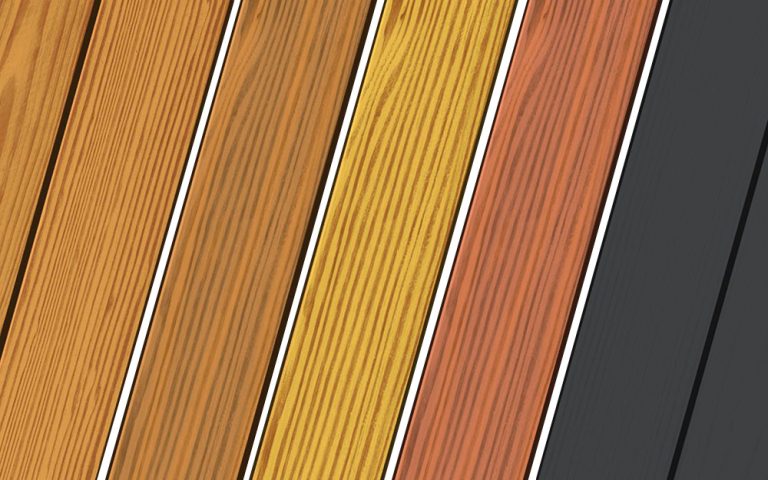
Semi-transparent stain adds a bit of color while still letting the wood grain show. It has more pigment than transparent stain. This means it offers better UV protection.
You can see the wood’s natural texture, but the color is more noticeable.
This type of stain is a popular choice for many decks. It offers a nice balance. You get enhanced color that can complement your home’s style.
You also get better protection than a clear stain. It’s a good middle ground for looks and durability. It’s like adding a thin veil of color over the wood.
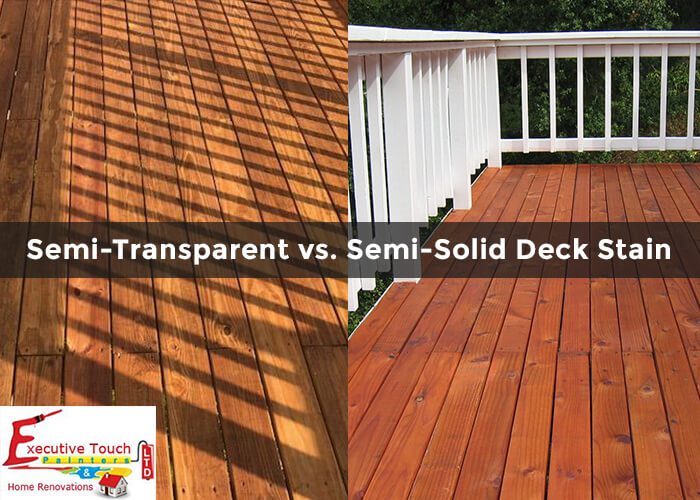
- Appearance: Adds color but still allows wood grain and texture to be visible.
- Protection Level: Offers good protection from water and improved UV protection due to more pigment.
- Maintenance: Typically lasts 2-3 years before needing reapplication.
- Best For: When you want some color but still want to see the wood underneath. Great for giving an older deck a refreshed, colored look.
Key Differences Table
Here’s a quick way to see the main differences side-by-side.
| Feature | Transparent Stain | Semi-Transparent Stain |
|---|---|---|
| Wood Grain Visibility | Full visibility | Partial visibility |
| Color Intensity | Very light, natural tint | Light to medium color |
| UV Protection | Basic | Good |
| Water Repellency | Good | Good |
| Typical Lifespan | 1-2 years | 2-3 years |
| Surface Look | Natural wood | Wood with a colored tint |
Choosing the Right Stain For Your Deck
Now that you know the basic differences, let’s figure out which one is right for your deck. Think about what you want your deck to look like and how much work you want to do. Your choice depends on these things.
This section will help you make a decision. We’ll guide you through questions to ask yourself. By the end, you should have a clear idea of whether transparent or semi-transparent is the better fit.
Consider Your Deck’s Condition
The state of your deck is a big factor. If your deck is made of beautiful, new wood, you might want to show it off. A transparent stain does just that.
It lets the natural beauty of the wood shine through. It’s like wearing a simple, elegant outfit.
If your deck is older or has some imperfections, a semi-transparent stain can be a lifesaver. It adds color that can hide minor flaws. It can make an older deck look refreshed and new again.
It gives your deck a little more personality and style.
Think About Your Desired Look
What kind of look are you going for? Do you love the natural, warm tones of bare wood? Then transparent is probably your best bet.
It feels light and airy.
Or do you want a bit more color? Maybe a soft brown, a light grey, or even a subtle red. Semi-transparent stains offer these options.
They add depth without completely covering the wood. This gives your deck a more finished, styled appearance. It’s about matching your home’s outdoor aesthetic.
Maintenance Commitment
How often are you willing to re-stain your deck? Transparent stains usually need reapplication sooner. This is because they have less pigment.
Pigment helps block UV rays, and without much pigment, the wood can fade faster.
Semi-transparent stains generally last a bit longer. They have more pigment, offering better protection. This means you might be able to go 2 to 3 years between stains.
If you prefer less frequent touch-ups, semi-transparent might be the better choice for you. It’s about finding a balance that works with your schedule.
A study by the Forest Products Laboratory found that darker stains generally offer better UV protection. This is because they contain more pigment. For instance, a semi-transparent stain with a darker tone would offer more long-term protection against sun damage than a clear stain.
However, the overall quality of the stain and the prep work done on the deck are also critical factors for longevity.
Sample Scenarios
Let’s look at a couple of examples to make it clearer.
Scenario 1: The New Deck Owner
Sarah just built a brand-new cedar deck. She loves the natural honey color of the cedar.
She wants to protect it from the weather but doesn’t want to hide its beautiful grain.
She’s okay with re-staining every couple of years.
Decision: Sarah chooses a transparent deck stain. This will keep her cedar looking like cedar, just protected.
Scenario 2: The Deck Refresh Project
Mark’s deck is about five years old. It’s starting to look a bit dull and has some minor fading.
He wants to give it a fresh look and better protection. He likes the idea of a subtle color, maybe a greyish tone.
He’d prefer not to stain for at least three years if possible.
Decision: Mark opts for a semi-transparent stain in a grey shade. This will cover some of the fading and add color, while offering good protection for a longer period.
Application And Benefits
Once you pick your stain, how you put it on matters. Good application means your deck will look great and last longer. We will cover how to apply both types.
We’ll also talk about why using a good stain is beneficial.
Applying stain correctly is key. It ensures an even finish and maximum protection. We’ll guide you through the steps.
You’ll see how the right application brings out the best in your chosen stain.
Preparing Your Deck
Before you stain, your deck needs to be clean and dry. This is a crucial step for any stain, whether transparent or semi-transparent.
First, sweep off all loose dirt and debris. Then, clean the deck thoroughly. You can use a deck cleaner or a mixture of water and mild detergent.
If your deck has old stain or paint, you might need to use a stripper. After cleaning, rinse it well.
Let the deck dry completely. This can take 24 to 48 hours, depending on the weather. If you don’t let it dry, the stain might not soak in properly.
It could lead to peeling or an uneven finish. Proper preparation is key for a lasting finish.
- Clean the Surface: Remove dirt, mildew, and any loose finishes. Use a good deck cleaner.
- Rinse Thoroughly: Make sure no cleaner residue is left on the wood.
- Allow to Dry Completely: Moisture trapped under the stain will cause problems. Wait for a dry spell.
- Light Sanding (Optional): For older decks or to ensure better adhesion, a light sanding can help.
Application Methods
Both transparent and semi-transparent stains can be applied with a brush, roller, or sprayer. Using a quality brush will help you get into the wood grain and any cracks.
A roller can cover larger areas faster. A sprayer is the quickest method for large decks. However, if you use a sprayer, you’ll often need to back-brush immediately.
This means using a brush to spread the stain evenly. It helps it soak into the wood properly and avoid lap marks.
Always follow the directions on the stain can. Apply thin, even coats. Work in small sections.
This prevents the stain from drying too quickly.
A recent survey on homeowner DIY projects indicated that proper deck preparation was cited as the most important step for a successful staining project by 85% of respondents. This highlights how critical cleaning and drying are, regardless of the stain type.
Benefits of Proper Staining
Using either transparent or semi-transparent stain correctly offers many benefits. It’s an investment that pays off.
You protect your deck from damage. This means it will look good for longer. It also adds to your home’s curb appeal.
A well-stained deck makes your outdoor space more inviting and enjoyable.
The protection from UV rays is vital. It stops the wood from turning grey and brittle. Water repellency prevents rot and warping.
These benefits contribute to the overall longevity and beauty of your deck.
- Extended Deck Life: Protects wood from decay, rot, and insect damage. This means your deck lasts much longer.
- Improved Aesthetics: Enhances the natural beauty of the wood or adds a desired color. Makes your outdoor space look more attractive.
- Easier Maintenance: A stained surface is easier to clean than raw wood. Spills and dirt are less likely to stain permanently.
- Cost Savings: Preventing damage through staining can save you money on repairs and eventual replacement. It’s cheaper to stain than to rebuild.
Common Pitfalls To Avoid
When staining your deck, some mistakes are common. Knowing them helps you avoid them. This ensures you get the best result possible.
We’ll point out what to watch out for. This way, your deck will look amazing and the stain will last.
Not Preparing The Deck Properly
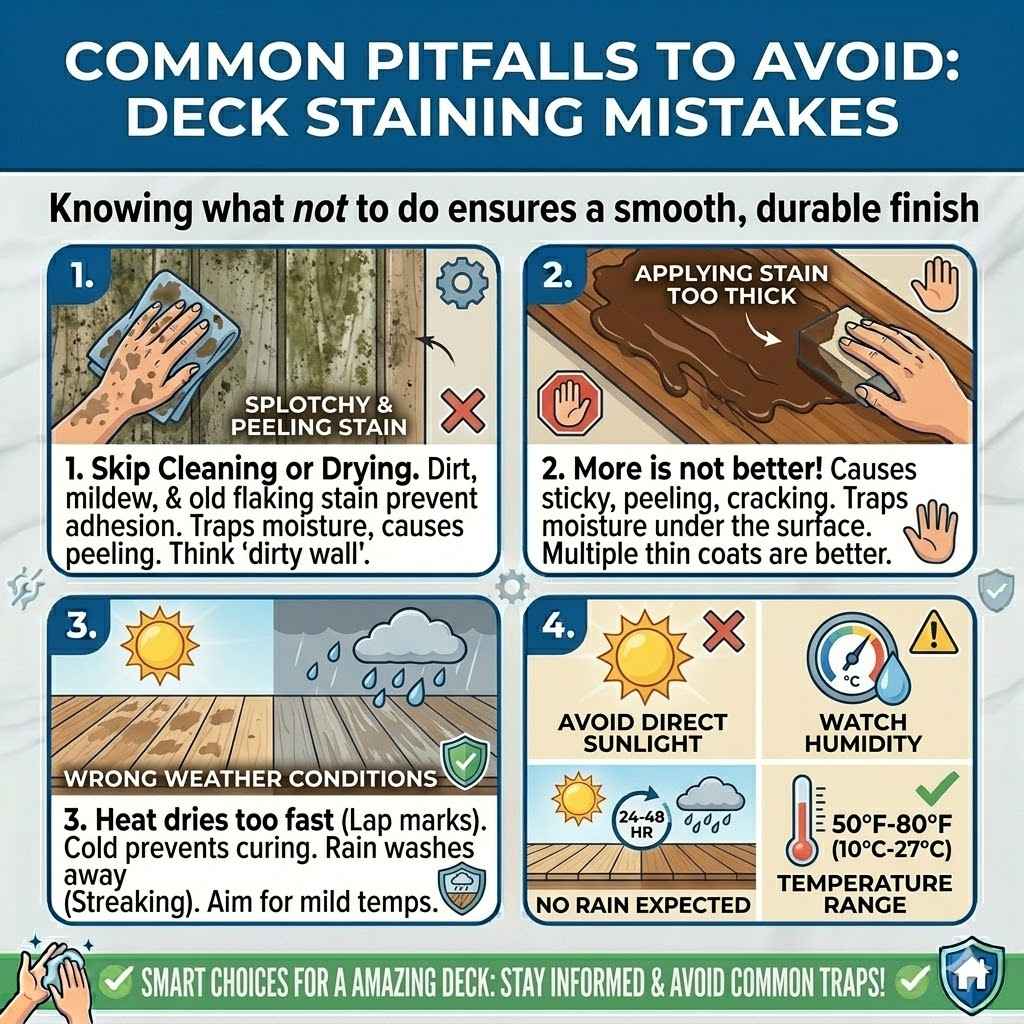
As we talked about, this is a big one. If you skip cleaning or don’t let the deck dry, the stain won’t stick well. It might peel or look splotchy.
Always take the time for proper prep work.
This includes cleaning off dirt, mildew, and any old, flaking stain. You need a clean, dry surface for the stain to adhere to. Think of it like painting a wall; you wouldn’t paint over dirt.
Applying Stain Too Thickly
It might seem like more stain equals more protection. This isn’t true. Applying stain too thick can cause it to become sticky.
It can also lead to peeling and cracking over time. It traps moisture under the surface.
It’s better to apply multiple thin coats. This allows the stain to penetrate the wood properly. It also creates a more even and durable finish.
Always read the manufacturer’s recommendations on application thickness.
Staining In The Wrong Weather
Temperature and humidity play a big role. You don’t want to stain when it’s too hot, too cold, or raining. High heat can make the stain dry too fast.
This leads to lap marks and uneven color.
Very cold temperatures can also prevent proper drying and curing. Rain will wash away the stain before it has a chance to dry. Aim for mild temperatures, usually between 50°F and 80°F (10°C to 27°C).
Check the weather forecast for a few days before and after you plan to stain.
- Avoid Direct Sunlight: Staining in direct sun can dry the stain too quickly, causing streaks.
- Watch for Humidity: High humidity slows drying time. It might prevent the stain from curing properly.
- No Rain Expected: Ensure no rain is forecast for at least 24-48 hours after application.
- Temperature Range: Most stains work best in mild temperatures. Check the product label for specific ranges.
Frequently Asked Questions
Question: Can I use a semi-transparent stain over a transparent stain?
Answer: Yes, you generally can. If the transparent stain is still in good condition, you can apply a semi-transparent stain over it. Ensure the surface is clean and dry.
The semi-transparent stain will add color and coverage.
Question: How often should I restain my deck?
Answer: Transparent stains may need restaining every 1-2 years, while semi-transparent stains can last 2-3 years. This depends on your climate and the amount of sun and wear your deck gets.
Question: Will semi-transparent stain hide all imperfections on my deck?
Answer: Semi-transparent stains can hide minor imperfections like small scratches and fading. However, they are designed to still show the wood grain. They won’t completely cover major flaws or structural issues.
Question: What is the difference between deck stain and deck sealer?
Answer: Deck stain contains pigments for color and protection, and it penetrates the wood. Deck sealer is typically clear and sits more on the surface to repel water. Stains offer better UV protection and color options.
Question: Can I use a darker stain over a lighter one?
Answer: Yes, it is usually possible to go darker. However, going lighter is much more difficult and often impossible without stripping the deck. If you are unsure, it is always best to test the stain in an inconspicuous area.
Summary
Choosing between transparent and semi-transparent deck stain is about balancing natural beauty with protection. Transparent lets wood’s true colors shine, while semi-transparent adds a hint of color and more UV defense. Properly preparing your deck and applying the stain correctly will ensure it looks great and lasts for years.