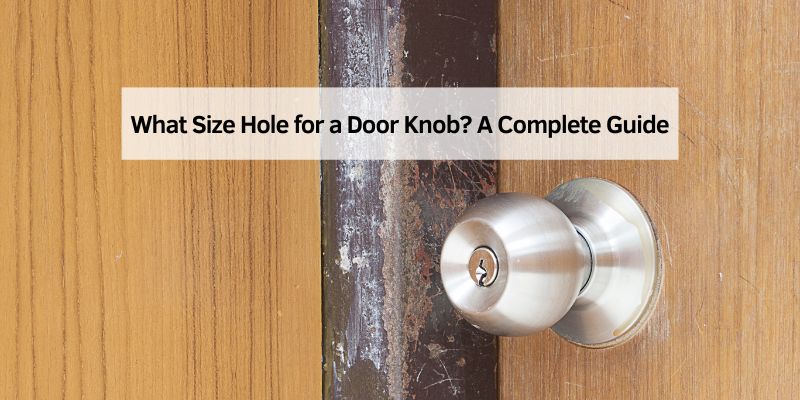
What Size Hole for a Door Knob? A Complete Guide
Hey there! I’m so thrilled you’re here to dive into a question that pops up for anyone tackling a door project: what size hole for a door knob? A few years back, I decided to replace the old, wobbly knob on my front door, and I quickly realized I needed the right hole size to make it work. I grabbed my tools, did some research, and even got advice from a carpenter friend. Let me tell you, it was a fun learning experience! Let’s sit down together, and I’ll share everything I’ve learned about door knob hole sizes in a way that’s clear and easy, like we’re chatting over a cold soda. Whether you’re a DIY newbie or a seasoned handyman, you’ll know exactly how to get that door knob installed perfectly. Ready? Let’s open the door to this project!
Why Door Knob Hole Size Matters
First, let’s talk about why the hole size is a big deal. When I started my project, I thought any hole would do. But the wrong size can make a knob loose or impossible to install. It’s like trying to fit a shoe that’s too big or too small—it just doesn’t work.
The hole size affects safety, too. A poorly fitted knob might not lock properly, and that’s a security risk. I wanted my front door to be strong. It also saves time and money. Drilling the right hole means less patching or buying a new door. Knowing this made me careful to get it right size from the start.
Standard Door Knob Hole Sizes
I learned that door knobs have standard sizes in the U.S. Most residential door knobs need a hole that’s 2⅛ inches in diameter. That’s about the size of a tennis ball. I measured my old knob’s hole, and it was exactly 2⅛ inches.
This size fits most brands like Schlage, Kwikset, and Baldwin. I checked my knob’s packaging, and it confirmed the 2⅛ size. Some commercial or specialty knobs might need different sizes, like 1½ or 2¾ inches, but 2⅛ is the go-to for homes. There’s also a smaller hole, called the backset, which I’ll explain next.
Understanding Backset and Cross Bore
The main hole is called the cross bore, but I needed another hole for the latch. This is the backset. It’s the distance from the door’s edge to the center of the cross bore. I found two common backsets: 2⅜ inches and 2¾ inches.
Most home doors use 2⅜ inches, which is what my front door had. Newer doors might use 2¾ inches for extra strength. I measured my door with a ruler to be sure. The latch hole, where the bolt goes, is usually 1 inch in diameter. Knowing these sizes helped me drill accurately.
Types of Door Knobs and Their Hole Sizes
Not all knobs are the same hole size. Here’s what I learned about different types:
- Passage Knobs: These are for closets or hallways with no lock. They use a 2⅛-inch hole. My closet door has one.
- Privacy Knobs: For bedrooms or offices, they lock from one side. They also need a 2⅛-inch hole. I used one in my bathroom.
- Keyed Entry Knobs: These lock with a key for exterior doors. My front door’s knob needed this, with a 2⅛-inch hole.
- Deadbolts: Often paired with knobs, they need a separate 2⅛-inch hole. I installed one 6 inches above my knob.
- Dummy Knobs: Non-functional for decor. They don’t need a hole, just surface mounting. I saw these in a friend’s home.
- Commercial Knobs: These might need 2¾-inch holes for heavier use. I didn’t use one, but good to know.
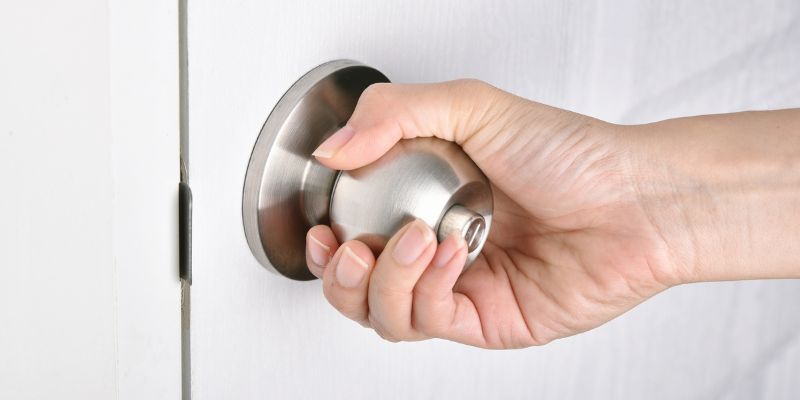
I checked my knob’s manual to confirm its size. Most residential knobs stick to 2⅛ inches, but always checking is smart.
Tools and Supplies You’ll Need
Before drilling, I gathered my tools. Here’s what I used:
- Hole Saw: A 2⅛-inch saw for the main hole. I bought one for $10.
- Drill Bit: A 1-inch spade bit for the latch hole. It cost $5.
- Drill: My cordless drill powered through the wood. I already owned it.
- Tape Measure: Measured backset and placement. Mine was $3.
- Pencil: Marked where to drill. I used a sharp one.
- Screwdriver: Secured the knob. My $5 Phillips worked.
- Chisel: Squared the latch hole. I spent $7 on one.
- Safety Gear: Goggles ($5) and gloves ($3) kept me safe.
- Door Knob Kit: Included the knob, latch, and screws. Mine was $30.
I spent $68 total, but the tools are reusable. Check your kit’s manual for exact sizes.
Measuring Your Door for the Hole
I measured carefully to avoid mistakes. Here’s how I did it:
- Check Door Thickness: Most doors are 1⅜ to 1¾ inches thick. My front door was 1¾ inches.
- Find the Backset: I chose 2⅜ inches, standard for my door. I marked it from the edge.
- Mark Knob Height: I placed the knob 36 inches from the floor, a common height.
- Locate Center Point: I marked the center of the 2⅛-inch hole on both sides of the door.
- Measure Latch Hole: I marked a 1-inch hole at the door’s edge, aligned with the backset.
This took 10 minutes. I used a tape measure and a pencil to be precise. Double-checking saved me from drilling errors.
How to Drill the Hole for a Door Knob
Drilling was the fun part! Here’s how I did it:
- Tape the Door: I put painter’s tape over my marks to prevent splintering.
- Drill Cross Bore: I used a 2⅛-inch hole saw. I drilled halfway from one side, then finished from the other to avoid tearing.
- Drill Latch Hole: I used a 1-inch spade bit at the door’s edge, aligned with the cross bore.
- Clean Edges: I smoothed the holes with sandpaper.
- Test Fit: I placed the latch in the 1-inch hole to check fit.
It took 20 minutes. I wore goggles and went slowly to keep the holes neat. The tape trick worked like a charm!
Table: Door Knob Hole Sizes and Tools
Here’s a table I made to keep it clear:
| Component | Size Needed | Tool Required | Tips |
|---|---|---|---|
| Cross Bore | 2⅛ inches | 2⅛-inch hole saw | Drill from both sides |
| Latch Hole | 1 inch | 1-inch spade bit | Align with backset |
| Backset | 2⅜ or 2¾ inches | Tape measure | Measure from door edge |
| Door Thickness | 1⅜ to 1¾ inches | Tape measure | Check knob compatibility |
| Knob Height | 36 inches from floor | Tape measure, pencil | Standard for comfort |
This kept me organized and confident.
Installing the Door Knob
After drilling, I installed the knob. Here’s my process:
- Insert Latch: I slid the latch into the 1-inch hole. I made sure it faced the right way.
- Secure Latch: I screwed the latch plate to the door edge with my screwdriver.
- Align Knob: I inserted the exterior knob through the 2⅛-inch hole, threading it through the latch.
- Attach Interior Knob: I lined up the interior knob and screwed it to the exterior side.
- Tighten Screws: I used my screwdriver to secure both sides evenly.
- Test Knob: I turned and locked it to ensure smooth operation.
This took 15 minutes. I followed the kit’s instructions to avoid mistakes.
Troubleshooting Drilling and Installation Issues
My first try wasn’t perfect. Here’s how I fixed issues:
- Splintered Wood: I drilled too fast. Sandpaper smoothed it, and tape prevented it next time.
- Misaligned Holes: My latch hole was off. I chiseled to adjust it.
- Loose Knob: I overtightened screws. Loosening them fixed the wobble.
- Latch Sticks: I sanded the latch hole for a snug fit.
- Wrong Size Hole: A friend drilled a 2¾-inch hole. He used a filler plate for $5.
I took my time to catch errors early. If it’s too tricky, a carpenter can help.
Maintaining Your Door Knob
I want my knob to last. Here’s my maintenance routine:
- Lubricate Lock: I spray graphite into the keyhole yearly. It costs $4.
- Clean Knob: I wipe it with a damp cloth to remove dirt.
- Tighten Screws: I check them every six months to prevent loosening.
- Test Lock: I try the key monthly to catch issues.
- Polish Finish: I use a metal cleaner for my brass knob. It’s $3.
This takes 10 minutes a year and keeps my knob shiny and smooth.
Costs of Installing a Door Knob
I tracked my expenses. Here’s the breakdown:
- Door Knob Kit: $20-$50. I paid $30.
- Tools: Hole saw ($10), spade bit ($5), tape measure ($3), screwdriver ($5), chisel ($7), goggles ($5), gloves ($3). Total: $38.
- Supplies: Painter’s tape ($3), sandpaper ($2), graphite ($4). Total: $9.
- Professional Help: A carpenter charges $50-$150. I did it myself.
- Maintenance: Graphite ($4), cleaner ($3). Total: $7 yearly.
I spent $77 total. DIY saved me $100 compared to hiring a pro.
Safety Tips for Drilling and Installation
I stayed safe while working. Here’s how:
- Wear Goggles: Protected my eyes from sawdust.
- Use Gloves: Kept my hands safe from sharp tools.
- Secure Door: I propped it open to avoid movement.
- Work Slowly: I drilled steadily to prevent slips.
- Keep Kids Away: I worked when my kids were out.
These kept me safe and my door intact. I cleaned up the sawdust after.
Environmental Impact of Door Knob Installation
I care about the planet, so I looked at the impact. Drilling a hole is low-waste compared to replacing a door. My knob’s metal is recyclable, and I used eco-friendly cleaners like vinegar for maintenance. I saved the old knob for a future project instead of tossing it. It’s a small way to keep my home green.
When to Call a Professional
I handled the job myself, but sometimes a pro is needed. I’d call a carpenter if:
- Complex Door: Glass or metal doors are tricky. My friend paid $100 for one.
- No Tools: Drilling needs a hole saw. A pro has everything.
- Multiple Doors: Installing five knobs takes time. A pro does it for $200.
- Damaged Door: If I mess up drilling, a pro can fix it.
- No Confidence: I’d hire out if I felt unsure.
I found a local carpenter for $50 per door. DIY was fun for me, though.
Why the Right Hole Size Is Key
Getting the hole size right made my knob look professional and secure. It’s a small detail that affects how well the lock works and how safe it feels to leave my home. I love how my front door locks smoothly now. It’s a quick project that boosts your home’s safety and your DIY pride.
Wrapping It Up!
So, what size hole do you need for a door knob? A 2⅛-inch cross bore and a 1-inch latch hole are standard for most U.S. home knobs, with a 2⅜-inch backset. I went from clueless about door knobs to confident, drilling perfect holes and installing a sturdy lock in under an hour. By measuring carefully, using the right tools, and following simple steps, you can upgrade your door like a pro. Grab your drill, mark that spot, and give it a try—you’ve got this! Your home will feel safer, and you’ll love showing off your handiwork. Thanks for diving into this with me—here’s to secure doors and happy homes!
FAQs
What size hole do most door knobs need?
Most need a 2⅛-inch hole for my front door. It’s standard. A 1-inch hole is for the latch plate.
How do I measure for a door knob hole?
I used a tape measure to mark 36 inches high and 2⅜ inches from the edge. Double-check both sides.
Can I drill a door knob hole without a hole saw?
It’s tough. I tried a spade bit once, but it splintered. A $10 hole saw is worth it.
What if I drill the wrong size hole?
I heard of a friend who used a filler plate for $5. I measured carefully to avoid this.
How much does it cost to install a door knob?
I spent $70 on a kit and tools. A pro charges $50-$150, but DIY saves money.