Where Did Noah Get The Wood To Build The Ark? Historians Say
It’s a question many people ponder, especially when thinking about the sheer scale of Noah’s Ark. Where did he even find that much wood? And what kind of wood was it?
It’s not just a story; it’s a massive engineering project. We’ll dive into what historians and biblical scholars have to say. We’ll look at the types of trees that might have been around.
We’ll also consider how Noah might have gathered and worked with the materials. This will help us understand this incredible feat.
The Bible says Noah built the Ark from gopher wood. It was a huge vessel. It needed a lot of strong, durable material. Scholars think gopher wood was likely a type of resinous tree. These trees are known for being long-lasting and water-resistant.
Understanding Gopher Wood
The most direct answer comes from the Bible itself. The book of Genesis tells us Noah was instructed to build the Ark from gopher wood. The verse is in Genesis 6:14: “Make for yourself an ark of gopher wood; make rooms in the ark, and cover it with pitch inside and out.” That’s pretty clear about the material.
But what exactly is gopher wood?
This is where things get a bit mysterious. The word “gopher” is not a common tree name today. It appears only once in the Bible.
This has led to a lot of speculation. Some scholars believe it was a specific type of tree. Others think it was a general term for a kind of wood.
We don’t have a direct match in modern botany.
However, many experts lean towards certain types of trees. These trees would have made sense for a large boat. They needed to last a long time.
They also had to withstand constant water. Trees like pine, fir, or cypress are often mentioned. These are all coniferous trees.
They are known for their strength and resistance to rot and insects. They also grow in large sizes, which would be needed for such a massive undertaking.
Pine trees, for example, are plentiful in many regions. They are relatively easy to work with. They also have natural oils that help with waterproofing.
Fir trees are also strong and durable. Cypress trees are famous for their longevity. They grow in wet environments and are very resistant to decay.
This makes them ideal for watercraft.
So, while we can’t point to a single “gopher tree” today, the description fits these types of strong, water-loving trees. Noah needed material that wouldn’t rot quickly in the floodwaters. He needed wood that could support an enormous structure.
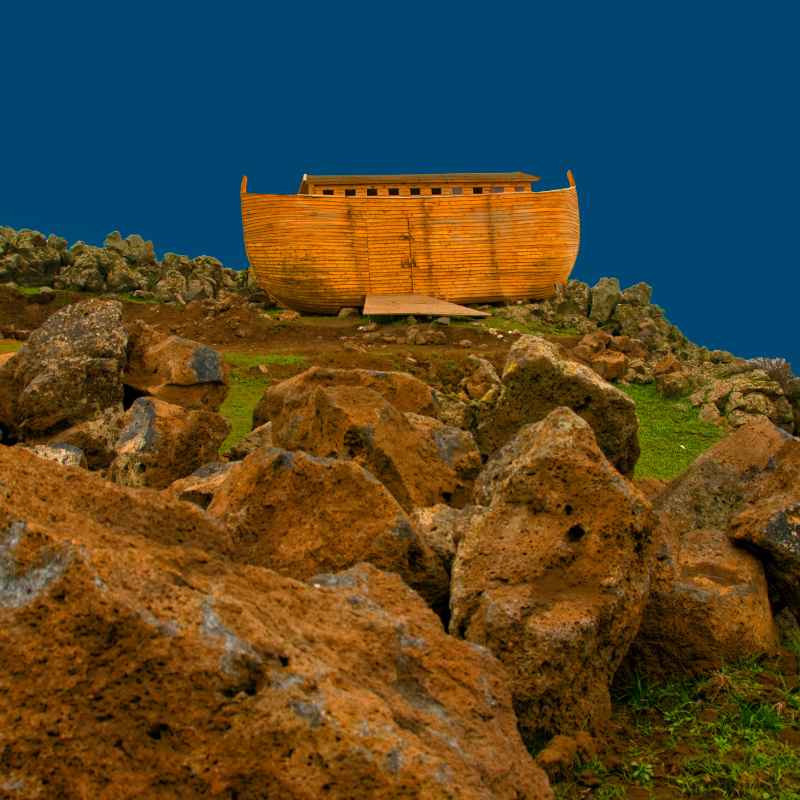
The Scale of the Ark and Material Needs
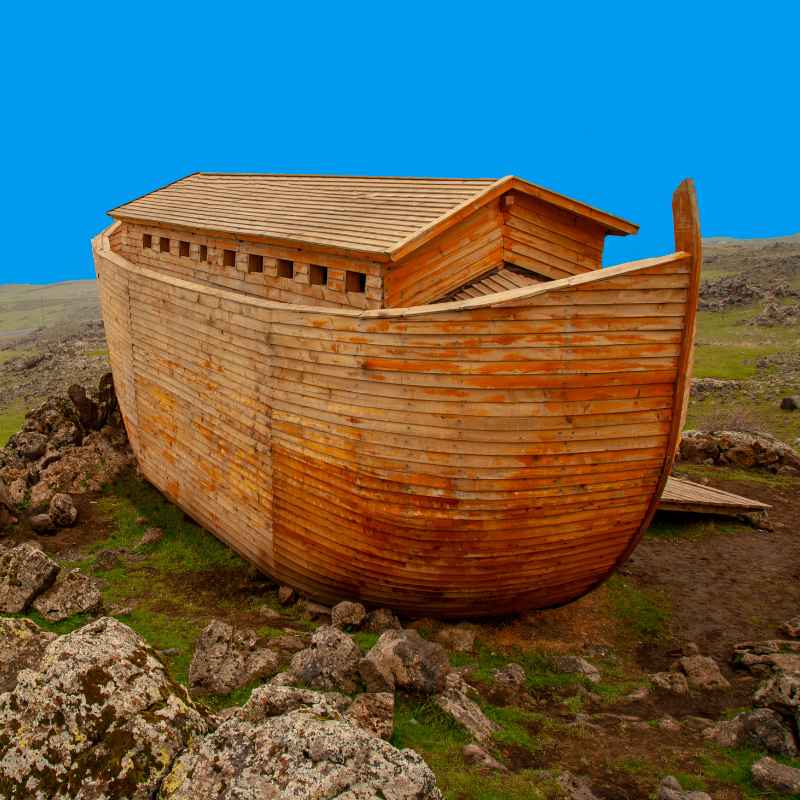
Let’s talk about how big this Ark was. The Bible gives us dimensions. It was about 300 cubits long.
A cubit is an ancient unit of measurement. It’s usually thought to be about 18 inches, or 1.5 feet. So, the Ark was roughly 450 feet long.
It was 75 feet wide and 45 feet high. That’s longer than a football field!
Building something that large requires an immense amount of wood. Think about building a modern ship. You need thousands of large trees.
These trees need to be harvested, transported, and shaped. This wasn’t a small shed; it was a colossal vessel designed to survive a global flood.
Estimates suggest that the Ark would have required the equivalent of millions of board feet of lumber. This is a staggering amount. To put it in perspective, a typical house might use tens of thousands of board feet.
The Ark was vastly larger than any single structure built by humans before or since, at least historically speaking.
Where would Noah get all this wood? The Bible doesn’t give us details about the sourcing. It focuses on the building instructions.
However, we can infer a few things. Noah was a righteous man. He lived in a time before widespread industrialization.
He likely had help. The Bible mentions his sons helped him build the Ark.
It’s plausible that Noah and his family worked with their community. They might have had to gather wood from a specific area. Perhaps there were forests nearby.
Or maybe they had to transport logs from further away. This would have been a massive logistical operation. It would have taken many years, as the Bible states Noah was building it for a long time.
The process would involve felling large trees. Then, they would have had to shape the logs. They would need to cut them into planks.
This would require tools. Ancient tools would have been much simpler than today. They likely used stone axes, saws, and wedges.
It would have been labor-intensive work.
Beyond the wood itself, the Ark needed to be waterproofed. Genesis mentions Noah covering the Ark with pitch. Pitch is a tar-like substance.
It’s naturally waterproof. It would have sealed the seams between the planks. It would have also protected the wood from the water.
This pitch would have come from trees too, likely from pine trees which produce a lot of resin.
Material Breakdown: What Was Needed?
Primary Material: Gopher Wood (Likely Pine, Fir, or Cypress)
- Strength and Durability: Essential for hull integrity.
- Water Resistance: Needed to prevent rot and leaks.
- Availability: Large trees required for massive planks.
Secondary Material: Pitch (Bitumen or Tar)
- Waterproofing: Sealed the seams and exterior.
- Preservation: Protected the wood from decay.
- Source: Likely derived from tree sap or natural asphalt deposits.
Tools: Stone axes, saws, hammers, chisels, wedges.
- Labor Intensive: Shaping large timbers was difficult.
- Precision Required: For fitting planks and creating a watertight structure.
Historical Context and Tree Availability
To understand where Noah got his wood, we need to consider the world at that time. The Bible describes a global flood. This event, if it occurred as described, would have reshaped the landscape.
Before the flood, the Earth was very different. Many scientists suggest a much older Earth with different climates and ecosystems.
If we consider the timeframe of the biblical narrative, humanity was still in its early stages. Noah was a descendant of Adam and Eve. He lived many generations after creation.
It’s reasonable to assume that forests existed. Large trees would have been abundant in many areas of the world.
Consider the earliest human civilizations. They often settled near forests. They used wood for shelter, tools, and fuel.
This shows that wood was a primary building material available to ancient people. It’s not a stretch to imagine vast forests existing in Noah’s time.
The Bible doesn’t specify Noah’s geographical location. However, the Middle East has historically been a region with forests. Areas like Mount Ararat, where the Ark is traditionally believed to have landed, are mountainous.
Mountains often have forests. Even plains could have supported large trees.
Some geological and archaeological theories suggest that the land bridge between Asia and Africa might have had different vegetation patterns. Ancient flood myths from various cultures also hint at cataclysmic events. These myths often involve humans surviving by building vessels.
They speak to a common ancestral memory or interpretation of natural disasters.
It’s also worth noting that the life spans of people in the early Bible were very long. Noah himself lived for 950 years. This suggests a different biological or environmental reality.
Perhaps the trees also grew to larger sizes or had different properties.
The idea of gathering wood over a long period makes the task more manageable. If Noah spent 100 years building the Ark, as some interpretations suggest, he had ample time. He and his sons could have slowly collected and prepared the necessary lumber.
They could have transported it to the construction site.
This wasn’t an overnight project. It was a generational undertaking. It required planning, labor, and a deep understanding of materials.
The availability of large, suitable trees was likely not a major obstacle in a world that was, by many accounts, lush and verdant.
Tree Types and Their Properties
Pine (Pinus genus)
- Pros: Abundant, strong, easy to work with, contains natural oils for water resistance.
- Cons: Some species are less durable than others.
Fir (Abies genus)
- Pros: Strong, straight trunks, good for large timbers, relatively rot-resistant.
- Cons: Can be heavy.
Cypress (Cupressus genus)
- Pros: Extremely durable, highly resistant to rot and insects, thrives in wet conditions.
- Cons: Can be harder to work with than pine.
Cedar (Cedrus genus)
- Pros: Aromatic, rot-resistant, strong.
- Cons: May not grow to the same massive sizes as some pines or firs.
Conclusion: Any of these types, or a combination, could have served as “gopher wood.” They all possess the qualities needed for a seaworthy vessel.
The Building Process: Labor and Tools
Let’s imagine Noah and his sons actually building the Ark. It’s not just about the wood. It’s about how they put it together.
Building a structure of that size with ancient tools is hard to picture. But ancient people were very skilled builders.
We see evidence of this in pyramids, Stonehenge, and other ancient monuments. These projects required immense labor and clever engineering. They didn’t have power saws or cranes.
They used leverage, ramps, and sheer manpower. They also had specialized tools.
For felling trees, they would have used sharpened stones. These were likely attached to wooden handles. Over time, these evolved into bronze and then iron tools.
If Noah lived before the widespread use of iron, he would have used stone or copper tools. These are less efficient but still capable of doing the job.
After felling a tree, they would have stripped it of branches. Then, they would have transported the logs. This might have involved rolling them or using sledges.
They would have used levers to move heavy objects. They might have also used water for transport, floating logs down rivers.
Once at the construction site, the logs would be shaped. They needed to be cut into planks. This would be done with stone or metal saws.
Then, the planks would be joined together. The Bible says the Ark was built in rooms. This implies internal divisions and supports.
The joints would have been critical. They needed to be tight and strong. They might have used wooden pegs.
They might have also used some form of ancient adhesive or sealant. The final step of applying pitch would have been crucial for making it watertight.
Think about the skill involved. Creating large, flat planks from rough logs. Shaping them to fit together perfectly.
Building internal walls and beams. This requires a lot of carpentry skill. Noah was described as a “preacher of righteousness.” But he was also clearly a skilled craftsman.
The time frame is key. If Noah was building for centuries, the work could be done incrementally. Young men could learn the trade from their fathers.
Generations of knowledge could be passed down. This would allow for the mastery of difficult techniques.
The sheer effort involved is hard to comprehend. Imagine hundreds of thousands of trees being cut down. Logs being moved.
Planks being sawn. All by hand, with basic tools. It highlights the commitment Noah had to the task.
He was following divine instructions. He was preparing for a world-changing event.
Infographic: The Ark Building Process
Phase 1: Site Selection & Preparation
Choose a suitable location near forests and a water source (if available for floating logs).
Phase 2: Timber Harvesting
Fell large, mature trees suitable for building (gopher wood).
Phase 3: Log Transport
Move logs to the construction site using leverage, rolling, sledges, or water.
Phase 4: Plank Preparation
Saw logs into planks and shape them using hand tools.
Phase 5: Ark Assembly
Construct the hull, internal rooms, decks, and supports.
Phase 6: Waterproofing
Apply multiple layers of pitch to the inside and outside of the Ark.
The “Gopher” Mystery: Alternative Theories
The exact meaning of “gopher wood” remains a puzzle. While pine, fir, or cypress are the most common suggestions, some other ideas exist.
One theory is that “gopher” comes from a Hebrew word. This word might describe the method of preparation. It could mean “smoothed” or “planed” wood.
This would refer to the finished state of the lumber. It doesn’t tell us the tree type, but the quality of the material.
Another idea is that “gopher” is related to the structure. Perhaps it refers to the nesting or box-like construction of the Ark. The word “gopher” is also associated with “gopher tunnels” in Hebrew.
This could imply a wood that was good for burrowing or building compartments.
Some scholars have even suggested it wasn’t a single tree species. It could have been a composite material. Or a general term for wood that was suitable for shipbuilding.
It needed to be strong, light, and buoyant.
What about other ancient texts? Do they offer clues? Many ancient flood narratives exist.
The Epic of Gilgamesh, for example, describes a similar flood and a large boat. The boat in that story is described as a cube. It’s made of reeds and bitumen.
This is a different material and shape. However, it shows a common need for durable, waterproof materials in flood survival stories.
The Book of Jubilees, an ancient Jewish text, mentions Noah using cedar and cypress. It also mentions acacia and juniper. This text is not part of the canonical Bible.
But it reflects traditions and interpretations from the time it was written. It shows that people were trying to identify the wood. They were applying their knowledge of available materials.
The most practical approach is to focus on the function. Noah needed wood that would float. Wood that wouldn’t rot in the water.
Wood that could be shaped into a strong, watertight hull. Pine, fir, and cypress all fit this description well. They are known for their buoyancy and durability.
They also grow in large sizes.
The mystery of “gopher wood” adds to the mystique of the Ark. But the core requirements are clear. Noah had to find and process vast quantities of suitable timber.
He had to build a remarkable vessel with the tools and knowledge available to him.
Myth vs. Reality: Understanding “Gopher Wood”
Myth: Gopher wood is a fictional tree from the Bible.
Reality: Gopher wood is a Hebrew term for a specific type of wood used for the Ark. Its exact identification is debated, but likely refers to resilient coniferous trees.
Myth: Noah had access to modern tools and knowledge.
Reality: Noah built the Ark using ancient tools and methods, requiring immense skill and labor over many years.
Myth: The Ark was a small boat.
Reality: The Ark was a colossal structure, estimated to be 450 feet long, requiring millions of board feet of lumber.
What This Means for You
Thinking about where Noah got the wood for the Ark can seem like a small detail. But it speaks to bigger ideas. It shows us the importance of understanding materials.
It highlights human ingenuity. It also shows faith in action.
For builders today, the principles remain the same. You need the right materials for the job. You need the right tools.
And you need the knowledge to use them effectively. Whether building a house or a boat, quality and suitability are key.
It also reminds us that great projects take time. They require patience and perseverance. Noah didn’t just wish the Ark into existence.
He worked on it for years. He followed instructions carefully. This is a lesson for any significant endeavor.
When we look at the Ark, we see a testament to faith and obedience. The physical act of gathering and building was a massive undertaking. It required resources, skill, and dedication.
Understanding the wood and the process helps us appreciate the scale of that commitment.
So, the next time you hear the story of Noah’s Ark, you can think about the trees. You can imagine the vast forests. You can picture the labor.
It’s a story that combines faith with practical, hands-on construction. It reminds us that even seemingly impossible tasks can be achieved with the right plan and plenty of hard work.
The details about “gopher wood” might be debated. But the core message is clear. Noah had access to the resources he needed.
He used them wisely. He built what he was instructed to build. And in doing so, he saved his family and the future of life on Earth.
Frequently Asked Questions about the Ark’s Wood
What does the Bible say about the wood used to build the Ark?
The Bible, in Genesis 6:14, instructs Noah to build the Ark of gopher wood. It doesn’t specify the exact type of tree, leaving room for interpretation by scholars.
What is gopher wood, and where did Noah get it?
The exact identification of gopher wood is uncertain. Most scholars believe it refers to a type of strong, durable, and water-resistant wood. Likely candidates include pine, fir, or cypress trees, which would have been available in forests.
How could Noah have gathered so much wood?
The Bible states Noah spent many years building the Ark. He likely worked with his sons and potentially others. They could have harvested trees over a long period, gradually collecting and preparing the vast amount of lumber needed.
Were there large trees available for Noah to use?
Yes, it is widely believed that in the ancient world, before extensive deforestation, large forests with massive trees were common. These would have provided the necessary timber for a structure as large as the Ark.
What other materials did Noah need besides wood?
Besides gopher wood, Noah was instructed to cover the Ark with pitch (a waterproof sealant) inside and out. Pitch would have protected the wood and made the vessel watertight. Pitch was likely derived from tree resins or bitumen.
Did Noah have the right tools to build the Ark?
Noah would have used the tools available at the time. These would likely include stone or early metal axes, saws, hammers, and chisels. Building the Ark would have been a massive undertaking requiring great skill and labor with these tools.
Why is the type of wood important?
The type of wood is important because it needed to be buoyant, strong, and resistant to rot to withstand a global flood for an extended period. The choice of gopher wood, whatever its exact identity, was crucial for the Ark’s integrity.
Conclusion: A Testament to Ingenuity and Faith
The question of where Noah got the wood for the Ark leads us down a fascinating path. It explores ancient texts, natural history, and human ingenuity. While the exact identity of gopher wood remains a mystery, its likely characteristics point to strong, durable trees.
These trees were plentiful in the ancient world. Noah’s task was immense. It required years of labor, skilled craftsmanship, and unwavering faith.
The Ark stands as a powerful symbol of obedience and survival.