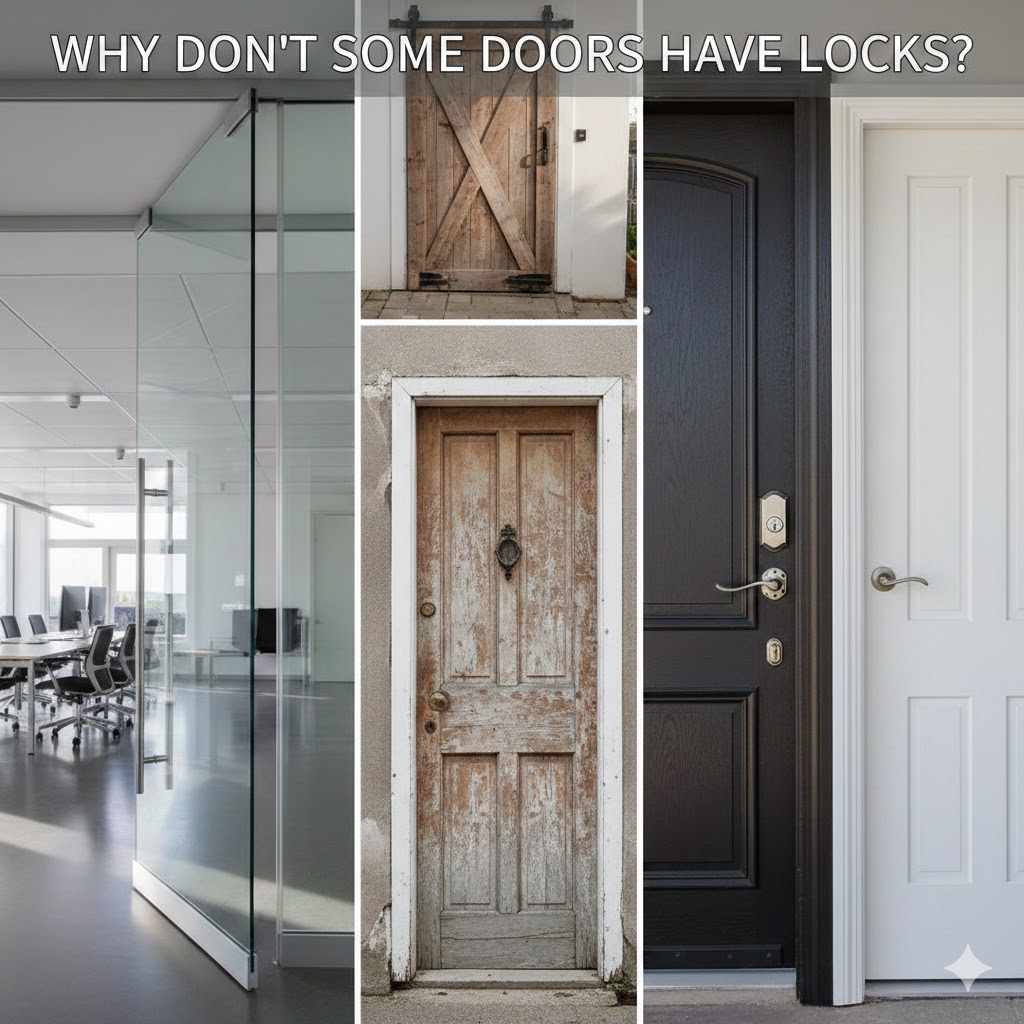
Why Don’t Some Doors Have Locks?
Sometimes a question pops into your head and you just can’t shake it. One of those curious things is, why don’t some doors have locks? It seems odd, right?
You might wonder if there’s a big secret behind it. Don’t worry! This is a common thought, and figuring out the answer is simpler than you think.
We’ll walk through it step-by-step. Let’s explore the reasons and what it means.
Understanding Why Doors Go Unlocked
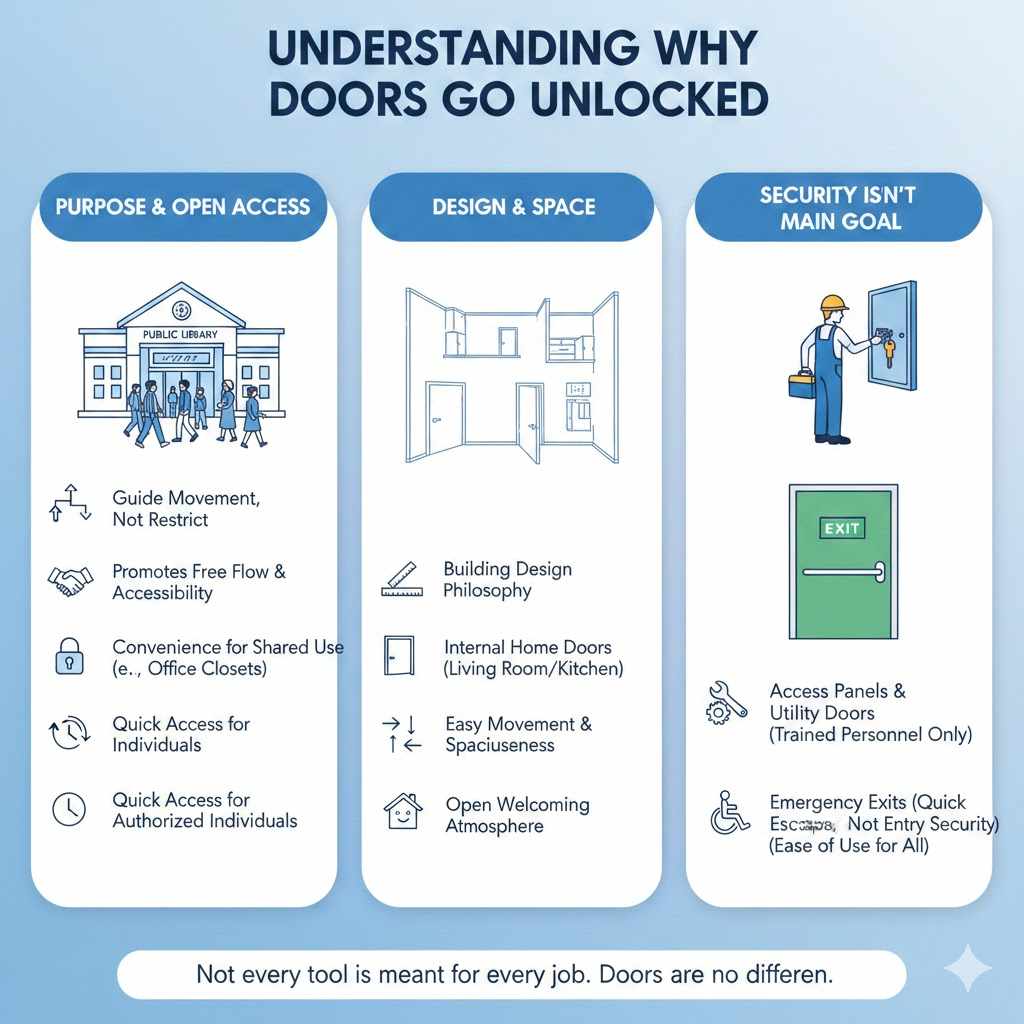
The simple fact that some doors lack locks is a result of many factors, mostly revolving around purpose, design, and necessity. It’s not about security in every situation, but rather about how a space is meant to be used and accessed. Think about it like this: not every tool is meant for every job.
Doors are no different. Their presence or absence of a lock signals their intended function within a building or a specific area.
The Purpose Behind Open Access
Many doors exist to guide movement, not to restrict it. In public buildings, for instance, doors leading to restrooms or common areas often don’t have locks. This is so people can easily enter and exit without needing a key.
It promotes a free flow of people and accessibility. Imagine a library’s reading room door; it’s meant to welcome anyone who wishes to enter and read, not to keep people out.
Consider a door that opens to a small storage closet in a shared office space. If everyone in the office has access to the items inside, a lock would be an unnecessary hassle. It’s designed for convenience and shared use.
The primary goal here is easy, quick access for authorized individuals.
The design of a building often dictates whether a door needs a lock. For internal doors within a home, like between a living room and a kitchen, locks are rarely installed. These spaces are meant to be open and connected for family life.
The focus is on easy movement and a feeling of spaciousness. The absence of a lock on these doors contributes to this open, welcoming atmosphere.
- Ease of Movement: Many doors are simply there to guide people. They aren’t meant to stop anyone. This is common in public spaces where free access is important.
- Shared Spaces: In places where many people use the same area, like a break room or a supply closet, locks can be inconvenient. Everyone needs to get in easily.
- Building Design Philosophy: Architects and builders decide where locks are needed based on how a building will be used. Some designs prioritize openness over strict security for certain doors.
When Security Isn’t The Main Goal
Not every door is designed to keep something in or out. Some doors serve a more functional role in the building’s infrastructure. For example, a small access panel for electrical wiring or a utility closet door might not have a lock.
These are typically accessed only by maintenance staff who carry their own tools or have a master key.
The idea is that if only a specific group of people needs to get to a certain area, and they have the means to do so without a permanent lock, then a lock isn’t installed. This saves on costs and simplifies maintenance. It assumes that unauthorized people wouldn’t typically need or even know how to access these areas.
Think about a fire exit door. While it might have a mechanism to open it from the inside, it often doesn’t have a lock on the outside that a regular person could use to enter. Its purpose is to allow people to escape quickly in an emergency, not to provide security against intruders.
This highlights how the primary function of a door dictates its features.
Accessibility is also a key consideration. Doors that are required to be accessible to people with disabilities, such as those in wheelchairs, might be designed without locks that could impede their movement or require complex operation. This ensures that everyone can use the space freely and safely.
- Access Panels and Utility Doors: These doors often don’t need locks because only trained personnel access them. They might use special tools or master keys instead.
- Emergency Exits: These doors prioritize quick escape during emergencies. They are designed to open easily from the inside, but not necessarily to be locked from the outside for security.
- Accessibility Requirements: Doors intended for public use, especially those that must accommodate individuals with disabilities, often avoid locks that could be difficult to operate.
The Different Types of Doors and Their Locks
The world of doors and locks is vast, with each type serving a unique purpose. Understanding these differences helps explain why some doors are secured and others are not. From the heavy-duty security of a bank vault to the simple privacy of a bedroom, locks are designed to match the need.
Residential Doors
When we think of our homes, security is usually a top priority. Most exterior doors of a house will have robust locks. This includes deadbolts and doorknobs with locking mechanisms.
These are designed to prevent unwanted entry and protect the people and belongings inside.
However, even within a home, not all doors are locked. Interior doors like those for bathrooms or bedrooms often have simple privacy locks. These locks are easy to operate from the inside and can be unlocked from the outside with a small tool or by a specific key.
Their main purpose is to provide privacy for the person using the room.
Hallway doors or doors leading to less frequently used areas like attics might have simpler latch mechanisms without a dedicated lock. This is because they are not typically seen as points of vulnerability for the home’s overall security.
Consider the difference between a front door, which has a strong deadbolt, and a closet door in a guest room. The front door is the first line of defense. The closet door’s main job is to keep things tidy and out of sight, not to deter a determined intruder.
The locking mechanism reflects this difference in priority.
- Exterior Doors: These are usually equipped with strong deadbolts and keyed doorknobs for maximum security against break-ins.
- Interior Privacy Doors: Bathroom and bedroom doors often have privacy locks that can be easily managed from the inside and sometimes from the outside with a simple tool.
- Less Critical Interior Doors: Doors to storage areas or hallways might have basic latches without specific locking mechanisms, focusing more on keeping areas closed than secured.
Commercial and Public Building Doors
In places like offices, schools, or shops, the need for locks varies greatly. Entrance doors to buildings will have strong locks, often integrated with electronic access systems. These control who can enter and when.
Internal office doors might have locks to secure individual offices or meeting rooms. This allows for private discussions or secure storage of sensitive documents. The type of lock can range from a simple keyed knob to a more advanced card reader system.
However, many doors in public areas of these buildings, such as hallways, stairwells, or restrooms, do not have locks. Their purpose is to facilitate easy movement for all occupants and visitors. Emergency exit doors are designed to open outwards easily for evacuation, but typically cannot be locked from the outside.
For instance, a door leading to a public restroom will have a simple occupancy indicator (occupied/vacant) rather than a keyed lock. This makes it easy for anyone to use the facility without needing a key. The focus is on immediate availability and convenience for the general public.
A real-life example is seen in most retail stores. The main entrance and staff-only doors have security measures. But doors leading to fitting rooms or customer service areas are designed for open access and privacy without complex locking systems.
This ensures a smooth customer experience.
- Main Entrances and Secure Areas: Offices and commercial buildings use advanced locks and access controls for main doors and sensitive rooms to manage entry.
- Public Access Doors: Doors in common areas like hallways, stairwells, and restrooms generally do not have locks to ensure ease of use for everyone.
- Emergency Exits: These are designed for swift evacuation. They open easily from the inside but usually cannot be secured from the outside.
Specialized Doors
Some doors have very specific security needs. Think of a bank vault door; it’s a massive, heavy structure with complex locking mechanisms designed for maximum security. These are the opposite of doors without locks.
On the other hand, doors that are meant to be constantly open or only temporarily closed might not have locks at all. A classic example is a revolving door at the entrance of a building. While it controls airflow and movement, it doesn’t have a lock in the traditional sense.
Its design is for continuous passage.
Another category includes doors that are part of a larger system, like a car wash entry or an automated gate. These are controlled electronically and might not have manual locks that people can use. Their operation is tied to sensors or payment systems.
Consider a theatrical stage door. While it might have a lock for when the theater is closed, during performance times, it’s often monitored by staff and might be kept unlocked for performers and crew to enter and exit. Its security needs change based on the context of its use.
A practical scenario is a gate to a community garden. Some might have simple latches that are easy to operate. Others might be left unlocked during daylight hours for community members to access freely.
The lock, or lack thereof, depends on the garden’s rules and how it’s managed.
- High-Security Doors: Doors like bank vaults have very advanced and heavy-duty locks because their primary purpose is extreme security.
- Automated and System-Controlled Doors: Doors that are part of larger automated systems, like car washes or controlled entryways, may not have traditional manual locks.
- Context-Dependent Access: The need for a lock can change based on the time of day or specific activities happening in an area, like a theater stage door.
Factors Influencing Lock Installation
Deciding whether a door needs a lock involves several considerations. It’s not just about personal preference; it’s about the function, location, and expected use of the door.
Cost and Maintenance
Installing locks costs money, both for the hardware itself and for the labor to put it in. For doors that don’t require a high level of security, the expense of adding a lock might not be justifiable. The cost of maintaining locks, including repairs or replacements over time, also plays a role.
Businesses and homeowners look for the best value. If a door serves a non-critical purpose, like separating two common areas in a home, the money saved by not installing a lock can be put to better use elsewhere. This is especially true for doors that might be damaged or need frequent use, increasing maintenance needs.
Think about a simple shed door versus a house’s main entrance. The shed might only need a basic latch because the items inside are not extremely valuable or the risk of theft is lower. The main entrance needs a robust lock because the stakes are much higher.
The cost reflects the level of protection desired.
Furthermore, maintenance can be a significant factor. Locks can break, get jammed, or require lubrication. For doors that are used frequently or exposed to weather, the wear and tear can be substantial.
Opting for no lock on less critical doors reduces these ongoing costs and potential headaches.
- Initial Expense: The purchase price of locks and installation fees are significant. For doors where security is not paramount, avoiding this cost is a practical choice.
- Ongoing Costs: Locks require maintenance, repairs, and eventual
- Durability Needs: Frequently used doors or those exposed to harsh conditions might wear out locks quickly. Choosing simpler mechanisms or no lock can prolong the life of the door system.
Accessibility and Convenience
In many situations, the primary goal is to make it easy for people to get where they need to go. Locks can be a barrier to this. For public spaces, shops, or even within a home, convenience is often prioritized over strict security for certain doors.
Imagine a door leading to a small public park or a community garden. If it’s meant to be open for people to enjoy during daylight hours, a lock would prevent that easy access. The intention is to invite people in, not to control their entry with a key.
The same logic applies to many doors in hospitals or care facilities where quick access is essential for staff and patients.
Consider the doors in a busy restaurant kitchen. They need to open quickly and easily for staff moving in and out with food and supplies. Complex locks would slow down operations significantly.
A simple swing door or a push-bar system is much more practical.
A good example is a door to a community center’s main hall. It needs to be accessible to anyone attending an event. Requiring a key or code would defeat the purpose of a public gathering space.
Therefore, it remains unlocked during operating hours.
Real-life statistics show that ease of access is a major design consideration. A study by the National Association of Home Builders found that while security is important for exterior doors, homeowners often prefer less restrictive options for interior doors to maintain a sense of openness and flow. This emphasizes the balance between security and convenience.
- User Experience: For public or frequently used doors, the ability to enter and exit without fumbling for keys greatly improves the user experience.
- Operational Flow: In environments like kitchens or busy offices, quick and easy passage through doors is critical for efficiency and workflow.
- Public Space Design: Doors in areas intended for general public use are typically designed for open access to encourage community participation and ease of use.
Aesthetics and Design
The appearance of a door and its hardware can significantly impact the overall look of a space. Some locking mechanisms can be bulky or visually unappealing. Designers often opt for doors without locks, or with more discreet locking systems, to maintain a clean and elegant aesthetic.
For example, a minimalist interior design might call for doors with flush handles and minimal visible hardware. A prominent lock could detract from the sleek lines and intended visual simplicity. In such cases, alternative methods of securing a door, like magnetic catches or roller catches, might be used if some level of closure is needed, or no closure at all if it’s just for guidance.
Think about a modern art gallery. The doors might be designed to blend seamlessly into the walls. Adding visible locks would disrupt the visual harmony.
The focus is on the art, and the architecture serves to complement it, not to draw attention with heavy security hardware.
A sample scenario could be a homeowner wanting a seamless look between their living room and dining room. They might opt for pocket doors or large sliding doors that don’t have traditional locks. The aesthetic goal is to create a continuous, flowing space, and visible locks would break this visual continuity.
In commercial design, large glass doors that welcome natural light might be chosen for their aesthetic appeal and the feeling of openness they create. While they can be secured, the choice of hardware is often made to complement the transparency and lightness of the glass, sometimes prioritizing a sleek, unobtrusive locking mechanism over a heavy-duty one.
- Visual Harmony: Locks can sometimes detract from the intended look of a door or room. Designers may choose doors without visible locks to maintain a clean and cohesive aesthetic.
- Minimalist Design: In modern or minimalist spaces, the absence of visible hardware, including locks, is often preferred to achieve a streamlined and uncluttered appearance.
- Architectural Integration: Doors designed to blend into walls or feature large glass panels often use discreet locking systems or rely on other security measures to preserve their visual impact.
Why Don’t Some Doors Have Locks? Common Scenarios
Let’s look at some everyday situations where you’ll find doors without locks, and understand the reasoning behind them.
Internal Doors in Homes
As mentioned, many doors inside a house don’t have locks. This is for convenience and privacy. A door between a kitchen and a dining room, for example, is usually just a passage.
Its purpose is to define spaces, not to secure them.
Think about a door that separates a hallway from a playroom. While you might want to keep the children in the playroom, a lock isn’t always the solution. Often, parents prefer doors that can be easily opened and closed, or they use baby gates.
The goal is supervision, not a locked barrier.
A sample scenario: A family has a door leading from their garage into their mudroom. This door is rarely locked from the inside. It’s primarily used for transferring items and for family members to enter and exit.
The main security for the house comes from the garage door and the front door.
- Defining Spaces: These doors serve to separate areas functionally or visually without needing to restrict access.
- Easy Supervision: For areas where children are present, parents often prefer doors that can be quickly opened for supervision rather than locked.
- Convenient Transitions: Doors between common living areas are usually kept unlocked to facilitate the easy flow of household members.
Public Restroom Doors
The doors to public restrooms are a prime example of doors that don’t have keyed locks. They use a different mechanism to indicate occupancy. A simple turn-button or sliding bolt on the inside lets you know if it’s free or taken.
This design is crucial for public hygiene and convenience. Imagine the chaos if every public restroom required a key. It would be impractical for everyone.
The system of showing ‘occupied’ or ‘vacant’ is universally understood and efficient.
A real-life example is every airport or shopping mall restroom. The doors have a mechanism that locks from the inside for privacy, but there’s no key needed to get in when it’s vacant. This ensures quick use by many people.
- Occupancy Indicators: These doors use a simple lock on the inside to signal if the room is in use, ensuring privacy without a key.
- Public Convenience: The design prioritizes easy access for anyone needing to use the facility without the hassle of keys or codes.
- Hygiene and Flow: This system helps manage traffic efficiently in high-use public areas.
Closet and Utility Doors
Doors leading to closets, pantries, or utility spaces often have simple latches or no locks at all. Their primary role is to conceal contents or provide access for maintenance.
For example, a linen closet door in a hotel room might just have a simple push-button handle that keeps it closed. It doesn’t need to be secured from theft, just kept shut.
A door to an electrical panel or a water heater in a home might have a very simple latch or be secured with a screw. Access is limited to those who know how to operate the equipment safely.
Consider a pantry door in a home. It’s meant to keep food items organized and out of sight. A simple knob that allows it to close and latch is usually sufficient.
Adding a lock would make it inconvenient to access ingredients while cooking.
- Concealment and Organization: These doors keep items out of view and tidy, serving an organizational rather than a security purpose.
- Limited Access Needs: They are often accessed by a limited number of people for maintenance or specific tasks, negating the need for general security locks.
- Functional Simplicity: A basic latch or even just a push-to-close mechanism is often all that’s required for these types of doors.
The Technology Behind Door Security
While we’ve discussed doors without locks, it’s also important to touch on how locks work and the advancements in this field. This helps to understand the contrast and the choices made in door design.
Mechanical Locks
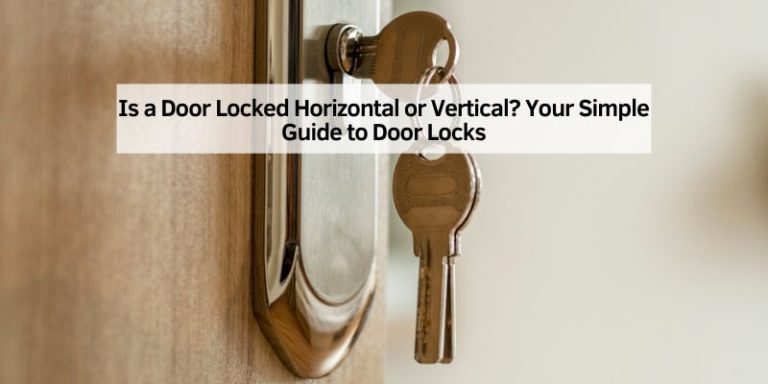
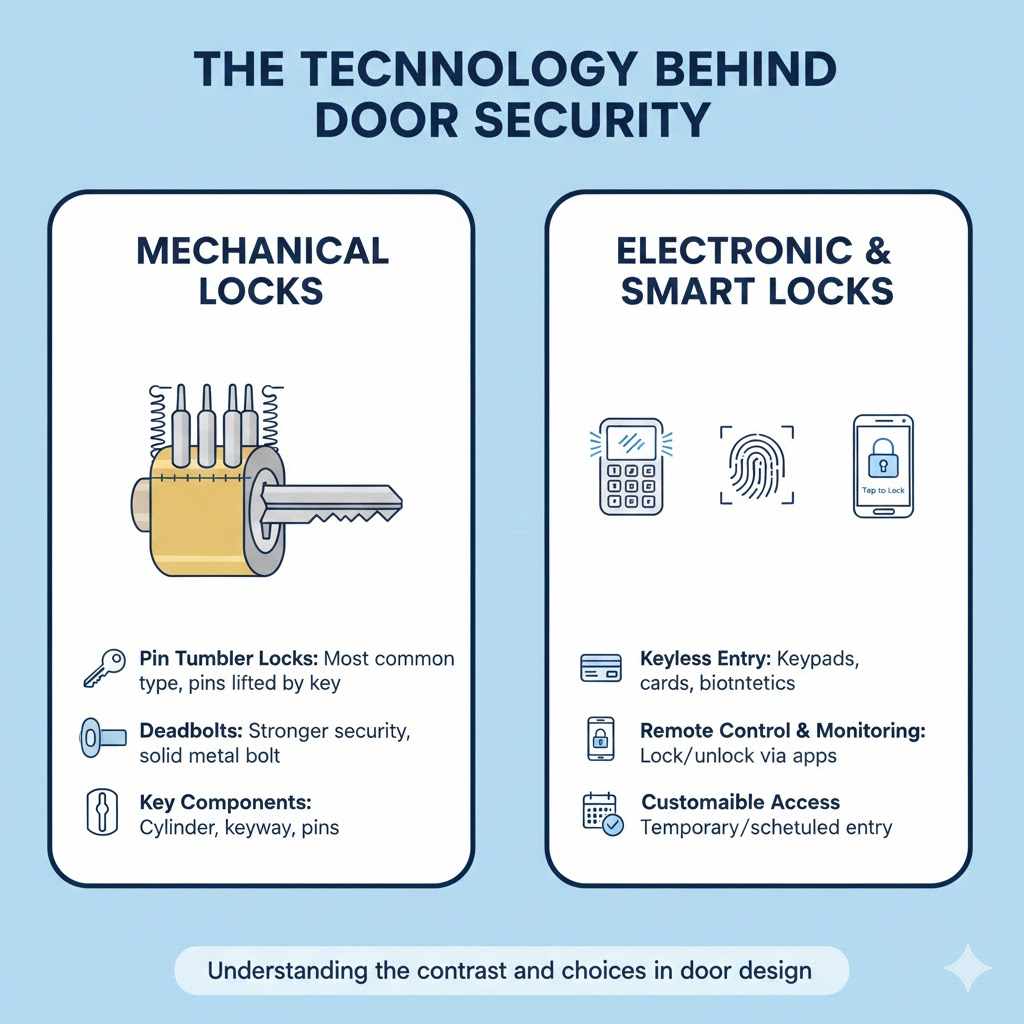
These are the traditional locks we are most familiar with. They use pins, tumblers, and springs to secure a door. When the correct key is inserted, it aligns the pins, allowing the cylinder to turn and the bolt to retract or extend.
There are many types, from simple doorknob locks to high-security deadbolts. The complexity and strength of the lock depend on its intended purpose. A basic doorknob lock might only offer privacy, while a heavy-duty deadbolt provides significant resistance to forced entry.
A key component of mechanical locks is the cylinder, which houses the keyway and the pins. The keyway is the slot where the key is the cylinder can rotate freely.
A real-life example is the common house lock. When you turn your house key, you are manipulating these pins. If the wrong key is used, the pins will not align correctly, and the cylinder will not turn, preventing the door from being unlocked.
- Pin Tumbler Locks: The most common type, using a set of pins that must be lifted to the correct height by a key to allow the cylinder to turn.
- Deadbolts: These offer stronger security than doorknob locks as they have a solid metal bolt that extends deep into the doorframe, making them harder to force open.
- Key Components: Understanding the cylinder, keyway, and pins helps explain how mechanical locks function and why specific keys are needed.
Electronic and Smart Locks
Technology has revolutionized door security. Electronic locks use keypads, RFID cards, fingerprint scanners, or smartphone apps to grant access. Smart locks connect to home networks, allowing remote locking and unlocking, as well as activity monitoring.
These systems offer greater convenience and control. You can grant temporary access to guests, receive notifications when someone enters, and even integrate them with other smart home devices. They remove the need for physical keys, which can be lost or copied.
A key benefit of smart locks is remote access. This means you can lock or unlock your door from anywhere in the world using your smartphone. This is incredibly useful if you forget to lock the door, or if you need to let a service provider in while you’re away.
Another feature is access logs, which provide a record of who entered and when.
A sample scenario: A homeowner uses a smart lock on their front door. They can give their dog walker a temporary digital key that expires after a certain time. The homeowner receives an alert on their phone when the dog walker arrives and leaves.
Statistics show a growing adoption of smart home technology. According to Statista, the global smart lock market is projected to continue its growth, indicating a trend towards more technologically advanced home security solutions.
- Keyless Entry: Systems use keypads, cards, or biometrics instead of traditional keys, offering convenience and eliminating the risk of lost keys.
- Remote Control and Monitoring: Smart locks allow users to lock, unlock, and monitor their doors from afar via smartphone apps.
- Customizable Access: Users can often grant temporary or scheduled access to different individuals, enhancing control over who enters and when.
Frequently Asked Questions
Question: Why would a closet door not have a lock
Answer: Closet doors typically don’t have locks because their primary purpose is to store items, not to provide high security. A simple latch is usually enough to keep the door closed and the contents out of sight, making access convenient.
Question: Are doors without locks less safe
Answer: Not necessarily. The safety of a door depends on its purpose and location. A public restroom door without a lock is safe because it’s designed for communal use with an occupancy indicator.
An exterior house door without a lock would be unsafe.
Question: Can I add a lock to any door
Answer: In most cases, yes. You can add different types of locks to most doors, depending on the door’s construction and your security needs. Simple privacy locks or deadbolts can often be installed by a locksmith or a handy individual.
Question: What is the simplest way to secure a door without a lock
Answer: If a door needs a temporary closure, you can use a slide bolt, a chain lock, or even a simple wedge. For privacy, a basic privacy knob set can be installed relatively easily on many doors.
Question: Why do some hotel room doors not have peepholes
Answer: While not directly about locks, the absence of a peephole is usually for aesthetic reasons or in very specific modern designs where other visual indicators might be present. However, most hotel doors are designed with peepholes for guest safety.
Summary
Doors don’t have locks for many sensible reasons. It often comes down to purpose convenience and design. From internal home doors to public facilities, the absence of a lock prioritizes easy access and functional flow.
Understanding these reasons helps appreciate how buildings are designed for people. You now know why certain doors remain unlocked.