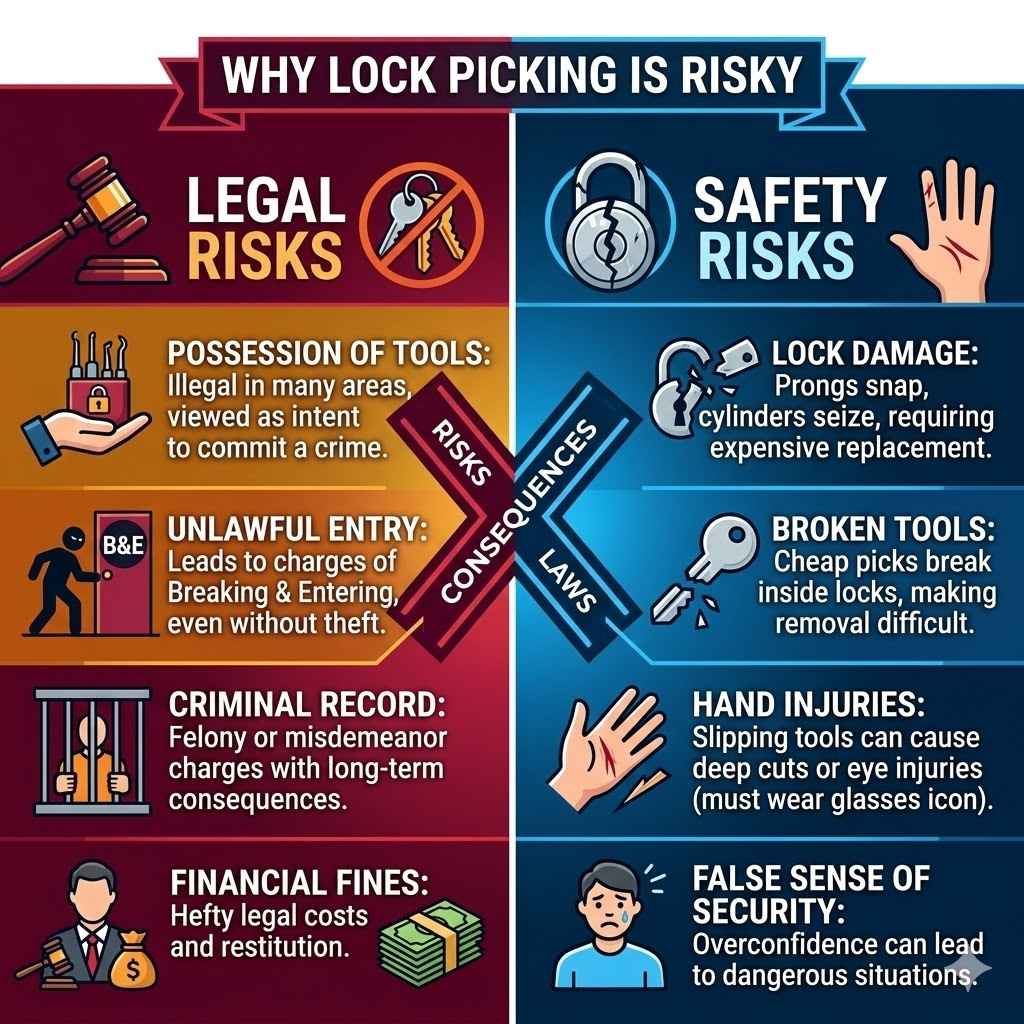
Why Lock Picking Is Risky Legal & Safety Facts
Learning about lock picking can seem tricky for beginners. Many people wonder about the rules and what could go wrong. This guide makes it simple.
We will go step by step to explain everything clearly. Get ready to learn about Why Lock Picking Is Risky: Legal & Safety Facts without any confusion.
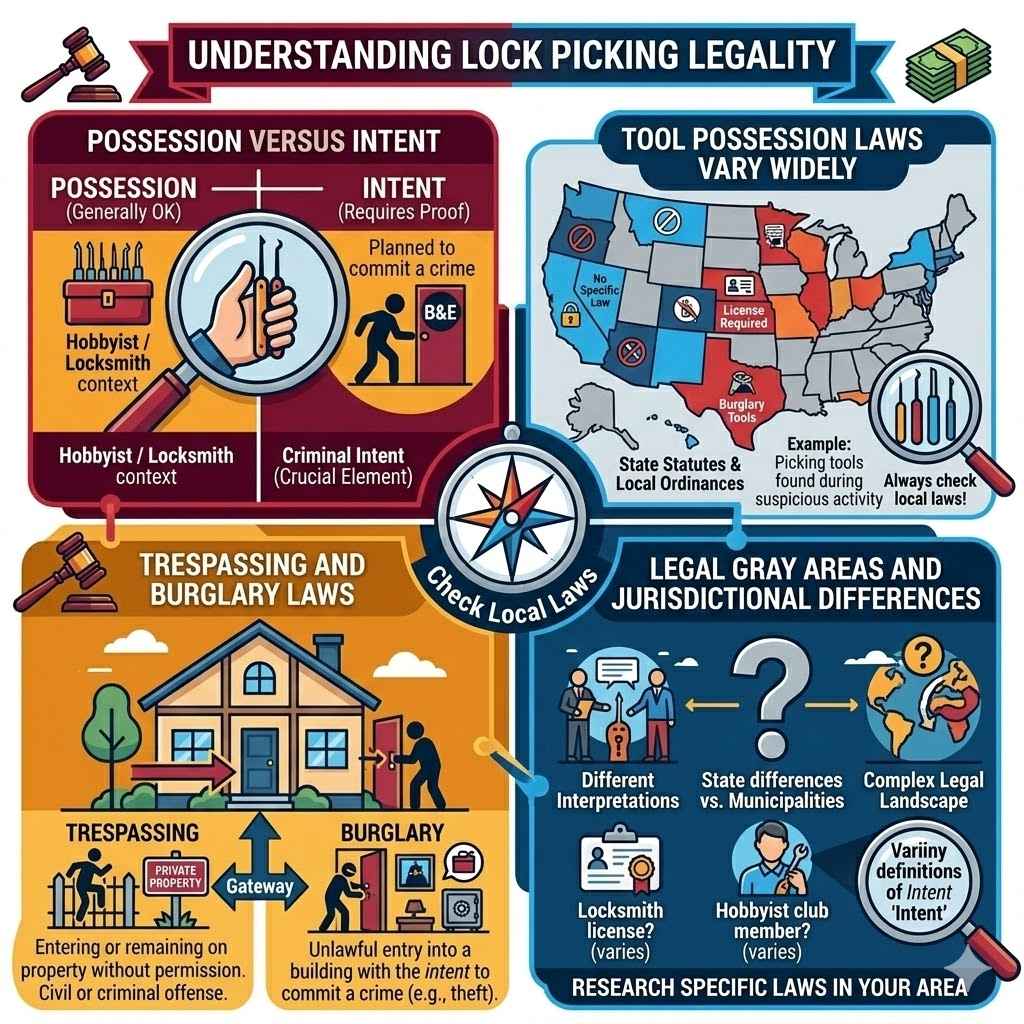
Understanding Lock Picking Legality
This section covers the legal aspects of lock picking. It’s important to know the laws where you live. Owning lock picking tools is often okay.
However, using them on locks you don’t own is usually against the law. We will explore the differences and what authorities consider.
Possession Versus Intent
Having lock picking tools by itself is generally not illegal in most places. Police often need to prove you had the intent to commit a crime. This means showing you planned to break into something.
Tool Possession Laws Vary Widely
Some regions have specific laws about possessing lock picking tools. These laws often depend on the context. If you are a locksmith or a hobbyist with no criminal intent, it’s usually fine.
If you have them with burglary tools or during suspicious activity, it can be a problem. Always check your local laws. For instance, in some states, just having picks with intent to commit a felony can lead to charges.
This is different from just having the tools in your toolbox at home. The key is intent, but possession can sometimes imply intent in specific circumstances.
Establishing Criminal Intent
To convict someone for illegal lock picking, prosecutors must prove criminal intent. This often involves evidence like the location where the tools were found. Were they found near a place that was broken into?
Was there other burglary equipment? Did the person try to hide the tools? These factors help build a case for criminal intent.
Without proof of intent, charges are harder to make stick. This is a major defense point in many lock picking related cases. Intent is the crucial element that shifts a hobby into a crime.
Trespassing and Burglary Laws
Lock picking can be a gateway to other crimes like trespassing or burglary. Even if you don’t steal anything, entering a property without permission can have legal consequences.
Trespassing Defined
Trespassing means entering or remaining on someone else’s property without permission. Using lock picking skills to bypass a lock to enter a property, even if you don’t intend to steal, is often considered trespassing. This is a civil offense in some places and a criminal offense in others.
Penalties can range from fines to jail time depending on the severity and location. For example, trespassing on private property can result in a misdemeanor charge. If the property is highly secured, like a government building, the charges can be much more severe.
Burglary and Its Elements
Burglary is typically defined as unlawfully entering a building with the intent to commit a crime inside, such as theft. Lock picking can be the method used to gain entry for a burglary. The act of picking the lock itself is not the burglary, but the intent to commit a crime after gaining entry is.
The penalties for burglary are usually severe, including significant prison sentences. This highlights the serious legal ramifications of using lock picking for illicit purposes.
Legal Gray Areas and Jurisdictional Differences
Laws about lock picking can be confusing and differ greatly by location. What is legal in one town might be a crime in another.
State and Local Ordinances
Each state and even many local municipalities have their own laws. Some places are very strict, while others are more lenient. It is vital to research the specific laws in your area.
This can involve checking state statutes or local police department guidelines. For instance, some states might require a locksmith license to carry certain types of picks, while others do not. The interpretation of “intent” can also vary significantly, making it a complex legal landscape.
Safety Risks of Lock Picking
Beyond legal troubles, picking locks can also be physically dangerous. Mistakes can lead to injuries or damage.
Physical Injury Risks
Using lock picking tools requires precision. If you are not careful, you could hurt yourself.
Cuts and Punctures
Lock picking tools are made of metal and can be sharp. If a tool slips, it can easily cut your fingers. This is especially true when working with small or intricate locks.
Keeping your hands steady and wearing protective gloves can help prevent these injuries. Minor cuts can become infected if not cleaned properly. Serious cuts might require medical attention, such as stitches.
Tool Breakage and Lacerations
Applying too much force can cause lock picks to break. Small pieces of metal can fly off and cause eye injuries. Broken picks can also leave sharp edges inside the lock.
These can cause further injury if you try to remove them. It’s important to use the right tools and apply gentle, controlled pressure. Understanding the mechanics of the lock helps prevent tool breakage.
Damage to Locks and Property
Incorrect lock picking can damage the lock itself, making it unusable. This can also lead to costly repairs or replacements.
Internal Lock Damage
Forcing tools into a lock or using excessive tension can bend or break internal pins and springs. This can render the lock permanently inoperable. You might end up needing to replace the entire lock cylinder or even the door.
It’s a common mistake for beginners to apply too much force, thinking it will help. In reality, it often does the opposite, causing more harm than good. Damaged locks can also compromise the security they are meant to provide.
Scratches and Aesthetic Damage
Even if the lock remains functional, you might scratch the exterior finish. This can be a problem for decorative locks or high-end hardware. Many people take pride in the appearance of their locks.
Unwanted scratches can be frustrating and difficult to repair. Careful technique and proper tools are essential to maintain the lock’s appearance.
Security Compromise Risks
Poorly executed lock picking attempts can leave signs of tampering. This can alert people that a lock has been compromised.
Visible Signs of Tampering
Scratches around the keyway, bent tools left behind, or a lock that doesn’t function smoothly can all indicate tampering. If you are trying to pick a lock discreetly, these signs defeat the purpose. They can draw attention and potentially lead to legal consequences or security alerts.
Law enforcement and security professionals are trained to spot these signs. Even a slightly jiggled lock can raise suspicion in a security audit.
Ethical Considerations and Best Practices
It’s crucial to approach lock picking with a strong sense of ethics. Always respect property and consent.
The Golden Rule of Lock Picking
The most important rule is to only pick locks that you own or have explicit permission to pick.
Ownership and Permission
This rule is the cornerstone of responsible lock picking. If a lock is not yours, you need clear, documented permission from the owner to practice on it. This applies to locks in your own home, your workplace, or anywhere else.
Picking a neighbor’s lock, even as a joke, is illegal and unethical. Consent is paramount. Without it, you risk legal trouble and damaging your reputation.
Hobbyist vs. Malicious Intent
There’s a big difference between a hobbyist learning about locks and someone with bad intentions.
Distinguishing Activities
Lock picking as a hobby is about learning mechanics and problem-solving. It’s often done in controlled environments with locks that belong to the hobbyist. Malicious intent involves using these skills to gain unauthorized access to property.
The tools and techniques might be the same, but the intent and legality are worlds apart. Security professionals often use lock picking as a legitimate skill for testing vulnerabilities.
Alternatives for Learning
If you want to learn about locks without legal or safety risks, there are safer ways.
Practice Locks and Kits
Many companies sell transparent practice locks. These allow you to see the internal mechanisms as you work. They are designed for learning and are perfectly legal to own and use.
Lock picking kits also come with specific tools for practice. These kits are a great way to develop your skills safely. They mimic real locks but are intended for educational purposes only.
You can find kits with various types of locks to learn different mechanisms.
Locksmith Training and Courses
Consider enrolling in locksmithing courses or training programs. These provide structured learning under experienced instructors. You will learn proper techniques, safety protocols, and legal responsibilities.
This is a professional and ethical way to develop lock-related skills. Many community colleges or trade schools offer such programs. They often include hands-on practice with real locks in a supervised setting.
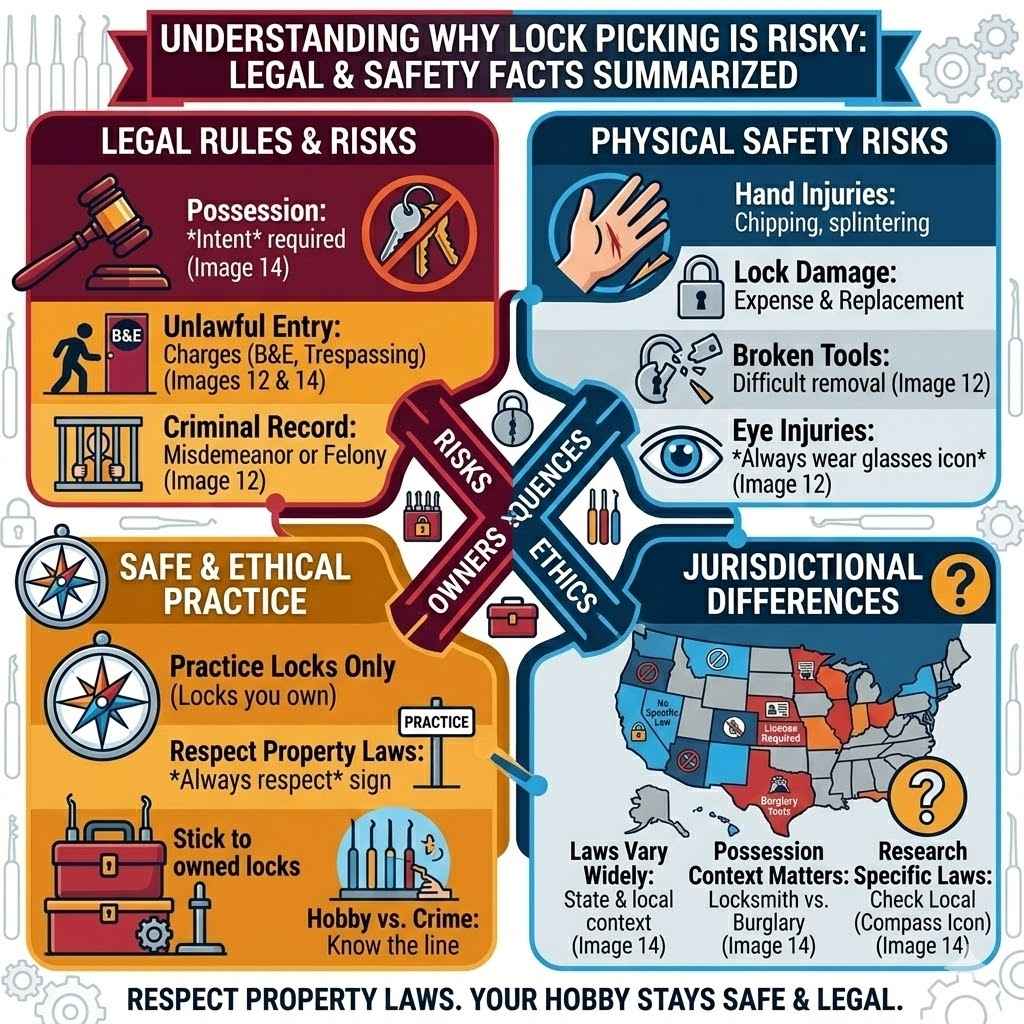
Why Lock Picking Is Risky Legal & Safety Facts Summarized
Understanding Why Lock Picking Is Risky: Legal & Safety Facts is essential for anyone interested in locks. We covered legal rules about owning and using tools, and the dangers of physical injury. We also discussed how to practice safely and ethically.
Always remember to respect property laws. Stick to practice locks or locks you own. This ensures your hobby stays safe and legal.
Frequently Asked Questions
Question: Is it legal to own lock picking tools?
Answer: In most places, yes. It is generally legal to own lock picking tools. However, laws can differ by region, and possession might be illegal if you have the intent to commit a crime.
Question: Can I practice lock picking on my friend’s door?
Answer: No. You should never practice on locks you do not own or have explicit permission to pick. This could be considered trespassing or attempted burglary.
Question: What are the physical dangers of lock picking?
Answer: The main physical dangers include cuts and punctures from sharp tools, and potential eye injuries if tools break. You could also damage the lock itself.
Question: What is the difference between lock picking as a hobby and malicious intent?
Answer: A hobbyist learns about lock mechanics and problem-solving, usually on their own locks. Malicious intent involves using these skills to break into property without permission.
Question: How can I learn lock picking safely and legally?
Answer: You can use transparent practice locks, purchase beginner kits, or enroll in locksmithing training courses. These methods allow you to learn without legal or safety risks.
Conclusion
Knowing Why Lock Picking Is Risky: Legal & Safety Facts keeps you out of trouble. Owning picks is usually fine, but using them without permission is not. Physical dangers like cuts and lock damage are real.
Always practice on your own locks or clear practice locks. Respecting property laws ensures your interest remains a safe and legal hobby.