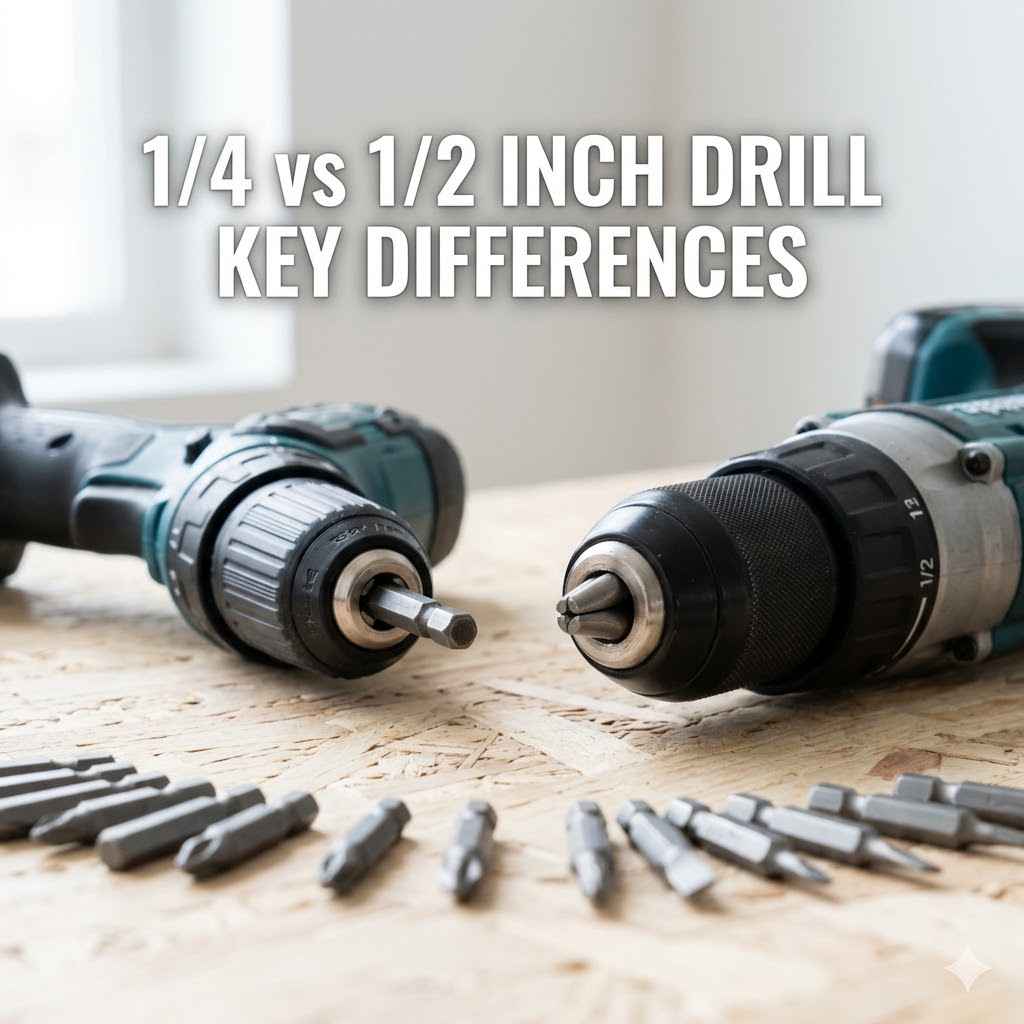
1/4 vs 1/2 Inch Drill Key Differences
Choosing the right drill bit size can sometimes feel tricky, especially when you’re just starting out. The difference between a 1/4 inch and a 1/2 inch drill bit might seem small, but it makes a big impact on your projects. We get it, figuring out which one to grab for what task can be confusing.
That’s why we’re breaking down the 1/4 vs 1/2 Inch Drill: Key Differences Explained in a super simple way. Get ready for clear steps to help you pick the perfect drill bit every time.
Understanding Drill Bit Sizes
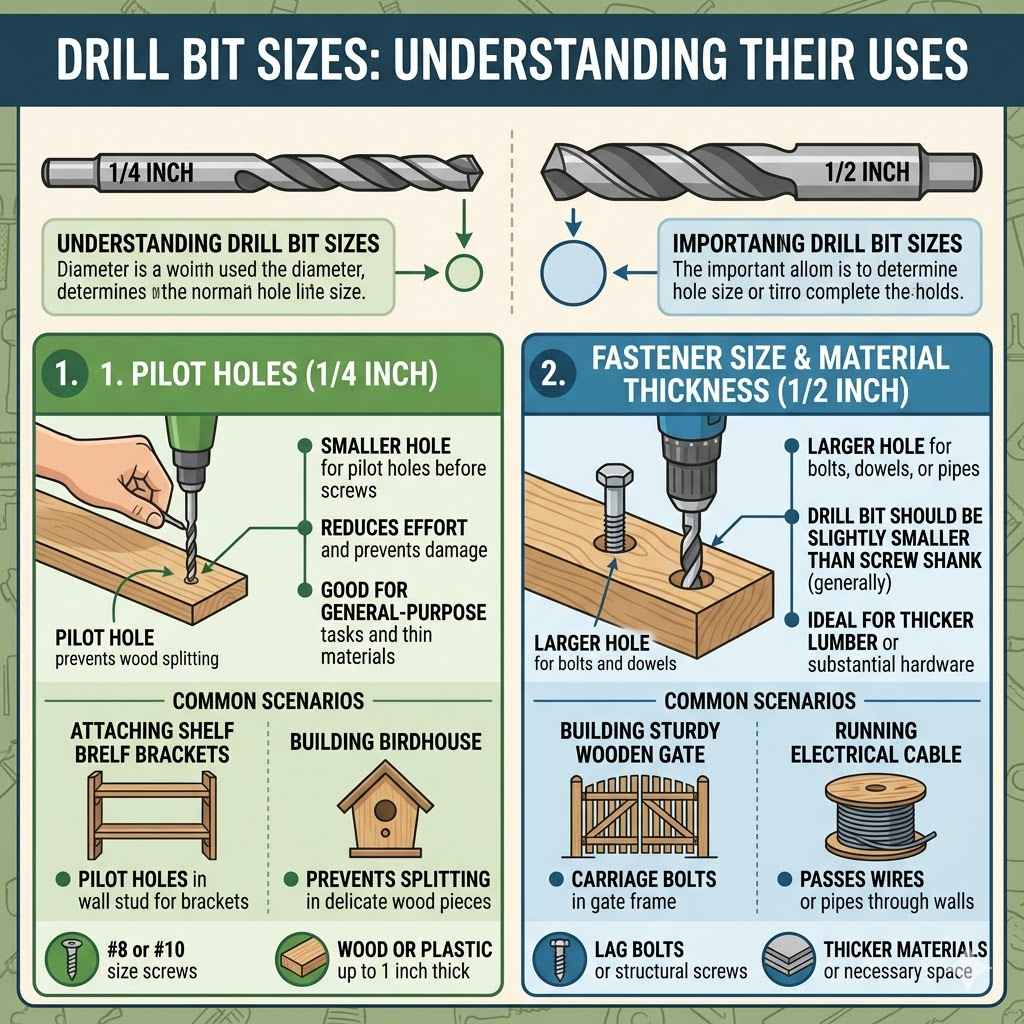
Drill bits come in many sizes, and the numbers refer to their diameter, which is the distance across the widest part of the bit. This diameter is super important because it determines the size of the hole you’ll make. A 1/4 inch drill bit makes a smaller hole, good for lighter tasks, while a 1/2 inch drill bit makes a much larger hole, suitable for bigger jobs.
Knowing this basic concept helps you choose the right tool for what you need to do.
Why Size Matters
The size of a drill bit directly impacts the type of material you can drill through and the purpose of the hole. A smaller bit, like a 1/4 inch, is perfect for drilling pilot holes for screws, creating small anchor points, or making holes in thin materials like sheet metal or thin wood. A larger bit, like a 1/2 inch, is used for creating bigger holes for bolts, dowels, or for tasks where you need to pass wires or pipes through a material.
-
Pilot Holes
The primary use for 1/4 inch drill bits is creating pilot holes. These are small holes drilled before inserting a screw. A pilot hole prevents wood from splitting, especially near the edges, and makes it easier for the screw to go in straight and with less effort. For example, when building a shelf, you’d drill pilot holes for all the screws that will hold the brackets in place. This simple step saves a lot of frustration and leads to a much cleaner finish. -
Fastener Size
The diameter of a drill bit should generally be slightly smaller than the shank of the screw you are using. For wood screws, a 1/4 inch bit is often used for screws up to about #8 or #10 size. For larger screws, like lag bolts or structural screws, you might need a 1/2 inch drill bit or even larger. The goal is to create a hole that guides the screw but doesn’t weaken the material too much. -
Material Thickness
The thickness of the material you are drilling into also plays a role. For very thin materials, a large drill bit might go straight through or cause the material to tear. For thicker materials, a smaller bit might not create a large enough hole for your needs. A 1/4 inch bit is versatile for many common DIY projects involving wood or plastic up to an inch thick. A 1/2 inch bit is better suited for thicker materials or when a substantial hole is required.
Common Uses for 1/4 Inch Drill Bits
The 1/4 inch drill bit is a workhorse for many everyday tasks. It’s the go-to for general-purpose drilling when you need a small, precise hole. Think about assembling furniture, hanging pictures, or putting together simple woodworking projects.
It’s also excellent for drilling into drywall or plaster to hang lighter items. Because it’s a common size, you’ll find it in most basic drill bit sets, making it very accessible for DIYers.
One common scenario is attaching a shelf bracket to a wall. You would use a 1/4 inch drill bit to create a pilot hole in the wall stud for the anchor screw. This ensures the screw goes in straight and holds securely.
Another example is putting together a birdhouse. You’d use a 1/4 inch bit to drill holes for the small screws that hold the pieces of wood together, preventing the wood from splitting.
Common Uses for 1/2 Inch Drill Bits
A 1/2 inch drill bit is used when you need to make a significantly larger hole. This size is perfect for tasks requiring more clearance, such as drilling holes for plumbing pipes, electrical conduit, or larger fasteners like carriage bolts. In woodworking, it’s ideal for creating holes for dowels or for passing thicker wires through wood pieces.
If you’re working with thicker lumber and need to join pieces with larger hardware, a 1/2 inch bit is often necessary.
Imagine you are building a sturdy wooden gate. You might need to join the frame pieces with large carriage bolts. For this, you would use a 1/2 inch drill bit to create holes that the bolts can pass through.
Another practical use is when running electrical cable through a wooden wall. A 1/2 inch hole is often sufficient to allow a cable to pass through without being pinched. This larger size provides the necessary space and allows for easier installation.
Drill Bit Materials and Types
Drill bits are made from different materials, and the type of material affects their durability and what they can cut through. The most common types are High-Speed Steel (HSS), Titanium-coated HSS, and Cobalt. Understanding these materials will help you choose the right bit for your specific drilling task and the material you are working with.
Each type has its own advantages and best uses.
High-Speed Steel (HSS) Drill Bits
High-Speed Steel (HSS) is a type of tool steel known for its hardness, resistance to heat, and ability to maintain its cutting edge at high speeds. HSS drill bits are the most common type and are suitable for drilling into wood, plastics, and softer metals like aluminum. They are generally affordable and widely available.
When using HSS bits, it’s important to use lubrication, especially when drilling into metal, to prevent overheating and premature wear.
-
Durability
HSS bits are quite durable for general-purpose drilling. They can withstand the heat generated by friction when drilling, which is essential for preventing the bit from becoming dull quickly. For everyday DIY tasks, HSS bits provide excellent value and performance. -
Applications
These bits are ideal for most household projects. Whether you’re assembling furniture, hanging shelves, or doing basic woodworking, HSS bits will serve you well. They are excellent for creating pilot holes and for drilling through materials like pine, oak, and various plastics. -
Cost-Effectiveness
Compared to other specialized drill bit materials, HSS bits are very budget-friendly. This makes them a practical choice for anyone who needs a reliable set of drill bits for a wide range of common tasks without breaking the bank.
Titanium-Coated HSS Drill Bits
Titanium coating is applied to HSS drill bits to increase their hardness and durability. This coating creates a smoother surface, which reduces friction and allows the bit to cut through materials faster and with less heat buildup. Titanium-coated bits are excellent for drilling into harder materials like steel, cast iron, and even some types of concrete, though specialized masonry bits are still best for heavy-duty concrete work.
They also last longer than standard HSS bits.
Imagine you need to drill into a metal appliance cabinet to attach a new handle. A standard HSS bit might struggle and overheat, but a titanium-coated bit would slice through the metal with ease. Another scenario is drilling pilot holes in a hardwood project, like a maple cutting board.
The titanium coating helps the bit stay sharp and cut cleanly, even in dense wood.
Cobalt Drill Bits
Cobalt drill bits are made from an alloy of steel with cobalt added. Cobalt significantly increases the bit’s hardness and heat resistance. These bits are designed for drilling into very hard metals, including stainless steel, hardened steel, and titanium.
They are more expensive than HSS or titanium-coated bits, but their superior performance and longevity in tough materials make them a worthwhile investment for professional tradespeople or serious DIYers tackling demanding metalworking projects. They require lubrication and slower speeds when drilling into hard metals.
A real-life example is a mechanic needing to drill into a rusted engine bolt that won’t budge. A cobalt drill bit is often the only tool that can penetrate such hardened, corroded metal. Similarly, a machinist working with thick steel plates would rely on cobalt bits to create precise holes without damaging the workpiece or the drill bit itself.
When to Use 1/4 Inch vs 1/2 Inch
The decision between using a 1/4 inch drill bit and a 1/2 inch drill bit boils down to the size of the hole you need to create and the purpose of that hole. This choice impacts the stability of your project, the types of fasteners you can use, and the overall aesthetic. Let’s look at some specific scenarios where one is clearly better than the other.
Choosing for Screws and Fasteners
When selecting a drill bit for screws, the general rule is to choose a bit that is slightly smaller than the screw’s shank diameter. For smaller wood screws, such as those commonly used in furniture assembly or cabinet making (e.g., #6 or #8 screws), a 1/4 inch drill bit is usually appropriate for creating a pilot hole. This ensures the screw has enough material to grip without splitting the wood.
For larger, heavier-duty screws or bolts, like lag bolts used in deck construction or carriage bolts used to secure heavy beams, a 1/2 inch drill bit or even larger might be necessary. These bolts have a thicker shank, and a 1/2 inch hole provides the clearance needed for them to pass through easily and securely. Using a bit that’s too small for a large bolt will make insertion difficult and can damage the bolt or the material.
Choosing for Dowels and Joining Wood
Dowels are wooden pins used to reinforce joints in woodworking. They come in various diameters, and you need a drill bit that matches the dowel’s size precisely. While 1/4 inch dowels are common for smaller projects, 1/2 inch dowels are used for larger, more robust joints.
If you plan to use 1/2 inch dowels, you will absolutely need a 1/2 inch drill bit to create the corresponding holes in both pieces of wood you are joining.
A good example is building a sturdy coffee table. The legs might be joined to the tabletop using large dowels and wood glue. In this case, you’d use a 1/2 inch drill bit to drill matching holes in both the tabletop and the legs, ensuring a strong and seamless connection.
For smaller projects like a simple picture frame, 1/4 inch dowels or even smaller might be used, requiring a 1/4 inch bit.
Choosing for Electrical and Plumbing Work
In electrical and plumbing installations, precise hole sizes are often dictated by building codes and the diameter of the wires, cables, or pipes being run. For running standard electrical wiring through wooden studs or joists, a 1/4 inch or 3/8 inch drill bit is often sufficient. This allows the wire to pass through without being pinched, preventing damage to the insulation.
However, when dealing with larger conduit, PVC pipes for plumbing, or thicker cable bundles, a 1/2 inch drill bit becomes essential. For instance, if you need to run a 1/2 inch flexible conduit through a wall, you will need a 1/2 inch hole. Similarly, if you’re installing a larger drainpipe, the hole through the floor or wall might need to accommodate a 1/2 inch pipe or larger, depending on the pipe’s outer diameter.
Choosing for Material Thickness and Strength
The thickness of the material you are drilling into is another key factor. For thin materials like sheet metal, plastic sheeting, or thin plywood, using a drill bit that’s too large can cause the material to deform, tear, or shatter. A 1/4 inch bit is often a safe bet for a wide range of thicknesses in common DIY materials.
Conversely, if you’re drilling through thick lumber, like a 2×6 or 4×4 post, and need a substantial hole, a 1/2 inch bit is more appropriate. Drilling a small hole in very thick wood might not achieve the desired depth or clearance. The strength of the material also matters; drilling a large hole in a thin piece of wood can significantly weaken it, so you need to balance the hole size with the material’s structural integrity.
Drilling Techniques and Safety
Proper drilling techniques and safety precautions are vital, regardless of the drill bit size you use. Using the correct speed, applying steady pressure, and wearing protective gear will ensure you achieve clean holes and prevent accidents. These practices apply whether you are using a 1/4 inch bit for a small pilot hole or a 1/2 inch bit for a larger task.
Speed and Pressure
The speed at which you drill and the amount of pressure you apply are critical for successful drilling. For smaller drill bits and softer materials like wood or plastic, you can generally use higher speeds. However, when drilling into harder materials like metal, it’s best to use slower speeds to prevent the bit from overheating and dulling quickly.
A good rule of thumb is that the harder the material, the slower the drill speed should be.
Applying steady, consistent pressure is also important. Too little pressure will result in the bit wandering or not cutting effectively. Too much pressure can cause the bit to bind, break, or damage the material.
Let the drill bit do the work; don’t force it. If you’re using a 1/2 inch bit in hardwood, you’ll likely need to apply more consistent pressure than you would with a 1/4 inch bit in pine.
Lubrication for Metal Drilling
When drilling into metal, lubrication is essential to reduce friction, dissipate heat, and prolong the life of your drill bit. Cutting oil or a multi-purpose lubricant can be used. Apply a small amount to the drilling spot before you start and periodically during the drilling process.
This not only cools the bit but also helps to clear away metal shavings, preventing them from clogging the flutes of the drill bit.
For example, if you’re using a 1/2 inch HSS drill bit to drill through a steel plate, applying cutting oil will make a significant difference. It will allow the bit to cut more smoothly, create cleaner edges, and last much longer than it would without lubrication. This is less critical for wood but still beneficial for very hard woods.
Safety Gear Essentials
Safety should always be your top priority when operating any power tool. Always wear safety glasses to protect your eyes from flying debris, wood chips, or metal shavings. If you are drilling into materials that create a lot of dust, like drywall or certain types of wood, consider wearing a dust mask.
Hearing protection might also be necessary if you’re using a powerful drill or working for extended periods.
Here are some essential safety items:
-
Safety Glasses
These are non-negotiable for any drilling task. They protect your eyes from particles that can be ejected at high speed. -
Gloves
While not always necessary for delicate work, gloves can provide a better grip on the drill and protect your hands from splinters or sharp edges. -
Work Clothes
Wear sturdy clothing that won’t get caught in the drill. Avoid loose sleeves or dangling jewelry.
Securing Your Workpiece
It’s crucial to secure the material you are drilling into firmly before you begin. Use clamps or a vise to hold the workpiece steady. If the material is not secured, it can spin uncontrollably when the drill bit engages, which can cause serious injury and damage to the material.
This is especially important when drilling larger holes with a 1/2 inch bit, as there is more torque involved.
Imagine you’re drilling a 1/2 inch hole in a small piece of wood. If it’s not clamped down, it could fly out of your hand when the bit bites, potentially hitting you or someone nearby. A simple scenario: you want to drill a hole in a wooden bracket.
Clamp the bracket to your workbench before you start drilling to ensure it stays put and you get a precise hole.
Comparing 1/4 Inch and 1/2 Inch Drill Bits
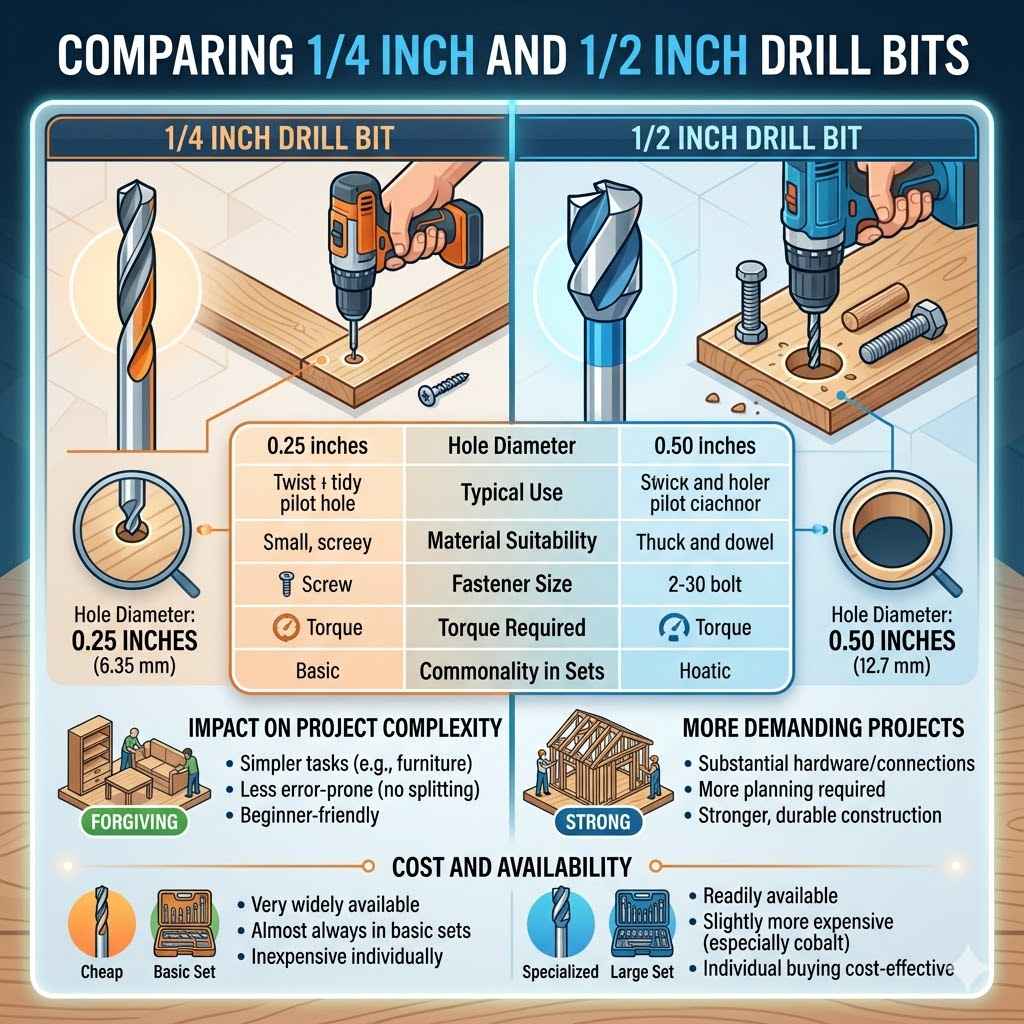
To make the choice even clearer, let’s directly compare the 1/4 inch and 1/2 inch drill bits across several key aspects. This comparison will highlight their distinct roles and help you decide which one is right for your next project. Understanding these differences ensures efficiency and better results.
| Feature | 1/4 Inch Drill Bit | 1/2 Inch Drill Bit |
|---|---|---|
| Hole Diameter | 0.25 inches (6.35 mm) | 0.50 inches (12.7 mm) |
| Typical Use | Pilot holes for screws, small fasteners, light-duty drilling | Larger holes for bolts, dowels, pipes, heavier-duty drilling |
| Material Suitability | Wood, plastic, soft metals, drywall | Wood, some plastics, some harder metals (with appropriate bit type) |
| Fastener Size | Screws up to #8 or #10 | Lag bolts, carriage bolts, larger dowels |
| Torque Required | Lower | Higher |
| Commonality in Sets | Very common, often a starter bit | Common, but sometimes found in larger sets or specialized kits |
Impact on Project Complexity
The choice between a 1/4 inch and a 1/2 inch drill bit can significantly influence the complexity of your project. Using a 1/4 inch bit for pilot holes makes tasks like assembling furniture much simpler and less prone to errors like wood splitting. It’s a forgiving size for beginners.
On the other hand, using a 1/2 inch bit often means you are tackling a more substantial project that requires larger hardware or structural connections. This might involve more planning and potentially stronger materials. Projects requiring 1/2 inch holes are typically more demanding but result in stronger, more durable constructions.
Cost and Availability
Both 1/4 inch and 1/2 inch drill bits are widely available and generally affordable, especially in standard HSS material. However, 1/4 inch bits are almost always included in any basic drill bit set, making them exceptionally easy to find. You can often buy single 1/4 inch bits very inexpensively.
1/2 inch drill bits are also readily available, but they might be slightly more expensive than their 1/4 inch counterparts, especially if you opt for specialized materials like cobalt. If you need a set of bits that includes larger sizes, the overall cost of the set will be higher. For occasional use, buying individual bits is a cost-effective approach.
Frequently Asked Questions
Question: What is the main difference between a 1/4 inch and a 1/2 inch drill bit?
Answer: The main difference is the diameter of the hole they create. A 1/4 inch drill bit makes a hole 0.25 inches wide, while a 1/2 inch drill bit makes a hole 0.50 inches wide. This affects the size of fasteners, dowels, or pipes that can fit through the hole.
Question: Can I use a 1/2 inch drill bit for small screws?
Answer: No, you should not use a 1/2 inch drill bit for small screws. It would create a hole much too large for the screw to grip properly, rendering the connection weak or useless. Always match the pilot hole size to the screw shank diameter.
Question: Is a 1/4 inch drill bit good for all wood projects?
Answer: A 1/4 inch drill bit is excellent for many wood projects, especially for pilot holes for common screws and light-duty connections. However, for larger dowels, bolts, or specific joinery techniques requiring larger holes, a 1/2 inch or larger bit might be necessary.
Question: Do I need special drill bits for metal?
Answer: Yes, for drilling into metal, it’s best to use drill bits made of High-Speed Steel (HSS), titanium-coated HSS, or cobalt. These materials are harder and can withstand the heat generated when drilling metal, unlike standard bits designed primarily for wood.
Question: When would I need a 1/2 inch drill bit instead of a 1/4 inch?
Answer: You would need a 1/2 inch drill bit when you need to create a larger hole, such as for fitting a 1/2 inch bolt, a large dowel, or a pipe. It’s for tasks requiring more clearance or stronger structural connections than a 1/4 inch hole can provide.
Conclusion
Understanding the 1/4 vs 1/2 Inch Drill: Key Differences Explained empowers you to choose the right tool. The 1/4 inch bit is your go-to for pilot holes and smaller tasks, while the 1/2 inch bit tackles larger jobs needing bigger clearance. Always consider your project’s needs, the materials you’re working with, and safety.
With this knowledge, you can drill with confidence and achieve great results.