Are Door Handles Universal? Exploring Compatibility and Options
Thinking about door hardware can feel tricky, especially when you’re just starting. The question Are Door Handles Universal? What Fits and What Doesn’t often pops up, and it’s something that can seem confusing. Don’t worry, lots of people have this question! This guide will break down everything you need to know in a clear, step-by-step way. We’ll explore the basics of door handle types, sizes, and compatibility, so you can pick the right one. Get ready to explore the exciting world of door hardware!
Door Handle Types Explained
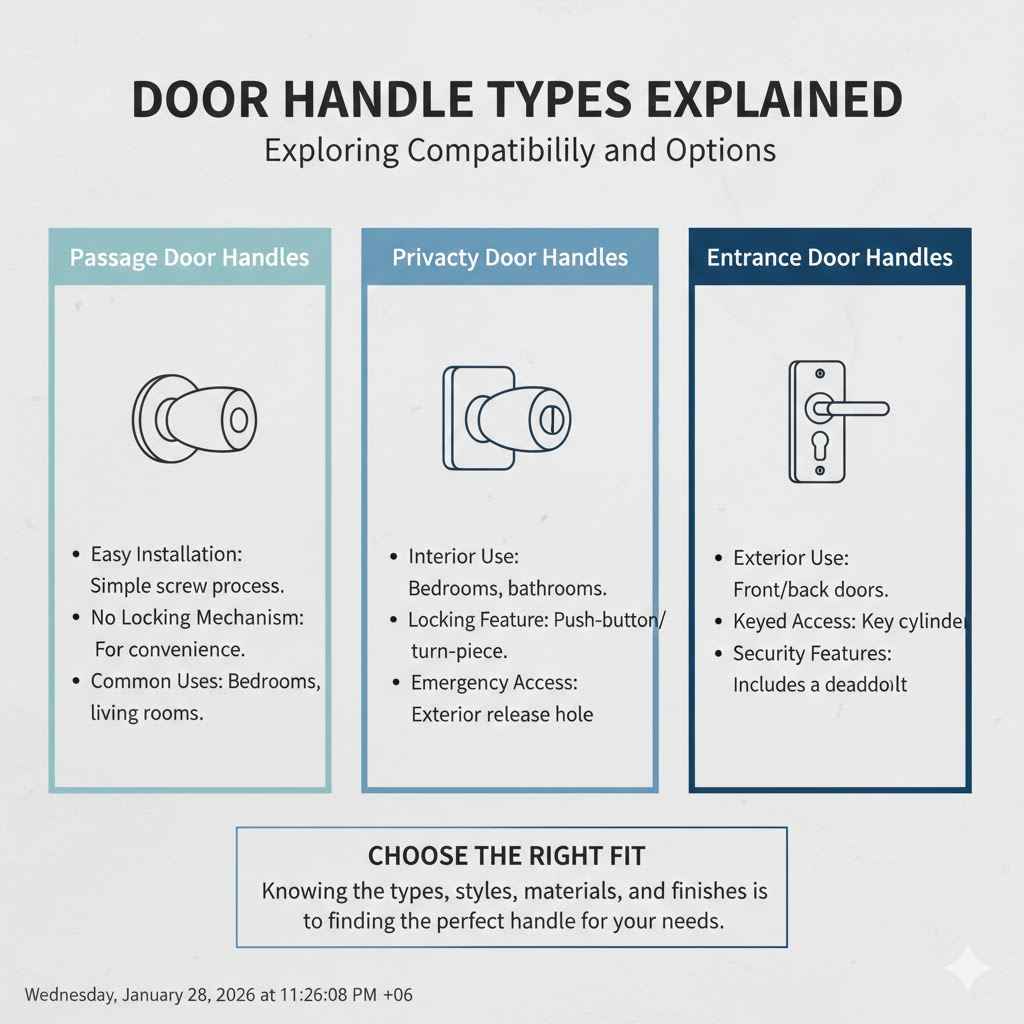
When you’re shopping for door handles, you’ll find there’s a lot to consider. They’re not all the same, and knowing the different types is an important first step. The main kinds of door handles are passage, privacy, and entrance handles. These names describe how the door handle works and where it is typically used. There are also different styles, materials, and finishes to choose from. Let’s explore these, so you can find the perfect fit for your needs.
Passage Door Handles
Passage door handles are super simple. They’re meant for doors that don’t need a lock, like hallways or closets. You can easily open them from either side, making them simple to use. They often come in lever or knob styles, and they’re usually easy to install. These are ideal for doors where you don’t need privacy or security.
- Easy Installation: Passage handles typically have a simple installation process, often involving just a few screws.
- No Locking Mechanism: The key feature of a passage handle is the lack of a locking system, designed for convenience.
- Common Uses: These handles are commonly found in interior doors, such as those leading to bedrooms or living rooms, where locking isn’t required.
Passage handles are the go-to choice for interior doors that don’t need locks. If a door just needs to open and close, this is the type you’re looking for. This allows for simple access from either side. They come in many designs, too, which can complement the style of your home.
Privacy Door Handles
Privacy door handles are for doors where you need a bit of seclusion. These have a locking mechanism, usually a button or a small turn-piece. They are commonly used in bedrooms and bathrooms. While they provide privacy, they usually don’t have a keyed entry. This helps keep things secure but also allows for easy access from the outside in case of an emergency. This balances the need for privacy with safety.
- Interior Use: Designed for use in bedrooms or bathrooms where privacy is important.
- Locking Feature: Typically features a push-button or a turn-piece that locks the door.
- Emergency Access: They usually include an emergency release feature, like a small hole on the outside of the handle that can be used to unlock the door with a special tool.
Privacy handles are perfect for interior doors. These handles let you have some privacy, like in a bedroom or bathroom. They’re great because you can lock them from the inside. But they also have a safety feature so someone can open the door from the outside if needed.
Entrance Door Handles
Entrance door handles are the heavy-duty types. These handles are designed for exterior doors and offer the most security. They always have a key lock on the outside and a thumb-turn or knob on the inside. This is for your front or back door. They come in many styles, from simple to very elaborate. Entrance handles help protect your home. They include deadbolts for extra security.
- Exterior Use: Specifically designed for exterior doors, such as the front door or back door.
- Keyed Access: Feature a key cylinder on the outside for locking and unlocking the door.
- Security Features: Often include a deadbolt for enhanced security.
Entrance door handles are crucial for your safety. They provide the strongest protection. They combine a lock and a deadbolt. This is to make sure your home is safe and secure. Remember, the right entrance door handle is a smart way to keep your home safe.
Understanding Door Handle Sizes and Measurements
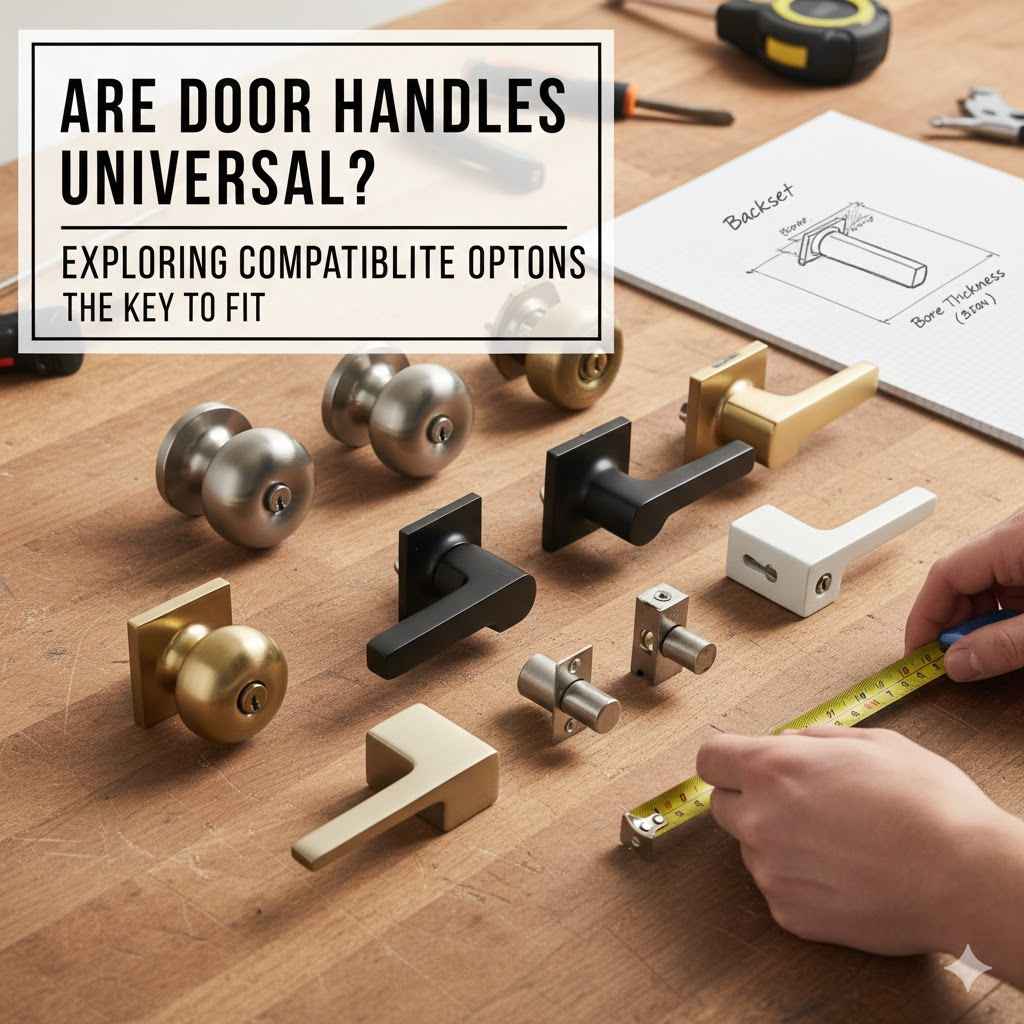
Knowing the right measurements is very important when picking a new door handle. You need to measure a few things to make sure the new handle will fit your door. The most important measurements are the backset, the door thickness, and the bore hole size. Not having the correct measurements will make the door handle installation a tough job. If you know these measurements, you can easily find a door handle that fits.
Backset Explained
The backset is a vital measurement. It is the distance from the edge of the door to the center of the doorknob or handle. There are two standard backset sizes: 2 3/8 inches and 2 3/4 inches. You can measure this by placing a ruler on the edge of your door and measuring to the center of the handle’s hole. Make sure to get the correct backset, or the handle won’t work properly. Checking the backset is a good idea before buying anything.
- Standard Sizes: The two most common backset sizes are 2 3/8 inches and 2 3/4 inches.
- Measuring Method: Measure from the edge of the door to the center of the doorknob’s hole.
- Compatibility: The backset must match your door for the handle to fit correctly.
The backset is a simple measurement. But, it’s very important. If the backset isn’t correct, your door handle won’t fit right. Measuring the backset ensures that the handle will work and install correctly.
Door Thickness
Door thickness is another vital measurement. Doors usually come in a few standard thicknesses, like 1 3/8 inches or 1 3/4 inches. Measure the thickness of your door from edge to edge. It’s important to match the door thickness with the handle’s specifications. This ensures that the handle will fit securely and that the screws will be the right length. It’s usually a simple measurement, but it will make a big difference.
- Standard Thicknesses: Common door thicknesses include 1 3/8 inches and 1 3/4 inches.
- Measuring Procedure: Measure the thickness of your door from one side to the other.
- Handle Compatibility: The door handle you select must be designed to fit your door’s thickness.
Door thickness is one of the easiest measurements. Take your time to get it right. It is important for the handle to fit properly. Correct measurement will allow for secure installation.
Bore Hole Size
The bore hole is the hole in the door where the handle’s mechanism sits. Most handles are designed to fit standard bore hole sizes. These sizes include 2 1/8 inches for the main bore hole and 1 inch for the latch bolt hole. Measure both holes to confirm that the new handle will work. This also helps you ensure that any new handle you get will fit without any issues.
- Standard Sizes: The main bore hole is usually 2 1/8 inches in diameter.
- Latch Bolt Hole: The hole for the latch bolt is typically 1 inch in diameter.
- Checking Procedure: Measure both holes to ensure the new handle fits properly.
Confirming the bore hole size is important for installation. Make sure the new handle fits these holes. If they don’t match, you may need to adjust the door or choose a different handle. Double-checking is a good way to save time and effort.
Are Door Handles Universal? Assessing Compatibility Factors
The question, “Are Door Handles Universal? What Fits and What Doesn’t” comes up often. The answer is not always simple, but knowing the details helps. The good news is that many door handles are designed to fit standard door preparations. However, you still need to keep a few things in mind to ensure a perfect fit. The backset, door thickness, and bore hole size play a big role. Also, think about the type of door you have. By considering these factors, you can get a door handle that works well and looks great.
Door Type Considerations
The type of door is a key thing to think about when choosing a handle. Is it an interior or exterior door? This can influence what type of handle you need. Interior doors, like bedrooms or bathrooms, often use passage or privacy handles. Exterior doors need entrance handles for security. Make sure you match the handle type with your door. This is important for both security and functionality. Consider the overall design of your home.
- Interior vs. Exterior: Interior doors often use passage or privacy handles, while exterior doors need entrance handles for security.
- Material of Door: The door material, like wood or metal, can influence the type of handle that works best.
- Door Style: Some handle styles work best with specific door designs.
Thinking about your door type helps you find the right handle. Whether it’s the security of an entrance handle or the privacy of a bathroom handle, the right choice makes all the difference. This will help you choose a door handle that meets your needs.
Compatibility with Existing Hardware
When swapping out a door handle, think about your existing hardware. It is a good idea to measure everything. Ensure your new handle’s backset, door thickness, and bore hole size match. Check the existing holes in the door. If your new handle has the same measurements, it should be a quick swap. If the holes are different, you might need to do some extra work. The existing hardware will help you choose a replacement.
- Measure Existing: Measure the backset, door thickness, and bore hole size of the existing hardware.
- Alignment: Ensure the new handle aligns with the existing holes and the latch.
- Modification: If the new handle has different measurements, you may need to modify the door.
Checking your existing hardware is essential for an easy change. If the new handle fits well, it’s a quick fix. If the measurements don’t match, think about whether you can make adjustments. The more careful you are, the easier it will be to put in your new door handle.
Material and Finish
The material and finish of a door handle can affect its appearance and durability. Door handles are made from many materials. These include brass, stainless steel, and zinc. Each material has different strengths. The finish adds style. Popular finishes include brushed nickel, polished brass, and matte black. Think about the style of your home. Pick a material and finish that suits your needs. This choice can change the look of a door.
- Material Options: Common materials include brass, stainless steel, and zinc.
- Finish Options: Popular finishes include brushed nickel, polished brass, and matte black.
- Durability: Consider how each material holds up to use and the environment.
Selecting the right material and finish is a key step. You’ll find options for every style. Choose a material and finish that fits your taste and home. This is a simple thing that can make a huge impact on how your door looks.
Installation Steps for Door Handles
Putting in a new door handle can be a simple task if you do it right. Here are the steps to make sure your installation goes smoothly. Gathering your tools and reading the directions is a good start. From there, take the steps one at a time. This will ensure your door handle fits perfectly. Following these steps can help make the installation a successful project.
Preparing Your Door
Preparing the door is essential. Start by removing the old handle. Use a screwdriver to remove the screws holding it in place. Then, take out the latch. Clear the area around the holes. If there are any old paint or debris, clean it off. Make sure the door is solid and the holes are ready. Cleaning the area will make the new handle fit better. This helps make the installation smoother.
- Remove the Old Handle: Use a screwdriver to remove the screws holding the old handle in place.
- Remove the Latch: Take out the latch by removing the screws and sliding it out of the door edge.
- Clean the Area: Clear away any old paint or debris around the holes to ensure a clean fit.
Preparing your door is like getting ready to paint. The cleaner the door, the better the final result. If the door isn’t prepped well, the new handle may not sit right. This first step can make your new door handle look great.
Installing the New Handle
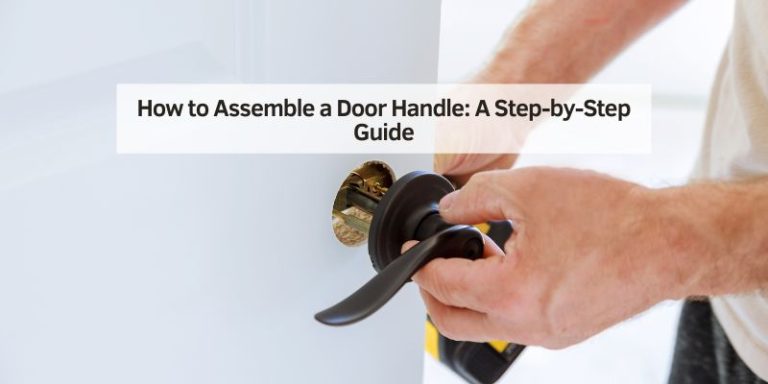
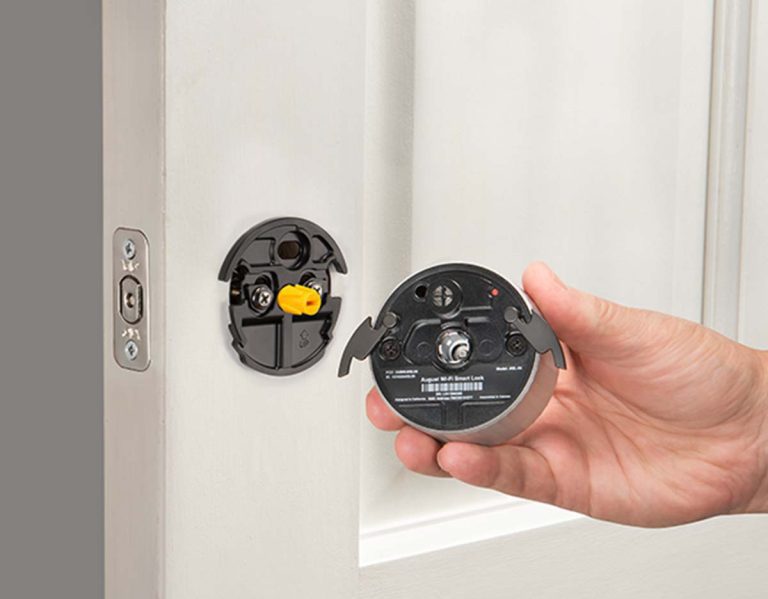
Start installing the new handle by putting the latch into the door’s edge. Secure it with screws. Then, attach the handle to the door. Make sure the spindles go through the holes. Align the handle. Then, screw the handle into the door. Tighten the screws. Test the handle to ensure it works correctly. Finally, add the strike plate to the door frame. Use screws to secure it. Checking each step will help ensure the door handle works well.
- Insert the Latch: Insert the new latch into the edge of the door and secure it with screws.
- Attach the Handle: Attach the handle by placing the spindles through the holes and securing them with screws.
- Add the Strike Plate: Install the strike plate on the door frame to accept the latch.
Installation is where your work comes to life. Be patient. Make sure everything aligns correctly. When you’re done, the door handle should work smoothly. Make sure you test the handle before you finish. This is to make sure everything works the way it should.
Troubleshooting Common Issues
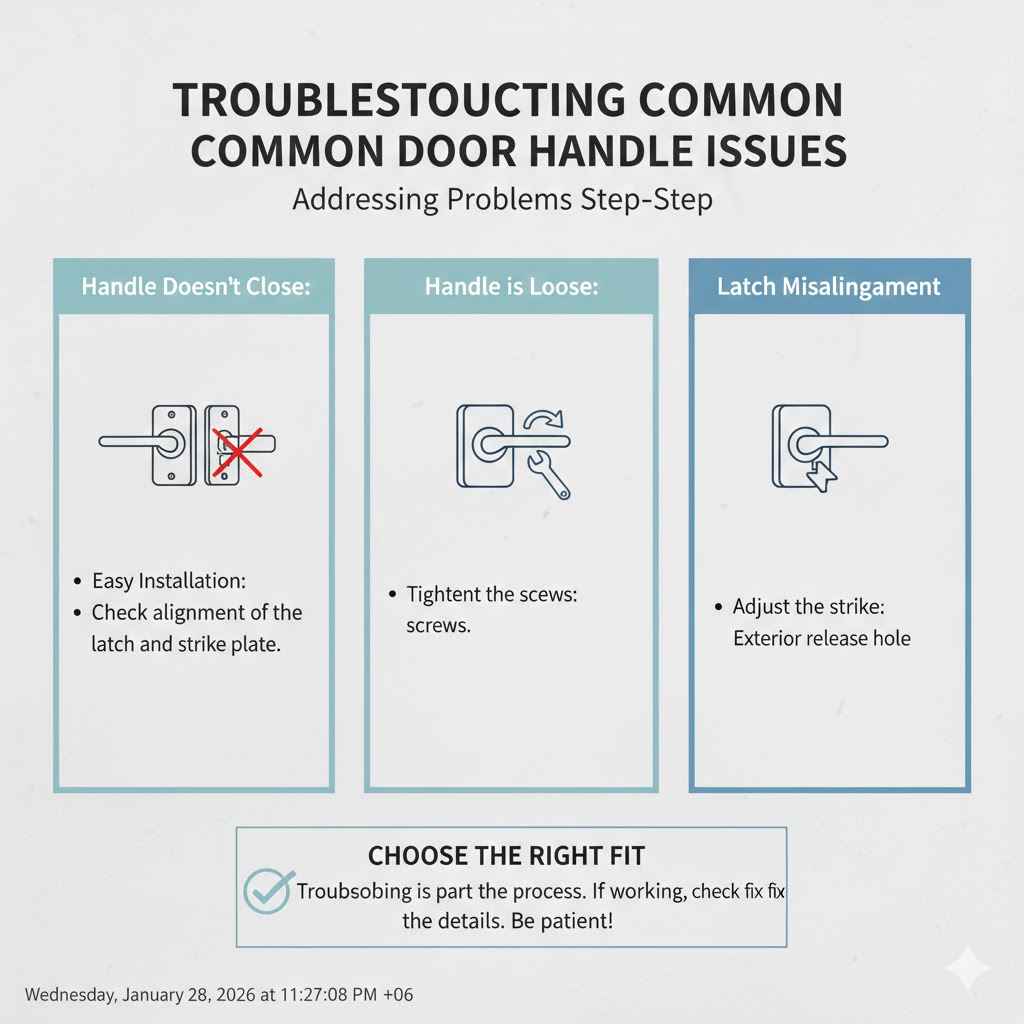
Things don’t always go perfectly, and problems can happen during installation. If the handle sticks or doesn’t close right, check the alignment of the latch and strike plate. Make sure the screws are tight. If the handle is loose, tighten the screws. For a misaligned latch, adjust the strike plate. If the handle won’t fit, double-check all your measurements. Addressing the issues one at a time will allow you to get the results you want. Remember to be patient.
- Handle Doesn’t Close: Check the alignment of the latch and strike plate.
- Handle is Loose: Tighten the screws.
- Latch Misalignment: Adjust the strike plate.
Troubleshooting is part of the process. If something isn’t working, don’t worry. Checking and fixing the details will help. If you do it well, your door handle will work fine. You will find that things get much easier with practice.
Frequently Asked Questions
Question: Can I use any door handle on my front door?
Answer: No, you should choose an entrance door handle for your front door. Entrance handles have a key lock and a deadbolt for maximum security. These handles are the best option for your front door because of the security features.
Question: What do I do if my new door handle doesn’t fit?
Answer: Check your measurements. Ensure the backset, door thickness, and bore hole size match. If not, the handle might not fit. You may need to modify the door or choose a different handle. Double-check everything, including the existing hardware.
Question: What is a backset, and why does it matter?
Answer: The backset is the distance from the edge of the door to the center of the handle’s hole. It is essential because it must match your door for the handle to fit properly. There are a few standard backset sizes.
Question: Are all door handles the same style?
Answer: No, door handles come in different styles. These include lever handles and knob handles. They also come in various finishes, like brushed nickel and matte black. Choose the style that best fits your home’s look and needs.
Question: Where can I buy door handles?
Answer: You can buy door handles at home improvement stores. You can also find them online from various retailers. Check the measurements. This will help make sure you buy a door handle that fits.
Final Thoughts
The question, “Are Door Handles Universal? What Fits and What Doesn’t” is something many people ponder. Exploring this reveals that while not all handles fit all doors, many are designed to work with standard measurements. Key factors include the backset, door thickness, and bore hole size. Knowing these measurements and the type of door you have can help you find a suitable handle. You’ll also need to consider your door’s material, style, and existing hardware. Following the installation steps and troubleshooting common issues will help make the process smooth.
Remember, whether it’s an entrance, passage, or privacy handle, choosing the right one can easily upgrade your space! Don’t be afraid to try this yourself. With a bit of knowledge and some tools, you can easily change your door handles and boost both the look and the safety of your home!