Best Plywood for Soundproofing: STC Ratings + Top Picks (2026)
Plywood alone rates only STC 25-35 for sound blocking — it takes mass and a decoupled air gap, not just wood, to actually stop noise. Multi-family walls must hit STC 50 under the 2024 International Building Code, and bare plywood falls 15-25 points short on its own. This guide covers real STC numbers for plywood assemblies, which materials close that gap, and which products we would actually pair it with.
This post contains affiliate links. As an Amazon Associate we earn from qualifying purchases at no extra cost to you.
How Plywood Actually Blocks Sound (STC Ratings Explained)
Sound Transmission Class (STC) is a lab-tested rating that measures how much airborne noise a wall, floor, or ceiling assembly blocks between 125 Hz and 4,000 Hz. Plain plywood, tested on its own, typically scores STC 25-35 — enough to muffle normal speech but not enough to stop a TV or music from carrying through a wall. It performs this poorly because wood is a good conductor of vibration, not a good sound barrier by itself.
Acoustic engineers call this the mass law: transmission loss increases by roughly 6 dB every time you double the mass per square foot of a barrier. That is why doubling a single sheet of plywood helps only modestly, while adding a dense, limp layer — like 2 lb mass loaded vinyl (MLV) — on top of it moves an assembly from around STC 25-30 up to roughly STC 35. Stacking plywood with drywall, resilient channel, and mineral wool insulation is what typically pushes a wall assembly to STC 50 or higher, which is the level at which loud sounds become hard to hear through the wall at all.
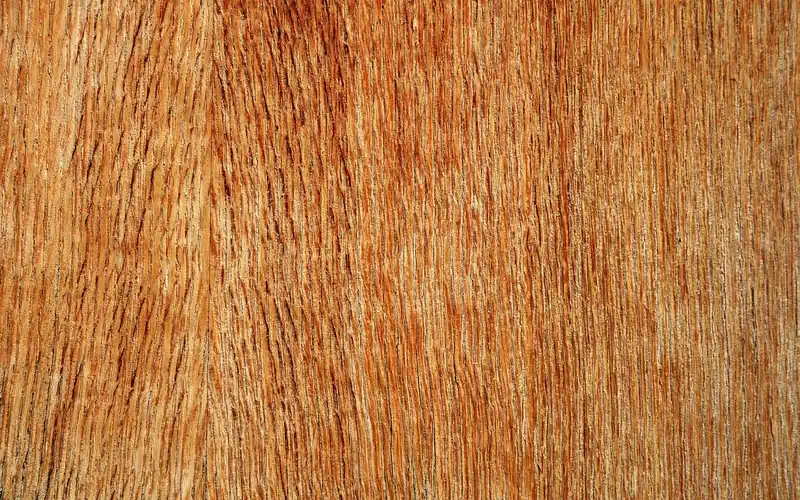
For interior wall paneling, MR-grade (moisture-resistant) or BWR-grade plywood is the standard pick; marine-grade plywood is worth the extra cost only in humid rooms like basements or bathrooms. If you’re weighing plywood against drywall for a wall assembly generally, our drywall vs. plywood comparison breaks down cost and performance for interior walls beyond just acoustics.
Plywood and Foam for a Music Room: What Actually Works
Plywood and acoustic foam solve two different problems, and mixing them up is the most common music-room mistake. Plywood (backed with mass like MLV) blocks sound from leaving or entering the room. Foam does not block sound at all — it only absorbs reflections and echo inside the room, which improves how a space sounds but does nothing to stop noise from reaching the neighbors.
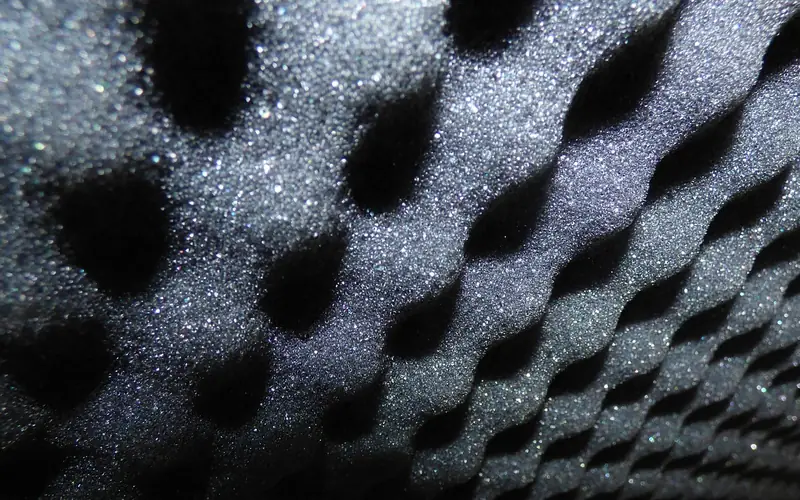
For a music room that needs both isolation and good sound quality, use plywood plus MLV (or plywood over resilient channel and drywall) as the wall assembly for isolation, then add foam or fabric-wrapped panels on the interior face for echo control. Leaving a small air gap between the plywood layer and the framing, rather than screwing it down tight everywhere, also measurably improves isolation because it prevents the panel from acting as a drum skin that re-radiates vibration.
Best Wood Acoustic Panel Pick
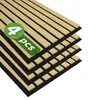
Art3d 4-Pack 12" x 93" Wood Slat Acoustic Panels – $140.98
A wood-veneer acoustic panel you can mount straight over plywood or drywall to treat echo in a music room or home studio — the same interior fix covered in the section above. Note: the slats are melamine-coated MDF, not solid plywood.
- Best for: Finishing the visible wall in a music room or studio after the plywood/MLV isolation layer is built
- Why we picked it: 93-inch panels cover a full wall height with fewer seams than shorter slat kits
- Main drawback: Treats echo only — it adds no meaningful STC rating, so it cannot replace the plywood/MLV layer
Compare more soundproofing options
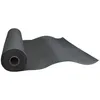 Option 1 2 lb MLV Barrier, 60 Sq Ft Roll – $289.00
|
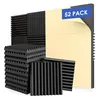 Option 2 FONESO 52-Pack Wedge Acoustic Foam – $38.47
|
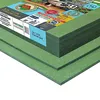 Option 3 STEICO Wood Fiber Underlayment, 6mm – $124.99
|
As an Amazon Associate we earn from qualifying purchases.
What Plywood Thickness and Grade Should You Use?
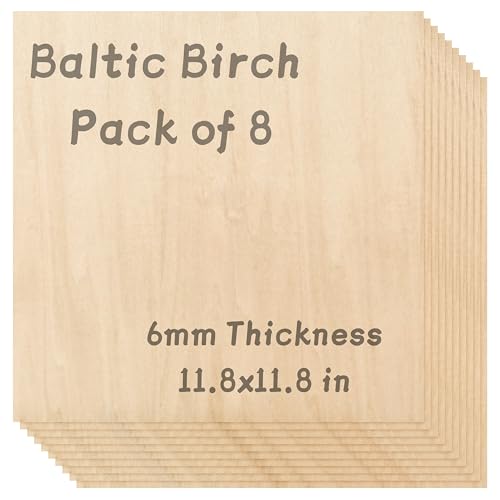
Most acoustic applications call for 12mm to 18mm (roughly 1/2 to 3/4 inch) plywood — thinner sheets add too little mass to matter for sound isolation, even though they’re fine for decorative paneling. For a subfloor under a soundproofing underlayment, 15/32 inch (about 12mm) CDX plywood is the typical baseline. If you’re also deciding on underlayment thickness for a floor, a 6mm (1/4 inch) wood-fiber layer is the standard middle ground — our underlayment on plywood guide covers when you actually need it under laminate or hardwood.
For multi-layer wall systems, pairing two sheets of 16mm or 18mm plywood with a damping compound like Green Glue between them measurably improves low-frequency absorption compared to a single thick sheet — the damping layer, not just the extra wood, is what does the work.
How to Layer Plywood With MLV for Better Soundproofing
- Frame or expose the stud wall: Confirm stud spacing and patch any gaps before adding layers — air leaks defeat mass-based soundproofing.
- Mount the first plywood layer: Screw 12-18mm plywood directly to the studs, leaving no gaps at the edges.
- Add the MLV layer: Staple or nail 1-2 lb mass loaded vinyl over the plywood, overlapping seams by at least 2 inches and taping every seam.
- Cap with drywall or a second plywood sheet: Screw the final layer on, offsetting seams from the layer below so no single crack runs through the whole assembly.
- Seal every edge: Run acoustic caulk around the perimeter and any penetrations — a single unsealed gap can undo a large share of an assembly’s rated performance.
Plywood Soundproofing Options Compared
| Assembly | Typical STC Rating | Best For |
|---|---|---|
| Single plywood sheet, unfinished | STC 25-35 | Light echo reduction only, not real isolation |
| Plywood + 2 lb MLV | ~STC 35 | Music rooms and home theaters on a budget |
| Plywood + drywall + mineral wool | STC 50+ | Meeting IBC’s shared-wall minimum |
| Foam panels alone (no plywood/MLV) | Adds ~0 to wall STC | Interior echo control only, not isolation |
📊 The 2024 International Building Code requires STC 50 (or field-tested NNIC 45) for walls and floor-ceiling assemblies separating dwelling units — plain plywood alone cannot meet this on its own. Source: International Code Council, 2024 IBC §1206.2
“Walls, partitions and floor-ceiling assemblies separating dwelling units and sleeping units from each other… shall have a sound transmission class of not less than 50 when tested in accordance with ASTM E90.”
Common Mistakes When Soundproofing With Plywood
- Relying on foam alone: Acoustic foam absorbs echo, not airborne noise — it will not stop sound from crossing a wall.
- Skipping the air gap: Screwing plywood tight to studs at every point turns the panel into a drum skin that transmits more vibration, not less.
- Leaving seams and edges unsealed: A single unsealed gap or electrical outlet can leak a disproportionate amount of sound compared to the surrounding solid wall.
- Ignoring flanking paths: Sound traveling through ductwork, shared framing, or under a door often matters more than the wall assembly itself once the wall is reasonably solid.
Frequently Asked Questions
What Is the Best Plywood for Soundproofing?
No single plywood grade blocks sound by itself — a 12mm to 18mm sheet paired with mass loaded vinyl or an extra layer of drywall is what actually raises the STC rating. Plain plywood alone tests at roughly STC 25-35, well short of the STC 50 code minimum for shared walls, so treat it as the structural base layer rather than the soundproofing solution.
How Effective Are Acoustic Foam Panels?
Acoustic foam panels are effective for reducing echo and improving how a room sounds, but they add close to zero STC value to a wall. They absorb sound reflections inside the room rather than blocking sound from entering or leaving it, so they work best layered on top of a real isolation assembly, not as a substitute for one.
Can Plywood Block Sound?
Yes, but only partially on its own — a single sheet of plywood rates around STC 25-35. Pairing plywood with mass loaded vinyl or a resilient-channel-and-drywall assembly is what pushes performance up toward the STC 50 mark that building codes require for shared walls. Sealing every seam and edge matters as much as the material choice itself.
How Thick Should Plywood Be for Soundproofing?
Use 12mm to 18mm (about 1/2 to 3/4 inch) plywood for acoustic applications — thinner sheets add too little mass to meaningfully block sound. For subfloors, 15/32-inch (roughly 12mm) CDX plywood is the standard baseline before adding a wood-fiber or foam underlayment on top.
What Thickness of Underlayment Is Best for Soundproofing?
A 6mm (1/4 inch) wood-fiber underlayment is the common middle ground for laminate, vinyl, LVT, LVP, or hardwood floors over a plywood subfloor. It balances real sound-impact reduction with easy installation; always check the flooring manufacturer’s own thickness limits before buying, since exceeding them can void a click-lock floor’s warranty.
How Do I Install Acoustic Foam Panels?
Clean the wall surface first, then measure and mark panel placement before mounting. Most foam panels use a peel-and-stick or double-sided adhesive backing for quick installation. Space panels evenly rather than covering the wall edge-to-edge — alternating foam with bare wall usually treats echo just as well and costs less.
Are High-Density Acoustic Panels Worth It?
Yes, for echo control specifically — high-density foam panels absorb reflections more consistently than thin, low-density foam, which matters in recording studios and home theaters. They are not a substitute for a mass-based isolation layer like plywood and MLV if your goal is stopping sound from leaving the room, not just improving how it sounds inside.
Still deciding between materials for the wall itself, not just the acoustic layer? Our guide to wood boards for speaker cabinets covers how different panel materials affect sound quality in built enclosures, which follows similar mass-and-damping principles to wall assemblies.
Conclusion
Plywood is a structural starting point for soundproofing, not the whole solution — on its own it rates only STC 25-35. Pair it with mass loaded vinyl or drywall and mineral wool to approach the STC 50 minimum most building codes require for shared walls, and add acoustic foam separately if echo control inside the room is also a goal. For more wall-material comparisons, see our full woodworking tips and guides hub.
Sponsored / affiliate links. As an Amazon Associate I earn from qualifying purchases. I may earn additional commission from eligible campaigns.