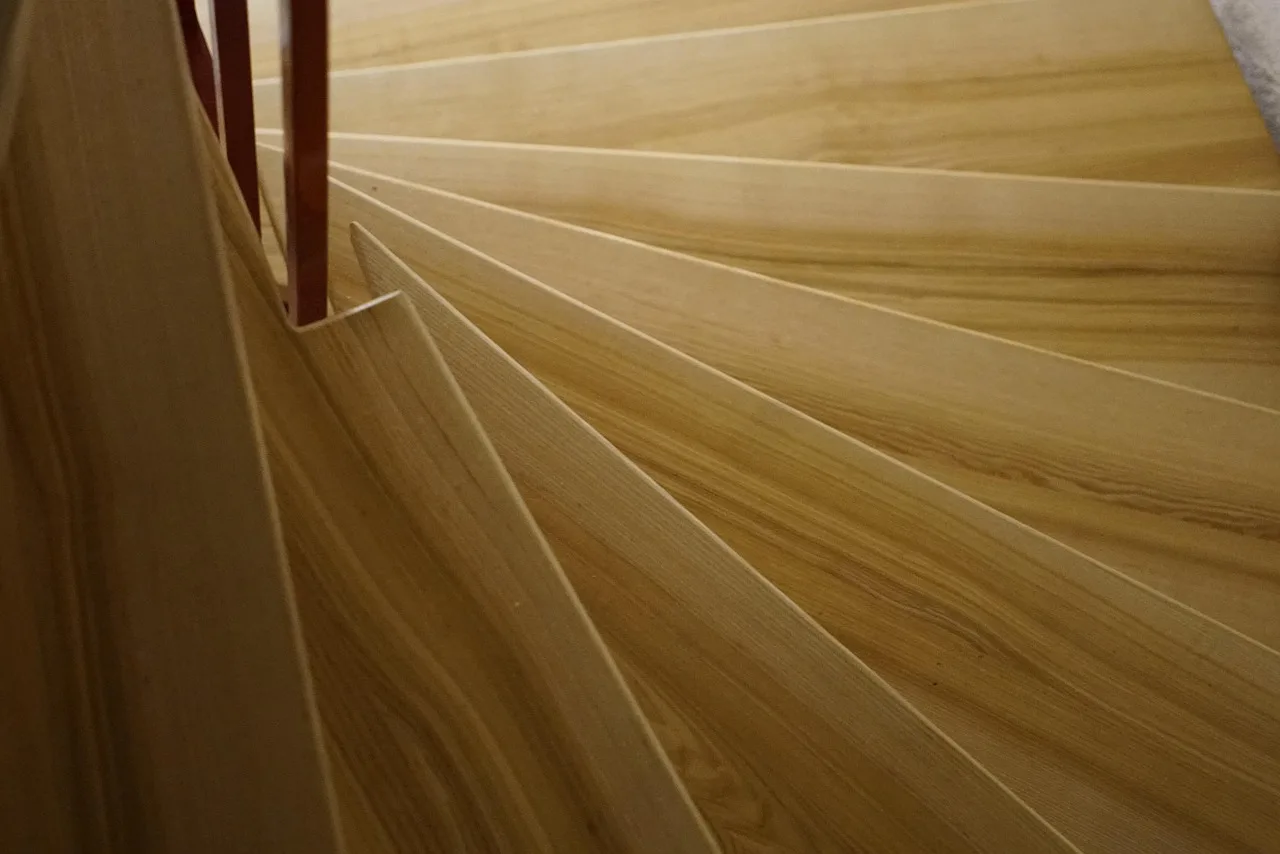
Best Woods for Stair Treads (2026): Based on Specs and Reviews
For most homes, white oak is the best all-around stair tread wood because it combines strong dent resistance, stable grain, and a neutral look that fits modern and transitional interiors. Use hard maple for a cleaner, lighter style, hickory for the hardest-use stairs, and red oak when budget and traditional trim matter.
Quick comparison
| Product | Badge | Best for | Price | ||
|---|---|---|---|---|---|
 |
Stair Treads (White Oak, 36" X 11-1/2" X 1")Generic | Our pick | Solid white oak · 36"×11½"×1" · unfinished | $39.50
Price as of 22 Oct 2026
|
View |
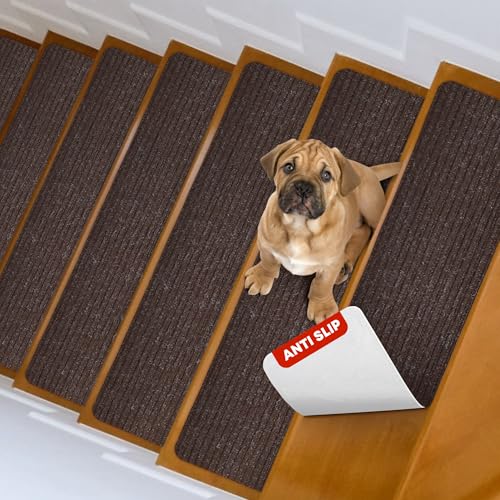 |
MBIGM Carpet Stair Treads for Wooden Steps, 15 Pack, 8" xMBIGM | Also great | $41.99
Price as of 22 Oct 2026
|
View | |
 |
Bona PowerPlus Hardwood Floor Deep Cleaner Spray – 32 fl ozBona | Pair with it | 32 oz refillable spray · oxygenated · residue-free | $10.97
Price as of 22 Oct 2026
|
View |
This guide weighs wear resistance, style, dent visibility, finish behavior, and upkeep together. Janka hardness matters, but it is only one part of the decision.
How we chose
The right tread depends on more than hardness. Traffic level, budget, and style should shape the choice, along with finish sheen, stain response, and how visible dents will look in your lighting.
Janka hardness is the standard dent-resistance metric for wood. Higher numbers generally mean better resistance to denting, which matters on stairs more than on many flat surfaces.
Stability matters too. Grain structure, sawn type, and how the wood handles humidity swings can change how well the tread stays flat and quiet over time.
Janka hardness and dent resistance
Hard maple, white oak, and hickory sit near the top of the common stair-tread choices. White ash and red oak still perform well for residential use, while walnut trades some dent resistance for a darker, more formal look.
Grain style and stain response
Fine, even grain reads cleaner and usually looks more modern. Open grain can add character, but it also makes scratches, pores, and stain variation more visible if the finish is dark or glossy.
Traffic level and maintenance tolerance
Busy stairs need a species that hides wear and handles repeated impacts from shoes, pets, and dropped items. Lower-traffic stairs can prioritize tone and grain without pushing hardness to the top of the list.
Stability, availability, and cost
Dry interiors can use solid wood for most projects. Rooms with humidity swings or radiant heat often do better with engineered treads, which use a veneer over a layered core for better dimensional control.
White oak: best for high-traffic stairs
White oak is the strongest all-around choice for most stair projects because it balances wear resistance, restrained grain, and broad style compatibility. It is the premium stair tread choice for homes that need durability without a heavy visual pattern.
White oak is described as the “absolute gold standard” for premium stair treads. Its Janka hardness is 1,360 lbf, and rift-sawn or quarter-sawn stock is recommended when you want the straightest grain patterns and the highest dimensional stability.
Choose white oak when you want a tread that looks current with light floors, painted risers, and simple railings. It also works well when you plan to use a clear or lightly tinted finish that keeps the wood tone close to natural.
The drawback is cost. White oak treads are said to cost between $120 and $300 each, and custom three-inch-thick white oak slabs can exceed $450 per tread.
Hard maple: best for modern interiors
Hard maple is the better fit when you want a pale, smooth tread with a clean, minimal look. It is a strong pick for modern interiors because the fine grain reads quiet and the surface can look very uniform after finishing.
Hard maple has a Janka hardness of 1,450 lbf, which makes it one of the hardest domestic hardwoods commonly considered for stairs. That high dent resistance is useful on front entries, family stairs, and upper floors that see repeated use.
Maple can be less forgiving than oak when stain absorption matters. Dark stains may look blotchy unless the finish schedule is carefully controlled, so it is often best left natural or finished in a light tone with a waterborne polyurethane.
Hickory: best for heavy foot traffic
Hickory is the tough choice for stairs that take a beating. It is among the hardest domestic woods, and its bold grain and color variation help hide the small marks that build up in busy homes.
It is a strong match for heavy foot traffic, especially where shoes, kids, and pets all use the same stair run. The tradeoff is visual movement in the grain, which can fight a very restrained or minimalist interior.
Hickory is also less forgiving on budget. It is often priced above more common domestic options, and the high-contrast grain is not the right fit if you want the staircase to disappear into the architecture.
Red oak: best for budget and traditional trim
Red oak is the practical workhorse. It offers a familiar grain, broad availability, and a price point that usually sits below white oak and hickory while still giving solid durability for residential stairs.
Its Janka hardness is 1,290 lbf, which keeps it in the durable range for everyday use. The open grain reads traditional, so it pairs well with classic trim, stained railings, and homes that already use red oak flooring or millwork.
Red oak is a smart choice when you want the stairs to match existing woodwork without stretching the budget. It is not the best option when you want the tightest, most modern-looking grain.
Is white oak or maple better for stair treads?
White oak is usually the safer all-around answer, while maple is better when you want the cleanest, lightest look. White oak gives you stronger style flexibility because its grain is controlled but not sterile, and it accepts a wide range of finishes well.
Maple wins when the goal is a pale, smooth staircase with minimal visual texture. The answer can shift if you plan a dark stain, because maple often needs more careful finishing to avoid blotchiness, while white oak usually takes stain more evenly.
If the stairs are busy and the interior is open-plan, white oak is the easier recommendation. If the stair run is a design feature and you want a crisp modern expression, maple is the better visual fit.
Should you choose solid wood or engineered stair treads?
Choose solid wood for most dry interiors where the stairs will stay within normal humidity swings. Choose engineered stair treads when you need more stability in a room with moisture changes, radiant heat, or a subfloor condition that makes movement more likely.
Engineered treads use a veneer over a layered core, which helps reduce movement compared with a single thick plank. That can be the smarter choice in basements, over heated slabs, or in homes where seasonal humidity shifts are hard to control.
Solid wood still makes sense when you want a tread that can be sanded and refinished over time. If you want the warmest traditional look and the stair environment is stable, solid oak or maple is usually the straightforward pick.
Are softwood stair treads a bad idea?
For busy stairs, yes, softwoods are usually a poor choice. Pine, fir, and cedar dent more easily than hardwoods, so they work best only on light-use or decorative stairs where wear marks are acceptable or even part of the look.
Eastern white pine is listed at 380 lbf, and Douglas fir at 710 lbf. Those numbers help explain why softwoods show heel marks, pet claw marks, and dropped-object dents sooner than oak, maple, or hickory.
Softwood can still make sense on a narrow secondary staircase, a loft ladder with light traffic, or a stair set that will be covered with a runner. In those cases, the runner does more of the wear control and the wood becomes a visual element rather than the main wear surface.
Picture a 12-step basement stair used five times a day. A softwood tread may look fine on installation day, then pick up visible dents at the nosing after a few weeks of use. In the same space, an oak tread keeps the marks more subdued and ages more evenly.
A common first-timer mistake is picking a stair tread species for its dark finish alone and overlooking how well it holds up to daily foot traffic. A dark stain on soft pine still leaves a soft tread underneath, so the wood can dent even if the surface looks formal from the top of the stairs.
Which one should you buy?
Start with use case, not appearance. A stair that sees daily family traffic needs a different species than a formal back stair or a low-use hallway connection.
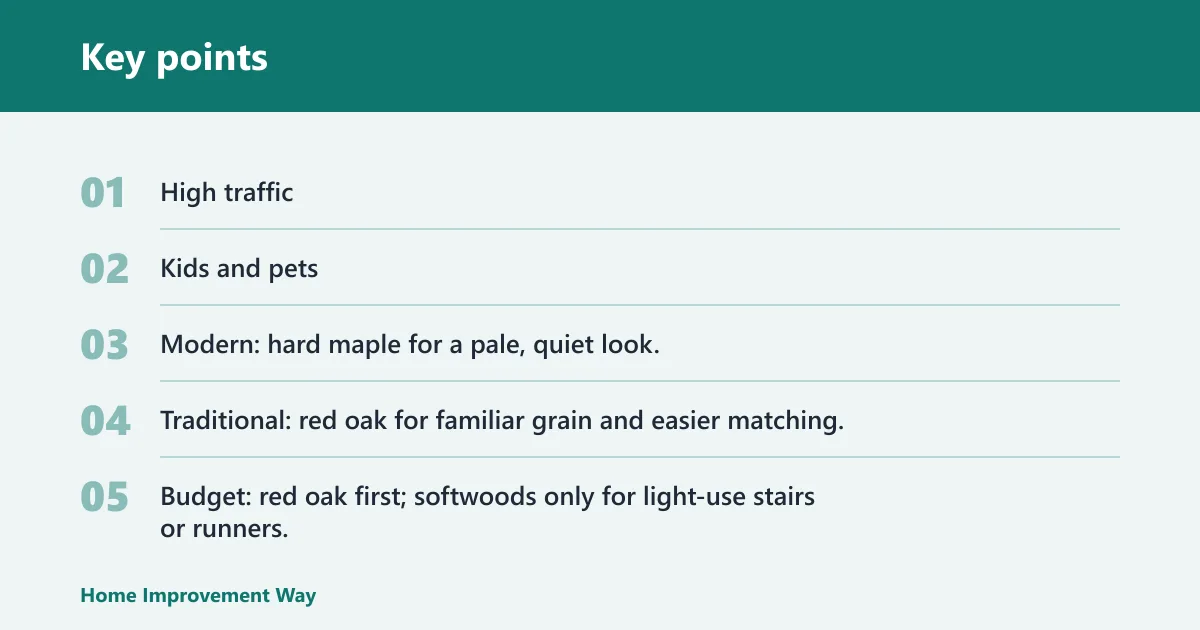
For high-traffic family stairs, choose white oak, hard maple, or hickory. For kids and pets, white oak is the easiest balance of durability and easy-to-live-with grain, while hickory hides wear but has a bolder look.
For modern interiors, hard maple gives the cleanest appearance. For traditional rooms or when you want to match existing trim, red oak is usually the most practical choice. For a luxury, darker staircase, black walnut fits best when design matters more than maximum dent resistance.
For budget-first projects, red oak usually beats the more expensive choices on value. Softwoods only make sense when traffic is light or you are intentionally creating a decorative stair.
Choose this if…
- High traffic: white oak or hickory.
- Kids and pets: white oak, then hickory if you can accept more grain movement.
- Modern: hard maple for a pale, quiet look.
- Traditional: red oak for familiar grain and easier matching.
- Budget: red oak first; softwoods only for light-use stairs or runners.
Suppose you are replacing treads on a front staircase that gets daily use and has painted risers. White oak with a satin finish is the cleaner choice than walnut, because the lighter tone fits the trim and the wear will be less visible over time.
Suppose the staircase sits over a heated basement slab. In that case, engineered treads often make more sense than solid stock because the layered core can handle movement better as conditions change through the seasons.
Stair tread selector table
| Wood | Wear resistance | Visual style | Stainability | Dent visibility | Maintenance burden | Best-use scenario |
|---|---|---|---|---|---|---|
| White oak | 5 | 4 | 4 | 3 | 3 | High-traffic family stairs with a clean, flexible look |
| Hard maple | 5 | 5 | 2 | 2 | 3 | Modern interiors that need a pale, smooth tread |
| Hickory | 5 | 3 | 3 | 2 | 4 | Heavy foot traffic and homes that can handle bold grain |
| Red oak | 4 | 4 | 4 | 3 | 3 | Traditional trim, broad availability, and budget control |
| Black walnut | 3 | 5 | 3 | 4 | 3 | Design-led staircases where color matters most |
| Eastern white pine | 1 | 3 | 2 | 5 | 5 | Light-use or decorative stairs, often with a runner |
| Douglas fir | 2 | 3 | 2 | 4 | 4 | Secondary stairs where cost matters more than dent resistance |
Choose this if…: high-traffic: white oak, hard maple
- High-traffic: white oak, hard maple, or hickory.
- Kids and pets: white oak or hickory, with a satin finish.
- Modern: hard maple for a smooth, light surface.
- Traditional: red oak for familiar grain and easier matching.
- Budget: red oak first; softwoods only for light-use stairs or runner-covered treads.
Waterborne polyurethane is a smart finish for light woods because it dries clear and resists ambering. That matters on maple and white oak when you want to preserve the original tone instead of warming it up with a yellow cast.
Satin or low-sheen finish is usually the better choice for stairs. It hides minor scratches better than high gloss and cuts glare, which helps each tread read more evenly in daylight and at night.
For maintenance, keep the finish clean and avoid dragging abrasive grit across the nosing. A pH-neutral cleaner is the safer choice on polyurethane-finished wood, and tired-looking treads can usually be renewed with cleaning and recoating before sanding becomes necessary.
How long should stair treads acclimate before installation?
Stair treads should acclimate for 1 to 2 weeks before installation, ideally in a space held around 35% to 55% humidity. That reduces post-installation movement and helps the wood settle closer to the conditions where it will stay in service.
Acclimation matters most for solid wood, but it also helps engineered treads settle before fastening. The goal is simple: let the material reach the home’s conditions before it is cut, installed, and locked in place.
Skip this step and the treads can move after install. Gaps, squeaks, or slight cupping are far more likely when the wood is installed too wet or too dry for the room.
Frequently asked questions
What is the best wood for stair treads?
White oak is the best all-around choice for most stair treads because it combines strong wear resistance, a stable grain pattern, and broad style flexibility. Hard maple is the better pick for a cleaner modern look, while hickory is the strongest option for very heavy use.
What Janka hardness is good for stair treads?
There is no single cutoff, but stair treads generally do better when the wood is in the harder domestic range. White oak at 1,360 lbf, hard maple at 1,450 lbf, and hickory all offer strong dent resistance, while softer woods will show wear faster.
What finish is best for wood stair treads?
Waterborne polyurethane is the best general choice when you want clear drying and less ambering, especially on maple and other light woods. A satin or low-sheen sheen is usually preferred because it hides small scratches better than high gloss and reduces visual glare.
Sponsored / affiliate links. As an Amazon Associate I earn from qualifying purchases. I may earn additional commission from eligible campaigns.