What Is Rough Sawn Lumber and When Is It Worth It?
Rough sawn lumber is worth it when you need extra thickness, a wider species choice, or a rough look that will stay visible; otherwise surfaced stock is the better buy. Choose badly, and you can spend more on tools, lose usable wood to planing, or still need heavy sanding. This guide shows how to decide.
This guide is part of our Woodworking materials guide series.
Verdict

- Durable ductile iron body for long-term use
- Adjustable cutting depth for precision trimming
- Versatile for multiple woodworking surface tasks
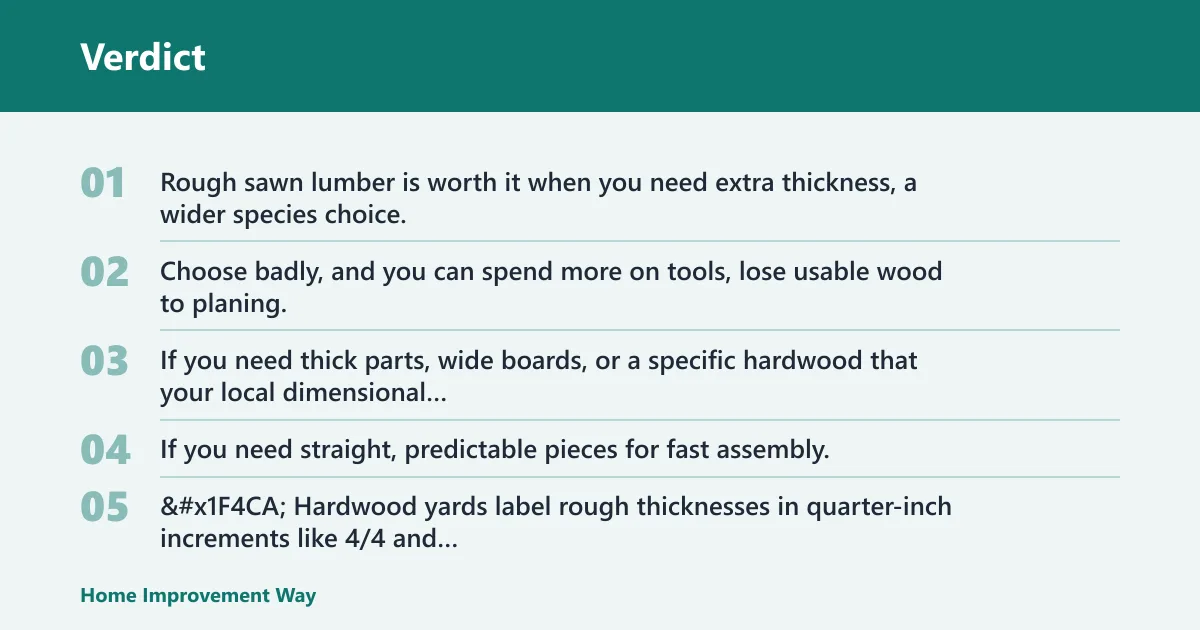
The buying decision is simple. If you need thick parts, wide boards, or a specific hardwood that your local dimensional rack does not carry, rough stock can make sense. If you need straight, predictable pieces for fast assembly, surfaced lumber is usually the cleaner choice.
📊 Hardwood yards label rough thicknesses in quarter-inch increments like 4/4 and 5/4. Source: Familyhandyman.
Specs at a glance
| Item | Rough sawn lumber | Dimensional lumber |
|---|---|---|
| Surface condition | Unplaned, unsurfaced, with saw marks | Surfaced and dressed |
| Typical sizing | Rough thickness, then milled down | Nominal sizes, more predictable dimensions |
| Purchase unit | Board foot | Often sold by linear foot or piece |
| Board foot definition | 144 cubic inches | Not usually the buying unit |
| Moisture behavior | More variable, with movement risk | More predictable range, though still not stable forever |
| Common yard labels | Quarter-inch increments like 4/4 and 5/4 | Nominal framing labels |
Who it is for
Rough sawn lumber is for you if you own, or can access, the tools to flatten boards and bring them to thickness before assembly. It also fits projects that need extra thickness, a wider species choice, or a visible rough texture. If you want quick, square, ready-to-build stock, it is a harder sell.
It suits bigger tabletops, wide panels, bench parts, and furniture where final size matters more than speed. It also helps when a specialty yard has the hardwood or softwood species you need and the home center does not.
How it comes from the mill
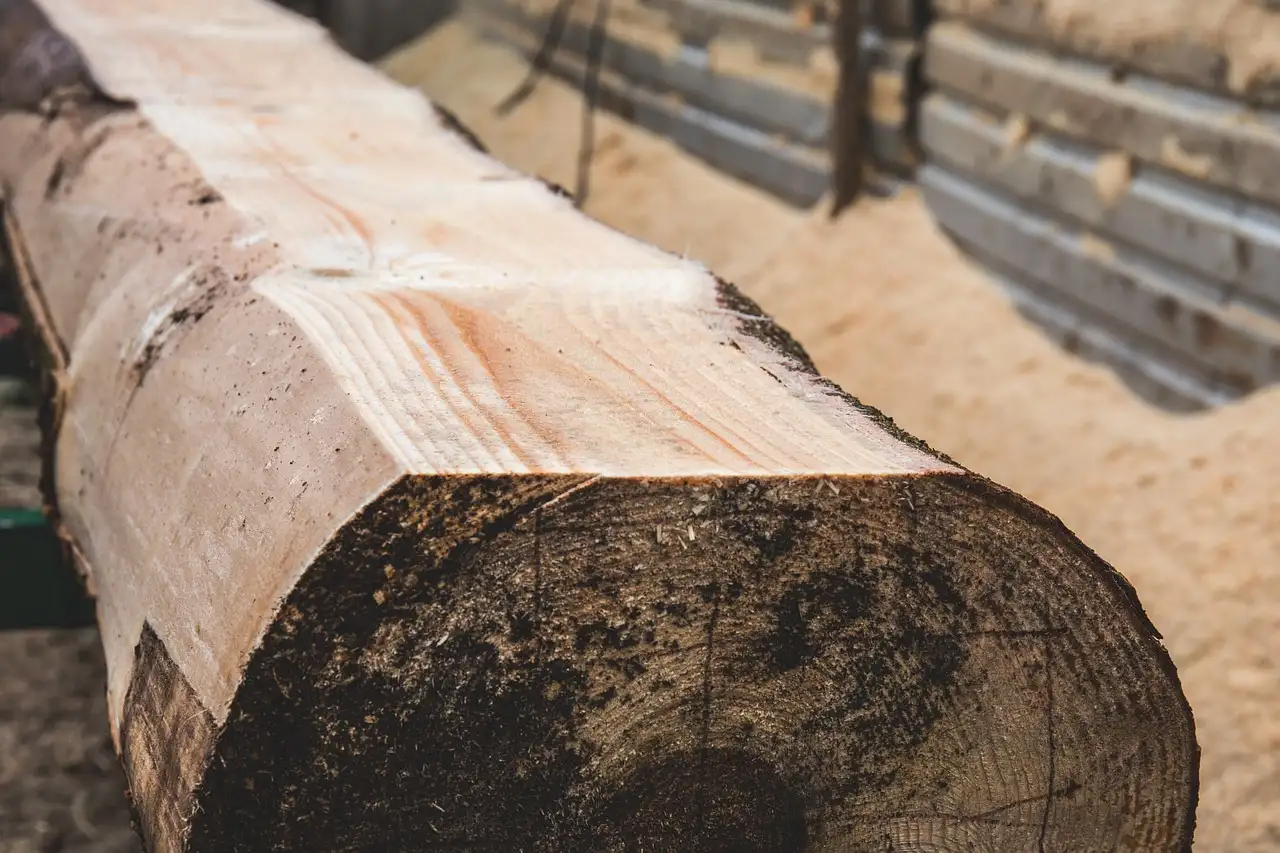
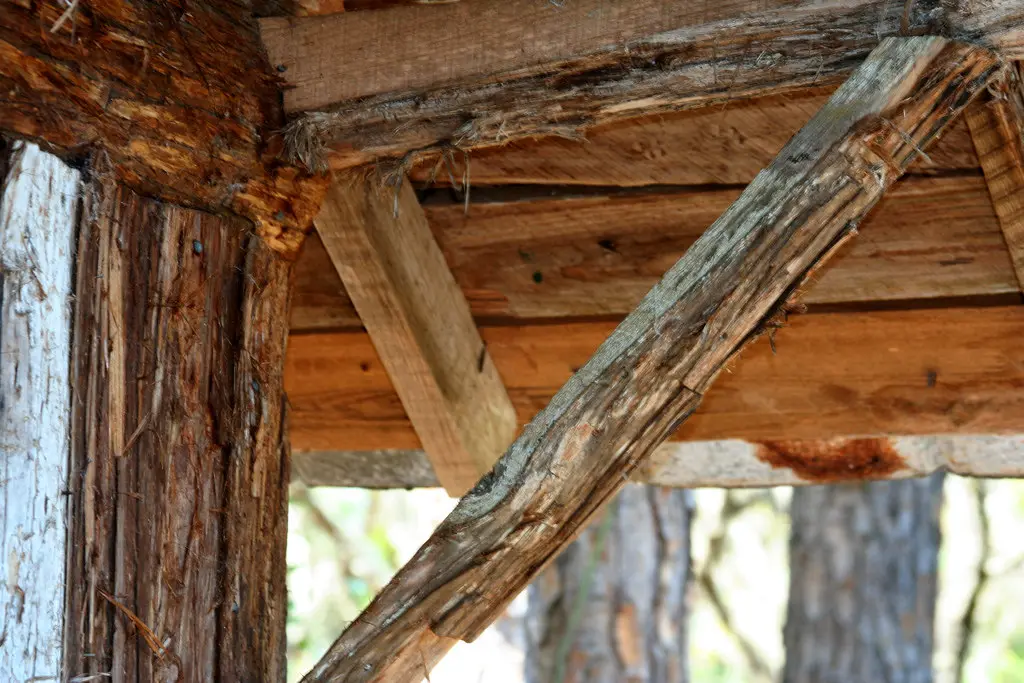
Rough-sawn lumber is lumber that has not been planed or surfaced. It comes off the mill with rough faces and visible saw marks, so the board is not yet ready for precision joinery. The stock usually starts oversize so you can mill it to final dimension.
Surface saw marks, rough faces, and oversize dimensions
Those saw marks are normal. So are rough edges, slight unevenness, and thickness that does not match its final dressed size. That oversize starts as your milling allowance, which is why rough lumber can give you more finished thickness than surfaced stock of the same category.
Rough sawn lumber versus dimensional lumber
Dimensional lumber is surfaced, dressed, and sold in nominal sizes with more predictable dimensions. Rough stock is not dressed and is usually bought for later milling. The difference matters because dimensional lumber saves time, while rough lumber trades time for choice and thickness.
What works
Rough lumber works best when the board needs to start thick and end thick. It is also useful when species selection matters, because specialty yards often carry a broader range of hardwoods and softwoods than a framing aisle. Rustic texture can be a valid design choice too.
Picture a 1-3/4-inch tabletop apron or a live-edge style shelf. Rough stock may be the better starting point because planing a surfaced board down that far would leave too little material. In that case, the milling waste is part of the plan, not a surprise.
Cost savings can be real on larger projects
Rough lumber can save money on larger projects, but only when you count the whole job honestly. Board-foot pricing can look attractive, yet you still need to add scrap, extra length, jointer and planer wear, and the time spent flattening and thicknessing each board.
Why extra thickness matters
For rough stock, buy boards at least 1/4 inch thicker than the final dimension for milling allowance. Hardwood yards often label rough thickness in quarter-inch increments like 4/4 and 5/4. In practice, that extra thickness can be the difference between a usable part and one that planes too thin. (familyhandyman.com)
Species selection can be better
Specialty yards often give you more choice than construction racks. That matters when a project calls for a specific hardwood, a less common softwood, or matching grain across several boards. If the species is the main reason you are buying, rough stock is often where the selection starts.
What does not

Rough sawn lumber does not fit every build. It is a weak choice when you need fast assembly, consistent dimensions, or a clean surface with little prep. It also becomes a poor buy when your scrap rate is high or your boards have hidden defects that eat up your milling allowance.
A common first-timer mistake is to buy rough boards for a small project and then discover the true cost is not the sticker price. The cost is the sticker price plus setup time, tool wear, and the wood you remove to get a flat, square part.
Tool cost and planer wear you should count
Milling rough lumber usually requires a jointer and planer. The jointer flattens rough faces and removes twist or cup before planing, while the planer thicknesses the board to final size. Both tools take time, and the planer is sensitive to dirt, nails, and grit.
Moisture risk and movement
Rough stock often arrives with more moisture content variability than surfaced lumber, and it can move during acclimation. That movement can show up after purchase, after cutting, or after the boards sit in your shop. If the project needs tight tolerances, that risk matters.
Defects can erase the savings
Checks, end cracks, twist, and sticker stains can turn a bargain into waste. End checks are common, so plan to discard several inches from each end. Minor warping may be removed in milling, but twisted boards should be avoided because the defect can survive processing.
Sticker stains are not always superficial
Sticker stains come from drying spacers and can look like surface discoloration. They may extend deeper than 1/8 inch, which means sanding alone may not remove them. On a visible tabletop or cabinet side, that can force you to reject a board you otherwise wanted.
Decision table: rough sawn versus surfaced lumber
| Factor | Rough sawn lumber | Surfaced lumber | Verdict |
|---|---|---|---|
| Thickness needed | Best when you need to start oversize | Better for standard dimensions | Rough |
| Species availability | Often broader at specialty yards | Usually narrower, especially at big-box stores | Rough |
| Project size | Better on larger builds where milling setup pays back | Better on small one-off jobs | Depends |
| Tool ownership | Best if you already have a jointer and planer | Better if you do not | Surfaced |
| Waste tolerance | Needs enough allowance for checks and jointing | Less waste from milling | Surfaced |
| Surface finish needs | Good if you want rustic texture or will mill anyway | Better for quick finish prep | Depends |
| Budget | Can save money if the project is large enough | Often cheaper after tool and scrap costs on small jobs | Depends |
| Moisture risk | Higher variability, more acclimation concern | More predictable, though not risk-free | Surfaced |
How do you choose boards and price them?
Price rough lumber by the board foot, not the linear foot. A board foot equals 144 cubic inches of wood, so the buying unit reflects volume, not board length alone. That matters because thickness and width drive the actual value you are getting.
How to estimate board feet for rough lumber
Use the board-foot formula for rough material: thickness in inches × width in inches × length in inches, divided by 144. That calculation gives you a buying estimate before milling. Since rough-sawn lumber is sold by the board foot, this is the unit you need at the yard.
How much extra to buy for milling
Buy at least one extra full board because milling takes time and mistakes happen. Also buy extra length because end checks are common and several inches may need to be trimmed off each end. A 10-foot rough-sawn board may be needed to yield two finished 4-foot boards.
What to inspect before you pay
Check each board for twist, checks, end cracks, and sticker stains. Twisted boards are the biggest warning sign because the defect can remain after milling. Short cracks at the ends are expected to some degree, but they still reduce usable length and should affect your count.
- Inspect both faces and both ends before pulling a board from the pile.
- Reject boards with obvious twist unless the project can absorb the waste.
- Measure rough thickness against your final target plus milling allowance.
- Expect to trim several inches off each end for checks and cracks.
- Confirm moisture condition and give the lumber time to acclimate after purchase.
Alternatives
Dimensional lumber
Dimensional lumber is the simpler buy when you need construction framing use, predictable nominal dimensions, and less milling work. It is surfaced, dressed, and easier to price quickly. For a deck frame, wall build, or basic shelf, it is usually the practical choice.
Resawn lumber versus rough sawn lumber
Resawn lumber and rough sawn lumber are not the same. Rough sawn lumber is straight from the mill and has not been surfaced. Resawn lumber has been cut again from an existing board, usually to create thinner stock or separate faces. If the term is vague at the yard, ask for clarification before buying.
When surfaced stock is simpler and safer
Surfaced stock wins when you need a stable starting point, limited waste, and parts that can go together with less machine work. It is also safer for beginners who do not yet own a jointer and planer. If your project is small and precision matters, surfaced lumber is usually the cleaner buy.

- Compatible with most ¼-inch shank routers
- Cuts, edges, and trims various wood types
- Includes labeled storage for organization
The Jorgensen No. 4 hand plane can be a useful alternative if you need light flattening or edge cleanup and do not want to rely entirely on a jointer. Based on the spec sheet and reviews, its strong point is controlled hand work; its drawback is obvious: a hand plane does not replace a planer for thicknessing a pile of rough boards.

- Ready-to-use, pre-chopped wood for projects
- Dried to reduce warping and cracking
- Heavy yield for multiple small applications
The American White Oak sticks from HANNIBALS DINER LLC fit small craft or shop tasks, not full lumber milling. Based on the product data, the kiln-dried stock should reduce some warp and crack risk, but the format is pre-chopped wood, so the drawback is limited size and little relevance for board-foot purchasing or furniture milling.
Should you buy it
Buy rough sawn lumber when the project needs extra thickness, wider species choice, or a surface that will be milled anyway. Skip it when you need fast, predictable parts and do not already own the machines to flatten and thickness the stock. The best choice depends on the whole job, not the sticker price alone.
For most beginners, the decision comes down to this: if you cannot use a jointer and planer, or you need flat parts right away, surfaced lumber is easier and less risky. If you can absorb waste and setup time, rough stock can be the better material for larger or more selective work.
Frequently asked questions
What is rough sawn lumber?
Rough sawn lumber is wood that has come from the mill without being planed or surfaced. It usually shows saw marks, rough faces, and oversize dimensions so you can mill it down later. That makes it useful for custom work, but not ready for fine joinery right away.
Is rough sawn lumber cheaper than finished lumber?
Sometimes, but not always after you count waste, tool wear, and the labor of milling. Rough lumber can look cheaper by the board foot, especially on larger jobs, yet surfaced lumber may cost less in total if you only need a few pieces or have no milling tools.
When is rough sawn lumber worth it?
It is worth it when you need more thickness, want a species your local yard carries only in rough form, or want a rustic surface that will be part of the design. It is less attractive when you need a quick build, tight tolerances, or low waste.
How do I estimate board feet for rough sawn lumber?
Calculate thickness × width × length, then divide by 144. That gives board feet, the standard buying unit for rough lumber. Because boards are sold by volume, this method helps you compare pieces of different sizes before you commit at the yard.
What defects should I check before buying rough sawn lumber?
Look for twist, checks, end cracks, and sticker stains. Twist is especially important because it can remain after milling and waste a lot of material. End checks are common, so expect to cut back several inches from each end before final sizing.
Can I use rough sawn lumber without a planer?
Only for projects that can tolerate uneven thickness or a rougher surface. You can sometimes hand-plane small parts, but precision work usually needs a planer, and often a jointer first. If the goal is flat, consistent parts, skipping the planer is usually not practical.
Sponsored / affiliate links. As an Amazon Associate I earn from qualifying purchases. I may earn additional commission from eligible campaigns.