Best Woods for Cutting Boards (2026): Research Shows
For many cutting boards and kitchen items, hard maple is often considered a strong all-around choice because its tight grain, moderate hardness, and relatively low open-pore structure can balance knife care, cleaning, and durability. Pick the wrong wood and you get deep scars, warped boards, odor retention, or a surface that dulls knives fast. This guide compares maple, walnut, beech, teak, oak, and bamboo by maintenance, moisture resistance, and knife safety.
This guide is part of our Woodworking materials guide series.
Quick comparison
| Product | Badge | Best for | Price | ||
|---|---|---|---|---|---|
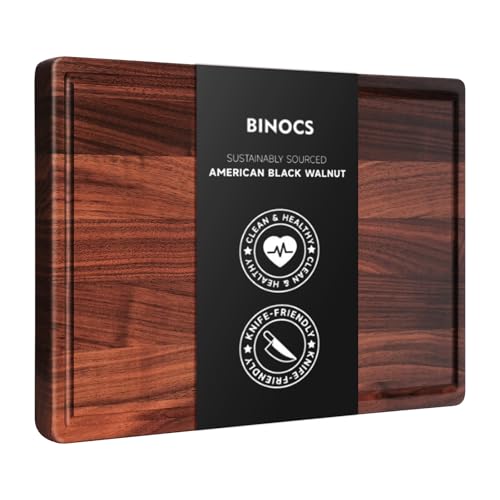 |
Walnut Wooden Cutting Boards for Kitchen, Solid WoodBINOCS | Our pick | 17in*12in · Walnut · Solid wood | $35.99
Price as of 15 Oct 2026
|
View |
 |
THETCHRY Maple End Grain Cutting Board Set, Wood Cuttingthetchry | Also great | End grain · FSC maple · 1-inch thick | $109.99
Price as of 15 Oct 2026
|
View |
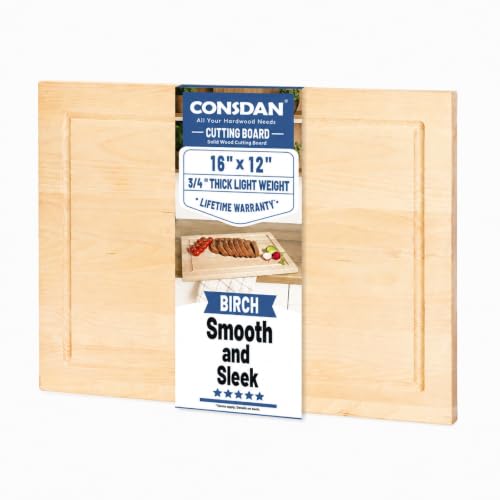 |
CONSDAN Wood Cutting Board for Kitchen, 16 x 12, SoildCONSDAN | Budget pick | 16x12in · Birch · Edge grain | $23.99
Price as of 15 Oct 2026
|
View |
 |
Live Edge Olive Wood Cutting Board 16"L X 7"W X 0.75"THThe Live Edge | Also great | 16in*7in · Olive wood · Live edge | $65.99
Price as of 15 Oct 2026
|
View |
Use this section to narrow the field fast. If you want one board for daily chopping, maple is the default. If you want a darker look that hides stains better, walnut is the cleanest tradeoff. If you want the least fussy look, weigh how the grain and finish affect upkeep before you buy.
How we chose
The right wood is more than a species name. Grain structure, hardness, maintenance, stain visibility, and the way you prep food matter just as much as price or appearance.
Here is the selection logic used throughout this guide:
- Closed-grain versus open-grain structure: closed-grain woods reduce liquid absorption and help limit bacteria, staining, and warping.
- Knife safety: harder is not always better; the surface should resist wear without being so harsh that it feels abusive to blades.
- Maintenance: boards need regular cleaning and food-grade mineral oil to reduce shrinking and warping.
- Food-use practicality: the right choice depends on chopping vegetables, carving meat, serving, or heavy-duty prep.
- Total ownership cost: a pricier board can still cost less over time if it lasts longer and stays stable.
Janka hardness rating can help with the durability part of the decision. It is commonly measured in pounds-force and gives a useful comparison point, but it should not be the only factor. A board also needs the right grain, the right construction, and regular care.
Cutting board matrix
| Wood | Knife-friendliness | Moisture resistance | Stain visibility | Maintenance frequency | Best kitchen use case |
|---|---|---|---|---|---|
| Maple | High | Good when sealed and oiled | Moderate | Regular | All-purpose prep, heavy daily use |
| Walnut | High | Good when sealed and oiled | Low | Regular | Everyday prep, serving, darker display boards |
| Beech | High | Good when sealed and oiled | Moderate | Regular | Maple substitute for general kitchen use |
| Cypress | Medium to high | Good, with careful drying | Moderate | Regular | Traditional boards where odor control matters |
| Teak | Medium | Very good | Low to moderate | Lower to regular | Moisture-prone kitchens, occasional prep |
| Oak | Low to medium | Poor | Moderate | High | Usually skip for primary cutting surfaces |
| Bamboo | Medium, often harsher feel | Moderate | Low to moderate | Regular | Budget boards, light to moderate use |
Read the table by task, not by habit. Chopping vegetables puts more value on knife feel and easy cleanup. Carving meat puts more value on moisture handling and stain control. Serving puts appearance higher on the list, though stability still matters.
What is the best wood for cutting boards?
Hard maple is the best all-around wood for most cutting boards because it combines a closed-grain structure with solid scratch and impact resistance, good knife safety, and broad availability. Walnut and beech are strong alternatives, but maple stays the safest default when you want one board that can handle frequent prep.
Maple is the industry standard among cutting-board makers for a reason. It is hard enough to hold up to repeated chopping, but not so hard that it becomes needlessly punishing on blades. Closed-grain wood also helps keep liquid and bacteria out of the cutting surface.
That said, species alone does not decide the outcome. An edge-grain maple board behaves differently from an end-grain maple board, and both behave differently from a face-grain board. Construction often changes the feel and lifespan more than the species label does.
Why hard maple leads
Hard maple is more scratch- and impact-resistant than beech or teak, which makes it a strong default for kitchen work. It takes repeated knife contact well, and its tight structure supports cleaner cleaning and less visible wear than many open-grained woods.
It does need regular conditioning. Food-grade mineral oil should be applied after cleaning on a routine schedule to reduce shrinking and warping. Skip that step, and even a good maple board can dry out, cup, or split at the edges.
Where maple is not automatic
If you want a darker board that hides stains better, walnut can be the smarter choice. If you want a lighter board with a more traditional maker’s standard, maple still wins. If you want the least upkeep look, the answer may depend more on finish and care habits than on the species itself.
Is maple or walnut better for a cutting board?
Maple is better when you want the most balanced default, especially for heavy daily prep. Walnut is better when you want a darker board that hides staining more effectively and still stays knife-friendly. Both are close-grained hardwoods, but maple usually wins for the broadest all-around use.
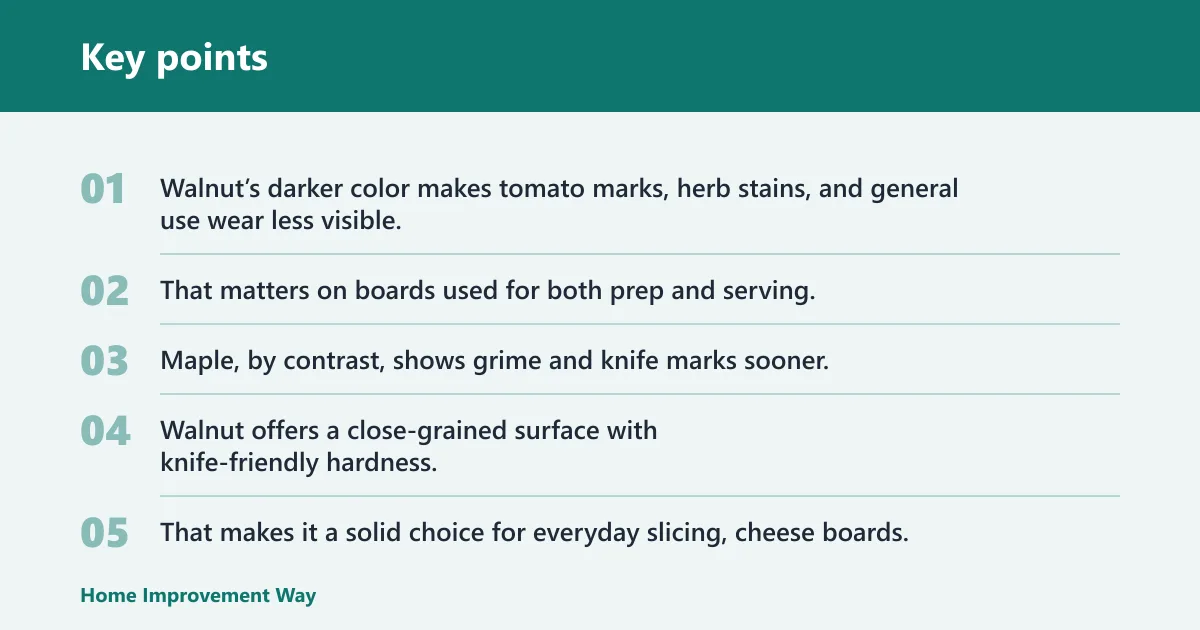
Walnut’s darker color makes tomato marks, herb stains, and general use wear less visible. That matters on boards used for both prep and serving. Maple, by contrast, shows grime and knife marks sooner, but it is the safer pick when you want the industry-standard work surface.
Walnut’s main advantage
Walnut offers a close-grained surface with knife-friendly hardness, so it is easier on edges than many harder or more open-pored woods. That makes it a solid choice for everyday slicing, cheese boards, and boards that sit out on display.
Its drawback is cost and appearance-driven care. Dark boards can still show oil unevenness or dry spots, and walnut is often chosen as much for looks as for function. If you forget cleaning and conditioning, a pretty board still ages poorly.
How beech compares
Beech is a food-safe, closed-grained hardwood and a common alternative to maple. It is scratch and impact resistant, which makes it useful when you want a similar working feel without buying maple specifically.
Its limitation is that it does not displace maple on every metric. Beech is a practical substitute, not a universal upgrade. For many buyers, it makes sense when availability or price is better than maple in the local market.
Hard maple: best for most kitchens
Hard maple is the safest default for most cutting boards because it offers a strong mix of durability, knife care, and moisture control when maintained properly. It is the board most home cooks can buy once and use across chopping, slicing, and light carving without constant second-guessing.
For a typical kitchen, choose maple when you want one board for vegetables, herbs, fruit, and general meal prep. It is also a sound pick for larger boards, which help with big cutting jobs and reduce the risk of crowded, messy prep.
What regular care looks like
After washing, dry the board fully and apply food-grade mineral oil on a regular schedule. That step helps reduce shrinking and warping, which are common causes of cracking and edge lift. The board should never sit wet for long.
- Rinse or wipe off food residue soon after use.
- Wash by hand with mild soap and warm water.
- Dry both faces and the edges completely.
- Store the board upright or in a position that lets air reach both sides.
- Oil it again when the surface looks dry or light in color.
When maple beats walnut or beech
Choose maple if you care more about a proven work surface than a dark display piece. Choose beech if local price or sourcing makes it the better value. Choose walnut if stain concealment and appearance matter enough to justify the darker tone.
Walnut: best for a dark board
Walnut fits buyers who want a darker cutting board that still treats knives well. Based on the product details and buyer feedback, this type of board works well for daily prep and can also pull double duty for serving. The drawback is simple: darker boards are still not low-maintenance, and walnut usually costs more than basic options.
Walnut’s biggest practical advantage is stain camouflage. Tomato juice, beet juice, and everyday discoloration are less obvious on a dark surface, which makes the board look cleaner between deep cleanings. That can matter if the board stays on the counter.
The BINOCS 17in*12in board is a moderate-size option for home kitchens, and the solid wood build suits chopping and charcuterie use. The tradeoff is that walnut is not the hardest choice on the list, so edge retention depends on the rest of the board design and on regular care.
Beech: best maple substitute
Beech is for buyers who want a food-safe, closed-grained hardwood at a lower entry price than many premium boards. The drawback is that this specific board is edge grain birch, so the construction and species differ from the maple-and-walnut ideal, which changes the feel and long-term wear pattern.
Beech matters here because it sits in the same practical lane as maple for many kitchens: scratch resistance, impact resistance, and a surface that works for routine prep. It is a sensible substitute when maple is hard to source or when you want a similar maintenance pattern.
The CONSDAN board adds a juice groove, which helps during meat prep and wet produce work. That feature improves spill control, but it does not remove the need for drying and oiling. Prefinished wood still needs attention after repeated washing.
Cypress: best for odor-prone prep
Cypress makes sense when odor control and a knife-friendly surface matter more than the most conventional hardwood choice. Its reputation for anti-bacterial and anti-mold properties is often part of Japanese-style board use, but that should be treated as a traditional strength rather than a medical claim. The downside is that style and material availability can vary a lot.
Cypress is useful for boards used with fish, aromatics, or ingredients that leave a lingering smell. Its odor-related reputation is one reason it appears in certain Japanese cutting boards. That said, it still needs normal cleaning and fast drying after use.
The Live Edge olive wood board is more of a serving and presentation piece than a heavy prep board, but it illustrates the same selection problem: attractive wood can be practical, yet finish and grain behavior still matter. A board that looks good is not automatically the right cutting surface for daily hard use.
Which one should you buy?
Buy maple if you want the safest all-around choice for heavy prep, frequent use, and a straightforward maintenance routine. Buy walnut if you want a darker board for display and everyday prep with better stain concealment. Buy beech if you want a maple-like alternative and the price or source is better.
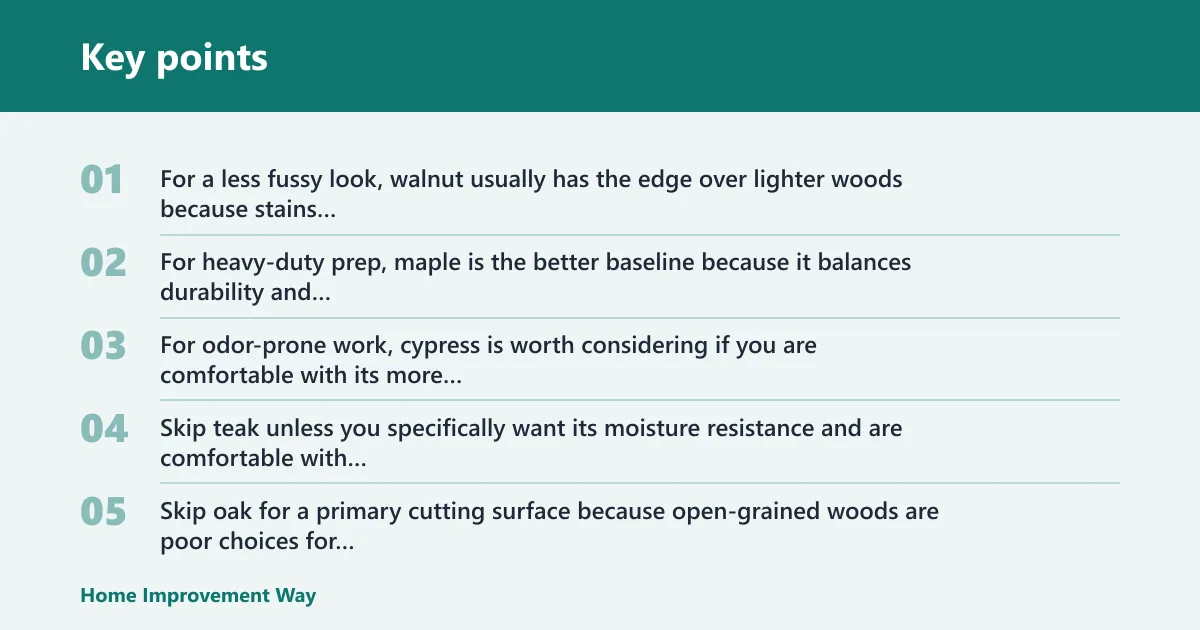
For a less fussy look, walnut usually has the edge over lighter woods because stains show less. For heavy-duty prep, maple is the better baseline because it balances durability and knife safety well. For odor-prone work, cypress is worth considering if you are comfortable with its more specialized role.
Skip teak unless you specifically want its moisture resistance and are comfortable with the higher price. Skip oak for a primary cutting surface because open-grained woods are poor choices for hygiene and drying. Skip pine for the same reason plus softness; it is too easy to mar for serious kitchen use.
Bamboo is common and economical, but common does not mean ideal. It can make sense on price, yet its feel and upkeep are different from hardwoods, and wood and bamboo should not be washed in the dishwasher. That alone changes how much ownership friction you should expect.
How to separate species from construction
Edge-grain boards usually show the face of the wood strips and are a common middle ground. End-grain boards expose the ends of the fibers and are often gentler on knives, but they usually cost more and need disciplined care. Face-grain boards are simpler and can be attractive, but they tend to show wear sooner.
Say your kitchen mostly handles chopped herbs, sliced fruit, and sandwich prep. A walnut edge-grain board may be enough, especially if you want a darker surface that hides marks. Suppose you break down roasts often; a larger maple or end-grain board is usually the better match because the board takes more abuse and needs better moisture control.
How to think about cost over time
Up-front price is only part of the cost. A cheap board that warps, stains, or splits early can cost more over time than a pricier board that stays flat and usable for years. Maintenance, not just species, determines that total ownership picture.
A board with the right grain and regular mineral oil care often lasts longer than a cheaper board with poor grain choice. That is why the cheapest option is not always the lowest-cost option.
Is bamboo good for cutting boards?
Bamboo can be a reasonable budget choice, but it is not the automatic winner that its price and availability suggest. It is common and economical, yet its knife feel and maintenance profile differ from hardwoods, and wood and bamboo both need hand washing rather than dishwasher cleaning.
Bamboo’s main appeal is practicality. It is widely sold, often affordable, and acceptable for light to moderate prep. The downside is that many buyers expect hardwood behavior from it, then notice a different cutting feel and wear pattern.
Bamboo is also not a substitute for proper care. If you want a board that stays flat and resists cracking, you still need cleaning, drying, and periodic oiling. A cheap board that is neglected will still fail early.
Where bamboo falls short
Bamboo can feel harder or more fibrous than some hardwood boards, which some cooks interpret as less knife-friendly. It may also show wear in ways that surprise first-time buyers who expected a traditional hardwood surface. For heavy prep, many cooks still prefer maple or walnut.
If your main goal is a display piece or a very low entry cost, bamboo can be fine. If your main goal is long-term knife care and a familiar board feel, hardwood usually makes more sense.
What woods are food safe for kitchen items?
Food-safe kitchen items are usually made from closed-grain, properly finished woods that resist liquid absorption and clean up well. Maple, walnut, beech, and cypress are common choices when the board is sealed, cleaned by hand, and dried fully after use. Grain structure and maintenance matter as much as the species name.
Closed-grain wood has pores that are not visible to the naked eye. That matters because it helps reduce liquid absorption, bacteria risk, staining, and warping. Open-grained wood has visible pores and absorbs moisture quickly, which makes it a poor choice for hygienic cutting surfaces.
That is why a good food-safe choice is never just “any hardwood.” It is a hardwood or similar material with the right grain, the right finish, and the right care routine.
What to avoid
Oak and ash are poor choices for primary cutting surfaces because their open grain absorbs moisture quickly. Pine is also a bad fit because it is too soft for repeated kitchen use and dents easily. Those woods may appear in other woodworking projects, but that does not make them suitable for food prep.
Glass and marble are discouraged because they can damage knife blades. Wood is gentler on knives than those hard surfaces, but that benefit only holds when the board itself is maintained properly.
What is the best wood for a butcher block?
Butcher block should follow the same wood-selection rules as cutting boards, because it is essentially a heavier kitchen surface, not a separate material category. Maple is usually the best all-around choice, walnut is a strong darker alternative, and beech can work well when you want a food-safe closed-grain hardwood.
A butcher block sees more surface area, more weight, and often more repeated contact than a smaller board. That means construction and maintenance matter even more. Regular conditioning with food-grade mineral oil helps reduce shrinking and warping on both butcher blocks and cutting boards.
The bigger the surface, the more important stability becomes. Larger boards can help with big cutting jobs, but they also need even drying and careful oiling to stay flat.
What matters most on a butcher block
Choose a closed-grain wood with enough hardness to resist dents without punishing blades. Then match the finish and care routine to the kitchen. If you skip drying or oiling, even a good butcher block will eventually move, crack, or stain.
How do I keep a wooden cutting board from warping?
Keep a wooden cutting board from warping by cleaning it gently, drying it fully on both sides, storing it where air can reach it, and applying food-grade mineral oil on a regular basis. Warping usually starts with uneven moisture, so the goal is balanced drying and steady conditioning.
Do not leave one side wet while the other side sits dry. Do not soak the board. Do not put wood or bamboo in the dishwasher. Those habits create uneven moisture gain and loss, which leads to cupping and edge lift.
Simple prevention steps
- Wash by hand soon after use.
- Dry both faces and all edges right away.
- Store the board upright or flat with airflow.
- Oil it with food-grade mineral oil when it starts looking dry.
- Use the board on a dry, stable counter, not a wet sink edge.
A common first-timer mistake is flipping a damp board onto one face and leaving it there overnight. That traps moisture on one side and can cause a visible bow. The fix is simple: dry it fully and let air reach both surfaces equally.
How often should I oil a wooden cutting board?
Oil a wooden cutting board regularly enough that it never looks dry, pale, or thirsty. Food-grade mineral oil is the standard conditioner because it helps reduce shrinking and warping after cleaning. The exact schedule depends on use, but the need for repeated oiling does not go away.
Use more oiling when the board sees frequent washing or stays in a dry kitchen. Use less when the board gets only occasional use. The sign that matters is the wood itself: if the surface looks rough or light, it is ready for conditioning again.
What oiling does
Mineral oil helps slow moisture loss and keeps the board more stable over time. It does not make the board invincible, and it does not replace cleaning. It is part of the maintenance pattern that keeps the board flat and usable.
Frequently asked questions
Should I avoid oak or pine for cutting boards?
Yes, for a primary cutting surface, oak and pine are usually poor choices. Oak’s open grain absorbs moisture quickly, and pine dents too easily for serious kitchen use. They may be fine for other woodworking projects, but they are not the right fit here.
Sponsored / affiliate links. As an Amazon Associate I earn from qualifying purchases. I may earn additional commission from eligible campaigns.