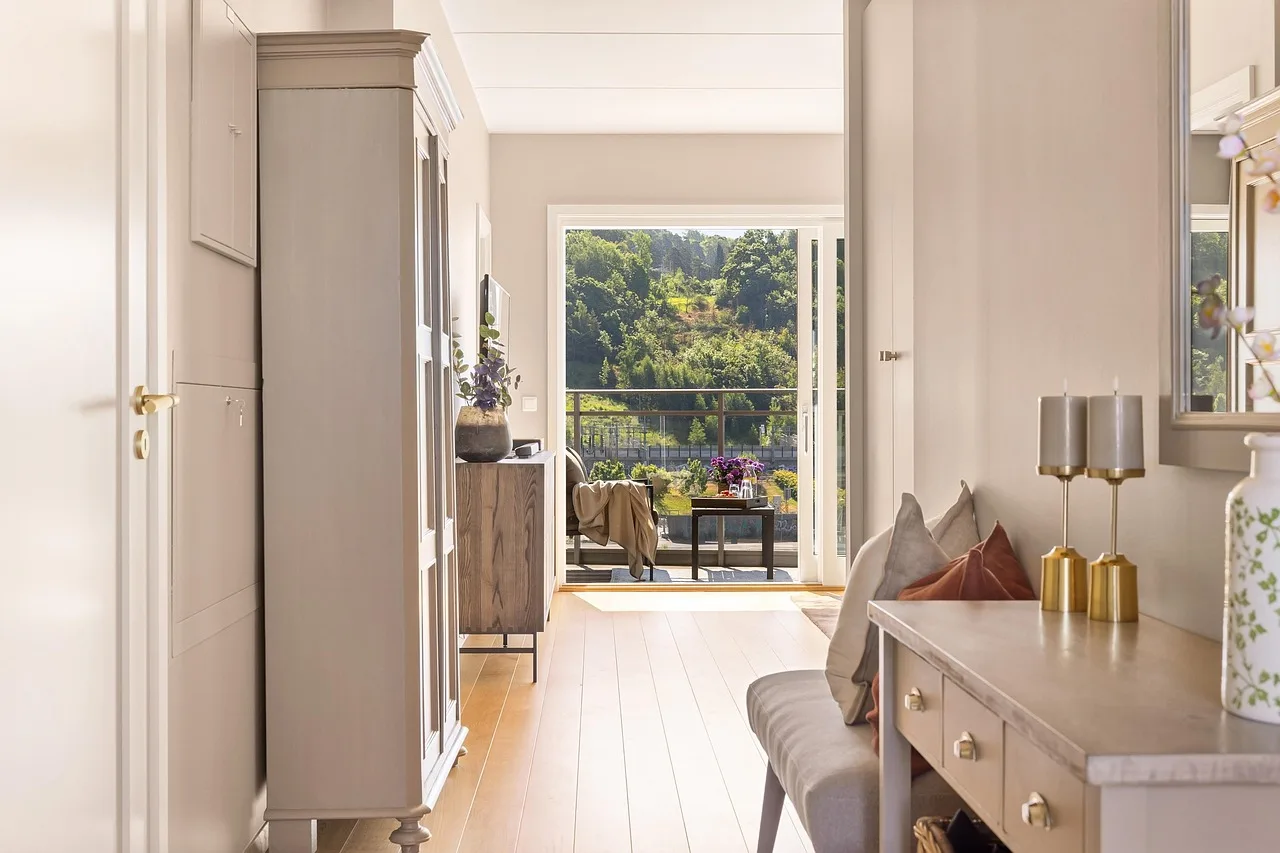
Best Wood for Cabinet Doors: Stability and Finishing
For painted cabinet doors, choose paint-grade poplar or soft maple. For clear finishes, quarter-sawn white oak, hard maple, cherry, or alder are the safest bets because they hold shape, keep edges strong, and sand and spray well. Pick an unstable or brittle species and you can end up with cupped doors, cracked joints, fuzzy stain, or chipped edges that cost time and redo work. This guide compares species by finish type, movement risk, durability, and how forgiving they are to sand and spray.
Picking wood based on whether you will paint, stain, or seal
Let the finish guide the wood choice. Paint can hide grain and stretch a budget species farther; stain puts pore pattern, sanding marks, and color shifts on display; clear sealant leaves the wood exposed, so edge quality and grain consistency matter most.
Painted doors: best options and why they work
Poplar is the usual budget pick for painted cabinet doors because it is a hardwood, it machines well, and its grain pattern stays minimal under paint. Soft maple is another strong choice when you want better dent resistance than poplar without moving into high-cost hardwood territory.
MDF also belongs here if the doors will stay in a dry interior. Its uniform density and smooth surface help paint lay flat, and it avoids grain telegraphing. The tradeoff is moisture resistance; edges and cutouts need careful sealing. The USDA Forest Products Laboratory’s Wood Handbook and MDF manufacturer technical sheets both warn that raw fiberboard edges absorb moisture faster than faces, so sealing the edges is not optional.
Stained doors: species that show grain well
Maple can be stained, but its tight grain makes color control harder than on open-pored woods. If you want stain to read clearly, cherry, oak, and alder are usually easier choices because their grain pattern gives the finish something to hold onto without fighting blotches as much.
Birch sits in the middle. It can stain, but it is more often chosen for paint because its appearance under stain can vary from piece to piece. If you want a cleaner, more even stained look, sample boards matter more with birch than with many other cabinet woods.
Clear coats: when the wood itself should stay visible
Clear finishes reward stable, easy-to-sand wood with predictable color. Maple is a strong clear-coat candidate when you want a clean, modern look and a hard surface. Alder and cherry are also common because they machine well and take a clear finish without heavy grain correction.
A common first-timer mistake is choosing a softwood for a clear-finished slab door because it is cheap and easy to cut. The face may look fine on day one, but dents, edge nicks, and visible seasonal movement become more obvious after installation. The USDA Wood Handbook notes that many softwoods dent more easily than common cabinet hardwoods, which is why they are usually a poor visible-door choice.
Hardwood vs softwood for cabinet doors
For most visible cabinet doors, hardwood or engineered-core construction is the safer choice than common softwood. Hardwood generally gives better dent resistance, more reliable screw holding around hinges and pulls, and a cleaner painted or clear-coated finish. Softwoods can work in some furniture applications, but they are easier to dent and often show more seasonal movement and surface damage in day-to-day kitchen use.
When hardwood wins
Hardwood is usually the better answer for cabinet doors that get touched often, need crisp edges, or need to stay visually clean over time. Maple, poplar, birch, cherry, and oak all machine well enough for doors and accept paint or clear coats with less drama than common framing softwoods. For door stiles, rails, and edge profiles, hardwood also holds up better around hinge boring and pull hardware.
When softwood can still make sense
Softwood can work for rustic interiors, utility cabinets, or intentionally knotty looks where the visual character matters more than a smooth painted finish. Even then, it is usually better for noncritical parts than for the door face itself. Softwoods tend to dent more easily, and their lower density can make screw zones and edge details less forgiving. That is why many cabinetmakers reserve them for secondary parts rather than prominent door fronts.
Why most visible doors use hardwood or engineered cores
Visible doors need three things at once: stable shape, durable edges, and a finish that looks intentional. Hardwoods provide a better balance of those traits, and engineered cores such as MDF or plywood can improve flatness when the door is painted. By contrast, common softwoods are more likely to show nicks, compression marks, and finish wear, especially along door edges and hardware areas.
Cabinet-door decision matrix

Use this matrix to match the wood to the finish, then to the door style. Movement risk matters because doors usually fail first at the edges, around rails, and near hardware holes. Paint quality matters when you need a smooth film. Stain quality matters when the grain has to look even after finishing.
| Species | Movement risk | Paint quality | Stain quality | Dent resistance | Edge durability | Best-use door style | Short recommendation |
|---|---|---|---|---|---|---|---|
| Maple | Low to moderate | Excellent | Fair to good | High | High | Stile-and-rail or slab | Best all-around choice when you want a hard, tight-grained door that paints or clears well. |
| Poplar | Low to moderate | Excellent | Poor to fair | Moderate | Moderate | Stile-and-rail for paint | Best value for painted doors where the grain should stay quiet under finish. |
| Birch | Low to moderate | Very good | Fair | Moderate | Moderate to good | Stile-and-rail or slab | Middle-ground option when you want decent paintability at a lower cost than many hardwoods. |
| Plywood | Low | Fair | Fair | Moderate | Moderate | Cabinet boxes, not visible door faces | Choose for stable panels and boxes, not as the first pick for exposed doors. |
| MDF | Very low in dry interiors | Excellent | Poor | Low to moderate | Low | Painted slab or painted panel doors | Best for smooth paint in dry rooms, with careful sealing on cut edges. |
| Particleboard | Low to moderate, but moisture sensitive | Fair | Poor | Low | Poor | Hidden components, not exposed door parts | Lowest-cost option, but weak screw holding power and poor moisture resistance limit it fast. |
How to read the matrix
For a painted kitchen, look first at paint quality and edge durability. For a stained cabinet face, look first at stain quality and dent resistance. For a slab door, flatness and edge stability matter more because the full face is visible and any movement shows quickly.
For stile-and-rail doors, frame members around the center panel can handle a wider range of woods if the joinery is sound. For slab doors, any tendency to bow, telegraph grain, or chip at the edges becomes more obvious.
Species-by-species quick picks
Maple: a strong default for cabinet doors. The USDA Forest Products Laboratory lists maple as a dense, hard, fine-grained hardwood with good wear resistance, which is why it works well when you want one wood that can go either painted or clear.
Poplar: the best painted-door value for many projects. It is inexpensive, easy to machine, and its grain stays understated under primer and top coat. It is less attractive for clear finishes because the surface is not as visually consistent as stain-first species.
Birch: a good middle-ground option. It costs less than many hardwoods, paints well, and can work for stained doors when the grain and color are carefully selected. It is a useful choice when maple feels too costly and poplar feels too soft for the application.
Plywood: stable, but better for cabinet boxes than for visible door faces. APA – The Engineered Wood Association emphasizes plywood’s dimensional stability and strong panel performance, which is why it makes sense where flatness matters more than a show surface.
MDF: best for smooth painted doors in dry interiors. It gives a uniform face that accepts paint evenly, but the material is not the right answer where humidity, splashback, or repeated edge impacts are likely. Manufacturer technical data from major panel makers consistently notes that exposed edges must be sealed to reduce moisture uptake.
Particleboard: use it cautiously and mostly where cost matters more than door life. Its weak screw holding power and moisture sensitivity make it a poor fit for exposed cabinet doors, especially near hardware or in kitchens and baths. The USDA Wood Handbook and APA both identify screw withdrawal and edge durability as weaker points for low-density particleboard compared with solid hardwood and better-grade plywood.
Best choice by door style
For stile-and-rail doors, maple, poplar, and birch are the most practical choices because they machine cleanly and hold edges well. A framed door also gives the joints a little more structure against seasonal movement.
For slab doors, MDF and stable plywood-based constructions are common for painted looks, while maple works well when you want solid wood and can manage movement with careful joinery and finishing. The more visible the face, the more important edge quality becomes.
What is the best wood for cabinet doors?
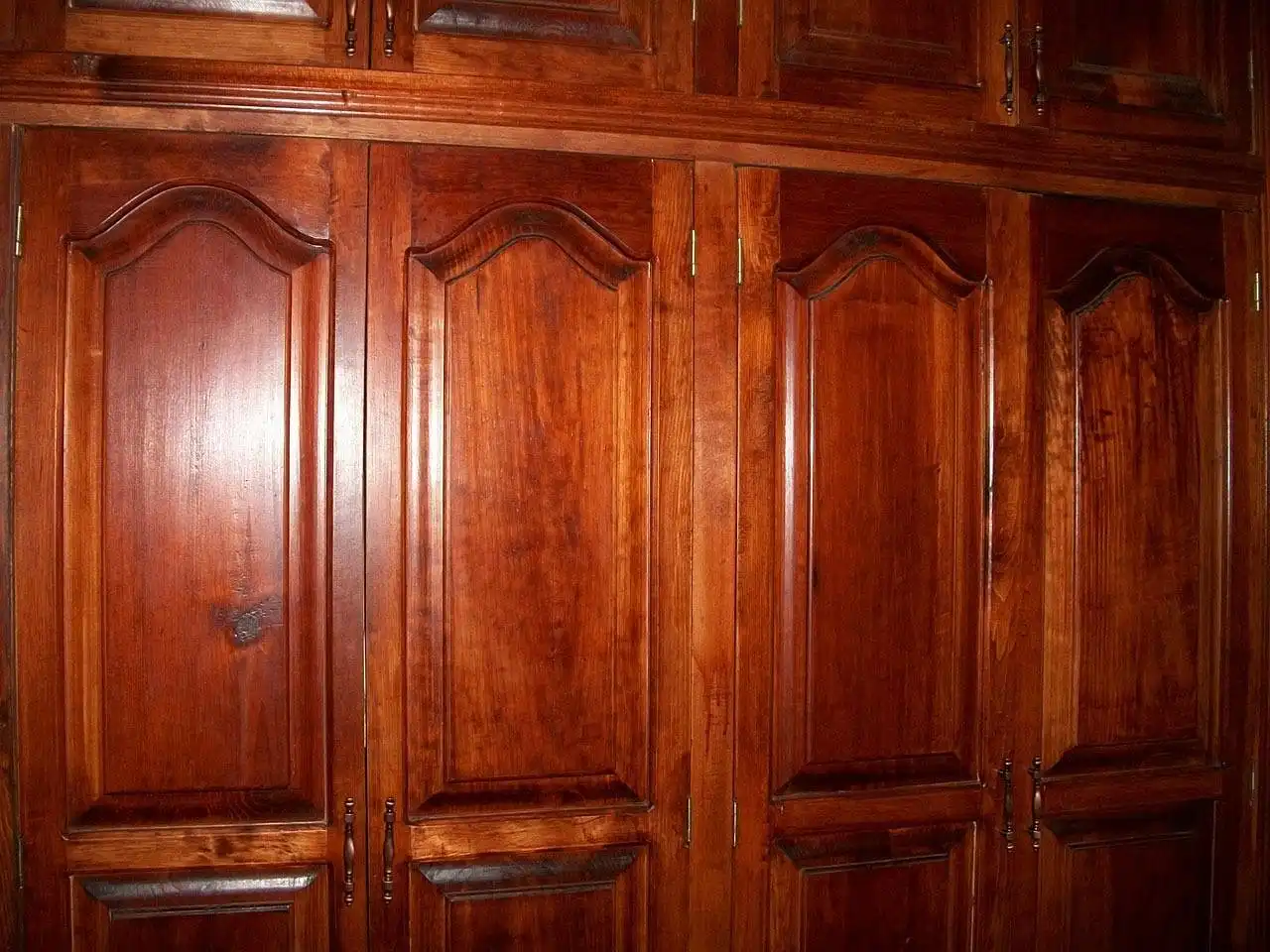
Maple is the safest all-around answer for many cabinet doors because it balances hardness, a tight grain, and finish flexibility. For painted doors, poplar is often the better budget choice. For clear finishes, maple, cherry, and alder usually look cleaner than paint-first species.
Maple for balanced performance
Maple is a good wood for cabinet doors when you want one material that can handle paint, stain, and clear sealant reasonably well. Its tight grain helps it finish evenly, and its hardness gives the door edges and hardware areas more resistance to damage than softer woods.
Poplar for painted doors on a budget
Poplar is a practical answer when the finish will be painted and the budget matters. It is a hardwood, but it is not a premium appearance species. That is why it fits painted cabinet doors better than stained doors where the grain would be visible.
Birch as a middle-ground option
Birch fits between budget and performance. It paints well, costs less than many hardwoods, and can be used for doors that need a cleaner look than poplar without moving up to maple for every part of the job.
Should cabinet doors be solid wood or MDF?
Choose solid wood when you want stronger edges, better screw-zone durability, and a finish that can tolerate more touch-up over time. Choose MDF when the doors will be painted, the room is dry, and you want a very smooth face with minimal grain showing through the finish.
Where solid wood has the edge
Solid wood is the better choice for stained doors and for doors that may take more abuse at corners, handles, and frame edges. It is also easier to repair locally because chips and dents can often be sanded and refinished without replacing the whole panel.
Where MDF makes sense
MDF makes sense for painted slab doors or painted panels in dry interior spaces. It is uniform, easy to sand smooth, and does not show grain telegraphing the way natural wood can under paint.
Why moisture exposure changes the answer
Moisture changes the answer because MDF swells when water reaches cut edges or damaged spots. If you expect sinks, steam, or frequent wet cleaning, solid wood or more stable engineered construction is usually the safer route.
How do you keep cabinet doors from warping?
Start with a stable species, then seal every side of the door, including the back and edges. Warping usually shows up as a cup, twist, or a door that no longer closes cleanly. The weak points are often the edges and the hardware area, not the center face.
Movement risk by species
Maple and birch generally behave better than many low-density softwoods. Plywood is often dimensionally stable because of its cross-grain construction, which helps explain why it is so commonly used in cabinetry work. MDF stays flat in dry spaces, but moisture can change that quickly. The USDA Forest Products Laboratory notes that wood movement follows changes in moisture content, so sealing all faces matters more than sealing only the front.
A common example is a 24-inch slab door finished on the front only and installed over a dishwasher, which may be more likely to pull out of flat. The front may look fine for a while, but the unsealed back can absorb moisture differently and pull the panel out of flat.
Why edges and hardware holes fail first
Edges fail first because they take the most abuse and expose end grain, which drinks finish faster than the face. Hardware holes also wear early because screws concentrate stress in a small area. That is why dent resistance and screw holding power matter as much as face grain. The Wood Handbook and APA guidance both point to edge density and material structure as key drivers of screw performance.
Finish and sealing steps that reduce trouble
- Sand all faces, edges, and cutouts before assembly or finishing.
- Seal both sides of the door, not only the visible face.
- Prime raw wood before paint, especially on poplar, birch, MDF, and particleboard.
- Use a top coat that suits the room and the wear level.
- Keep moisture-prone locations away from MDF and particleboard door parts.
Which wood finishes best for cabinets?
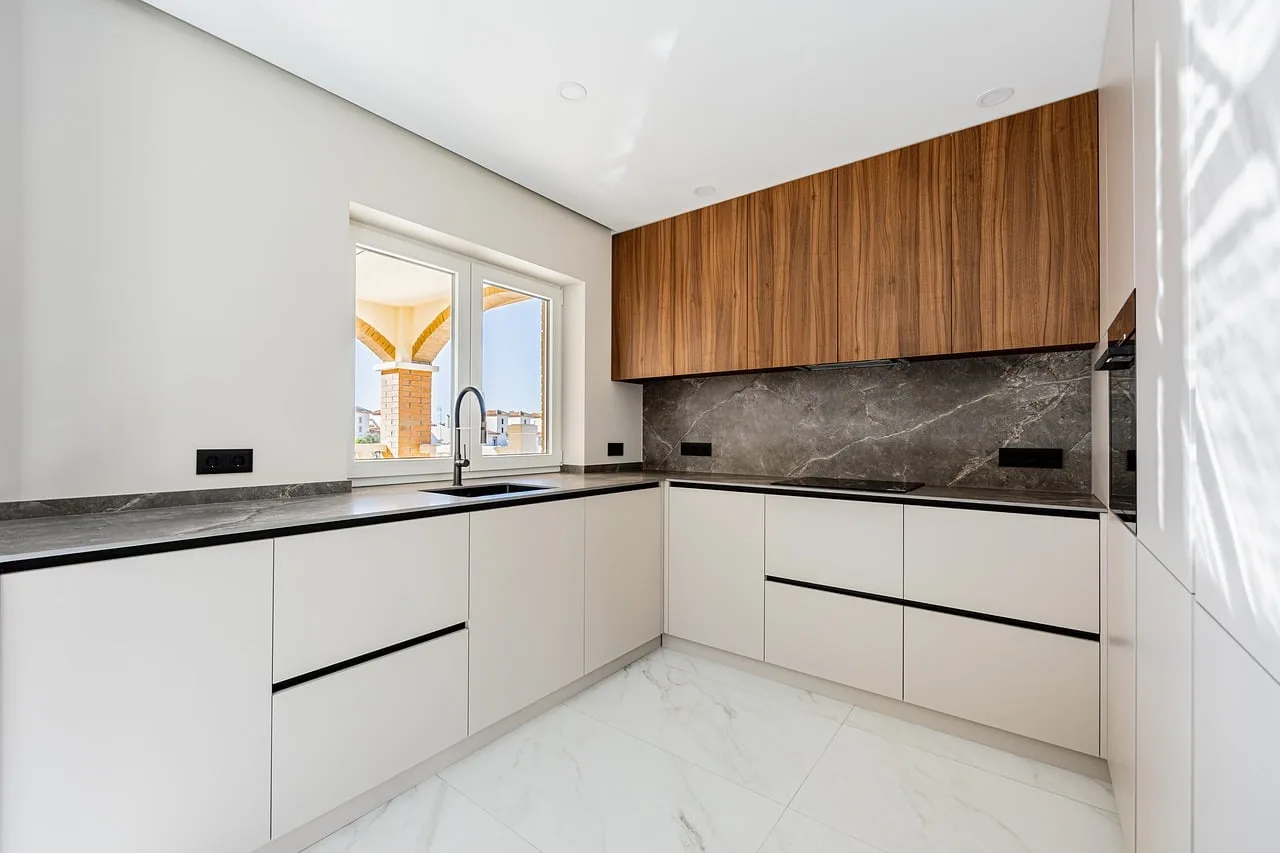
Paint finishes best on poplar, birch, and MDF because they hide grain and can produce a cleaner face with less visible patterning. Stain finishes best on maple, cherry, oak, and alder when the grain pattern is part of the look. Clear systems need the most attention to sanding and species selection.
Finish system sequence for cabinet doors
| Step | What to do | When filler or conditioner is needed | Primer | Topcoat type | Sheen | Edge-sealing requirement | Best species fit |
|---|---|---|---|---|---|---|---|
| Prep | Sand progressively, remove dust, and break sharp corners slightly so the finish does not pull away from edges. | Use grain filler on open-pored woods if you want a flatter painted or clear look; use pre-stain conditioner on blotch-prone woods before stain. | Not yet | Not yet | Any, depending on final look | Seal all edges and cutouts before the first finish coat. | All species; especially important on MDF, poplar, maple, birch, oak |
| Primer | Apply a sandable primer to raw wood or MDF to block absorption and level the surface. | Usually not needed for clear coats; for stain, use conditioner only where blotching is a risk. | Required for paint systems | Not yet | Any paint sheen | Especially important on end grain, routed profiles, and MDF edges. | Poplar, birch, MDF, particleboard, soft maple |
| Topcoat | Apply the final paint, conversion varnish, lacquer, or clear finish in compatible coats. | None if prep is correct; if stain is used, let it cure fully before topcoat. | Optional under paint systems only | Waterborne acrylic/urethane, alkyd enamel, lacquer, or clear varnish depending on project | Satin and semi-gloss are common for cabinets because they balance cleanup and defect hiding. | Recoat edges as carefully as faces because thin spots show first there. | Paint: poplar, birch, MDF. Stain/clear: maple, cherry, alder, oak |
| Final cure and use | Let the coating fully cure before heavy handling, hinge adjustment, or cleaning. | Not applicable | Not applicable | Depends on product system | Lower sheen hides defects better; higher sheen highlights grain and sanding marks. | Keep moisture away from unsealed edges and underside surfaces. | Any species, but especially MDF and particleboard need the most edge care |
Paint systems
Paint works well when you want to hide species differences and reduce the look of grain or blotchy color. Rather than relying on shortcuts, use a primer matched to the substrate, sand between coats, and seal edges thoroughly. Product systems from major paint manufacturers still assume proper surface prep even when marketing emphasizes quick application.
Stain systems
Stain is less forgiving because it magnifies uneven sanding, glue smears, and grain differences. On maple, stain can look cleaner with careful prep, but it will not behave the same way as oak or cherry. Always plan for sample boards when the face will remain stained. A pre-stain conditioner helps on blotch-prone woods, but it does not turn every species into a stain-first wood.
Primer, top coat, and sheen choices
Primer matters most on porous or uneven species because it controls absorption and helps prevent telegraphing. Top coat choice affects wear and cleanup. Sheen changes the look of imperfections: glossier finishes reflect more light, which can make sanding marks and edge defects easier to see. For most cabinet work, satin or semi-gloss is easier to live with than high gloss because it hides more surface variation.
What wood is cheapest for cabinet doors?
Particleboard is often the lowest-cost option, but it is generally the weakest choice for exposed cabinet doors because of moisture sensitivity and poor screw-holding power. Poplar is often the better low-cost choice when the doors will be painted and need to survive regular use.
Lowest price versus lowest risk
Lowest price is not the same as best value. A cheap material that chips, swells, or strips around hinges can cost more in repairs and replacements than a slightly better species chosen at the start.
A common first-timer mistake is using particleboard for a pair of bathroom vanity doors because it looks inexpensive on paper. Once a hinge loosens or water reaches a cut edge, the door can fail much sooner than a solid-wood or better-grade painted option.
Frequently asked questions
Is maple a good wood for cabinet doors?
Yes. Maple is a strong cabinet-door species because it has a tight grain, good edge durability, and a smooth sanding profile. The USDA Forest Products Laboratory’s Wood Handbook treats maple as a durable, high-density hardwood, which fits the needs of a door that has to stay crisp around edges and hardware.
What wood finishes best for cabinets?
Paint finishes best on poplar, birch, and MDF because they hide grain and help create a uniform face. Stain finishes best on maple, oak, cherry, and alder when you want the grain visible. Clear sealants work best on species with stable color and clean sanding behavior.
What wood is best for painted cabinet doors?
Poplar is often the best budget choice for painted cabinet doors because it is inexpensive, easy to work, and has a minimal grain pattern. Soft maple is the stronger premium choice when you want more hardness and better edge durability without sacrificing paint quality.
Sources
- USDA Forest Products Laboratory, Wood Handbook: Wood as an Engineering Material.
- APA – The Engineered Wood Association, plywood and particleboard performance guidance.
- Major MDF manufacturer technical data sheets for moisture exposure and edge-sealing guidance.
- Paint and coatings manufacturer product data on primer, topcoat compatibility, and cure requirements.
Sponsored / affiliate links. As an Amazon Associate I earn from qualifying purchases. I may earn additional commission from eligible campaigns.


