Best Wood for Bathroom Projects: Moisture Resistance Explained
For bathroom projects, use the most moisture-tolerant wood in splash zones, teak, white oak, or mahogany, and reserve stable hardwoods like maple or birch for dry or lightly humid areas; avoid softwoods unless they are fully sealed and kept away from water. Choose poorly, and you get swelling, cupping, mildew, joint failure, and repairs that cost more than the wood itself. This guide breaks bathroom wood choices into exposure zones and explains which species are safe near tubs, sinks, and vents.
Bathroom moisture zones

Not every bathroom area sees the same exposure. A vanity side panel beside a sink gets splashes and wiping water. A mirror frame across the room may only see humidity. A shower-adjacent shelf sits in a much harsher zone, where repeated wetting matters more than the species name on the rack.
Bathrooms can reach 70-90% relative humidity from showers, so wood keeps moving even when it is not visibly wet. That movement follows the wood’s equilibrium moisture content, or EMC, the moisture level wood tends to balance with surrounding air. In a room with roughly 60-90% RH, swelling and shrinkage can stress joints, fasteners, and finishes.
Humid space versus splash zone
Humid-space use means the wood is mostly exposed to air moisture, not standing water. That includes mirror frames, trim, and some cabinet faces. Splash-zone use means water can land directly on the part, collect on edges, or sit long enough to soak in. That includes vanity tops, sink fronts, shelving near tubs, and window sills above a basin.
Use exposure first, species second. A wood that works for a dry vanity door may be the wrong pick for a shelf beside a shower curtain. Water-resistant is not waterproof, and that distinction matters most where edges and end grain stay wet.
Which parts fail first?
End grain, cut edges, and fastener holes fail before broad flat faces. Finish wears faster on handles, lower cabinet rails, and the underside of sink fronts. Once water enters a joint or an unsealed edge, swelling starts there first and spreads into cupping, glue-line stress, and finish lift.
Picture a 12-inch-wide oak shelf mounted above a vanity splash line. If the front edge is sealed but the underside edge is left raw, water can wick into the unprotected grain after repeated wipe-downs. The shelf may look fine for a while, then start to cup at the front edge.
How moisture resistance works
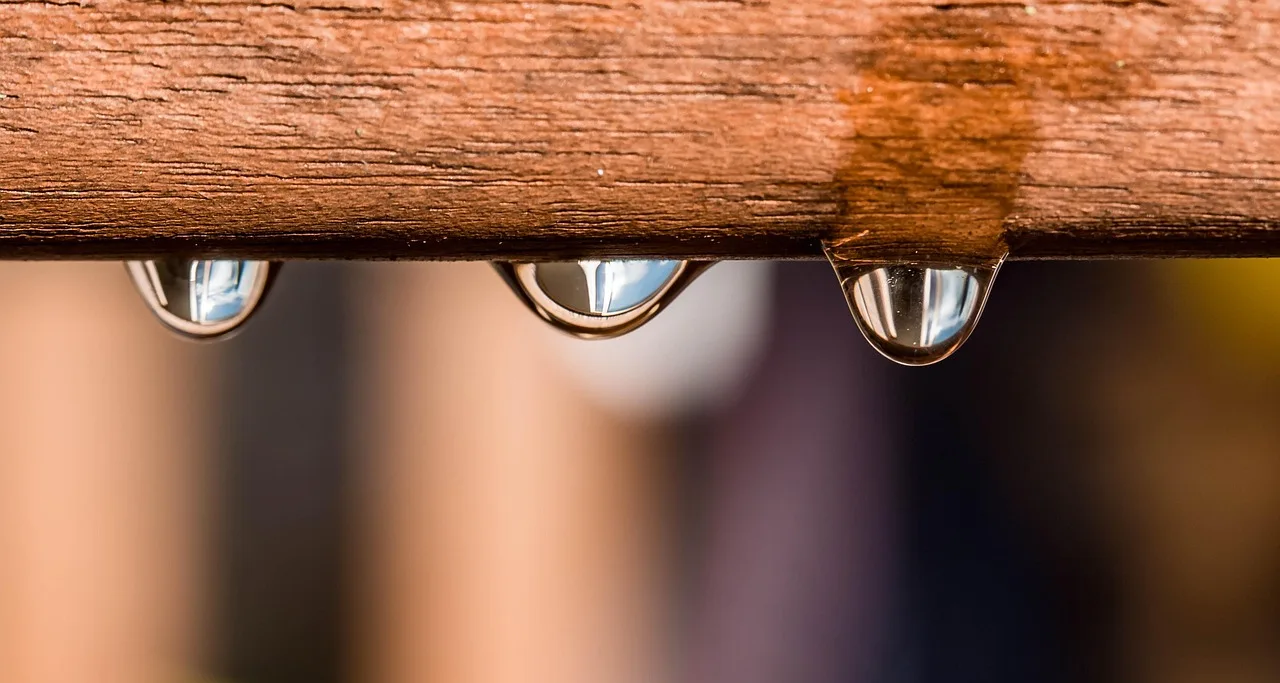
Moisture resistance comes from more than one trait. Grain density, pore size, natural oils, and dimensional stability all matter. Dense, tight-grained woods move less and absorb water more slowly than open-grained, low-density woods, but no species becomes waterproof just because it is hard.
Grain density and porosity
White oak is a common bathroom cabinet species because its grain is tight enough to resist rapid moisture uptake better than many open-pored woods. Teak goes further because its natural oils slow water entry and help it last in wet zones. Ipe is even denser, which is why it fits premium wet-area work where specialized fasteners may be needed.
Oils, decay resistance, and movement
Natural oils help, but they are not a substitute for a finish system. Teak’s oils, cedar’s aromatic oils, and ipe’s density all support moisture resistance, yet each species still needs sealed end grain and sound joinery. Mahogany sits in the middle: tight grain, balanced moisture resistance, and a price that is usually easier to justify than teak.
Wood that starts with a lower, more uniform moisture content is easier to manage. Kiln-dried lumber is preferred for bathroom cabinetry because it reduces the chance that the board will shrink after installation or absorb excess moisture before it is sealed. It also lowers microbial growth risk compared with wet stock.
Equilibrium moisture content in bathrooms
EMC matters because wood always chases the surrounding air. In a bathroom with repeated steam and shower use, the air pushes wood toward a higher moisture level, then the room dries and the wood moves back down. That back-and-forth is what loosens joints, telegraphs through paint, and warps thin parts.
- Measure the board before installation with a moisture meter.
- Use a pin meter for spot checks or a pinless meter for faster surface scans.
- Target 8-12% pre-install for bathroom wood.
- Match the wood to the room’s exposure, then seal all cut faces and edges.
- Keep the exhaust fan running long enough to clear steam after showers.
Best woods by bathroom project part
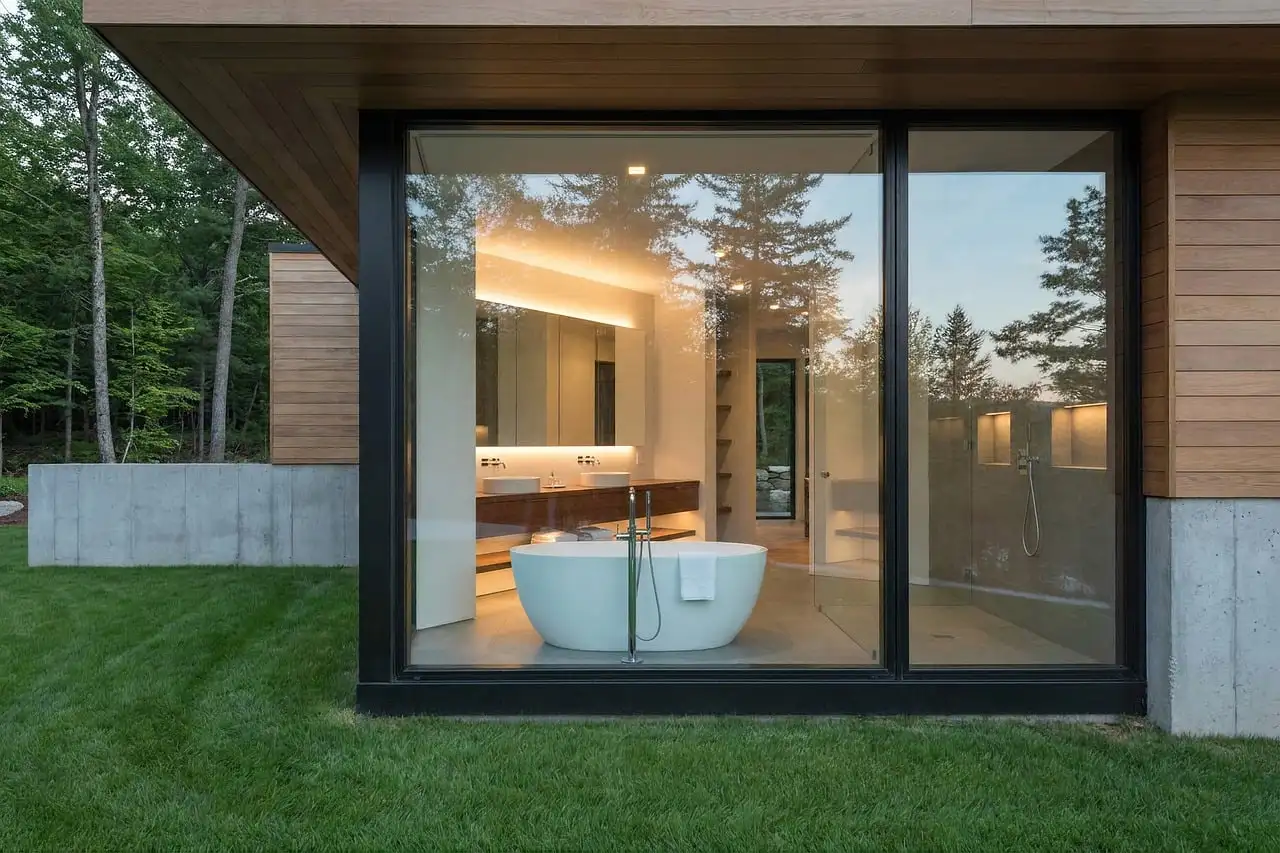
Choose the wood by the part, not by habit. Vanities, shelving, trim, benches, and window sills do different jobs and fail for different reasons. A cabinet box needs stability. A bench needs decay resistance. A mirror frame needs movement control more than brute strength.
Vanities and cabinet fronts
Teak, white oak, and mahogany are the strongest fits for visible vanity parts that see humidity and some splash. Teak is often considered the most moisture-tolerant of the three and is commonly used for vanities and towel racks. White oak is a strong domestic option for bathroom vanities and cabinets. Mahogany works well for cabinet fronts and mirror frames where you want balanced resistance without teak’s cost.
Shelving, trim, and mirror frames
For shelves and trim outside the direct splash line, white oak, mahogany, and properly sealed engineered panels are practical. Mirror frames can also use mahogany or white oak, because they need dimensional stability and a finish that resists repeated wiping. If the shelf sits near a sink or tub, treat it like a wet-edge part, not a decorative trim piece.
Benches, paneling, and window sills
Cedar is a budget-friendly pick for bathroom paneling or benches, especially where its aromatic oils can help with moisture resistance. It still needs end-grain sealing because cut ends soak water faster than faces. Ipe belongs in premium wet-zone use, such as a shower bench or a highly exposed sill, but it may require specialized fasteners because of its density.
| Project part | Splash exposure | Recommended species | Acceptable backup species | Finish system | Red-flag species to avoid |
|---|---|---|---|---|---|
| Vanity doors and drawer fronts | Low to moderate splash | White oak, mahogany | Teak | Sealer plus two topcoats of polyurethane; seal edges and back sides | Standard MDF, untreated pine |
| Sink base cabinet box | Moderate splash risk | Marine-grade plywood with water-resistant core | White oak plywood | Edge seal all cutouts; finish interior surfaces | Standard MDF, particleboard |
| Mirror frame | Humid space | Mahogany, white oak | Cedar | Sealer plus two coats of polyurethane | Open-pore softwoods left raw |
| Shelving near sink | Moderate to high splash | Teak, white oak | Ipe | Full wrap finish with special attention to underside and ends | Raw cedar, standard MDF |
| Bench or shower-adjacent seat | High splash | Teak, ipe | Cedar, sealed hardwood plywood | Marine-grade sealant or polyurethane; repeated edge sealing | Poplar, softwoods, standard MDF |
| Window sill above tub or sink | High splash and condensation | White oak, teak | Ipe | Seal all faces, ends, and fastener holes before install | Unsealed pine, standard MDF |
Is teak really the best choice?
Teak is the strongest all-around pick for bathroom cabinets and other wet-zone parts, but it is not always the smartest buy. It has natural oils, high moisture resistance, and a long service life, and the cited guide ranks it best overall for bathroom cabinets and vanities. It also carries a higher cost, often $20-30 per board foot in that guide.
Where teak is worth the cost
Teak makes sense where repeated splash and cleanup are part of the design. That includes vanity tops, drawer fronts near sinks, towel racks, and shelf parts that sit close to wet fixtures. Its Janka hardness of 1,070 lbf in the cited guide adds durability for high-touch locations, but hardness alone is not why it works there.
Where teak is overkill
Teak is usually more wood than you need for a mirror frame across the room or a small trim piece above the toilet. In those spots, white oak or mahogany usually gives enough resistance at a lower cost. Save teak for the parts most likely to get wet, not every visible surface.
What to expect from upkeep
Teak still needs finish care if you want it to keep looking even and resist staining. Even a naturally oily wood can fail at edges, screw holes, and cutouts if those areas are not sealed. If the room lacks good exhaust ventilation, the finish will age faster and the maintenance interval shortens.
Can you use white oak in a bathroom?
Yes. White oak is a strong bathroom choice for vanities, cabinets, and some trim because of its tight grain and moisture resistance. It is commonly recommended for bathroom vanities and cabinets, but it is not a skip-the-sealer wood. It still needs sealing, acclimation, and smart placement away from standing water.
Solid stock versus engineered form
White oak often works best in engineered form for larger cabinet parts because engineered panels move less across width than solid boards. That matters for cabinet doors, drawer fronts, and box parts that need to stay flat. Solid stock can still be used, but the wider the part, the more movement you have to plan for.
Why sealing and acclimation matter
White oak’s moisture resistance does not stop swelling at unprotected edges. Seal the end grain, underside, and drilled holes before installation. Also let the lumber acclimate so the board’s moisture level moves closer to the room’s EMC before it is fixed in place. That lowers the chance of later bowing or joint stress.
Suppose a white oak vanity side panel arrives dry, then gets installed the same day beside a shower-heavy bath. The room stays steamy, the panel takes on moisture, and the door gap changes. A short acclimation period and full edge sealing would have reduced that movement.
Best uses and weak spots
White oak is a good fit for cabinet faces, vanity sides, and mirror frames. It is less forgiving for parts with a lot of hidden raw edge, such as thin shelves cut after finishing. If you use it there, seal every cut edge and keep the room’s ventilation working.
Plywood, solid wood, or engineered panels?
Plywood and other engineered panels usually win on dimensional stability, while solid wood wins on repairability and appearance in visible parts. For bathrooms, that often means plywood for cabinet boxes and solid wood for faces, trim, and parts you may want to refinish later. Standard MDF is a poor choice in wet bathrooms and fails quickly there; moisture-resistant MDF is acceptable only for some cabinet uses, not for splash-prone parts.
Dimensional stability compared
Engineered wood and plywood handle humidity swings better because layers resist movement better than a single wide board. That is why marine-grade plywood is recommended for cabinet boxes in bathrooms. A stable box keeps doors aligned and reduces stress on hinges, slides, and edge banding.
Best use cases by exposure level
Use plywood where moisture is likely but direct wetting is limited, such as sink bases and cabinet boxes. Use solid hardwood where appearance, repairability, and finish quality matter most, such as doors and trim. Use premium species like teak or ipe only where direct water exposure justifies the cost.
When plywood beats solid stock
Plywood beats solid stock whenever panel flatness matters more than matching grain across a wide face. That includes large cabinet sides, toe-kick panels, and some bathroom floors where a water-resistant core offers better behavior than a wide solid board. It also simplifies construction because it moves less after installation.
A common first-timer mistake is choosing solid pine for a bathroom shelf because it is easy to buy and easy to cut. In a room with repeated shower steam, that shelf may twist or open at the joints unless every surface is sealed and the part stays far from direct splash.
Frequently asked questions
What is the best wood for bathroom cabinets?
Teak is the strongest all-around pick for bathroom cabinets and vanities, especially in wet zones. White oak is the best domestic option for many projects, and mahogany is a solid mid-premium alternative. If you want the cabinet box itself to stay stable, use marine-grade plywood with sealed edges.
Is teak really the best wood for bathrooms?
Teak is the best choice where moisture exposure is highest because of its natural oils, strong moisture resistance, and long lifespan. It is not the best value for every part, though. For mirror frames, dry trim, or low-splash cabinetry, white oak or mahogany often makes more sense.
What woods should you avoid in a bathroom?
Avoid standard MDF in bathrooms, especially near sinks or tubs, because it fails quickly there. Untreated softwoods are also risky in wet zones. If you use a softer species at all, keep it in a dry or lightly humid area and seal it thoroughly before installation.
Do finishes make any wood moisture-resistant?
Finishes help, but they do not make wood waterproof. A good sealer and about two topcoats of polyurethane can slow moisture entry on faces, though raw edges and end grain can remain weak points. Edge sealing matters more than choosing a glossy or matte topcoat.
Should bathroom wood be kiln-dried or air-dried?
Kiln-dried lumber is usually the better choice for bathroom work because it has lower and more uniform moisture content. That helps reduce movement after installation and lowers microbial growth risk. Air-dried stock can be usable, but it needs closer moisture checks before you install it.
How do I keep bathroom wood from warping?
Start with kiln-dried lumber, check it with a moisture meter, and aim for 8-12% before install. Seal all cut edges, use stable joinery, and keep the room vented after showers. Warping often starts when a part is installed too wet, too dry, or with unsealed end grain.
Is plywood better than solid wood for bathroom projects?
For cabinet boxes and other large flat parts, yes, plywood is usually better because it is more dimensionally stable. For visible doors, trim, and frames, solid wood is easier to repair and refinish. A mixed build often gives the best balance of stability, appearance, and cost.
Sponsored / affiliate links. As an Amazon Associate I earn from qualifying purchases. I may earn additional commission from eligible campaigns.