Best Wood for Fences: Posts, Rails, and Boards Compared
For most wood fences, use decay-resistant posts such as cedar, cypress, or pressure-treated pine; straighter, lower-cost rails such as pressure-treated pine; and cedar or redwood boards for the best balance of durability and appearance. Poor wood choices lead to leaning posts, split rails, warped boards, and faster replacement costs. This guide compares the best woods for posts, rails, and boards by strength, rot resistance, workability, and price.
Best wood by fence part decision table

| Wood | Posts | Rails | Boards |
|---|---|---|---|
| Cedar | Moderate ground-contact durability; fairly straight; easy to cut; mid-to-high cost. Best use: above-ground or lightly loaded posts in dry to moderate climates. Avoid when: you need the longest possible ground-contact life or very hard stock. | Moderate durability; usually straight; very workable; mid cost. Best use: visible rails where appearance matters and loads are light to moderate. Avoid when: you need a budget rail with maximum stiffness. | Good exposed-surface durability; stable enough if dry; easy to plane and fasten; mid-to-high cost. Best use: visible fence boards and privacy fences. Avoid when: you want the lowest price or the hardest wear surface. |
| Pressure-treated pine | Good to very good ground-contact durability when rated for contact with soil; usually straight; easy to source; low cost. Best use: budget posts and most replacement jobs. Avoid when: you want a natural untreated look or the fence stays wet without maintenance. | Good durability with treatment; usually straight; easy to machine; low cost. Best use: economical rails, especially on long runs. Avoid when: you want a high-end exposed grain or untreated hardwood look. | Moderate exposed-surface durability; variable straightness; easy to work; low cost. Best use: painted or stained boards where cost matters most. Avoid when: you want the most stable board appearance with minimal movement. |
| Oak | Very good ground-contact durability untreated; can be cleft, round, square, rough-sawn, or freshly sawn; hard to work; high cost. Best use: traditional pasture fences and heavy posts. Avoid when: budget and tool wear matter more than longevity. | Very good durability; often heavy and less forgiving to machine; high cost. Best use: strong rails where a traditional look matters. Avoid when: you need light parts or quick installation. | Good durability; can move as it dries; harder to finish cleanly; high cost. Best use: exposed boards in traditional work. Avoid when: you need the calmest board movement or the easiest cutting. |
| Robinia | Excellent ground-contact durability untreated; often very durable in soil; can be irregular and hard to work; high cost. Best use: pasture fence posts and long-life ground-contact work. Avoid when: uniform appearance is more important than life span. | Excellent durability; tough to machine; high cost. Best use: rails where long service matters more than easy cutting. Avoid when: you need a quick, low-cost build. | Very good exposed durability; can be uneven in size; hard to process; high cost. Best use: durable boards or rustic fencing. Avoid when: you need wide, highly uniform boards. |
| Sweet chestnut | Very good ground-contact durability untreated; usually light and easy to handle; moderate-to-high cost. Best use: round posts in pasture and boundary fences. Avoid when: you need the hardest stock available. | Very good durability; commonly used as half-round rails; moderate-to-high cost. Best use: lightweight durable rails. Avoid when: you need a square, machine-perfect profile. | Good to very good exposed durability; moderate movement; moderate-to-high cost. Best use: boards where natural durability matters. Avoid when: you want the lowest-cost board option. |
| Larch | Good ground-contact durability; often dimensionally stable as fence and gate posts; rough-sawn or planed; moderate cost. Best use: squared posts and palisades where shape stability matters. Avoid when: you need the longest ground-contact life without treatment. | Good durability; reasonably straight; moderate workability; moderate cost. Best use: rails where stability matters more than softness. Avoid when: the fence will see severe soil wetness. | Good exposed-surface durability; fairly stable; moderate workability; moderate cost. Best use: boards that need a cleaner, steadier look. Avoid when: you need the cheapest board stock. |
How to read the ratings
Ground-contact durability matters most for posts, because posts fail first in wet soil. Straightness matters most for rails and boards, where twist or bow makes fastening harder and layout less accurate. Workability affects cutting, drilling, and fastening. Cost tier helps separate budget stock from longer-life hardwoods.
Use the table as a part-by-part guide, not a single-wood verdict. A fence can use one species for posts and another for rails or boards. That is often the smarter choice when the soil is wet, the line is long, or the visible face needs a cleaner finish.
What is the best wood for fence posts?
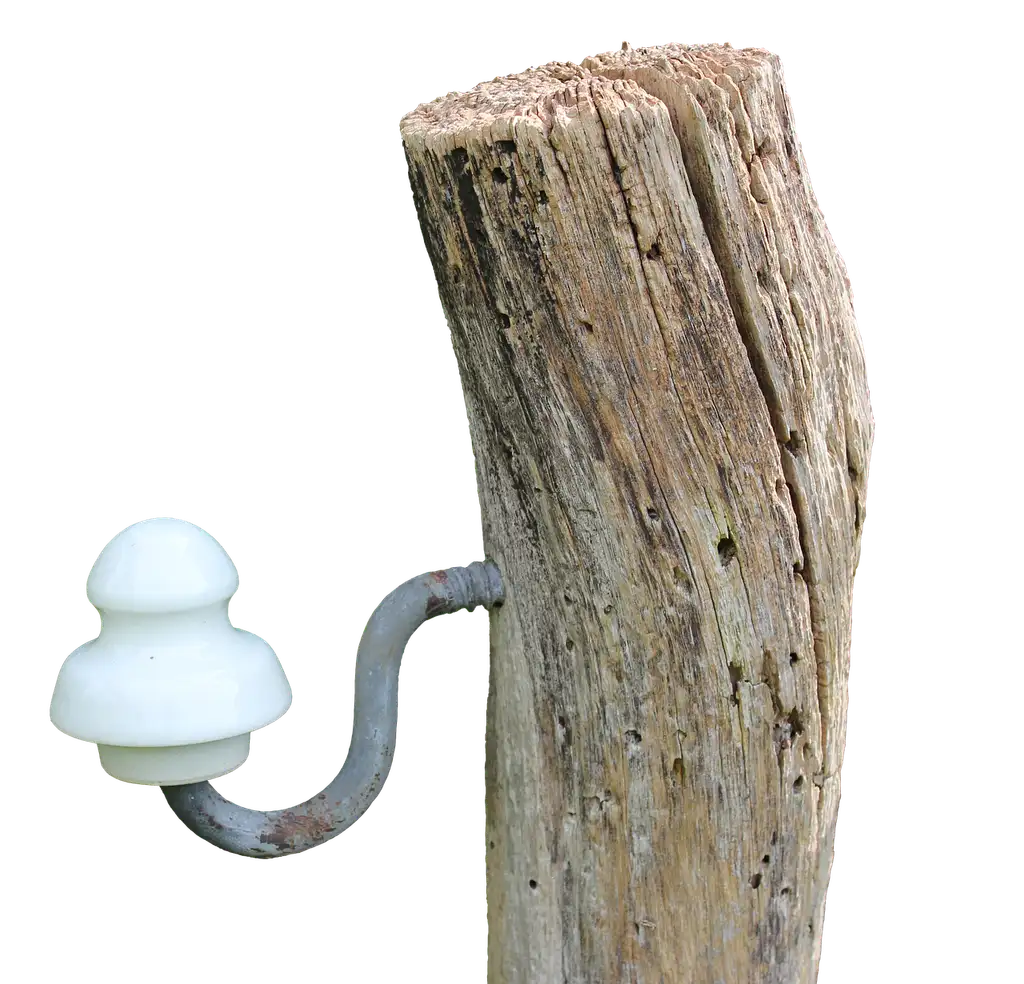
The best wood for fence posts is the species that can stay sound in ground contact for your climate, with enough straightness to keep the line true. For most budget builds, pressure-treated pine is the practical standard. For untreated durability, robinia, oak, sweet chestnut, and larch are stronger choices.
Ground-contact durability first
Fence posts live in the harshest spot on the fence line. Soil moisture, splashback, and trapped debris attack the buried end first. That is why the post choice matters more than the board choice for long life. Posts that resist rot in the soil usually cost more up front, but they can delay replacement.
Untreated cedar can work in some settings, but it is not the same as a dense hardwood post in wet ground. Pressure-treated pine remains the economical standard solution, especially when the treatment is rated for contact with soil. For long-term pasture fencing, robinia is a standout because its cleft posts are described as the hardest native timber for pasture fences.
Common post materials compared
Oak posts are commonly used in pasture fencing and are available as cleft posts, round posts, or square posts. They are also sold rough-sawn or freshly sawn. That flexibility helps when you want a traditional look and untreated ground-contact use.
Sweet chestnut is another durable untreated option, and it is often used for round posts. Larch is valued for squared posts and palisades, and it is described as dimensionally stable as fence, corner, and gate posts. That stability helps when you need a cleaner line and fewer shape changes after installation.
Pressure-treated softwood stakes are often the economical standard solution for posts. They are a sensible choice when the fence is long, the budget is tight, or replacement parts need to stay available. The tradeoff is maintenance in ground contact, especially where water lingers around the post base.
Failure modes to plan
Posts usually fail by rot at the soil line, but splitting, twisting, and termite damage can also shorten service life. Split tops often start where fasteners are driven too close to the end grain. Twist is a problem when the stock is not straight or dries unevenly after installation.
A common first-timer mistake is to choose a durable species for the visible parts and a weak post for the buried part. Suppose a 1.8 m privacy fence uses good boards but an untreated softwood post in damp clay. The boards may still look fine while the post leans from the base outward within a few seasons.
Life span varies by climate and maintenance. Dry, well-drained sites are easier on wood than shaded, wet sites with poor airflow. Sealing cut ends, keeping soil away from the wood, and checking fasteners all help, but no coating cancels poor drainage.
Which wood works best for fence rails?
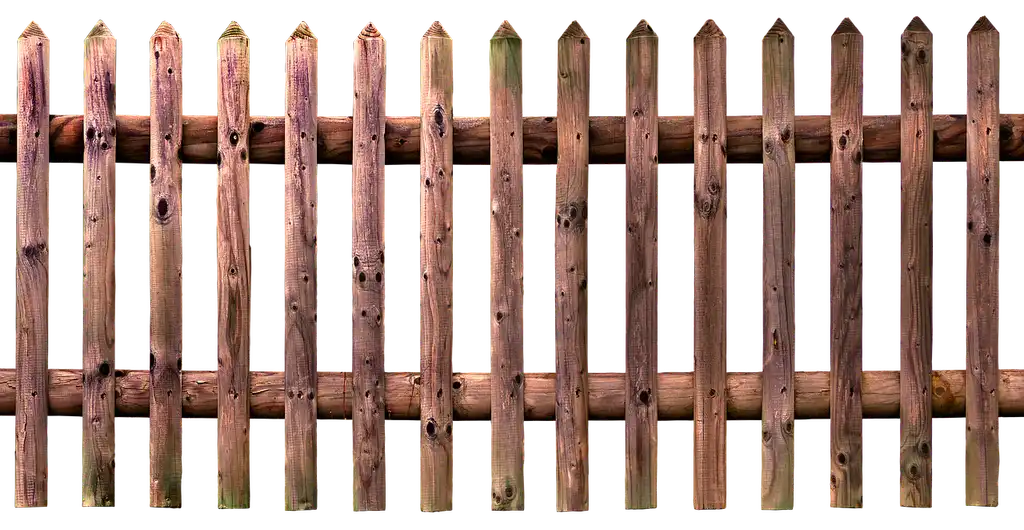
The best rail wood is usually straighter and cheaper than the post wood, because rails must span between posts without adding much weight or twist. Pressure-treated pine is the common budget choice. For untreated durability, oak, robinia, sweet chestnut, and larch all have a place, depending on the look you want and the tools you have.
Arris rails versus cant rails
Arris rails traditionally use tongues cut at their ends that fit into post slots. They suit a more traditional build and can make a tight mechanical joint. Cant rails are fixed to the front face of fence posts, which makes them easier to attach and replace.
Repair bracket compatibility also matters. Galvanised steel repair brackets can repair broken rails, which is useful when you want to keep the existing post line and replace only the damaged member. That favors a rail system that uses accessible fixings and standard sizes.
Rail spacing and layout
Fence rails should be no greater than about 200 mm from the top or bottom of the boards. Vertical spacing between fence rails should be no greater than about 700 mm. Fences over about 1.1 m should use three rails.
Those rules help keep boards supported against movement. On a taller privacy fence, three rails spread the load better and reduce board flex. On a shorter fence, two rails may be enough if the boards are narrow and the span is modest.
For a board fence, place the rail line so the boards are supported at regular intervals rather than left with a long unsupported section. That limits sagging and helps keep fasteners from loosening.
Brackets and repairs
Rails often fail at the ends first, where moisture enters and fasteners concentrate stress. A split rail can sometimes be repaired with galvanised steel repair brackets instead of full replacement. That is one reason pressure-treated pine is popular: a rail can be cheap enough to replace, but it is also simple to repair when the damage is local.
Say your fence needs a quick patch after storm damage. A cant rail on the front face is easier to reach with brackets than a hidden rail buried in a slot, so the repair choice can affect future maintenance as much as first cost.
Which wood is best for fence boards?
The best board wood is stable enough to stay flat, durable enough to handle exposure, and easy enough to fasten without splitting. Cedar is a common exposed-surface choice. Redwood is also widely used where available. Pressure-treated pine is the budget route, while oak, robinia, sweet chestnut, and larch suit longer-life fences.
Exposed faces and movement
Fence boards can be fixed on the front of the posts or set between posts, and that layout changes what the wood has to do. Front-mounted boards are easier to read visually and can suit a cleaner face. Between-post layouts can be stiffer in some designs, but the board ends may be more exposed to moisture.
Boards on the weather side should be chosen for exposed-surface durability and movement control. A board that checks heavily or cups badly looks rough fast, even if the fence is still standing. That is why straight, stable stock matters more on boards than on hidden bracing.
Checking, cupping, and stability
Checking is the surface cracking that appears as wood dries. Cupping is the edge-to-edge curve that pulls a board away from flat. Movement is normal in wood, but some species move less and stay cleaner in service. Larch is often a good choice when you want a more stable board, while oak and robinia are better when durability outweighs ease of finish.
Boards should be preservative treated before installation if the species will sit near splash zones or touch damp framing. That is especially useful on budget softwood boards. It is also worth sealing cut ends after trimming, because freshly exposed end grain can soak up water faster than the rest of the board.
Pressure-treated pine and other budget options
Pressure-treated softwood is the economical standard for many fences. Untreated stock is cheaper at purchase but usually unsuitable where ground contact or frequent wetting is expected. Impregnated variants cost more, yet they are the better option for posts and rails when budget matters and service life still has to be respectable.
Untreated versus impregnated stock
Untreated softwood can work in dry, sheltered parts of a fence, but not as a buried post in damp soil. Impregnated pressure-treated pine is the practical upgrade when you need ordinary lumber to survive outside. For posts and rails, that treatment often gives the best balance of availability, cost, and ease of cutting.
Where budget wood fits best
Use budget wood where the part is easy to replace or where the fence is temporary, long, or hidden from view. Pressure-treated pine is especially sensible for posts and rails. For boards, it can work well if you are willing to paint or stain and accept more movement than you would get from higher-grade hardwood.
What maintenance to expect
Wood in ground contact needs periodic attention no matter the species. Refasten loose rails, keep soil and mulch off the post base, and inspect end grain after wet seasons. Maintenance extends life, but it does not turn a short-lived species into a long-lived one.
When hardwood is worth the cost
Hardwood is worth the extra cost when the fence is expected to stay up for years in soil, take daily wear, or carry a traditional look that softer wood cannot match. Robinia, oak, sweet chestnut, and larch all earn their place when longevity, stability, and appearance matter more than the first invoice.
Robinia for pasture fences
Robinia, also called black locust, is a strong natural-durability option for pasture fences. It is used untreated, without impregnation, and sold as stakes, cleft posts, and half-round rails. That makes it valuable where ground-contact durability is the main goal and a rustic profile is acceptable.
Because robinia is hard, it can be less forgiving to cut and drill than softwood. That is the tradeoff. If you need long service in wet soil and can accept higher tool wear and cost, it is one of the strongest choices.
Oak in traditional fencing
Oak has a long role in pasture fencing because it can be used untreated in ground contact. Posts may be cleft, round, or square, and stock may be rough-sawn or freshly sawn. That makes oak useful when you want heavy, traditional parts with a familiar look.
Oak is a poor fit for bargain builds. It is better when the fence is part of a permanent boundary and you want stout posts that feel substantial. It can also be a good choice when local supply makes it easier to source than a niche hardwood.
Sweet chestnut and larch
Sweet chestnut is often chosen for round posts and half-round rails, with natural durability without impregnation. It suits fences where weight, durability, and appearance all matter. Larch fills a slightly different role: squared posts and palisades, rough-sawn or planed, with a reputation for dimensional stability as fence and gate posts.
Picture a boundary fence along a damp field edge. If you want untreated parts with better resistance than plain softwood, sweet chestnut or larch can make sense. If you need the hardest native timber for pasture fencing, robinia moves to the front of the line.
How far apart should fence posts be?
Intermediate fence posts should be kept at no more than 3 m spacing. End posts, corner posts, and intermediate posts do different jobs, so they should not be treated as interchangeable. Corner and end posts take more pull and should be heavier than line posts.
End, corner, and intermediate posts
End posts anchor the line. Corner posts change direction and take load from two fence runs. Intermediate posts only support the straight run between them. That is why a long fence may need stronger posts at the turns and smaller posts along the straight sections.
Maximum spacing rule
Keeping spacing at no more than 3 m helps rails stay straight and boards stay supported. Wider gaps can leave rails overloaded and make the fence feel springy. If the site is windy, wet, or uneven, shorter spans are often the safer choice.
Layout with a string line
Use a string line during layout so the post tops stay aligned before digging is finished. That gives you a visual reference for height and keeps the line from wandering. Once the corner and end posts are set, the intermediate posts can be placed to match the string rather than the uneven ground.
- Set the corner and end posts first.
- Run a string line between them at the target height.
- Mark intermediate posts at no more than 3 m spacing.
- Check that rails can land within about 200 mm of the top or bottom of the boards.
- Use three rails on fences over about 1.1 m.
Frequently asked questions
What is the best wood for fence posts, rails, and boards?
There is no single best wood for every part. Pressure-treated pine is usually the best value for posts and rails, especially on long runs. Cedar is a good visible board choice. For untreated ground-contact durability, robinia, oak, sweet chestnut, and larch are stronger options than ordinary softwood.
Should I use cedar, pressure-treated pine, or hardwood for a fence?
Use cedar when you want a good-looking, workable fence and are willing to pay more than for softwood. Use pressure-treated pine when budget and availability matter most. Choose hardwood when the fence part will sit in wet soil, carry more wear, or needs longer service without impregnation.
How long do wood fence posts last in the ground?
That depends on species, soil, drainage, and maintenance. One competitor estimate puts wood fence posts at 15 to 20 years before replacement, but that is not a promise for every site. Wet soil, poor drainage, and neglected cut ends can shorten that time sharply.
Are half-round rails or square rails better for board fences?
Half-round rails are common in durable natural-wood systems such as sweet chestnut and some pressure-treated options. Square rails are easier to align with many modern layouts and brackets. The better choice depends on the post type, the repair hardware, and whether you want a traditional or more regular look.
Can I mix wood posts with metal brackets or metal posts?
Yes. Metal repair brackets can save a damaged rail, and mixed systems can reduce replacement work over time. The key is compatibility. A wood rail fixed to a metal post needs the right bracket pattern and fasteners, and the wood still needs protection where it meets moisture or metal edges.
Which wood is best for rot resistance in wet climates?
For wet climates, choose a species with strong natural durability or pressure treatment rated for soil contact. Robinia is a top untreated choice, with oak, sweet chestnut, and larch also worth considering. For budget work, pressure-treated pine remains the standard, but it still needs maintenance in ground contact.
Sponsored / affiliate links. As an Amazon Associate I earn from qualifying purchases. I may earn additional commission from eligible campaigns.