Best Woods for Trim and Molding (2026): Research Shows
For painted interior trim, straight-grained poplar or paint-grade MDF is usually the best choice in dry rooms. Use clear pine or maple only when you need harder, more dent-resistant trim, and avoid resinous or knotty boards. Poor species choice leads to grain telegraphing, cracked paint, swelling joints, and extra filler work. This guide compares common trim woods by paintability, stainability, stability, dent resistance, and room conditions.
Quick comparison
| Product | Badge | Best for | Price | ||
|---|---|---|---|---|---|
 |
Americraft S4S Flat Trim Moulding, 9 1/4"H x 3/4"P x 96"L,Ekena Millwork | Our pick | 9 1/4 in. x 3/4 in. x 96 in. · FAS grade · primed pine | $39.37
Price as of 25 Oct 2026
|
View |
 |
1" x 3 1/2" x 6" Poplar (Paint Grade) Plain Base Block,BONNEVILLE MANUFACTURING | Also great | 1 x 3 1/2 x 6 in. · paint grade · poplar | $31.18
Price as of 25 Oct 2026
|
View |
 |
American Wood Clear Pine Board 1 " X 4 " X 4 ‘ PineAMERICAN WOOD MOULDING | Budget pick | 1 in. x 4 in. x 4 ft. · clear pine · board | $9.94
Price as of 25 Oct 2026
|
View |
Use the table below to sort by finish risk first, then by species. That keeps you from buying a wood that looks good on the rack but creates more filler, primer, or touch-up work after installation.
Trim wood decision table
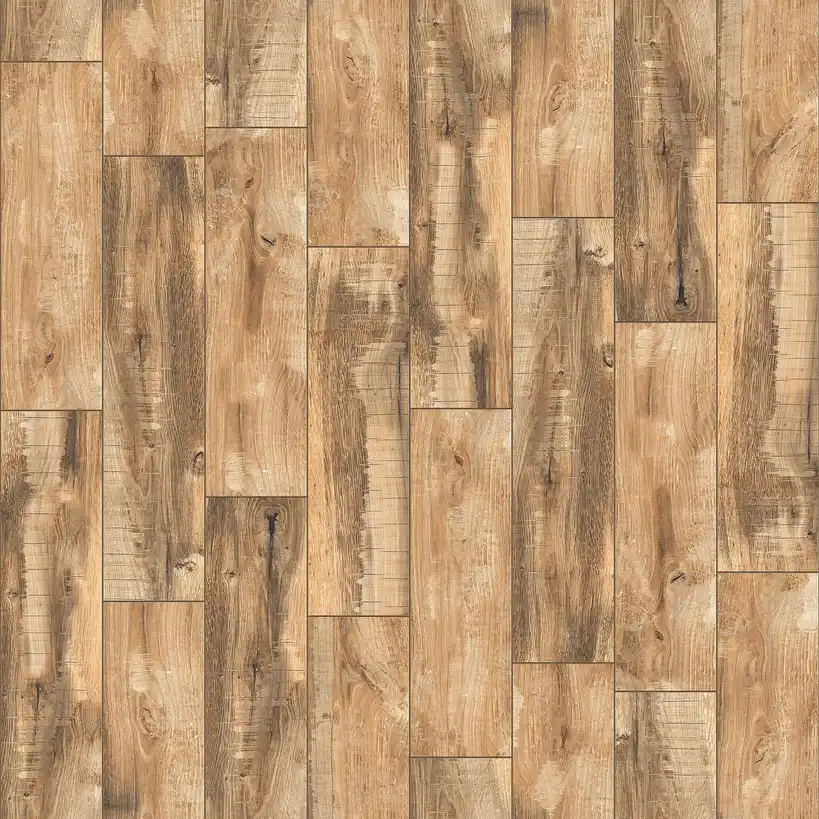
| Species | Paintability | Stainability | Grain visibility | Dent resistance | Movement risk | Best room use | Prep notes | Failure mode |
|---|---|---|---|---|---|---|---|---|
| Poplar | Excellent for paint; industry standard | Fair, but usually not the first choice for stain | Low to moderate; fine grain, sometimes visible streaks | Moderate; 540 lbf Janka hardness | Low to moderate for long runs | Baseboards, casing, crown, stair trim in painted rooms | Prime knots and mineral streaks; fill nail holes and inspect cut ends | Mineral streaks can telegraph, especially under light paint |
| MDF | Very good in dry rooms; smooth faces | Poor to fair | Very low | Low to moderate at edges | Low in dry areas, higher risk if moisture enters cut edges | Budget baseboards and casing in dry rooms only | Seal cut edges well; prime before install if possible | Swelling at cut edges and fastener points |
| Pine | Good if clear and well sealed | Fair to good, depending on knots and resin | Moderate to high; visible grain and knots | Low; prone to dents | Moderate | Affordable painted trim, rustic or classic looks, stair parts with careful prep | Use clear pine for paint; knot seal, fill, and sand smooth | Sap bleed and knots can stain through finish |
| Red oak | Poor for paint unless grain is filled | Very good; traditional stain-grade benchmark | High; pronounced grain | High; 1290 lbf Janka hardness | Moderate | Stain-grade baseboards, casing, crown, stair trim | Fill grain for smoother finishes; choose if you want open-grain character | Open grain stays visible and can trap finish in low spots |
| White oak | Poor for paint unless grain is filled | Very good; more subdued than red oak | Moderate; tighter and more linear than red oak | High; 1360 lbf Janka hardness | Lower than many hardwoods; more moisture-resistant | High-end interiors, humid-adjacent rooms, premium stain-grade trim | Use careful sanding and finish planning; grain fill if you want a smoother look | Can still show grain and figure, even under clear finish |
| Maple | Good for paint when prepped carefully | Fair; can blotch when stained | Low; tight grain | High; 1450 lbf Janka hardness | Moderate | High-traffic painted trim, smooth modern looks, selective stain work with conditioner | Use a controlled stain schedule or conditioner if staining; sand carefully before paint | Blotching under stain; can show sanding marks if finish work is rushed |
| Cherry | Good, but usually chosen for clear finish instead | Excellent for premium stain-grade trim | Low to moderate; fine grain with warm color | Moderate; 950 lbf Janka hardness | Moderate | Premium interiors, furniture-grade trim, feature rooms | Plan for color change over time; keep finish consistent across parts | Color deepens over time, so new pieces may not match old ones exactly |
| Basswood | Excellent for ornate paint work | Poor to fair | Very low | Low | Moderate | Hand-carved moldings and appliques | Best for shaped details, not abuse | Dents and marks easily |
How we chose
This guide sorts trim wood by finish risk before species name. That means paintability, stain behavior, and touch-up effort come first, then dent resistance and room conditions.
Three factors matter most. First, how much prep the wood needs for a clean finish. Second, whether the room is dry or exposed to moisture swings. Third, how much abuse the trim will take from vacuums, shoes, chairs, and ladders.
Janka hardness helps compare dent resistance in lbf, while T/R ratio helps judge dimensional stability. Lower T/R ratio means more even shrinkage, which lowers cupping and twisting risk.
Say your hallway baseboards get bumped daily. A harder species may hold up better, but a smoother paint finish still depends on tight grain, clean cuts, and sealed end cuts or edges.
Poplar: best for painted trim
Poplar is the common default for painted trim because it cuts cleanly, accepts primer well, and stays stable on long runs. It is also the industry standard for paint-grade moldings, and Meridian describes it as having fine grain that accepts paint beautifully.
Use it for baseboards, casing, crown, and stair trim when you want a paint-ready wood with less prep drama than many hardwoods. It is a good fit when the goal is a smooth painted finish rather than visible grain.
Its drawback is appearance under light finishes. Poplar can show green, purple, or black mineral streaks, and those marks may telegraph through thin paint unless you prime and spot-fill them first.
MDF: best for budget paint-grade trim
MDF is a budget paint-grade option for dry rooms only. It has a smooth face, so it can give you a very clean painted look when the room stays dry and the cut edges are sealed well.
This works best for long, straight baseboards and simple casing where you want low cost and minimal grain show-through. It is a composite material, so it does not move like solid wood along the grain.
The drawback is edge failure. Cut edges and fastener holes need careful sealing, because moisture can swell MDF quickly. That makes it a poor choice near sinks, tubs, or any spot that sees splash water or frequent wet cleaning.
Pine: best for affordable softwood trim
Pine is the affordable softwood option, and clear pine is the version to favor if you plan to paint it. It works well for rustic and classic looks, and it can also suit simple trim profiles when budget matters more than perfect dent resistance.
The tradeoff is clear. Pine dents more easily than hardwoods, and resin pockets or knots can bleed through paint if they are not sealed. That makes prep more important than the species name alone.
Use knot sealer on resinous spots and fill visible defects before priming. A common first-timer mistake is buying knotty boards for a white painted room and then finding stain patches or ghosting around the knots after the first coat dries.
Oak: best for stain-grade trim
Oak is the common default for stain-grade trim because the grain is attractive and the wood takes stain readily. Red oak is the traditional benchmark, while white oak brings a tighter, more linear grain and better moisture resistance.
Choose red oak when you want a classic, open-grain look. It has pronounced grain and usually needs more filling if you want a smoother finished surface. Choose white oak when you want a more refined look and more moisture resistance, especially in high-end interiors.
Both are harder and more durable than softwoods. Red oak is listed at 1290 lbf Janka hardness, and white oak at 1360 lbf, so either one resists dents better than pine or poplar.
Red oak versus white oak
Red oak gives you bolder grain and a very traditional stain-grade appearance. White oak is tighter and more linear, so it looks a little cleaner and handles moisture better.
If the room is dry and you want visible grain, red oak is often the easier fit. If the trim will sit near a humid zone or you want a more upscale, quieter grain pattern, white oak is the better choice.
Maple and cherry sit higher on the finish-quality ladder. Maple has a tight grain and high dent resistance, while cherry has a fine grain and a warm color that deepens over time.
Maple is useful when you want a smooth painted result in a high-traffic area, or when you need a harder trim species that can take bumps better than pine. Its drawback is stain behavior: it can blotch, so stain work needs careful prep and often a conditioner or a more controlled finishing schedule.
Cherry is a furniture-grade choice for premium stained trim. It is listed at 950 lbf Janka hardness, so it is not the hardest option here, but it offers a refined look that many homeowners want in feature rooms or formal spaces.
Picture a 14-foot dining room crown line that runs past three windows. If you choose a species with uneven movement or difficult blotching, every seam and patch can stand out after finish. A premium species helps, but only if the finish plan matches the wood.
Blotch control and finish planning
For maple, stain samples are worth the time because blotching is a finish risk, not a rumor. For cherry, expect the color to change with exposure, so avoid mixing old and new boards without planning for that shift.
If you want a painted, hard-wearing trim profile, maple can make sense. If you want a stain-grade showpiece, cherry usually belongs ahead of maple because the finish reads more naturally on its grain and color.
Which one should you buy?
If you are painting, start with poplar for most rooms. It gives you the best balance of paintability, clean machining, and stable long runs. Choose MDF only for dry rooms and simple profiles where low cost matters more than edge toughness.
If you are staining, choose oak first. Red oak suits classic interiors, while white oak is the better pick when you want tighter grain and better moisture resistance. Cherry is the premium choice when the room calls for a finer, warmer look.
If the room is dry and the trim will not be hit much, MDF or poplar can save money. If the trim will take abuse, move up to harder woods like maple or oak, because harder woods usually resist dents better even though they often cost more and may need more sanding or filling for a paint-ready surface.
If you need to decide by location, use this rule: baseboards take the most abuse, casing gets moderate contact, crown is mostly visual, and stair trim takes both contact and sightline scrutiny. That makes finish quality and durability more important on stairs than on crown.
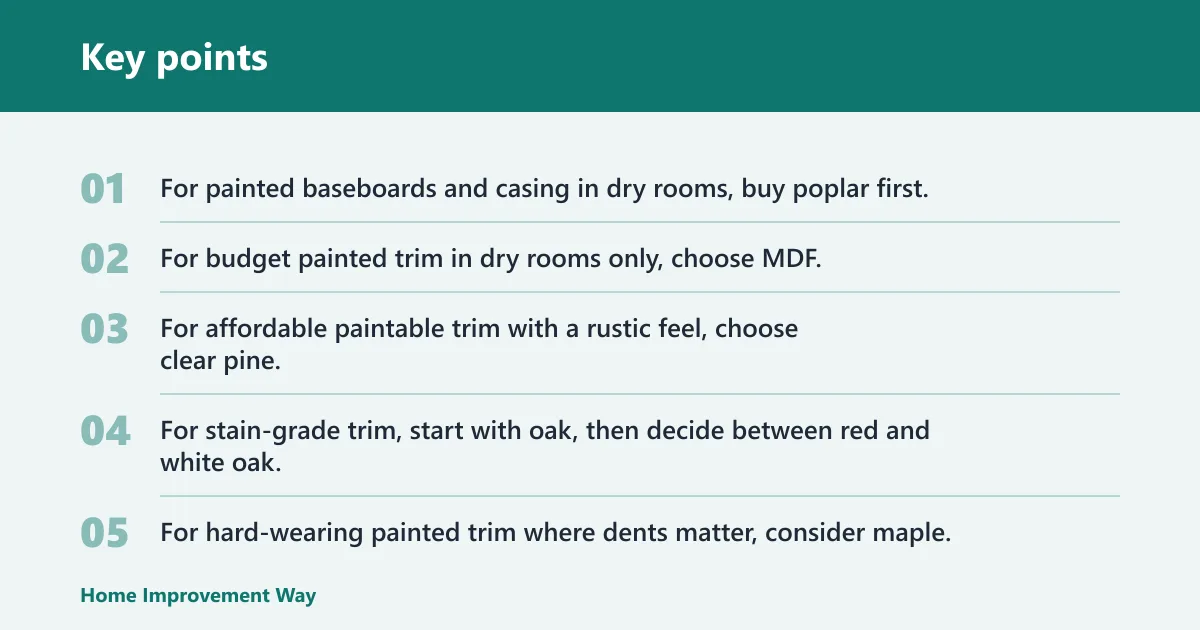
- For painted baseboards and casing in dry rooms, buy poplar first.
- For budget painted trim in dry rooms only, choose MDF.
- For affordable paintable trim with a rustic feel, choose clear pine.
- For stain-grade trim, start with oak, then decide between red and white oak.
- For hard-wearing painted trim where dents matter, consider maple.
- For premium stained trim, choose cherry.
How to stop finish failures matters as much as species. Prime knots, seal resin pockets, fill mineral streaks where they will show, and seal cut ends or cut edges before installation or soon after cutting.
- Inspect each board for knots, resin streaks, and grain direction.
- Use knot sealer on pine knots and any suspect resin pockets.
- Fill visible defects and nail holes with a putty that matches the finish plan.
- Seal cut ends on solid wood, and seal cut edges on MDF.
- Prime before final paint so streaks do not bleed through.
- For stain-grade oak or maple, sand and test a sample first.
How do I stop tannin bleed or blotching when painting trim wood?
Use the right blocker for the failure mode. Tannin bleed and sap bleed need stain-blocking primer, while blotching needs better surface prep, careful sanding, and a finish plan that matches the species. The best defense is to seal problem areas before the topcoat ever goes on.
On pine, focus on knots and resin pockets. On poplar, inspect for mineral streaks that may show under light colors. On maple, be alert for stain blotching if you are not painting and want a uniform finish.
For paint-grade trim, the practical sequence is simple: spot-seal problem spots, fill defects, sand smooth, prime, then topcoat. For stain-grade trim, sample the finish on offcuts first so you can judge color and absorption before the final install.
Frequently asked questions
What is the best wood for trim and molding if I’m painting it?
Poplar is the best all-around choice for painted trim because it machines cleanly, takes primer well, and stays stable on long runs. MDF is a budget option for dry rooms, and clear pine can work when you want a cheaper softwood. Avoid knotty stock if you want fewer touch-up problems.
What wood species are best for stain-grade trim and molding?
Oak is the usual starting point for stain-grade trim, with red oak giving a traditional open-grain look and white oak offering tighter grain and better moisture resistance. Cherry is a premium choice for a warmer, furniture-grade result. Maple can be stained, but blotching makes it less forgiving.
Is poplar or pine better for painted baseboards and casing?
Poplar is usually better for painted baseboards and casing because it has finer grain, more predictable machining, and fewer resin issues. Pine is cheaper and can look fine in classic or rustic rooms, but knots, dents, and sap bleed raise prep time. Choose clear pine only when price matters most.
Does MDF work for trim and molding in dry rooms?
Yes, MDF works for trim and molding in dry rooms, especially for baseboards and simple casing. It offers smooth faces and a low-cost paint base. The risk is swelling at cut edges or exposed spots, so seal those areas well and avoid bathrooms, laundry splash zones, and other damp areas.
Which trim woods are most stable and least likely to warp?
Lower T/R ratio usually means more even shrinkage, which reduces cupping and twisting risk. Among common trim choices, white oak is a strong option for stability and moisture resistance, while poplar is also dependable for long painted runs. No species is warp-proof, so good storage and acclimation still matter.
What wood should I use for trim in high-traffic areas?
For high-traffic trim, choose harder species first. Maple and oak resist dents better than softwoods, with white oak and hard maple near the top for durability. If you still want a painted finish, poplar is fine for many homes, but it will show dents sooner than harder woods.
Should I choose oak, maple, poplar, or pine for interior molding?
Choose poplar for painted trim, oak for stain-grade trim, maple when you want harder painted trim or a very fine-grained hardwood, and pine when budget matters most. Oak and maple cost more and may need more finish work. Pine is cheaper, but knots and dents are the tradeoff.
Sponsored / affiliate links. As an Amazon Associate I earn from qualifying purchases. I may earn additional commission from eligible campaigns.