Best Wood for Outdoor Furniture: Weather Resistance by Species
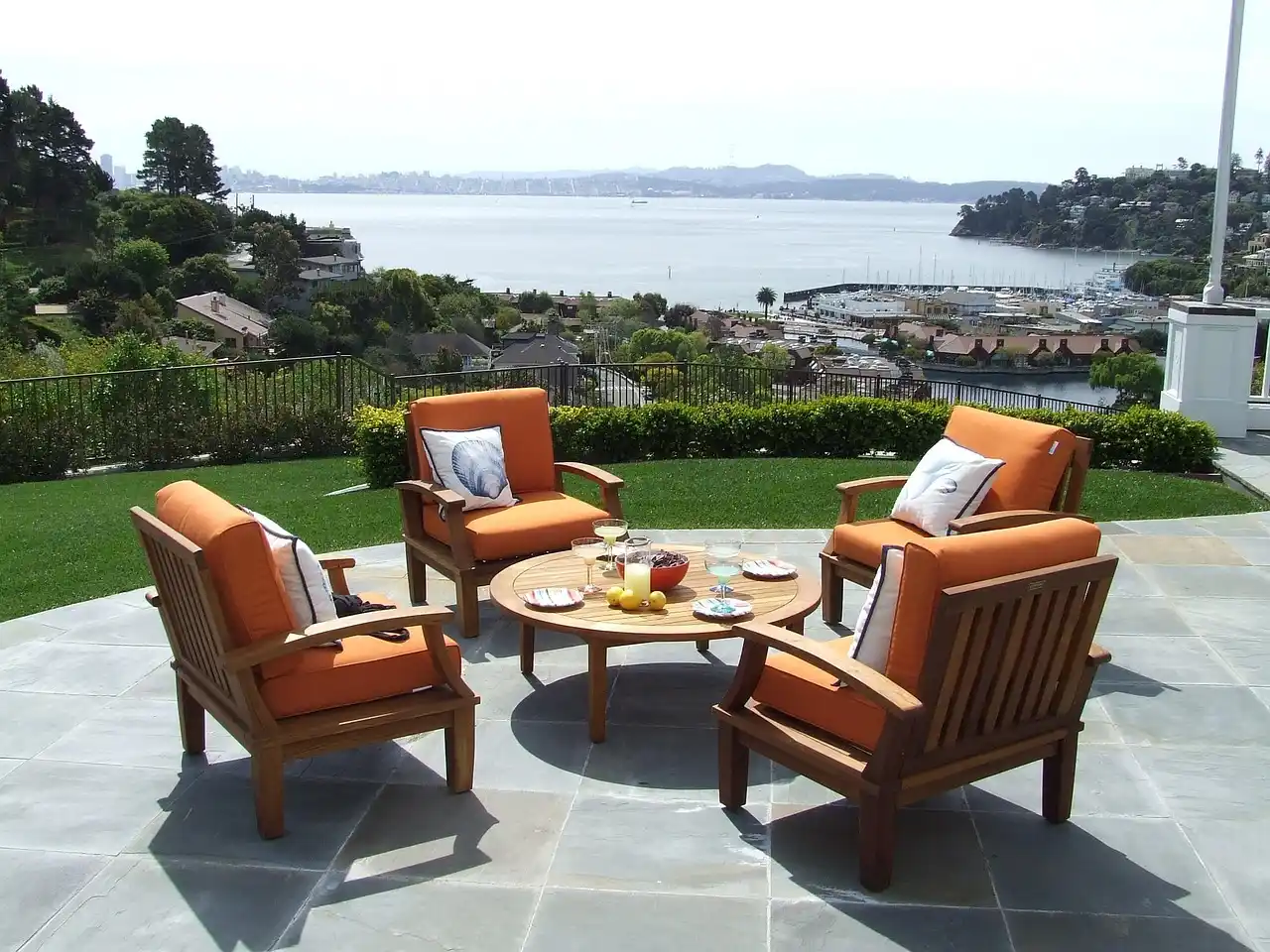
Teak is the safest all-around pick for outdoor furniture, but white oak, ipe, cedar, and cypress can beat it when the climate and maintenance plan match the wood’s decay behavior. Choose wrong, and furniture cups, checks, or rots fast, turning a weekend build into a short-lived expense. This guide compares species by weather-resistance mechanism, upkeep tolerance, and climate fit so you can choose wood with fewer surprises.
Wood weather decision table


| Climate or build | Best species | Why it fits | Expected maintenance | Likely failure mode | Hardware requirement |
|---|---|---|---|---|---|
| Humid or coastal | Teak or white oak | Teak’s natural extractives help it resist moisture and decay; white oak’s closed pores and tyloses slow water entry | Wash off salt and dirt; apply UV-protective oil every 1 to 2 years if you want to keep color | Surface graying, checking, and fastener staining if hardware is wrong | Stainless steel fasteners, especially with oak |
| Arid or full-sun | Ipe or teak | Ipe is extremely dense and highly durable; teak holds up to UV and damp weather better than many woods | Oil only if you want color retention; otherwise expect weathering to gray the surface | UV fade, surface checking at end grain, and tool marks if machining is rough | Exterior-grade hardware; pre-drill for ipe |
| Freeze-thaw | Teak, white oak, or cedar in protected designs | Stable joinery and good drainage matter more than sheer density when water freezes in joints | Store or cover during wet freezes; reseal exposed end grain | Joint loosening, checking, and split ends | Stainless steel fasteners and corrosion-resistant screws |
| Budget build | Pressure-treated pine or acacia | PT pine is the lowest-cost option; acacia is denser and more durable than soft pine while still costing less than teak or ipe | Seal all faces and end grain; expect more frequent refinishing than premium woods | Warping, checking, and early finish breakdown | Exterior-rated hardware; stainless where budget allows |
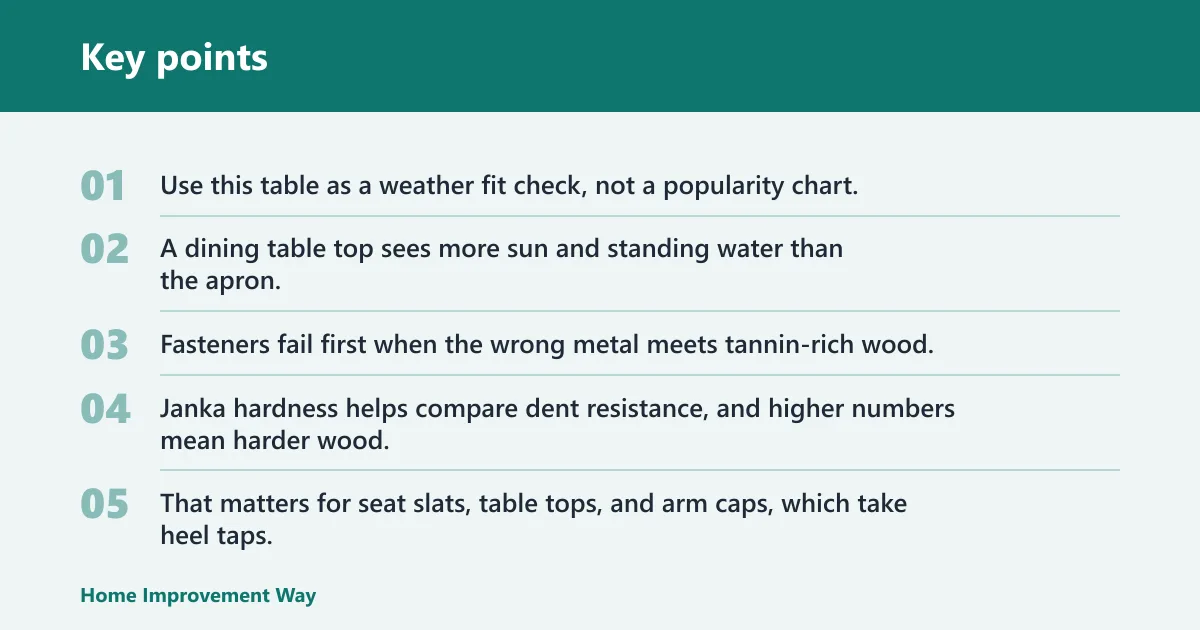
Use this table as a weather fit check, not a popularity chart. A dining table top sees more sun and standing water than the apron. Legs and stretchers fail differently. Fasteners fail first when the wrong metal meets tannin-rich wood.
Janka hardness helps compare dent resistance, and higher numbers mean harder wood. That matters for seat slats, table tops, and arm caps, which take heel taps, dropped dishes, and repeated contact. It does not replace rot resistance, but it helps predict whether the surface will bruise easily.
Teak vs acacia vs cedar vs white oak vs ipe vs PT pine
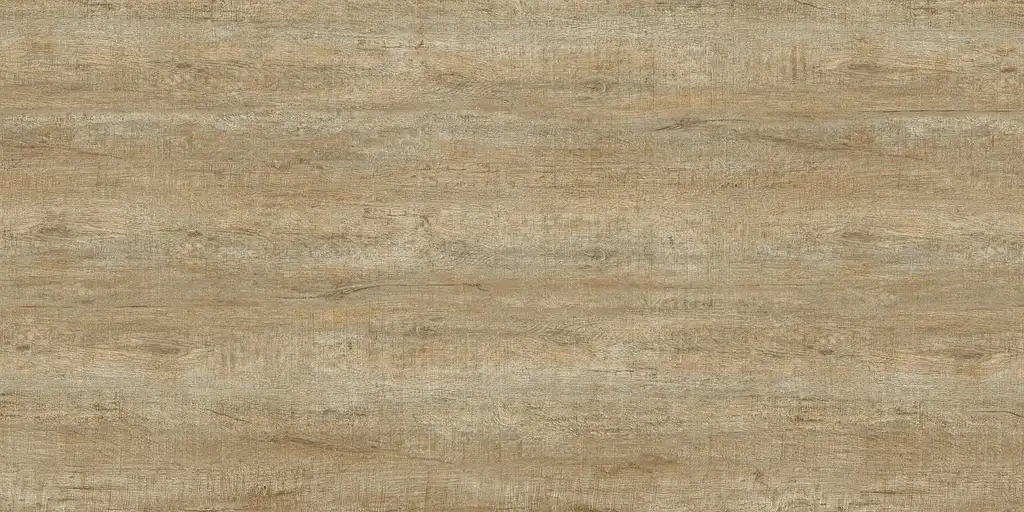
| Species | Rot resistance mechanism | Janka hardness | Maintenance tolerance | Weight | Cost tier | Best climate | Worst climate |
|---|---|---|---|---|---|---|---|
| Teak | Natural oils and extractives help resist moisture and decay | About 1,000 lbf | High; can weather outdoors with minimal care | Medium to heavy | High | Humid, coastal, mixed sun/rain | None that is unforgiving; performance falls mainly when drainage is poor |
| Acacia | Dense hardwood structure with moderate natural durability | Varies by species, often roughly 1,500 to 2,300 lbf | Moderate; better with covering or seasonal storage | Medium | Low to mid | Covered patios, mild climates, seasonal use | Wet freeze-thaw exposure with no cover |
| Cedar | Natural decay-resistant extractives | About 350 to 900 lbf depending on species | Moderate to high, but soft surface wears sooner | Light | Mid | Damp climates where light weight matters | High-traffic, impact-heavy, or exposed corner details |
| White oak | Closed-pore grain and tyloses slow water movement | About 1,360 lbf | Moderate; good with sealing and stainless hardware | Heavy | Mid to high | Temperate, humid, and structural outdoor furniture | Projects that need to stay light or move often |
| Ipe | Extreme density and high natural durability | About 3,680 lbf | Very high; can be left to weather if built well | Very heavy | High | Full-sun, exposed decks, harsh weather | Low-budget builds or shops without carbide tooling |
| Pressure-treated pine | Chemical preservative treatment under pressure | About 690 lbf for southern yellow pine | Low to moderate; needs sealing and inspection | Medium | Low | Budget utility furniture with protective finish | Appearance-critical pieces that need low movement and low upkeep |
Use this table as a species shortcut. If the furniture must live outside with minimal attention, the best rank is generally teak, then ipe, then white oak, with cedar and acacia behind them depending on climate and design. PT pine is the budget outlier: useful, but only when the tradeoff is understood.
What makes wood hold up outdoors?
The main threats are sun, rain, moisture, insects, and rot. Outdoor wood lasts when it sheds water, moves predictably with seasonal humidity, and resists fungi and insects long enough for the finish or gray patina to do its job. The best species slow those failure modes instead of chasing them.
Moisture movement and end grain
Wood moves across the grain as humidity changes. End grain drinks water fastest, so seal it first on every part, from table legs to slat ends. Unsealed ends often split before the face does, especially on tops and seat rails where water can sit after rain.
Rot resistance versus decay resistance
Rot resistance is practical outdoor durability. Decay resistance is the wood’s natural ability to slow fungal attack. Teak, cedar, white oak, and ipe each handle moisture in different ways, but none are immune. Good drainage, air gaps, and dry storage matter as much as the species.
Dent resistance and Janka hardness
Janka hardness is the dent-resistance metric most buyers should know. It helps explain why cedar dents easily while ipe feels almost unforgiving under a tool or dropped object. Harder is not always better, though, because very hard woods can be heavier, harder to machine, and more demanding on fasteners.
Fasteners and stain control
Stainless steel fasteners resist tannin corrosion and help prevent black stains around screw heads. That matters with cedar and white oak, both of which can discolor around the wrong metal. Use exterior-grade hardware anywhere the furniture will see rain, dew, or salty air.
Teak for long service life
Teak is the premium benchmark because its natural extractives help it resist moisture, insects, and termites. It is expensive, but it can last decades outdoors with minimal maintenance. If you want the safest all-around long-life choice, teak is the one most buyers compare everything else against.
Natural oils and termite resistance
Teak’s oil content helps it shed water and slow decay. That does not make it maintenance-free, but it explains why teak often outperforms many other woods in damp weather. It also resists termites better than softer species, which matters in warm, humid regions.
Expected outdoor lifespan
Teak can last 50 to 70 years outdoors with minimal maintenance, depending on design, exposure, and care. The USDA Forest Service notes teak as a highly durable hardwood for exterior use, and wood species references commonly place it among the most weather-tolerant furniture woods. That figure assumes decent joinery, sensible drainage, and normal exposure, not standing water or neglected fasteners.
Tool wear and maintenance
Teak’s silica content dulls tools faster than softer woods. Expect more wear on blades and cutters, and plan for regular cleaning if you want to keep the color. UV-protective oil, applied about every 1 to 2 years, can help preserve the newer-wood look and delay teak from graying quickly. Manufacturer finish sheets for outdoor wood oils generally recommend reapplication at that interval, with exposure and climate as the main variables.
Western red cedar for lighter builds
Cedar works well for outdoor furniture because it is lightweight, easy to work with, and naturally resistant to decay. It is a good choice for chairs, benches, and table frames where low weight matters more than dent resistance. The tradeoff is softness, so cedar bruises and dents faster than harder woods.
Why cedar works well
Western red cedar’s natural extractives and low density make it a strong choice for outdoor use, especially where rain is common but furniture needs to stay movable. It stands up to UV rays and damp weather better than many softer woods, which matches cedar’s long-standing outdoor use.
Where cedar dents or wears faster
Cedar’s low density is the reason it feels easy to cut and assemble, and also the reason it dents easily. Use it for parts that benefit from light weight and accept wear, not for exposed corners that get bumped often. Seat edges and arm fronts show damage first.
Best furniture parts for cedar
Cedar fits slats, backrests, side panels, and secondary framing. It is less ideal for narrow legs and hard-use table corners unless you accept dents as part of the look. For the longest service life, pair cedar tops or slats with sturdier structural parts and stainless steel fasteners.
Is white oak good for outdoor furniture?
Yes, white oak is a strong outdoor choice because its closed-pore structure and tyloses help block water movement through the grain. It is heavy, durable, and better suited to outdoor use than red oak. Use stainless steel fasteners with it, and expect a furniture build that feels substantial rather than light.
Closed-pore structure and tyloses
White oak is a closed-pore hardwood, and tyloses in the grain are commonly cited as helping slow water entry. That is one reason it has a stronger outdoor reputation than red oak. It is still wood, so exposed end grain and joints need sealing and sensible design.
Why stainless fasteners matter
White oak contains tannins that can react with ordinary steel fasteners. Stainless steel fasteners help prevent corrosion and black staining around screw heads and bolts. On a white oak table, that matters just as much as the species choice itself.
Heavy-duty uses and limits
White oak works well for table bases, chair legs, and stretchers where strength matters. It is heavy and strong, which is useful for stability in wind or rough use. The downside is weight, so moving a large white oak set takes more effort than cedar or acacia.
Suppose you build a 72-inch dining table with a white oak top and cheaper secondary framing wood. That mixed-material approach can make sense if the top takes the weather and the hidden frame stays protected. Keep the fasteners stainless and seal every end grain surface before assembly. For a deeper material comparison, see teak and white oak.
Ipe and acacia compared
Ipe and acacia can both work outdoors, but they solve different problems. Ipe is the extreme durability option: very dense, slow to move, and long-lasting. Acacia is the more economical middle ground. It offers good durability and warm honey tones, but it is less forgiving in harsh winters.
Density, weight, and tool needs
Ipe is so dense it can sink in water. That density is part of why it lasts so long, but it also means pre-drilling every hole and using carbide-tipped tools. Ipe has a Class A fire rating, which is unusual for a wood this durable and dense.
When acacia makes sense
Acacia makes sense when you want a dense, durable wood at a lower material cost than teak or ipe. It often suits tables, benches, and compact seating where budget matters and the furniture can be covered or stored in harsh winters. Expect a lighter long-term commitment than teak.
When ipe is worth the cost
Ipe is worth the cost when the furniture will live outdoors year-round and you want one of the longest-lasting species available. It pays off best on heavily exposed pieces, wide tabletops, and high-wear surfaces. The machining penalty is real, so the labor bill is often higher too.
Is pressure-treated pine safe?
Pressure-treated pine is safe for outdoor furniture when you buy the right grade, use exterior hardware, and finish it properly. It is the budget choice, and it uses chemical preservatives under high pressure. The weak point is stability, not basic outdoor use, because it can warp and check as it dries.
Best budget use cases
Pressure-treated pine works best for utility benches, picnic tables, planters, and simple frames where lowest cost matters more than fine appearance. It is also the easiest way to build large outdoor pieces without a premium species budget. Ground-contact rated stock is generally the safer pick for parts near splash zones or soil.
Warping, checking, and sealing
Pressure-treated pine is prone to warping and checking, especially if one face dries faster than the other. Seal the ends and exposed faces after the wood has dried enough to accept finish, then plan on upkeep. Without that step, the board can twist, split, or cup more quickly.
Hardware and finish requirements
Use exterior-grade hardware and a sealer, even on treated lumber. Treated wood can be rough on fasteners if you use cheap steel, and finish slows moisture exchange that drives checking. If the project is visible furniture, keep the design simple so movement causes less stress at the joints.
What wood lasts longest outside without maintenance?
Short answer: teak usually lasts longest outdoors with the least maintenance, with ipe very close behind in many exposures. White oak is next tier for structural outdoor use, while cedar and acacia can last well if the design keeps them dry. “Without maintenance” means the wood may gray and look weathered long before it loses structural soundness.
Ranked answer by no-maintenance durability
- Teak — best balance of decay resistance, stability, and long outdoor service life
- Ipe — extremely durable and dense, especially strong in high-exposure locations
- White oak — durable when sealed and detailed correctly, especially for heavier furniture
- Cedar — durable enough for many outdoor uses, but softer and more prone to wear
- Acacia — decent durability, but species and climate swings matter more
- Pressure-treated pine — can last, but appearance and movement usually deteriorate sooner
Graying versus structural life
Gray color is not the same as rot. Many outdoor woods turn silver-gray from UV exposure while remaining structurally sound for years. The real durability test is whether the wood keeps its shape, avoids deep checking at joints, and resists decay where water lingers.
Climate caveats
In coastal humidity, teak often has the edge because it tolerates damp conditions well. In full-sun, high-wear settings, ipe can outperform lighter woods if it is detailed correctly. In freeze-thaw climates, even durable species fail early when water is trapped in joints, so drainage and fastener choice matter as much as the species.
How do you keep outdoor wood from rotting?
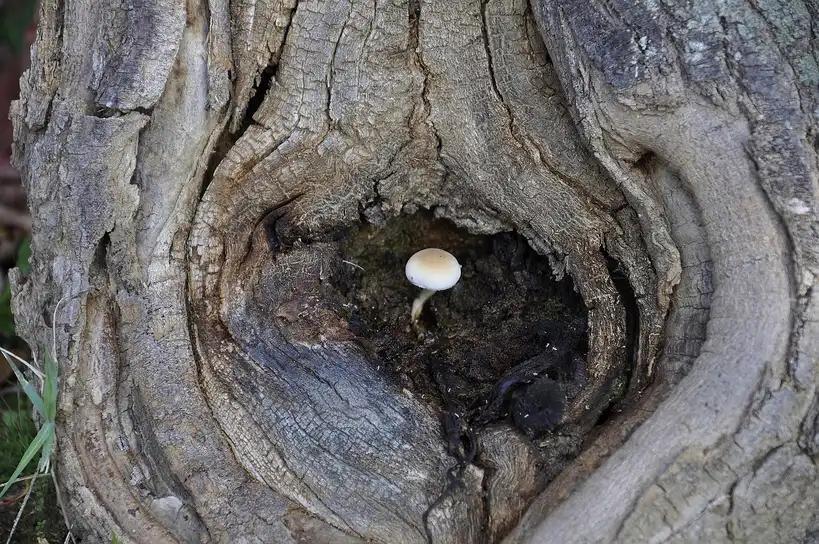
Start with sealed end grain, corrosion-resistant hardware, and a finish plan that matches the species and climate. Rot usually begins where water lingers: screw holes, cut ends, lap joints, and undersides with poor airflow. Good design and maintenance slow that process far more than cosmetics do.
Seal end grain first
Seal cut ends before assembly if possible, then touch them up after cutting and fitting. End grain soaks up water first, which is why many outdoor projects fail there before the face boards fail. This step matters on every species, including teak and white oak.
Choose the right hardware
Use stainless steel fasteners with cedar and oak to reduce tannin corrosion and black staining. For ipe, pre-drill every hole because of its density, and use sharp carbide tools to avoid tearout and heat buildup. Good hardware keeps joints tight, which matters as wood moves through seasons.
Oil, cover, or store as needed
UV-protective oil, applied about every 1 to 2 years, can help preserve the newer-wood look and slow surface drying. Covering or storing the furniture during long wet spells helps more than any finish alone. A finish can slow weathering; it cannot stop standing water.
Match maintenance to climate
Humid coastal areas demand faster inspection and better drainage. Full-sun spaces need more UV care. Freeze-thaw regions punish trapped water. A species that does fine in dry shade may fail early on an uncovered deck near a sprinkler or salt air.
A common first-timer mistake is using cedar for a bench top, then fastening it with plain steel screws and leaving the end grain bare. The wood itself is fine, but the hardware stains, the ends split, and the bench starts to look older than it is after one wet season.
Frequently asked questions
What is the best wood for outdoor furniture?
Teak is the best all-around wood if you want high durability and low maintenance. White oak and ipe can be better in specific climates, though. The best choice depends on moisture, sun, budget, and how often you are willing to oil, cover, or store the furniture.
Is teak better than acacia for outdoor furniture?
Teak is better if you want the longest service life and the most forgiving outdoor performance. Acacia is the better value when you want a denser wood than pine without teak pricing. Acacia is a smart choice for covered patios or furniture you can store in harsh winters.
How long does teak outdoor furniture last?
Teak can last 50 to 70 years outdoors with minimal maintenance. That assumes good drainage, decent joinery, and no neglect around fasteners or end grain. If you oil it, you can help preserve the color, but the real value is its long service life even when left to weather.
Does cedar work for outdoor furniture?
Yes. Western red cedar is lightweight, easy to work with, and naturally resistant to decay. It is a strong choice for chairs, benches, and slatted pieces. The tradeoff is softness, so cedar dents more easily than teak, white oak, or ipe.
What wood is best for outdoor furniture on a budget?
Pressure-treated pine is the lowest-cost option, especially for larger projects. Acacia is the better budget step-up if you want a denser, more attractive wood with warm honey tones. In both cases, plan for sealer, exterior hardware, and more upkeep than teak or ipe.
Sponsored / affiliate links. As an Amazon Associate I earn from qualifying purchases. I may earn additional commission from eligible campaigns.