Best Woods for Basements (2026): Based on Specs and Reviews
For basement projects, choose kiln-dried lumber or moisture-stable plywood, and use marine or exterior plywood only where repeated dampness is possible; keep solid wood off concrete and leave about 1/4 inch to 3/8 inch expansion gaps. Bad choices swell, cup, stain, and split, then can fail fast near basement moisture. This guide compares species, plywood cores, finishes, and placement rules for built-ins, shelving, trim, and paneling.
Quick comparison
| Product | Badge | Best for | Price | ||
|---|---|---|---|---|---|
 |
Minwax Fast Drying Polyurethane Protective Wood Finish,Minwax | Our pick | 1 Gallon · Semi-gloss · Oil-based polyurethane | $48.98
Price as of 20 Oct 2026
|
View |
 |
Digital Wood Moisture Meter Wood Humidity Tester HygrometerQYQRQF | Pair with it | Digital meter · 0-99.9% range · 4 modes | $9.99
Price as of 20 Oct 2026
|
View |
Use the comparison below as a starting point, then match the material to the basement’s actual moisture level. A dry, conditioned basement gives you more workable options than a room with seasonal dampness or slab vapor risk.
📊 An 8×14-foot basement insulation project is estimated at $100 to $150. Source: How To Insulate Your Basement.
How we chose
The selection leans on four checks: dimensional stability below grade, moisture tolerance at cut edges and fasteners, finishability for common DIY projects, and the likely failure mode if the basement shifts from dry to damp.
That matters more than the wood label on the rack. A species can look fine on paper and still move enough to crack paint, open joints, or loosen screws if humidity swings.
Is engineered wood better than solid wood in a basement?
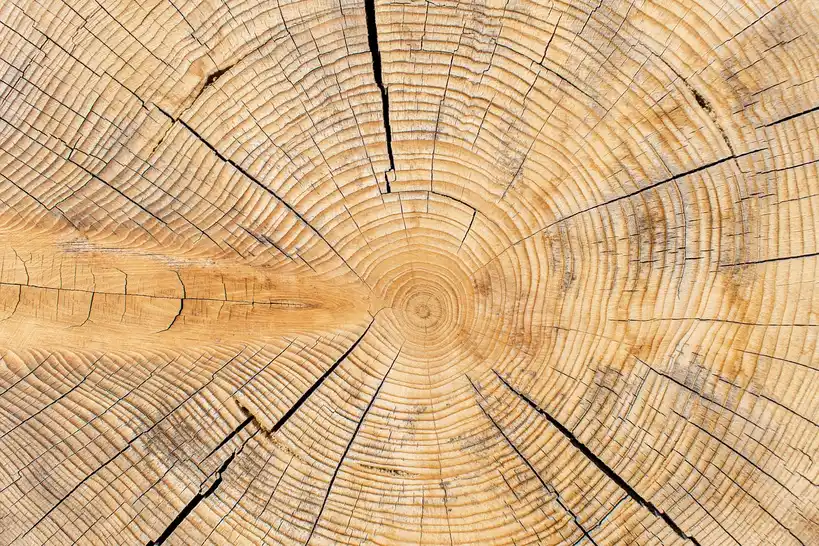
Yes. For most basement projects, engineered wood is the safer default because its plywood or high-density fiberboard core and cross-layered construction move less than solid boards when humidity changes. That makes it a better fit for built-ins, paneling, and many furniture-style projects below grade.
Solid hardwood can work only in a very dry, temperature-stable basement with tight humidity control. Even then, it still expands and contracts more than engineered material, so it needs more care at joints, edges, and fasteners.
Why cross-layered construction helps
Engineered wood uses a plywood or HDF core, and the grain layers counter each other. That reduces cupping, twisting, and seam opening when the basement air moves from heating season to humid summer air.
For cabinets and wall panels, that stability matters as much as appearance. A panel that stays flat is easier to paint, easier to fasten, and less likely to rub against adjacent parts.
When solid wood makes sense
Solid hardwood is acceptable only when the space is genuinely dry, the slab is isolated from vapor, and the project is not pressed against concrete. Even then, keep it to smaller pieces such as tabletops or accent parts where movement is easier to manage.
If the basement ever shows efflorescence, condensation, or recurring musty odor, solid wood is the wrong bet. Those are signs that moisture control, not species choice, needs attention first.
Oak plywood: best for durable built-ins
Oak plywood is the safest all-around pick for basement shelves, cabinets, wall panels, and trim when you want a wood look with better stability than solid stock. Oak’s durable grain also suits projects that may see bumps, screws, and repeated use.
Based on the product details, a fast-drying oil-based polyurethane is useful for interior woodwork and cabinets because it adds a clear protective film and helps seal cut faces. The drawback is that finish alone does not fix a damp basement; the project still needs moisture control, edge sealing, and gap planning.
Maple plywood: best for clean, painted projects
Maple plywood suits cabinet boxes, trim, and smooth-faced wall panels when you want a cleaner, more contemporary look. It is a good choice where visible grain should stay subtle and the surface needs good wear resistance.
Maple is still an engineered option, so it benefits from the same basement rules as oak plywood: seal exposed edges, keep it off direct slab contact, and use it in a basement where humidity is controlled. Its drawback is that a smooth face can still telegraph swelling at edges if moisture management is weak.
Solid hardwood: best for very dry basements
Solid hardwood should be reserved for very dry basements with strong humidity control, and even there it is best for tabletops or accent pieces rather than large panels. It can look excellent, but it changes size more with seasonal humidity swings than engineered stock.
White oak and hickory are among the better solid species for basement use when conditions are unusually stable. Pine is the opposite: it is discouraged in basements with higher humidity because it moves more and dents more easily.
Red flags that call for a switch
If the space has damp concrete, a history of condensation, or visible moisture at slab edges, move away from solid hardwood. If the project needs broad flat panels, long trim runs, or tight door gaps, engineered wood is the safer choice.
Also watch for repeated seasonal gap changes in nearby finish carpentry. That is a sign the basement air is shifting enough to punish solid stock over time.
What is the best wood for basement projects?
The best wood for most basement projects is engineered plywood with a moisture-stable core, especially oak or maple faces for cabinets, trim, wall panels, and shelving. For very dry spaces, solid white oak or hickory can work, but only with careful moisture control and more movement allowance.
The key is to match the material to the room, not to pick a universal “best” species. A dry, conditioned basement supports more options than a space with seasonal dampness or known moisture risk.
Basement wood selection matrix
| Basement condition | Project type | Recommended wood type | Avoid list | Minimum moisture-control steps | Top failure risk |
|---|---|---|---|---|---|
| Dry conditioned | Shelves | Engineered oak plywood or maple plywood | Untreated pine, plain particleboard | Test humidity, seal cut edges, keep off slab with spacers | Edge swelling from hidden condensation |
| Dry conditioned | Cabinets | Maple plywood for a clean finish | Solid hardwood panels, moisture-sensitive MDF at exposed edges | Seal all cut faces, use a vapor barrier over concrete where needed | Fastener loosening from seasonal movement |
| Dry conditioned | Trim | Engineered oak plywood or stable solid white oak | Pine in humid seasons, unfinished MDF near slab edges | Prime and paint all faces, maintain 30% to 50% indoor humidity | Open joints and paint cracks |
| Dry conditioned | Wall panels | Plywood-faced panels with sealed edges | Standard MDF, softwood with wide grain movement | Install over a dry, flat wall system with an air gap from concrete | Panel bowing from minor humidity swings |
| Dry conditioned | Tabletops | Solid hardwood or thick veneer plywood | Low-grade softwood, unfinished panel stock | Use a moisture meter reading before assembly, finish both sides equally | Warping from uneven moisture uptake |
| Dry conditioned | Framing | Standard kiln-dried lumber | Wet lumber, anything bowed or twisted | Verify the slab is dry, keep lumber off concrete during storage | Twist that telegraphs into finished walls |
| Seasonally damp | Shelves | Engineered oak plywood with sealed edges | Solid hardwood, pine, unsealed MDF | Use a dehumidifier, add a vapor barrier or subfloor system, seal all faces | Sagging and edge swelling |
| Seasonally damp | Cabinets | Maple plywood or oak plywood | Solid hardwood doors and face frames | Keep indoor humidity between 30% and 50%, elevate cabinets off concrete | Door sticking and finish failure |
| Seasonally damp | Trim | Plywood-based trim, stable solid oak in small runs | Pine, MDF at corners and ends | Prime all sides, leave small movement gaps at joints | Cracking at miters |
| Seasonally damp | Wall panels | Engineered wood panels on a dry furring system | Solid panels, standard MDF | Separate panels from concrete, verify moisture with a meter first | Hidden mold and face swelling |
| Seasonally damp | Tabletops | Engineered top with thick veneer | Wide solid pine or poplar tops | Finish both faces and edges, avoid direct floor contact | Cupping |
| Seasonally damp | Framing | Kiln-dried lumber only after moisture review | Any visibly damp board | Fix leaks first, then install after slab and air are dry | Hidden rot and nail movement |
| Known moisture risk | Shelves | Moisture-tolerant plywood only after the source is fixed | Solid wood, MDF, pine | Repair seepage, test the slab, install only after drying | Rapid swelling and finish breakdown |
| Known moisture risk | Cabinets | Delay the project until conditions improve | Any softwood or solid hardwood near concrete | Use a moisture test kit or professional meter reading first | Cabinet base failure |
| Known moisture risk | Trim | Delay or use temporary, replaceable trim only | Pine, MDF, solid hardwood | Fix active seepage and keep humidity under control before install | Paint blistering and joint failure |
| Known moisture risk | Wall panels | Do not install until the basement is dry | Any wood paneling against damp concrete | Install a vapor barrier and subfloor or wall system after drying | Trapped moisture and mold |
| Known moisture risk | Tabletops | Postpone, or use a fully sealed temporary top | Solid wood slabs | Confirm the area is dry and stable for weeks, not days | Severe warping |
| Known moisture risk | Framing | Fix the moisture problem before framing | Any wood used to hide active seepage | Repair water entry, then confirm dry conditions before framing | Rot and hidden structural damage |
Do I need to test moisture before using wood in a basement?
Yes. Before installation, use a calcium chloride test kit or a professional moisture meter reading to check slab vapor emission and wood moisture conditions. This is especially important when wood will sit near concrete, under built-ins, or over a slab that may still be drying.
Fresh concrete needs time before flooring or other wood work. Even a basement that looks dry can still release vapor from the slab, and that vapor can show up later as swelling, finish failure, or fastener movement.
What to do before you install
- Check for leaks, seepage, condensation, and efflorescence.
- Fix active water entry before any wood goes in.
- Let the slab and the room stabilize if the concrete is new.
- Choose a material and installation method that fit the measured conditions.
Say your basement has a 12-by-16-foot wall with built-in shelves planned along the slab edge. If the slab test shows moisture still moving through concrete, the right answer is not “more finish.” The right answer is to stop, solve the moisture source, and delay the shelves until the room is dry enough for wood.
What underlayment or vapor barrier should I use in a basement?
Over concrete slabs, a vapor barrier is used to reduce moisture transfer, and it is often paired with an underlayment or subfloor system. The right assembly depends on the product, but the point is the same: keep slab vapor away from the wood and leave room for controlled movement.
For floating engineered floors, the material usually rests on underlayment over a moisture barrier. For built-ins and wall panels, the same idea applies in another form: isolate the wood from concrete and do not trap dampness behind it.
What matters most
The barrier is not decorative. It is part of the moisture strategy, especially where concrete is the source of vapor. Flatness, fastening pattern, and product-specific underlayment requirements still matter.
Do not assume one underlayment fits every basement project. A cabinet toe kick, wall panel system, and click-lock floor each need different prep details.
Floating vs glue-down installation methods
Floating installation is more forgiving for basements because click-lock planks rest on underlayment and can accommodate movement with expansion gaps. Glue-down installation is more precise and depends on tested slab vapor emission plus moisture-tolerant adhesive selection.
Both methods are common for basement floors, but neither should be treated as a shortcut around moisture. The room still needs to be dry enough for the system you choose.
When floating makes sense
Floating engineered systems suit basements that see seasonal change because they allow the assembly to move a bit as conditions shift. That makes them easier to manage when the slab is not perfect, though flatness still matters and product limits still apply.
When glue-down makes sense
Glue-down can work when slab moisture has been tested and the adhesive is specified for the conditions. It can feel more permanent, but it is less forgiving if the slab later emits more vapor than expected.
Picture a finished basement office with a long wall of cabinets and a bookcase run. A floating floor may handle seasonal change better underfoot, while the wall units still need sealed edges and standoff from the concrete wall. Different wood elements in the same room can need different moisture decisions.
How do I stop basement humidity from warping wood?
Keep indoor humidity between 30% and 50% with dehumidifier use, and keep air moving so damp pockets do not collect around wood. That helps prevent warping, cupping, and gaps in shelving, trim, panels, and tabletops.
Humidity control matters as much as species choice. Even stable plywood can swell at cut edges if the basement sits damp for long stretches.
Practical control steps
Seal exposed end grain and cut faces. Keep wood parts away from direct slab contact. Use a vapor barrier where concrete is the source of moisture. And do not close up a wall or cabinet chase until the space is actually dry.
Regular spill cleanup still matters, especially in utility areas and around sump pumps, laundry rooms, or exterior doors. Small water events can become repeated swelling events if they are ignored.
Can solid hardwood ever work in a basement?
Yes, but only in a very dry basement with stable humidity, no active seepage, and careful placement away from concrete. Even then, solid hardwood is best used for small, visible pieces where movement is manageable, not for large panels or moisture-prone trim runs.
For most basement carpentry, engineered wood is the safer choice because it tolerates movement better. Solid wood is a conditional option, not the default.
What not to assume
Rot resistance does not cancel movement. Cedar, white oak, and other more durable species can still cup, open joints, or shift against fasteners if the basement air changes too much.
That is why “more rot-resistant” is not the same as “basement-safe.” If the room is damp, fix the dampness first.
Can I use pine or other softwood in a basement project?
Pine can be used only in a dry, conditioned basement and only for low-risk pieces that are well sealed, but it is not a strong choice in higher humidity. It moves more than the better basement species and dents more easily, which raises the odds of visible wear and fastener loosening.
For trim, shelving, or cabinet parts near concrete, engineered plywood is usually the better buy. Pine is more of a budget choice for controlled spaces than a basement problem-solver.
Which one should you buy?
Buy engineered oak plywood if you want the safest all-around choice for basement shelves, cabinets, wall panels, and trim. Buy maple plywood if the project needs a smoother face and a cleaner painted look. Buy solid hardwood only if the basement is dry, stable, and well controlled.
For budgets, engineered plywood usually gives the best balance of cost and risk for common basement carpentry. Solid hardwood costs more in material and in movement management, while moisture-resistant MDF is only worth considering in very dry, conditioned spaces where repeated dampness is not expected.
Decision rules
Choose engineered oak plywood if the basement is dry but not perfectly predictable, or if the project includes shelves, trim, or cabinets that need strength and stability.
Choose maple plywood if you want a smoother, cleaner finish on built-ins or wall panels and the basement air is controlled.
Choose solid hardwood only for dry, conditioned rooms where the project can tolerate movement and the wood will not sit against concrete.
Delay the project if you have active seepage, recurring condensation, or a slab that has not passed a moisture check.
Sponsored / affiliate links. As an Amazon Associate I earn from qualifying purchases. I may earn additional commission from eligible campaigns.