Best Woods for Speaker Enclosures (2026): Research Shows
MDF is usually the best starting point for speaker enclosures when the goal is low cabinet resonance and clean bass. Baltic birch plywood is the stronger, lighter, more moisture-tolerant choice for portable, humid, or screw-heavy builds. The right answer depends on enclosure type, panel size, and how much bracing the box can support. This guide compares MDF, Baltic birch, plywood, and solid wood by density, stiffness, damping behavior, screw holding, moisture resistance, weight, cost tier, and best enclosure type, with recommendations tied to published material properties and loudspeaker-cabinet guidance.



Direct answer
MDF is the best default for speaker enclosures when the main goal is low resonance and clean bass. Baltic birch plywood is the better choice when the cabinet must be stronger, lighter, or more tolerant of moisture. For large or high-output boxes, enclosure design and bracing matter as much as the panel material, because a well-braced plywood cabinet can outperform a poorly braced MDF cabinet.
MDF vs Baltic birch
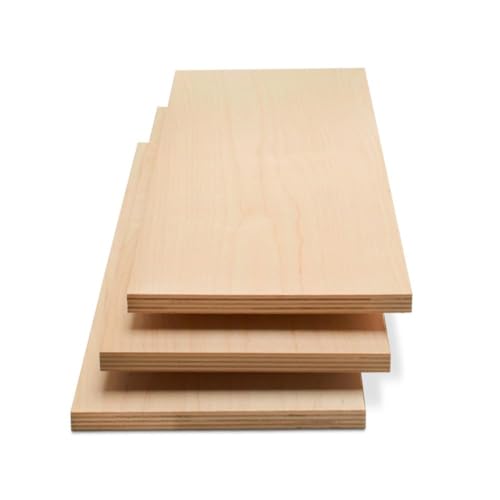
MDF is a fiberboard with very uniform density, which is why it is widely used for loudspeaker enclosures and cabinetry. Published material-data sheets commonly place standard MDF around the mid-40s lb/ft³, with good internal damping but lower edge screw-holding and poor moisture resistance. Baltic birch plywood is typically around the low-40s lb/ft³ for 18 mm sheets, with cross-laminated plies that improve stiffness, screw holding, and dimensional stability. That makes birch the more durable structural choice, while MDF remains the easier path to a quiet, dead-sounding box.
Acoustically, the tradeoff is not simply “one rings and one does not.” Cabinet behavior depends on panel span, thickness, bracing, edge support, and damping treatment. Loudspeaker-design references consistently favor stiff, well-braced panels and controlled panel resonance over relying on mass alone. MDF’s higher internal damping helps suppress audible panel coloration, but birch’s greater structural efficiency can win when the design uses braces, smaller unsupported spans, and good fasteners.
Density vs resonance
Density matters because heavier panels generally lower the tendency of a wall to be driven by the speaker’s internal air pressure, but density is only part of the formula. Panel stiffness and damping determine whether a cabinet stores energy and re-radiates it as coloration. In practice, the “best” material is the one that produces the least audible panel activity in the finished box, not simply the one with the highest density rating.
That is why a material decision matrix should separate rigidity from damping. MDF scores well on damping and consistency. Baltic birch scores well on stiffness-to-weight and fastener retention. Solid hardwoods can be dense, but their anisotropic grain and seasonal movement make them less predictable for large enclosure panels.
Material decision matrix
| Material | Density range / relative rating | Stiffness / rigidity | Screw holding | Moisture resistance | Weight | Cost tier | Best enclosure type |
|---|---|---|---|---|---|---|---|
| MDF | ~40–50 lb/ft³; high | Moderate; relies on thickness and bracing | Fair at edges; good with pilot holes and inserts | Poor | Heavy | Low to medium | Indoor sealed subwoofers, studio monitors, fixed home cabinets |
| Baltic birch plywood | ~35–45 lb/ft³; medium-high | High | Strong | Better than MDF | Medium | Medium to high | Portable speakers, PA cabinets, car audio boxes, braced subs |
| Standard plywood | Varies widely; medium | Moderate to high, depending on grade | Moderate | Moderate | Medium | Low to medium | Budget builds where grade is verified and bracing is strong |
| Solid hardwood | Often high, species dependent | High in the grain direction; movement-prone across grain | Strong with proper joinery | Moderate, species dependent | Medium to heavy | High | Small specialty cabinets, furniture-grade builds |
How the ratings were assigned: density uses common published ranges for MDF and birch plywood in standard sheet thicknesses; stiffness/rigidity reflects panel construction and cabinet-design guidance that favors cross-laminated plywood for structural efficiency; screw holding reflects edge-grain behavior and the presence of continuous plies versus fiberboard edges; moisture resistance follows material composition and standard wood-engineering guidance; weight follows density; cost tier reflects common market positioning of the material type rather than any single retailer listing; best enclosure type reflects loudspeaker-construction practice and the material properties above.
Enclosure-type recommendations
For a sealed subwoofer box or home theater cabinet, MDF is usually the safest default because the cabinet can be made heavy, quiet, and highly damped. A common build choice is 3/4 inch MDF with a glued-and-screwed shell, rabbets or dados at the joints, and at least one window brace or cross brace on larger panels. Edges should be sealed with glue, shellac, or primer before finishing because MDF absorbs moisture readily.
For a portable PA cabinet, car audio enclosure, or box that will see repeated handling, Baltic birch plywood is the more practical choice. Its layered plies hold screws better, tolerate vibration and transport better, and resist edge crumbling better than MDF. A typical robust build uses 18 mm plywood, glued butt joints with cleats or dados, and internal bracing that ties opposite walls together so panel spans stay short.
For studio monitors, the best answer is often MDF unless the cabinet must stay light or live in a humid room. Because these boxes are smaller, the damping advantage of MDF is easy to exploit. A compact monitor cabinet can be built from 3/4 inch MDF with heavy glue joints, tight driver rebates, and foam or fiberfill inside the enclosure to control internal reflections.
For outdoor, garage, boat-adjacent, or damp spaces, plywood wins because moisture behavior matters more than a small damping advantage. Even then, edges and cutouts should be sealed carefully, and the cabinet finish should protect all exposed faces. Marine plywood is the specialist option when the enclosure will see regular humidity exposure.
Bracing and vibration control steps

Bracing is one of the highest-value upgrades in any speaker cabinet. It raises panel resonances, reduces wall flex, and can make a birch cabinet outperform a heavier but poorly built MDF box. Good practice is to shorten unsupported spans with window braces, shelf braces, or cross braces, especially on large side panels and rear panels near the driver load.
Construction details matter. Use 3/4 inch or 18 mm stock for main panels in most full-size cabinets, cut precise rabbets or dados when possible, and choose screws that are long enough to bite securely without splitting the material. MDF benefits from coarse-thread screws, pilot holes, and glue; birch can accept more conventional wood screws, but glue should still carry the joint, not the screw alone. For MDF, edge sealing and predrilling are critical; for plywood, void-free or cabinet-grade stock improves reliability and reduces local flex.
Damping material inside the box helps with internal reflections and standing waves, but it does not replace structure. Polyfill, wool felt, or acoustic foam can improve the acoustic environment inside the enclosure, yet the shell still needs stiffness and airtight joints. Around the driver cutout, terminal cup, and corners, airtight sealing is essential because leaks can alter bass behavior and create audible noise.
Humidity guidance
MDF performs poorly in moisture because it swells when the fibers absorb water. That swelling can weaken joints, distort driver openings, and ruin the edge finish. If MDF must be used in a marginal environment, the edges, cutouts, and any exposed surfaces need to be fully sealed before assembly or finishing, and the cabinet should be kept away from standing moisture.
Baltic birch plywood handles humidity better because the cross-laminated plies restrain movement and the material is less prone to catastrophic edge swelling. Even so, plywood is not waterproof by default. For damp spaces, edge sealing, durable coatings, and protected fastener holes still matter. Marine plywood is the more conservative choice when humidity is routine, not occasional.
Solid hardwood caveats
Solid hardwoods such as oak, maple, and walnut can be used for speaker cabinets, but they are usually better for small specialty builds than for performance-first enclosures. The main issue is movement: solid wood expands and contracts across the grain with seasonal humidity, which can open seams or stress joints if the design does not account for it. That behavior is less forgiving than sheet goods.
Hardwood also adds cost and weight quickly. It can be an excellent choice for a furniture-grade cabinet, a showpiece, or a compact enclosure where edge strength and appearance matter. For larger subwoofer or PA boxes, however, the material does not automatically improve sound. In most cases, a well-braced MDF or birch cabinet will be easier to execute and more predictable acoustically.
Which one should you choose?
Choose MDF if the cabinet will live indoors, the goal is low resonance, and the box can be built and left alone. Choose Baltic birch plywood if the enclosure will be moved, screwed into often, exposed to humidity, or built large enough that panel strength becomes a priority. Choose solid hardwood only when the cabinet is small, furniture-like, or appearance-driven enough to justify the added complexity.
For a subwoofer box, MDF is the default recommendation unless portability or moisture exposure changes the brief. For a portable speaker box or PA cabinet, Baltic birch is the stronger recommendation because it balances rigidity, screw retention, and durability. For a studio monitor cabinet, MDF usually provides the cleanest starting point. For a humid garage or outdoor setup, plywood is the safer option.
The most reliable way to improve sound is not to chase the densest board; it is to pair the right material with the right thickness, bracing, and sealing strategy. That is the practical takeaway from cabinet-design references and the material-property data.
Frequently asked questions
What is the best wood for speaker enclosures?
MDF is usually the best default for speaker enclosures because its damping and uniformity help keep cabinet resonance low. Baltic birch plywood is the better choice when strength, lighter weight, or moisture resistance matters more. The best option depends on the enclosure type and how much bracing the design includes.
Is MDF or plywood better for speaker boxes?
MDF is better for low cabinet resonance and quiet indoor boxes. Plywood is better for portability, durability, and moisture tolerance. A heavily braced plywood cabinet can outperform a poorly built MDF cabinet, so the build quality matters as much as the sheet material.
Does wood density affect speaker resonance?
Yes, but density is only one part of the story. Higher density can reduce vibration tendency, yet stiffness, damping, panel size, and bracing determine how the cabinet behaves in practice. The most useful comparison is finished-cabinet behavior, not density alone.
Can solid hardwood be used for speaker cabinets?
Yes, but it is usually a specialty choice. Solid hardwoods can look excellent and feel very rigid, yet they move with humidity and are more expensive and harder to build into large, stable boxes. They make the most sense for small furniture-grade cabinets.
What wood is best for subwoofer boxes?
MDF is often the best starting point for subwoofer boxes because its damping helps keep bass clean and the enclosure quiet. If the box will be moved often or lives in a humid environment, Baltic birch plywood with good bracing is the stronger practical option.
What wood handles humidity best in speaker enclosures?
Plywood handles humidity better than MDF, and marine plywood is the safer choice when moisture exposure is regular. MDF absorbs moisture quickly and can swell, so it is the least suitable option for damp spaces. Proper edge sealing still matters for any material.
How thick should a speaker cabinet be?
For many full-size builds, 3/4 inch MDF or 18 mm birch plywood is the standard starting point. Larger panels or higher-output enclosures often need additional bracing rather than simply thicker board. Thickness helps, but panel span control is usually the bigger improvement.
What fasteners and joints work best?
Glue should carry the joint, with screws or clamps used to hold alignment while it cures. MDF benefits from predrilled coarse-thread screws and edge sealing; plywood does well with glue, screws, cleats, rabbets, or dados. A sealed, airtight joint is more important than any single fastener choice.
Do you need bracing inside a speaker cabinet?
Yes, in many cabinets bracing is essential. It reduces panel flex, raises resonances, and helps stop audible vibration. Large side panels, rear panels, and wide spans near the driver benefit most from braces that connect opposing walls.
Does internal damping replace bracing?
No. Damping material helps reduce internal reflections, but it does not stop the cabinet walls from moving. Structure and damping solve different problems, and the best cabinets use both.
Sources
Commonly used references for the material-property claims above include MDF and plywood manufacturer data sheets, Wood Database species data for hardwood movement and density trends, Baltic birch plywood technical sheets describing cross-laminated construction, and loudspeaker-design references from cabinet-construction texts and driver-enclosure guidance that emphasize panel stiffness, bracing, airtight joints, and controlled resonance.
Sponsored / affiliate links. As an Amazon Associate I earn from qualifying purchases. I may earn additional commission from eligible campaigns.