Can Chicken Of The Woods Grow On The Ground? Find Out
We all want to find these tasty treasures. Knowing where they like to grow helps a lot. This guide will clear up the confusion about Chicken of the Woods and its favorite spots.
You’ll learn if the ground is a possibility and what signs to look for. Let’s dive in and become mushroom spotters extraordinaire!
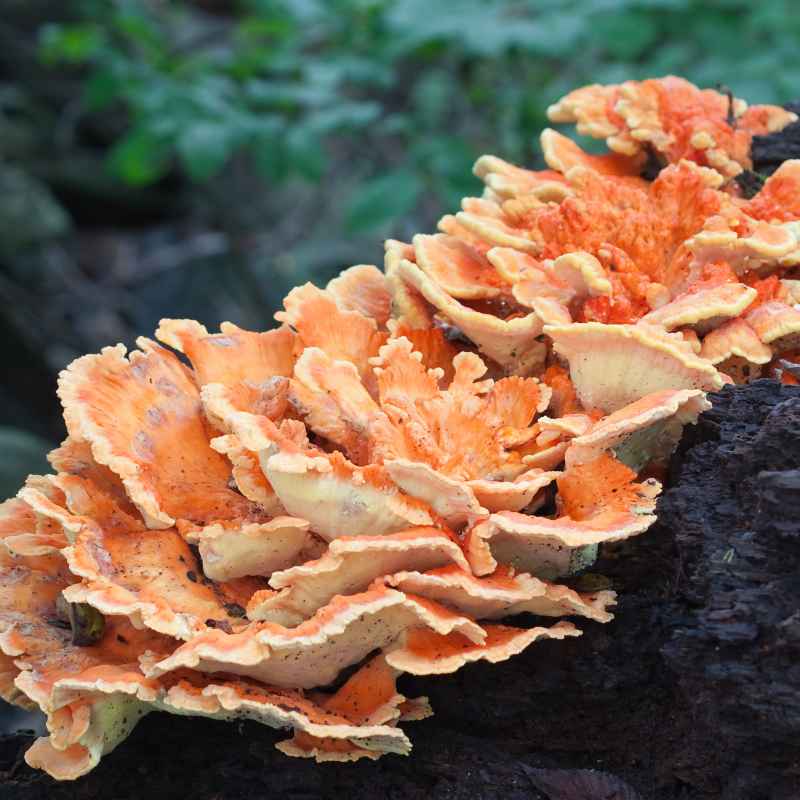
While the vibrant colors of Chicken of the Woods (Laetiporus sulphureus) often catch the eye, its growth is quite specific. It primarily thrives on dead or dying wood, particularly hardwoods like oak and chestnut. You won’t typically find it growing directly from soil or leaf litter, as it needs a woody substrate to get its start.
Understanding Chicken of the Woods Growth
Chicken of the Woods is a type of fungus. It’s known for its striking appearance. Think of bright orange or yellow shelves.
These shelves grow in clusters. They look like something from a fairytale forest. But where do they actually come from?
It’s not magic, it’s biology.
This mushroom is a parasite. Or, it can be a saprophyte. This means it feeds on living or dead wood.
It’s a bit of a wood-lover. It needs wood to get its food. This is the key to understanding where it grows.
It’s not just about luck or random chance.
The fungus starts as tiny spores. These spores float in the air. They land on a suitable spot.
This spot must have the right conditions. Then, the fungus starts to grow. It sends out fine threads.
These threads are called mycelium. The mycelium spreads through the wood. It breaks down the wood.
This is how the fungus gets its food.
When the time is right, the mushroom forms. This is the part we see. These mushrooms are reproductive structures.
They produce more spores. These spores will then spread to find new places to grow. So, the mushroom itself is just the fruiting body.
The main part of the fungus lives inside the wood.
The Ground Question: Can Chicken of the Woods Grow There?
Now, let’s get to the big question. Can Chicken of the Woods grow directly on the ground? The simple answer is: generally, no.
It’s very rare. Mushrooms need something to feed on. For Chicken of the Woods, that food is wood.
It needs a woody base.
Think about what’s on the forest floor. There are leaves. There are needles.
There’s dirt. These things break down differently than wood. They are usually too acidic.
Or, they don’t have the right nutrients. The fungus’s mycelium can’t get a good start on them. It’s like trying to build a house on sand.
It won’t be stable.
So, when you see Chicken of the Woods, look closely. It’s almost always attached to wood. This wood might be a fallen log.
It could be a stump. It might even be the base of a living tree. The wood might be very old.
It might be covered in moss. But it is wood.
Sometimes, a log can be partially buried. It might look like it’s growing from the ground. But if you dig a little, you’ll find the wood.
The mushroom is still growing from that wood. It’s a common mistake to think it grows from soil. But it’s the wood hidden beneath that matters.
This is important for foragers. You need to be sure. You must know what you are picking.
Some mushrooms can be toxic. Identifying them correctly is vital. Knowing where they grow helps with identification.
It’s a good safety practice.
My First Chicken of the Woods Hunt: A Story
I remember my first real mushroom hunting trip. It was late spring. The air was damp and smelled like earth.
I had read all about Chicken of the Woods. I was eager to find some. My friend, who knew a bit about foraging, took me into a state park.
He warned me about looking for the right things.
We walked for what felt like miles. I kept scanning the ground. I was looking for bright colors.
I saw some interesting mushrooms, but not the ones I wanted. My friend kept pointing to trees. He’d say, “Look here.
Look on this log.” I was so focused on the ground, I almost missed it.
Then, I saw it. On a huge, fallen oak log, there was a splash of vibrant orange. It was a cluster of Chicken of the Woods.
It looked like a shelf. It was perfectly positioned on the decaying wood. It was even better than the pictures.
I felt a rush of excitement, almost disbelief.
My friend smiled. He said, “See? It’s always on wood.
Even old wood.” He showed me how the mycelium had worked its way into the log. It had made the log soft in places. The mushroom was growing from the side of this massive log.
It wasn’t on the dirt at all. That day taught me a valuable lesson about fungi and their homes.
Chicken of the Woods: Key Growth Facts
Habitat: Primarily decaying wood, especially hardwoods like oak, chestnut, and cherry.
Substrate: Needs a woody base to grow. It does not grow directly from soil or leaf litter.
Appearance: Bright orange to yellow, fan-shaped or shelf-like fruiting bodies.
Season: Typically found in spring and fall, depending on local climate.
Identification: Look for its distinct color and texture on dead or dying trees and logs.
Where to Find Chicken of the Woods
So, if it’s not the ground, where does Chicken of the Woods like to hang out? The forest is its kingdom. But not just any part of the forest.
You need to find areas with plenty of dead wood. Old growth forests are great. Parks with many mature trees are good too.
Think about the type of wood. Chicken of the Woods has favorite trees. Oak trees are a top choice.
So are chestnut, walnut, and cherry trees. If you see a fallen oak log, that’s a prime spot to investigate. The older the log, the better.
It has had time to rot nicely.
Don’t forget about stumps. A large, decaying stump can host a whole colony. The wood inside might be soft and moist.
This is perfect for the fungus to thrive. Even living trees can be affected. If a tree is sick or injured, the fungus might attack it.
The mushrooms will then grow from the trunk or branches.
Your local climate plays a role. These mushrooms like moisture. They often appear after good rains.
They tend to show up in spring and fall. These are the cooler, wetter times of the year. Summers can be too dry for them.
When you’re searching, scan the bases of trees. Look at fallen logs lying on the ground. Keep an eye on the sides of standing dead trees.
These are your best bets. You are looking for that bright, unmistakable color.
Common Places to Spot Chicken of the Woods
Fallen Logs: Especially large ones made of oak or similar hardwoods. The log might be covered in moss or leaves, but the mushroom will be attached to the wood.
Tree Stumps: Old, decaying stumps are excellent habitats. Look for them near the base where moisture collects.
Dead Standing Trees: Sometimes, the mushrooms grow from the trunk or even large branches of dead trees that are still upright.
Base of Living Trees: Less common, but possible if the tree is unhealthy. Look for signs of decay at the root flare or trunk base.
Why It Prefers Wood, Not Soil
Let’s dig a bit deeper into why wood is so important. Fungi are decomposers. They are nature’s recyclers.
They break down dead organic matter. This returns nutrients to the soil. Chicken of the Woods has a specific diet.
It likes cellulose and lignin. These are found in wood.
Soil, on the other hand, is a mix of minerals, organic matter, and living organisms. While it’s rich in nutrients, it’s not the right kind for this fungus. The structure of soil is different from wood.
The threads of the fungus can’t penetrate soil easily. It can’t break it down effectively.
Think of it like a plant. A tomato plant needs soil to grow. It gets nutrients from the soil.
It anchors its roots there. A mushroom is different. It doesn’t have roots in the same way.
It has mycelium. This mycelium is like a web. It spreads through its food source.
For Chicken of the Woods, that food source is wood. It needs the structure of wood. It needs the specific compounds in wood.
Soil just doesn’t provide that. The acidity levels in soil can also be a problem. Some soils are too acidic for the fungus to survive.
So, when you’re hunting, remember this. You’re looking for the mushroom’s pantry. That pantry is made of wood.
It’s not the dirt. This is why looking on the ground will usually lead to disappointment. You need to adjust your search pattern.
Understanding Fungal Diets
Saprophytic Fungi: Feed on dead organic matter (like wood, leaf litter). Many mushrooms are saprophytes.
Parasitic Fungi: Feed on living organisms. Some Chicken of the Woods can act as parasites.
Mycoheterotrophic Fungi: Get nutrients from other fungi or plants indirectly.
Chicken of the Woods Diet: Primarily feeds on cellulose and lignin in dead wood, making it a saprophyte. It can also be parasitic on living trees.
What If You See Something Similar on the Ground?
It’s always good to be cautious. Nature is full of surprises. Sometimes, you might see something that looks like Chicken of the Woods.
But it’s growing from the ground. What could that be?
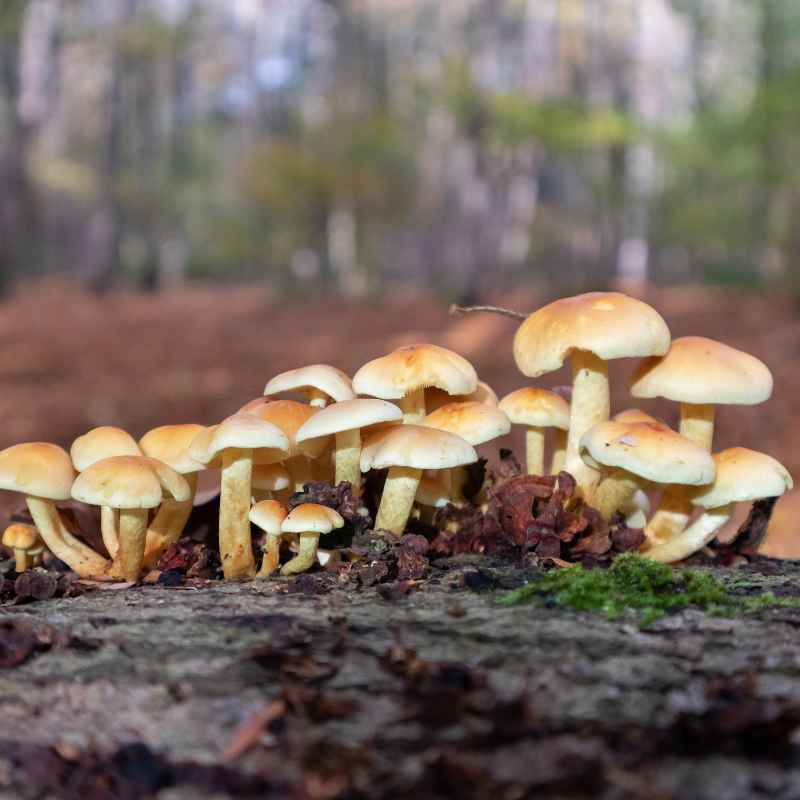
There are other types of fungi. Some might grow in leaf litter. Some might grow near trees.
It’s possible you’re seeing a different mushroom altogether. For example, some puffballs grow on the ground. Certain shelf fungi can grow at the base of trees, with their main body hidden in the soil.
A common mistake is mistaking other orange or yellow mushrooms for Chicken of the Woods. Always do your research. Use multiple identification guides.
If you are unsure, do not eat it. It is better to be safe than sorry.
Remember the key features of Chicken of the Woods: It grows in shelves. It’s bright orange or yellow. It has pores on the underside, not gills.
And, critically, it grows on wood. If any of these don’t match, be very careful.
The ground can be misleading. A large piece of decomposing wood might be buried. It might look like it’s part of the soil.
But it’s still wood. You need to confirm the substrate. This is the most important step for accurate identification.
Key Identification Features for Chicken of the Woods
Growth Pattern: Grows in overlapping shelves or rosettes.
Color: Bright orange, yellow, or salmon-pink. Color may fade with age.
Texture: Soft, fleshy, and somewhat leathery when young. Becomes firmer with age.
Underside: Features small pores, not gills. The pores are usually the same color or slightly lighter.
Attachment: Always attached to wood (logs, stumps, trees).
Real-World Scenarios: Spotting the Difference
Let’s look at a few typical scenes. Imagine you’re walking in a damp forest after a good rain. You see a bright orange cluster.
It’s at the base of a large oak tree. You get closer. You see it’s growing right out of a thick, mossy log.
The log is clearly decaying. This is a perfect spot for Chicken of the Woods.
Now, picture another scenario. You are in a more open area. There’s a lot of leaf litter.
You see some orange mushrooms scattered among the leaves. They don’t seem to be attached to anything solid. They look more like small cups or bells.
These are likely not Chicken of the Woods. They could be other species.
Consider a third case. You find a large, flat mushroom. It’s growing from a pile of wood chips in a garden.
The chips are made of bark. This is still wood. While it’s not a natural forest setting, Chicken of the Woods can grow on these wood chips if they are decomposing well.
It’s still a woody substrate.
The environment matters. Forests with plenty of dead trees and fallen logs are prime hunting grounds. Areas with sandy soil might have fewer logs.
Areas with clay soil might preserve logs longer. Understanding your local ecosystem can help predict where to look.
Habits are important too. People often look for mushrooms on the ground because it’s easy to see. They might overlook the bases of trees or hidden logs.
Shifting your focus to where the wood is will greatly improve your chances. It’s about knowing the mushroom’s preferred lifestyle.
What This Means for You as a Forager
If you plan to forage for Chicken of the Woods, this knowledge is key. It will save you time. It will also help you find more.
Stop looking on the ground. Start looking at wood.
When is it normal to find it on wood? It’s normal from late spring through fall. You’ll see it on oak, chestnut, and other hardwoods.
The mushrooms will be bright and fleshy.
When should you worry? If you’re not 100% sure of the identification. If you find something that looks like it but isn’t on wood.
If the mushroom is old, brittle, or discolored. If you are in an area that has been sprayed with pesticides or herbicides. These are all reasons to be cautious.
Simple checks: Gently touch the mushroom. Is it firm? Does it have a pleasant, earthy smell?
Look underneath for pores. Confirm it’s growing from a piece of wood. If all signs point to yes, you’re likely onto a good find.
Remember the U.S. Forest Service guidelines. They often suggest identifying at least three key features before harvesting.
For Chicken of the Woods, the presence of wood as a substrate is one of the most critical. It’s your primary clue.
When to Harvest and When to Be Cautious
Harvest: Bright, firm, young specimens growing clearly on dead hardwoods. Ensure positive identification.
Caution: If growing on conifers (can cause digestive upset). If old, dry, or brittle. If you are unsure of the species.
If found in areas with known contamination (pesticides, industrial waste).
Test: Always cook Chicken of the Woods thoroughly. Some people are sensitive even to edible species. Try a small amount first.
Quick Tips for Finding Chicken of the Woods
Here are some simple tips to boost your foraging success:
- Focus on Hardwoods: Oak and chestnut are your best friends.
- Look for Dead Wood: Fallen logs, stumps, and dead standing trees are prime real estate.
- Go After Rain: Moisture encourages mushroom growth.
- Scan Vertically: Look up the sides of logs and trees, not just down.
- Trust Your Eyes: The vibrant color is a strong indicator, but always verify.
- Bring a Field Guide: Have a reliable mushroom identification book or app handy.
- Go with an Expert: If you are new, an experienced forager can teach you invaluable lessons.
Quick Foraging Checklist
- Wood Type: Hardwood (ideal), Conifer (avoid for consumption)
- Substrate: Dead or dying wood (essential)
- Location: Forest, wooded park, areas with decomposing trees
- Condition: Fresh, firm, vibrant color
- Underside: Pores, not gills
- Smell: Mild, earthy
Frequently Asked Questions About Chicken of the Woods Growth
Can Chicken of the Woods grow on pine trees?
While Chicken of the Woods (Laetiporus sulphureus) primarily prefers hardwoods like oak, it can sometimes be found on conifers like pine. However, mushrooms growing on conifers can sometimes cause digestive upset or be less desirable in taste and texture. It’s generally recommended to stick to those found on hardwoods.
How old can a Chicken of the Woods mushroom get?
Younger mushrooms are tender and best for eating. As they age, they become tougher and more woody. The shelf-like structures can persist for a while, but the edible quality declines.
It’s best to harvest them when they are still bright and fleshy.
What is the best time of year to find Chicken of the Woods?
The best time is usually spring and fall. These seasons offer the right balance of moisture and cooler temperatures that the mushroom needs to fruit. Heavy rains followed by warm weather are ideal conditions.
Is it okay to eat Chicken of the Woods that is growing on a living tree?
It’s possible, but caution is advised. When it grows on a living tree, it means the tree is likely compromised or diseased. While the mushroom itself might be edible, it’s often considered less desirable.
Also, if the tree is unhealthy, it might have absorbed things from the environment that you don’t want to consume. Foragers often prefer those on dead wood.
What are the dangers of misidentifying Chicken of the Woods?
Misidentification is the biggest danger. There are other shelf fungi, and some can be toxic. Eating the wrong mushroom can cause anything from mild stomach upset to severe poisoning.
Always be absolutely certain of your identification before consuming any wild mushroom.
Why do some Chicken of the Woods look pinkish?
Some species, like Laetiporus cincinnatus, have a white or pale pore surface and can appear more pinkish or salmon-colored on the cap, especially when young. The classic bright orange variety is Laetiporus sulphureus. Both are generally considered edible when cooked.
Conclusion: The Wood is Key
So, to wrap it all up, the answer to whether Chicken of the Woods grows on the ground is a pretty clear no. Its life cycle is tied to wood. It needs that specific food source.
When you’re out exploring, remember to look at logs, stumps, and dead trees. That’s where the real treasure lies. Happy hunting!
Sponsored / affiliate links. As an Amazon Associate I earn from qualifying purchases. I may earn additional commission from eligible campaigns.