Can Electricity Travel Through Wood? Yes, If It’s Wet
Electricity can travel through wood, but only once moisture content climbs above roughly 20–30% — dry wood’s resistivity runs 10^14 ohms or higher, closer to glass than to copper. Treat any wood touching a downed line or exposed wiring as live regardless, since even damp or dirty wood conducts. This guide covers why moisture changes wood’s conductivity, what the real lab numbers show, and how to test wood before working near it.
Insert your Affiliate Disclosure reusable block here.
Does Wood Conduct Electricity? The Short Answer
Electricity is the flow of electrons, and materials conduct it well when electrons move freely through them — copper and aluminum are good conductors for exactly that reason. Wood is built from cellulose, hemicellulose, and lignin, none of which offer free electrons, so dry wood behaves as an insulator rather than a conductor.
That changes once water enters the picture. It isn’t the wood fiber itself that starts conducting — it’s the water absorbed into it. Water carries dissolved minerals and ions that act as charge carriers, and once enough of it soaks into the wood, those ions give electricity a path that dry cellulose never provided.
Properties of Wood
Cellulose gives wood its strength and makes up most of its structure. Hemicellulose binds the fibers together, and lignin acts as the glue holding the whole structure rigid. None of these three components are naturally conductive, which is why kiln-dried lumber is treated as a practical insulator in most household contexts.
📊 Dry wood has a volume resistivity around 10^14 to 10^18 ohm-centimeters — but that number falls to roughly 10^5 to 10^6 ohm-centimeters at the fiber-saturation point, about 26–30% moisture content. That’s a drop of nearly a billion-fold in resistance from a relatively small amount of absorbed water. — Source: USDA Forest Products Laboratory, Wood Handbook, Ch. 4
Factors Affecting Wood’s Conductivity
Moisture content is the dominant factor by far — every percentage point of added moisture below the fiber-saturation point measurably drops wood’s electrical resistance, and the effect accelerates sharply as moisture climbs past 20%. Species matters too: woods with naturally higher extractive content (certain oaks and cedars, for instance) conduct slightly better than low-extractive species at the same moisture level, though the difference is minor compared to the moisture effect.
Grain direction has a measurable but secondary effect — current moves somewhat more easily along the grain than across it, since that’s the direction the wood’s natural fiber and moisture channels run. None of this changes the core safety rule: assume any wet, damp, or dirty wood near a power source can conduct.
Best Wood Moisture Meter Pick
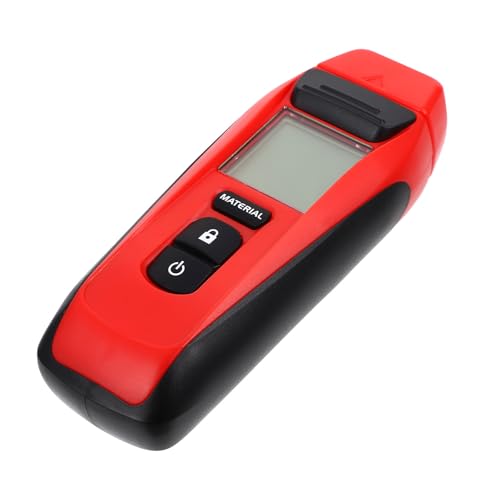
General Tools MMD4E Moisture Meter for Wood, Walls & Water Leak Detection – $37.70
Reads a 5–50% moisture range on wood, covering the fiber-saturation threshold this guide’s resistivity numbers are built around — a fast way to check a board’s moisture before working near any electrical source.
- Best for: checking deck boards, framing, or downed branches before electrical work nearby
- Why we picked it: pin-type reading matches the same resistance principle behind the lab numbers above
- Main drawback: pins leave small holes, not ideal for finished furniture
Compare more moisture meter options
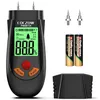 Option 1 6-Scale Digital Moisture Meter – $15.99
|
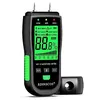 Option 2 RDINSCOS Firewood Moisture Meter – $18.89
|
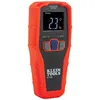 Option 3 Klein Tools ET140 Pinless Meter – $49.97
|
As an Amazon Associate we earn from qualifying purchases.
Real-World Scenarios
Dry Wood vs. Wet Wood
Dry wooden furniture, handles, and framing lumber are safe to be around under normal household voltage because dry cellulose simply doesn’t offer electricity a path. Soak that same wood — rain, a leak, ground contact — and the calculus changes; a wet wooden ladder, wet deck board, or wet tree branch can carry current well enough to shock someone.
Why a Tree Struck by Lightning Can Explode or Split
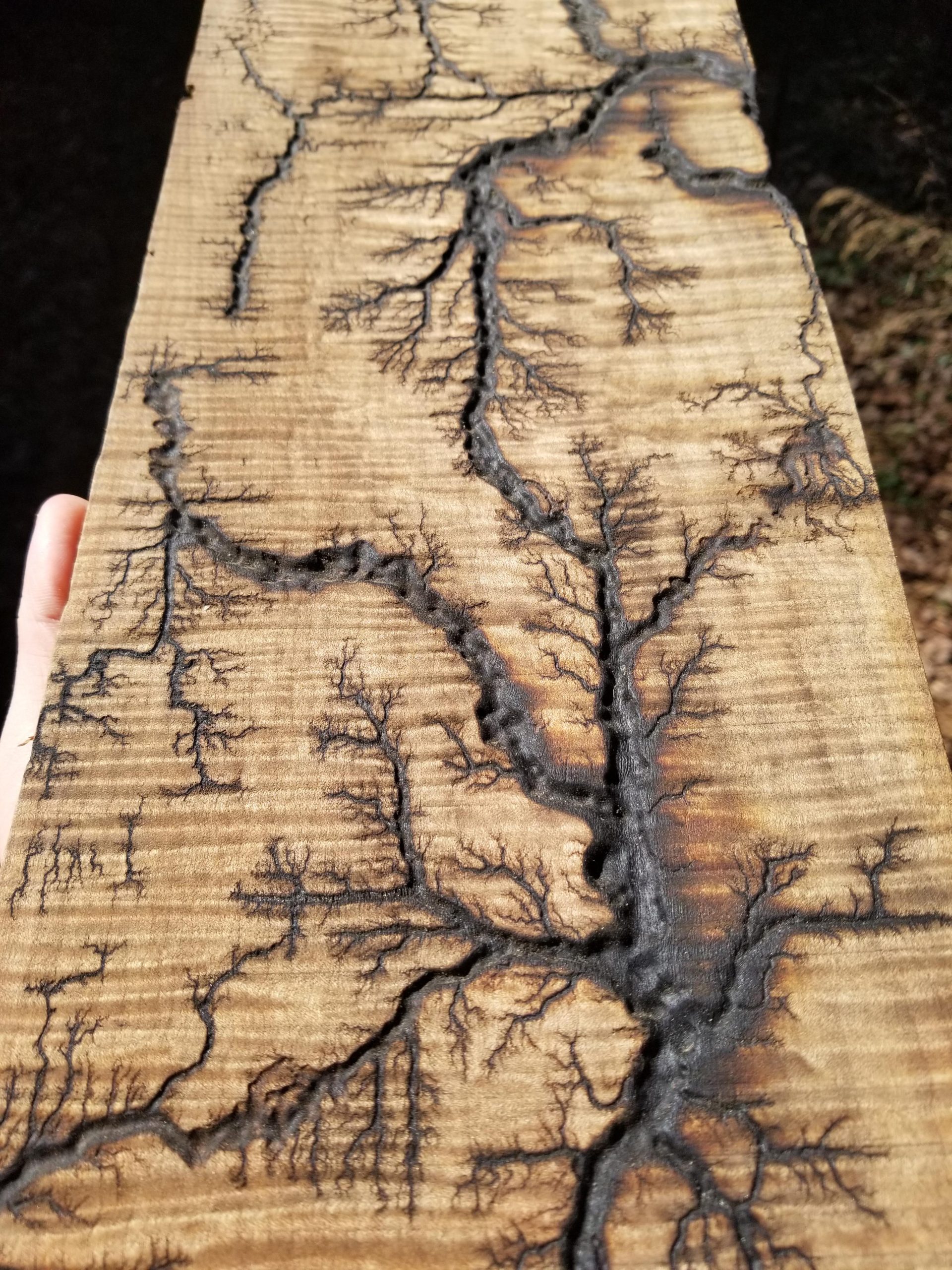
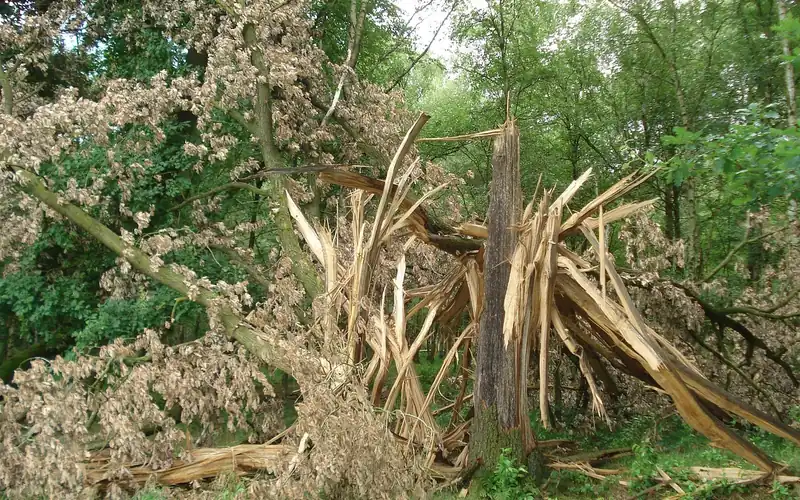
A tree isn’t uniformly conductive — the moist sapwood layer just beneath the bark is where the current actually travels, down toward the roots and into the ground. That current flash-boils the sap into steam almost instantly, and since the trunk has no pressure-release valve, the steam pressure can blow a strip of bark clean off or split the trunk outright. A dry, dead branch with no sap left often just breaks instead, since there’s no moist conductive layer to carry the charge.
📊 Stay at least 10 feet away from a downed power line and anything touching it, including a tree limb or fence — the ground within roughly 35 feet of an energized line can itself carry current. — Source: Electrical Safety Foundation International
Common Myths
The biggest myth is that wood is a universal insulator that’s always safe to use around electricity. Dry wood is a poor conductor, but that protection disappears as soon as the wood picks up moisture — and “damp” is a lower bar than most people assume, since surface dirt and grime hold moisture too.
A second myth: that a wooden tool or ladder is inherently “non-conductive” the way rubber gloves are. Rubber and dry wood are both poor conductors under normal conditions, but rubber-insulated tools are engineered and rated for a specific voltage; a wooden broom handle is not, and its protection collapses the moment it’s wet or dirty.
Safety Considerations
Keep wood dry around any electrical source, and treat any wood you can’t confirm is dry as a potential conductor rather than an automatic insulator. Rubber gloves rated for electrical work, not bare hands on a wooden tool, are the correct protection when working near live circuits.
“Even non-conductive materials like wood or cloth, can conduct electricity if even slightly wet.”
Never try to move a downed line, or anything touching one, with a wooden object of any kind — broom handles and boards have been assumed safe before and weren’t. Call your utility or 911 instead and keep everyone at least 10 feet back.
How to Check Wood’s Moisture Content Before Working Near Electricity
A pin-type moisture meter is the fastest way to check whether a board, deck, or downed branch has crossed into conductive territory before you work near it electrically.
- Insert the pins: Push the meter’s stainless steel pins fully into the wood’s surface for full contact.
- Read the percentage: Check the display against the meter’s wood scale — most read 5% to 50% moisture content.
- Compare to 20%: A reading under 20% is in the safer, low-conductivity range; readings climbing toward the high 20s and 30s mean the wood is approaching the fiber-saturation point where resistance drops sharply.
Frequently Asked Questions
Can electricity pass through wood?
Yes, but not easily when the wood is dry — dry wood’s resistivity is closer to glass than to metal. Once moisture content rises above roughly 20%, dissolved ions in the absorbed water give electricity a real path through the wood.
Is dry wood a good conductor of electricity?
No. Dry wood lacks the free electrons that conductors need, giving it a resistivity in the range of 10^14 ohms or higher — that makes it a poor conductor, functionally an insulator, under normal dry conditions.
Can wet wood conduct electricity?
Yes. Water absorbed into wood carries dissolved ions that act as charge carriers, and resistivity falls by roughly a billion-fold by the time moisture content reaches the 26–30% fiber-saturation point. This is why wet or damp wood near any live wiring should be treated as a shock hazard.
Is it true that electrical currents can flow through fibreglass and wood if they’re wet or dirty?
True. Both fibreglass and wood are good insulators when clean and dry, but moisture or surface grime on either material creates a conductive path current can follow. This is exactly why electrical safety standards call for keeping tool handles and ladders both dry and clean, not just made from a “safe” material.
Why does wood sometimes conduct electricity?
Wood conducts when it absorbs enough moisture that dissolved minerals in the water can carry charge through it. The wood fiber itself never becomes conductive — it’s the water inside it doing the work, which is why bone-dry wood stays an insulator even at high voltage until it picks up moisture.
How can you tell if a piece of wood is conductive?
A pin-type moisture meter gives the clearest answer — insert the pins and check the reading against the wood scale. Below 20% moisture content, wood stays a poor conductor; readings in the high 20s or 30s mean it’s near or past the fiber-saturation point where conductivity increases sharply.
Conclusion
Wood itself lacks the free electrons a true conductor needs, which is why dry lumber and treated wood are treated as insulators around the house. That protection depends entirely on the wood staying dry — a moisture content above roughly 20% changes the physics, and above 26–30% (the fiber-saturation point) resistance drops by nearly a billion-fold.
Never assume a downed line or exposed wire is safe because wood, cloth, or anything else is between you and it. Keep lumber and framing properly dried and maintained, check questionable wood with a moisture meter before working near it electrically, and call a professional for anything involving a downed line.
Sponsored / affiliate links. As an Amazon Associate I earn from qualifying purchases. I may earn additional commission from eligible campaigns.