Do Door Knobs Come With Strike Plates: Essential Guide
Do door knobs come with strike plates? Yes, most new door knob sets are sold with a matching strike plate included. However, it’s always wise to check the product packaging to be sure, especially if you’re buying a knob-only replacement. This guide will help you understand what to expect and what to do if yours is missing.
Ever found yourself staring at a new door knob, ready to install it, only to realize there’s no little metal piece for the door frame? It’s a common puzzle for DIYers! You might wonder, “Do door knobs come with strike plates?” The short answer is usually yes, but understanding the specifics can save you a trip to the hardware store. This guide is here to clear up any confusion, so you can confidently tackle your door knob project.
We’ll walk through what to expect when you buy a new door knob, why the strike plate is so important, and what to do if yours is missing or damaged. Let’s get your door working smoothly again!
Understanding Door Hardware: Knobs and Strike Plates
When you’re upgrading or replacing a door knob, it’s easy to focus just on the shiny new handle. But a door knob system is made up of a few key parts that work together to keep your door secure and functional. Two of the most important pieces are the door knob itself (including the latch mechanism) and the strike plate.
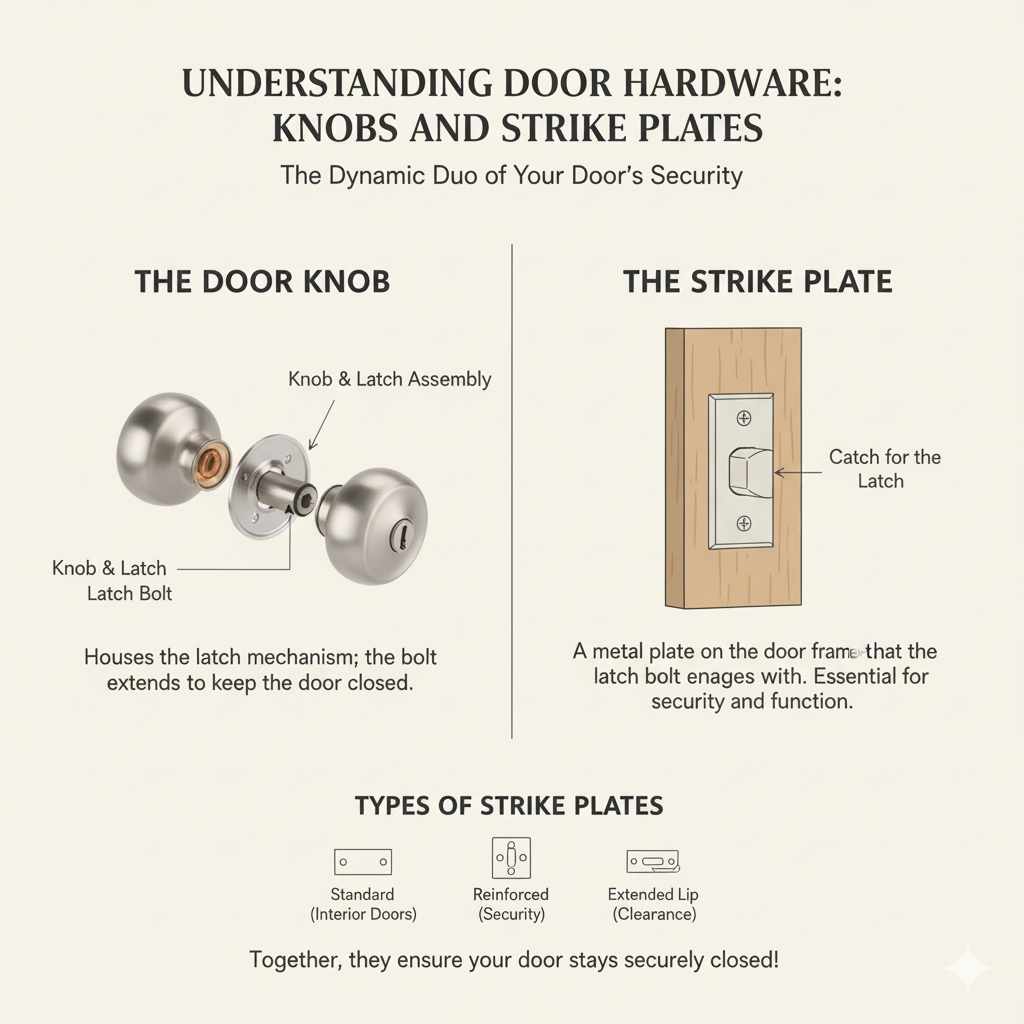
The door knob is what you interact with directly. It houses the latch that retracts when you turn the knob, allowing the door to open. The latch has a bolt that extends out when the door is closed, fitting into a hole. This is where the strike plate comes in.
What is a Strike Plate?
A strike plate is a small, typically metal, plate that is installed on the door frame. It has a hole or a slot that the latch bolt from the door knob extends into when the door is closed. Think of it as the “catch” for your door’s latch. Without a properly installed strike plate, the latch bolt has nothing to engage with, and the door won’t stay closed securely.
The standard strike plate is simple: a flat metal piece with a hole. However, there are also “reinforced strike plates” and “extended lip strike plates” designed for added security. These are often thicker, have longer screws that go into the door frame studs, or have an extended lip to help prevent kicking or prying the door open. For most interior doors, a standard strike plate is perfectly adequate. For exterior doors or doors where security is a higher concern, a reinforced option might be better.
Do Door Knobs Come With Strike Plates? The Simple Answer
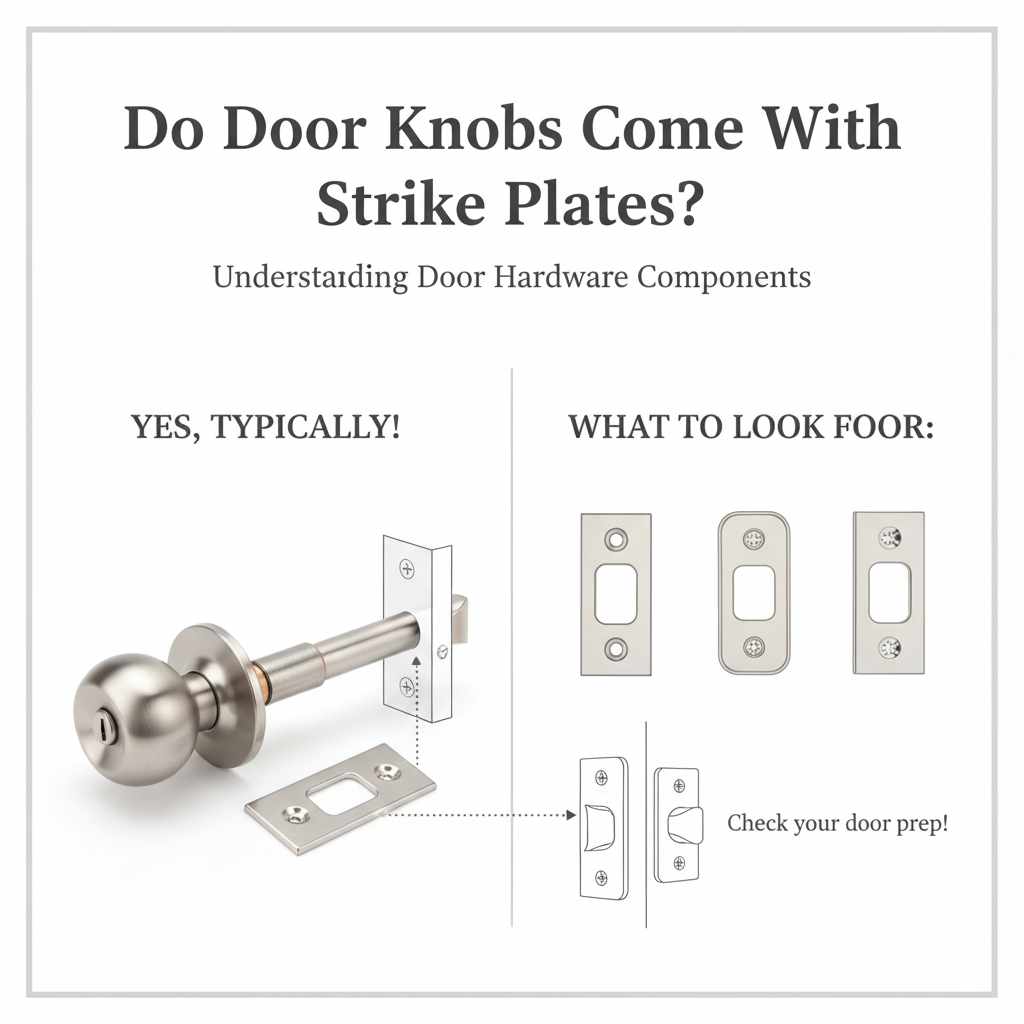
For the vast majority of new door knob sets you purchase, the answer is yes, a strike plate is included. Manufacturers know that the strike plate is an essential component for the door knob to function. It’s rare for a complete new door knob assembly to be sold without one.
When you buy a new door knob kit, you can generally expect to find the following items inside the box:
- The interior and exterior knob assemblies.
- The latch mechanism (the part that goes into the edge of the door).
- Screws for mounting the knob and attaching the latch.
- A strike plate for the door frame.
- Installation instructions.
This is true for most common types of door knobs, including:
- Passage knobs: Used on interior doors where you need privacy but no lock, like closets or hallways.
- Privacy knobs: Used on interior doors like bathrooms or bedrooms, featuring a lock mechanism.
- Dummy knobs: These are just the handle and don’t have a latch or lock mechanism; they’re usually for decorative purposes on closet doors or double doors where only one side needs a handle. Dummy knobs might not always come with a strike plate, as they aren’t functional latches.
- Keyed entry knobs: Used on exterior doors, these have a key cylinder on the outside and a thumb turn on the inside.
When a Strike Plate Might Not Be Included
While it’s rare, there are a few scenarios where a strike plate might not be in the box:
- Buying a Knob Only: If you’re purchasing just the knob mechanism itself (perhaps you’re replacing a broken knob but keeping the old latch and strike plate), then it won’t come with a strike plate.
- Older or Specialty Hardware: Very old, antique, or highly specialized door hardware might be sold in pieces.
- Clearance or Incomplete Packaging: Occasionally, a box might be damaged, or a part could have been missed during manufacturing or packaging.
The best practice is always to check the product description or the packaging itself before you buy. Most packaging will clearly list what’s included.
Why is the Strike Plate So Important?
The strike plate is more than just a piece of metal; it’s crucial for your door’s security and functionality. Let’s break down why:
- Door Security: The strike plate provides a solid anchor point for the latch bolt. When the door is closed, the latch extends into the hole in the strike plate. This prevents the door from swinging open unintentionally and acts as the first line of defense against forced entry. A well-installed strike plate, especially one with long screws, makes it much harder to kick in a door.
- Door Alignment: It helps ensure the door is properly aligned with the frame. The strike plate guides the latch bolt, making it easier to close the door smoothly.
- Smooth Operation: A correctly sized and positioned strike plate allows the latch to engage and disengage without sticking, leading to a better user experience.
- Protection for the Door Frame: The strike plate protects the wood of your door frame from wear and tear caused by the latch bolt repeatedly engaging and disengaging.
The American National Standards Institute (ANSI) has standards for door hardware, including strike plates, to ensure they perform reliably. These standards often dictate the size, shape, and screw hole placement for different types of doors and hardware. You can learn more about building codes and hardware standards from resources like the International Code Council (ICC), which develops model building codes used across the United States.
What to Do If Your New Door Knob Doesn’t Come With a Strike Plate
Don’t panic if you open your new door knob box and find it missing the strike plate! It’s a fixable situation. Here’s what you can do:
1. Double-Check the Packaging
Before anything else, carefully look through all the packaging materials. Sometimes, the strike plate can be tucked away in a smaller plastic bag or hidden within the cardboard inserts. Ensure you haven’t accidentally discarded it.
2. Identify the Type of Strike Plate You Need
Most new door knobs come with a standard “square-cornered” strike plate. However, there are variations:
- Square Corner: The most common type, with sharp, 90-degree corners.
- Radius Corner: Has rounded corners, often used with older doors or specific knob styles.
- Full Lip: Has an extended lip that wraps around the edge of the door jamb.
- Jamb (or Box) Strike: A simpler plate with just a hole, often for different latch types.
Compare the latch mechanism of your new knob to the old one. The strike plate needs to match the shape of the latch bolt’s end. If your old strike plate is still functional and the correct shape, you might be able to reuse it.
3. Purchase a Replacement Strike Plate
If you can’t find one or need a new one, strike plates are readily available at hardware stores and home improvement centers. They are also very affordable.
When buying a replacement, bring your old strike plate with you if possible, or at least take clear photos of it and the latch mechanism. Pay attention to:
- Dimensions: Measure the height and width of the old plate.
- Screw Hole Placement: Note the distance between the screw holes.
- Corner Shape: Square or radius.
- Latch Opening Shape: Does it match the bolt on your new knob?
You can often buy universal strike plates that fit most standard latches, or you can find specific replacements. Many hardware stores also sell “door knob installation kits” which include a new latch, strike plate, and screws, which can be handy.
4. Consider an Upgraded Strike Plate for Security
For exterior doors, or even interior doors where you want extra durability, consider purchasing a reinforced strike plate. These are typically:
- Thicker Metal: More resistant to bending or breaking.
- Longer Screws: Often come with 3-inch screws that penetrate the door frame and reach the wall studs, providing a much stronger anchor. This is a significant security upgrade.
- Extended Lip: Helps prevent the door from being kicked or pried open.
Installing a reinforced strike plate is a simple DIY project that can greatly improve your door’s security. You can find excellent resources on home security from government sites like CISA (Cybersecurity & Infrastructure Security Agency), which offers general security advice applicable to physical home protection.
Table: Common Door Knob Hardware Components
Understanding the parts helps when troubleshooting or buying replacements.
| Component | Description | Function | Typically Included with New Knob? |
|---|---|---|---|
| Door Knob/Lever | The external and internal handle. | Operates the latch mechanism. | Yes |
| Latch Mechanism | The spring-loaded bolt that extends from the edge of the door. | Retracts to open the door; extends to keep it closed. | Yes |
| Strike Plate | Metal plate on the door frame with a hole for the latch bolt. | Catches the latch bolt to secure the door; protects the frame. | Usually Yes |
| Spindle | A square rod that connects the interior and exterior knobs. | Transmits the turning motion from one knob to the other. | Yes |
| Screws | Various screws for mounting the knob and attaching hardware. | Hold everything together. | Yes |
Installing or Replacing a Strike Plate: A Quick Guide
If you need to install a new strike plate or replace an old one, it’s a straightforward process. Here’s how:
Tools You’ll Need:
- Screwdriver (Phillips head or flat head, depending on the screws)
- New strike plate (and screws, if not provided)
- Pencil
- Optional: Chisel and hammer (if the mortise needs adjustment)
Steps:
- Remove the Old Strike Plate: Unscrew the old strike plate from the door frame. If it’s difficult to remove, gently pry it loose with a flathead screwdriver.
- Check the Fit: Hold the new strike plate in place. It should fit snugly into the cutout (mortise) in the door frame.
- Align the New Strike Plate: Position the new strike plate so that the hole is centered with the latch bolt when the door is closed. You want the latch bolt to slide smoothly into the strike plate opening without rubbing against the edges.
- Mark and Prepare (if necessary): If the new strike plate doesn’t fit perfectly into the old mortise, you might need to make some minor adjustments. Use a pencil to trace the outline of the new plate. If the mortise is too deep or too wide, you may need to use a chisel to carefully remove a small amount of wood. If it’s too shallow, you might need to add shims behind the plate.
- Screw in the New Strike Plate: Once aligned, screw the new strike plate into the door frame. Start with one screw to hold it in place, then add the others. Ensure the screws are snug but don’t overtighten, which could strip the wood.
- Test the Door: Open and close the door several times. Check that the latch bolt engages smoothly with the strike plate and that the door closes and stays closed securely. If it sticks or doesn’t latch properly, you may need to slightly adjust the strike plate’s position or the size of the opening.
Pro Tip for Security:
If you’re installing a reinforced strike plate with longer screws, drill pilot holes first to make screwing easier and prevent the wood from splitting. Ensure these long screws go deep enough to catch the wall studs behind the door frame. This makes a huge difference in preventing forced entry.
When to Replace Your Strike Plate
You might need to replace your strike plate even if your door knob came with one. Common reasons include:
- Damage: The old strike plate might be bent, cracked, or have a widened opening from wear and tear or attempted forced entry.
- Misalignment: If your door doesn’t close properly, or the latch doesn’t engage smoothly, the strike plate might be slightly out of position. Sometimes, adjusting its position or replacing it can fix the issue.
- Upgrading Security: As mentioned, switching to a reinforced strike plate is a common and effective security upgrade for exterior doors.
- Aesthetic Changes: If you’re changing the finish of your door knobs (e.g., from brass to brushed nickel), you might want a matching strike plate for a cohesive look.
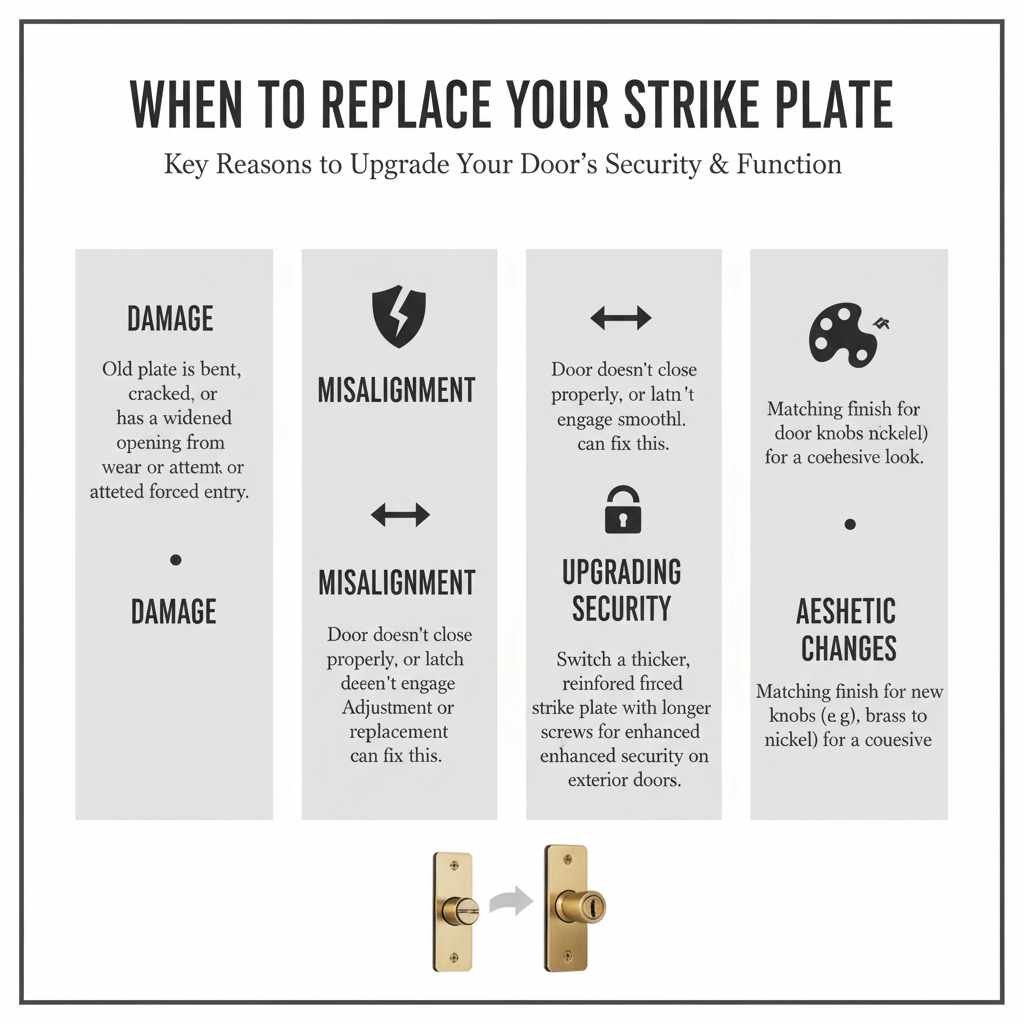
Table: Common Strike Plate Types and Their Uses
Here’s a quick look at different strike plate styles.
| Type | Description | Best For | Key Features |
|---|---|---|---|
| Standard (Square Corner) | Flat metal plate with a square hole for the latch. | Most interior doors, standard knob sets. | Simple, common, easy to install. |
| Radius Corner | Similar to standard, but with rounded corners. | Doors with rounded latch cutouts, some older hardware. | Matches rounded edges, aesthetically pleasing. |
| Full Lip Strike | Has an extended lip that wraps around the door jamb. | Doors where latch needs extra guidance, some older styles. | Helps guide latch, can offer slightly more protection. |
| Reinforced Strike Plate | Thicker metal, often with multiple or longer screw holes. | Exterior doors, doors needing enhanced security. | Uses long screws into studs, significantly increases strength. |
| Extended Lip Strike Plate | Has a longer, often angled lip extending from the plate. | High-security applications, preventing kick-ins. | Designed to resist prying and kicking forces. |
Frequently Asked Questions (FAQ)
Here are some common questions homeowners have about door knobs and strike plates:
Q1: Can I reuse my old strike plate with a new door knob?
A: Yes, you often can, as long as the old strike plate is in good condition, not damaged, and the shape of its opening matches the latch bolt of your new door knob. You may need to reuse the old screws if the new ones don’t fit the existing holes.
Q2: My new door knob latch doesn’t line up with the strike plate hole. What should I do?
A: This is usually a sign that the strike plate is not positioned correctly. You might need to loosen the screws and slightly adjust the plate’s position up, down, left, or right. If the hole is too small, you may need to file it larger. If the plate is too far out of alignment, the mortise in the door frame might need to be chiseled out to accommodate the plate in the correct position.
Q3: What are the long screws that come with some strike plates for?
A: These are for reinforced strike plates. The long screws (often 3 inches) are designed to go through the door frame and anchor directly into the wall studs behind it. This provides much greater resistance to forced entry compared to standard screws that only go into the softer wood of the door frame.
Q4: How do I know if I have a security strike plate?
A: Security strike plates are typically made of thicker metal and will have longer screws. They might also have an extended lip. The key feature is their ability to anchor deeply into the wall studs, making the door much harder to kick or pry open.
Q5: My door knob is hard to turn, but the latch is engaging. Is the strike plate the problem?
A: Possibly. If the strike plate hole is too small or not aligned correctly, it can put pressure on the latch bolt even when the door is open, making the knob stiff. Check the alignment and ensure the latch bolt slides freely into the opening. Sometimes, the issue might be with the latch mechanism itself or the alignment of the door knob spindle.
Q6: Where can I buy a replacement strike plate?
A: You can find replacement strike plates at most hardware stores, home improvement centers (like Home Depot or Lowe’s), and online retailers. Bringing your old one or clear photos will help you find the exact match you need.
Conclusion
Navigating the world of door hardware can seem a bit daunting, but understanding the basics of what’s included and what’s essential makes all the difference. We’ve learned that, generally, yes, new door knobs do come with strike plates because they are a critical part of the system. However, it’s always a good idea to verify this when purchasing.
We’ve also seen that the strike plate is vital for both the smooth operation and the security of your door. Whether you’re installing a brand-new knob or just replacing a worn-out strike plate, the process is manageable for most DIYers. Remember to check the type of strike plate you need, consider security upgrades like reinforced plates for exterior doors, and don’t hesitate to bring your old hardware to the store for guidance.
With this knowledge, you can confidently approach your next door hardware project, ensuring your doors are secure, functional, and look great. Happy DIYing!