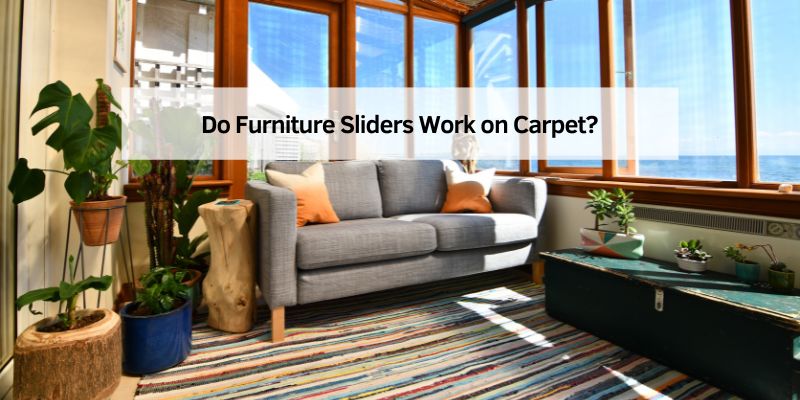
Do Furniture Sliders Work on Carpet?
Furniture sliders work on carpet — plastic discs glide best on low-pile carpet under ¼ inch, while felt or heavy-duty sliders handle high-pile carpet up to ¾ inch without sinking. Using the wrong type can flatten fibers or exceed a slider’s weight rating, which runs 250 to 1,000 lbs per leg depending on material. This guide covers matching sliders to pile height, weight capacity by type, and the exact steps to move furniture without carpet damage.
What Are Furniture Sliders, and Why Do They Matter?
Furniture sliders are small, flat devices you place under furniture legs to help move heavy items with ease. Think of them as little helpers that reduce friction between your furniture and the floor. They come in various shapes, sizes, and materials, like plastic, felt, or rubber. I first discovered sliders when I needed to move a bulky couch across my living room without scratching my floors or pulling a muscle.
Why do they matter? Moving furniture without sliders on carpet can be a nightmare. Carpets create resistance, making it hard to slide heavy objects. Sliders act like skates, letting your furniture glide smoothly. They also protect your carpet from tears or wear and save you from back pain. I’ve found they’re a game-changer for anyone who loves rearranging their space or needs to move furniture frequently.
How Do Furniture Sliders Work on Carpet?
Carpets are tricky because they’re soft, textured, and create more friction than hard floors like wood or tile. When I first tried sliders, I was skeptical. Would they really work on my thick, shaggy carpet? Here’s what I learned about how they function.
Sliders work by creating a smooth surface that reduces the grip between furniture and carpet. Hard plastic sliders, for example, glide over carpet fibers, while felt sliders are gentler and prevent snagging. The key is choosing the right slider for your carpet type. Low-pile carpets (short, tightly woven fibers) are easier to work with, while high-pile or plush carpets (long, fluffy fibers) need sturdier sliders. I’ve tested both, and the difference is noticeable. On my low-pile carpet, plastic sliders worked like a charm. On my plush bedroom carpet, I needed heavy-duty sliders with a larger surface area.
The weight of the furniture also matters. Heavier items like sofas or bookcases need sliders designed to handle the load without sinking into the carpet. I once tried using cheap sliders under a massive oak dresser, and they buckled under the weight. Lesson learned: match the slider to the job.
Types of Furniture Sliders for Carpet
Not all sliders are created equal. Through trial and error, I’ve found that certain types work better on carpet. Here’s a breakdown of the main types I’ve used and what they’re best for.
- Plastic Sliders: These are hard, smooth discs, often made of durable plastic or Teflon. They’re great for low-pile carpets because they glide easily over the surface. I used plastic sliders under my dining table, and it moved like it was on ice. They’re affordable and widely available but may struggle on thick, shaggy carpets.
- Felt Sliders: These have a soft, padded surface that protects carpets from damage. They’re ideal for delicate or high-pile carpets. I used felt sliders under my bedframe, and they worked well without snagging the fibers. However, they’re not as durable for very heavy furniture.
- Rubber Sliders: These are grippy on top to hold furniture legs but smooth on the bottom for sliding. They’re versatile and work on both low- and high-pile carpets. I found them perfect for my recliner, which has uneven legs.
- Heavy-Duty Sliders: Designed for large, heavy furniture like pianos or armoires, these are wider and sturdier. I used them to move a bookcase stuffed with books, and they didn’t budge under the weight. They’re pricier but worth it for big jobs.
Here’s a quick table to sum it up:
| Slider Type | Best For | Pros | Cons |
|---|---|---|---|
| Plastic Sliders | Low-pile carpets | Affordable, smooth gliding | Not ideal for high-pile carpets |
| Felt Sliders | High-pile or delicate carpets | Gentle on carpets, easy to use | Less durable for heavy furniture |
| Rubber Sliders | Mixed carpet types | Versatile, good grip on furniture | Can be pricey |
| Heavy-Duty Sliders | Large, heavy furniture | Strong, reliable for big loads | More expensive, bulkier |
Best Carpet Slider Pick
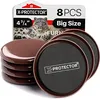
X-PROTECTOR Furniture Sliders for Carpet (8-Pack) – $12.99
This is the same X-Protector brand mentioned in our brands section above — the 4¾-inch size matches the heavy-duty category this guide recommends for sofas and dressers on high-pile carpet.
- Best for: heavier furniture on medium-to-high-pile carpet
- Why we picked it: plastic-and-foam build matches the weight-distribution rule this guide covers
- Main drawback: the round 4¾-inch shape needs centering under square legs, unlike the square style
Compare more carpet slider options
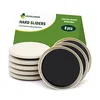 Budget Pick COVERCORNER Round Furniture Sliders (8-Pack) – $8.99
|
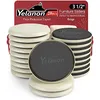 Whole-House Pack Yelanon Heavy Duty Furniture Sliders (20-Pack) – $15.99
|
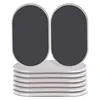 Heavy-Duty Pick Large Oval Furniture Sliders 9.5in (8-Pack) – $20.89
|
As an Amazon Associate we earn from qualifying purchases.
Choosing the Right Furniture Sliders for Your Carpet
Picking the right sliders can feel overwhelming with so many options. I’ve made the mistake of grabbing the cheapest ones and regretting it. Here’s what I consider now to make sure I get the best sliders for my carpet.
First, check your carpet type. Is it low-pile, high-pile, or somewhere in between? Low-pile carpets are flat and dense, like those in offices. High-pile carpets are fluffy, like shag rugs. I measure the pile height by pressing a ruler into the carpet. If it’s less than ½ inch, it’s low-pile; over ¾ inch, it’s high-pile. This helps me choose sliders that won’t sink or snag.
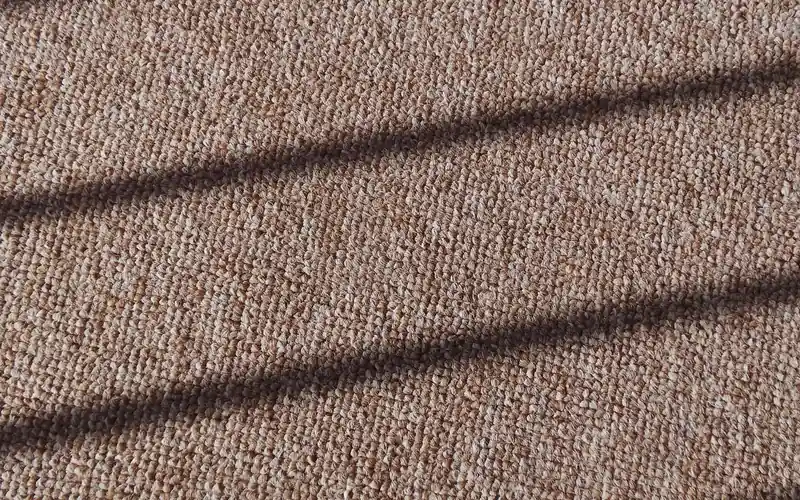
📊 Carpet pile under ¼ inch (6mm) is classified low-pile, and anything over ½ inch (12mm) is high-pile — that exact cutoff is what determines whether a plastic slider glides cleanly or a felt/heavy-duty slider is needed instead. — Source: Hunker, 2026
Next, consider the furniture’s weight and size. A lightweight chair needs smaller sliders, while a heavy sectional sofa needs larger, heavy-duty ones. I once used small sliders under a big couch, and they got crushed. Check the weight capacity on the slider’s packaging—most list this clearly.
Shape matters too. Round sliders are great for even weight distribution, while square ones work better for rectangular legs. I prefer adhesive sliders for permanent use (like under my bed) and non-adhesive ones for temporary moves. Finally, look for sliders with a smooth bottom for carpets to avoid catching fibers.
Furniture Sliders vs. Coasters vs. Caster Wheels for Carpet
Sliders aren’t the only carpet-protection option, and they’re not always the right one. Coasters and caster wheels solve different problems — here’s how the three compare for carpeted floors.
| Option | What It Does | Best For |
|---|---|---|
| Furniture Sliders | Reduces friction so you can push/pull furniture across carpet | One-time or occasional moves — rearranging a room |
| Furniture Coasters | Stays stationary under a leg, spreading weight to stop dents | Furniture that stays put — sofas, beds, bookcases |
| Caster Wheels | Adds rolling wheels to the furniture itself | Furniture you move often — TV stands, kitchen islands |
If your furniture mostly stays in place and you just want to stop carpet dents, furniture coasters do that job better than sliders, since sliders are built to move, not to sit still under constant weight. If you’re deciding between sliders for carpet versus sliders made for hardwood floors, the difference comes down to the base material — carpet sliders use a harder, slicker bottom to cut through pile, while hardwood sliders use a softer bottom to avoid scratching the finish.
How to Use Furniture Sliders on Carpet
Using sliders is pretty straightforward, but I’ve learned a few tricks to make it easier. Here’s my step-by-step process based on my experience.
- Clear the Area: Move any rugs, toys, or obstacles. I vacuum the carpet first to remove dirt that could scratch the sliders or furniture.
- Lift the Furniture: This is the hardest part. For heavy pieces, I ask a friend to help or use a lever (like a crowbar) to lift one side. Place a towel under the legs to avoid scratching the carpet while lifting.
- Place the Sliders: Slide the sliders under each leg or corner. Make sure they’re centered. For adhesive sliders, press firmly to stick them to the furniture. I used non-adhesive sliders under my sofa and just slipped them under each corner.
- Push or Pull Gently: Start moving the furniture slowly. I push from the lower part of the furniture to keep it stable. If it feels stuck, check if a slider has shifted.
- Check the Carpet: After moving, I inspect the carpet for any dents or damage. If the carpet is flattened, I fluff it up with a fork or steam it to restore the pile.
One tip: don’t rush. I once pushed too fast and knocked a slider out of place, making the furniture wobble. Take your time, and it’ll go smoothly.
Benefits of Using Furniture Sliders on Carpet
I can’t stress enough how much sliders have changed my furniture-moving game. Here are the biggest benefits I’ve noticed.
- Ease of Movement: Sliders make moving heavy furniture feel effortless. I moved my entire living room set in an afternoon without breaking a sweat.
- Carpet Protection: Carpets are expensive, and dragging furniture can tear fibers or leave marks. Sliders prevent this. My carpets still look brand-new after years of rearranging.
- Time-Saving: Without sliders, moving furniture takes forever. With them, I can rearrange a room in minutes.
- Back-Saving: No more straining my back or begging friends for help. Sliders let me move things solo, which is a huge win.
- Versatility: I use sliders for all sorts of furniture—beds, couches, tables, even appliances. They’re a must-have for any home.
Common Challenges and How to Overcome Them
I’ve hit a few bumps along the way using sliders on carpet. Here’s what I’ve faced and how I dealt with it.
- Sliders Sinking into High-Pile Carpet: On my shaggy rug, small sliders sank under heavy furniture. I switched to larger, heavy-duty sliders, and the problem was solved.
- Furniture Tipping: Uneven legs can make furniture wobble. I make sure all sliders are the same type and placed securely. For wobbly pieces, I add extra sliders for balance.
- Sliders Slipping Off: Cheap sliders sometimes slide out from under furniture. I now use sliders with grippy tops or adhesive backs to keep them in place.
- Carpet Dents: Heavy furniture can leave dents in carpets, even with sliders. I leave sliders under furniture I move often to reduce dents, and I steam the carpet to fluff it up afterward.
“On my shaggy rug, small sliders sank under heavy furniture. I switched to larger, heavy-duty sliders, and the problem was solved.”
If you hit a snag, don’t give up. Experiment with different sliders or techniques. I’ve found that patience and the right tools fix most issues.
My Favorite Furniture Slider Brands for Carpet
After testing a bunch of sliders, I have a few go-to brands that work great on carpet. Here are my top picks based on personal use.
- SuperSliders: These are versatile and come in various sizes. Their plastic sliders are perfect for low-pile carpets, and their heavy-duty options handle bigger furniture. I used them for my dining set, and they glided smoothly.
- EZ Moves: These are pricier but worth it for heavy furniture. Their wide, sturdy sliders worked wonders on my high-pile bedroom carpet. They also come with a lifting tool, which I found super handy.
- X-Protector: These felt sliders are my go-to for delicate carpets. They’re gentle and don’t snag fibers. I use them under my coffee table, and they’ve held up for years.
- GorillaGrip: Their rubber sliders are great for mixed carpet types. I used them under my recliner, and they stayed put even on uneven legs.
I recommend checking reviews and starting with a variety pack to test what works best for your home.
Tips for Maintaining Your Carpet After Using Sliders
Using sliders protects your carpet, but you still need to care for it. Here’s what I do to keep my carpets looking great.
- Vacuum Regularly: Dirt can get trapped under sliders, so I vacuum before and after moving furniture.
- Fluff the Pile: If sliders flatten the carpet, I use a fork or a carpet rake to lift the fibers. A handheld steamer works wonders too.
- Check for Wear: I inspect my carpet for any snags or tears after moving heavy items. If I spot damage, I trim loose fibers with scissors.
- Rotate Sliders: For furniture I move often, I leave sliders in place but rotate them every few months to prevent wear on one spot.
Taking these steps keeps my carpets in top shape, even with frequent furniture rearranging.
Frequently Asked Questions
Can furniture sliders damage my carpet?
No, sliders are designed to protect carpets. They reduce friction, preventing tears or wear. Just make sure to use the right type, like felt sliders for delicate carpets. I’ve never had damage when using sliders correctly.
Do I need different sliders for different carpet types?
Yes, it helps. Plastic sliders work great on low-pile carpets, while felt or heavy-duty sliders are better for high-pile carpets. I match the slider to my carpet’s pile height for the best results.
Can I leave furniture sliders under furniture permanently?
Yes, you can! I leave adhesive sliders under my bed and sofa for easy moving. Just check them occasionally for wear and replace them if needed to keep your carpet safe.
Are furniture sliders reusable?
Most are, yes. I’ve reused plastic and rubber sliders multiple times without issues. Felt sliders may wear out faster, so I keep extras on hand for heavy use.
How do I know if my furniture is too heavy for sliders?
Check the weight capacity on the slider’s packaging. For very heavy items, like pianos, use heavy-duty sliders. I learned the hard way that cheap sliders can’t handle massive furniture.
Can I use sliders on rugs over carpet?
Yes, but it’s trickier. Rugs can bunch up, so I secure the rug with tape or weights first. Use sturdy sliders to avoid sinking into the rug’s fibers.
Do felt sliders work on carpet, or are they only for hardwood floors?
Felt sliders work on carpet, but they’re gentler than plastic and best reserved for delicate or high-pile carpet where a hard plastic edge could snag fibers. On low-pile carpet, plastic or Teflon sliders glide more consistently than felt, which some manufacturers design primarily for hardwood use.
Conclusion
So, do furniture sliders work on carpet? Absolutely — when you match the slider to your carpet’s pile height and your furniture’s weight. I’ve moved everything from lightweight chairs to heavy bookcases across my carpets, and sliders have made it so much easier while keeping the fibers intact. Pick the right type, follow the steps above, and you’ll wonder how you ever moved furniture without them.
Sponsored / affiliate links. As an Amazon Associate I earn from qualifying purchases. I may earn additional commission from eligible campaigns.