Does Dark or Light Paint Hide Imperfections Better: Essential Guide
Quick Summary:
Generally, dark paint hides wall imperfections better than light paint because it absorbs light, making shadows less noticeable. However, the finish (sheen) of the paint plays a crucial role. A matte or eggshell finish in either dark or light colors is best for concealing minor flaws.
Hey there, fellow home improvers! Md Meraj here, your go-to guide for making those DIY projects feel less like a chore and more like a triumph. Ever stared at a freshly painted wall and then noticed every tiny bump, ding, or hairline crack that suddenly popped out? It’s a common frustration, and picking the right paint color can make a huge difference. We all want that smooth, flawless finish, right? Well, the good news is you don’t need to be a pro painter to achieve it. The secret often lies in understanding how light and color interact with your walls. Today, we’re diving deep into whether dark or light paint is your best bet for hiding those little imperfections. Get ready to learn how to choose the perfect shade and finish for a beautiful, seamless look in your home!
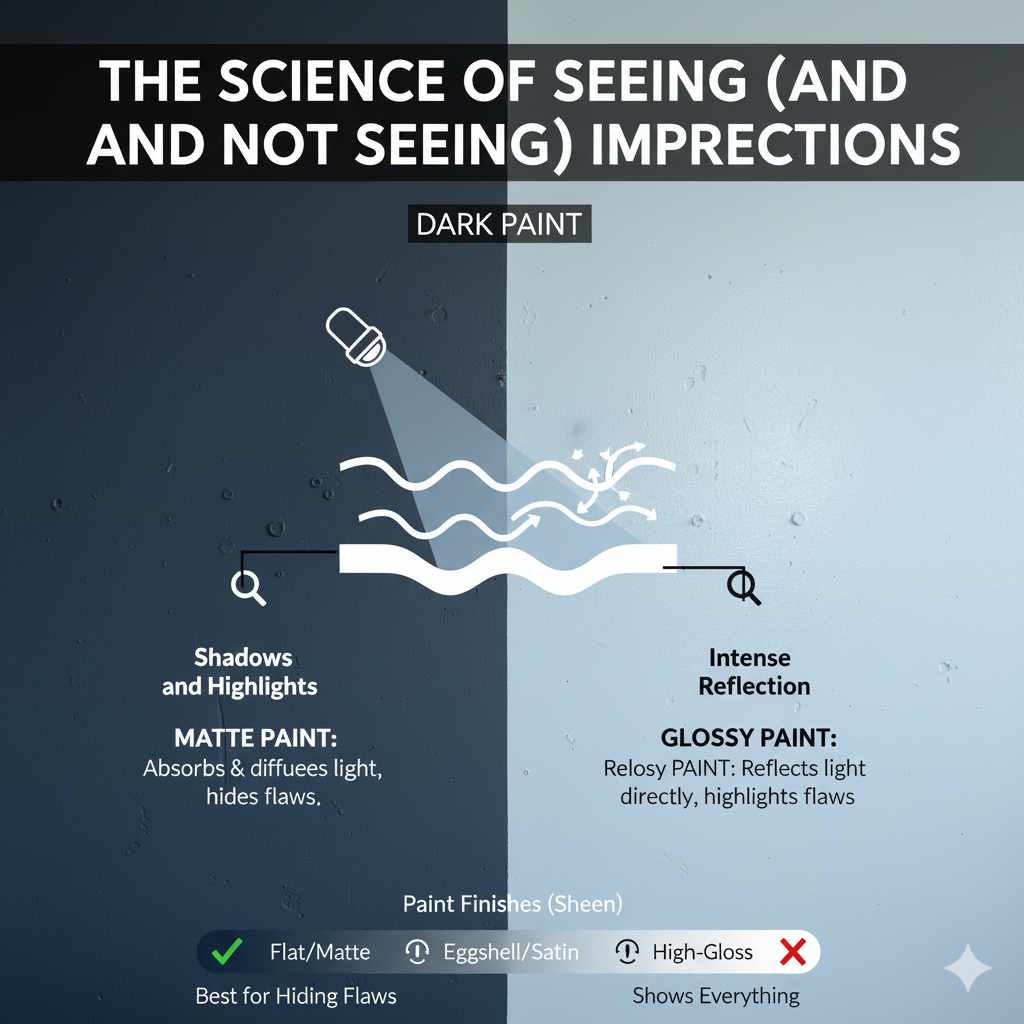
The Science of Seeing (and Not Seeing) Imperfections
It might seem like magic, but there’s a simple science behind why certain paint colors and finishes are better at camouflaging wall flaws. It all comes down to how light behaves. When light hits a surface, it can be absorbed, reflected, or scattered. Imperfections on a wall, like small dents, nail pops, or uneven textures, create tiny shadows and highlights as light bounces off them. These variations in light and shadow are what make those flaws visible to our eyes.
Think about it like this: when you shine a flashlight directly at a bumpy surface, the bumps cast distinct shadows. If you were to spread that light out more softly, the shadows wouldn’t be as harsh, and the bumps would be harder to spot. Paint color and, more importantly, paint finish, influence how light interacts with your walls in a similar way.
How Light Affects Our Perception
Our eyes are naturally drawn to contrasts. Where light hits a surface directly, it appears brighter. Where it falls into a slight dip or shadow, it appears darker. These subtle shifts are what reveal imperfections. A perfectly smooth wall reflects light evenly, creating a uniform appearance. A wall with minor flaws, however, will have inconsistent light reflection, making those areas stand out.
Direct overhead lighting, or light sources that hit the wall at an angle (like light from a window), tend to highlight texture and imperfections more than diffused or ambient lighting. This is why a wall might look great in the morning but reveal its flaws under harsh afternoon sun or bright track lighting.
Understanding Paint Finishes (Sheen)
Before we even talk about color, let’s touch on the importance of paint finish, also known as sheen. This is arguably more critical than color when it comes to hiding imperfections. The sheen of a paint refers to how much light it reflects.
- High-Gloss/Gloss: These finishes are very reflective. They bounce a lot of light, which makes them durable and easy to clean, but they also highlight every single flaw on the surface. Think of a shiny car – you see every little scratch!
- Semi-Gloss: Still quite reflective, though less so than gloss. It’s a good choice for trim and doors because it’s durable, but it will show imperfections on walls.
- Satin/Eggshell: These are considered mid-sheen finishes. They offer a nice balance between washability and hiding minor flaws. They have a soft glow but don’t reflect light as harshly as higher sheens, making them excellent for most living spaces.
- Matte/Flat: These finishes have very little to no sheen. They absorb light rather than reflecting it. This makes them fantastic at concealing imperfections like minor dents, dings, and uneven textures because they don’t create distracting highlights or shadows. The trade-off is that they are generally less washable than finishes with more sheen.
For hiding imperfections, a matte or eggshell/satin finish is generally your best friend. These finishes diffuse light, making it harder for your eyes to pick out minor surface variations.
Does Dark Paint Hide Imperfections Better?
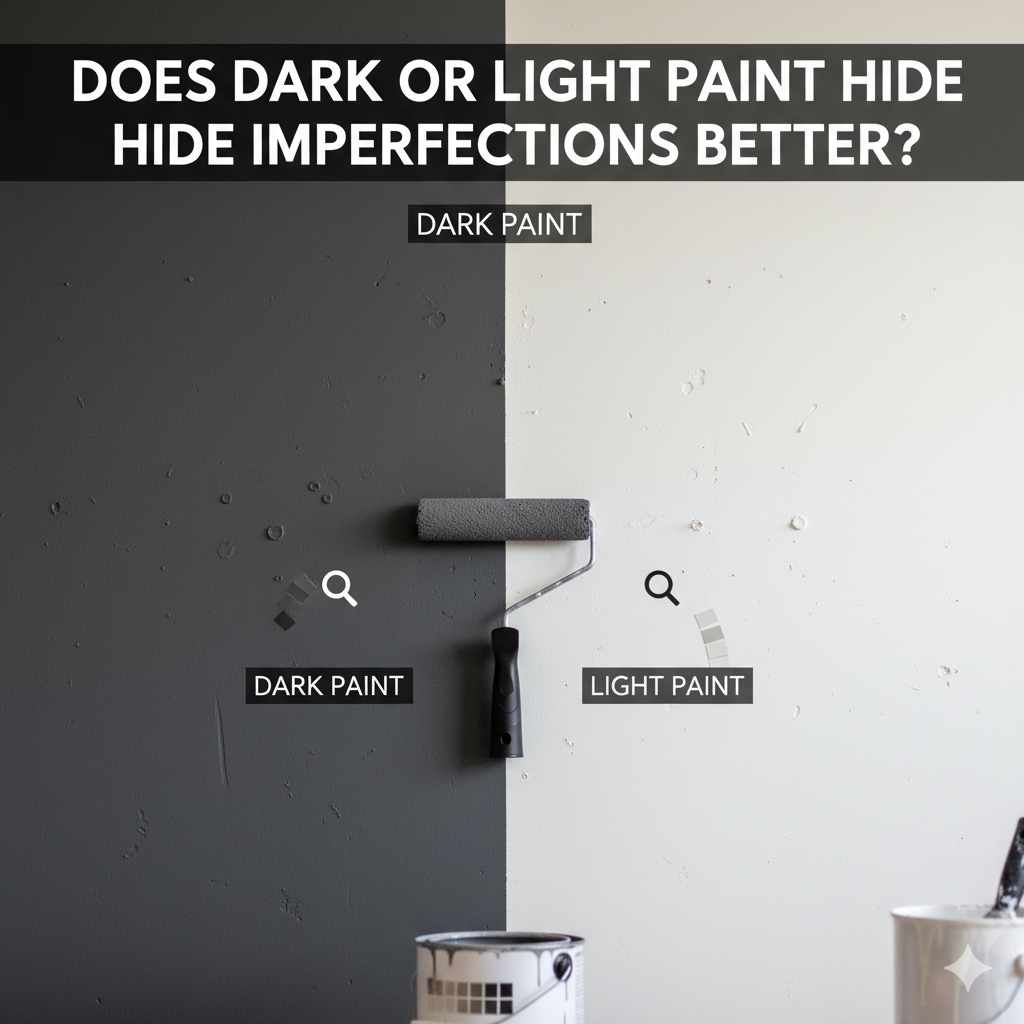
This is the million-dollar question, and the answer is generally: yes, dark paint often hides imperfections better than light paint, especially when paired with a matte or eggshell finish.
Here’s why:
- Light Absorption: Dark colors, by their nature, absorb more light than they reflect. When light hits a dark surface, less of it is bounced back towards your eyes. This means that the subtle shadows and highlights created by wall imperfections are less pronounced. The darker color essentially “swallows” the light, making the variations in the surface less noticeable.
- Reduced Contrast: With light colors, even minor bumps and dips create noticeable contrast as light hits them directly or falls into slight shadows. Dark colors minimize this contrast, creating a more uniform visual field.
Imagine a dark navy blue wall versus a bright white wall. If there’s a tiny scuff mark or a small bump on the white wall, it will likely catch the light and stand out dramatically. On the dark navy wall, that same imperfection might blend in much more subtly, almost disappearing into the overall depth of the color.
The Role of Undertones in Dark Colors
It’s worth noting that not all dark colors behave the same. Very deep, rich colors with minimal undertones tend to be the best at hiding flaws. Colors with strong, contrasting undertones (like a very warm dark brown with yellow undertones in a room with cool lighting) might still show some variation, but generally, the darker and more absorbing the color, the better it will conceal.
For example, a deep charcoal gray or a rich navy blue is likely to be more forgiving than a lighter, brighter shade of the same color.
Does Light Paint Hide Imperfections Better?
In most cases, light paint does not hide imperfections as well as dark paint, especially when it has a higher sheen. Light colors tend to reflect more light, which can amplify any surface irregularities.
However, there are exceptions and nuances:
- Matte or Flat Finishes: If you choose a light color, opting for a matte or flat finish is absolutely crucial for hiding imperfections. Because these finishes absorb light, they can significantly reduce the visibility of flaws even in lighter shades. A very pale, matte gray or a soft, flat off-white can be surprisingly effective.
- Soft, Diffused Light: Rooms with very soft, diffused lighting (think north-facing rooms or spaces with sheer curtains) might show fewer imperfections even with lighter paint colors.
- Very Minor Imperfections: If your walls are nearly perfect, with only the most minuscule imperfections, a light color might not be a problem, particularly in a low-traffic area.
The challenge with light colors is that they tend to highlight any deviation from a perfectly smooth surface. A small ding can look like a significant shadow on a pale wall, and a subtle texture can become a focal point.
Dark vs. Light Paint: A Comparative Look
Let’s break down the pros and cons of dark and light paint when it comes to hiding imperfections. This table should help clarify things.
| Paint Color Type | Pros for Hiding Imperfections | Cons for Hiding Imperfections | Best Finish for Hiding Flaws |
|---|---|---|---|
| Dark Paint (e.g., navy, charcoal, deep forest green) | Absorbs light, reducing shadow visibility. Minimizes contrast, making flaws less noticeable. Can create a cozy, sophisticated atmosphere. | Can make a room feel smaller or darker. May require more coats for full coverage. Touch-ups can be tricky to match perfectly. | Matte or Eggshell/Satin |
| Light Paint (e.g., white, beige, pale gray) | Makes a room feel larger and brighter. Generally easier to cover with fewer coats. Touch-ups are often easier to blend. | Reflects more light, highlighting imperfections. Bumps, dents, and textures can be more visible. | Matte or Flat |
Visualizing the Difference
Imagine you’re looking at a wall under a spotlight. If the wall is painted a deep, matte black, the spotlight’s glare might be subdued, and the subtle bumps and dips won’t create harsh shadows. Now, picture that same spotlight on a matte, pale yellow wall. The light will bounce off more readily, and any unevenness will cast more defined shadows, making them easier to see.
This principle holds true for various light sources and paint colors. The key takeaway is that the absorption of light by darker colors, combined with a non-reflective finish, creates the best camouflage.
Factors Beyond Color: The Crucial Role of Finish
As we’ve touched upon, the paint finish (sheen) is often more important than the color itself when it comes to hiding imperfections. A matte or flat finish is designed to create a soft, velvety look by absorbing light. This lack of reflectivity is what makes it so effective at camouflaging minor surface issues.
Even a very light color can look surprisingly smooth if it’s in a matte finish. Conversely, a dark color in a high-gloss finish will show every single flaw, just like a dark, shiny car.
When to Prioritize Finish Over Color
If your primary goal is to hide imperfections, and you’re open to most colors, focus first on selecting a matte or eggshell/satin finish. These finishes are specifically engineered to provide a softer appearance and reduce the visibility of surface irregularities.
For areas that need to be highly durable and washable, like kitchens or bathrooms, satin or eggshell are often the best compromise. While they are more reflective than matte, they still offer better coverage of imperfections than semi-gloss or gloss finishes.
Practical Tips for Choosing and Applying Paint
Now that we understand the science, let’s get practical. Here are some tips to help you choose the right paint and apply it for the best results, especially if you’re aiming to hide wall flaws.
1. Assess Your Walls
Before you even pick up a paint chip, take a good, honest look at your walls. Are they relatively smooth, or do they have noticeable dents, cracks, or uneven textures? Shine a light source across the wall at different angles to reveal any problem areas.
2. Consider the Lighting
How much natural and artificial light does the room get? Bright, direct light will make imperfections more obvious, even with the best paint choice. Diffused or ambient lighting is more forgiving.
3. Choose the Right Finish
As discussed, for hiding imperfections:
- Best: Matte or Flat (ideal for low-traffic areas, less washable)
- Good Compromise: Eggshell or Satin (more durable and washable, still good at hiding flaws)
- Avoid if possible: Semi-Gloss and Gloss (they highlight everything!)
You can learn more about paint sheens and their uses from resources like Sherwin-Williams’ guide on understanding paint sheens.
4. Select Your Color Wisely
- For Maximum Concealment: Opt for deep, rich, or dark colors. Think charcoal gray, deep blues, forest greens, or rich burgundies.
- If You Prefer Light Colors: Choose muted, soft tones. Avoid stark whites or very bright pastels if hiding flaws is a priority. A warm off-white, a soft greige, or a pale, muted blue can work better than a crisp, cool white.
5. Prepare Your Walls Properly
No paint color or finish can magically hide major damage. Proper wall preparation is non-negotiable for a professional-looking finish.
- Clean: Wash walls to remove dirt, grease, and grime.
- Repair: Fill any holes, cracks, or gouges with spackle or joint compound. Sand smooth once dry.
- Sand: Lightly sand any glossy or semi-gloss surfaces to create a “tooth” for the new paint to adhere to.
- Prime: Use a good quality primer, especially over repaired areas or if you’re making a drastic color change. Primer not only helps with adhesion and coverage but can also help to even out the surface appearance.
For more on prep, check out This Old House’s guide on preparing walls for painting.
6. Application Technique Matters
- Use a Quality Roller: A good roller cover with the appropriate nap length for your wall texture will help apply paint evenly.
- Avoid Overworking: Apply paint in consistent strokes, avoiding excessive back-rolling or over-brushing, which can create unevenness.
- Multiple Thin Coats: It’s often better to apply two thin coats of paint than one thick one. This leads to a more uniform finish.
- Allow Drying Time: Ensure each coat is completely dry before applying the next, following the manufacturer’s recommendations.
When Dark Paint Might Not Be Ideal
While dark paint is excellent for hiding imperfections, it’s not always the best choice for every room or every homeowner. Consider these points:
- Room Size: Very dark colors can make small rooms feel even smaller and more enclosed.
- Lighting: If a room has very little natural light, a dark color can make it feel gloomy.
- Maintenance: While dark matte paints hide imperfections well, they can sometimes show dust or lint more easily. Also, touching up dark paint can be challenging; the new paint might be slightly different in shade or sheen, creating a visible patch.
- Desired Aesthetic: If you’re aiming for a bright, airy, minimalist, or Scandinavian-style look, dark paint might not fit your vision.
In these situations, a lighter color with a matte or eggshell finish becomes a more practical choice, provided the wall preparation is thorough.
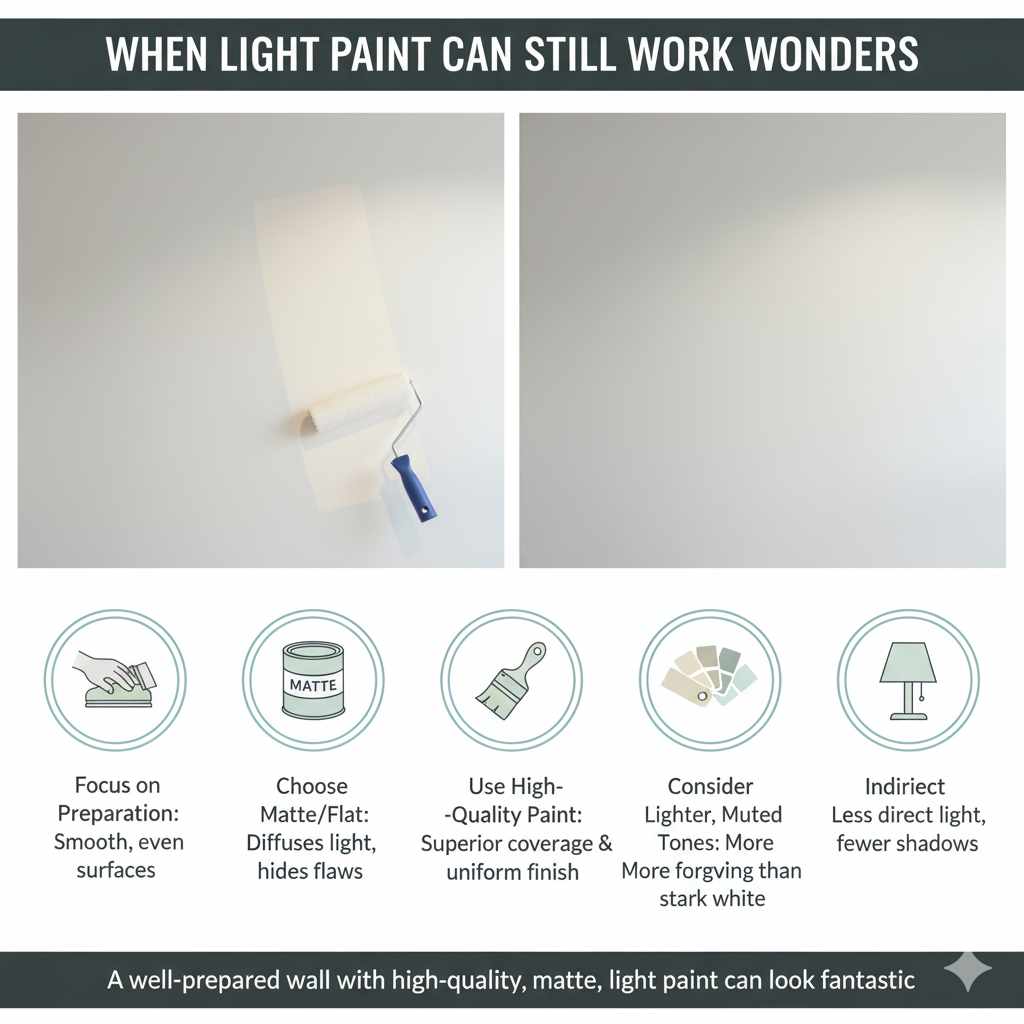
When Light Paint Can Still Work Wonders
Don’t despair if you love light colors! With the right approach, they can still achieve a beautiful, smooth finish.
- Focus on Preparation: This is paramount. The smoother and more evenly prepared your walls are, the less work the paint has to do.
- Choose Matte/Flat: Seriously, this is your best friend for light colors and imperfections.
- Use High-Quality Paint: Better quality paints often have superior coverage and a more uniform finish.
- Consider Lighter, Muted Tones: Instead of stark white, try off-whites, soft beiges, muted grays, or pale, dusty blues and greens. These have more depth and can be more forgiving.
- Indirect Lighting: If possible, arrange your lighting to be more diffused and less direct on wall surfaces.
A well-prepared wall painted with a high-quality, matte, light color can look fantastic. It just requires a bit more attention to detail during the prep and application stages compared to a dark matte paint.
Frequently Asked Questions (FAQ)
Q1: Will a darker color hide a bad paint job from the previous owner?
A: Generally, yes, a darker color, especially in a matte or eggshell finish, is more likely to hide minor flaws from a previous paint job than a lighter color. However, significant texture differences or peeling paint will still be visible. Thorough wall preparation is always the first step.
Q2: Is it harder to paint with dark colors?
A: Dark colors can sometimes require more coats to achieve full, even coverage, especially if you’re painting over a very light color. This means more time and potentially more paint. Touch-ups can also be more noticeable if not done perfectly.
Q3: Can a textured wall be painted to hide the texture?
A: Paint can help to slightly disguise texture, but it won’t eliminate it. A matte finish will do a better job of minimizing the visual impact of texture than a glossy finish. For significant texture issues, consider skim coating the walls first.
Q4: What is the best paint finish for a ceiling?
A: For ceilings, a flat or matte finish is almost always recommended. Ceilings are rarely seen up close and are often viewed under direct light, so a flat finish is ideal for hiding imperfections and avoiding glare. Dark ceilings are rare, but a dark matte would also work well for hiding flaws.
Q5: Does the type of paint (e.g., latex vs. oil-based) affect how well it hides imperfections?
A: While the base (latex or oil) affects durability and application, the sheen and pigment are the primary factors in hiding imperfections. Modern latex paints, especially in matte or eggshell finishes, are excellent at concealing flaws and are generally easier to work with than oil-based paints for walls.
Q6: If I choose a dark color, should I use a dark primer?
A: Using a tinted primer that matches your dark topcoat can significantly improve coverage and reduce the number of coats needed. Many paint stores can tint primers to a color close to your final paint choice, which is highly recommended for dark colors.
Conclusion
So, to wrap it all up, the age-old question of whether dark or light paint hides imperfections better leans towards the darker side, but with a very important caveat: the finish. A dark paint in a matte or eggshell finish is generally your most forgiving option for camouflaging minor wall flaws. It absorbs light and minimizes the contrast that makes dents and dings pop. Light colors, while great for making spaces feel larger and brighter, tend to highlight every surface irregularity, especially in higher sheens.
However, don’t let this discourage you if you love a light and airy aesthetic! By prioritizing a matte or flat finish, choosing muted, soft shades over stark brights, meticulously preparing your walls, and using quality paint and application techniques, you can still achieve a beautifully smooth finish with lighter colors. Remember, proper wall preparation—cleaning, repairing, sanding, and priming—is the foundation for any successful paint job, regardless of color or finish. With these insights, you’re well-equipped to make an informed decision and achieve that flawless look you’ve been dreaming of for your home. Happy painting!