Hang A Hammock Indoors: Easy Guide
Want to relax in a cozy hammock without putting holes in your walls? Many people think you need to drill and install permanent hooks to hang a hammock indoors. This can seem like a big job, especially if you’re new to DIY projects.
But it doesn’t have to be hard! We’ll show you simple ways to hang a hammock indoors without drilling any holes. Get ready to create your own indoor oasis with our easy, step-by-step solutions.
Let’s find out how to get started.
Hang A Hammock Indoors Without Drilling Smart Solutions
Creating a relaxing hammock space inside your home is a dream for many. The idea of a soft sway and cozy comfort often comes with a big question: how do I hang it up without damaging my walls? For beginners, the thought of drilling holes can be intimidating, raising concerns about structural integrity, rental agreements, or simply the effort involved.
This section focuses on providing practical and accessible methods to achieve that perfect indoor hammock setup. We explore the most common and effective ways to enjoy your hammock’s embrace without resorting to screws or drills, making it easy for anyone to transform a corner into a haven of relaxation.
Using Hammock Stands A Sturdy Choice
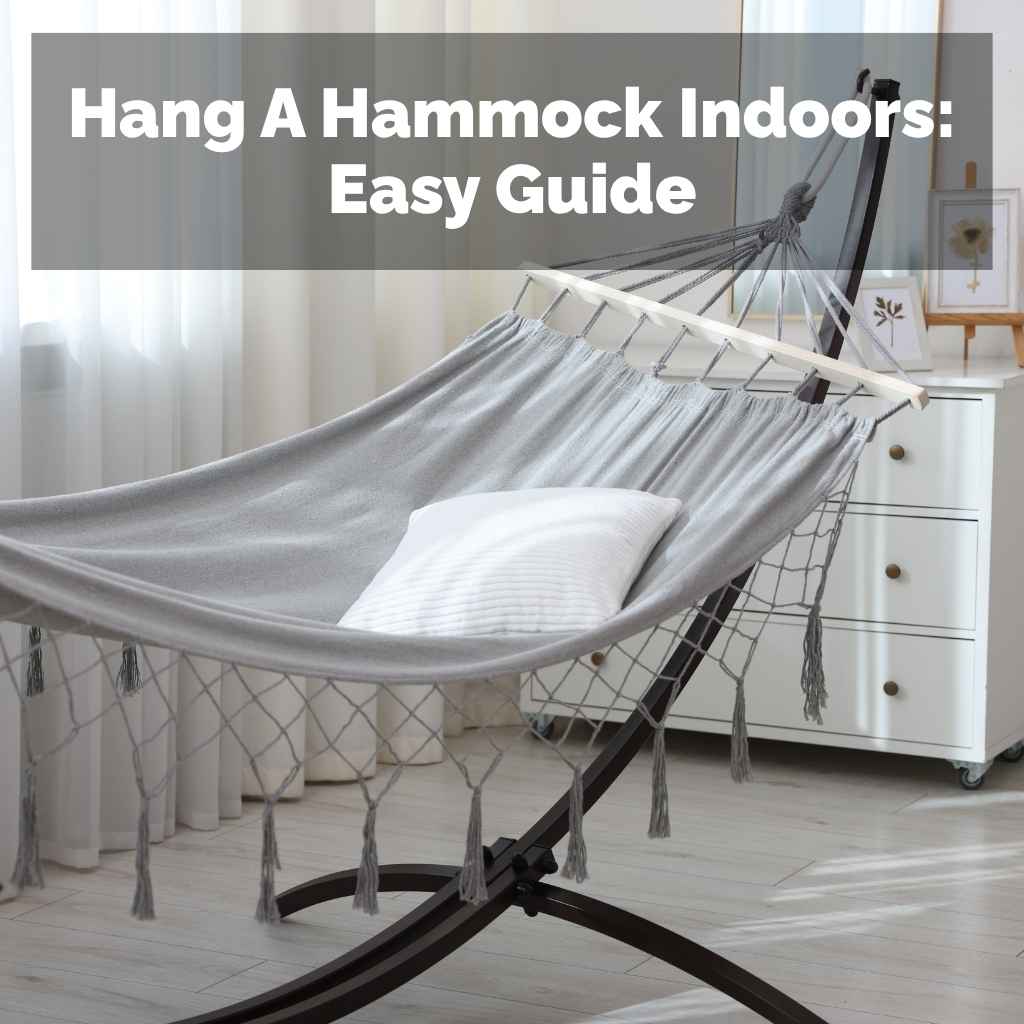
Hammock stands are perhaps the most straightforward and popular solution for hanging a hammock indoors without any drilling. These freestanding structures are designed to support the weight of a hammock and its occupant securely. They eliminate the need for wall mounting entirely.
Stands come in various materials, including metal and wood, and different styles to complement your home decor. They are portable, allowing you to move your hammock setup to different rooms or even outdoors when the weather is nice.
The primary advantage of using a hammock stand is its simplicity and safety. There’s no guesswork involved in finding stud locations or worrying about weight limits on drywall. You simply assemble the stand according to the manufacturer’s instructions, attach your hammock, and you’re ready to relax.
Many stands are designed for quick assembly and disassembly, making them ideal for those who might need to move or store them.
When choosing a hammock stand, consider the weight capacity. Most stands can comfortably hold up to 300-500 pounds, which is usually sufficient for one or two people. Also, check the length and width of the stand to ensure it fits the space you have in mind.
Some stands are specifically designed for indoor use and have a more compact footprint.
Example Scenario: Sarah lives in a rented apartment and loves reading. She wanted to hang her hammock in the living room but couldn’t drill holes. She purchased a metal hammock stand that was easy to assemble.
Within 15 minutes, her hammock was hung, and she was enjoying her book from her new cozy spot.
Types Of Hammock Stands
There are several types of hammock stands available, each offering unique features and benefits. Understanding these variations can help you pick the best one for your needs. The most common types include:
- A-Frame Stands These are shaped like the letter ‘A’ and are very stable. They are often made of metal or wood and provide a wide base for support. They are excellent for durability and can hold significant weight.
- C-Frame Stands These stands have a more minimalist design, often featuring a single, curved support. They can be more space-efficient than A-frame stands but may have a slightly smaller weight capacity. Their sleek look can be very appealing for modern interiors.
- X-Frame Stands These stands use a folding mechanism with legs that extend outwards in an ‘X’ shape. They are known for their portability and ease of storage. Many X-frame stands can be quickly set up and taken down, making them versatile.
Each type of stand requires minimal assembly. Typically, you’ll need to connect a few pieces together, often with included hardware like bolts or screws. Once assembled, the stand provides a stable platform to attach your hammock.
Ensure the stand is placed on a level surface to maximize stability and safety.
Weight Capacity And Safety Considerations For Stands
When selecting a hammock stand, one of the most critical factors is its weight capacity. This specification tells you the maximum amount of weight the stand can safely support. Exceeding this limit can lead to the stand collapsing, causing injury or damage.
Always check the manufacturer’s stated weight limit and err on the side of caution, especially if multiple people might use the hammock.
Most indoor hammock stands are designed to hold at least 300 pounds, with many supporting up to 500 pounds. This is generally sufficient for one person. If you plan for two people to relax together, look for stands with a higher weight limit.
It is also important to consider the dynamic load – the force exerted when someone gets in or out of the hammock, or when movement occurs. Stands designed for dynamic loads are engineered to handle these forces safely.
Safety also involves proper assembly. Follow the instructions carefully, ensuring all parts are securely fastened. Periodically check the stand for any signs of wear or damage, and tighten any loose connections.
Placing the stand on a flat, stable surface is paramount. Uneven flooring can compromise the stand’s stability, increasing the risk of tipping.
Door Frame Hammock Mounts A Clever Alternative
For those who want a more integrated look or have limited floor space, door frame hammock mounts offer a creative, drill-free solution. These specialized hooks or brackets are designed to fit securely into the frame of a standard interior doorway. They leverage the structural integrity of your door frame to hold the weight of the hammock and its occupant.
The concept is simple yet effective. The mounts typically clamp or hook onto the top and sides of the door frame. Because door frames are built to withstand the pressure of a door swinging open and shut, they are generally strong enough to support a hammock.
This method allows you to hang a hammock without making any permanent alterations to your walls or ceilings, which is ideal for renters or anyone hesitant about drilling.
It’s essential to ensure your door frame is robust. Solid wood frames are best. Hollow or weak frames may not be suitable.
Always check the weight limit specified by the manufacturer of the door frame mount. Proper installation is key; the mount needs to be firmly secured to the frame according to the instructions. This type of mount essentially turns your doorway into a hammock station, offering a unique and space-saving way to relax.
How Door Frame Mounts Work
Door frame hammock mounts work by distributing the weight of the hammock and its user across the strong components of the door frame. They typically consist of two main parts: a brace that fits over the top of the door frame and a hook or strap that extends down to attach to the hammock. The brace rests on the top edge of the frame, while the hook or strap secures to the side jamb.
Some designs might use a tension system to enhance stability.
The key is that these mounts do not pierce the frame itself. Instead, they use pressure and the inherent strength of the doorway to hold the hammock. When you sit in the hammock, the weight pulls downwards, and the brace on top of the frame helps to prevent it from lifting, while the side attachment keeps it stable.
This makes them a temporary and non-damaging installation.
The installation process is usually very quick. You might need to adjust straps or tighten clamps. It’s important to test the mount by applying some gentle pressure before fully committing your weight.
Ensure the mount is centered and balanced within the doorway. This method is particularly clever because it uses an existing structural element of your home that is often underutilized.
Choosing The Right Door Frame Mount
Selecting the correct door frame mount involves a few considerations to ensure safety and usability. First, measure the width and depth of your door frame. Mounts are often designed to fit standard door frame dimensions, but variations exist.
Make sure the mount you choose is compatible with your specific door frame size.
Next, check the weight capacity. Just like hammock stands, door frame mounts have a maximum weight they can safely support. Prioritize mounts with a weight limit higher than what you anticipate needing.
This provides an extra margin of safety. Look for mounts made from durable materials like heavy-duty steel or reinforced nylon, which can withstand repeated use and stress.
Read reviews from other users to gauge the mount’s effectiveness and ease of installation. Some mounts might be trickier to adjust or may slip if not fitted perfectly. Finally, consider the type of hammock you have.
Some mounts are more versatile and can accommodate various hammock styles, while others might be optimized for specific hammock types, like those with spreader bars.
Ceiling Hook Alternatives No Drilling Needed
While the goal is to avoid drilling, some creative solutions can mimic the stability of ceiling hooks without actually drilling into your ceiling. These methods often involve repurposing existing sturdy structures or using specialized tension systems. They offer a way to hang a hammock from a higher point, providing a different kind of sway and relaxation experience.
One such method involves using heavy-duty curtain rod brackets or shelf brackets that can be clamped or affixed to sturdy beams or overhead structures that are already in place. Another approach might involve creating a temporary frame from strong, adjustable poles that can be tensioned between walls or floors, with suspension points attached to these poles. These solutions require careful planning and a good understanding of the structural elements available in your home.
It’s crucial to remember that these methods rely heavily on the existing strength of your home’s structure. Any questionable beam or support should be avoided. Professional advice might be necessary if you are unsure about the load-bearing capacity of any element you plan to use.
Safety is paramount, and compromising on this could lead to accidents.
Repurposing Existing Structures
Sometimes, the best solution for hanging a hammock indoors without drilling is to look at what you already have. Sturdy ceiling beams, exposed structural elements in older homes, or even very strong, well-secured overhead cabinets can sometimes serve as anchor points. This requires a keen eye for what is truly load-bearing and safe to use.
For instance, if you have a house with exposed wooden beams in the living room or bedroom, you might be able to use heavy-duty C-clamps designed for industrial use to attach eye bolts or specialized hammock suspension straps to these beams. These clamps grip the beam securely without penetrating it. Similarly, if you have a robust wooden structural support in your attic or basement that extends into your living space, it might offer a potential anchor point.
It’s vital to assess the material and size of the beam or structure. It must be solid wood, not particleboard or a hollow material. The diameter or width should be substantial enough to provide a firm grip for the clamps.
Always ensure that the structure you are considering is indeed a load-bearing element of your home. If in doubt, it’s best to consult with a carpenter or structural engineer.
Tension Rod Systems For Hammocks
Tension rod systems offer a unique approach to suspending a hammock without any drilling. These systems typically involve high-tension rods that are expanded between two strong surfaces, such as opposing walls or the floor and ceiling. Suspension points are then attached to these tension rods, allowing you to hang your hammock.
The principle behind tension rods is simple physics. By expanding the rod between two points, it creates a strong outward force, pressing against the surfaces. This outward force is what holds the rod in place and allows it to bear weight.
For hammock suspension, these rods need to be exceptionally strong and capable of handling significant pressure. The surfaces they are tensioned against must also be structurally sound and capable of resisting this outward force without buckling or damage.
When using tension rod systems for hammocks, it is critical to select rods specifically designed for heavy-duty applications. Standard shower curtain tension rods are not sufficient. Look for industrial-grade tension poles or specialized hammock suspension kits that utilize this technology.
Ensure the surfaces you are using are solid and will not be damaged by the pressure. For example, tensioning against plaster walls without solid studs behind them would be risky. This method is best suited for environments with solid, parallel structural elements that can safely withstand the applied pressure.
DIY Hammock Hanging Solutions
For the more adventurous DIY enthusiast, there are creative ways to hang a hammock indoors without drilling that involve building simple, temporary structures. These can range from creating a portable A-frame from wood to using strong, repurposed items to fashion a hammock support.
The key to these DIY solutions is focusing on stability and safety. Any structure you build must be able to support the weight of the hammock and its occupant without tipping or collapsing. This often involves using sturdy materials and ensuring the design distributes weight evenly.
While these methods require more effort than using a pre-made stand, they can be a rewarding and cost-effective way to achieve your indoor hammock goal.
It’s also important to consider the aesthetics. A well-built DIY solution can be just as attractive, if not more so, than a store-bought item. You can customize the materials and finish to match your home decor.
Always prioritize safety and thorough testing before using any DIY setup.
Building A Simple Wooden Hammock Frame
Creating a wooden hammock frame is a rewarding DIY project that offers a sturdy and aesthetically pleasing way to hang your hammock indoors without drilling. The most common design is a variation of an A-frame, providing excellent stability. You will need basic woodworking tools like a saw, drill, sandpaper, and screws, along with sturdy lumber such as pine or cedar.
The construction typically involves cutting two pairs of angled legs that form the A-shape. These legs are then joined at the top with a crossbeam or connector. A central spreader bar connects the two A-frames, defining the distance between them and providing the attachment point for the hammock.
The size of the frame can be adjusted based on the length of your hammock and the space you have available.
Once the basic frame is assembled, sand down all surfaces to remove splinters and ensure a smooth finish. You can then paint, stain, or seal the wood to protect it and match your decor. It’s crucial to ensure all connections are strong and secure.
Pre-drilling pilot holes before inserting screws can prevent the wood from splitting and make assembly easier.
Example Scenario: David wanted a unique hammock setup in his loft apartment. He decided to build his own frame using reclaimed wood for a rustic look. He carefully measured and cut the pieces, assembling a robust A-frame structure.
The final result was not only functional but also a beautiful centerpiece in his living area.
Using Heavy Duty Clamps And Straps
For a less involved DIY approach, combining heavy-duty clamps with strong suspension straps can offer a surprisingly effective drill-free hanging solution. This method is particularly useful if you have sturdy furniture or architectural elements that can serve as anchor points.
Think about using robust C-clamps or bar clamps. These can be attached to the edges of a very strong table, a heavy-duty workbench, or even a sturdy railing. The clamps provide a secure grip on the furniture.
From these clamps, you would then attach wide, heavy-duty suspension straps, similar to those used for tree-saving hammock setups. These straps distribute the pressure over a larger area of the furniture, reducing the risk of damage.
The hammock itself would then be hung from these straps using carabiners or integrated loops. It’s essential to ensure that the furniture or element you are clamping to is extremely stable and can bear significant weight. Test the setup by applying considerable downward pressure before you get into the hammock.
This method is best suited for temporary setups or for individuals who understand the load-bearing capabilities of their furniture.
Statistic: Studies on furniture stability indicate that the average load a well-built wooden table leg can support is upwards of 500 pounds. However, this can vary greatly depending on the table’s construction and materials.
Choosing The Right Hammock For Indoor Use
Not all hammocks are created equal, and some are better suited for indoor use than others. When planning to hang a hammock indoors without drilling, the type of hammock you choose can significantly impact the ease of setup and overall comfort.
Consider the material and design. Hammocks made from soft, breathable fabrics like cotton or polyester blends are generally more comfortable for lounging indoors. Hammocks that don’t require spreader bars can be easier to manage in limited indoor spaces, as they conform more readily to your body and can be hung in a gathered-end style.
Hammock length and width are also important. A hammock that is too long might not fit well in a smaller room, while one that is too narrow might not feel as secure or comfortable. Always check the hammock’s dimensions and compare them to the space you have available and the hanging method you intend to use.
Hammock Types Suitable For Indoors
Several hammock styles are excellent choices for indoor relaxation. Each offers a unique comfort and setup experience:
- Gathered-End Hammocks These are the most common type and are made from a single piece of fabric. They are known for their deep, enveloping comfort as they cradle your body. They typically require two anchor points at a suitable distance apart and are very versatile for various hanging methods.
- Brazilian Hammocks Similar to gathered-end hammocks, these are made from a large piece of fabric but often have decorative fringe. They offer exceptional comfort and are a popular choice for indoor use due to their soft material and excellent support.
- Camping Hammocks These are lightweight, durable, and packable, often made from ripstop nylon. While designed for the outdoors, their compact size and ease of setup make them a great option for indoor use, especially if space is a concern.
Hammocks with spreader bars can also be used indoors, but they require more space and a setup that can accommodate their rigid structure. They lie flatter than gathered-end hammocks, which some people prefer. However, they can be bulkier to hang and store.
Understanding Hammock Weight Limits
Just like hammock stands and mounts, hammocks themselves have weight limits. This is a crucial safety factor. The fabric, stitching, and any included suspension hardware are designed to support a certain maximum load.
Exceeding this limit can cause the hammock to rip or fail, leading to potential injury.
Most standard hammocks are designed to hold between 300 to 500 pounds. This is generally enough for one person. Some larger or heavy-duty hammocks are rated for even higher weights, accommodating two people or heavier individuals.
Always check the manufacturer’s specifications for the hammock’s weight capacity before purchasing and using it.
When using a hammock with a partner, ensure the combined weight of both individuals does not exceed the stated weight limit. It’s also wise to consider the dynamic forces involved when getting into or out of the hammock, or when shifting positions. A hammock with a higher weight limit provides a greater margin of safety for everyday use.
Real-life Example: A couple purchased a hammock that was rated for 300 pounds. They often used it together, unaware that their combined weight exceeded this limit. One evening, the hammock ripped, causing them to fall.
Fortunately, they were not seriously injured, but it highlighted the importance of adhering to weight limits.
Where To Place Your Indoor Hammock
The placement of your indoor hammock can significantly enhance its functionality and your enjoyment. While you’re avoiding drilling, you still have flexibility in choosing the perfect spot. Consider the primary purpose of your hammock—relaxation, reading, or just a cozy corner.
Think about natural light. A spot near a window can provide a bright and airy feel, perfect for reading or just enjoying the view. Consider the flow of your room.
You don’t want the hammock to obstruct pathways or make the room feel cramped. If using a hammock stand, its portability allows for easy experimentation with different locations.
Also, consider privacy and noise. A quieter corner of the room might be more conducive to relaxation. If you have pets or small children, ensure the placement is safe and out of the way of potential hazards.
Maximizing Space And Comfort
When setting up your indoor hammock, consider how to best utilize your available space for maximum comfort. If you have a dedicated reading nook, that might be the ideal location. Placing it in a corner can create a sense of enclosure and coziness.
If you’re using a hammock stand, remember you can move it. Try it in different spots over a few days to see where you enjoy it the most. Perhaps a spot that gets afternoon sun is perfect for a nap, while a well-lit area is better for reading.
The goal is to create an inviting and comfortable retreat.
Adding small touches like a soft blanket, a few throw pillows, or a small side table for a book and drink can further enhance the comfort and functionality of your hammock space. Ensure there’s enough clearance around the hammock so you can get in and out easily without bumping into furniture.
Ensuring A Safe And Stable Setup
Regardless of the drill-free method you choose, safety and stability are paramount. Always double-check that your chosen method is secure before committing your full weight. If using a stand, ensure it’s on a level surface and all locking mechanisms are engaged.
For door frame mounts, confirm they are tightly secured and that your door frame is robust. If using clamps or DIY solutions, thoroughly test the anchor points and connections. Periodically inspect your setup for any signs of wear, loosening, or damage.
Consider the flooring beneath the hammock. While not strictly a safety issue for the hanging mechanism, having a soft rug or mat underneath can provide extra cushioning in case of any accidental slips or shifts. This adds an extra layer of comfort and minor protection.
Statistic: A survey found that over 60% of people who own hammocks use them for relaxation and stress relief, highlighting the importance of a safe and comfortable setup for mental well-being.
Frequently Asked Questions
Question: What is the easiest way to hang a hammock indoors without drilling
Answer: The easiest way is to use a freestanding hammock stand. These require no tools and can be set up in minutes, providing a stable and secure hanging solution.
Question: Can I hang a hammock from a door frame
Answer: Yes, specialized door frame hammock mounts are available that clamp onto the door frame without any drilling. They are a clever solution for renters or those who don’t want to damage walls.
Question: Are hammock stands safe for indoor use
Answer: Yes, hammock stands are designed for safe indoor use. Always ensure you purchase a stand with an appropriate weight capacity for your needs and place it on a level surface.
Question: What if my ceiling is too high for a door frame mount
Answer: If your ceiling is too high, you might consider heavy-duty clamps attached to sturdy furniture or beams, or look into specialized tension rod systems that can extend to higher points, provided the surfaces can handle the pressure.
Question: How much weight can most indoor hammocks hold
Answer: Most standard indoor hammocks are designed to hold between 300 to 500 pounds. Always check the product specifications for the exact weight limit of your hammock.
Wrap Up
You can easily hang a hammock indoors without drilling. Stands offer a simple, freestanding option. Door frame mounts provide a clever, non-damaging alternative.
DIY solutions and clever repurposing of items also work well. Choose a hammock suitable for indoor comfort and always prioritize safety with secure setups. Enjoy your new cozy spot!