Hole Saw Sizes for Metal: Chart by Thickness (3/4″-6″)
Hole saw sizes for metal run 3/4″ to 6″ — match the saw to the metal’s thickness, not just the hole you need. A saw sized wrong for the gauge burns out teeth fast, wanders off-center, or seizes and grabs the workpiece mid-cut. This guide covers the size-by-thickness chart, conduit knockout sizes, RPM settings, and which bi-metal kits actually hold up on steel.
Quick Answer
For metal up to 1/4″ thick (sheet steel, aluminum), use a 3/4″–1″ bi-metal or carbide hole saw. For 1/4″–1/2″ metal, step up to 1-1/4″–2″. For anything over 1/2″ thick, use a 2-1/8″–3″ saw and slow the drill down. Always pair the saw with the correct mandrel thread — 1/2″-20 for saws 1-3/16″ and under, 5/8″-18 for 1-1/4″ and larger.
Hole Saw Size Chart for Metal by Thickness
Hole saw size for metal is a cutting-tool diameter selected primarily by the workpiece’s gauge, not the finished hole alone. Thin sheet metal tears and deflects under an oversized saw, while thick plate overheats and dulls a saw that’s too small in tooth count for the cut. Use the chart below as a starting point, then confirm against your specific hole saw kit’s speed rating.
| Metal Thickness | Recommended Hole Saw Size | Typical Use |
|---|---|---|
| Up to 1/4″ (sheet steel, aluminum) | 3/4″ – 1″ | Electrical boxes, small conduit, thin panels |
| 1/4″ – 1/2″ | 1-1/4″ – 2″ | Structural steel tube, angle iron, thicker enclosures |
| Over 1/2″ | 2-1/8″ – 3″ | Heavy plate, machinery mounts (slow RPM required) |
| Any thickness, large openings | Up to 6″ (some kits to 12″) | Recessed lighting cans, HVAC penetrations, cornhole-style cutouts |
The most common sizes stocked in general-purpose kits are 3/4″, 7/8″, 1-1/8″, 1-1/2″, and 2″ — these cover roughly 80% of household and light-commercial metal drilling jobs, from electrical knockouts to appliance panel cutouts.
Hole Saw Sizes for Electrical Conduit and Knockouts
Conduit knockouts follow a fixed formula, not the thickness chart above: for 1/2″, 3/4″, and 1″ trade-size conduit, add 3/8″ to the trade size to get the hole saw diameter. Larger trade sizes step up by a fixed increment instead.
| Conduit Trade Size | Hole Saw Size Needed |
|---|---|
| 1/2″ | 7/8″ |
| 3/4″ | 1-1/8″ |
| 1″ | 1-3/8″ |
| 1-1/4″ | 1-3/4″ |
| 1-1/2″ | 2″ |
| 2″ | 2-1/2″ |
| 2-1/2″ | 3″ |
| 3″ | 3-5/8″ |
This chart holds regardless of box material — the difference between steel and PVC enclosures is technique, not size: run a slower RPM and add cutting oil on steel, and use light pressure on PVC to avoid melting the plastic at the cut edge, per ShieldenStrut’s conduit hole saw sizing guide.
Hole Saw RPM Speed Chart for Cutting Metal
Running a hole saw too fast on metal is the single biggest cause of burned-out teeth. Speed drops as diameter and material hardness increase — a 1″ saw on mild steel can run several times faster than a 3″ saw on stainless.
| Material | Small Saw (up to 1″) | Large Saw (2″+) |
|---|---|---|
| Aluminum | 300–500 RPM | 100–200 RPM |
| Mild steel | 150–300 RPM | 80–150 RPM |
| Stainless steel | 90–150 RPM | 40–80 RPM |
| Cast iron | 100–200 RPM | 50–90 RPM |
📊 Bi-metal hole saw speeds range roughly 40–500 RPM across the 9/16″ to 6″ size range, dropping as diameter and material hardness increase. — Source: Starrett Hole Saw RPM Guide
“As a general rule — the harder or more brittle the material, the slower you should cut. You can use the highest speeds on aluminum and mild steel, while cast iron and stainless require a bit more patience.”
Hole saw arbor size is a mandrel thread standard that must match the saw before RPM even matters: saws 1-3/16″ and smaller use a 1/2″-20 thread, while 1-1/4″ and larger use 5/8″-18. Mixing the two means the saw won’t seat on the mandrel at all, regardless of how well it matches your metal thickness.
Best Metal Hole Saw Kit Pick
METOTY 19 PCS Carbide Hole Saw Kit for Metal (1/2″–2-1/8″) – $51.99
Covers the 3/4″–2″ range this guide’s thickness chart calls for most often, with titanium-plated pilot drills included so you’re not buying those separately.
- Best for: Sheet metal and mid-gauge steel from 1/2″ to 2-1/8″
- Why we picked it: Widest common-size spread of any kit in this price range, matches the thickness chart above almost size-for-size
- Main drawback: Carbide teeth still need reduced RPM on stainless — don’t run it at the small-saw speed listed above
Compare more metal hole saw kit options
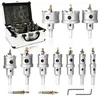 Budget Pick MonoPro 12 PCS Kit (5/8″–2-1/8″) – $38.99
|
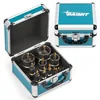 Mid-Range Pick DAIMIT 14 Pcs TCT Kit (1/2″–1-57/64″) – $39.98
|
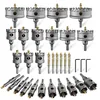 Largest Range 33 PCS Kit (1/2″–4″) – $131.99
|
As an Amazon Associate we earn from qualifying purchases.
HYCHIKA Bi-Metal Hole Saw Kit (17-Piece)
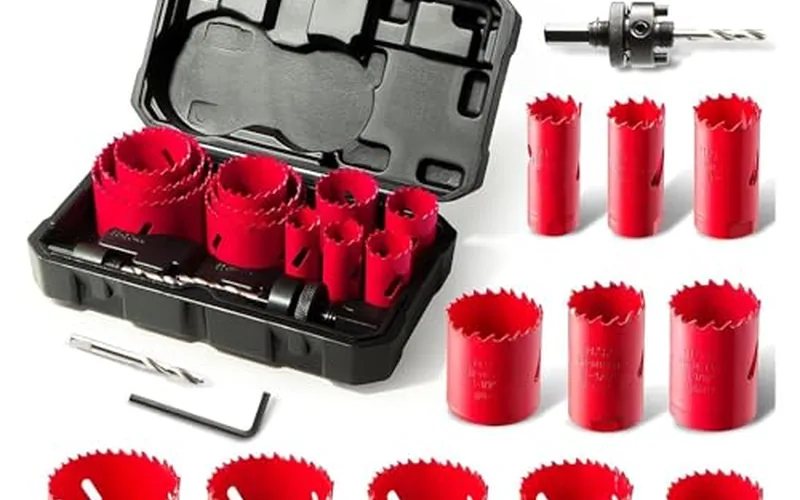
The HYCHIKA Bi-Metal Hole Saw Kit is a 17-piece set built for metal, PVC board, and plastic plate, with sizes from 3/4″ to 2-1/2″ — enough range to cover both the small-conduit and structural-steel rows in the size chart above.
- Pros: High-speed steel construction, wide size range, mandrels included, compact storage case
- Cons: May need an adapter for some drill models; not rated for material over 1/2″ thick
VIKITON Bi-Metal Hole Saw Kit With Case
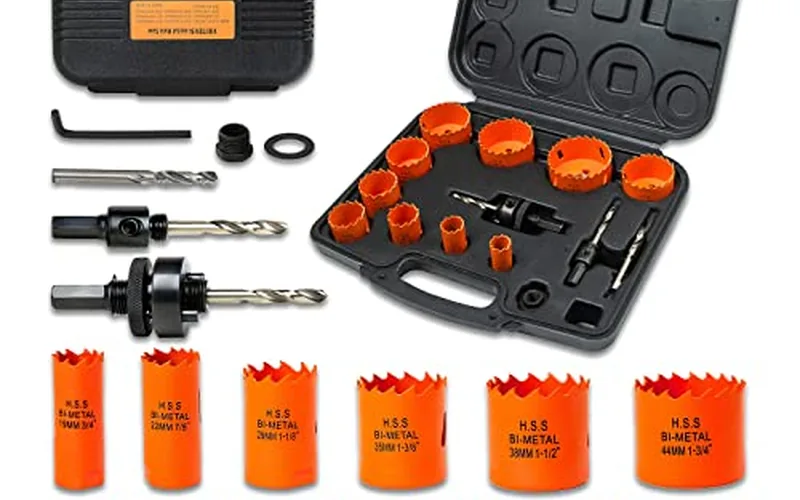
The VIKITON Hole Saw Kit covers 3/4″ to 2-1/2″ for metal, wood, and plastic, with a clean cutting edge and fast chip removal that keeps the cut from clogging on steel.
- Pros: Wide size range, durable bi-metal build, fast chip clearing, portable case
- Cons: Not rated for the hardest alloys; higher upfront cost than a basic single-size saw
6″ HSS Bi-Metal Hole Cutter (152mm)
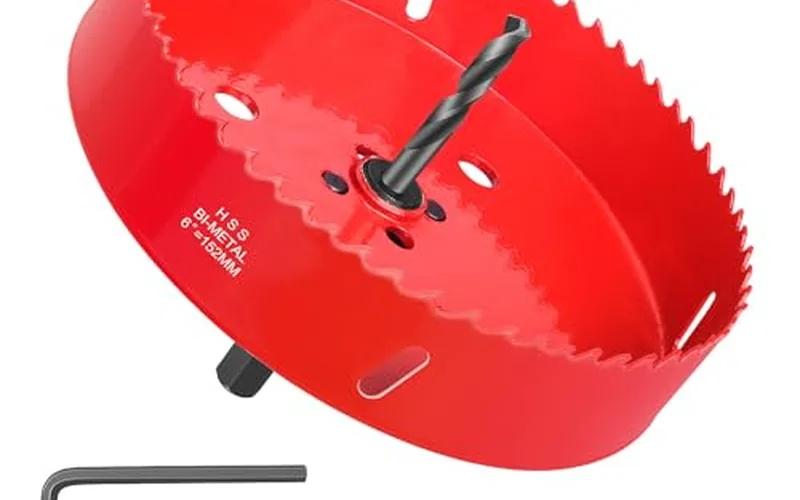
The 6″ HSS Bi-Metal Hole Cutter is a single large-diameter saw for recessed lighting, cornhole board cutouts, and other big-opening jobs that the smaller kits above don’t reach.
- Pros: HSS bi-metal construction, smooth flat drilling edge, fast chip removal
- Cons: Needs more effort on harder materials; single fixed size only
Common Mistakes When Sizing a Hole Saw for Metal
- Sizing by hole diameter alone: ignoring metal thickness leads to a saw that overheats or wanders — check the thickness chart first, then the diameter you need.
- Wrong arbor thread: forcing a 5/8″-18 saw onto a 1/2″-20 mandrel (or vice versa) damages the threads before you ever start cutting.
- Full RPM on stainless: stainless steel needs roughly half the RPM of mild steel at the same diameter — running mild-steel speed burns the teeth in seconds.
- No cutting fluid: dry-cutting metal over 1/8″ thick shortens tooth life dramatically; a drop of cutting oil at the start of the cut extends the saw’s usable life.
- Ignoring pilot bit wear: a dull pilot drill lets the saw walk off-center before the teeth even engage — replace it before the main teeth show wear.
Frequently Asked Questions
What Is A Bi-metal Hole Saw?
A bi-metal hole saw is a cutting tool designed for drilling through metal and other materials. It consists of a high-speed steel (HSS) tooth band welded to a carbon steel body. This combination offers durability and sharpness, making it ideal for clean cuts in various applications.
How Do I Choose The Right Hole Saw Size?
To choose the right hole saw size, consider the diameter of the hole needed and the material’s thickness — use 3/4″-1″ for metal up to 1/4″ thick, 1-1/4″-2″ for metal up to 1/2″ thick, and 2-1/8″-3″ for anything thicker. Most kits offer a range of sizes, such as from 3/4″ to 2-1/2″.
Can Hole Saws Cut Through Pvc And Plastic?
Yes, hole saws can effectively cut through PVC and plastic materials. Using a bi-metal hole saw is ideal for these materials due to its sharp teeth and smooth cutting edge. Ensure you maintain a steady speed to prevent melting or chipping during the cutting process.
What Materials Can I Use A Hole Saw On?
You can use a hole saw on various materials, including metal, wood, and plastic. Bi-metal hole saws are particularly effective for tougher materials like metal. Always check the specifications of your hole saw kit to ensure compatibility with the materials you plan to cut.
How Do I Maintain My Hole Saws?
To maintain your hole saws, clean them after each use to remove debris and chips. Store them in a dry place to prevent rust. Regularly inspect the teeth for wear and replace them as needed. Proper maintenance ensures longevity and performance in future projects.
Are There Hole Saw Kits For Specific Projects?
Yes, there are hole saw kits designed for specific projects. For example, kits are available for woodworking, metalworking, and even specialized tasks like installing recessed lights. These kits typically include various sizes and types of hole saws suited to the intended applications for maximum efficiency.
What Hole Saw Arbor Size Do I Need?
It depends on the saw’s diameter, not your drill’s chuck size. Hole saws 1-3/16″ and smaller use a 1/2″-20 thread mandrel; saws 1-1/4″ and larger use a 5/8″-18 thread mandrel. Match the mandrel to the saw before checking chuck compatibility.
What RPM Should I Use to Cut Steel With a Hole Saw?
For mild steel, run small saws (up to 1″) at 150–300 RPM and large saws (2″+) at 80–150 RPM. Stainless steel needs roughly half those speeds. Slower is safer — a saw running too fast burns out its teeth before it burns through the metal.
Conclusion
Hole saw size for metal comes down to two numbers: the material’s thickness and the mandrel thread it needs, not just the hole diameter you want. Use 3/4″–1″ for sheet metal, step up to 1-1/4″–2″ for thicker steel, and slow the RPM down as both diameter and material hardness increase. The HYCHIKA and VIKITON kits cover most household jobs in one case; the 6″ cutter and the carbide options above handle the larger and harder-metal jobs those kits can’t reach.
Sponsored / affiliate links. As an Amazon Associate I earn from qualifying purchases. I may earn additional commission from eligible campaigns.