How High Should A Light Fixture Be: Essential Guide
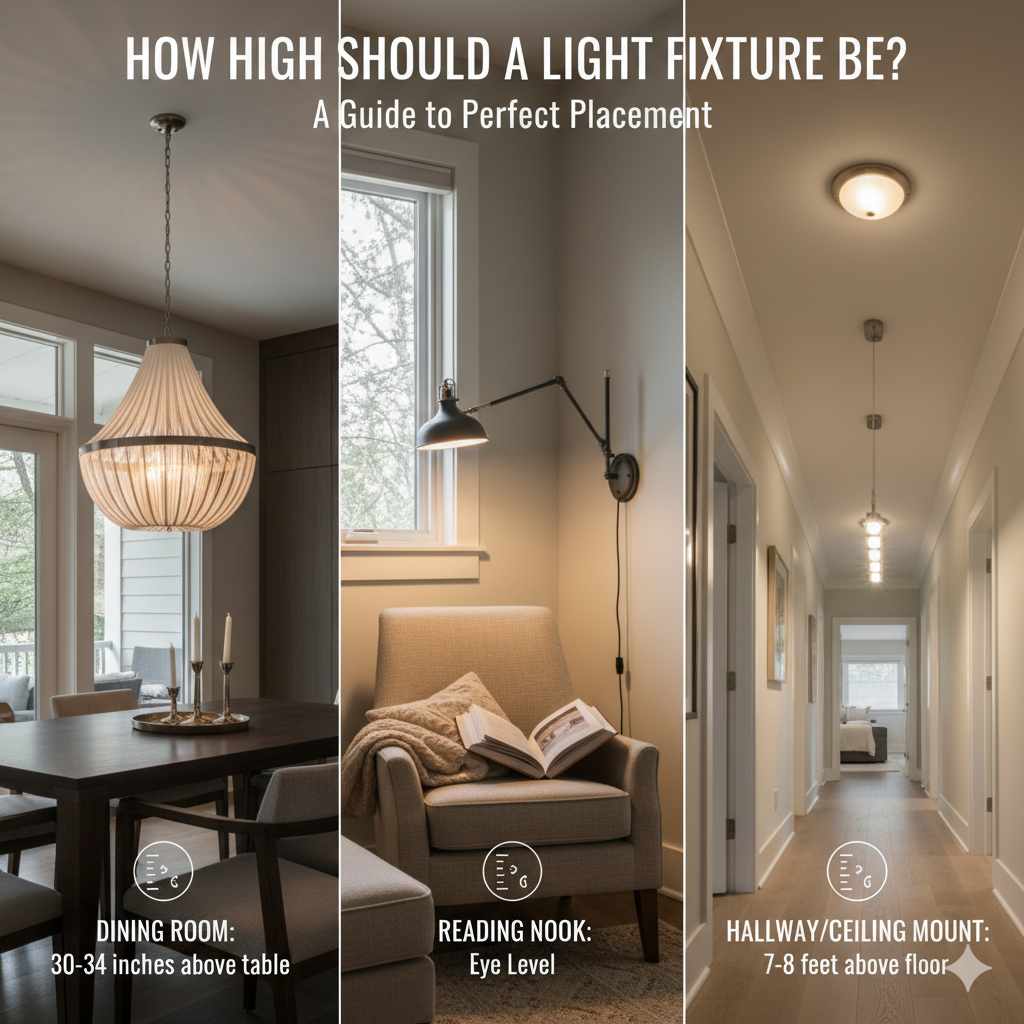
The ideal height for a light fixture depends on its location and purpose, typically ranging from 7 to 8 feet for general lighting, 30 to 36 inches above countertops, and 28 to 34 inches above dining tables. Getting this right ensures both optimal illumination and a comfortable, aesthetically pleasing space.
Figuring out where to hang a light fixture can feel a bit tricky, right? You want it to look good, but more importantly, you want it to light up your space just right. Too high, and it might not do its job. Too low, and it could be a bump hazard or just look out of place. It’s a common puzzle for many of us tackling home improvement projects. But don’t worry, this guide is here to make it simple. We’ll walk through the easy steps to find that perfect hanging height for any light fixture in your home, so you can feel confident and get beautiful, functional results. Let’s get your lighting just right!
General Lighting Heights: Setting the Mood and Function
When we talk about general lighting, we mean the everyday lights that fill a room, like ceiling lights or flush mounts. These are the workhorses of your home’s illumination. Getting their height right is crucial for both comfort and usability.
Ceiling Fixtures: Flush Mounts and Semi-Flush Mounts
These are often the go-to for hallways, bedrooms, kitchens, and living areas where you need good overall light without a fixture hanging too low.
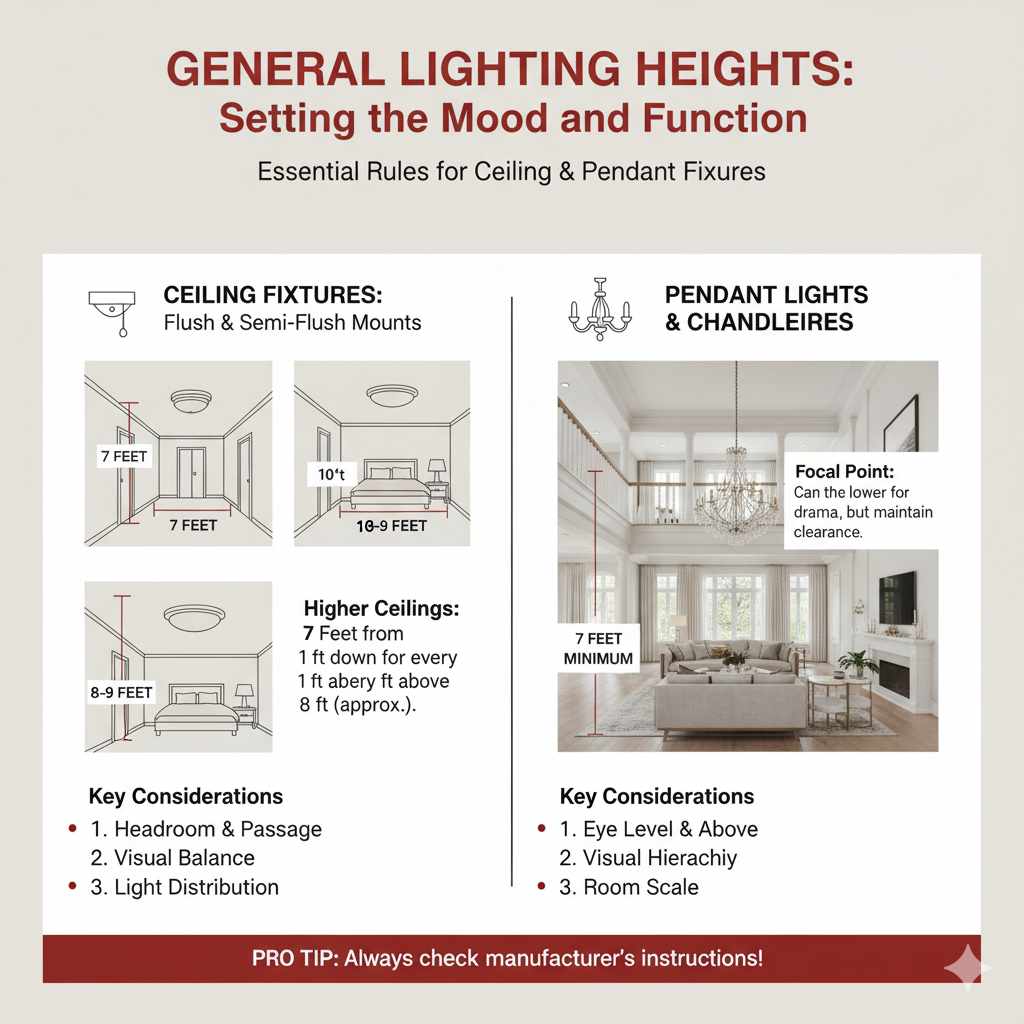
For flush-mount fixtures (those that sit directly against the ceiling) and semi-flush mount fixtures (which hang down a few inches), the general rule of thumb is to position them at a height that allows for comfortable passage and effective light distribution.
- Minimum Clearance: You want to ensure there’s enough headroom for people to walk under without feeling cramped or bumping their heads. A standard ceiling height is 8 feet. For most areas, a fixture should hang no lower than 7 feet from the floor.
- Visual Balance: Even if your ceilings are higher, the fixture shouldn’t look lost. For 8-foot ceilings, aim for the bottom of the fixture to be around 6.5 to 7 feet from the floor. For higher ceilings, you have more flexibility, but consider the fixture’s scale relative to the room. A good starting point for higher ceilings might be 1 foot down from the ceiling for every foot above 8 feet, but always adjust based on the fixture’s size and style.
- Light Distribution: Consider how the light spreads. Some fixtures are designed to cast light upwards and downwards, while others primarily illuminate downwards. The height will affect the reach of this light.
It’s always a good idea to check the manufacturer’s recommendations, as some fixtures have specific installation requirements.
Pendant Lights and Chandeliers in Main Living Areas
Pendants and chandeliers add style and focused light. In living rooms or entryways with open space, their height is more about aesthetics and creating a focal point.
- Eye Level and Above: Generally, the bottom of a pendant or chandelier in a main living area should be at least 7 feet from the floor. This ensures it’s not an obstruction.
- Visual Hierarchy: If it’s a large statement piece, you might hang it slightly lower to make it a clear focal point, but still maintaining that 7-foot minimum clearance.
- Room Scale: For very high ceilings, a chandelier might hang much lower, but always ensure it’s at least 7 feet from the floor. The scale of the fixture to the room is key here.
Lighting Over Tables: Dining and Coffee
Lighting over tables is a bit different because the table itself dictates the height. The goal is to illuminate the surface without blinding those sitting around it.
Dining Table Height Guidelines
This is a very common question, and getting it right makes a huge difference to your dining experience.
When hanging a pendant or chandelier over a dining table, the primary consideration is the height of the table itself and the chairs used. You want the light to be close enough to illuminate the food and faces, but not so low that it obstructs conversation or feels overwhelming.
- The Golden Rule: The most common recommendation is to hang the bottom of the fixture 28 to 34 inches above the surface of the dining table.
- Consider Chair Height: If you have particularly tall chairs, you might want to hang the fixture a bit higher within that range (closer to 34 inches) so people aren’t looking directly into the light source when seated. Conversely, for shorter chairs, you might go slightly lower (closer to 28 inches).
- Room Height Matters: For rooms with standard 8-foot ceilings, 30 inches above the table is often a sweet spot. If you have higher ceilings, you might hang it slightly lower relative to the table, but remember the overall clearance from the floor. The fixture should still be at least 7 feet from the floor to allow people to walk around.
- Multiple Pendants: If you’re using multiple smaller pendants over a long table, space them evenly and ensure the bottom of each is at the same height.
A good tip is to use painter’s tape to mark the proposed height on the ceiling and then hang a balloon or a similar object to visualize the drop. This helps you see how it will look and feel in the space.
Coffee Table and Side Table Lighting
While often achieved with table lamps, sometimes pendant lights are used for a modern look.
- Pendants: If using a pendant over a coffee table, aim for the bottom of the fixture to be about 30 to 36 inches above the table surface. This is similar to dining tables, but often a bit higher to accommodate movement around the seating area. Ensure it’s at least 7 feet from the floor.
- Table Lamps: For table lamps, the shade’s bottom should generally be at or slightly below eye level when you are seated. This provides comfortable reading light without glare. The lamp base height will vary greatly depending on the table and the lamp itself.
Kitchen Lighting Heights: Task and Ambient
The kitchen is a hub of activity, so lighting needs to be both functional for tasks like cooking and chopping, and ambient for general use.
Under-Cabinet Lighting
This is crucial for task lighting directly on your countertops.
- Placement: Under-cabinet lighting is installed directly on the underside of your upper cabinets. The goal is to direct light onto the countertop surface where you’ll be working.
- Height from Countertop: The fixture itself should be positioned as close to the front edge of the cabinet as possible without being visible from a standing position. This maximizes the light on the counter and minimizes glare. The exact height is determined by the cabinet design, but it’s typically only an inch or two from the bottom of the cabinet, casting light down onto the counter below.
Island and Peninsula Lighting
These often use pendants or track lighting to provide focused illumination.
Lighting over a kitchen island or peninsula serves a dual purpose: task lighting for food prep and ambient light for the surrounding area. The height here is critical for both functionality and safety.
- Pendant Lights: For pendants over a kitchen island, a common guideline is 30 to 36 inches above the countertop surface. This range ensures good task lighting without being too low to obstruct views or conversation.
-
Considerations:
- Clearance: Make sure there’s enough space for people to stand and work comfortably without hitting their heads.
- Line of Sight: If the island is used for casual dining, ensure the pendants don’t block the view across the island.
- Fixture Size: Larger fixtures might need to be hung slightly higher than smaller ones to maintain visual balance.
- Track Lighting: If using track lighting, the heads should be aimed to illuminate the workspace effectively. The track itself is usually installed a few inches below the cabinet or directly on the ceiling.
A great resource for understanding kitchen lighting design, including spacing and height, can be found through the U.S. Department of Energy’s Energy Saver website, which offers tips on energy-efficient lighting choices.
General Kitchen Ceiling Lights
For overall illumination in the kitchen.
- Flush or Semi-Flush Mounts: Similar to other rooms, these should be at least 7 feet from the floor, but often higher if the ceiling is standard 8 feet. They provide ambient light to complement task lighting.
Bathroom Lighting Heights: Vanity and General
Bathrooms require good lighting for grooming tasks, and the height of fixtures is key to avoiding shadows and glare.
Vanity Light Placement
This is where you need focused light for mirrors and grooming.
Vanity lights are essential for clear visibility when applying makeup, shaving, or brushing teeth. Their placement significantly impacts how well you see yourself.
- Horizontal Bar Lights: These are typically mounted directly above the vanity mirror. The bottom of the fixture should be positioned 70 to 80 inches from the floor, or about 6 to 12 inches above the mirror. This height ensures the light shines down on your face without creating harsh shadows under your eyes, nose, or chin.
- Sconces (Side Lights): For the best shadow-free lighting, sconces are often placed on either side of the mirror, at eye level (around 60 to 66 inches from the floor). This provides even illumination from multiple angles.
- Avoid Overhead Single Lights: A single light directly above your head when standing at the vanity can create unflattering shadows. If you must use one, ensure it’s a diffused fixture and consider adding side lighting.
The U.S. Consumer Product Safety Commission (CPSC) provides guidelines on safe product use, which can indirectly inform safe fixture placement and installation practices.
Bathroom Ceiling Lights
For general ambient light in the bathroom.
- Flush or Semi-Flush Mounts: Similar to other rooms, these should be at least 7 feet from the floor. In bathrooms, especially smaller ones, a flush mount is often preferred to maximize headroom. Ensure the fixture is rated for damp or wet locations.
Hallway and Stairway Lighting
These areas are about safe passage and ambient light.
Hallway Lighting
Hallways need enough light to navigate comfortably and safely.
- Ceiling Fixtures: Flush or semi-flush mount fixtures are common. They should be positioned to provide even light. A general rule is to place them about halfway down the hallway, or spaced evenly, at least 7 feet from the floor.
- Wall Sconces: If using sconces, they should be mounted at a height that doesn’t obstruct passage, typically around 66 to 72 inches from the floor.
Stairway Lighting
Safety is paramount on stairs.
- Ceiling Fixtures: At the top and bottom of the stairs, ensure ceiling fixtures are at least 7 feet from the floor.
- Wall Sconces: Sconces are excellent for stairways, providing light on each step. Mount them about two-thirds of the way up the wall, or at a height that illuminates the tread of the step below without being a hazard. A height of 66 to 72 inches is common.
- Step Lights: Small, recessed lights installed directly into the risers of the stairs offer a very safe and elegant solution.
Factors Influencing Fixture Height
While general rules are helpful, several factors can influence the perfect height for your light fixture.
Ceiling Height
This is perhaps the most significant factor.
- Standard Ceilings (8-9 feet): You have less flexibility. Fixtures generally need to be higher up to avoid being an obstruction.
- High Ceilings (10+ feet): You can hang fixtures lower relative to the ceiling, making them more prominent features, but always maintain the minimum 7-foot clearance from the floor.
- Low Ceilings (Under 8 feet): Flush mounts are often the best choice, and ensuring they are as close to the ceiling as possible is key.
Fixture Type and Size
The design of the light itself plays a big role.
- Large Chandeliers: In grand entryways or dining rooms with high ceilings, large chandeliers can hang lower to fill the space, but still must clear 7 feet from the floor.
- Small Pendants: These can be clustered or hung individually, and their height is more flexible, but still needs to consider clearance.
- Flush Mounts: Designed for low ceilings or areas where overhead clearance is limited.
Room Function and Activity
What happens in the room dictates how the light should perform.
- Task Areas (Kitchen Counters, Desks): Need focused, lower light for precision work.
- Dining Areas: Light needs to illuminate food and faces without being blinding.
- Living Areas/Hallways: Ambient light for general visibility and mood.
- Bathrooms: Shadow-free light for grooming is essential.
Visual Aesthetics and Proportion
Sometimes, it’s about how it looks.
- Focal Point: A fixture can be a statement piece, and its height can emphasize its presence.
- Balance: The fixture should look proportionally correct within the room’s overall dimensions.
Measuring and Installing Tips
Getting the height right during installation is key to a successful project.
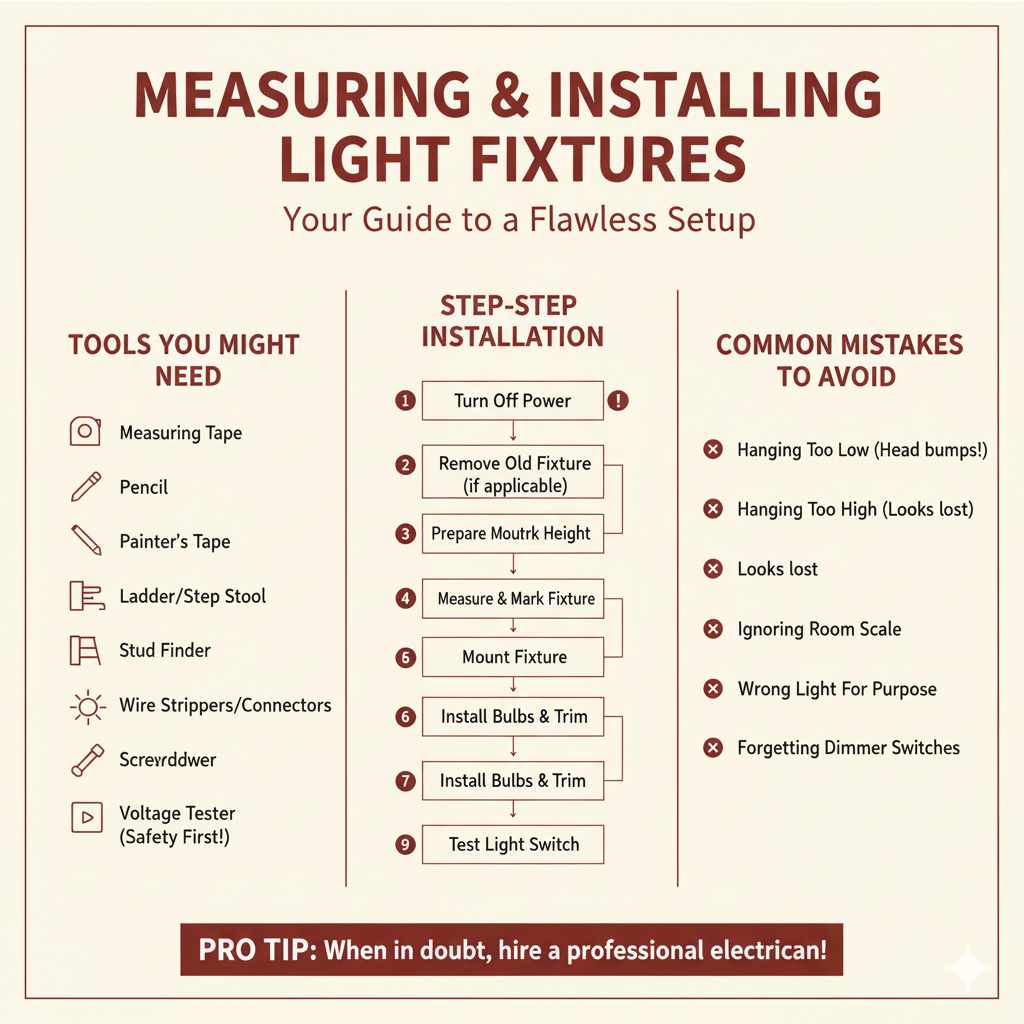
Tools You Might Need
Having the right tools makes the job smoother.
- Measuring tape
- Pencil
- Painter’s tape
- Ladder or step stool
- Stud finder (if mounting to ceiling or wall)
- Wire strippers and connectors
- Screwdriver
- Voltage tester (crucial for safety!)
Step-by-Step Installation Process (General)
Always prioritize safety! If you’re unsure, hire a professional electrician.
- Turn off Power: Locate the circuit breaker that controls the light fixture and switch it OFF. Use a voltage tester to confirm there is no power at the fixture’s wiring.
- Remove Old Fixture (if applicable): Carefully detach the old fixture.
- Prepare Mounting Hardware: Install the new fixture’s mounting bracket to the electrical box in the ceiling or wall according to the manufacturer’s instructions.
- Measure and Mark: Determine the correct height based on the guidelines above. Use painter’s tape on the ceiling or wall to mark where the top of the fixture or the chain/rod will attach.
- Wire the New Fixture: Connect the wires from the fixture to the house wiring (black to black, white to white, ground to ground). Use wire connectors securely.
- Mount the Fixture: Carefully attach the fixture to the mounting bracket.
- Install Bulbs and Trim: Screw in the light bulbs and attach any decorative glass shades or trim.
- Restore Power: Turn the circuit breaker back ON.
- Test: Turn on the light switch to ensure the fixture works correctly.
Common Mistakes to Avoid
Learning from others’ experiences can save you hassle.
- Hanging too low: This is the most common mistake, leading to head bumps and an unbalanced look. Always maintain at least 7 feet of clearance for general fixtures.
- Hanging too high: The fixture can look lost and fail to provide adequate light where it’s needed.
- Ignoring room scale: A tiny fixture in a large room or a massive one in a small space will always look off.
- Not considering the purpose: Using ambient light for a task area, or vice-versa.
- Forgetting about dimmer switches: These can offer flexibility in light intensity and mood.
FAQ About Light Fixture Height
How high should a pendant light be above a kitchen island?
For a kitchen island, pendant lights should generally hang 30 to 36 inches above the countertop. This height provides good task lighting without being too low to obstruct views or conversation.
What is the standard height for a ceiling light fixture?
For general ceiling fixtures like flush or semi-flush mounts, aim for the bottom of the fixture to be at least 7 feet from the floor, especially in areas with standard 8-foot ceilings. For hallways and main living areas, this ensures comfortable passage.
How low can a chandelier hang in a dining room?
A chandelier over a dining table should typically hang 28 to 34 inches above the table surface. Ensure that when hung, the bottom of the chandelier is still at least 7 feet from the floor.
Should my vanity lights be above or beside the mirror?
For the most flattering and shadow-free illumination for grooming, lights beside the mirror (sconces) at eye level are often best. If using a fixture above the mirror, position its bottom 6 to 12 inches above the mirror, around 70 to 80 inches from the floor.
How do I choose the right height for a fixture in a room with high ceilings?
With high ceilings, you have more flexibility. A good starting point is to hang the fixture about 1 foot down from the ceiling for every foot above 8 feet, but always ensure the bottom of the fixture is at least 7 feet from the floor. The fixture’s size and style should also be considered for proportion.
Is there a rule for lighting height in hallways?
Yes, in hallways, ceiling fixtures should generally be at least 7 feet from the floor to ensure clearance. If using wall sconces, they should be mounted around 66 to 72 inches from the floor.
Conclusion: Lighting Your Way to Perfection
Finding the right height for your light fixtures might seem like a small detail, but as we’ve explored, it has a big impact on your home’s comfort, functionality, and overall look. By following these guidelines – remembering the 7-foot rule for general clearance, the specific ranges for tables and vanities, and considering your room’s unique features – you can confidently select and hang fixtures that truly enhance your space.
Remember, these are guidelines, not strict laws. Your home is unique, and sometimes a slight adjustment makes all the difference. Don’t be afraid to visualize, measure twice, and even use temporary markers to see how a height will feel before committing. With a little planning and attention to detail, you can achieve beautiful, functional lighting that makes your home feel even more welcoming and livable. Happy lighting!