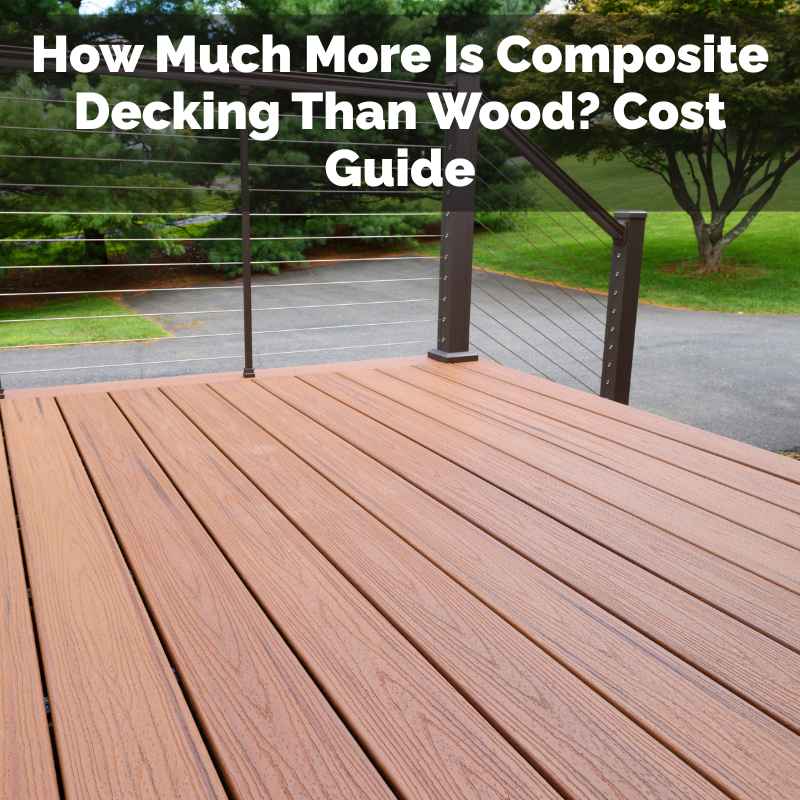
How Much More Is Composite Decking Than Wood? Cost Guide
Composite decking usually costs more upfront than wood decking. However, over its lifespan, it can be more cost-effective due to lower maintenance and longer durability. Factors like brand, material quality, and installation complexity affect the final price for both.
Composite Decking vs. Wood: The Price Tag Breakdown
When you’re comparing costs, it’s not just about the price you see at the lumber yard or the decking showroom. It’s about the whole picture. Think about the initial purchase price.
Then, consider what you’ll spend over the years. This includes maintenance, repairs, and how long each option will last. Composite decking often has a higher initial cost.
But many find it saves them money in the long run. Wood, on the other hand, might seem cheaper at first. Yet, it demands more attention and often needs replacing sooner.
Let’s look at the numbers. Wood decking materials can range widely. For pressure-treated pine, a common choice, you might pay between $3 to $7 per square foot.
Cedar and redwood are pricier. They can run from $5 to $12 per square foot. This is just for the boards themselves.
You still need fasteners, stain, sealant, and labor.
Composite decking is generally more expensive. Prices can start around $5 per square foot for budget-friendly options. High-end, premium composite boards can go for $15 to $25 per square foot or even more.
These higher prices reflect advanced materials, better aesthetics, and longer warranties. The more realistic wood-grain patterns and richer colors often come with a higher cost.
So, right away, you see a gap. Composite costs more per board. But the story doesn’t end there.
We need to talk about what happens after installation.
The True Cost of Ownership: Beyond the Initial Purchase
This is where the conversation really shifts. The upfront cost is just one piece of the puzzle. To truly compare composite and wood decking, we need to consider the total cost of ownership over time.
This includes all the expenses that come up during the deck’s life.
Wood decks need a lot of upkeep. Every year or two, you’ll likely need to clean them thoroughly. Then comes the staining or sealing.
This process takes time and money. Stain and sealant products cost money. You also have to buy or rent tools like pressure washers.
And there’s the labor involved. If you do it yourself, it’s your weekend gone. If you hire someone, it’s a significant expense.
Let’s break down typical wood deck maintenance costs. Cleaning might cost $50-$200 per year if you DIY. Professional cleaning could be $200-$500.
Staining or sealing can cost $100-$400 in materials each time. If you hire a pro, it can be $500-$1,500 or more. Over 10-15 years, these costs add up very quickly.
You could easily spend several thousand dollars on maintenance alone for a wood deck.
Now, think about composite. Most composite decks require very little maintenance. A gentle cleaning with soap and water is usually enough.
Some manufacturers suggest specific cleaners, but these are often just a few dollars. You never need to stain or seal composite. This saves you hours of work and hundreds, if not thousands, of dollars over the deck’s life.
This is a huge advantage for busy homeowners.
What about repairs? Wood can rot, warp, splinter, or crack, especially in harsh weather. Replacing a few boards might be necessary every few years.
This adds to both material and labor costs. Composite decking, while not immune to damage, is far more resistant. It doesn’t rot or splinter.
While it can scratch or fade over time, replacing a damaged composite board is usually simpler and less frequent than with wood.
The lifespan is also a major factor. A well-maintained wood deck might last 10-15 years, sometimes a bit longer. Cheaper wood decks might need
So, while the initial price is higher for composite, the reduced need for cleaning, staining, sealing, and repairs, combined with a longer lifespan, often makes it a more economical choice over the long haul. It’s an investment in lower future costs and less stress.
Understanding Composite Decking Materials
Composite decking isn’t just one thing. It’s a mix of materials. This blend is what gives it its unique properties.
Most composite boards are made from a combination of recycled plastic and wood fibers. These are often sawdust or wood chips from sawmills. Sometimes, manufacturers add binding agents and UV inhibitors.
The ratio of plastic to wood matters. It affects the look, feel, and durability. Some cheaper composites might have a higher wood content.
This can make them more prone to moisture absorption and fading. Higher-end composites tend to use more plastic. This makes them more resistant to moisture, mold, and insects.
They also often have a more stable color and a better feel underfoot.
There are different types of composite decking too. The older style is called “first-generation” or “40/60” composite. This usually has a higher wood content.
It can look a bit bland and is more likely to fade or stain. Newer composites are often “second-generation” or “70/30” composites, with more plastic. These are generally better.
The latest innovation is “third-generation” or “capped” composite decking. These boards have a hard outer shell, or cap, made of plastic. This cap is fused to a composite core.
The cap provides a strong barrier against stains, scratches, mold, and UV rays. It’s this capping technology that makes premium composites so durable and low-maintenance. Brands like Trex, TimberTech (now part of AZEK), and Fiberon offer various capped composite lines.
The quality and type of composite you choose will directly impact its price. A basic, uncapped composite will be cheaper. A premium, fully capped composite with a realistic wood grain finish will cost more.
When comparing prices, always check the product specifications. Understand what you’re getting for your money.
The manufacturing process also plays a role. Advanced extrusion techniques can create more realistic textures and patterns. This adds to the cost but also to the aesthetic appeal.
So, the price of composite decking varies greatly based on its composition and manufacturing quality.
Wood Decking: Types and Associated Costs
Wood offers a different kind of appeal. It has a natural warmth and beauty that many people love. However, “wood” is a broad term.
The type of wood you choose significantly impacts both the cost and the required maintenance. Understanding these differences is key to making an informed decision.
Pressure-Treated Pine is the most common and budget-friendly wood decking option. It’s pine lumber that has been treated with chemicals. This treatment helps it resist rot, decay, and insects.
Its price typically ranges from $3 to $7 per square foot for the boards. It’s widely available. However, it can warp, crack, or splinter over time if not properly maintained.
It needs regular cleaning and sealing to look its best and last longer.
Cedar is a popular choice known for its natural beauty and pleasant aroma. It’s naturally resistant to rot and insects, though not as much as treated pine. Cedar boards usually cost between $5 to $12 per square foot.
While it has natural resistance, it still requires sealing and regular maintenance to prevent graying and maintain its color. It can also be softer and more prone to dents than some other woods.
Redwood is another premium wood option, prized for its rich color and natural resistance to decay and insects. Redwood decks can range from $7 to $15 per square foot. Like cedar, it needs regular cleaning and sealing to preserve its appearance.
It’s a beautiful but more expensive wood choice.
Tropical Hardwoods like Ipe, Teak, or Tigerwood are among the most expensive wood options. Ipe, for instance, can cost $10 to $20 per square foot or more. These woods are incredibly dense and durable.
They offer excellent natural resistance to rot, insects, and decay. They have a stunning, rich appearance. However, their density can make them harder to work with during installation.
They also require regular oiling to maintain their natural color, or they will weather to a silvery gray.
Beyond the boards themselves, you need to factor in other costs for wood decks. These include fasteners (screws or nails), stain or sealant, and potentially wood preservatives. The labor costs for installation can also be higher for hardwoods due to their density.
Regular maintenance, as mentioned before, adds significantly to the long-term cost of wood decks.
The choice between these wood types depends on your budget, desired look, and willingness to perform maintenance. Pressure-treated pine offers the lowest entry price but requires the most upkeep. Hardwoods offer superior durability and beauty but at a much higher initial and ongoing cost.
Installation Costs: A Significant Factor
The price of the decking material is only part of the story. Installation costs can significantly impact the total project budget for both wood and composite decks. These costs depend on several factors.
Complexity of the Design: A simple, rectangular deck is less expensive to install than a multi-level deck with curves, intricate railings, or built-in features like benches or planters. More complex designs require more labor and planning.
Site Preparation: Does the area need extensive leveling? Is there difficult terrain? Are there existing structures or landscaping that need to be removed or worked around?
These factors add to the labor time and cost.
Type of Foundation: The type of supports needed for the deck – concrete footings, piers, or posts – can influence installation costs. Installing deep footings in certain soil types or weather conditions can be more time-consuming and expensive.
Railing and Stair Design: Railings and stairs are often a significant part of the overall cost. Simple wood railings are generally cheaper than intricate composite railings or custom metal designs. The number of staircases also adds to the cost.
Labor Rates: Labor rates vary greatly by region. In areas with a higher cost of living, expect to pay more for skilled deck builders. Experience also matters.
A seasoned builder might charge more but could also work more efficiently and with fewer mistakes.
DIY vs. Professional Installation: If you choose to install it yourself, you save on labor costs. However, this requires significant time, skill, and the right tools.
Mistakes can be costly to fix. For most people, hiring a professional is the safer and more reliable option.
Material Installation Differences: While both wood and composite require skilled installation, there can be subtle differences. Some composite decking systems have unique fastening methods (like hidden fasteners) that can add a bit to the installation time and cost. However, this often results in a cleaner look.
Very dense hardwoods can be harder to cut and drill, potentially increasing labor time.
Generally, installation costs can range from $15 to $50 per square foot, or more, depending on the factors listed above. For a 400-square-foot deck, this could mean an additional $6,000 to $20,000 in labor costs alone.
It’s crucial to get multiple detailed quotes from reputable contractors. Make sure these quotes specify exactly what is included – the materials, labor, site prep, waste removal, and any permits required. Don’t just compare the bottom line; compare the details to understand where your money is going.
Quick Comparison: Installation Factors
Factor | Wood Decking | Composite Decking
Design Complexity | Varies | Varies (hidden fasteners can add time)
Site Prep | Varies | Varies
Foundation | Varies | Varies
Railings | Generally less expensive | Can be more expensive (especially premium options)
Special Tools | Standard woodworking tools | Standard woodworking tools + specific composite tools (e.g., for hidden fasteners)
Experience Needed | High | High (especially for complex patterns or hidden systems)
Hidden Costs and Long-Term Savings
Beyond the visible price tags of materials and labor, there are other financial considerations. Thinking about these “hidden” costs can help you make a truly informed decision.
For wood decks, one of the biggest hidden costs is the recurring expense of maintenance. As we’ve discussed, staining, sealing, and repairs add up. Over a 15-year lifespan, a wood deck could cost you thousands in materials and countless hours of your own time.
Add to that potential costs for damaged furniture or clothing from splinters, and the numbers grow.
Another potential hidden cost for wood is related to its lifespan. If a cheaper wood deck needs
For composite decks, the upfront cost is higher. This is the most obvious “cost.” However, the long-term savings often outweigh this initial investment. You save money by not needing to buy stains or sealants.
You save time and effort because cleaning is minimal. You avoid the cost of replacing rotted or warped boards.
Consider the resale value of your home. A beautiful, well-maintained composite deck can be a significant selling point. It suggests a home that has been cared for and features modern, low-maintenance upgrades.
This could potentially help you sell your home faster and for a better price.
Warranty is also a financial consideration. Most composite decks come with long warranties, often 25 years or more, sometimes covering stain and fade resistance. This warranty provides peace of mind and protects your investment.
If a manufacturing defect occurs, the company stands behind its product. Wood decks typically have no such long-term warranty on appearance or structural integrity beyond the initial purchase.
Think about the cost of outdoor furniture. Splinters from wood decks can damage cushions and snag clothing. Composite decks, being smoother and splinter-free, are gentler on your outdoor gear.
This can indirectly save you money on replacements.
Ultimately, the “hidden” costs of wood are often related to its degradation and ongoing care. The “hidden” costs of composite are largely absorbed by its higher upfront price, which is then recouped through lower maintenance and a longer lifespan.
Composite vs. Wood: A Real-World Scenario
Let me share a story. A few years ago, my neighbors, the Millers, decided to replace their old, graying wood deck. They had a decent-sized deck, maybe 300 square feet.
Their original wood deck had served them for about 12 years. It had been stained and sealed faithfully every two years. But it was starting to show its age – some boards were warped, others had minor cracks, and the color was uneven despite their best efforts.
They initially looked at a decent quality cedar. The quote for the wood, plus installation and a nice railing, came in around $12,000. They were ready to go with it.
Then, they visited a friend who had recently installed composite. They were amazed at how good it looked. It was a rich, dark brown with a subtle grain pattern.
It looked incredibly clean and modern.
Curiosity piqued, they got a quote for a comparable composite deck. The composite material alone was significantly more expensive. When all was said and done, including installation and railings, the composite deck came in at $18,000.
That $6,000 difference was hard to swallow. They debated for weeks.
The deciding factor for them was the maintenance. Mrs. Miller works part-time and has two active kids.
The thought of another weekend spent cleaning, sanding, staining, and sealing was draining. They remembered all the times their weekend plans were dictated by the weather and the deck’s needs. They also thought about the $12,000 wood deck needing another stain job within a year or two, plus potential repairs down the line.
That would add another $1,000-$2,000 soon after installation.
They decided to stretch their budget for the composite. They chose a mid-range capped composite. Now, two years later, their deck looks as good as the day it was installed.
They hose it down once or twice a summer. The kids can run around barefoot without fear of splinters. When I see them out there, it’s clear they made the right choice for their lifestyle and budget, even with the higher initial price.
This story highlights the trade-off. Wood can be beautiful and more affordable upfront. But the ongoing investment in time and money for maintenance is real.
Composite offers a premium look and feel with minimal upkeep. For the Millers, the peace of mind and saved time were well worth the extra $6,000.
Factors Influencing Composite Decking Prices
When you’re looking at composite decking, you’ll see a wide range of prices. What makes one composite board cost $5 per square foot and another $25?
Brand Reputation: Established brands like Trex, TimberTech, and Fiberon often command higher prices. This is due to their proven track record, extensive research and development, and strong warranties. Smaller or lesser-known brands might offer lower prices but could compromise on quality or longevity.
Capping Technology: As mentioned, “capped” composites have a protective outer layer. The quality and thickness of this cap are crucial. Premium, multi-layered caps offer superior protection against stains, scratches, fading, and moisture.
These boards are more expensive.
Wood Content vs. Plastic Content: While most composites use recycled plastic and wood fibers, the ratio affects cost and performance. Higher plastic content generally leads to better durability and moisture resistance, but it can also increase the price.
Aesthetics: Realistic wood grain patterns, richer color palettes, and wider board options (like those mimicking wider planks) add to the manufacturing complexity and cost. If you want a composite that looks incredibly like natural wood, expect to pay more.
Warranty: Longer and more comprehensive warranties, especially those covering stain, fade, and even structural integrity for decades, come with a higher price tag. This reflects the manufacturer’s confidence in their product’s durability.
Collection or Series: Within a single brand, you’ll often find different collections. For example, Trex might have a “Select” series (more budget-friendly) and an “Enhance” or “Transcend” series (premium, with better visuals and durability). Each series has a different price point.
Board Dimensions and Features: Standard board sizes are typical. Custom dimensions or unique edge profiles might cost extra. Some systems also offer specific matching railings, fasteners, or lighting that can be bundled or priced separately.
It’s important to look beyond the per-square-foot price and understand the features and benefits each option offers. A cheap composite might seem like a bargain, but if it fades quickly or scratches easily, you might regret not investing in a better quality product.
Composite Decking Price Tiers (Approximate per sq ft)
- Budget/First-Gen: $5 – $9 (Less common now, often uncapped)
- Mid-Range Capped: $9 – $15 (Good balance of cost and performance)
- Premium Capped: $15 – $25+ (Top-tier aesthetics, durability, and warranties)
Factors Influencing Wood Decking Prices
The price of wood decking is also highly variable. Several key factors come into play:
Species of Wood: As discussed, this is the biggest driver. Pressure-treated pine is the cheapest. Cedar and redwood are mid-range.
Tropical hardwoods like Ipe are the most expensive.
Quality and Grade: Within each wood species, there are different grades. Higher grades have fewer knots, imperfections, and a more uniform appearance, making them more expensive. Lower grades might have more knots or minor defects, reducing the cost but potentially affecting durability and look.
Treatment (for Pine): The type and depth of the pressure treatment can influence cost. More robust treatments designed for harsh conditions or longevity might cost slightly more.
Board Width and Length: Standard board sizes are generally more affordable. Wider boards or specific lengths can sometimes command a premium.
Source and Availability: Lumber prices fluctuate based on market demand, supply, and even the time of year. Local availability and transportation costs also play a role.
Finished vs. Unfinished: Some wood comes pre-primed or pre-stained, which adds to the cost but saves you a step. Most wood is sold unfinished, requiring you to purchase and apply your own protective coatings.
Sustainability Certifications: Wood certified by organizations like the Forest Stewardship Council (FSC) often carries a premium due to responsible sourcing practices.
When budgeting for wood, remember to always add in the cost of fasteners (screws are generally better than nails for longevity and appearance), stain, sealant, and any necessary tools for application and maintenance.
The Math: Comparing Long-Term Value
Let’s crunch some numbers to see how composite and wood stack up over, say, 20 years.
Scenario: 400 sq ft Deck
Wood Deck (Pressure-Treated Pine – Mid-Range Quality)
- Initial Material Cost: 400 sq ft x $5/sq ft = $2,000
- Initial Installation Cost: 400 sq ft x $25/sq ft = $10,000
- Total Initial Cost: $12,000
- Maintenance (Estimated): 10-15 maintenance cycles over 20 years. Each cycle costs ~$500 (DIY materials & tools) to $1,500 (pro). Let’s average $1,000 per cycle.
- Total Maintenance Cost: 12 cycles x $1,000/cycle = $12,000
- Potential Board Replacement: Assume one round of replacing a few boards at year 15 = $500
- Total Cost Over 20 Years: $12,000 + $12,000 + $500 = $24,500
Composite Deck (Mid-Range Capped Composite)
- Initial Material Cost: 400 sq ft x $12/sq ft = $4,800
- Initial Installation Cost: 400 sq ft x $35/sq ft = $14,000 (often slightly higher due to complexity/care)
- Total Initial Cost: $18,800
- Maintenance Cost: Minimal cleaning. Let’s budget $50/year for cleaners.
- Total Maintenance Cost (20 years): 20 years x $50/year = $1,000
- Potential Repairs: Very minimal. Assume one board replacement in 20 years = $200
- Total Cost Over 20 Years: $18,800 + $1,000 + $200 = $20,000
Scenario: 400 sq ft Deck
Wood Deck (Premium Hardwood like Ipe)
- Initial Material Cost: 400 sq ft x $15/sq ft = $6,000
- Initial Installation Cost: 400 sq ft x $30/sq ft = $12,000 (can be higher due to difficulty)
- Total Initial Cost: $18,000
- Maintenance (Estimated): 15-20 maintenance cycles over 20 years. Each cycle costs ~$700 (DIY oiling) to $2,000 (pro). Let’s average $1,200 per cycle.
- Total Maintenance Cost: 18 cycles x $1,200/cycle = $21,600
- Potential Board Replacement: Assume minimal due to durability = $300
- Total Cost Over 20 Years: $18,000 + $21,600 + $300 = $39,900
Composite Deck (Premium Capped Composite)
- Initial Material Cost: 400 sq ft x $20/sq ft = $8,000
- Initial Installation Cost: 400 sq ft x $40/sq ft = $16,000
- Total Initial Cost: $24,000
- Maintenance Cost: Minimal cleaning. Let’s budget $50/year.
- Total Maintenance Cost (20 years): 20 years x $50/year = $1,000
- Potential Repairs: Very minimal = $200
- Total Cost Over 20 Years: $24,000 + $1,000 + $200 = $25,200
As you can see from these simplified models, even premium hardwoods can end up costing more than a premium composite over two decades, largely due to the intensive maintenance required. Mid-range options show a more dramatic difference, with composite often being cheaper overall.
Cost Summary: 400 sq ft Deck Over 20 Years
Option | Initial Cost | Maintenance Cost | Total Estimated Cost
Pressure-Treated Pine | $12,000 | $12,000 | $24,500
Mid-Range Composite | $18,800 | $1,000 | $20,000
Premium Hardwood | $18,000 | $21,600 | $39,900
Premium Composite | $24,000 | $1,000 | $25,200
Note: These are estimates and can vary significantly based on specific products, labor rates, and maintenance frequency.
Is It Ever Cheaper to Go With Wood?
Yes, there are specific situations where wood decking might be the cheaper option overall, or at least in the short term.
Very Small Decks: For a tiny landing or a very small platform, the upfront cost difference might not be as significant. The cost of even a few composite boards could approach the cost of cheap wood boards for a very small area.
Tight Upfront Budget: If your budget is extremely limited right now, and you can’t afford the higher initial investment of composite, then pressure-treated pine is likely your only viable option for a new deck. You’ll need to be prepared for the ongoing maintenance costs and shorter lifespan.
Extensive DIY Skills and Time: If you are a seasoned DIYer with plenty of free time and enjoy the process of sanding, staining, and sealing, you can significantly reduce the labor costs associated with wood. This can make wood a more budget-friendly choice if you’re willing to put in the work.
Specific Aesthetic Desires: Some people simply prefer the natural look and feel of real wood. For them, the aesthetic value might outweigh the cost savings of composite. If you choose a premium hardwood and are committed to its maintenance, the upfront cost might be comparable to or even less than high-end composite, but the long-term costs will likely be higher.
Short-Term Living: If you plan to move within the next 5-7 years and are building a deck primarily to enhance the saleability of your home for that short period, a cheaper wood deck might suffice. The long-term maintenance and replacement costs might not be your concern if you won’t be the one paying them.
However, in most typical scenarios where homeowners plan to stay in their homes for many years and want a deck that looks good with minimal hassle, composite decking often proves to be the more economical choice over the long run, despite the higher initial price.
When to Worry About Your Deck’s Cost
It’s easy to get caught up in numbers, but sometimes, the “cost” isn’t just about money. Here’s when the financial aspect of your deck decision might warrant extra attention:
Budget Overruns During Installation: If your chosen contractor’s quotes are consistently higher than expected, or if unexpected issues arise during installation that drastically increase the price, it’s a sign to pause and re-evaluate. This could mean the scope of the project is too ambitious for your budget, or you might need to find a more cost-effective material or design. Always have a contingency fund for unexpected costs.
Underestimating Maintenance for Wood: If you choose a wood deck thinking the maintenance will be easy, but then you realize how much time and money it actually takes, that’s a hidden cost biting you. The “cost” here is your time and potentially your sanity. If the upkeep feels like a burden, it might have been a more expensive choice in terms of your lifestyle.
Buying the Cheapest Composite Available: Sometimes, the cheapest composite boards are the cheapest for a reason. They might lack proper capping, fade quickly, or warp. If you end up needing to replace them in just 5-10 years, the initial savings are wiped out, and you’ve spent more than you would have on a better product or even some wood options.
Ignoring Warranties: Not understanding the warranty for either wood or composite can lead to unexpected costs. If a board fails prematurely and you can’t get it replaced because you missed a clause in the warranty, that’s a costly oversight.
Not Factoring in the “Enjoyment” Cost: This is subjective, but if the cost of maintaining a wood deck means you rarely use it, then the deck itself has a high “enjoyment cost.” The higher initial cost of composite might be justified if it leads to more usable, enjoyable outdoor space for years to come.
Essentially, you should worry if your deck project’s costs are becoming unmanageable, if you’re consistently underestimating the true expenses (especially maintenance), or if the chosen material doesn’t meet your long-term needs and expectations, leading to premature replacement or dissatisfaction.
Quick Tips for Managing Deck Costs
Whether you lean towards wood or composite, here are some ways to keep your deck project within budget and manage costs effectively:
- Get Multiple Detailed Quotes: Don’t settle for the first bid. Get at least three detailed quotes from reputable contractors for both materials and labor. Compare them carefully, looking at what’s included.
- Consider a Simpler Design: Intricate curves, multiple levels, and complex railing systems drive up costs. A well-designed, simple deck can be just as beautiful and functional.
- Prioritize Materials Wisely: If your budget is tight, perhaps opt for a mid-range composite instead of the top-tier, or choose pressure-treated pine over premium hardwoods. Focus your budget on the main decking boards, as they are most visible.
- DIY What You Can (Safely): If you have the skills, consider tackling certain parts of the project yourself, like demolition of the old deck, site preparation, or even some of the installation if you’re experienced. However, always prioritize safety and structural integrity.
- Shop Around for Materials: Prices can vary between different lumber yards and specialty decking suppliers. Look for sales or bulk discounts if possible.
- Factor in Maintenance from Day One: When comparing wood and composite, always include the estimated cost of ongoing maintenance in your long-term budget. This is where many people underestimate the total expense of wood.
- Understand Warranties: Read the fine print on any warranty. Know what it covers, for how long, and what your responsibilities are (e.g., regular cleaning). This can save you money down the line if issues arise.
- Ask About Payment Plans: Some contractors or material suppliers offer financing options. This might help spread out the initial cost if it’s a concern.
Frequently Asked Questions About Decking Costs
Is composite decking always more expensive than wood upfront?
Generally, yes. The raw materials and manufacturing process for composite decking typically result in a higher price per square foot compared to most common wood decking options like pressure-treated pine. However, the price gap narrows when comparing composite to premium hardwoods, and it often reverses when considering long-term costs.
How much more does composite decking cost per square foot compared to pressure-treated pine?
You can expect composite decking to cost roughly 2 to 4 times more per square foot than pressure-treated pine. For example, if pressure-treated pine is $3-$7/sq ft, mid-range composite might be $9-$15/sq ft, and premium composite $15-$25+/sq ft.
Will a composite deck increase my home’s resale value?
Yes, a well-installed composite deck can significantly enhance your home’s resale value. It’s often seen as a desirable, low-maintenance upgrade that appeals to many buyers. The return on investment (ROI) can be quite good, though it typically doesn’t recoup 100% of the initial cost.
What are the hidden costs of wood decking I should watch out for?
The biggest hidden costs are ongoing maintenance (staining, sealing, cleaning, repairs), potential replacement of warped or rotted boards, and the cost of your time spent on these tasks. Also, consider the cost of replacing furniture damaged by splinters.
Can I save money by buying composite decking on sale?
Yes, material costs can fluctuate. Many suppliers offer seasonal sales or discounts on decking materials. However, always compare the sale price to the standard price of comparable brands and ensure the product quality meets your needs.
Don’t sacrifice quality for a small discount.
Is the installation cost for composite decking significantly higher than for wood?
Installation costs can be similar or slightly higher for composite, depending on the complexity of the design and the specific fastening systems used. Some composite systems, like those with hidden fasteners, might require more specialized tools or take slightly longer to install, potentially increasing labor costs.
If I choose a cheaper composite, will I regret it later?
Often, yes. Cheaper composites might lack proper UV protection, leading to rapid fading, or may not have adequate capping, making them more prone to scratches, mold, and moisture absorption. This can result in a deck that looks worn and requires premature replacement, negating any initial cost savings.
The Final Verdict on Decking Costs
Deciding between composite and wood decking is a significant choice. The initial price tag for composite is higher, that’s clear. You’ll likely spend more upfront for composite materials and potentially installation compared to basic wood options like pressure-treated pine.
However, the true cost of ownership paints a different picture.
When you factor in the years of reduced maintenance, the absence of staining and sealing, the resistance to rot and insects, and the extended lifespan, composite decking often proves to be the more economical choice over the long haul. It’s an investment that pays dividends in time saved, money not spent on upkeep, and a deck that remains beautiful and functional for decades.
Wood offers natural beauty and a lower entry price. But it demands continuous attention and investment. If you have the budget for the initial outlay, a composite deck can offer peace of mind and a more relaxed outdoor living experience.
Weigh your budget, your lifestyle, and your long-term goals. The right choice is the one that fits your needs best.
Sponsored / affiliate links. As an Amazon Associate I earn from qualifying purchases. I may earn additional commission from eligible campaigns.