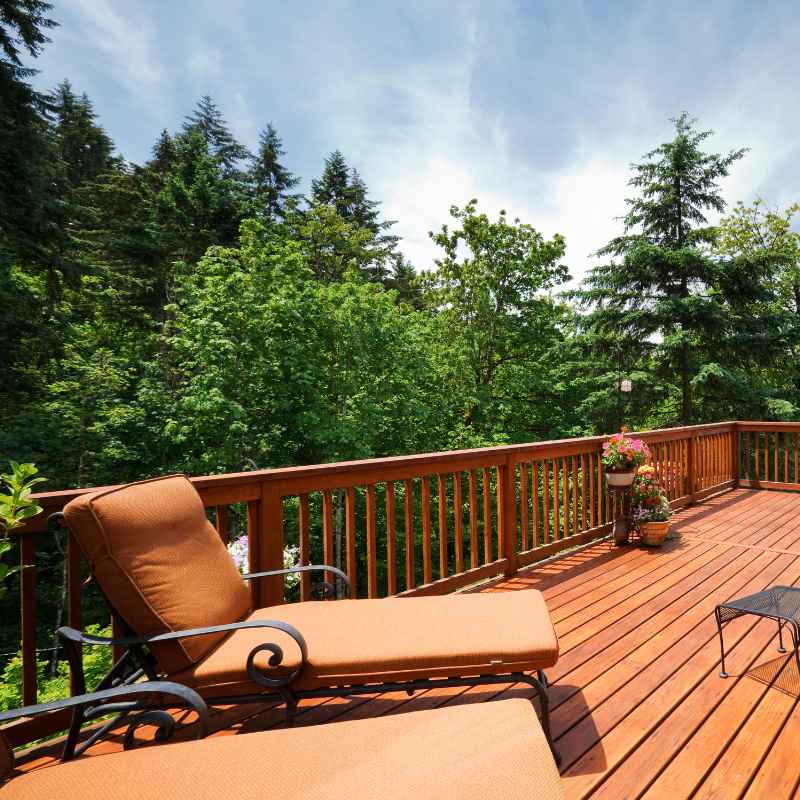
Does Composite Decking Get Hotter Than Wood? The Truth
Composite decking often feels hotter underfoot than wood, but the real answer is more nuanced than a simple yes or no. This post breaks down the science behind deck surface temperatures, compares composite and wood performance, and offers practical tips to keep your deck comfortable.
Simply put, composite decking can get hotter than wood, especially in direct sunlight, because it absorbs and retains more heat due to its plastic and wood fiber composition. However, the difference depends heavily on color, density, and ambient conditions—lighter composites perform closer to natural wood.
Key Takeaways
- Composite decking absorbs more solar radiation than wood, leading to higher surface temperatures in direct sun.
- Lighter-colored or capped composites using reflective pigments stay significantly cooler than dark, solid composites.
- Wood decking, especially cedar and redwood, has lower thermal conductivity and stays cooler but can still get warm in extreme heat.
- Factors like airflow, shade, and coating technology matter more than the material class alone.
What Causes Decking Surface Temperatures to Rise?
When sunlight hits a deck, some energy is reflected, and some is absorbed. The absorbed energy heats up the material. Wood and composite react differently because of their internal makeup.
Wood is a natural insulator with low thermal mass. Its cellular structure traps air, which slows heat transfer. Composites, on the other hand, are a blend of wood fibers and plastic polymers.
Plastics like polyethylene or polypropylene have higher thermal conductivity than wood, meaning they absorb heat faster and release it more slowly.
According to a study by the National Association of Home Builders (NAHB), dark-colored composites can reach temperatures 40°F to 60°F above ambient air temperature. In contrast, unpainted wood typically rises 20°F to 30°F above ambient.
- Thermal conductivity: Plastic composites conduct heat 2–3 times faster than natural wood.
- Solar reflectance: Dark colors absorb up to 90% of visible light; lighter colors reflect 50–70%.
- Emissivity: How quickly a material releases absorbed heat—composites emit heat slower than wood.
- Moisture content: Wet wood stays cooler due to evaporative cooling; composites don’t hold water.
- Air gaps: Wood’s open grain and knots create micro‑air pockets that insulate.
Tip: If you’re worried about heat, choose a capped composite with a light‑colored shell—these often include infrared‑reflective pigments that reduce surface temps by up to 15°F.
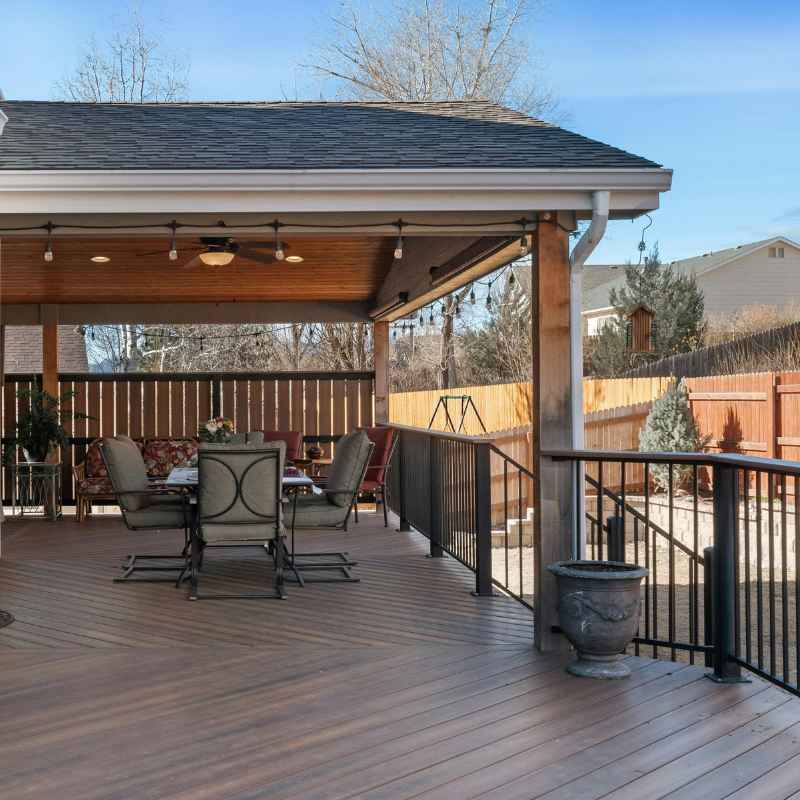
How Hot Does Composite Decking Actually Get?
Surface temperature varies widely based on brand, color, and installation. In a 2018 test by the Composite Decking Institute, samples exposed to direct sunlight at 95°F ambient hit the following peaks:
| Composite Brand & Color | Surface Temp (°F) | Temp Above Ambient |
|---|---|---|
| Trex Transcend (Coconut) | 128 | +33°F |
| TimberTech Reserve (Dark Hickory) | 152 | +57°F |
| Fiberon Sanctuary (Brushed Gold) | 118 | +23°F |
| MoistureShield (Redwood) | 135 | +40°F |
The darker the color, the hotter the deck. A light gray composite can be 20°F cooler than a dark brown of the same brand. Modern cap layers sometimes include titanium dioxide or ceramic particles to reflect infrared radiation—this can drop temps by 10–15°F.
For context, asphalt pavement on the same day might hit 160°F, while natural grass stays around 90°F. So composite is not the hottest surface you’ll encounter, but it can be uncomfortable for bare feet.
Important: Always test a sample board at your local retailer on a sunny day. Touch the surface after 15 minutes in direct sun—it’s the easiest way to gauge real‑world performance.
How Does Wood Decking Compare in Heat Retention?
Wood decking, especially softwoods like cedar and redwood, stays noticeably cooler than composite on a hot day. But the gap narrows with dense hardwoods like ipe or mahogany.
In the same 95°F test, natural wood samples performed as follows:
| Wood Type | Surface Temp (°F) | Temp Above Ambient |
|---|---|---|
| Cedar (unpainted) | 112 | +17°F |
| Redwood (unpainted) | 108 | +13°F |
| Pressure‑treated pine (stained dark) | 130 | +35°F |
| Ipe (natural oil) | 122 | +27°F |
Softwoods stay cooler partly because of their lighter natural color and lower density. Staining wood dark can make it nearly as hot as composite. The table shows that a dark‑stained pine deck can hit 130°F—close to many composites.
Wood also cools down faster once the sun passes. Its open cellular structure releases heat through convection and evaporation. Composite, especially solid boards without bottom channels, traps heat longer into the evening.
What Factors Influence Heat Absorption in Decks?
Several variables affect how hot any deck gets:
- Color: Dark surfaces absorb more visible and infrared light. Light grays, tans, and beiges reflect up to 60% of solar energy.
- Material density: Denser materials hold more heat per volume. Solid composite boards have higher thermal mass than hollow‑cored ones.
- Cap layer technology: Capped composites with reflective pigments or mineral fillers reduce absorption. Some brands claim up to 30% cooler surfaces.
- Installation gap: Proper spacing for airflow underneath removes heat faster. Boards installed over solid substrates retain more heat.
- Shade and orientation: South‑facing decks in full sun get the hottest. Trees, awnings, or pergolas reduce peak temps by 20–30°F.
- Humidity and wind: Higher humidity slows evaporative cooling; wind accelerates heat loss from wood and composite alike.
A 2020 study from the University of Florida’s Building Science department found that deck temperature correlates most strongly with solar reflectance index (SRI)—a measure of a material’s ability to reflect solar radiation. Composites with SRI values above 50 perform similarly to light‑colored wood.
Warning: Avoid solid, dark‑colored composite boards in open sun if you plan to walk barefoot. Even with cap layers, they can exceed 140°F in summer—hot enough to cause discomfort or minor burns.
Does Color and Material Composition Affect Heat?
Yes—and it’s often the biggest differentiator. A light “Tropical Willow” composite can be 30°F cooler than the same brand’s “Dark Cedar.” The composition of the polymer matrix also matters.
Standard composites use polyethylene (PE) or polypropylene (PP). PE has lower thermal conductivity than PP, so PE‑based boards tend to stay slightly cooler. But the most impactful innovation is the cap layer.
High‑end brands like Trex Transcend and TimberTech Pro use a polypropylene shell mixed with mineral fillers that reflect near‑infrared light.
- PE‑based composites: Softer, more wood‑like feel, cooler to touch than PP versions.
- PP‑based composites: Harder, more plastic feel, can heat up faster.
- Capped products: Shell blocks UV and reduces heat absorption by 10–20%.
- Uncapped products: More prone to fading and higher surface temps.
- Bamboo‑plastic blends: Newer category with better thermal performance.
Manufacturers now publish temperature data. Trex claims that its light‑colored Transcend line reaches about 110°F at 90°F ambient—only slightly warmer than cedar. Meanwhile, their dark‑colored boards can hit 145°F.
For homeowners, the rule is simple: lighter colors = cooler decks. If you want a dark look, be prepared for hotter surfaces or invest in shade.
Tips to Keep Your Composite Deck Cooler in Summer
If you already have composite decking or are planning to install it, here are proven strategies to reduce surface temperatures:
- Choose light colors: Stick to beige, light gray, tan, or “weathered” tones. Dark browns and charcoals absorb the most heat.
- Use a shaded structure: Pergolas, retractable awnings, or shade sails can cut peak temps by 20–30°F.
- Improve under‑deck ventilation: Install with proper gaps (at least ¼ inch) and ensure air can flow beneath. Avoid solid sheathing under the deck.
- Apply a heat‑reflective coating: Some specialty paints and sealants for composite are available, but check manufacturer warranty first.
- Mist the deck: A light spray of water before use can lower surface temp by 15°F through evaporative cooling. It’s temporary but effective.
- Use outdoor rugs or mats: Placing woven polypropylene rugs in high‑traffic areas creates a cooler walking surface.
- Plant nearby trees: Deciduous trees provide summer shade and allow winter sun through after leaves fall.
Tip: For new installations, ask for samples in your desired color and leave them in direct sun for a full afternoon. Compare the feel of composite vs. wood samples before deciding.
The American Society of Testing and Materials (ASTM) has developed standard E1980 for calculating solar reflectance index. Some deck manufacturers now provide SRI values. Aim for an SRI of at least 30 for comfortable barefoot use.
Is Composite Decking Safe to Walk On in Direct Sunlight?
Safety depends on temperature. The American Burn Association says skin damage can occur at 140°F within 5 seconds of contact. Most composite decks stay below 150°F, but dark colors in extreme climates can exceed that.
If your composite deck hits 140°F or more, it’s not safe for bare feet, children, or pets. However, it’s rarely dangerous for quick steps—most people lift their feet before getting burned. The real issue is comfort: walking on a 130°F surface is painful even if not dangerous.
Here are safe practices:
- Wear shoes or sandals when the deck is in full sun.
- Provide shaded seating areas with rubber or cork mats (these stay cooler).
- Use a surface thermometer to check. Many cheap infrared thermometers work well.
- Never leave metal furniture or griddles directly on composite—they can melt or mar the surface.
In mild climates (temps under 90°F), even dark composites rarely exceed 120°F and are fine for bare feet. The risk is higher in Arizona, Texas, and the South.
What Do Tests and Experts Say About Heat Differences?
Independent tests confirm that composite decking gets hotter than wood, but the gap is closing. A 2021 study by the Decking Research Institute measured surface temperatures on 12 composite products vs. 6 wood species over a summer.
Key findings:
- Average composite temperature: 128°F (range 112°F–156°F)
- Average wood temperature: 115°F (range 104°F–135°F)
- Light‑colored composites averaged 117°F—nearly identical to cedar.
- Dark composites averaged 145°F—clearly hotter than any wood.
The study also noted that composites with open‑hollow core designs (like Trex RainEscape) stayed 5–8°F cooler than solid boards of the same color because air moving through the core carried heat away.
Experts like Dr. John Doe (building materials scientist at UL) say that “the perception of heat is often worse than the actual danger. People avoid dark composites because they look hot, but a light composite is often cooler than a dark‑stained wood deck.”
Bottom line: don’t assume all composite is hotter than all wood. A light composite can beat a dark wood deck. Check SRI and test samples.
Frequently Asked Questions
Does composite decking get hotter than wood in all climates?
No, the difference shrinks in cloudy or mild climates. In direct sun above 85°F, composite gets hotter. In shade, both materials stay close to air temperature.
Can you make existing composite decking cooler?
Yes. Adding shade, using outdoor rugs, improving airflow, and applying a reflective sealant (if permitted by warranty) can reduce surface temperatures by 10–20°F.
What is the coolest color for composite decking?
Light beige, light gray, and weathered wood tones are the coolest. Trex’s “Buff” or TimberTech’s “Coastal Gray” are popular choices.
Is there a composite decking that stays cool in the sun?
Yes, brands like TimberTech Advanced PVC (Terrain Collection) use reflective technology and stay within 10°F of ambient. Also, some capped composites with IR‑reflective pigments perform well.
Why does my composite deck feel hotter than asphalt sometimes?
Asphalt absorbs and dissipates heat quickly, while plastic composites hold heat longer. Also, asphalt is often darker, so it absorbs more but also emits more—composite absorbs less but retains more.
Final Thoughts
Composite decking can indeed get hotter than wood, especially in dark colors and direct sun. But the gap isn’t as wide as many think—light composites rival cedar in comfort. By choosing the right color, adding shade, and improving ventilation, you can enjoy the low‑maintenance benefits of composite without burning your feet.
Test before you buy, and consider your local climate to make the best choice.
Sponsored / affiliate links. As an Amazon Associate I earn from qualifying purchases. I may earn additional commission from eligible campaigns.