Which Heat Transfer Method Works In Empty Space? Explained
It’s a question that pops into your head when you think about space travel or even just the sun warming your face. How does heat move when there’s nothing there, no air, no water, just… empty space? It’s a puzzle that feels like it shouldn’t have an answer, but thankfully, science has figured it out.
We’re going to break down exactly how heat finds its way through the vast emptiness.
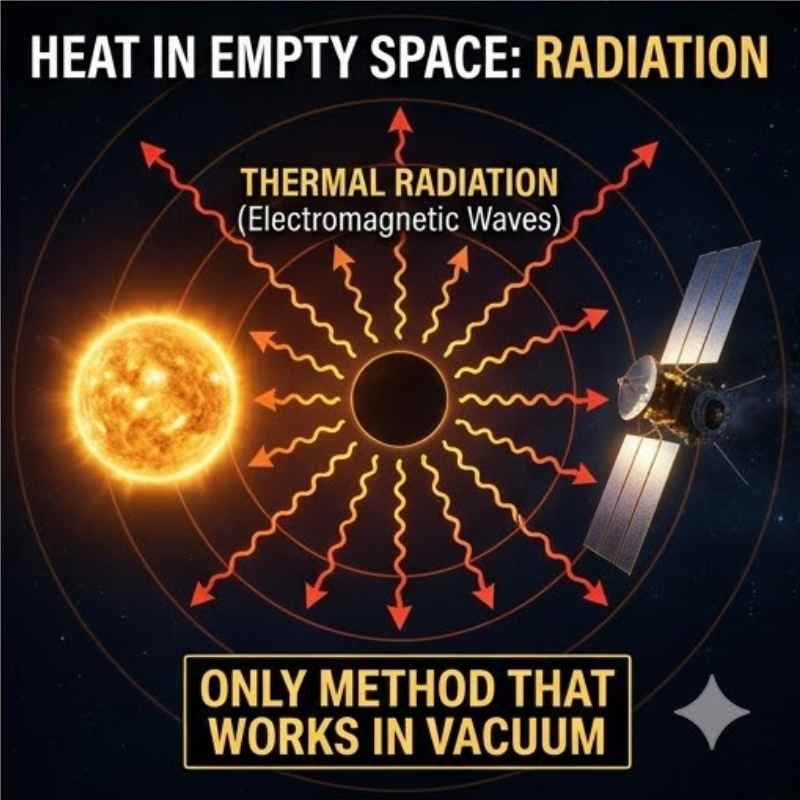
The primary way heat moves through empty space is through radiation. This method doesn’t need a medium like air or water to travel. Instead, it uses electromagnetic waves. Think of it like light from the sun reaching Earth across millions of miles of vacuum. This radiant heat is essential for understanding heat transfer in space.
Understanding Heat Transfer
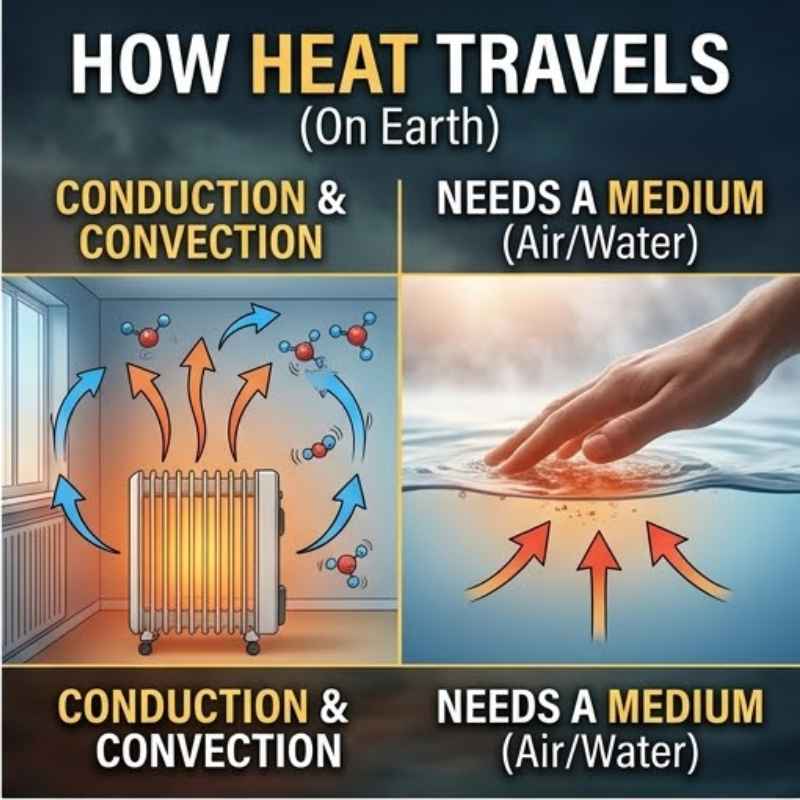
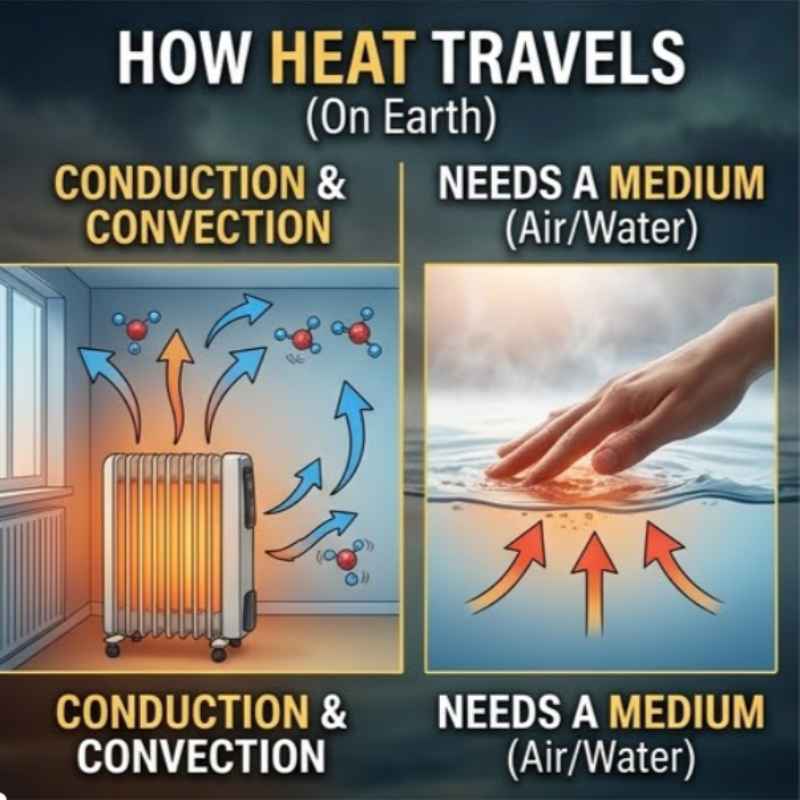
Before we dive into the void, let’s quickly touch on the ways heat normally moves. We know there are three main ways: conduction, convection, and radiation. Think about your kitchen.
Conduction is when you touch a hot pan handle. Heat moves straight from the pan to your hand. That’s direct contact.
Convection is what happens when you boil water. The heat from the stove warms the water at the bottom. This warm water rises, and cooler water sinks down to get heated.
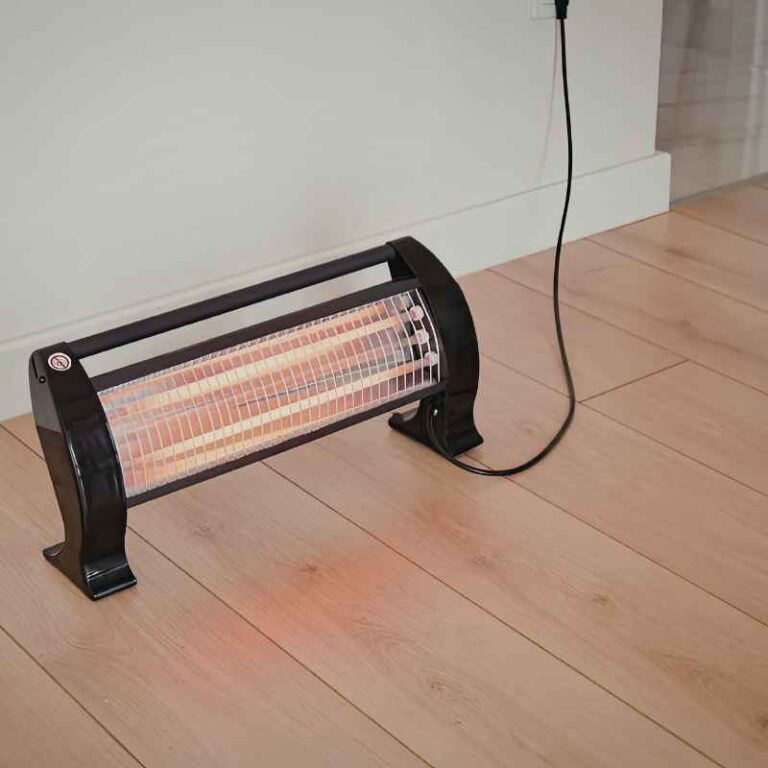
It creates a cycle, a current of heat moving through a fluid like water or air. It’s how a room gets warm from a heater.
Radiation is a bit different. It’s how the sun warms the Earth. It’s also how a campfire warms you even if the air between you and the fire is cool.
Radiation doesn’t need anything to travel through. It sends out waves, like light waves or infrared waves. These waves carry energy.
When they hit something, that energy turns into heat.
The Challenge of Empty Space
Now, imagine empty space. It’s a vacuum. That means there are hardly any particles there.
No air, no water, no solid stuff. This is a big problem for conduction and convection. For conduction to work, particles need to bump into each other to pass heat along.
In a vacuum, there are too few particles to do that effectively.
Convection relies on fluids moving. If there’s no fluid, there’s nothing to form those currents. So, both conduction and convection, which are common on Earth, basically stop working in the vast emptiness of space.
This leaves us with only one method that can work: radiation. It’s the only one that can cross a vacuum.
Radiation: The Space Traveler’s Heat
Radiation is all about energy waves. Everything that has a temperature above absolute zero gives off thermal radiation. This radiation is in the form of electromagnetic waves.
These waves travel at the speed of light. They can go through empty space without losing much energy. It’s like a silent, invisible messenger carrying heat.
The hotter an object is, the more radiation it gives off. Also, the waves are shorter and more energetic. Think about a stove burner.
When it’s just warm, you don’t see any light. But as it gets hotter, it starts to glow red. That glow is visible light, which is also a form of electromagnetic radiation.
So, even if you can’t see it, it’s sending out heat waves.
The sun is a perfect example. It’s millions of miles away. Yet, its radiant energy travels through the vacuum of space.
It reaches Earth and warms our planet. This is a huge amount of heat transfer. Without radiation, we wouldn’t have warmth or light from the sun.
Spacecraft also rely on this. They can get very hot from the sun’s rays.
On the flip side, objects in space can also lose heat through radiation. If a spacecraft is in shadow, it’s not getting direct sunlight. It will then radiate its own heat away into the cold of space.
This is why controlling temperature on spacecraft is so tricky. They need to manage both heat coming in and heat going out.
This all means that radiation is the key method for heat transfer in empty space. It’s the only way heat can move from one place to another when there’s nothing in between them. It doesn’t need air, water, or any other substance.
It just needs energy and a path for waves to travel.
Personal Experience with Radiant Heat
I remember being on a camping trip years ago. We had a campfire going. It was a crisp autumn night.
The air was quite chilly, maybe in the 40s Fahrenheit. I was sitting a few feet away from the fire. I could feel the warmth on my face and arms quite strongly.
Yet, the air between me and the fire felt cool.
It struck me then how the heat was reaching me. There was no wind blowing the heat directly at me. The air was just still.
It was a clear example of radiant heat. The fire was emitting infrared waves. These waves traveled through the air.
When they hit my skin, they were absorbed. This made my skin feel warm.
It was a powerful lesson. Even though the air wasn’t carrying the heat like a convection current, the heat was still there. It was traveling in a different form.
This is precisely how heat works in space. The only difference is that the “air” between the heat source and the object is even emptier. So, radiation becomes the absolute champion for any heat transfer happening there.
Understanding Radiant Heat Sources
What emits radiant heat?
- Anything warm: The sun, stars, planets, even people.
- The hotter it is, the more it radiates.
- Think of a hot stovetop or a lit light bulb. They both give off heat you can feel.
Real-World Context: Spacecraft and Satellites
In space, everything is a battle against the extreme temperatures. Outer space is incredibly cold, close to absolute zero. But direct sunlight can be incredibly hot.
A spacecraft orbiting Earth is constantly exposed to these extremes. It’s like being in an oven and a freezer at the same time.
The parts of a spacecraft facing the sun soak up a lot of radiant heat. They can get very hot. The parts facing away from the sun radiate their heat out into the blackness.
They can become very cold. This temperature difference can cause materials to expand and contract. It can also damage sensitive equipment.
Engineers designing spacecraft use special materials. They use reflective coatings. These coatings bounce sunlight away.
This stops the spacecraft from overheating. They also use insulation. This helps trap heat inside.
It keeps critical parts at a stable temperature. Sometimes, they use radiators. These are panels designed to radiate excess heat away.
The International Space Station (ISS) is a great example. It has large, white radiators. These radiators are crucial.
They help shed the heat generated by the station’s equipment and the astronauts. Without them, the ISS would quickly overheat. This shows how important managing radiant heat is for survival in space.
Even simple satellites need careful thermal design. They might have a single solar panel. One side of the panel faces the sun and gets hot.
The other side faces away and gets cold. This can cause stress on the panel. Engineers have to think about how heat moves, even in tiny amounts, from the hot side to the cold side via conduction through the panel itself.
Space Heat Transfer: Myth vs. Reality
Myth: Heat can’t travel in space because there’s nothing there.
Reality: Heat travels through empty space via electromagnetic radiation. The sun warming Earth is proof.
Myth: Space is just cold.
Reality: Space has extremes. It’s cold in shadow but can be extremely hot in direct sunlight.
What This Means for You
So, how does this affect us here on Earth? Well, understanding radiation in space helps us understand it better here too. Many of our technologies rely on this knowledge.
Think about solar panels on houses. They convert the sun’s radiant energy into electricity. The sun’s rays are traveling through space to get to them.
Even on a cloudy day, you can feel the sun’s warmth. That’s radiation. It can penetrate clouds to some extent.
This is why wearing sunscreen is important, even when it’s not sunny. The UV rays, a form of radiation, are still there.
When it’s really cold outside, and you’re standing near a window, you might feel a draft. That’s convection. But if you stand near a window on a sunny day, you can feel the warmth coming in.
That’s radiation. The glass lets the sun’s rays pass through.
The principles of radiant heat transfer are vital for things like building insulation. Good insulation traps heat. It stops it from escaping by radiation.
It also slows down conduction and convection. But understanding radiation is key, especially for high-temperature applications or in environments where convection and conduction are limited.
It also helps explain phenomena like why asphalt gets so hot on a sunny day. It’s absorbing a lot of solar radiation. This makes it much hotter than the surrounding air.
This is a direct application of how radiant energy heats surfaces.
Quick Scan: Heat Transfer in Empty Space
| Method | Works in Space? | Why? |
| Conduction | No | Needs direct particle contact; space has very few particles. |
| Convection | No | Needs a fluid (gas or liquid) to move heat; space is a vacuum. |
| Radiation | Yes | Uses electromagnetic waves that travel through a vacuum. |
Quick Fixes & Tips for Understanding
While you can’t exactly “fix” heat transfer in empty space, you can apply the knowledge. Here are some simple ways to think about it:
- Think of Light: Radiant heat travels like light. If light can reach something, heat can too.
- Hot Things Glow: The hotter something is, the more radiation it gives off. You might even see it as light.
- Shadows are Cold: If something is blocking the radiant heat source, it will be cooler.
- Reflective Surfaces Bounce Heat: Shiny surfaces send radiation away. This is why emergency blankets are shiny.
- Dark Surfaces Absorb Heat: Dark colors absorb more radiation. This is why black shirts get hotter in the sun.
These simple ideas can help you visualize how heat moves, especially when thinking about space. They are practical ways to remember the power of radiation.
Frequent Questions About Heat Transfer in Space
How does the sun warm the Earth if space is empty?
The sun warms the Earth through radiation. The sun emits electromagnetic waves, including infrared radiation, which carry heat. These waves can travel through the vacuum of space without needing a medium.
When they reach Earth, they are absorbed by the atmosphere and the surface, warming our planet.
Can heat transfer from a hot object to a cold object in a vacuum?
Yes, heat can transfer in a vacuum, but only through radiation. A hotter object emits more thermal radiation. This radiation travels through the vacuum.
When it hits a colder object, it can be absorbed, transferring energy and thus heat. Conduction and convection cannot occur in a vacuum.
Why are spacecraft covered in shiny materials?
Spacecraft are often covered in shiny, reflective materials to manage temperature. These materials reflect a significant amount of solar radiation. This helps prevent the spacecraft from overheating in direct sunlight.
It’s a key strategy for thermal control in the harsh environment of space.
How do astronauts stay warm or cool inside a spacecraft?
Astronauts inside a spacecraft are in a controlled environment. The spacecraft itself has sophisticated thermal control systems. These systems manage heat generated by equipment and people.
They use insulation, radiators, and sometimes active cooling systems to maintain a comfortable temperature. Heat transfer within the spacecraft is a mix of conduction, convection, and radiation.
Does heat escape from a spacecraft into space?
Yes, spacecraft do lose heat to space. This happens primarily through radiation. Any object with a temperature above absolute zero emits thermal radiation.
A spacecraft radiates its own heat away into the cold vacuum of space. This is why thermal management is so critical for spacecraft design.
Can you feel the heat of distant stars?
While stars emit tremendous amounts of radiant energy, they are extremely far away. The intensity of that radiation decreases significantly with distance. So, while stars are radiating heat, it’s usually not enough for us to feel directly on Earth, even through the vacuum of space.
We detect their light and other electromagnetic signals.
Conclusion
So, the mystery of heat transfer in empty space is solved. It’s all about the power of radiation. This invisible force is what allows the sun’s warmth to cross the void.
It’s also what spacecraft use to manage their temperatures. Understanding this principle is fundamental to space exploration and many technologies we use every day.
Sponsored / affiliate links. As an Amazon Associate I earn from qualifying purchases. I may earn additional commission from eligible campaigns.