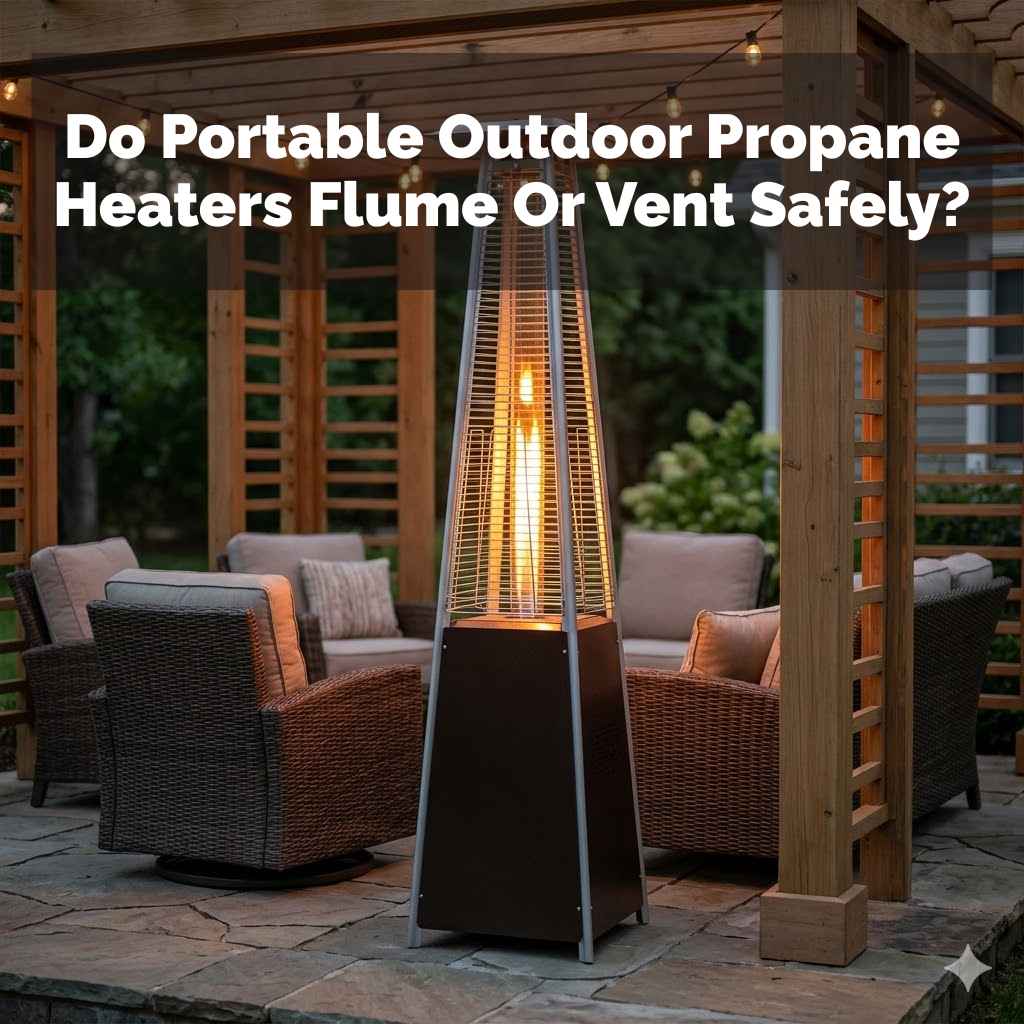
Do Portable Outdoor Propane Heaters Flume Or Vent Safely?
Many portable outdoor propane heaters are designed to vent exhaust gases directly into the surrounding air. They do not have a traditional flume or chimney like indoor appliances. Safe operation relies on ample outdoor ventilation.
How Portable Outdoor Propane Heaters Work
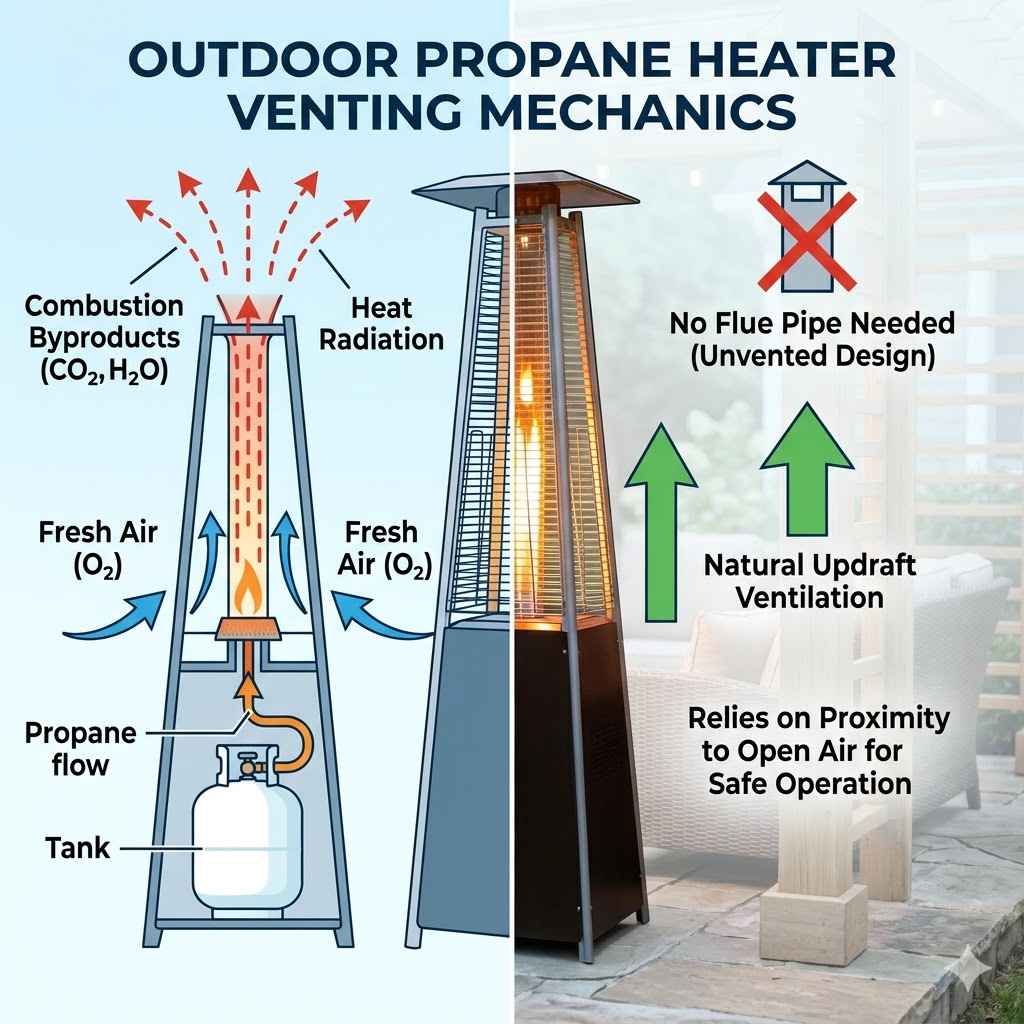
These heaters create warmth by burning propane. Propane is a fuel gas. When it burns, it creates heat.
It also creates exhaust gases. These gases are mostly carbon dioxide and water vapor. But, incomplete burning can create dangerous carbon monoxide.
The heater has a burner. This is where the propane mixes with air. Then, it ignites.
The heat rises from the burner. It warms the area around it. The exhaust gases are released.
They go out into the open air.
Think of it like a campfire. Campfires burn wood. They release smoke and heat.
They don’t have a chimney. They vent into the sky. Portable outdoor heaters are similar.
They vent into the open. This is why they are for outside use only.
The Importance of Ventilation
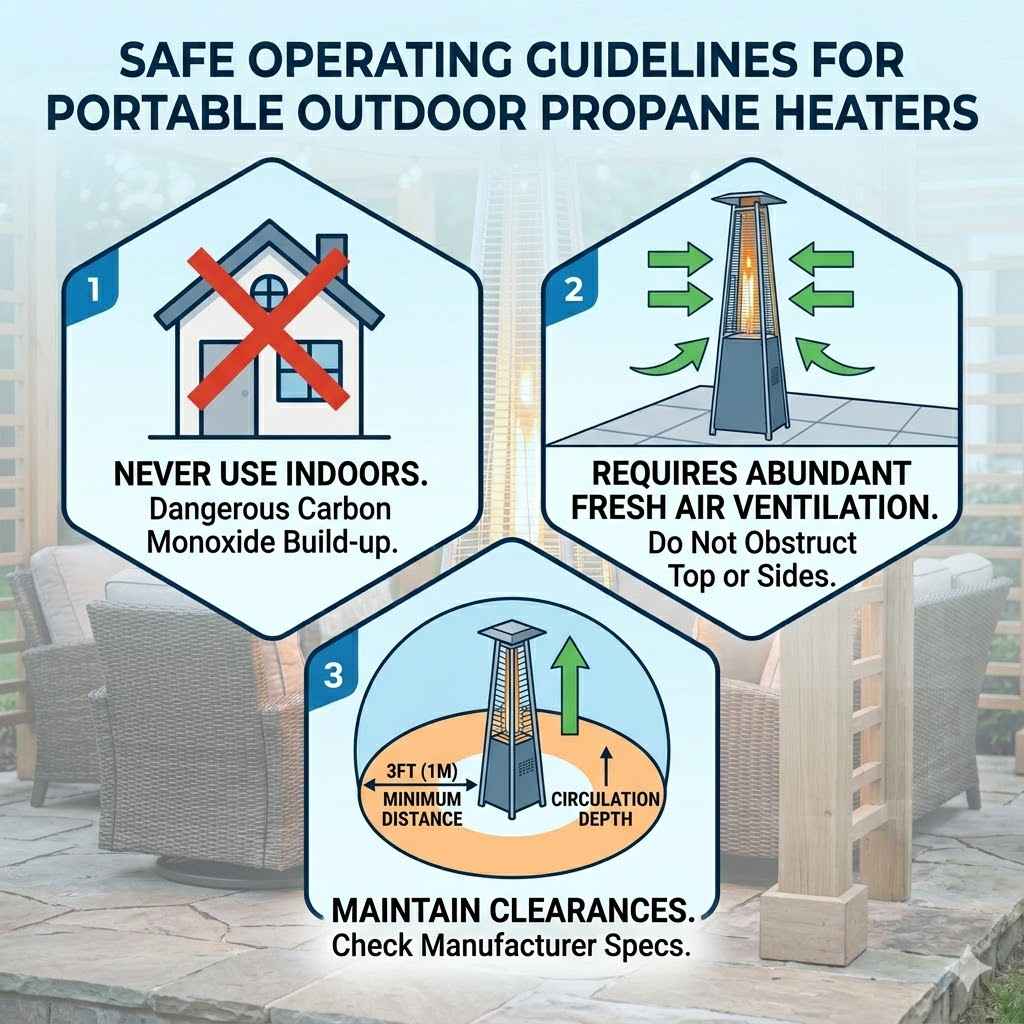
Ventilation is key for these heaters. It means having plenty of fresh air. Outdoor spaces usually have this.
Wide-open patios, decks, or yards are good. These spaces allow exhaust gases to spread out. They do not build up.
If there isn’t enough ventilation, gases can build up. The most dangerous gas is carbon monoxide. This gas is colorless and odorless.
It can make people very sick. In high amounts, it can be deadly. This is why using them indoors is a big no-no.
Even on a windy day, some buildup can happen. This is especially true if you are very close to the heater. Or if you are in a covered area.
Like a screened-in porch with no open sides. Always check your surroundings.
Personal Experience with Patio Heaters
I remember one crisp autumn evening. My family was gathered on our back deck. We had just bought a new portable propane heater.
It was a tall, upright one. It looked quite stylish.
We turned it on. The heat was instant and lovely. We all moved closer.
The conversation flowed easily. I was enjoying the warmth and company. Then, a slight breeze picked up.
It blew some leaves around.
As it did, I noticed a faint smell. It wasn’t strong. But it was there.
It reminded me a little of a gas stove that’s not quite right. My stomach did a little flip. I quickly thought about the heater.
I remembered reading the manual. It stressed outdoor use and ventilation. Our deck is fairly open.
But we did have an overhang above us. It wasn’t fully enclosed, but it was a roof. I felt a little pang of worry.
Was the smell just from the initial burn-off? Or was it something more?
I casually suggested we move our chairs a bit further out. Towards the edge of the deck. Where there was no roof.
Everyone agreed. The smell seemed to disappear completely. It was a good reminder.
Even with plenty of open space, paying attention to where the heat and exhaust go is important.
Understanding Gas Flow
Fuel Source: Liquid propane is stored in a tank.
Vaporization: Heat from the surroundings turns the liquid propane into gas.
Regulation: A regulator controls the flow of gas from the tank.
Burner Mix: Gas mixes with air at the burner.
Combustion: Ignition creates heat and exhaust gases.
Exhaust Release: Gases exit the heater into the open air.
What About “Fluming”?
The word “flume” usually refers to a channel. It’s often used for water. Or for a duct that carries gases away.
Like a chimney or vent pipe. Portable outdoor heaters don’t have these.
They are designed for direct venting. This means the exhaust gases go straight into the air around them. There’s no enclosed pipe.
There’s no special channel built into the heater. The heater itself is the point of release.
This direct venting relies on natural air movement. Wind and open space are the “flue” in this case. They carry the exhaust away safely.
So, while they don’t “flume” in the traditional sense, they do vent. They vent directly into your outdoor environment.
Types of Outdoor Propane Heaters
You see a few main types. Some are tall standing heaters. These are often seen at restaurants.
They have a wide base. A tall pole leads to the heating element. The exhaust comes from the top.
Others are smaller. They might sit on a table. Or they might be mounted on a railing.
These are usually for smaller spaces. Like a small balcony or patio table.
There are also some types that look like big tanks. These might have a grill-like top. Or a ceramic element.
They still burn propane. And they still release exhaust gases.
Regardless of the style, the principle is the same. Propane burns. Heat is made.
Exhaust gases are released. And they need to go somewhere. That somewhere must be open and well-ventilated.
Quick Safety Checks
- Location: Always use in a well-ventilated outdoor space.
- Clearance: Keep away from flammable materials like curtains or bushes.
- Tank Size: Ensure the propane tank is securely attached.
- Flame: Never leave a lit heater unattended.
- Wind: Strong winds can affect performance and safety.
Real-World Contexts
Imagine a breezy spring evening. You’re at an outdoor cafe. The tables have small propane heaters.
They are on the ground. The air moves freely. This is ideal.
The exhaust gases dissipate quickly.
Now, picture a slightly different scene. A couple has a patio. It’s covered by a roof.
And it has screens on two sides. They use a tall standing heater. The screens offer some protection from the wind.
But they also limit air movement.
If the heater runs for a long time, gases can build up. Especially if the wind isn’t blowing much. The screens act like walls.
They trap the exhaust. This is where the danger increases. Even if it’s not fully enclosed, less ventilation is still a risk.
Another scenario: a large backyard party. People are milling around. Some might stand close to a heater for warmth.
They might not realize the exhaust is near them. This is why awareness is so important. Everyone needs to know these heaters are for warmth, not for breathing in fumes.
Myth vs. Reality
Myth: Outdoor heaters vent like indoor ones with pipes.
Reality: Most portable outdoor heaters vent directly into the open air.
Myth: Any outdoor space is safe.
Reality: Spaces with limited airflow or enclosed areas are risky.
Myth: The smell is just propane.
Reality: While some initial smell is normal, persistent or strong odors can indicate issues or dangerous gas buildup.
What This Means for You
So, do they flume or vent safely? They vent directly. And whether that’s safe depends on you.
It depends on how you use them. And where you use them.
When it’s normal: You’re on a wide-open patio. There’s a gentle breeze. The heater provides warmth.
You don’t smell any strong or unusual odors. You feel comfortable and relaxed.
When to worry: You’re in a covered porch or screened-in room. The air feels still. You start to smell a faint, strange odor.
Or you feel light-headed or notice headaches. This is when you should turn off the heater immediately.
Simple checks: Before turning it on, look around. Is there plenty of open space? Are there any doors or windows to the inside nearby?
Make sure there’s nothing flammable close by. Keep children and pets at a safe distance.
If you are ever unsure, err on the side of caution. Turn it off. Move it to a more open area.
Or use it for a shorter time. Your safety and the safety of those around you come first.
Safety First: A Quick Checklist
Environment: Is it truly outdoors with lots of fresh air movement?
Flammables: Are curtains, cushions, or plants too close?
Propane Tank: Is it upright and securely attached?
Operation: Is the flame steady and blue, not yellow or sputtering?
Feelings: Do you or anyone else feel unwell?
Quick Tips for Safe Use
Using your outdoor propane heater is generally straightforward. But a few tips can ensure you stay safe.
Always read the manufacturer’s instructions. Every heater is a little different. The manual has specific details for your model.
Check the propane tank. Make sure it is securely connected. Look for any leaks.
You can sometimes smell propane if there’s a leak. Don’t use the heater if you suspect a leak.
Keep the heater clean. Dust and debris can affect how it works. It can also be a fire hazard.
Never use it to dry clothes. Or to warm up anything other than the air around you.
Turn it off when you are done. Or when you leave the area. Even for a short time.
Store propane tanks properly. Keep them upright. In a cool, well-ventilated place.
Away from flames or sparks.
Observational Flow: Safe Operation
1. Select Location: Wide-open outdoor area. Good air circulation.
2. Connect Tank: Securely attach propane tank per instructions.
3. Ignite Heater: Follow starting procedure. Observe flame color.
4. Enjoy Warmth: Maintain safe distance from heater and flammables.
5. Monitor Environment: Note any unusual smells or sensations.
6. Turn Off: Shut down completely when finished or leaving.
Frequent Questions
Do outdoor propane heaters produce carbon monoxide?
Yes, all propane heaters produce carbon monoxide (CO) as a byproduct of combustion. This is why they MUST be used only in well-ventilated outdoor areas. CO is a dangerous gas that can build up in enclosed spaces and cause serious harm or death.
Can I use a portable outdoor propane heater on a covered patio?
It depends on the patio’s coverage and ventilation. If the patio is only partially covered and has open sides, it might be safe. However, if it’s fully enclosed with walls and a solid roof, it’s too risky.
The exhaust gases need to escape freely into the open air.
What is the safe distance to be from a propane heater?
Manufacturers usually provide recommended clearances. Generally, keep at least a few feet away from the heat source. Always ensure there are no flammable items like curtains, dry leaves, or furniture too close to the heater itself.
Check your owner’s manual for specifics.
How do I know if my outdoor heater is venting properly?
If you don’t smell any strong or unusual odors, and the flame is a steady blue color, it’s likely venting properly. A yellow or flickering flame can indicate incomplete combustion. If you experience headaches, dizziness, or a persistent strange smell, turn off the heater immediately and move to fresh air.
What happens if the propane tank runs out while the heater is on?
If the propane tank runs out, the heater will simply shut off. There isn’t typically a dangerous event. However, it’s always best to monitor your fuel level and turn off the heater before the tank is completely empty.
This prevents unexpected shutdowns.
Can I use an outdoor propane heater in light rain?
Most portable outdoor propane heaters are designed to withstand some outdoor elements. However, it’s crucial to check your specific model’s specifications. Avoid using it in heavy rain or strong winds.
Moisture can sometimes affect the ignition or burner. Always protect the propane tank from direct rain if possible.
Conclusion
Portable outdoor propane heaters vent their exhaust directly into the air. This is safe when done in a truly open, well-ventilated space. They don’t have chimneys because they rely on the outdoors for dispersal.
Always prioritize fresh air and awareness.
Sponsored / affiliate links. As an Amazon Associate I earn from qualifying purchases. I may earn additional commission from eligible campaigns.
 MEGAWISE Portable Air Conditioner and Heater, 420W 110V Compact AC Unit with Remote Control, 1400W Cooling Capacity, 800W Heating, Dehumidifier, Fan, Sleep Timer, ChampagneAZEUS Portable AC and Heater Unit, 420W 110V Compact Air Conditioner for Tent RV Truck Cabin and Small Room, 1400W Cooling, 800W Heating, Remote Control, Dehumidifier, Sleep Timer, Champagne