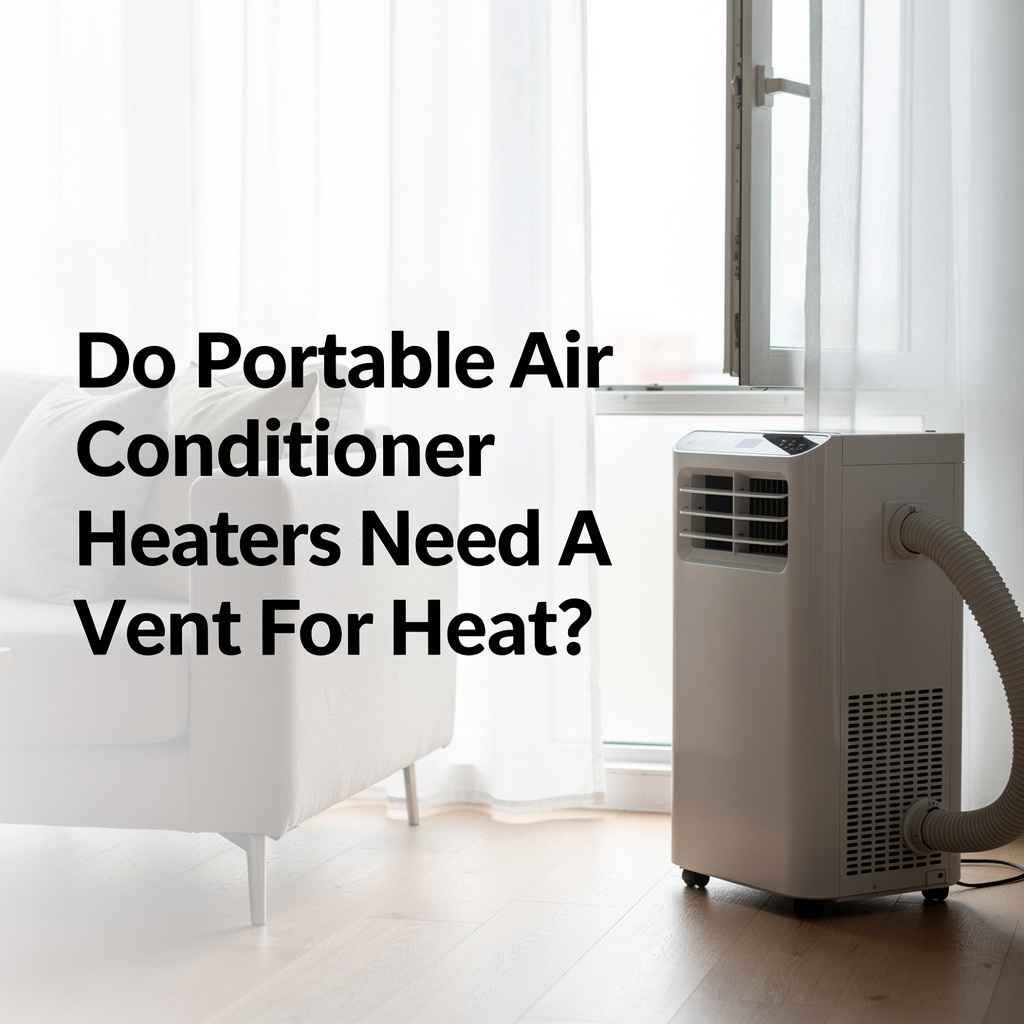
Do Portable Air Conditioner Heaters Need A Vent For Heat?
Understanding if your portable unit needs a vent for its heating function is key to safe and efficient operation. Many people assume venting is only for cooling, but the reality depends on the specific heating technology. We’ll cover the science and practicalities.
How Portable Air Conditioner Heaters Work
Portable air conditioners have been around for a while. They help cool down a room when the summer sun beats down. Many of these units are now “all-in-one” devices.
This means they can cool your space in the summer. They can also warm it up when the weather turns cold.
The cooling part is pretty straightforward. The unit pulls warm air from your room. It then passes this air over cold coils.
This takes the heat out of the air. The cool air is blown back into your room. The heat that was removed has to go somewhere.
That’s why air conditioners need to vent hot air outside. Usually, this is through a window hose.
Now, let’s talk about the heating side. This is where things can get a bit different. Not all portable units that have a heater function work the same way.
Some use a heat pump technology. Others might use a simple electric resistance heater, like a space heater.
A heat pump is a clever piece of tech. It works by moving heat from one place to another. In heating mode, it can actually pull heat from the outside air.
It then transfers this heat inside your room. This is very energy efficient. It’s similar to how a refrigerator works, but in reverse.
For this to work well, the unit still needs to manage air flow.
Other units might have a simple heating element. This is like the coils in a toaster. Electricity flows through a wire.
This wire gets hot. A fan then blows air over this hot wire. The warm air then enters your room.
This is a very direct way to create heat.
The Science of Venting for Heat
So, why might a heater need a vent? It really comes down to the type of heating technology used. For units that use a heat pump to generate heat, the answer is usually no, you don’t need a vent specifically for the heating function.
The heat pump’s job is to move existing heat into your room. It’s not creating heat by burning fuel or by expelling byproducts.
In this heat pump mode, the unit might still have a hose connected to the outside. But this hose might be for drawing in outside air to warm. Or it might be to release any condensation.
It’s not expelling hot, used air like in cooling mode. The main goal is to bring warmth in. So, no combustion gases are produced.
However, there’s a catch. Some “portable air conditioner heaters” are actually just two separate functions in one box. They might have a powerful air conditioner for cooling.
Then, they might have a separate electric resistance heater element inside. This is the kind of heater that works like a typical space heater. It turns electricity into heat directly.
If your unit has this type of electric resistance heating, it doesn’t produce harmful fumes. It doesn’t burn fuel. So, technically, it doesn’t require a vent to expel dangerous gases.
You can use it without any hose connected, just like you would a regular space heater.
But here’s where it gets tricky for many users and can lead to safety concerns. Some manufacturers might design these dual-function units with a single exhaust hose. This hose is used for cooling.
In heating mode, if the unit relies on an electric resistance heater, it might still need to expel some air. This is often to prevent the unit from overheating. It might also be to remove moisture or simply to ensure good air circulation within the appliance.
Consider this: when your unit is in cooling mode, it’s pulling warm room air, cooling it, and then expelling that warm air outside. If it’s a unit with a heating element, and it’s not a heat pump, it’s adding heat to the room air. It might still need to vent some air to prevent internal overheating or to manage moisture.
Some designs might reuse the existing exhaust hose for this purpose, even if it’s not strictly to vent fumes. This can be confusing.
The key takeaway is to check your specific model’s manual. It will tell you exactly how it works in heating mode. It will also specify if any venting is needed.
For safety, always follow the manufacturer’s instructions. Never assume.
Personal Experience: The Overheating Scare
I remember a few years back, I got one of those fancy portable units. It was advertised as an all-in-one solution. Cool in summer, heat in winter.
I was thrilled! The first cold snap hit, and I eagerly switched it to heat mode. I noticed it had an exhaust hose still attached to the window.
My brain, still stuck in summer mode, thought, “Why is this still hooked up? It’s supposed to be heating!” I figured it was just a leftover from the cooling setup. I unhooked the hose and tucked it away.
I turned on the heat, and for a while, it worked okay. The room started to feel warmer.
Then, I started to smell something… faint, but a bit odd. Like warm plastic. I kept the heat on, thinking it was just the new unit breaking in.
A few hours later, I walked into the room and the unit felt incredibly hot to the touch. Way hotter than I expected. I felt a bit of panic rise.
Was it going to catch fire?
I quickly turned it off. I let it cool down. I then pulled out the manual.
Reading through the heating section, I saw it clear as day. Even in heat mode, for my specific model, it recommended keeping the exhaust hose attached. It explained that the unit needed to vent some internal air to prevent overheating the electrical components.
It wasn’t expelling fumes, but it needed airflow to keep its internal parts from getting too hot. That experience taught me a valuable lesson: always read the manual, especially for dual-function appliances.
Understanding Your Unit’s Heating Type
Heat Pump Units:
- These units move existing heat.
- They don’t burn fuel.
- Generally, no venting is needed for heat itself.
- May still use a hose for air intake or condensation.
Electric Resistance Units:
- These use a heating element like a space heater.
- They turn electricity directly into heat.
- No combustion gases are produced.
- Some may still need a vent to prevent internal overheating.
Real-World Context: Dual-Function Design
The design of portable air conditioner heaters often leads to this confusion. Manufacturers try to create one unit that serves multiple purposes. This is great for consumers.
It saves space and money. But it means the internal workings have to accommodate different processes.
For cooling, the unit absolutely needs to expel hot air. This is a core principle of refrigeration and air conditioning. The heat removed from the room must be transferred outside.
This is why the exhaust hose is essential for cooling. It’s usually a thick, insulated hose that fits into a window kit.
When the unit switches to heating mode, the engineers have a few choices. If they use a heat pump, the system is designed to move heat from outside in. This process doesn’t create harmful byproducts that need venting.
The unit’s fan will still run, circulating air. It might need to draw in outside air if the outside temperature is very low. It might also need to vent moisture.
If the unit uses electric resistance heating, it’s like having a powerful space heater inside the air conditioner casing. This method is simple and effective for heating. However, high-powered electrical components can generate significant heat.
To ensure the longevity and safety of the unit, a mechanism to dissipate this internal heat is often included. Sometimes, this involves a smaller vent or even reusing the main exhaust hose, not for expelling fumes, but for managing internal heat.
Think about it like a car. A car engine needs an exhaust to get rid of burned fuel. But the radiator in a car is there to cool the engine itself, not to expel fumes.
Similarly, some parts of your portable heater might need cooling, even when the main job is heating the room. The hose might serve a secondary ventilation purpose related to the appliance’s internal workings.
It’s also worth noting the U.S. context. In American homes, especially with varying climates, these units are popular.
They offer flexibility. People might use them in apartments, dorm rooms, or secondary living spaces where a permanent HVAC system isn’t feasible or desired. The dual-functionality appeals to this need for versatile climate control.
Quick Scan: Venting Needs by Mode
| Mode | Typical Venting Need | Reason |
| Cooling | Yes, always | Expel hot air removed from room. |
| Heating (Heat Pump) | Usually No | Moves heat, no fumes. Hose may be for intake/moisture. |
| Heating (Electric Resistance) | Check Manual | May need venting for internal unit cooling/air circulation. |
What This Means for You: Safety First
The most important thing is your safety. If a portable unit has a heating function, you need to know how it works. This is especially true if you are considering using it without a vent in heating mode.
Always refer to your unit’s user manual.
Look for specific instructions for the heating mode. Does it say the exhaust hose must remain connected? Or does it give you an option?
If it mentions expelling air for any reason, even if it’s not combustion fumes, it’s best to follow that guidance.
Here are some simple checks you can do:
- Read the Manual: This is your first and best resource.
- Identify Heating Type: Does it mention “heat pump” or just “electric heat”?
- Visual Inspection: Does the unit have multiple hoses? Or just one? What does the manual say about them in heat mode?
- Smell Test: If you run it in heat mode without a vent (and the manual says it’s okay), and you smell anything strange like burning plastic or fumes, turn it off immediately.
If your unit is a heat pump model, you’re likely in the clear for venting heat. The air it exhausts is not harmful. It’s just air that has been processed.
It might be slightly cooler or warmer than room air, but it’s not a byproduct of combustion.
If your unit uses electric resistance heating, and the manual says you can run it without a vent, then it’s generally safe. However, pay attention to how hot the unit itself gets. If it feels excessively hot, or if you notice any unusual noises or smells, it’s a sign something isn’t right.
In such cases, it’s better to connect the vent hose if possible or stop using the unit.
Normal vs. Concerning Signs in Heat Mode
Normal Signs:
- Warm air blowing from the unit.
- Unit surface feels warm to the touch (not dangerously hot).
- Standard operating sounds.
Concerning Signs:
- Strong, unusual smells (burning plastic, chemical odors).
- Unit is excessively hot to touch.
- Strange noises like crackling or hissing.
- Error codes on the display.
- Room suddenly feels stuffy or airless (if a vent is needed for circulation).
Quick Tips for Using Your Portable Heater
When you’re using your portable air conditioner heater, especially in winter, here are a few tips to keep in mind for efficiency and safety:
- Close Doors and Windows: Just like with cooling, close doors and windows to keep the warm air inside the room you’re trying to heat.
- Placement Matters: Don’t block the air intake or outlet. Keep the unit clear of curtains or furniture.
- Set the Thermostat: Use the thermostat to maintain a comfortable temperature. Avoid running it at maximum heat all the time if not needed.
- Regular Cleaning: Clean the air filters regularly. This helps the unit run efficiently and keeps the air clean.
- Condensation: Many units collect condensation. Ensure the drain hose is properly placed if your unit has one, or empty the collection tank as recommended.
Frequently Asked Questions About Portable Heater Venting
Do all portable AC units with a heater function need a vent?
Not necessarily. It depends on the type of heating. Heat pump models typically don’t need a vent for heat.
Electric resistance models usually don’t produce harmful fumes, but some may still need venting for internal cooling or air circulation. Always check your manual.
Can I use my portable heater indoors without connecting the hose if the manual says it’s okay?
Yes, if your manual specifically states that the unit can be used in heating mode without the exhaust hose connected, and it’s not a heat pump that needs outside air, it is generally safe to do so. This usually applies to electric resistance heaters that need to vent internal heat. Never assume it’s okay.
What happens if I run my portable heater without a vent when it needs one?
Running a unit without a necessary vent can cause it to overheat. This could damage the appliance, reduce its lifespan, or even pose a fire risk in extreme cases. It can also lead to poor performance or the unit shutting down.
Is it safe to vent a portable heater into a closed room?
No. If your unit requires venting to expel fumes (which is rare for electric heaters, but possible for fuel-burning ones not typically found in portable AC units), you should never vent into a closed room. Always vent combustion byproducts directly outside.
For portable AC heaters using electric resistance or heat pumps, venting is usually for internal unit management, not fume expulsion.
My unit has two hoses. Do I need to use both in heat mode?
This depends entirely on the model. Some units have one hose for exhaust and another for intake. In heat mode, one hose might be for drawing in outside air, while the other manages condensation or internal air.
Your manual will specify the correct hose configuration for each mode.
What is the difference between a heat pump heater and an electric resistance heater in a portable unit?
A heat pump moves existing heat from one place to another, making it energy-efficient. An electric resistance heater uses a heating element to convert electricity directly into heat, like a toaster or a typical space heater. Heat pumps generally don’t need venting for heat, while electric resistance heaters might need it for internal cooling.
Conclusion
So, do portable air conditioner heaters need a vent for heat? The answer isn’t a simple yes or no. It truly depends on the technology your specific unit uses.
Most heat pump models don’t need venting for heat. Units with electric resistance heaters might, but not to expel fumes. Always, always consult your owner’s manual.
It’s your best guide to safe and efficient operation. Following these guidelines helps keep your space warm and your unit running smoothly.
Sponsored / affiliate links. As an Amazon Associate I earn from qualifying purchases. I may earn additional commission from eligible campaigns.