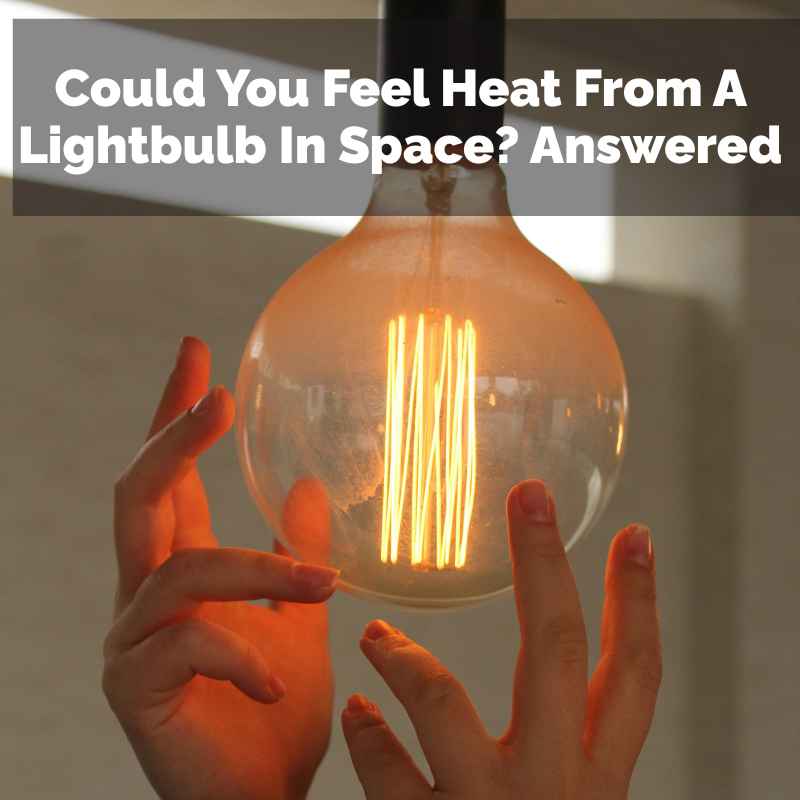
Could You Feel Heat From A Lightbulb In Space? Answered
The ability to feel heat from a lightbulb in space depends on proximity and whether the heat can reach you. In the vacuum of space, heat travels differently. You won’t feel heat through conduction or convection, only through radiation. If you are close enough to a lit bulb, you will feel its radiant heat.
Understanding How Lightbulbs Make Heat
Every time you flip a switch, your lightbulb does more than just glow. It’s actually a little heat-making machine. This is true for most kinds of bulbs, but especially the older kinds.
The Traditional Incandescent Bulb
Think about the classic lightbulb. It has a thin wire inside called a filament. When electricity flows through this wire, it gets super hot.
It gets so hot that it starts to glow and give off light. This glowing is called incandescence.
But here’s the thing: most of the energy used by this bulb doesn’t turn into light. A lot of it turns into heat instead. For a standard incandescent bulb, maybe only 5% to 10% becomes light.
The rest, a huge 90% to 95%, is heat!
This heat escapes the bulb. It warms up the air around it. This is why lamps feel warm to the touch after they’ve been on for a while.
This heat transfer happens in a few ways.
Conduction, Convection, and Radiation
We feel heat in our homes through different methods. Conduction is when heat moves through direct touch. If you touch a hot pan, heat moves from the pan to your hand.
This is conduction.
Convection happens when heat moves through fluids, like air or water. Hot air rises. This is why the top of a room is usually warmer.
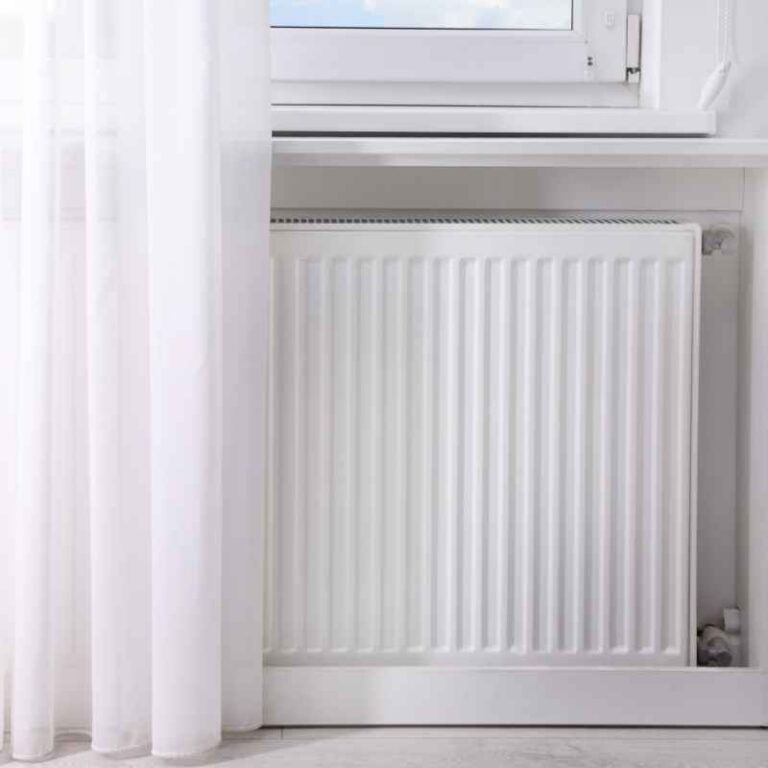
It’s also how a radiator heats a room. The hot radiator warms the air next to it. This air rises and spreads heat around.
Radiation is different. It’s when heat travels as waves, like light itself. The sun’s heat reaches us through the vacuum of space using radiation.
You don’t need air or direct touch for radiation to work. This is a key point for our space question.
Other Bulb Types
Newer bulbs, like LEDs and fluorescents, are much better. They waste less energy as heat. They turn more electricity into light.
So, an LED bulb might only produce a small amount of heat compared to an old incandescent bulb.
But even these bulbs produce some heat. It might not be as much, but it’s still there. And for our space scenario, any heat that is produced is important to consider.

The Vacuum of Space: A Different Kind of Environment
Space is not like Earth at all. It’s mostly empty. This emptiness is called a vacuum.
There’s no air. There are no gases. This makes a huge difference in how things work, especially heat.
No Air Means No Convection or Conduction
On Earth, when a lightbulb gets hot, it warms the air around it. This hot air then moves around the room. This is convection.
Also, if something touches the bulb, heat moves into that thing. This is conduction.
In space, there’s no air to move. There’s no air to warm up. So, convection is completely out.
If you were floating next to a lightbulb in space, the air currents that usually carry its heat away wouldn’t exist.
There’s also no air or other matter to conduct heat away. If the lightbulb was touching something, like a spacecraft wall, heat would conduct into that wall. But if it’s just floating there, with nothing touching it, conduction can’t happen either.
Radiation is King in Space
This leaves only one way for heat to travel: radiation. Just like the sun’s warmth reaches Earth, the heat from a lightbulb in space would travel outwards in waves. These waves carry energy.
When these waves hit something, like your skin, that energy can be absorbed.
This absorbed energy is what we feel as heat. So, if you were floating near a lightbulb in the vacuum of space, and it was on, you would feel its heat, but only because of radiation.
Heat Travel in Space vs. Earth
On Earth:
- Convection: Hot air rises and moves.
- Conduction: Heat moves by touching things.
- Radiation: Heat travels in waves (like from the sun).
In Space (Vacuum):
- Convection: Does not happen (no air).
- Conduction: Only happens if objects touch.
- Radiation: The main way heat travels.
The Experience of Feeling Heat in Space
So, let’s imagine you’re an astronaut. You’re on a spacewalk, maybe fixing something on the outside of the International Space Station. Suddenly, you notice a lightbulb nearby, perhaps a small work light attached to the station.
It’s on. You know lightbulbs get hot. But space is cold, right?
And there’s no air. You start to wonder if you’ll feel anything.
As you float closer, you can’t feel any air currents. It’s silent, except for your own breathing inside your helmet. Your suit is insulated, protecting you from the extreme cold of space.
But what about this lightbulb?
You extend your gloved hand, slowly, towards the bulb. You’re not going to touch it – that’s a big no-no! But you move your hand closer, within a foot or so.
And then, you feel it. A subtle warmth radiating from the bulb. It’s not like the intense heat you’d feel in your kitchen, but it’s definitely there.
It’s a strange sensation. You can’t see any visible heat waves, of course. You can’t feel any breeze.
It’s just this direct warmth on your glove. It’s a powerful reminder that heat is energy, and energy travels, even through the emptiness of space.
This is radiation at work. The bulb is sending out infrared energy. Your glove, and your skin inside it, absorb this energy.
Your body registers this absorption as warmth. The amount of warmth you feel depends on how close you are, how hot the bulb is, and how powerful its radiation is.
It’s a very different feeling than standing next to a heater on Earth. On Earth, you’d feel the heat on your skin, but also the air moving around you. In space, it’s just the direct wave of energy.
It’s a pure, unadulterated transfer of heat via radiation.
This experience highlights the importance of understanding how heat works in different environments. For astronauts, managing heat is crucial. Their suits need to keep them warm but also let excess heat escape.
Direct sunlight can heat them up a lot. So can heat from equipment.
Factors Affecting How Much Heat You Feel
So, you can feel heat from a lightbulb in space. But it’s not a simple yes or no. Several things change how strong that feeling is.
Distance is Key
This is probably the biggest factor. The further away you are from the lightbulb, the less heat you will feel. Heat radiation spreads out as it travels.
Think of a campfire. You feel its warmth when you’re close, but less so when you’re far away.
The intensity of radiation decreases with the square of the distance. This means if you double the distance, the heat you feel drops to one-fourth. So, to feel significant heat, you’d need to be quite close to the bulb.
The Lightbulb Type Matters
As we talked about, different bulbs make different amounts of heat. An old-fashioned incandescent bulb is a heat monster. It puts out a lot of infrared radiation, which is the heat we feel.
An LED bulb, on the other hand, is much more efficient. It makes less heat. So, you’d have to be much, much closer to an LED to feel any warmth at all.
Maybe close enough to risk melting your glove if it was super powerful!
A powerful floodlight bulb would feel much hotter than a small indicator light, even if they were the same type. The wattage or power output is critical.
Your Protection: The Spacesuit
Astronauts wear special suits. These suits are designed to protect them. They are very good at reflecting radiation.
They also have layers that help insulate. This means some of the heat from the lightbulb might bounce off your suit. Or, the suit’s layers might slow down the heat getting to your skin.
So, even if the bulb is radiating a lot of heat, your suit will act as a barrier. You might feel a slight warmth on the outside of your suit, but it might not reach you inside.
Quick Scan: Heat Felt in Space
Closest to Bulb: Strongest heat felt.
Farther from Bulb: Weakest heat felt.
Incandescent Bulb: More heat felt.
LED Bulb: Less heat felt.
Direct Exposure: More heat felt.
Spacesuit Barrier: Less heat felt.
The Background Temperature of Space
Space itself is very cold. Temperatures can be near absolute zero (-270.45 degrees Celsius or -454.81 degrees Fahrenheit). But this cold only matters if you are trying to get rid of heat.
When you’re near a heat source like a lightbulb, the radiation from the bulb is sending energy to you. This adds heat. The coldness of space is what’s around you, trying to pull heat away from you.
It’s a balance.
If the lightbulb is hot enough, the heat it radiates to you will be more than the heat space radiates away from you. That’s when you feel warmer. The background temperature doesn’t stop the radiation from reaching you; it just affects how quickly your body loses heat overall.
Real-World Scenarios and Why It Matters
Understanding heat transfer in space isn’t just a fun thought experiment. It’s crucial for keeping astronauts safe and equipment working.
Spacecraft Design
Spacecraft, like the ISS, are complex systems. They have lots of electronics that produce heat. They also have lights for astronauts to work by.
Engineers have to figure out how to manage all this heat.
They use special materials to insulate parts of the spacecraft. They use radiators to dump excess heat into space through radiation. They have cooling systems that circulate fluids to move heat around.
If a light on the outside of the ISS was too hot and too close to something sensitive, it could cause damage. Or, if heat isn’t managed properly inside, electronics could overheat and fail. So, knowing how heat moves is a big deal.
Astronaut Safety
Astronauts need to be protected from both the extreme cold and the intense heat of direct sunlight. Their spacesuits are their personal spacecraft. They have multiple layers to control temperature.
A bright light source near an astronaut could be a hazard. It could overheat their suit or cause discomfort. That’s why spacewalks are carefully planned.
Light sources are positioned thoughtfully. Safety protocols are followed.
Imagine an astronaut working in a dimly lit area of a spacecraft. They turn on a work light. They need to be able to see.
But they also need to be sure that light isn’t going to cook them or their equipment. It’s a constant balancing act.
Heat Management Checklist for Space
- Insulation: Keeping heat in or out.
- Radiators: Dumping excess heat into space.
- Cooling Loops: Moving heat where it’s needed or away from sensitive parts.
- Material Choice: Using materials that don’t absorb too much heat or emit too much.
- Light Placement: Ensuring lights don’t overheat astronauts or equipment.
The Sun: The Ultimate Space Heater
The most powerful source of heat in space, by far, is the Sun. Its rays travel through the vacuum and can heat up surfaces incredibly fast. This is why the side of a spacecraft facing the Sun gets extremely hot, while the side facing away gets extremely cold.
Managing solar heat is a massive challenge for space missions. Think about the Mars rovers. They have to survive extreme temperature swings.
They use insulation, heaters, and complex systems to keep their internal components within their operating range.
So, the principle of heat transfer via radiation is central to everything in space. From a tiny lightbulb to the massive power of our Sun, radiation is the way energy travels across the vast emptiness.
What This Means for You
You probably won’t be floating around a lightbulb in space anytime soon. But understanding this helps us appreciate how heat works everywhere. It shows that heat is a form of energy that doesn’t need air to travel.
When It’s Normal to Feel Heat
In your home, it’s perfectly normal to feel heat from a lightbulb. If you touch an old incandescent bulb that’s been on, it’s hot. If you put your hand near a lamp, you feel warmth.
This is a mix of radiation and convection.
Even with LED lights, which are much cooler, you might feel a slight warmth if you hold your hand very close for a while. This is normal and expected. It means the bulb is doing its job, even if it’s very efficient.
When to Check Your Lightbulbs
While it’s normal for bulbs to get warm, there are times you might want to check them. If a bulb seems much hotter than it used to, or hotter than others of the same type, something might be wrong.
Is the fixture too small for the bulb? Is the bulb getting too much power? Is the bulb old and failing?
These could be reasons for unusual heat. Always use bulbs that are rated for your light fixture. Check the fixture’s maximum wattage.
If a bulb is so hot it’s discolored or smells funny, turn it off immediately. It might be a fire hazard. This usually only happens with very old or damaged incandescent bulbs.
Simple Checks You Can Do
First, check the bulb’s wattage. Make sure it matches what the fixture is designed for. For example, a reading lamp might say “Max 60W”.
Putting in a 100W bulb is not a good idea.
Next, feel the bulb carefully. Let it cool down a bit before touching it. Compare the warmth of different bulbs in your home.
If one is significantly hotter than others, it might need replacing.
Also, look at the socket. Is it clean? Is it damaged?
A loose or dirty socket can cause problems and sometimes extra heat.
Quick Safety Checks for Home Lightbulbs
1. Wattage: Does it match the fixture limit?
2. Temperature: Is it hotter than similar bulbs?
3. Smell: Does it have a burning or odd smell?
4. Appearance: Is the bulb discolored or look damaged?
5. Socket: Is it clean and in good condition?
Frequently Asked Questions About Space Heat
Can you get a sunburn in space from a lightbulb?
No, you cannot get a sunburn from a standard lightbulb in space. Sunburns are caused by ultraviolet (UV) radiation from the Sun. Most household lightbulbs, especially LEDs and fluorescents, produce very little UV radiation.
Incandescent bulbs produce almost none. The Sun itself is the primary source of dangerous UV rays in space.
If I stood next to a bright lightbulb in space, would I melt?
It’s extremely unlikely you would melt from a standard household lightbulb in space. While you would feel its radiant heat, the amount of energy is not enough to cause melting. Melting requires very high temperatures.
The main concern would be if the heat was intense enough to damage your spacesuit or cause discomfort over time.
How does a spacesuit protect astronauts from heat?
Spacesuits have multiple layers. The outer layer is often white and reflective to bounce away solar radiation. Inside, there are cooling garments with tubes that circulate water to remove body heat.
They also have insulating layers to prevent heat loss to the cold vacuum of space. It’s a very sophisticated climate control system.
Why don’t astronauts feel the extreme cold of space if they can feel heat?
Astronauts are protected by their spacesuits. The suit acts like a personal spacecraft. It keeps the extreme cold of space out.
When they are in direct sunlight, they can get very hot. When they are in shadow, the suit’s systems work to keep them warm enough. They don’t directly experience the near-absolute-zero temperatures.
Does the lightbulb itself get cold in space if it’s not on?
Yes, if a lightbulb is in the shade in space and not producing its own heat, it will cool down. It will radiate its own heat away into the vacuum. Its temperature will approach the very low background temperature of space, which can be extremely cold, well below freezing.
Is radiant heat from a lightbulb dangerous in space?
The radiant heat from a typical household lightbulb is generally not dangerous for an astronaut with a properly functioning spacesuit. However, very powerful light sources or prolonged exposure at close range could potentially overheat parts of the suit or cause discomfort. Safety protocols ensure that light sources are used responsibly.
Conclusion
So, to answer our initial question: could you feel heat from a lightbulb in space? Yes, you could, but only through radiation. Because there’s no air, conduction and convection don’t happen.
You’d need to be close enough to feel the waves of warmth radiating from the bulb. It’s a neat scientific concept that shows how energy travels, even in the emptiest places.