Do Standard Propane Tanks Work For Outdoor Heaters?
We’ll break down exactly how propane tanks work with outdoor heaters. You’ll learn about the different sizes, what to look for, and some important safety tips. By the end, you’ll feel confident about your setup.
Let’s get you enjoying that warmth.
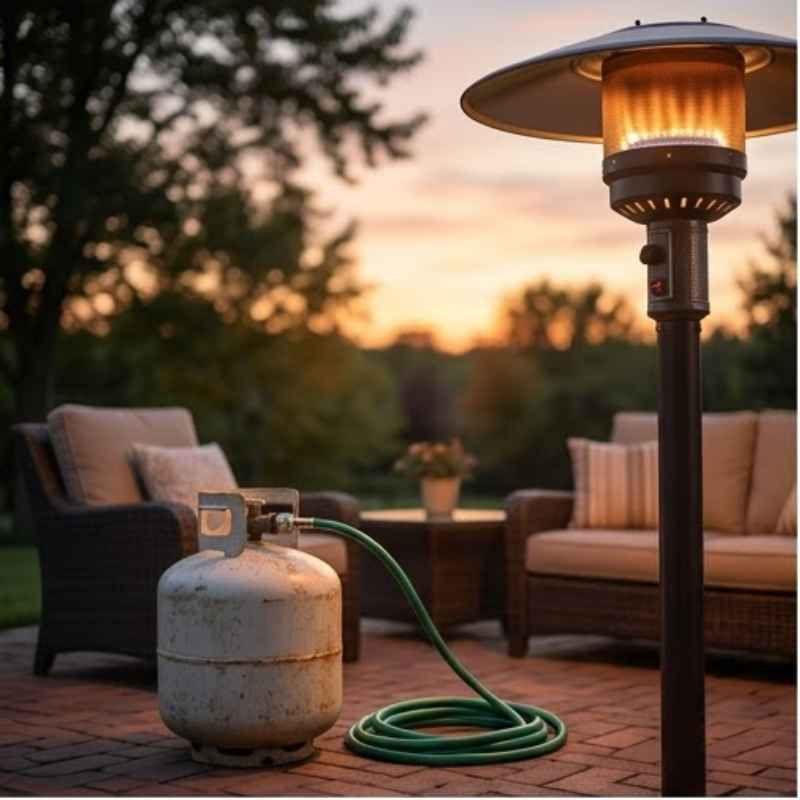
Yes, standard propane tanks, commonly known as BBQ tanks, typically work for most residential outdoor heaters. These tanks are usually 20-pound cylinders. However, always check your outdoor heater’s manual for specific requirements regarding tank size, regulator type, and hose connections to ensure safe and proper operation. Some larger or commercial heaters might need larger tanks or special fittings.
Understanding Propane Tanks and Outdoor Heaters
Propane tanks are basically portable fuel storage. They hold liquid propane under pressure. When you open a valve, the liquid turns into a gas.
This gas then travels through a hose to your appliance, like an outdoor heater. The appliance burns this gas to create heat. It’s a simple process, but the details matter.
Most outdoor heaters are designed for common propane tank sizes. The most frequent one is the 20-pound cylinder. This is the same size many people use for their backyard barbecue grills.
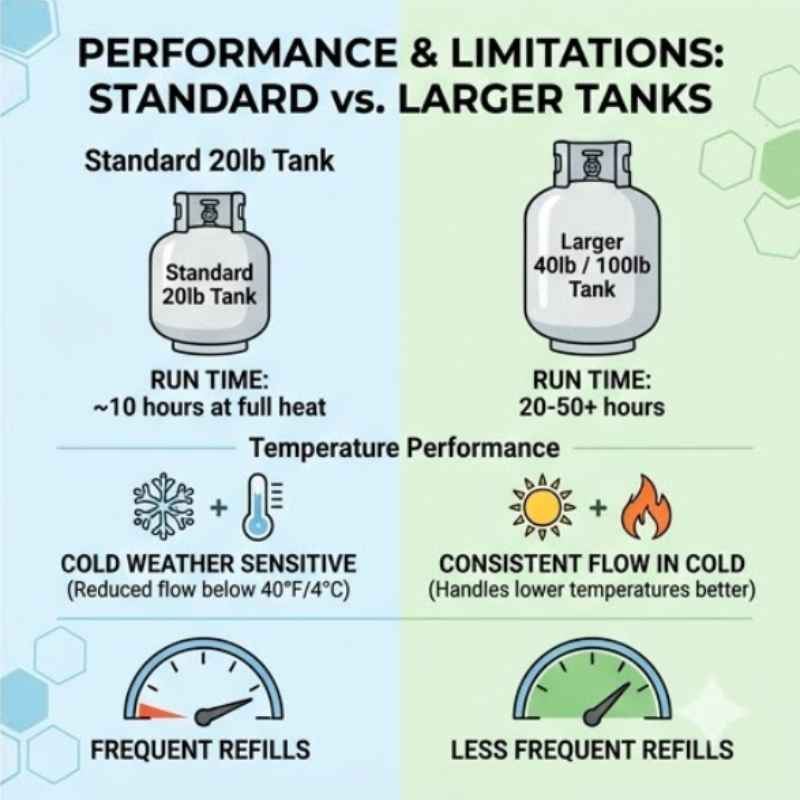
It’s a good size because it offers a decent amount of burn time without being too heavy to move. You can usually get about 8 to 10 hours of heat from a fully filled 20-pound tank on a typical patio heater.
But not all propane tanks are the same. There are different sizes. There are also different types of valves and connections.
Your heater needs the right connection to get the gas safely. The pressure of the gas is also important. A regulator on the tank or hose controls this pressure.
It ensures the gas flows at the right speed to the heater.
How Propane Tank Sizes Affect Your Heater
The size of the propane tank directly impacts how long your heater will run. Think of it like a gas tank in a car. A bigger tank means you can drive further.
With propane, a larger tank means your heater will run for a longer time before needing a refill. This is especially important if you plan to use your heater for an extended period, like during a long outdoor party or on a chilly evening.
The 20-pound tank is the most common for home use. It’s convenient and widely available. You can easily swap an empty one for a full one at many stores.
For a typical patio heater that uses about 30,000 to 40,000 BTUs (British Thermal Units) per hour, a 20-pound tank will last several hours. Let’s say your heater uses 30,000 BTUs per hour. A 20-pound tank holds about 4.7 gallons of propane.
Propane has an energy content of roughly 91,500 BTUs per gallon. So, a full 20-pound tank has about 430,000 BTUs. Dividing that by your heater’s usage (430,000 / 30,000) gives you around 14.3 hours of run time.
This is an estimate, of course. Real-world use can vary based on settings and external temperature.
Some larger or commercial-grade outdoor heaters might need more fuel. They might burn more BTUs per hour. For these, you might see options for 30-pound, 40-pound, or even 100-pound propane tanks.
A 30-pound tank holds about 7 gallons. A 40-pound tank holds about 9.4 gallons. A 100-pound tank holds about 23.7 gallons.
These larger tanks provide significantly more run time but are also heavier and less portable. You also need to make sure your heater is designed to connect to these larger tanks. Sometimes, a different regulator or hose is needed for bigger tanks.
Propane Tank Size vs. Run Time (Approximate)
20 lb (Standard BBQ)
30 lb
40 lb
100 lb
8-10
12-15
16-20
40-50
*Based on a typical 30,000-40,000 BTU/hr patio heater. Actual run time will vary.
Compatibility: What Does Your Heater Need?
The most crucial aspect is compatibility. Your outdoor heater will come with a specific manual. This manual is your guide.
It will tell you exactly what kind of propane tank the manufacturer recommends. It will also specify the type of regulator and hose needed.
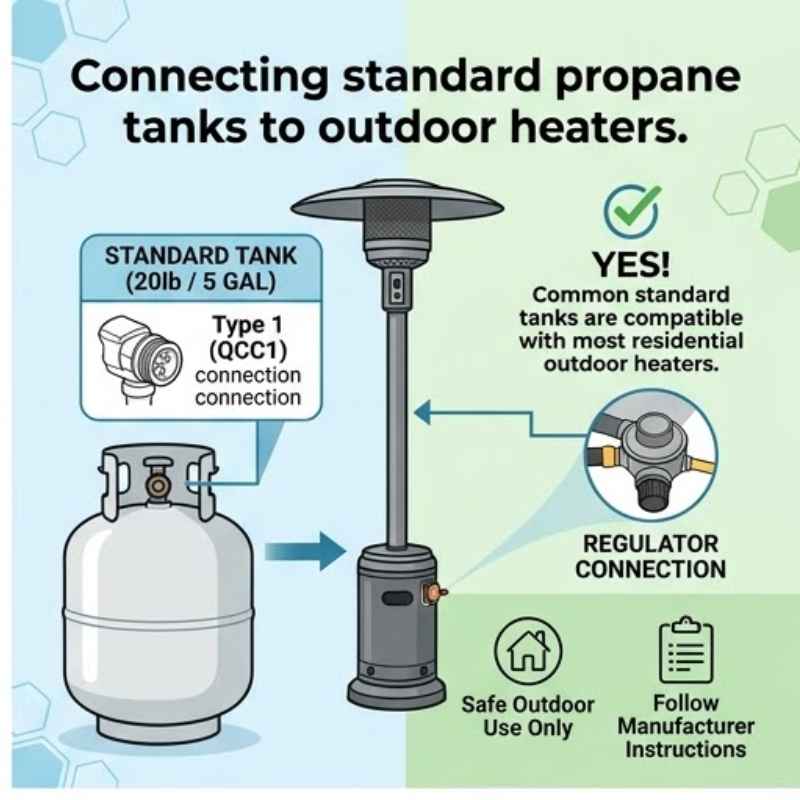
Most standard patio heaters are built for the POL (Prest-O-Lite) valve system or the newer ACME (or QCC) connection found on 20-pound tanks. The ACME connection is more common now. It has a hand-tightening feature that makes connecting and disconnecting easier and safer.
You’ll often see a regulator with a hose attached to your heater.
This regulator is very important. It steps down the high pressure from the tank to a lower, usable pressure for the heater. It also helps maintain a consistent gas flow.
If your heater requires a specific pressure, say 11 inches of water column (WC), then the regulator must match this. A regulator that’s too high or too low can cause problems. It might lead to weak flames, no flames, or even unsafe operation.
Always match the regulator to your heater’s specifications.
Hose compatibility is also key. The hose connects the tank valve (through the regulator) to the heater’s gas inlet. The ends of the hose need to fit securely onto both the regulator and the heater.
Most hoses come with standard fittings that match common regulators and heater inlets. However, if you’re using a larger tank or a specialized heater, you might need a different type of hose with specific fittings.
I remember one time, I was helping a friend set up a new outdoor heater. We had a 20-pound tank ready. Everything looked fine.
We connected the hose, turned on the gas, and… nothing. No flame. We checked the connections, the tank, everything.
Then I looked closer at the heater’s manual. It mentioned a specific type of regulator was needed for that model. The one we had was for a different appliance.
We had to run out and get the correct regulator. Once that was swapped, the heater fired right up. It was a simple fix, but it taught me to always double-check the manual first.
Safety First: Essential Precautions
Using propane involves some inherent risks. Safety should always be your top priority. Here are some essential precautions to keep in mind:
- Inspect your tank: Before every use, check your propane tank for any signs of damage. Look for dents, rust, corrosion, or leaks. Never use a damaged tank.
- Check connections: Ensure all connections between the tank, regulator, and heater hose are snug and secure. You can check for leaks using a soapy water solution. Apply it to the connections. If you see bubbles forming, there’s a leak.
- Proper ventilation: Always use your outdoor heater in a well-ventilated area. Never use it indoors or in an enclosed space. Propane combustion produces carbon monoxide, which is odorless and deadly in enclosed areas.
- Keep flammable materials away: Ensure there are no flammable materials near the heater. This includes dry leaves, firewood, furniture cushions, and curtains. Maintain a safe clearance around the heater as specified in its manual.
- Don’t overfill: If you are refilling your own tank, never overfill it. Tanks are usually filled to 80% capacity. Overfilling can cause the tank to rupture due to pressure buildup from temperature changes. Most refill stations handle this automatically.
- Store tanks properly: Store propane tanks upright in a cool, dry, well-ventilated area, away from heat sources and ignition sources. Never store them indoors, especially in basements or garages.
- Turn off when not in use: Always turn off the gas valve on the tank when the heater is not in use or when you are disconnecting the tank.
Leak Detection Tip
How to Check for Leaks: Mix one part liquid dish soap with ten parts water in a spray bottle. Spray the solution onto all connections after turning on the gas. If bubbles appear and grow, you have a leak.
Turn off the gas immediately and tighten the connection or replace the faulty part.
Common Scenarios and Troubleshooting
What if your heater isn’t working right? Most issues can be traced back to a few common culprits related to the propane system.
Scenario 1: The heater won’t light.
- Check the propane level: Is the tank empty or very low? Try a different, full tank.
- Verify the connection: Is the tank valve fully open? Is the regulator connected securely?
- Pilot light issues: If your heater has a pilot light, ensure it’s lit and staying lit. Follow the manufacturer’s instructions for relighting.
- Regulator or hose problem: The regulator might be faulty, or the hose could be kinked or blocked.
Scenario 2: The flame is weak or flickering.
- Low propane: Again, a low tank can cause a weak flame.
- Incorrect regulator: The regulator might not be providing enough pressure, or it might be the wrong type for the heater.
- Obstruction in the gas line: Debris or a kink in the hose can restrict gas flow.
- Extreme cold: Very cold temperatures can affect propane vaporization, leading to lower pressure and a weaker flame.
Scenario 3: The heater turns off suddenly.
- Empty tank: The most common reason.
- Safety shut-off: Many regulators have a safety feature that can shut off gas flow if it detects a large leak or rapid gas release. This often happens if the valve on the tank is opened too quickly. Try closing the tank valve, disconnecting the regulator, waiting a minute, and reconnecting, then slowly opening the tank valve.
- Overheating: Some heaters have thermal shut-off features. Ensure proper ventilation and no obstructions.
Quick Troubleshooting Steps
Check: Tank full? Valve open? Connections tight?
Check: Tank level? Regulator correct? No kinks?
When to Call a Professional or Get a Different Tank
While standard 20-pound tanks work for most home heaters, there are times when you might need to reconsider. If your heater is a commercial unit or has very high BTU requirements, it might be designed for larger tanks. These larger tanks (30lb, 40lb, 100lb) often use different regulator setups or hoses.
Also, if you’ve gone through all the troubleshooting steps and your heater still isn’t working correctly, it might be time to call a professional. There could be an issue with the heater itself, or a more complex problem with the gas line. A qualified technician can diagnose the issue and ensure your heater is safe to use.
If your heater is rated for a larger BTU output, simply using a 20-pound tank might not be enough. You could find yourself running out of propane much faster than you expect, or the heater might not perform to its full potential. In such cases, investing in a larger tank compatible with your unit is the best solution.
Always consult your heater’s manual. It’s the definitive source for what your specific model needs.
Real-World Use and Maintenance
Using propane for outdoor heating is incredibly convenient. It’s clean-burning and provides instant warmth. However, like any fuel source, it requires a bit of care.
Regular maintenance of your propane system can prevent many common problems. This includes checking hoses for cracks or wear, ensuring regulators are functioning correctly, and keeping tanks clean and free from rust. Performing these checks before each heating season can save you a lot of headaches.
When you’re out of propane, refilling or exchanging your tank is a routine task. Most hardware stores, gas stations, and propane dealers offer exchange services. You bring in your empty tank and swap it for a full one, often for a set price.
This is usually the easiest option for 20-pound tanks. Refilling at a certified station is also an option and can sometimes be slightly cheaper, but you must take the tank to the station.
I know people who always keep two 20-pound tanks on hand. This way, when one runs out, they can immediately swap it out for the full one and keep their patio warm without interruption. It’s a simple strategy that makes enjoying your outdoor space much easier, especially during unexpected cold snaps.
Maintenance Checklist
- Inspect tank for dents, rust, and leaks annually.
- Check hose for cracks or brittleness every six months.
- Test connections for leaks with soapy water before first use each season.
- Ensure regulator is functioning and not damaged.
- Clean around the tank valve and regulator occasionally.
What This Means For Your Cozy Nights
So, can you use a standard propane tank for your outdoor heater? Generally, yes. The common 20-pound tank is designed to work with the majority of residential outdoor heaters.
This means you probably don’t need a special, hard-to-find tank to enjoy your patio on a cool evening.
What’s most important is making sure the entire system is compatible and safe. This includes the tank size, the regulator, and the hose connection. Always refer to your outdoor heater’s user manual.
It’s the best resource to ensure you have the right parts and are using them correctly.
If you follow the safety guidelines and check your equipment regularly, you can look forward to many warm and enjoyable evenings outdoors. Don’t let confusion about propane tanks keep you inside when the weather is just right for being outside.
Quick Tips for Propane Heater Use
Here are a few easy tips to make your propane heater experience smooth:
- Always check the tank level before a gathering. Nothing kills the mood like running out of heat halfway through.
- Store a spare tank. Having a second 20-pound tank ready means a quick swap without missing a beat.
- Keep the manual handy. It contains vital safety and operational information.
- Invest in a good cover for your heater. This protects it from the elements when not in use.
- Periodically clean the burner screen. This helps ensure efficient burning.
Frequently Asked Questions About Propane Tanks for Heaters
Can I use a 100-pound propane tank with a standard patio heater?
While a 100-pound tank provides much more fuel, it’s not always directly compatible with standard patio heaters. These larger tanks often require a different regulator and hose setup. Always check your heater’s manual to confirm compatibility.
Using an incorrect setup can be unsafe and may not work properly.
What is the difference between a propane tank for a grill and one for a heater?
For most residential uses, there is no significant difference. The common 20-pound cylinder used for grills is also the most common size for patio heaters. The critical difference lies in the regulator and hose assembly, which must match the heater’s BTU output and gas pressure requirements.
How long does a 20-pound propane tank last in an outdoor heater?
A standard 20-pound propane tank typically lasts between 8 to 10 hours when used with a common patio heater rated at 30,000-40,000 BTUs per hour. This is an estimate, and actual run time can vary based on the heater’s specific BTU consumption, outdoor temperature, and how high you set the flame.
Do I need a special regulator for an outdoor heater?
Yes, usually. Outdoor heaters require a specific regulator that is designed to deliver the correct gas pressure (measured in inches of water column) to the appliance. This regulator is often included with the heater or specified in its manual.
It’s crucial that the regulator matches the heater’s requirements for safe and efficient operation.
What does BTU mean, and how does it affect propane tank life?
BTU stands for British Thermal Unit. It’s a measure of heat energy. A higher BTU rating means the heater produces more heat.
A heater with a higher BTU rating will consume propane faster, meaning a propane tank will last for a shorter period compared to a lower BTU heater using the same size tank.
Can I connect my outdoor heater directly to a natural gas line?
No, you cannot directly connect an outdoor heater designed for propane to a natural gas line without significant modification and professional conversion. Propane and natural gas have different chemical compositions, pressures, and heating values, requiring different equipment and fittings for safe and effective use.
Final Thoughts on Propane and Warmth
Enjoying your outdoor space in cooler weather is easy with a propane heater. Most standard propane tanks are perfectly suitable for this purpose. The key is ensuring your connections are secure, your regulator is correct, and your heater is compatible with the tank you choose.
Always prioritize safety and check your equipment. You’ll be enjoying the warmth in no time.
Sponsored / affiliate links. As an Amazon Associate I earn from qualifying purchases. I may earn additional commission from eligible campaigns.