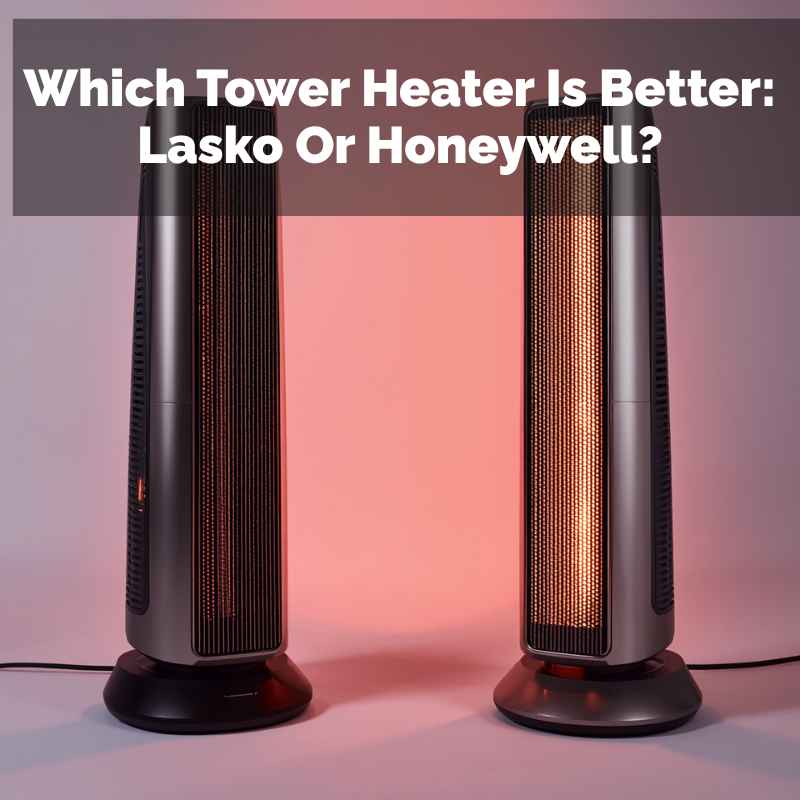
Which Tower Heater Is Better: Lasko Or Honeywell?
When deciding between a Lasko or Honeywell tower heater, consider your specific needs for heating power, safety features, extra functions like oscillation or remote control, energy efficiency, and budget. Both brands offer reliable options that can effectively warm a room, but one might better suit your priorities.
Lasko vs. Honeywell Tower Heaters: A Closer Look
Tower heaters are popular for good reason. They stand tall and sleek. This helps them spread warm air better.
They often use ceramic heating elements. These are known for being safe and quick to heat up. They are a good choice for many rooms.
Think living areas, bedrooms, or even home offices. Now, let’s see how Lasko and Honeywell stack up.
Lasko is a name many folks trust for home comfort. They make fans, heaters, and air purifiers. Honeywell is also a big name.
They are known for thermostats and air control. So, both have a history with home climate. This means they should know what they’re doing with heaters.
When we talk about tower heaters, we look at a few key things. How much heat can it put out? Does it have safety shut-offs?
Can it move the air around a room? Is it easy to control? And, of course, how much does it cost?
These are the questions that matter when you’re choosing.
I remember one cold winter. My old heater just wasn’t cutting it. The room stayed chilly.
I felt like I was always wearing extra sweaters inside. I needed a better solution. So, I started looking into what was out there.
I looked at different brands and types. That’s when I really started to compare models. I wanted something that would make a real difference.
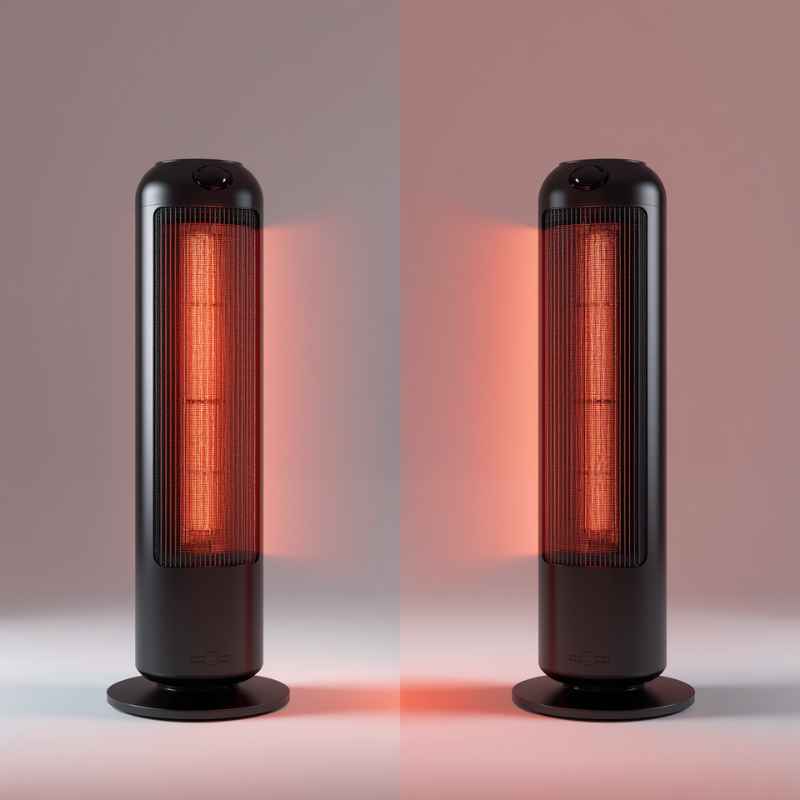
Understanding Tower Heater Technology
Most tower heaters use ceramic plates. These plates get hot. A fan blows air across them.
This heated air then moves into your room. This method is quite efficient. It’s also safer than older coil heaters.
Coil heaters could get very hot on the surface. Ceramic elements tend to have a cooler outer casing. This is a big plus for homes with kids or pets.
The size of the ceramic element matters. It affects how much heat the heater can produce. This is often measured in watts.
Higher wattage usually means more heat. But it can also mean more power use. Many tower heaters have different heat settings.
You can choose a lower setting for gentle warmth. You can pick a higher setting for quick heating.
Another common feature is oscillation. This means the heater swivels back and forth. This helps spread the warm air more evenly across the room.
Without oscillation, the heat might just blow in one direction. This could make one part of the room feel warm. Other parts might stay cold.
Oscillation makes a big difference for comfort.
Many modern tower heaters also come with a thermostat. This lets you set a target temperature. The heater will then turn itself on and off to maintain that temperature.
This is great for saving energy. It also keeps the room from getting too hot or too cold. You set it and forget it.
Lasko Tower Heaters: What to Expect
Lasko offers a range of tower heaters. They often focus on providing good heat output. Many models are designed to be powerful.
They can warm up a space quickly. You’ll find Lasko heaters with simple controls. Often, they have a few heat settings.
There’s usually a high and a low setting. Some also have a fan-only mode.
Safety is a big deal for Lasko. Most of their heaters have a cool-touch exterior. This means the outside doesn’t get dangerously hot.
They also have tip-over protection. If the heater gets knocked over, it will shut off automatically. This is a really important safety feature.
It gives you peace of mind.
Some Lasko models have extra features. You might find oscillation on some. A remote control is also available on higher-end models.
Lasko heaters are generally priced competitively. They offer a good balance of features and cost. You can often find a Lasko heater that fits your budget.
I recall a time when my apartment felt drafty. It was one of those old buildings. Even with the main heat on, corners felt cold.
I bought a Lasko tower heater. It was a simple model. It had a high and low setting.
I put it in the living room. Within minutes, the room felt so much cozier. It really made a difference on those cold nights.
Lasko Heater Quick Facts
Key Features:
- Good heat output
- Cool-touch exterior
- Tip-over protection
- Simple controls
- Often budget-friendly
Best For:
- Quick heating
- Basic warmth needs
- Homes where safety is a priority
When looking at Lasko, pay attention to the wattage. Higher wattage means more heat. But also check the size of the room it’s meant for.
A heater that’s too small won’t warm a large space. A heater that’s too big might be overkill. It’s about matching the heater to your needs.
Honeywell Tower Heaters: Innovation and Comfort
Honeywell also has a strong lineup of tower heaters. They often focus on advanced features and user control. You’ll find models with digital displays.
These make it easy to see and set the temperature. Many Honeywell heaters include multiple heat settings. They might have a low, medium, and high option.
Some even offer different fan speeds.
One area where Honeywell often shines is in smart features. Some of their heaters have a programmable timer. This lets you set them to turn on or off at specific times.
This is super useful for waking up to a warm room. Or for saving energy when you’re away. Many also come with remotes.
This adds a layer of convenience.
Safety features are top-notch with Honeywell. They also include tip-over protection. Most have overheat protection.
This is another safety layer. If the internal temperature gets too high, it shuts off. The exterior is typically designed to stay cool to the touch.
This makes them safe around family.
Honeywell heaters might be priced a bit higher than some Lasko models. This is often due to the added technology and features. But if you value precise temperature control and convenience, they are worth considering.
They aim to offer a more refined heating experience.
I remember helping my aunt choose a heater. She wanted something easy to use. She also wanted it to feel safe.
She didn’t want to have to bend down to change settings. We looked at Honeywell models. The digital display was clear.
The remote was simple. She was very happy with how easy it was to operate.
Honeywell Heater At a Glance
Key Features:
- Digital displays
- Programmable timers
- Multiple heat and fan settings
- Remote controls
- Advanced safety features
Best For:
- Precise temperature control
- Convenience and ease of use
- Energy saving with timers
When you look at Honeywell, think about how you’ll use the heater. Do you want to set it and forget it? Or do you like to adjust things often?
The digital controls and timers might appeal to you. Their focus on features often means a slightly higher upfront cost. But it can pay off in comfort and control.
Comparing Key Features: Lasko vs. Honeywell
Let’s put them head-to-head on some important points. This will help you see the differences more clearly. It’s not just about brand names.
It’s about what each offers you.
| Feature | Lasko Tower Heaters | Honeywell Tower Heaters |
|---|---|---|
| Heating Power | Often high wattage for quick heating. Good for warming spaces fast. | Varies; many offer precise control with multiple settings. Can be powerful. |
| Controls | Typically simple dials or buttons. Easy to understand. | Often digital displays with more options. Programmable timers on many models. |
| Oscillation | Available on many models, spreading heat well. | Commonly included, contributing to even heating. |
| Thermostat | Present on many models for temperature maintenance. | Highly precise digital thermostats are standard on many. |
| Safety Features | Cool-touch, tip-over shut-off. Very reliable. | Cool-touch, tip-over, overheat protection. Often advanced. |
| Remote Control | Available on some higher-end models. | Frequently included, adding convenience. |
| Price Range | Generally more budget-friendly, good value. | Can be mid-to-higher range, reflecting features. |
| Design | Functional, often sturdy. | Sleeker, more modern designs often seen. |
This table shows that both brands do a good job. Lasko might win on simplicity and cost for some. Honeywell might be the choice for those who want more bells and whistles.
It really comes down to what you need most.
I’ve had both a Lasko and a Honeywell. The Lasko was my first. It was simple and did its job.
I didn’t need a lot of fancy settings. Later, I got a Honeywell for my office. I liked being able to set a precise temperature.
The timer was great for when I worked late. It saved me from having to remember to turn it off.
Safety First: What to Look For
When choosing any heater, safety should be your top concern. Tower heaters are generally safe. But there are features that make them even safer.
Both Lasko and Honeywell usually include these. Make sure the model you choose has them.
Essential Safety Features
Tip-Over Protection
This is crucial. If the heater is knocked over, it shuts off instantly. This prevents fires.
Always check for this feature.
Overheat Protection
This feature detects when the heater is getting too hot internally. It then shuts down the unit. This is another important fire prevention measure.
Cool-Touch Exterior
The outside of the heater stays cool enough to touch. This greatly reduces the risk of burns. It’s especially important in homes with children or pets.
Stable Base
A wide, stable base helps prevent tipping. A wobbly heater is a tipping hazard. Look for a sturdy design.
I once saw a small fire start because of an old-fashioned heater. It tipped over. No automatic shut-off.
It was a scary moment. Since then, I never buy a heater without tip-over protection. It’s a small thing that can make a huge difference.
Always double-check the specs for these safety features.
Also, remember that even safe heaters need proper use. Never cover a heater. Keep it clear of curtains or furniture.
Don’t use extension cords if you can avoid it. Plug the heater directly into the wall. These are simple rules that keep everyone safe.
Energy Efficiency and Running Costs
Heaters can use a good amount of electricity. Especially if you run them for long periods. Both Lasko and Honeywell offer models with energy-saving features.
However, the fundamental power draw is key.
A heater’s wattage tells you how much power it uses. A 1500-watt heater uses more power than a 1000-watt heater. Many tower heaters have a maximum wattage of 1500 watts.
This is often the standard for powerful heating.
Look for heaters with adjustable thermostats. This lets you set a target temperature. The heater will cycle on and off.
This is more efficient than a heater that just runs constantly. It keeps the room at a steady temperature without overworking.
Programmable timers are also great for efficiency. You can set the heater to only run when you need it. For example, you might set it to warm the bedroom for an hour before you go to sleep.
Or to turn on just before you wake up. This way, you’re not heating an empty room.
Some models might also have an “Eco” mode. This setting uses less power. It might provide a gentler heat.
Or it might cycle on and off more frequently. This can save you money on your electricity bill. It’s good for maintaining a comfortable temperature without high costs.
My friend Sarah once got a new heater. She was worried about her electric bill. She chose a model with a good thermostat and timer.
She said she noticed a difference. The room stayed warm. Her bill didn’t go up as much as she expected.
She felt much better about using it regularly.
Tips for Energy Saving
- Use the Thermostat Wisely: Set it to a comfortable but not overly high temperature (e.g., 68-70°F).
- Utilize Timers: Schedule heating for when you are actually in the room.
- Seal Drafts: Ensure windows and doors are sealed to prevent warm air from escaping.
- Consider Room Size: Use a heater appropriate for the room size. An oversized heater wastes energy.
- Wear Layers: Sometimes a sweater is all you need, reducing the need for high heat settings.
Think about how often you’ll use the heater. If it’s just for a few hours on very cold days, the running cost might not be a huge concern. If you plan to use it daily for many hours, then energy efficiency becomes very important.
Both brands offer options that can help manage energy use.
Ease of Use and Convenience
How easy is the heater to set up and operate? This is where personal preference plays a big role. Both Lasko and Honeywell aim for user-friendliness, but they approach it differently.
Lasko often opts for a straightforward design. You might see a dial for temperature and another for heat settings. These are usually easy to turn.
The buttons are big and clear. If you want something that works right out of the box with no fuss, Lasko is a strong contender.
Honeywell often brings in more advanced controls. Digital displays show the current and set temperature clearly. You might have up and down buttons for temperature.
Some models have dedicated buttons for fan speed or oscillation. This offers more fine-tuning. If you enjoy having more control, you’ll like Honeywell’s approach.
Remote controls add a lot of convenience. Imagine being cozy on the couch and not having to get up to change the temperature. Both brands offer remotes on select models.
This is a feature many people find they can’t live without once they have it.
Portability is also key. Tower heaters are usually designed to be moved. Look for a sturdy handle on top.
The shape of tower heaters makes them easy to pick up and carry from room to room. Most are not too heavy. This means you can easily bring warmth wherever you need it.
I know people who find complex controls overwhelming. They just want heat. For them, a simple Lasko heater is perfect.
On the other hand, my dad loves technology. He likes having all the settings at his fingertips. He would definitely prefer a Honeywell with its digital controls and remote.
It’s about matching the user to the product.
Convenience Factors
Controls Type
- Simple Dials/Buttons: Lasko often excels here. Very intuitive.
- Digital Displays & Touchpads: Honeywell often features these for precise control.
Remote Control
- Available on select models from both brands. A major convenience upgrade.
Portability
- Both brands offer well-designed, easy-to-carry tower heaters.
Noise Level
- Fan noise is common. Newer models are often quieter. Check reviews for specific noise levels.
Consider how you like to interact with your appliances. Do you want it to be simple and silent? Or do you appreciate a digital interface?
This will guide you toward the right brand and model.
Real-World Performance and Durability
What happens when you actually use these heaters day after day? Durability and performance are vital. Both Lasko and Honeywell have reputations to uphold.
Lasko heaters are often praised for being workhorses. They are built to provide heat reliably. Many users report owning Lasko heaters for years.
They stand up to regular use. The simpler designs can mean fewer parts to break. This can lead to longer-lasting units.
Honeywell heaters, with their more complex electronics, can also be durable. However, as with any electronic device, there’s always a small chance of component failure. But generally, Honeywell products are well-made.
They are designed to perform consistently.
When reading reviews, pay attention to comments about longevity. Do people say they’ve had the heater for 5 years? Or is it breaking after one winter?
User reviews can be a great source of information on real-world performance.
Think about the environment where you’ll use it. If it’s in a busy, high-traffic area, a sturdy Lasko might be ideal. If it’s in a quiet office where it will be on for long hours, a Honeywell with precise controls could be better.
The goal is to match the heater’s build and features to its intended use.
I have a friend who is very frugal. He buys things that last. He’s had the same Lasko heater for almost ten years.
He just dusts it off each fall. It still works perfectly. He says simple is often best for durability.
He trusts Lasko for that reason.
Durability Check
Build Quality
- Lasko: Often robust, designed for everyday use and longevity.
- Honeywell: Well-constructed, with focus on electronic components and refined design.
User Feedback
- Look for consistent positive reviews about units lasting several years.
- Pay attention to common complaints about specific failure points.
Materials
- Check for sturdy plastic housings and durable fan motors in product descriptions or reviews.
Ultimately, both brands offer products that can last. Choosing one over the other might come down to specific model reviews and your personal experience with their build quality. Don’t underestimate the power of reading what other users have experienced.
Which Is Better: Lasko or Honeywell for You?
So, after looking at all this, which one should you pick? There’s no single “better” heater. It’s about finding the best fit for your home and your life.
Choose Lasko if:
- You want a heater that is simple to use.
- You need powerful heating quickly.
- You are on a tighter budget.
- You prioritize basic safety features without a lot of extras.
- You like straightforward, no-nonsense appliances.
Choose Honeywell if:
- You want precise temperature control and digital features.
- You value convenience like remote controls and timers.
- You appreciate a sleeker, more modern design.
- You are willing to spend a bit more for advanced functionality.
- You want to integrate your heater into a smart home setup (some models).
Think about the room you want to heat. Is it a small bedroom or a large living area? Does it have high ceilings?
This can influence the power you need. Also, consider your climate. Are you in a place with very harsh winters?
Or just occasional cold snaps?
I’ve seen people happy with both brands. My neighbor has a Lasko. It keeps her sunroom warm all winter.
My colleague has a Honeywell in his home office. He loves the precise control it offers him when he’s working. Both are doing exactly what they need them to do.
Ultimately, the best way to decide is to list your priorities. Write down what is most important to you in a heater. Then, compare the models from Lasko and Honeywell that meet those needs.
Read reviews for specific models. This will help you make a confident choice.
Frequently Asked Questions
Are Lasko heaters generally reliable?
Yes, Lasko heaters are generally considered reliable. They are known for their durability and simple, effective design. Many users report owning Lasko heaters for many years without issues.
Are Honeywell heaters good for large rooms?
Honeywell offers various tower heaters. Some are designed with higher wattage and features like strong oscillation to help warm larger rooms effectively. Always check the product specifications for the recommended room size.
Which brand is safer, Lasko or Honeywell?
Both Lasko and Honeywell prioritize safety. They typically include features like tip-over protection, overheat protection, and cool-touch exteriors on their tower heaters. Both brands are known for offering safe products when used as directed.
Can a tower heater replace my central heating system?
Tower heaters are designed for supplemental or spot heating. They are best for warming a single room or a specific area. They are generally not powerful enough to replace a central heating system for an entire house.
How much electricity does a tower heater use?
Most tower heaters operate at around 1500 watts on their high setting. This is similar to many other portable electric heaters. The actual electricity cost depends on your local electricity rates and how long you run the heater.
Should I get a heater with a thermostat?
Yes, a thermostat is highly recommended. It helps maintain a consistent temperature and makes the heater more energy-efficient by cycling on and off as needed, rather than running constantly.
What is the difference between ceramic and coil heaters?
Ceramic heaters use heated ceramic plates to warm air, and a fan blows the air. They are generally safer as the exterior stays cooler. Coil heaters use exposed heating coils, which can get much hotter and pose a higher burn risk.
Final Thoughts
Choosing between a Lasko and a Honeywell tower heater comes down to your priorities. Both brands offer excellent products that can make your home warmer and more comfortable. Think about what features matter most to you.
Then, make your choice. Happy heating!
Sponsored / affiliate links. As an Amazon Associate I earn from qualifying purchases. I may earn additional commission from eligible campaigns.