Oil-filled radiator vs ceramic heater: which saves more?
Neither type saves more on electricity by itself: a roughly 1,500-watt oil-filled radiator and a roughly 1,500-watt ceramic heater should cost about the same per hour at the same wattage. The cheaper choice is the one you can run for fewer minutes. Miss that, and you can pay more on winter bills while heating empty space. This guide compares short top-ups, evening use, and overnight background heating, with simple cost rules.
This guide is part of our Heater efficiency guide series.
| Decision factor | Oil-filled radiator | Ceramic heater | Winner |
|---|---|---|---|
| Heat-up speed | Slower to reach the chosen temperature | Heats almost instantly; fan-assisted models move warm air quickly | Ceramic heater |
| Heat retention after switch-off | Stays warm longer and does not cool quickly | Can keep radiating some heat, but usually drops off sooner | Oil-filled radiator |
| Running cost at the same wattage | Same as ceramic heater for the same runtime | Same as oil-filled radiator for the same runtime | Tie |
| Best fit for short, intermittent use | Can waste heat-up time if the room is occupied briefly | Usually better for quick top-ups | Ceramic heater |
| Best fit for steady background heat | Well suited to longer, steadier heating | Can work well, especially with eco mode, but steady use often favors other formats | Oil-filled radiator |
| Safety features and airflow | Often quieter, with fewer moving parts | Many include tilt detection and overheat protection; fan needs clear airflow | Tie |
Which Is Cheaper: Runtime and Wattage Explained
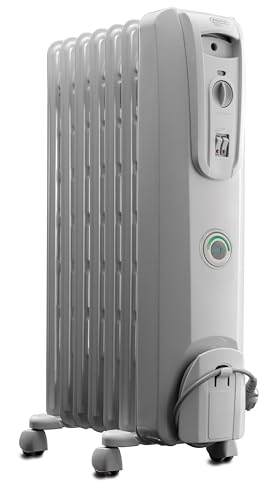


On the electricity bill, the answer depends on runtime, not the label on the heater. A 1,500-watt oil-filled radiator and a 1,500-watt ceramic heater draw the same power while they are on, so the same watts for the same hours cost the same. The cheaper option is the one that reaches comfort fastest and can stop sooner.
Why heat-up speed and total cost are not the same thing
Heat-up speed changes comfort speed, not the hourly arithmetic. Electric heaters tend to produce heat almost instantly, while oil-filled radiators take longer to reach the chosen temperature and work best for steady heating over longer periods.
That means a ceramic heater can feel cheaper in a cold room for the first 15 minutes because it gets useful warmth into the space sooner. But if you leave either heater running for the same amount of time at the same wattage, the cost is the same.
📊 Ceramic heaters on average vary between 85% and 90% efficiency. Source: Ceramic Radiators vs Oil-Filled Radiators.
What each heater is, in plain terms
Oil-filled radiator: thermal oil, sealed reservoir, slow warm-up
Oil-filled radiators and electric radiators use heat from warmed thermal oil inside the unit. A submerged heating element warms that liquid, then the metal body gives off warmth through radiation after the oil heats the casing. Once warm, an oil-filled radiator does not cool down quickly.
These units are portable standalone electric appliances, and they often range from 500 to 2500W. That wattage range matters because higher wattage raises running cost per hour, even if the appliance feels more powerful.
Ceramic heater: ceramic core or plate, often fan-assisted, quick output
Some electric heaters use a ceramic core and a fan to distribute warmth. Ceramic heaters heat quickly and keep radiating heat after switch-off, but the warm-up is still much faster than an oil-filled radiator in most room setups.
Ceramic heaters on average vary between 85% and 90% efficiency, and many include eco mode. They are often described as very effective for heating smaller spaces.
Which heats a room faster?
Ceramic heaters usually feel warmer sooner. They tend to produce heat almost instantly, and fan-assisted airflow moves that warmth into the room faster than a slow radiant body can. That makes them better for quick top-ups, especially when you want comfort now rather than later.
Why ceramic heaters usually feel warmer sooner
The fan is the difference most people notice. It pushes warmed air through the room, so the occupied area reaches a usable temperature quickly. In a small bedroom or office, that speed can matter more than how long the unit coasts after shutoff.
When slower oil-filled heat can still be the better fit
An oil-filled radiator is a better fit when the room stays occupied for a longer stretch. The slower rise to temperature is less of a penalty when you plan to run the heater for hours, and the steady output can feel more even once the body is hot.
How the two heaters differ in heat retention
Oil-filled radiators hold warmth longer after switch-off because the oil and metal mass cool slowly. Ceramic heaters can also keep radiating heat after switch-off, but they usually shed warmth faster once the fan stops and the element is no longer powered.
Why oil-filled radiators keep giving off warmth after switch-off
That leftover heat is useful only in the right setting. It can reduce cycling in a long evening session, especially if the room is already near comfort level. It is not free heat, because you already paid to make the unit warm.
How ceramic heaters lose useful warmth sooner
Ceramic heaters are better for burst comfort than stored warmth. In a short session, the quick output helps; in a longer session, less stored heat means the unit relies more on active power draw to keep the room comfortable.
Cost matrix: 1 hour, 4 hours, and 8 hours
To compare the two fairly, use the same wattage and the same electricity price. Below, both heaters are set at about 1,500W, and the electricity rate is about 30 pence per kWh. The formula is simple: kilowatts multiplied by hours multiplied by the rate.
| Usage pattern | Power setting | Time on | Energy used | Cost at 30p/kWh | Oil-filled radiator | Ceramic heater | Winner |
|---|---|---|---|---|---|---|---|
| Quick heat | 1,500W | 1 hour | 1.5 kWh | £0.45 | £0.45 | £0.45 | Tie |
| Evening use | 1,500W | 4 hours | 6.0 kWh | £1.80 | £1.80 | £1.80 | Tie |
| Overnight background heat | 1,500W | 8 hours | 12.0 kWh | £3.60 | £3.60 | £3.60 | Tie |
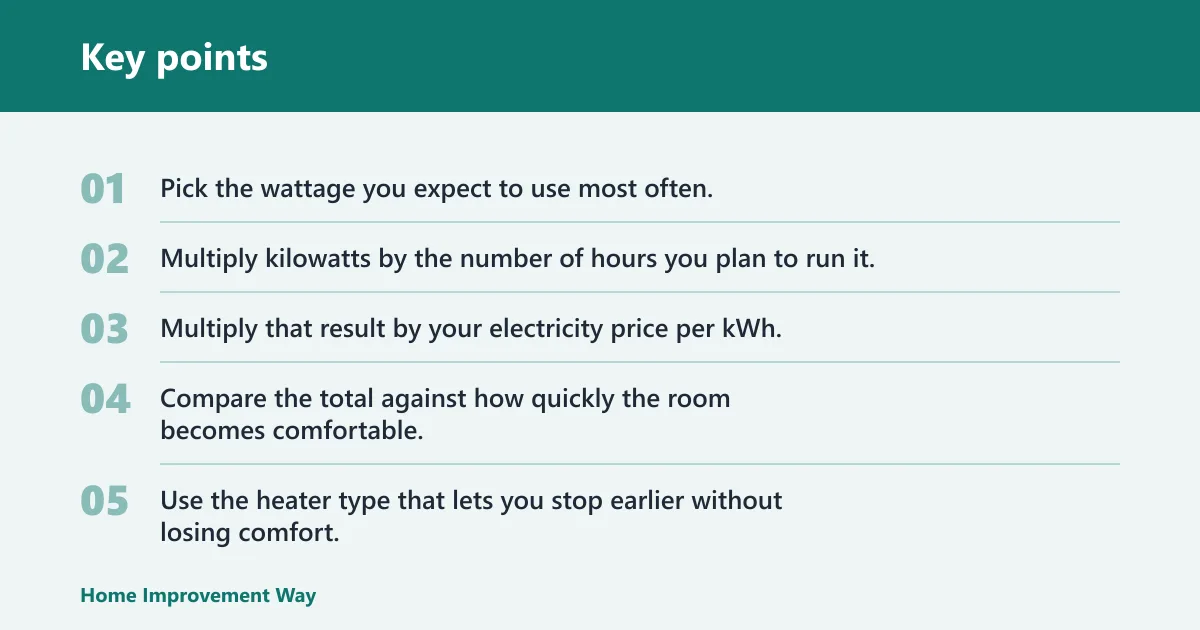
That matrix is the key point many comparisons miss. If the wattage and runtime are identical, the type does not change the electricity cost. What changes is how quickly you feel warm, whether the heater can be turned down sooner, and whether its leftover heat helps the next part of the session.
- Pick the wattage you expect to use most often.
- Multiply kilowatts by the number of hours you plan to run it.
- Multiply that result by your electricity price per kWh.
- Compare the total against how quickly the room becomes comfortable.
- Use the heater type that lets you stop earlier without losing comfort.
Which heater is cheaper to run for your routine?
The cheaper heater is the one that matches your occupancy pattern. For short bursts, a ceramic heater often wins in practice because it reaches useful warmth faster. For longer background heat, an oil-filled radiator can be the better fit because its slower, steadier output suits all-evening use.
Short top-ups and intermittent occupancy
If you only need heat for 20 to 60 minutes, a ceramic heater usually makes more sense. Say your spare room feels cold before bed and you only want to warm it while you get changed; fast output matters more than stored heat, and a slow warm-up can waste part of the session.
Evening use in a bedroom or small living space
For a few hours of occupied time, the answer depends on direct warmth versus a gentler background level. In a small room, a ceramic heater can cover the first cold spell quickly, while an oil-filled radiator may feel steadier once the room is already warm enough.
Overnight background heat and steadier use
For long stretches, the oil-filled radiator often suits the job better. It is best used for steady heating over longer periods, and its slower cooldown can help maintain comfort through a quiet night. That does not mean lower electricity use on its own; it means fewer comfort gaps if the thermostat cycles off.
Choose oil-filled radiator if… / Choose ceramic heater if…
Choose an oil-filled radiator if you want steady background heat, a calmer temperature change, or a heater that can keep giving off warmth after it cycles off. It is a good fit for longer occupied periods, such as an evening in a medium room or all-night bedroom heating where the target is stable comfort.
Choose a ceramic heater if you want fast heat for a small room, short timed sessions, or quick comfort before sleep, dressing, or desk work. It is usually the better choice when the room is occupied briefly, when you need warmth at once, or when fan-assisted airflow can spread heat into the space faster.
What safety features matter most?
Overheat protection and tip-over shutoff matter most for both heater types. Many ceramic heaters include tilt detection and overheat protection, and that is useful in bedrooms, hallways, or other places where accidental contact is more likely. Cooler-touch housings can also reduce burn risk, but placement still matters.
Why fan-assisted ceramic units need clear airflow
A fan can move heat quickly, but it also needs space around intake and outlet openings. Do not press a ceramic heater against curtains, bedding, or furniture. In a small room, that matters as much as any efficiency claim because blocked airflow hurts performance and safety at the same time.
Placement tips for bedrooms and small rooms
Keep either heater on a flat, stable surface and away from soft furnishings. If the room is cramped, an oil-filled radiator’s slower surface heating may feel less abrupt, while a ceramic heater should sit where the airflow can reach the occupied area without obstruction.
Frequently asked questions
Is an oil-filled radiator cheaper to run than a ceramic heater?
Not by type alone. At the same wattage and runtime, both cost the same to run because they use the same amount of electricity. The cheaper option is the one that gets you comfortable sooner and lets you switch off earlier without making the room feel too cold.
Which heats a room faster: oil-filled radiator or ceramic heater?
Ceramic heaters usually heat a room faster. They produce heat almost instantly, and fan-assisted models move that warmth around quickly. Oil-filled radiators warm more slowly because they must heat the oil and metal body before the room feels noticeably warmer.
Do ceramic heaters keep heat as well as oil-filled radiators?
No, not usually. Ceramic heaters can keep radiating heat after switch-off, but oil-filled radiators hold warmth longer and do not cool down quickly. That makes oil-filled models better for steady background warmth, while ceramic heaters suit short, active bursts of heating.
How do wattage and runtime affect heater running costs?
They set the bill. Higher wattage uses more electricity each hour, and longer runtime multiplies that cost. A 1,500-watt heater running for 4 hours costs more than the same heater running for 1 hour, regardless of whether it is oil-filled or ceramic.
Which heater is better for a bedroom or small room?
For a small bedroom, a ceramic heater is often better for quick warm-up before sleep or on cold mornings. For overnight background heat, an oil-filled radiator can be a better fit because it gives steadier warmth and keeps emitting heat after the thermostat cycles off.
What should I choose for steady background heat vs quick heat?
Choose oil-filled for steady background heat and longer occupied periods. Choose ceramic for quick heat, short sessions, and small rooms where you want warmth fast. If your routine changes from hour to hour, the right answer can change with it, even if the wattage stays the same.
Sponsored / affiliate links. As an Amazon Associate I earn from qualifying purchases. I may earn additional commission from eligible campaigns.