Are Micathermic Heaters More Efficient Than Ceramic Heaters?
No, micathermic heaters do not use less electricity than ceramic heaters at the same wattage, but they can feel more efficient in small, draft-free rooms because they warm people and nearby surfaces by radiation. Pick the wrong type and you may pay for quiet operation while the room still feels cold, then turn the heater up and lose the savings you expected. This guide compares comfort, noise, room size, and placement so you can decide when micathermic makes sense and when ceramic is the better buy.
How each heater delivers heat differently



No. At the same wattage, micathermic heaters and ceramic heaters use about the same electricity while they are on. Both are electric resistance heaters, so nearly all input power becomes heat. The real difference is how that heat reaches you, how long the heater runs, and whether the room can hold the warmth.
How each heater works
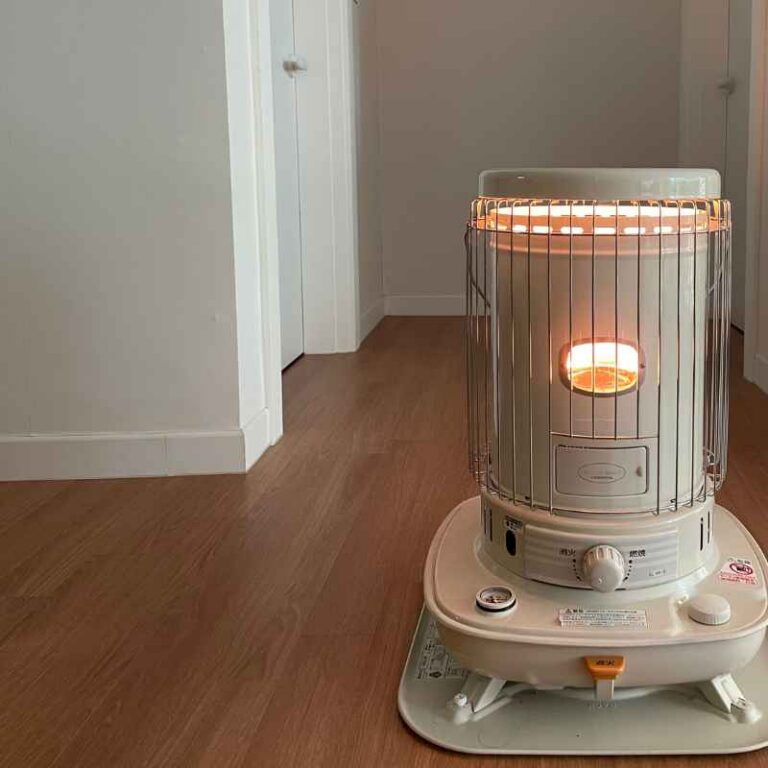
A micathermic heater uses a mica-covered heating element with radiant heat plus natural convection. Many units are fanless, so they are usually quieter and can feel warm sooner on your skin and nearby surfaces. Most portable home units are around 1,500 watts, which makes them a common pick for bedrooms, offices, and medium occupied rooms.
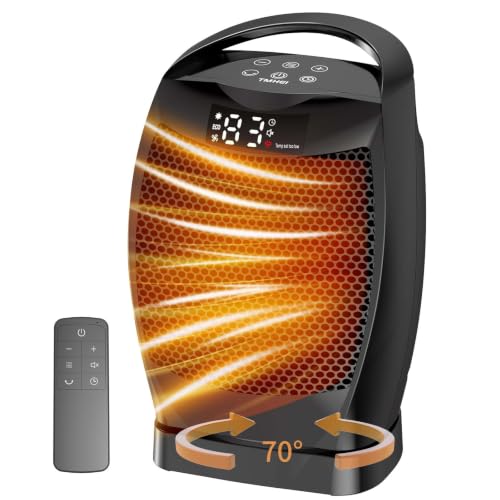
A ceramic heater uses a PTC ceramic element with a fan-forced airflow. That fan moves warm air into the room quickly, so the heater often feels faster at the start. Many models add a digital thermostat, remote, timer, and oscillation. The fan also makes them louder than fanless units in many cases.
Both types are still electric resistance heaters. That means the wattage label is the key number for electricity draw while the heater is on, not the heater style.
Why comfort can feel different from cost
A micathermic heater can feel more efficient in a small enclosed room because the radiant component warms the occupant and nearby surfaces without waiting as long for the whole air volume to heat up. In a draft-free bedroom, that may let you stay comfortable at a lower setting or shorter runtime.
A ceramic heater can feel more efficient when you want a quick warm-up. The fan moves heat into the air faster, so the room can feel less cold sooner. That does not mean it uses less electricity. It means the heat is distributed differently.
Which heats faster and feels quieter?
Ceramic heaters usually give you a faster warm-up feel because the fan pushes heat into the room quickly. Micathermic heaters often feel gentler and quieter because many are fanless. If your main goal is warm air right away, ceramic usually wins. If your main goal is low sound in a small room, micathermic usually feels better.
Warm-up speed and airflow
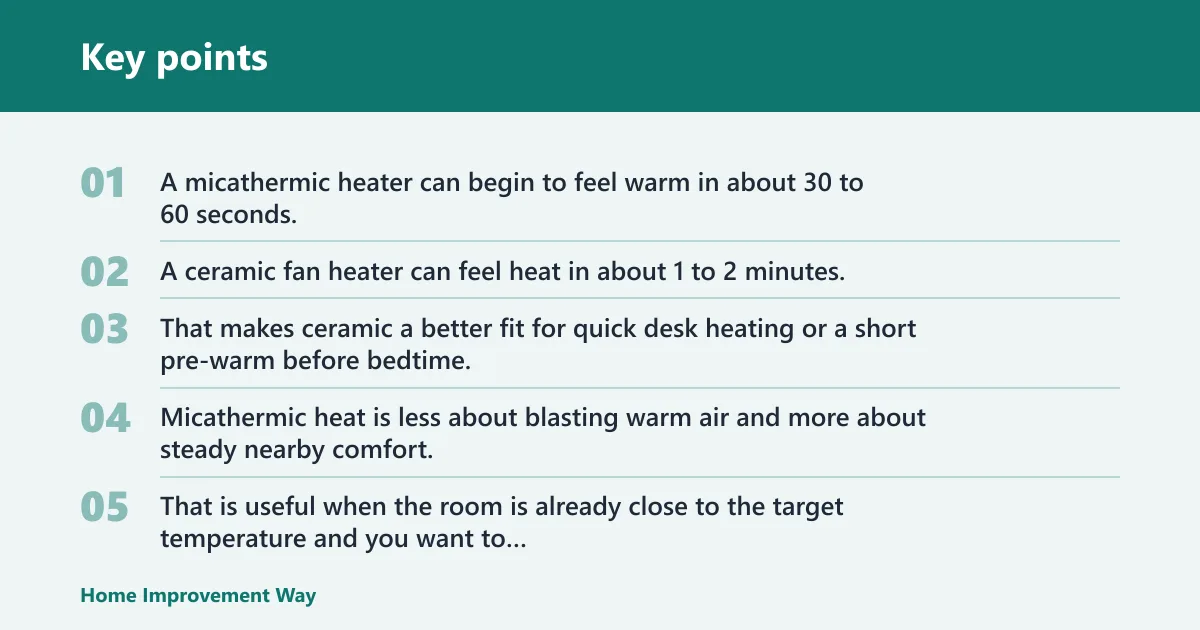
A micathermic heater can begin to feel warm in about 30 to 60 seconds. A ceramic fan heater can feel heat in about 1 to 2 minutes, but it usually moves that warmth through the room faster after startup. That makes ceramic a better fit for quick desk heating or a short pre-warm before bedtime.
Micathermic heat is less about blasting warm air and more about steady nearby comfort. That is useful when the room is already close to the target temperature and you want to hold it there with less noticeable airflow.
Noise and dust movement
Micathermic heaters are usually quieter because many units have no fan. Ceramic heaters usually make more sound because the fan is part of the design. If noise is a problem in a bedroom, the quieter unit often matters more than the faster one.
Ceramic heaters can also stir more dust than fanless micathermic heaters because moving air lifts loose particles and carries them through the room. That does not mean ceramic heaters are dirty. It means the airflow can be noticeable in rooms with dusty floors, vents, or bedding.
When each heat style feels better in a bedroom
Suppose you have a 120-square-foot bedroom with the door closed and modest drafts. A micathermic heater may keep the room comfortable with less fan noise, especially if you only need steady background heat while you sleep or read.
Suppose the same room feels cold when you first walk in. A ceramic heater usually reaches a comfortable feel faster because the fan moves heat into the air right away. That can matter more than quiet if you only need a quick burst of warmth.
Do micathermic heaters and ceramic heaters cost the same to run?
Yes, if the wattage and runtime are the same. A 900W heater uses 0.9 kWh per hour at full power, and a 1,500W heater uses 1.5 kWh per hour at full power. Local electricity rate changes the bill, but the heater label alone does not change the math.
Micathermic heaters efficient than table
| Heater wattage | Energy use per hour | At $0.12/kWh | At $0.18/kWh | At $0.30/kWh |
|---|---|---|---|---|
| 900W | 0.9 kWh | $0.11 per hour | $0.16 per hour | $0.27 per hour |
| 1,500W | 1.5 kWh | $0.18 per hour | $0.27 per hour | $0.45 per hour |
Thermostat cycling changes the monthly bill
Thermostat cycling changes actual cost because the heater does not run at full power every minute. If a 1,500W heater is scheduled for 240 hours in a month, then runtime matters more than the heater label. At $0.18/kWh, the full-power monthly cost would be $64.80 if it ran nonstop for all 240 hours.
The table below uses that same 240-hour month and shows what happens when the heater cycles at different runtime levels. The heater type does not change the math. Room heat loss does.
| Runtime | 120-square-foot bedroom | Drafty open room |
|---|---|---|
| 25% | 60 hours of burner time, $16.20 per month at $0.18/kWh | 60 hours of burner time, $16.20 per month at $0.18/kWh |
| 50% | 120 hours of burner time, $32.40 per month at $0.18/kWh | 120 hours of burner time, $32.40 per month at $0.18/kWh |
| 75% | 180 hours of burner time, $48.60 per month at $0.18/kWh | 180 hours of burner time, $48.60 per month at $0.18/kWh |
The practical difference is that a small bedroom may actually hold temperature at 25% to 50% runtime, while a drafty open room often forces longer cycles. So the same heater can cost less in the bedroom only because the room holds heat better, not because the micathermic or ceramic label changes electricity use.
What room conditions change the answer?

Room conditions often matter more than heater type. A small enclosed room with a closed door, decent insulation, and low ceiling height holds heat better than a large drafty space with open doorways. That means the heater cycles less often, which lowers actual energy use.
Small enclosed room versus open layout
A practical range for a 1,500W mica heater is around 100 to 200 square feet. That fits many bedrooms and offices when the space is reasonably enclosed. Open layouts spread heat farther and lose it faster, so the heater stays on longer to keep the same comfort level.
Open rooms also make the airflow pattern matter more. Ceramic heaters can spread warm air faster, but that does not fix the heat loss. If the room leaks warmth faster than the heater can replace it, runtime goes up and the bill follows.
Insulation, drafts, and ceiling height
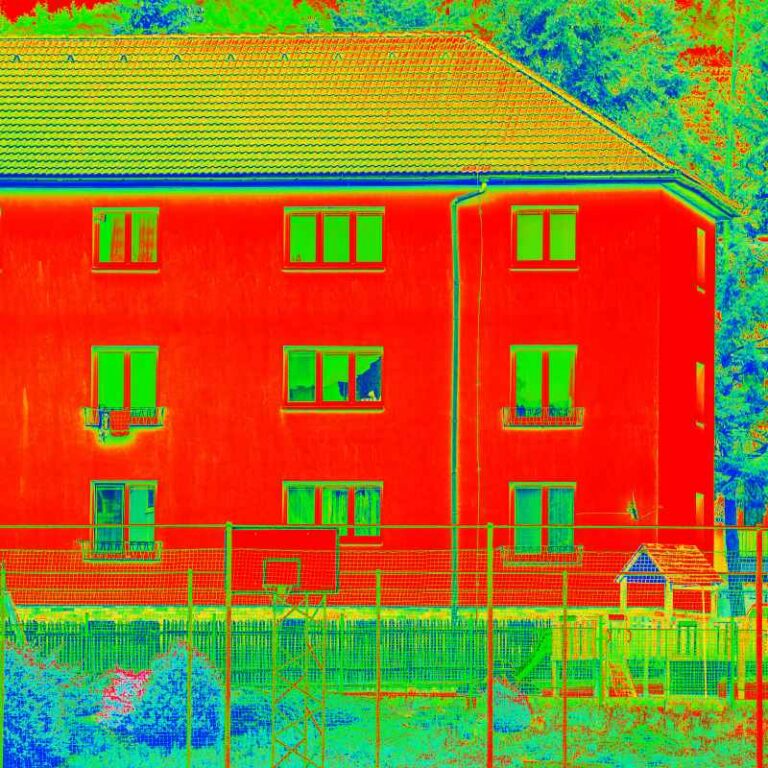
Better insulation lowers heat loss. Closed doors help. Drafts around windows, leaky baseboards, and tall ceilings all raise the amount of energy needed to hold a target temperature. In a room with these losses, a quiet micathermic heater may still run longer than expected, which can erase the comfort advantage you were counting on.
That is the failure case many buyers miss. A heater can feel gentle and still cost more in practice if the room keeps pulling heat away. The same is true for ceramic units. The room decides the runtime.
Closed-door bedroom use and occupancy pattern
If you are heating a bedroom only when you are in it, the best setup is usually a closed door and a modest setpoint. That lets either heater cycle instead of run flat out. Micathermic can feel better for quiet overnight use. Ceramic can feel better for a short pre-warm before you settle in.
Picture a bedroom that is 120 square feet with the door closed for the night. A micathermic unit at a lower setting may keep the space comfortable with little sound. Open the door to a hallway, and the same heater may cycle much longer to keep up.
Safety basics from CPSC guidance
Portable heaters need clear space. The U.S. CPSC advises keeping them at least three feet from bedding and furniture, plugging them directly into a wall outlet, and turning them off while sleeping. Those rules apply to both micathermic and ceramic heaters.
- Keep the heater at least three feet from combustibles.
- Plug it directly into a wall outlet.
- Turn it off while sleeping.
- Place it where foot traffic will not tip it over.
Choose micathermic if… / Choose ceramic if…
Choose micathermic if you want quiet heat in a bedroom, office, or other small enclosed room. It makes sense when you care more about low noise and steady nearby warmth than about fast air movement. It also fits rooms where drafts are limited and the door stays closed.
Choose ceramic if you want faster warm-up, a quicker rise in room air temperature, or added controls like a timer, remote, or oscillation. It is often the better pick for short heating bursts, desk use, or any room where you want the air to feel warmer sooner.
Skip either type if the room is large, very drafty, or used as an open-through space. In those cases, runtime rises and the comfort gain can shrink. A portable space heater works best when the room is small enough to hold heat.
Frequently asked questions
Are micathermic heaters more efficient than ceramic heaters?
No. At the same wattage, micathermic and ceramic heaters use about the same electricity while they are on. The difference is comfort delivery. Micathermic can feel more efficient in a small, closed room because radiant heat warms people and nearby surfaces sooner.
Do micathermic heaters use less electricity than ceramic heaters?
Not by default. Both are electric resistance heaters, so nearly all input power becomes heat. If both draw 1,500W, both use about 1.5 kWh per hour at full power. The bill changes when runtime changes, not because the label is micathermic or ceramic.
Which heats a room faster: micathermic or ceramic?
Ceramic usually feels faster because the fan pushes warm air through the room. Micathermic can feel warm sooner on skin and nearby surfaces, but the whole-room air temperature often rises more gradually. For quick pre-warm tasks, ceramic usually has the edge.
Are micathermic heaters quieter than ceramic heaters?
Usually yes. Many micathermic heaters are fanless, so they make less operating noise. Ceramic heaters usually use a fan, which adds sound. If quiet matters in a bedroom, that fan difference is often the deciding factor.
What room size is best for a micathermic heater?
That fits many bedrooms and offices when the room is enclosed and not too drafty. In bigger or leakier spaces, the heater may run longer and feel less effective.
Do ceramic heaters stir up more dust than micathermic heaters?
They can. Ceramic heaters usually use a fan, and moving air can lift loose dust and spread it through the room. Micathermic heaters usually move less air, so they tend to disturb less dust. The difference is about airflow, not about electrical efficiency.
Sponsored / affiliate links. As an Amazon Associate I earn from qualifying purchases. I may earn additional commission from eligible campaigns.