Which Heater Type Uses the Least Electricity in Winter?
The lowest electricity use in winter usually comes from the lowest-wattage space heater that can hold your target room temperature, with a thermostat and timer helping keep runtime down. An oversized heater wastes power and can overheat a small room. This guide compares heater types by electricity use and shows how to match wattage, controls, and room size.
How runtime and wattage determine heater costs
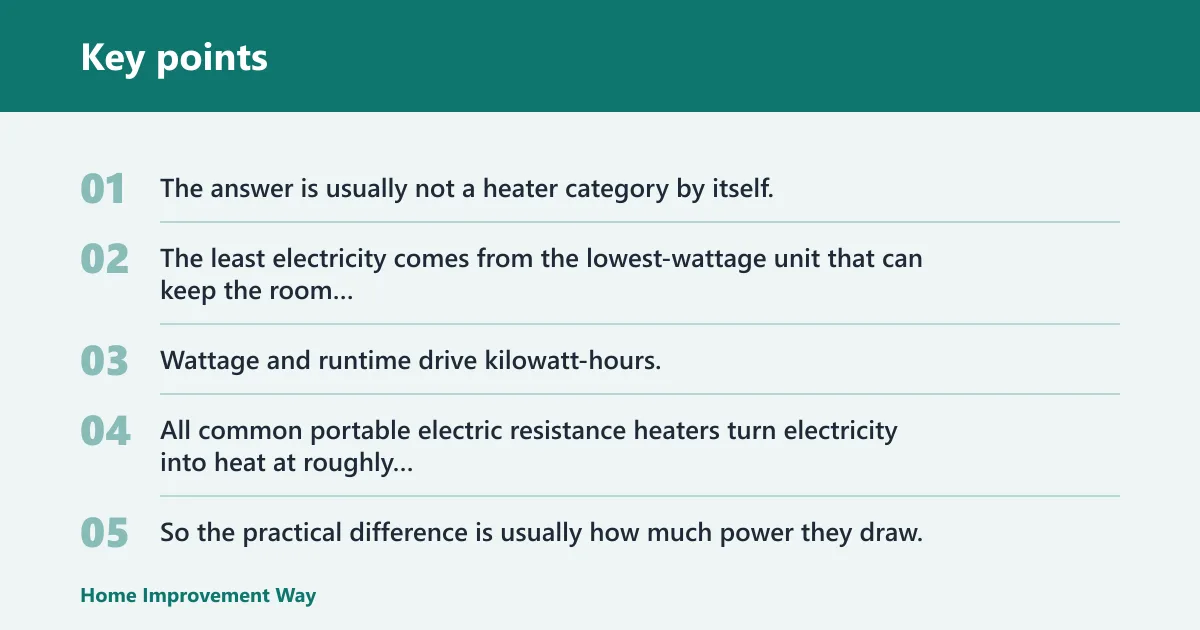



The answer is usually not a heater category by itself. The least electricity comes from the lowest-wattage unit that can keep the room comfortable for the hours you actually need it. Wattage and runtime drive kilowatt-hours, while thermostat control and room fit decide how long the heater stays on.
All common portable electric resistance heaters turn electricity into heat at roughly the same basic conversion level. So the practical difference is usually how much power they draw, how tightly they hold the set temperature, and whether they keep heating an empty room. A heater that runs less often costs less to use.
How runtime turns watts into cost
Use this formula: watts ÷ 1000 × hours × local electricity rate. A 1,500-watt heater costs about $1.55 to run for an 8-hour workday, so runtime matters as much as wattage. If a thermostat shuts the unit off sooner, the bill drops with it.
Infrared, ceramic/PTC, and oil-filled heaters can all be reasonable choices. The cheapest one in practice is the one that lets you run the lowest wattage for the shortest time while still meeting your comfort target. That is the rule to keep in front of every comparison.
What heater wattage is cheapest to run?
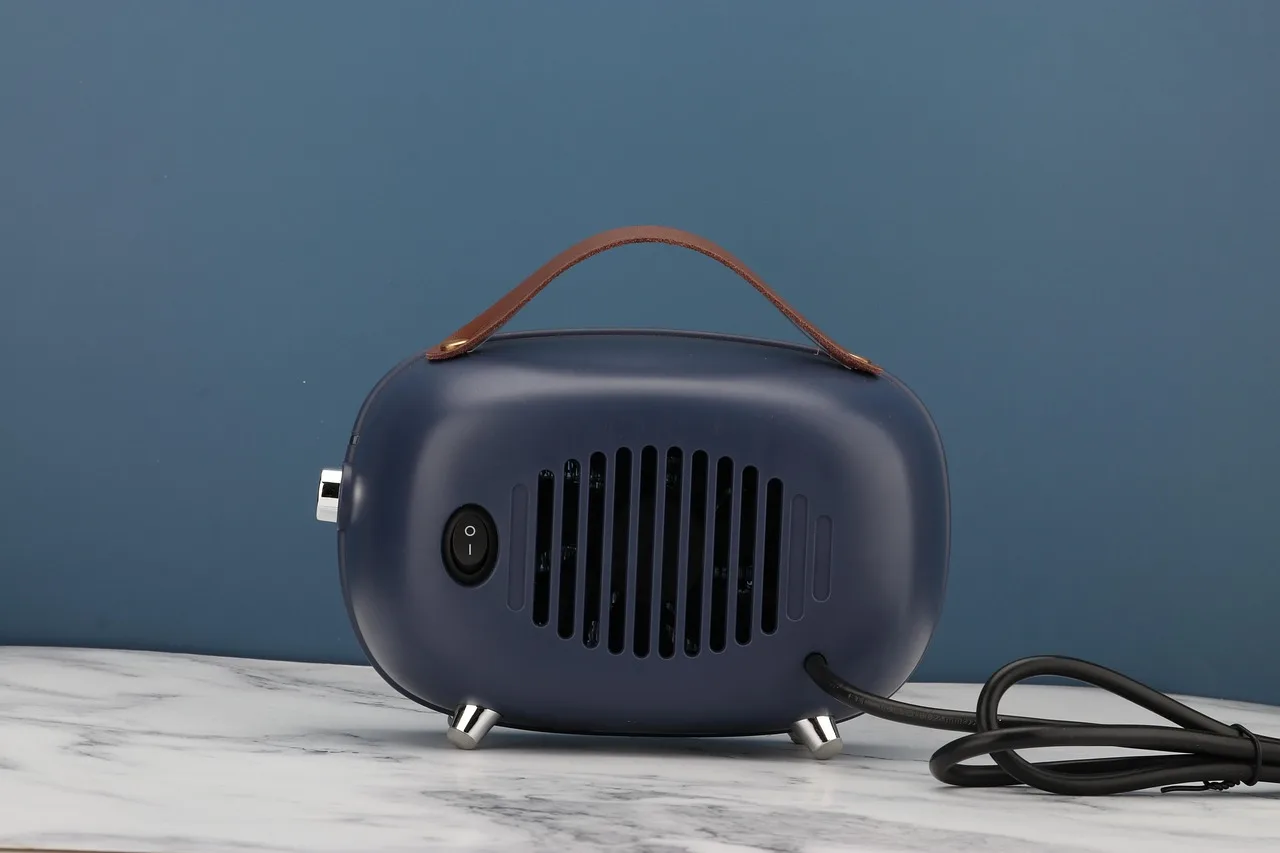
Lower wattage usually costs less to run because each hour draws fewer kilowatt-hours. For many portable heaters, 750W, 1000W, and 1500W are common settings, and 1500W is often the upper limit for standard household outlets. The right choice depends on room size, insulation, and how long you need heat.
750W, 1000W, and 1500W explained
A 750W setting is useful for a small, occupied space or as a holding level after a room is already warm. A 1000W setting is often a middle-ground choice for bedrooms and office spaces. A 1500W setting can help warm a larger or draftier room faster, but it is also the highest common power draw.
The goal is to find the lowest wattage that still keeps the room comfortable. For a small space, 400–800 watts is suggested. For a small, well-insulated bedroom, 500–1,000 watts is suggested. A common rule of thumb is about 10 watts per square foot, though ceiling height and drafts can change that.
Infrared, ceramic, and oil-filled compared
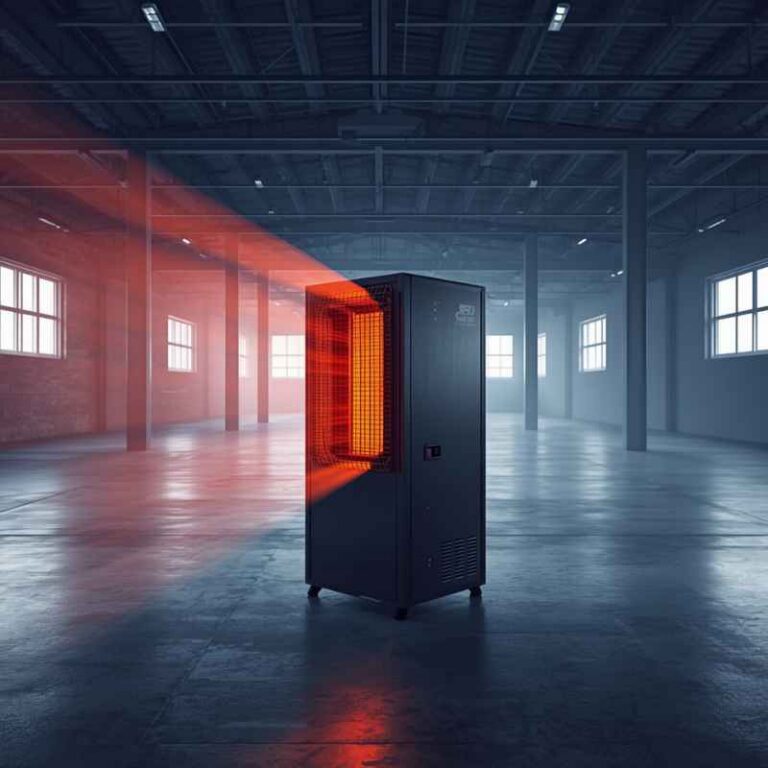
Infrared heaters warm objects and people directly rather than heating the air. That can feel quick and focused near a chair, sofa, or desk, especially at 750W or 1500W modes. It does not change the electricity math; the wattage and runtime still decide cost.
Ceramic/PTC heaters warm up fast and often use a thermostat to cycle on and off. That makes them a practical choice for short-use rooms where you want heat quickly, then only as needed. Their draw still depends on the selected wattage, but cycling can reduce runtime once the room reaches the setpoint.
Oil-filled radiators are quiet, often have multiple watt settings and eco modes, and keep giving off heat after the element cycles off. That thermal mass can help in steady, occupied rooms where you want a slower, even feel. They are not magic-saving units; the savings come from the lower draw and longer off cycles.
Heater run-cost table
This table gives a simple decision aid for room type, insulation, occupancy, and the lowest practical wattage range. Use it as a starting point, then adjust for local rate, ceiling height, and how much time you spend in the room. The cost formula is included so you can check your own numbers.
| Room type | Insulation level | Occupancy pattern | Lowest practical wattage range | Heater type most likely to fit | Quick cost check |
|---|---|---|---|---|---|
| Small bedroom | Well insulated | Evening and overnight, occupied space | 500W to 1000W | Ceramic/PTC or oil-filled radiator | 1000 ÷ 1000 × hours × rate |
| Desk zone | Moderate insulation | Short, seated sessions | 400W to 800W | Infrared or compact ceramic/PTC | 750 ÷ 1000 × hours × rate |
| Drafty bedroom | Poor insulation | Nighttime use with closed door | 1000W to 1500W | Ceramic/PTC or oil-filled radiator | 1500 ÷ 1000 × hours × rate |
| Very small room | Well insulated | Brief use, frequent cycling | 400W to 750W | Infrared or small ceramic/PTC | 750 ÷ 1000 × hours × rate |
| Medium room | Average insulation | Occupied for several hours | 1000W to 1500W | Ceramic/PTC or oil-filled radiator | 1500 ÷ 1000 × hours × rate |
Say your bedroom is well insulated, about 100 square feet, and you only need heat from 10 p.m. to 6 a.m. A 750W heater with a thermostat may hold the room with less cycling than a 1500W unit, because the smaller unit is less likely to overshoot the setpoint and waste peak draw.
Suppose you are heating a desk nook for three hours. An infrared heater at 750W can be a better practical fit than a larger fan heater because it directs warmth at you and nearby objects. The room still needs the same watt-hours to heat, but you are not paying to warm the whole space as much.
Do thermostat and timer settings save electricity?
Yes. A thermostat reduces overshoot by shutting the heater off when the room reaches the target temperature, then turning it back on only when needed. A timer limits how long the heater can run unattended, which prevents wasted overnight or empty-room heating. Those controls save runtime, not heat by magic.
How thermostats cut overshoot
Thermostat precision matters because a heater that runs too far past the setpoint wastes energy and can make a small room uncomfortable. Better control means shorter on-cycles and fewer swings around the target temperature. That matters most in compact rooms where a full-power burst can heat the air fast.
Eco modes can help when they truly lower wattage or extend off-cycles. The Devola Smart WiFi Platinum uses 1500W in normal mode and half that in eco mode. Trusted Reviews measured the unit at 1443W in full-power mode and 731W in eco mode, showing how a lower setting can cut draw when the room does not need full output.
How timers limit wasted runtime
Timers are most useful when you already know how long you need heat. The Devola model includes a timer with one-hour increments between one and 24 hours. That kind of control helps stop the heater from running after you fall asleep or leave the room.
Auto shutoff also helps prevent unattended runtime. It is not a substitute for correct sizing, but it does reduce waste from forgetting a heater on overnight. In practice, the best savings come from pairing a correct wattage with a thermostat and a timer.
How room size changes the answer
Room size changes how much wattage you need, and insulation changes how long that wattage must stay on. If the room leaks heat quickly, lower wattage may never hold the setpoint.
Why drafty rooms need more power
Drafts pull warm air away and replace it with cold air, which forces longer runtime. That does not make a heater more efficient; it just means the heater has to work harder to hold the target. Closing doors and reducing air leaks is part of the heating strategy, not an afterthought.
A common first-timer mistake is putting a 1500W heater in a tiny, well-insulated room and then leaving it on high. The room heats quickly, the thermostat shuts it off, then the cycle repeats. You are still paying for repeated peak draw, and the space may feel too warm in short bursts.
When 1500W is still the right choice
Some rooms simply need that much output. A drafty bedroom, a larger finished basement area, or a room with high ceilings may require 1500W to reach the target temperature at all. In those cases, the cheapest option is still the one that can maintain comfort without running flat out all the time.
Zone heating helps here. Heat only the room you are using, close the door, and choose the smallest wattage that works. That approach usually costs less than heating the whole house to the same temperature.
Which heater fits a bedroom, desk, or drafty room?
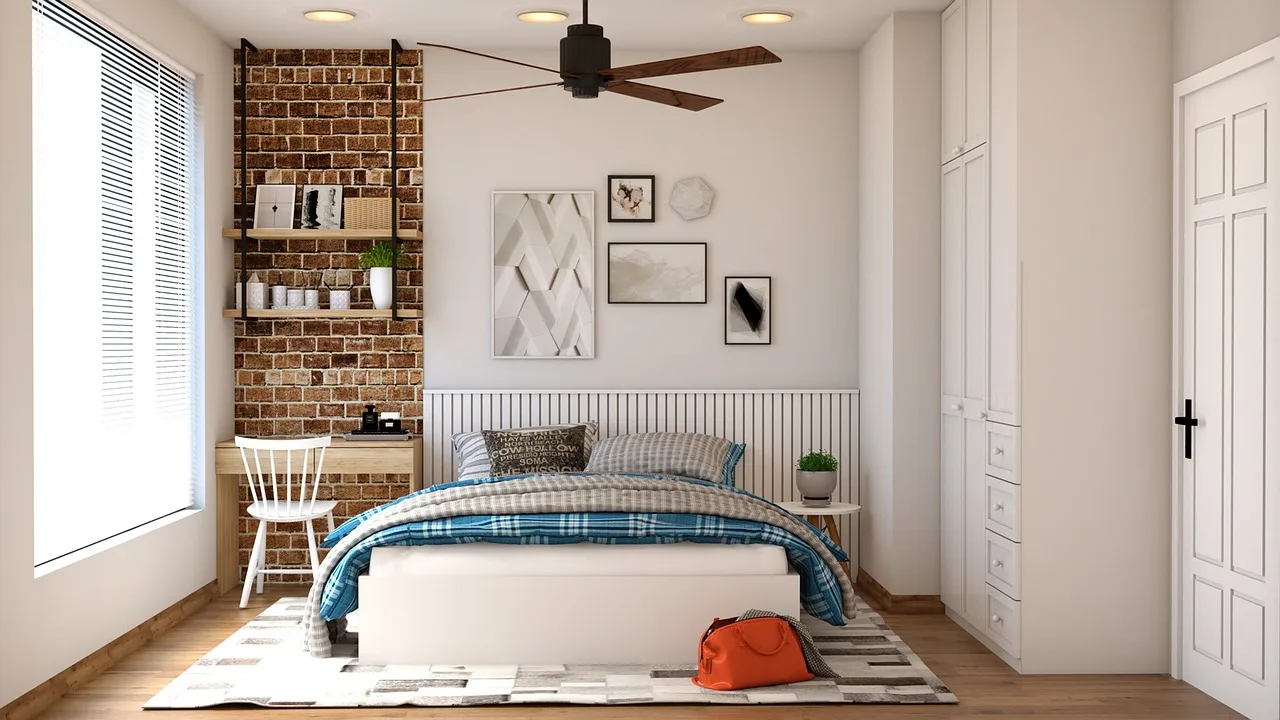
The right heater depends on what the room needs, how long you stay there, and how well the room holds heat. Bedrooms usually favor lower wattage with tight thermostat control. Desk zones benefit from focused heat. Drafty rooms often need more wattage, but only if the room cannot hold temperature with a smaller unit.
Bedroom use
For a small, well-insulated bedroom, 500–1,000 watts is the practical range to start with. An oil-filled radiator works well when you want quiet, even heat through the night. A ceramic/PTC heater is useful if you want faster warm-up before bed, then thermostat cycling after the room reaches target temperature.
Desk zone use
For a desk zone, infrared often makes sense because it heats people and objects directly. That gives you comfort where you are sitting without pushing as much heat into the rest of the room. A 750W setting is often a better starting point than jumping straight to 1500W.
Drafty room use
For a drafty room, look at insulation first, then wattage. If the space is still cold after doors are closed and leaks are reduced, a 1000W to 1500W heater may be needed to maintain comfort. Ceramic/PTC and oil-filled radiators are common choices because they can cycle with a thermostat and keep steadier room temperature.
Very small room use
In a very small room, oversizing is a real problem. A 400–800 watt heater is often enough, and infrared can be a good fit for spot use. The key is not maximum output. It is stable comfort without short cycling or overheating the space.
Safety matters in every setup. Most portable heaters top out around 1500W, and that ceiling helps keep them within standard household circuit limits. Do not overload the outlet, keep the heater clear of fabrics and furniture, and use the built-in controls instead of leaving the unit unattended.
Frequently asked questions
Which space heater type uses the least electricity?
No single type always uses the least electricity. The lowest-wattage heater that can hold your target room temperature usually costs the least to run. Wattage, runtime, thermostat cycling, and room fit matter more than the label on the box.
Is a ceramic heater cheaper to run than an infrared heater?
Not by type alone. A ceramic heater can be cheaper if it uses a lower wattage or cycles off sooner with its thermostat. An infrared heater can be cheaper in a desk zone if it lets you stay comfortable at 750W instead of heating the whole room.
Do oil-filled radiators use less electricity than fan heaters?
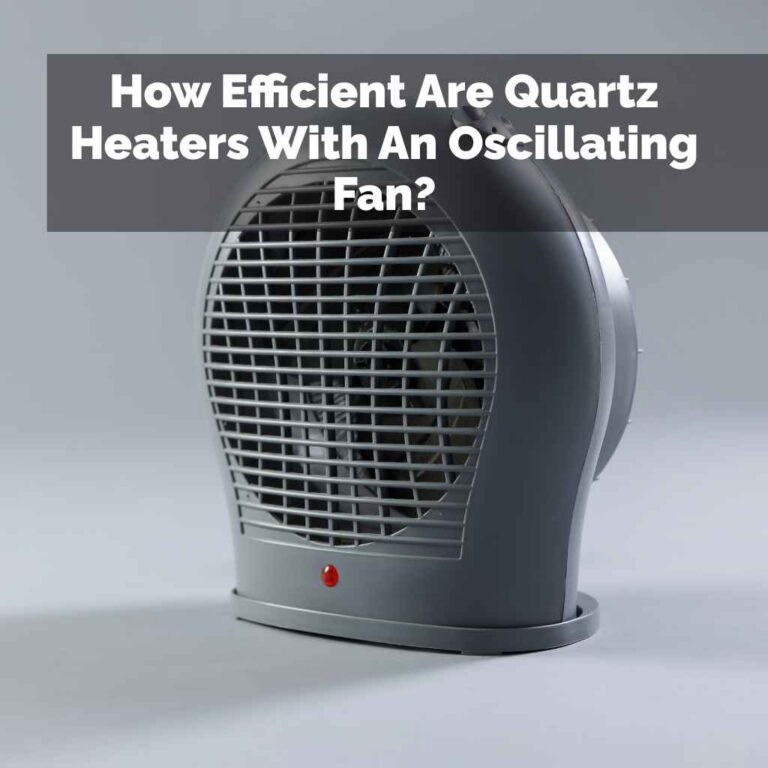
Not automatically. Oil-filled radiators often feel steadier because they keep emitting heat after the element cycles off, which can reduce on-off noise and short bursts. A fan heater can still use the same or less electricity if it runs at a lower wattage or for fewer hours.
Does wattage matter more than heater type?
Yes. Wattage is the main driver of electricity use, and runtime multiplies it. Heater type affects comfort feel, warm-up speed, and how the thermostat cycles, but the electricity bill still comes from watts times hours times rate.
What wattage space heater is cheapest to run for a bedroom?
For a small, well-insulated bedroom, 500–1,000 watts is the best starting range. The cheapest option is the lowest wattage that still keeps the room comfortable through the night. If the room is drafty, you may need more output, but not more than necessary.
How much does a 1500-watt heater cost to run in winter?
A 1,500-watt heater costs about $1.55 to run for an 8-hour workday. Your actual cost depends on your electricity rate and how often the thermostat keeps the unit off. If the heater cycles less often, the daily cost drops with the runtime.
Sponsored / affiliate links. As an Amazon Associate I earn from qualifying purchases. I may earn additional commission from eligible campaigns.