Which Heater Is Best for a Bedroom at Night?
For many bedrooms, an oil-filled radiator heater is often a good choice at night because it tends to run quietly, hold heat well, and have fewer sleep-disrupting parts than fan heaters; choose one with a thermostat, tip-over shutoff, and overheat protection built in. Bad bedroom heating can mean noise, dry air, hot spots, or a fire risk. This guide covers the safest heater types, the features that matter overnight, and how to size one for your room.
Bedroom heater decision table


Use this table as a bedroom-first filter, not a blanket ranking. The best choice changes with room size, draftiness, and how sensitive the sleeper is to fan noise, light, and temperature swings.
| Room condition | Best heater type | Ideal wattage range | Noise profile | Overnight risk | Best for |
|---|---|---|---|---|---|
| Small, insulated bedroom | Oil-filled radiator | Lower end of the 1,500 watts class | Very quiet; fanless | Low if placed on a hard, flat floor with clearances | Sleepers who wake easily from fan noise |
| Small, drafty bedroom | Micathermic heater | 1,500 watts class | Quiet; often below 40 dB at full output | Low to moderate; check surface and clearance rules | Rooms that need faster room warmth without a fan |
| Shared bedroom | Panel heater | Lower to mid range in the 1,500 watts class | Quiet; low air movement | Low if the thermostat and timer are used correctly | People who want steady heat with a low-profile unit |
| Large bedroom up to 300 square feet | Oil-filled radiator or panel heater | 1,500 watts class | Quietest option for most sleepers | Low, but slow warm-up means earlier startup | Longer overnight warmth with less cycling noise |
| Drafty room with a single sleeping area | Infrared heater | 1,500 watts class, used cautiously | Quiet; radiant heat has no fan sound | Moderate if placement is poor; do not aim at bedding | Directional warming when the room leaks heat fast |
The table reflects the same tradeoff every bedroom heater makes: faster warm-up usually brings more noise or more cycling, while quieter heat tends to warm the room more slowly. For sleep, stable temperature matters more than raw output.
Which heater is best for a bedroom at night?
For most bedrooms, the best heater at night is an oil-filled radiator. It is fanless, quiet, and steady, so it is less likely to wake you with airflow noise, fan ramps, or frequent cycling. Use one only if the manual allows the intended use and placement.
Best overall pick for sleep comfort
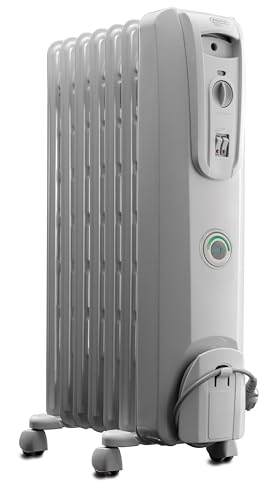
An oil-filled radiator is usually the strongest all-night choice because it offers gentle, long-lasting warmth without dry air. It does not blast heat into the room, so it is less likely to create hot spots near the heater and cold spots elsewhere.
Best for small bedrooms
For a small bedroom, a quiet oil-filled radiator or a micathermic heater is usually the better fit. A small room reaches temperature faster, so you can use less aggressive heat and avoid the fan noise that often comes with ceramic units.
Best for large bedrooms
For a larger bedroom, a 1,500 watts oil-filled radiator or a panel heater usually makes the most sense. A larger room needs more time to warm up, so a steady heater with a thermostat usually works better than a loud fan heater that cycles hard and stops often.
Best for drafty rooms
In drafty rooms, an infrared heater can help with directional warmth, and a micathermic heater can help warm the room faster without a fan. Do not assume one heater can handle heavy heat loss. Ceiling height, windows, and air leaks change the result.
Say your bedroom is 160 square feet, insulated, and quiet matters more than speed. An oil-filled radiator can bring the room to a stable sleep temperature with less disturbance than a fan-assisted model. If the same room sits under a window draft, a micathermic unit may feel faster, but only if the manual supports that placement and setup.
How quiet is each heater type?
Noise matters more at night than most product pages admit. Typical electric space heater noise can range from 30 dB to 65 dB, and forced-air heaters are the loudest because they use a fan. For sleep, the quieter end of the range is the target.
Fan noise and sleep disruption
Ceramic heaters are often fan-assisted, which means they can heat quickly but also add steady airflow noise. That noise can be more disruptive than the number on a spec sheet, especially if the fan ramps up and down during the night.
Clicks, cycling, and display light
Sleep disruption is not only about decibels. Thermostat clicks, short heating cycles, and bright control lights can break sleep even when the heater sounds quiet on paper. A dim display, a simple timer, and fewer mode changes matter in a dark room.
What a decibel spec can and cannot tell you
A decibel rating helps compare models, but it does not capture pitch, fan startup, or the little pauses that stand out in a silent room. The quietest heater categories for bedrooms are micathermal heaters, oil-filled radiators, and convection panel heaters. Micathermal heaters can operate at below 40 dB at 100% heating output.
Are ceramic heaters good for bedrooms?
Ceramic heaters can work in bedrooms, but they are best when you want faster warm-up and can tolerate fan noise. PTC ceramic heating heats quickly, and typical bedroom models often reach up to 1,500 watts. For light sleepers, the fan is the main drawback.
PTC ceramic heating and fast warm-up
PTC ceramic heaters are useful when a cold room needs heat fast before bedtime. That speed can be helpful in a cold house. It is less helpful if you want the room to stay quiet after you fall asleep.
Fan-assisted noise and bedroom limits
Because ceramic heaters often use a fan, they are less ideal for sleep than fanless types. They can also move air in a way that feels dry or uneven if the room is small. The heater may warm the area around it faster than the entire bedroom.
When a ceramic heater fits a bedroom
A ceramic heater fits best when you need short, pre-bed heating and do not plan to rely on it as the quietest overnight option. Pick one only if it has clear safety features, a thermostat, and a timer, and set it on a hard, flat floor as the manual directs.
Which heater is safest for overnight use?
A safer bedroom heater is one that matches the manual, sits on the correct surface, and includes tip-over protection, overheat shutoff, and auto shutoff. Safety features reduce risk, but they do not turn a heater into a hands-off appliance for any bedroom setup.
Tip-over and overheat protection
Tip-over protection is useful because pets, kids, and tight walkways raise the chance of accidental contact. Overheat shutoff matters because a blocked intake, poor placement, or dust buildup can push temperatures too high.
Hard-floor placement and clearance rules
Many portable heaters call for a hard, flat surface and clear space around the unit. Do not treat carpet, bedding, curtains, or other soft materials as normal placement. Keep the heater where the manual says it can go, and do not assume any model is safe just because it is labeled for a bedroom.
Cool-touch cabinets, auto shutoff, and timers
A cool-touch exterior helps reduce burn risk, especially in tight bedrooms. A timer can reduce runtime and help avoid overheating the room, while a thermostat keeps the heater from running continuously when the space is already warm enough.
A common first-timer mistake is choosing a heater that feels safe during a short test, then placing it too close to bedding because the room is tight. The correct move is to follow the clearance diagram first, then decide whether the unit still fits the room.
- Read the manual for surface, clearance, and unattended-use rules.
- Set the heater on a hard, flat floor unless the model says otherwise.
- Pick the quietest type that can still heat the room size you have.
- Use a thermostat and timer to limit unnecessary runtime.
- Choose tip-over protection, overheat shutoff, and auto shutoff as baseline features.
How many watts do you need?
A 1,500 watts heater is a common bedroom ceiling, and the bedroom heater list here is sized at 1,500 watts and up to 300 square feet. That does not mean every room that size needs the same heater. Insulation, drafts, and ceiling height can change the answer a lot.
1,500 watts class as a common ceiling
For many bedrooms, 1,500 watts is often the upper practical limit for a portable electric heater. It is common because it gives enough output for small to medium rooms without pushing into a larger-appliance setup.
Square footage, ceiling height, and insulation
Square footage alone is not enough. A small room with poor insulation may need more help than a bigger, well-sealed room. Higher ceilings also increase the air volume you need to warm, which makes the same heater feel weaker.
When a lower-watt unit is enough
If the bedroom is small and well insulated, a lower-watt heater may hold temperature better than a maxed-out model that cycles loudly. Less output can be enough when the room retains heat well and the sleeper only needs a mild temperature bump.
Which heater type works best by room condition?
Oil-filled radiators are usually best for steady overnight warmth, panel heaters are good for low-profile heat, and micathermic or infrared heaters work best when the room has a specific heat-loss problem. The right choice depends on whether you need quiet comfort, fast recovery, or directional heat.
Oil-filled radiator for steady overnight warmth
Oil-filled radiators are a strong choice when you want the room to stay warm with very little noise. They warm slowly, but they keep temperature stable. The review guidance is clear on one point: they offer gentle, long-lasting warmth without dry air.
Panel heater for low-profile heat
Panel heaters are a good option when you want a low-noise unit that takes little visual space. They can be wall-mounted or freestanding, and they usually work best with a thermostat and timer because those controls help steady the room temperature overnight.
Infrared and micathermic for specific bedroom conditions
Infrared heaters are useful for directional warming in drafty rooms, but placement matters. Do not aim one toward the bed as an overnight setup. Micathermic heaters combine convection and radiant heat, and they are among the least noisy types, which makes them useful when quiet matters more than fast fan-driven warmth.
Which room heater is best for home?
For most homes, the best room heater is the one that matches the room’s size and use, not the most powerful model on the shelf. In bedrooms, that usually means a quiet oil-filled radiator, a panel heater, or a micathermic unit with thermostat control.
Which heater is best for a small bedroom?
For a small bedroom, the best heater is usually an oil-filled radiator or a micathermic heater. Both can be quiet enough for sleep, and both avoid the fan noise that often makes ceramic heaters less appealing at bedtime. A thermostat matters more than raw heat output.
What is the safest heater for a bedroom?
The safest heater for a bedroom is one with tip-over protection, overheat shutoff, auto shutoff, and a cool-touch exterior, used exactly as the manual directs. That usually points to an oil-filled radiator or panel heater placed on a hard, flat floor with proper clearance.
What is the quietest heater for sleeping?
The quietest heater for sleeping is usually a micathermic heater, an oil-filled radiator, or a convection panel heater. Micathermal heaters can run below 40 dB at full output, and fanless designs avoid the airflow noise that interrupts sleep. Lights and clicking still matter.
Are oil-filled radiators better for bedrooms at night?
Yes, for many bedrooms they are the better night choice because they provide steady, quiet heat with fewer moving parts. They are slower to warm the room than a fan heater, but that slow output is often an advantage after bedtime because it creates fewer sleep disruptions.
Frequently asked questions
Which heater is best for a large bedroom?
For a large bedroom, a 1,500 watts oil-filled radiator or a convection panel heater is usually the better match. Both are better for steady overnight warmth than a noisy fan heater. Ceiling height, insulation, and drafts still change how much heat the room actually holds.
Which heater type is most efficient for a bedroom?
Efficiency in a bedroom depends on how well the heater matches the room, not only on the heater type. A thermostat and timer help any type cycle less. In a well-sealed room, a quieter heater can be the most comfortable and practical choice because it avoids wasted overheating.
How many watts do I need for a bedroom heater?
Many bedroom heaters top out at 1,500 watts, which is a common ceiling for portable models. Smaller, well-insulated rooms may need less. Larger, draftier rooms may need the full 1,500 watts class and still benefit from better insulation or a different heater type.
Sponsored / affiliate links. As an Amazon Associate I earn from qualifying purchases. I may earn additional commission from eligible campaigns.